
• My Feed
  • Home
  • What's Important
  • Media & Entertainment
Search

Stay Curious. Stay Wanture.

© 2026 Wanture. All rights reserved.

  • Terms of Use
  • Privacy Policy
Science/Mind
Can We Upload Consciousness Into Machines?

Elon Musk's Neuralink is mapping the brain—but digital immortality faces impossible gaps

12 November 2025

—

Explainer *

Elias Monroe
banner

Consciousness upload promises digital immortality by copying your mind into a robot. With Neuralink's brain-computer interfaces now in human trials, the technology is advancing rapidly. But scientists face massive challenges: mapping 86 billion neurons, understanding how consciousness emerges, and solving the core question—would a digital copy really be you? Explore the science, ethics, and timeline of humanity's quest to transcend biology.

1570218d-7689-4768-bc1b-67c1a80eca1f

Summary:

  • Consciousness upload technology aims to digitally preserve human minds using brain-computer interfaces like Neuralink's neural implants
  • Current BCIs can map brain signals, but full consciousness transfer requires mapping 86 billion neurons and solving complex computational challenges
  • Ethical questions arise about digital consciousness: identity, rights, immortality, and whether a digital copy is truly the original person

In recent conversations about the future of technology, Elon Musk has revived one of humanity's oldest questions: what if we could preserve consciousness beyond the body? The idea—uploading a human mind into a machine—sounds like science fiction. But with advances in brain-computer interfaces, particularly through Neuralink, Musk suggests it may be closer than we think. The concept is simple in theory: capture the electrical patterns of thought, memory, and personality as data, then transfer that data into a humanoid robot like Tesla's Optimus. The result? A digital version of you that continues after your biological self is gone—what Musk calls a "digital afterlife."

But what does "consciousness upload" actually mean? And more importantly—would it really be you?

What Is Consciousness Upload Technology?

Consciousness upload is the theoretical process of copying the brain's neural patterns—thoughts, memories, personality—into a digital format that could be stored, transferred, or run on a machine. Think of it like backing up a hard drive, except instead of files and photos, you're copying the structure of your mind.

The idea rests on a core assumption: that consciousness is the result of physical processes in the brain. If that's true, then in principle, those processes could be mapped, encoded, and recreated elsewhere. The technology that might make this possible is called a brain-computer interface, or BCI—a system that translates neural signals into digital commands.

BCIs are already real. They're being used today to help paralyzed patients control prosthetic limbs or type with their thoughts. But consciousness upload would require something far more ambitious: not just reading a few signals, but capturing the entire pattern of activity across billions of neurons—and doing so with enough detail to preserve who you are.

How Brain-Computer Interfaces Make Mind Transfer Possible

A brain-computer interface works by detecting electrical activity in the brain and converting it into data a computer can understand. Neurons communicate through tiny electrical pulses. BCIs use electrodes—thin wires or sensors—to pick up those pulses and decode them into commands like "move a cursor" or "type a letter."

Current medical BCIs, like those developed at Stanford or Johns Hopkins, use anywhere from a few dozen to a few hundred electrodes. They can detect signals from specific brain regions and translate them into simple actions. Patients with spinal cord injuries have used these systems to control robotic arms or communicate through text.

Neuralink's Role in Consciousness Mapping

Neuralink, Musk's neurotechnology company, is pushing the boundaries of what BCIs can do. In May 2023, the FDA granted Neuralink an investigational device exemption, allowing the company to begin its first human trials. The PRIME study—Precise Robotically Implanted Brain-Computer Interface—officially started on January 9, 2024. As of September 2025, Reuters reported that 12 people globally have received Neuralink implants, with trials expanding to sites in Canada, the UK, and the UAE.

Neuralink's system uses over 1,000 electrodes, far more than earlier devices. It's designed to record from many neurons simultaneously, capturing richer data about brain activity. The FDA has also granted Breakthrough Device designation to Neuralink's Blindsight program, which aims to restore vision, and in 2025, to a speech-restoration program. A speech-translation trial was planned to begin in October 2025.

But even with 1,000 electrodes, we're nowhere near mapping the entire brain. The human brain contains roughly 86 billion neurons, each forming thousands of connections. To upload consciousness, you'd need to capture not just individual signals, but the entire network—how neurons fire together, how patterns shift over time, how memory and emotion emerge from structure.

From Brain Data to Digital Mind

If you could map all that activity, the next step would be encoding it. This means translating neural patterns into a digital format—essentially, turning your mind into software. That software would need to run on hardware capable of simulating the brain's complexity in real time.

The computational power required is staggering. The brain performs an estimated 10¹⁵ operations per second. Current supercomputers can approach that scale, but they consume enormous energy and occupy entire buildings. A portable system—like a humanoid robot—would need breakthroughs in both processing speed and energy efficiency.

The Humanoid Robot Connection: Tesla Optimus as Digital Host

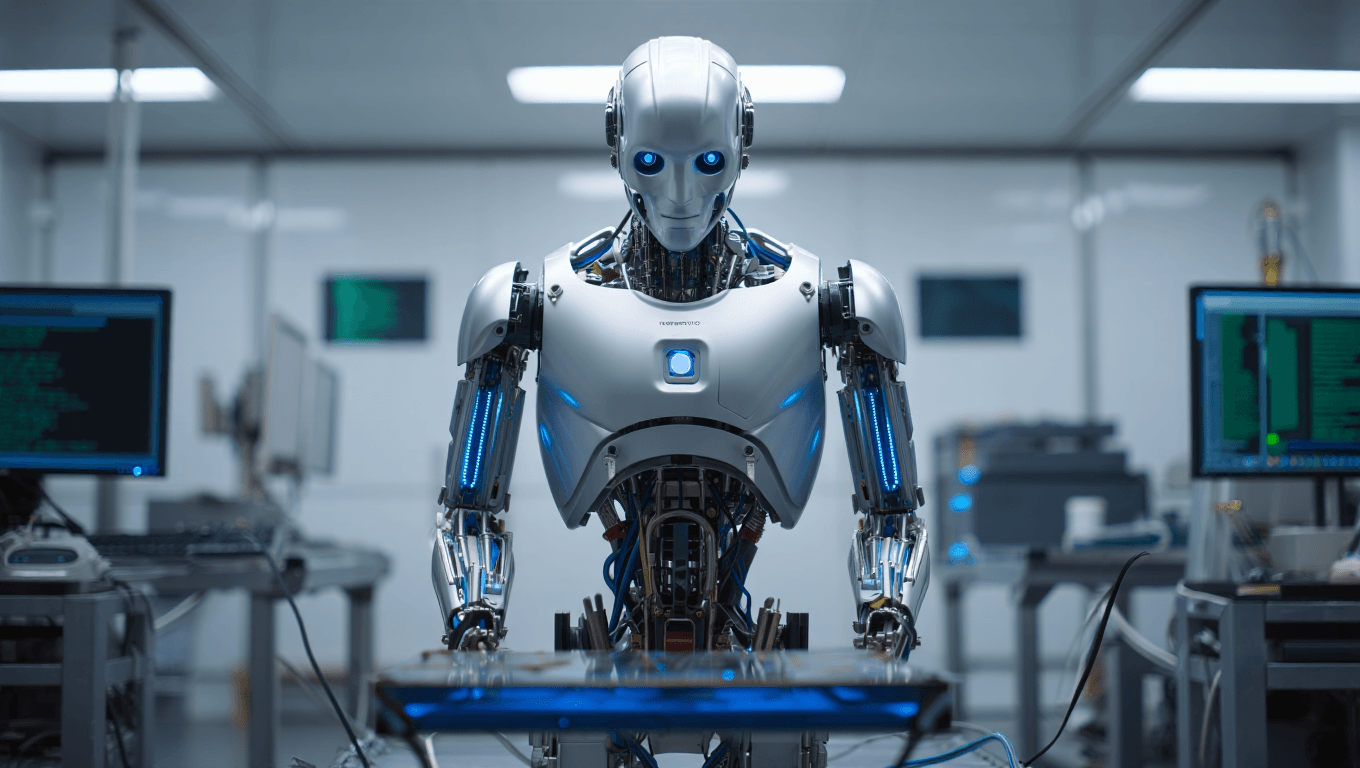
If consciousness could be encoded, it would need a physical form to interact with the world. Musk has suggested Tesla's Optimus robot as a potential host. Optimus is a humanoid robot designed for general-purpose tasks—walking, lifting, manipulating objects. In theory, it could serve as a body for a digital mind.

But a robot body raises new questions. Would a digital consciousness experience the world the same way? Human perception is deeply tied to biology—the feel of skin, the rhythm of breath, the chemistry of emotion. A robot might see and hear, but would it feel? And if not, would the uploaded mind still be recognizably you?

The Core Question: Copy or Continuation?

Even if we could upload a perfect copy of your brain, would that copy be you—or just a simulation of you? This is where neuroscience meets philosophy.

Imagine a thought experiment: scientists scan your brain in perfect detail and create a digital replica. The replica has all your memories, your personality, your way of thinking. It believes it's you. But you're still sitting in the chair, alive and conscious. So who is the real you?

This is a version of the Ship of Theseus problem. If you replace every part of a ship, is it still the same ship? If you copy every neuron in a brain, is it still the same person?

What Scientists Say About Digital Consciousness

Neuroscientists are divided. Some argue that consciousness is substrate-independent—meaning it doesn't matter if it runs on neurons or silicon, as long as the pattern is the same. Others believe consciousness is inseparable from biology, tied to the specific chemistry and structure of living tissue.

There's no scientific consensus on whether a digital mind would be conscious at all. We don't fully understand how consciousness arises in the brain, let alone how to recreate it elsewhere. Until we solve that problem, consciousness upload remains speculative.

Ethical Challenges of Digital Immortality

If consciousness upload becomes possible, it will raise profound ethical questions. Who owns a digital mind? Does it have legal rights? Can it be copied, edited, or deleted?

Consider identity. If your digital copy diverges from you over time—learning new things, forming new memories—is it still you, or a separate person? What about consent? If someone uploads your mind without permission, is that theft? Murder? Something else entirely?

Then there's inequality. If digital immortality is expensive, it could become a privilege of the wealthy, deepening social divides. And if it's widely available, what happens to society when death is optional?

What's Missing From the Technology

Several major scientific gaps stand between today's BCIs and consciousness upload. First, we need to map all 86 billion neurons and their connections—a task far beyond current imaging technology. Second, we need to understand how consciousness emerges from neural activity, which remains one of the biggest unsolved problems in neuroscience.

Third, we need data storage capable of holding a human mind. Estimates suggest a full brain map could require exabytes of data—millions of times more than a typical hard drive. Fourth, we need computers fast enough to simulate a brain in real time, with energy efficiency that fits inside a portable system.

Finally, we need to solve the continuity problem: how to transfer consciousness without simply making a copy. None of these challenges have clear solutions yet.

Timeline: When Could Consciousness Upload Become Reality?

Musk has suggested consciousness upload could happen within two decades. Most neuroscientists are more cautious. Current BCIs can read signals from small brain regions. Scaling to the whole brain will take decades of research, at minimum.

Near-term (5 years): BCIs will likely improve medical applications—better prosthetics, speech restoration, vision aids. Neuralink's PRIME study, designed as a small feasibility trial with approximately 10 subjects in the U.S., is part of this phase. The company has reported plans to scale toward thousands of implants per year, with a target of $1 billion in revenue by 2031.

Medium-term (10–15 years): We may see partial brain mapping and more sophisticated neural interfaces. But full consciousness upload would require breakthroughs we can't yet predict.

Long-term (beyond 20 years): If the technology becomes possible, it will depend on solving fundamental questions about consciousness, computation, and identity—questions that may take generations to answer.

What This Means for Human Evolution

If consciousness upload becomes real, it would redefine what it means to be human. Death would no longer be inevitable. Identity could become fluid. The boundary between biology and technology would dissolve.

But it would also force us to confront uncomfortable questions. What is the self? What makes life meaningful? And if we can live forever—should we?

For now, consciousness upload remains a thought experiment. BCIs are advancing rapidly, but they're still tools for restoring lost function, not transcending biology. The gap between reading a few neurons and capturing an entire mind is vast. Whether that gap can be crossed—and whether we should try—remains an open question.

The technology is real. The timeline is uncertain. And the implications, if it ever arrives, will reshape everything we think we know about life, death, and what it means to be conscious in this emerging digital afterlife.

Topic

Neuralink Expansión Global

Neuralink's First Peer Review: Three Patients, Real Data

2 November 2025

Neuralink's First Peer Review: Three Patients, Real Data

Neuralink expands to UK as brain chip race heats up

28 October 2025

Neuralink expands to UK as brain chip race heats up

What is this about?

  • Explainer */
  • Elias Monroe/
  • Science/
  • Mind

Feed

    Google adds Gmail mobile encryption for Enterprise Plus

    Google adds Gmail mobile encryption for Enterprise Plus

    Mobile Gmail now provides end-to-end encryption, dropping third-party tools

    about 8 hours ago
    Microsoft removes Copilot disclaimer on April 10, 2026

    Microsoft removes Copilot disclaimer on April 10, 2026

    2025 Nadella interview frames the removal as a push to make Copilot a tool

    about 8 hours ago
    Artemis-2 Returns: Orion Splashdown at 3:00 a.m. PT

    Artemis-2 Returns: Orion Splashdown at 3:00 a.m. PT

    Four astronauts end a nine‑day, 406,765 km lunar arc—Moon flight since Apollo 17

    about 8 hours ago
    Button AI Assistant Debuts, Offering Screen‑Free Voice Help

    Button AI Assistant Debuts, Offering Screen‑Free Voice Help

    Nostalgic iPod Shuffle design meets privacy‑first press‑to‑talk AI

    1 day ago
    Razer Hammerhead V3 HyperSpeed Debuts with Dual‑Mode Case

    Razer Hammerhead V3 HyperSpeed Debuts with Dual‑Mode Case

    The USB‑C case also serves as a 2.4 GHz receiver, cutting dongles for PS5 and phones

    1 day ago
    Apple ships 6.2 million Macs Q1 2026, M5‑MacBook Pro leads

    Apple ships 6.2 million Macs Q1 2026, M5‑MacBook Pro leads

    Apple’s share rises to 9.5%, moving it into fourth place among global PC makers

    1 day ago
    Galaxy S22 Ultra can be bricked after factory reset

    Galaxy S22 Ultra can be bricked after factory reset

    US owners report IMEI‑level lock that hands control to unknown administrator Numero LLC

    1 day ago
    Mouse: P.I. for Hire arrives April 16 on PC, PS5, and Xbox

    Mouse: P.I. for Hire arrives April 16 on PC, PS5, and Xbox

    Modes: 4K 60 fps quality or 120 fps performance on PS5 and Xbox Series X

    1 day ago
    YouTube Rolls Out Auto Speed for Premium Users

    YouTube Rolls Out Auto Speed for Premium Users

    The AI‑driven playback boost aims to cut dead air on long videos

    2 days ago
    Blackwell Set to Capture Majority of the 2026 GPU Market

    Blackwell Set to Capture Majority of the 2026 GPU Market

    GB300/B300 GPUs Push Blackwell to 71% of Shipments; Rubin Falls to 22%

    2 days ago
    Google launches AI avatar tool for Shorts on April 9, 2026

    Google launches AI avatar tool for Shorts on April 9, 2026

    Ages 18+ can create digital replicas, with Synth ID tags and a 3‑year auto‑delete

    2 days ago
    Mac OS X 10.0 Cheetah runs on Wii

    Mac OS X 10.0 Cheetah runs on Wii

    Ports Mac OS X 10.0 Cheetah to the Wii, showing the PowerPC 750CL can run an OS

    2 days ago
    DuoBell Beats ANC: Safer Cycling with Apple AirPods Max

    DuoBell Beats ANC: Safer Cycling with Apple AirPods Max

    A 750 Hz blind‑spot lets DuoBell cut through ANC on popular headphones

    2 days ago
    Škoda DuoBell prototype unveiled on April 5, 2026

    Škoda DuoBell prototype unveiled on April 5, 2026

    750 Hz pulse and 2,000 Hz chime cut through ANC, alerting riders faster at 15 mph

    3 days ago
    SteamGPT Leak Reveals Dual‑Role AI on Steam

    SteamGPT Leak Reveals Dual‑Role AI on Steam

    Leak shows AI handling support and cheat‑detection for millions on the platform

    3 days ago
    Oppo Pad mini challenges Apple with Snapdragon 8 Gen 5

    Oppo Pad mini challenges Apple with Snapdragon 8 Gen 5

    April 21: Oppo Pad mini 8.8‑inch, Snapdragon 8 Gen 5, 5.39 mm, 279 g, 144 Hz OLED

    3 days ago
    Apple to ship 3 million foldable iPhones by end‑2026

    Apple to ship 3 million foldable iPhones by end‑2026

    Limited rollout equals 12 % of iPhone volume and rivals Samsung’s 2.4 million Galaxy Z Fold 7 sales

    3 days ago
    Apple unveils iPhone 18 Pro, iPhone 18 Pro Max, and iPhone Ultra

    Apple unveils iPhone 18 Pro, iPhone 18 Pro Max, and iPhone Ultra

    Mockups match leaked renders; 20 million Samsung panels for iPhone Ultra

    4 days ago
    Sony launches Playerbase program for Gran Turismo 7

    Sony launches Playerbase program for Gran Turismo 7

    PlayStation gamers can win a flight, facial scan, and an avatar in Gran Turismo 7

    4 days ago
    Claude Mythos Preview Beats Opus 4.6 in Cybersecurity!

    Claude Mythos Preview Beats Opus 4.6 in Cybersecurity!

    Claude Mythos Preview for five partners—pricing after a 100 million token credit

    4 days ago
    Loading...
Science/Mind

Can We Upload Consciousness Into Machines?

Elon Musk's Neuralink is mapping the brain—but digital immortality faces impossible gaps

November 12, 2025, 2:10 pm

Consciousness upload promises digital immortality by copying your mind into a robot. With Neuralink's brain-computer interfaces now in human trials, the technology is advancing rapidly. But scientists face massive challenges: mapping 86 billion neurons, understanding how consciousness emerges, and solving the core question—would a digital copy really be you? Explore the science, ethics, and timeline of humanity's quest to transcend biology.

1570218d-7689-4768-bc1b-67c1a80eca1f

Summary

  • Consciousness upload technology aims to digitally preserve human minds using brain-computer interfaces like Neuralink's neural implants
  • Current BCIs can map brain signals, but full consciousness transfer requires mapping 86 billion neurons and solving complex computational challenges
  • Ethical questions arise about digital consciousness: identity, rights, immortality, and whether a digital copy is truly the original person

In recent conversations about the future of technology, Elon Musk has revived one of humanity's oldest questions: what if we could preserve consciousness beyond the body? The idea—uploading a human mind into a machine—sounds like science fiction. But with advances in brain-computer interfaces, particularly through Neuralink, Musk suggests it may be closer than we think. The concept is simple in theory: capture the electrical patterns of thought, memory, and personality as data, then transfer that data into a humanoid robot like Tesla's Optimus. The result? A digital version of you that continues after your biological self is gone—what Musk calls a "digital afterlife."

But what does "consciousness upload" actually mean? And more importantly—would it really be you?

What Is Consciousness Upload Technology?

Consciousness upload is the theoretical process of copying the brain's neural patterns—thoughts, memories, personality—into a digital format that could be stored, transferred, or run on a machine. Think of it like backing up a hard drive, except instead of files and photos, you're copying the structure of your mind.

The idea rests on a core assumption: that consciousness is the result of physical processes in the brain. If that's true, then in principle, those processes could be mapped, encoded, and recreated elsewhere. The technology that might make this possible is called a brain-computer interface, or BCI—a system that translates neural signals into digital commands.

BCIs are already real. They're being used today to help paralyzed patients control prosthetic limbs or type with their thoughts. But consciousness upload would require something far more ambitious: not just reading a few signals, but capturing the entire pattern of activity across billions of neurons—and doing so with enough detail to preserve who you are.

How Brain-Computer Interfaces Make Mind Transfer Possible

A brain-computer interface works by detecting electrical activity in the brain and converting it into data a computer can understand. Neurons communicate through tiny electrical pulses. BCIs use electrodes—thin wires or sensors—to pick up those pulses and decode them into commands like "move a cursor" or "type a letter."

Current medical BCIs, like those developed at Stanford or Johns Hopkins, use anywhere from a few dozen to a few hundred electrodes. They can detect signals from specific brain regions and translate them into simple actions. Patients with spinal cord injuries have used these systems to control robotic arms or communicate through text.

Neuralink's Role in Consciousness Mapping

Neuralink, Musk's neurotechnology company, is pushing the boundaries of what BCIs can do. In May 2023, the FDA granted Neuralink an investigational device exemption, allowing the company to begin its first human trials. The PRIME study—Precise Robotically Implanted Brain-Computer Interface—officially started on January 9, 2024. As of September 2025, Reuters reported that 12 people globally have received Neuralink implants, with trials expanding to sites in Canada, the UK, and the UAE.

Neuralink's system uses over 1,000 electrodes, far more than earlier devices. It's designed to record from many neurons simultaneously, capturing richer data about brain activity. The FDA has also granted Breakthrough Device designation to Neuralink's Blindsight program, which aims to restore vision, and in 2025, to a speech-restoration program. A speech-translation trial was planned to begin in October 2025.

But even with 1,000 electrodes, we're nowhere near mapping the entire brain. The human brain contains roughly 86 billion neurons, each forming thousands of connections. To upload consciousness, you'd need to capture not just individual signals, but the entire network—how neurons fire together, how patterns shift over time, how memory and emotion emerge from structure.

From Brain Data to Digital Mind

If you could map all that activity, the next step would be encoding it. This means translating neural patterns into a digital format—essentially, turning your mind into software. That software would need to run on hardware capable of simulating the brain's complexity in real time.

The computational power required is staggering. The brain performs an estimated 10¹⁵ operations per second. Current supercomputers can approach that scale, but they consume enormous energy and occupy entire buildings. A portable system—like a humanoid robot—would need breakthroughs in both processing speed and energy efficiency.

The Humanoid Robot Connection: Tesla Optimus as Digital Host

If consciousness could be encoded, it would need a physical form to interact with the world. Musk has suggested Tesla's Optimus robot as a potential host. Optimus is a humanoid robot designed for general-purpose tasks—walking, lifting, manipulating objects. In theory, it could serve as a body for a digital mind.

But a robot body raises new questions. Would a digital consciousness experience the world the same way? Human perception is deeply tied to biology—the feel of skin, the rhythm of breath, the chemistry of emotion. A robot might see and hear, but would it feel? And if not, would the uploaded mind still be recognizably you?

The Core Question: Copy or Continuation?

Even if we could upload a perfect copy of your brain, would that copy be you—or just a simulation of you? This is where neuroscience meets philosophy.

Imagine a thought experiment: scientists scan your brain in perfect detail and create a digital replica. The replica has all your memories, your personality, your way of thinking. It believes it's you. But you're still sitting in the chair, alive and conscious. So who is the real you?

This is a version of the Ship of Theseus problem. If you replace every part of a ship, is it still the same ship? If you copy every neuron in a brain, is it still the same person?

What Scientists Say About Digital Consciousness

Neuroscientists are divided. Some argue that consciousness is substrate-independent—meaning it doesn't matter if it runs on neurons or silicon, as long as the pattern is the same. Others believe consciousness is inseparable from biology, tied to the specific chemistry and structure of living tissue.

There's no scientific consensus on whether a digital mind would be conscious at all. We don't fully understand how consciousness arises in the brain, let alone how to recreate it elsewhere. Until we solve that problem, consciousness upload remains speculative.

Ethical Challenges of Digital Immortality

If consciousness upload becomes possible, it will raise profound ethical questions. Who owns a digital mind? Does it have legal rights? Can it be copied, edited, or deleted?

Consider identity. If your digital copy diverges from you over time—learning new things, forming new memories—is it still you, or a separate person? What about consent? If someone uploads your mind without permission, is that theft? Murder? Something else entirely?

Then there's inequality. If digital immortality is expensive, it could become a privilege of the wealthy, deepening social divides. And if it's widely available, what happens to society when death is optional?

What's Missing From the Technology

Several major scientific gaps stand between today's BCIs and consciousness upload. First, we need to map all 86 billion neurons and their connections—a task far beyond current imaging technology. Second, we need to understand how consciousness emerges from neural activity, which remains one of the biggest unsolved problems in neuroscience.

Third, we need data storage capable of holding a human mind. Estimates suggest a full brain map could require exabytes of data—millions of times more than a typical hard drive. Fourth, we need computers fast enough to simulate a brain in real time, with energy efficiency that fits inside a portable system.

Finally, we need to solve the continuity problem: how to transfer consciousness without simply making a copy. None of these challenges have clear solutions yet.

Timeline: When Could Consciousness Upload Become Reality?

Musk has suggested consciousness upload could happen within two decades. Most neuroscientists are more cautious. Current BCIs can read signals from small brain regions. Scaling to the whole brain will take decades of research, at minimum.

Near-term (5 years): BCIs will likely improve medical applications—better prosthetics, speech restoration, vision aids. Neuralink's PRIME study, designed as a small feasibility trial with approximately 10 subjects in the U.S., is part of this phase. The company has reported plans to scale toward thousands of implants per year, with a target of $1 billion in revenue by 2031.

Medium-term (10–15 years): We may see partial brain mapping and more sophisticated neural interfaces. But full consciousness upload would require breakthroughs we can't yet predict.

Long-term (beyond 20 years): If the technology becomes possible, it will depend on solving fundamental questions about consciousness, computation, and identity—questions that may take generations to answer.

What This Means for Human Evolution

If consciousness upload becomes real, it would redefine what it means to be human. Death would no longer be inevitable. Identity could become fluid. The boundary between biology and technology would dissolve.

But it would also force us to confront uncomfortable questions. What is the self? What makes life meaningful? And if we can live forever—should we?

For now, consciousness upload remains a thought experiment. BCIs are advancing rapidly, but they're still tools for restoring lost function, not transcending biology. The gap between reading a few neurons and capturing an entire mind is vast. Whether that gap can be crossed—and whether we should try—remains an open question.

The technology is real. The timeline is uncertain. And the implications, if it ever arrives, will reshape everything we think we know about life, death, and what it means to be conscious in this emerging digital afterlife.

Topic

Neuralink Expansión Global

Neuralink's First Peer Review: Three Patients, Real Data

2 November 2025

Neuralink's First Peer Review: Three Patients, Real Data

Neuralink expands to UK as brain chip race heats up

28 October 2025

Neuralink expands to UK as brain chip race heats up

What is this about?

  • Explainer */
  • Elias Monroe/
  • Science/
  • Mind

Feed

    Google adds Gmail mobile encryption for Enterprise Plus

    Google adds Gmail mobile encryption for Enterprise Plus

    Mobile Gmail now provides end-to-end encryption, dropping third-party tools

    about 8 hours ago
    Microsoft removes Copilot disclaimer on April 10, 2026

    Microsoft removes Copilot disclaimer on April 10, 2026

    2025 Nadella interview frames the removal as a push to make Copilot a tool

    about 8 hours ago
    Artemis-2 Returns: Orion Splashdown at 3:00 a.m. PT

    Artemis-2 Returns: Orion Splashdown at 3:00 a.m. PT

    Four astronauts end a nine‑day, 406,765 km lunar arc—Moon flight since Apollo 17

    about 8 hours ago
    Button AI Assistant Debuts, Offering Screen‑Free Voice Help

    Button AI Assistant Debuts, Offering Screen‑Free Voice Help

    Nostalgic iPod Shuffle design meets privacy‑first press‑to‑talk AI

    1 day ago
    Razer Hammerhead V3 HyperSpeed Debuts with Dual‑Mode Case

    Razer Hammerhead V3 HyperSpeed Debuts with Dual‑Mode Case

    The USB‑C case also serves as a 2.4 GHz receiver, cutting dongles for PS5 and phones

    1 day ago
    Apple ships 6.2 million Macs Q1 2026, M5‑MacBook Pro leads

    Apple ships 6.2 million Macs Q1 2026, M5‑MacBook Pro leads

    Apple’s share rises to 9.5%, moving it into fourth place among global PC makers

    1 day ago
    Galaxy S22 Ultra can be bricked after factory reset

    Galaxy S22 Ultra can be bricked after factory reset

    US owners report IMEI‑level lock that hands control to unknown administrator Numero LLC

    1 day ago
    Mouse: P.I. for Hire arrives April 16 on PC, PS5, and Xbox

    Mouse: P.I. for Hire arrives April 16 on PC, PS5, and Xbox

    Modes: 4K 60 fps quality or 120 fps performance on PS5 and Xbox Series X

    1 day ago
    YouTube Rolls Out Auto Speed for Premium Users

    YouTube Rolls Out Auto Speed for Premium Users

    The AI‑driven playback boost aims to cut dead air on long videos

    2 days ago
    Blackwell Set to Capture Majority of the 2026 GPU Market

    Blackwell Set to Capture Majority of the 2026 GPU Market

    GB300/B300 GPUs Push Blackwell to 71% of Shipments; Rubin Falls to 22%

    2 days ago
    Google launches AI avatar tool for Shorts on April 9, 2026

    Google launches AI avatar tool for Shorts on April 9, 2026

    Ages 18+ can create digital replicas, with Synth ID tags and a 3‑year auto‑delete

    2 days ago
    Mac OS X 10.0 Cheetah runs on Wii

    Mac OS X 10.0 Cheetah runs on Wii

    Ports Mac OS X 10.0 Cheetah to the Wii, showing the PowerPC 750CL can run an OS

    2 days ago
    DuoBell Beats ANC: Safer Cycling with Apple AirPods Max

    DuoBell Beats ANC: Safer Cycling with Apple AirPods Max

    A 750 Hz blind‑spot lets DuoBell cut through ANC on popular headphones

    2 days ago
    Škoda DuoBell prototype unveiled on April 5, 2026

    Škoda DuoBell prototype unveiled on April 5, 2026

    750 Hz pulse and 2,000 Hz chime cut through ANC, alerting riders faster at 15 mph

    3 days ago
    SteamGPT Leak Reveals Dual‑Role AI on Steam

    SteamGPT Leak Reveals Dual‑Role AI on Steam

    Leak shows AI handling support and cheat‑detection for millions on the platform

    3 days ago
    Oppo Pad mini challenges Apple with Snapdragon 8 Gen 5

    Oppo Pad mini challenges Apple with Snapdragon 8 Gen 5

    April 21: Oppo Pad mini 8.8‑inch, Snapdragon 8 Gen 5, 5.39 mm, 279 g, 144 Hz OLED

    3 days ago
    Apple to ship 3 million foldable iPhones by end‑2026

    Apple to ship 3 million foldable iPhones by end‑2026

    Limited rollout equals 12 % of iPhone volume and rivals Samsung’s 2.4 million Galaxy Z Fold 7 sales

    3 days ago
    Apple unveils iPhone 18 Pro, iPhone 18 Pro Max, and iPhone Ultra

    Apple unveils iPhone 18 Pro, iPhone 18 Pro Max, and iPhone Ultra

    Mockups match leaked renders; 20 million Samsung panels for iPhone Ultra

    4 days ago
    Sony launches Playerbase program for Gran Turismo 7

    Sony launches Playerbase program for Gran Turismo 7

    PlayStation gamers can win a flight, facial scan, and an avatar in Gran Turismo 7

    4 days ago
    Claude Mythos Preview Beats Opus 4.6 in Cybersecurity!

    Claude Mythos Preview Beats Opus 4.6 in Cybersecurity!

    Claude Mythos Preview for five partners—pricing after a 100 million token credit

    4 days ago
    Loading...
banner