
Logo
Decide better.Live better.
My feedToday
Logo
Decide better.Live better.
My feedToday
Logo
My feedToday

Stay Curious. Stay Wanture.

© 2026 Wanture. All rights reserved.

  • Terms of Use
  • Privacy Policy
Logo
Decide better.Live better.
My feedTodayTechScienceHealthMobilityMindProductivityHomeExperiencesLongevity
Logo
Decide better.Live better.
My feedTodayTechScienceHealthMobilityMindProductivityHomeExperiencesLongevity
Logo
My feedTodayTechScienceHealthMobilityMindProductivityHomeExperiencesLongevity
Tech/Gadgets

Google Android XR glasses bring Gemini AI to your field of view

20 May 2026

—

News

Logan Price

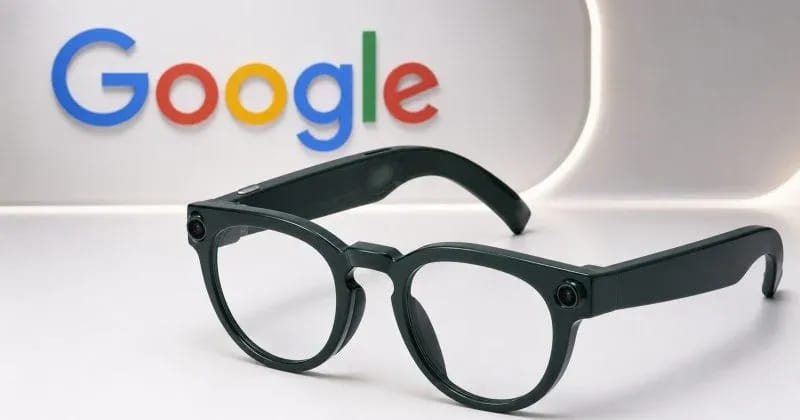
Google is moving its AI ambitions from your screen to your eyes. At the recent I/O conference, the company unveiled a new lineup of Android XR smart glasses designed to integrate the Gemini AI assistant directly into your daily life.

Two ways to see the world through AI

The announcement introduces two distinct hardware paths, catering to different levels of digital immersion. Think of it like the difference between a high-end pair of headphones and a full VR headset—one focuses on what you hear and sense, while the other changes how you see.

The first option, Model 1, is an "audio-only" device. It functions similarly to the Meta Ray-Bans, using built-in cameras, microphones, and speakers to provide a hands-free experience. You can use Gemini to snap photos, record videos, or ask questions about your surroundings without ever touching a phone. It relies on contextual awareness—the ability for the glasses to "understand" what the camera is seeing—to help you navigate or identify objects.

Model 2 is the more ambitious version, featuring a built-in display. This model uses a small, hidden lens that is visible only to the wearer. It is designed to provide a true Augmented Reality (AR) experience—layering digital information, such as real-time language translations or turn-by-turn navigation, directly onto your physical field of view. While Google has not yet published U.S. retail prices for these models, the company is targeting a release within 2026.

A collaborative ecosystem

Google isn't building these in a vacuum. To ensure these glasses actually work in a real-world home or office, they are partnering with established names like Warby Parker, Gentle Monster, and Samsung. This move suggests Google wants the hardware to look like stylish eyewear rather than bulky tech gadgets.

To support developers, Google also shared details regarding the Android XR Developer Catalyst program. This initiative provides the necessary kits for partners to build apps specifically for this new form factor. We previously explored Google's AR glasses prototype, which demonstrated how Gemini Live could identify objects like 17th-century paintings in real time.

The competitive landscape

The smart glasses market is already heating up, and Google is entering a crowded field. The pricing for these new models will likely be compared against several existing players:

  • Premium Tier: The Samsung Galaxy XR headset, which launched in October 2025, established a high-end price point at $1,799.
  • Mid-Range Tier: The XREAL One Pro currently retails between $599 and $649 in the U.S. market.
  • Entry Tier: Consumer AR glasses like the XREAL 1S are priced around $449.

Google's strategy appears to be a tiered rollout. Industry reports suggest they may prioritize the audio-focused glasses first, followed by the more advanced display versions later in the fall of 2026. As these devices move from prototype to retail, the big question isn't just whether the AI is smart enough, but whether the battery life and comfort can keep up with a full day of use.

What is this about?

  • News
  • Logan Price
  • Tech
  • Gadgets

Feed

    SpaceX IPO: A historic bet on the space economy

    SpaceX IPO: A historic bet on the space economy

    With 2025 revenue hitting $18.6 billion, the Nasdaq debut tests market appetite for Elon Musk

    Jasmine Wu20 minutes ago
    Figma AI agents turn manual design into high-level direction

    Figma AI agents turn manual design into high-level direction

    New intent-based tools allow designers to build layouts using natural language instead of clicking and dragging

    Evelyn Parkabout 5 hours ago
    NanoClaw's sandbox stops AI agents from compromising your OS

    NanoClaw's sandbox stops AI agents from compromising your OS

    NanoCo secures $12 million to scale its isolated architecture for enterprise AI deployment

    Marcus Dillardabout 5 hours ago

    Microsoft's new Surface lineup is for businesses, not consumers

    Wait for Snapdragon X2 models this summer if you aren't buying for an enterprise fleet

    Carter Brooksabout 6 hours ago

    Small space, smart laundry: Xiaomi's new dual-zone washer faces US hurdles

    The Mijia Mini Dual-Zone offers simultaneous wash and dry cycles in 0.2 m², but import risks remain high for American buyers

    Logan Priceabout 8 hours ago
    Beyond the 150-minute minimum: Why your movement volume matters

    Beyond the 150-minute minimum: Why your movement volume matters

    New data shows a 30% cardiovascular risk reduction at higher weekly activity volumes

    Sarah Lindgrenabout 10 hours ago
    The age 35 threshold: Why your physical capacity begins to drop early

    The age 35 threshold: Why your physical capacity begins to drop early

    New longitudinal data shows physiological decline starts decades sooner than expected, shifting the window for effective health intervention

    Sarah Lindgrenabout 11 hours ago
    Slow biological aging through creative arts: A new longevity protocol

    Slow biological aging through creative arts: A new longevity protocol

    New UCL data suggests monthly cultural engagement provides measurable epigenetic benefits comparable to physical activity

    Mei-Lin Chenabout 12 hours ago
    5 minutes to longevity: how micro-movements reduce mortality risk

    5 minutes to longevity: how micro-movements reduce mortality risk

    New Lancet data suggests small daily activity increments offer high-leverage healthspan returns without extreme training

    Sarah Lindgrenabout 20 hours ago
    Loading...
Tech/Gadgets

Google Android XR glasses bring Gemini AI to your field of view

20 May 2026

—

News

Logan Price

Google is moving its AI ambitions from your screen to your eyes. At the recent I/O conference, the company unveiled a new lineup of Android XR smart glasses designed to integrate the Gemini AI assistant directly into your daily life.

Two ways to see the world through AI

The announcement introduces two distinct hardware paths, catering to different levels of digital immersion. Think of it like the difference between a high-end pair of headphones and a full VR headset—one focuses on what you hear and sense, while the other changes how you see.

The first option, Model 1, is an "audio-only" device. It functions similarly to the Meta Ray-Bans, using built-in cameras, microphones, and speakers to provide a hands-free experience. You can use Gemini to snap photos, record videos, or ask questions about your surroundings without ever touching a phone. It relies on contextual awareness—the ability for the glasses to "understand" what the camera is seeing—to help you navigate or identify objects.

Model 2 is the more ambitious version, featuring a built-in display. This model uses a small, hidden lens that is visible only to the wearer. It is designed to provide a true Augmented Reality (AR) experience—layering digital information, such as real-time language translations or turn-by-turn navigation, directly onto your physical field of view. While Google has not yet published U.S. retail prices for these models, the company is targeting a release within 2026.

A collaborative ecosystem

Google isn't building these in a vacuum. To ensure these glasses actually work in a real-world home or office, they are partnering with established names like Warby Parker, Gentle Monster, and Samsung. This move suggests Google wants the hardware to look like stylish eyewear rather than bulky tech gadgets.

To support developers, Google also shared details regarding the Android XR Developer Catalyst program. This initiative provides the necessary kits for partners to build apps specifically for this new form factor. We previously explored Google's AR glasses prototype, which demonstrated how Gemini Live could identify objects like 17th-century paintings in real time.

The competitive landscape

The smart glasses market is already heating up, and Google is entering a crowded field. The pricing for these new models will likely be compared against several existing players:

  • Premium Tier: The Samsung Galaxy XR headset, which launched in October 2025, established a high-end price point at $1,799.
  • Mid-Range Tier: The XREAL One Pro currently retails between $599 and $649 in the U.S. market.
  • Entry Tier: Consumer AR glasses like the XREAL 1S are priced around $449.

Google's strategy appears to be a tiered rollout. Industry reports suggest they may prioritize the audio-focused glasses first, followed by the more advanced display versions later in the fall of 2026. As these devices move from prototype to retail, the big question isn't just whether the AI is smart enough, but whether the battery life and comfort can keep up with a full day of use.

What is this about?

  • News/
  • Logan Price/
  • Tech/
  • Gadgets

Feed

    SpaceX IPO: A historic bet on the space economy

    SpaceX IPO: A historic bet on the space economy

    With 2025 revenue hitting $18.6 billion, the Nasdaq debut tests market appetite for Elon Musk

    Jasmine Wu20 minutes ago
    Figma AI agents turn manual design into high-level direction

    Figma AI agents turn manual design into high-level direction

    New intent-based tools allow designers to build layouts using natural language instead of clicking and dragging

    Evelyn Parkabout 5 hours ago
    NanoClaw's sandbox stops AI agents from compromising your OS

    NanoClaw's sandbox stops AI agents from compromising your OS

    NanoCo secures $12 million to scale its isolated architecture for enterprise AI deployment

    Marcus Dillardabout 5 hours ago

    Microsoft's new Surface lineup is for businesses, not consumers

    Wait for Snapdragon X2 models this summer if you aren't buying for an enterprise fleet

    Carter Brooksabout 6 hours ago

    Small space, smart laundry: Xiaomi's new dual-zone washer faces US hurdles

    The Mijia Mini Dual-Zone offers simultaneous wash and dry cycles in 0.2 m², but import risks remain high for American buyers

    Logan Priceabout 8 hours ago
    Beyond the 150-minute minimum: Why your movement volume matters

    Beyond the 150-minute minimum: Why your movement volume matters

    New data shows a 30% cardiovascular risk reduction at higher weekly activity volumes

    Sarah Lindgrenabout 10 hours ago
    The age 35 threshold: Why your physical capacity begins to drop early

    The age 35 threshold: Why your physical capacity begins to drop early

    New longitudinal data shows physiological decline starts decades sooner than expected, shifting the window for effective health intervention

    Sarah Lindgrenabout 11 hours ago
    Slow biological aging through creative arts: A new longevity protocol

    Slow biological aging through creative arts: A new longevity protocol

    New UCL data suggests monthly cultural engagement provides measurable epigenetic benefits comparable to physical activity

    Mei-Lin Chenabout 12 hours ago
    5 minutes to longevity: how micro-movements reduce mortality risk

    5 minutes to longevity: how micro-movements reduce mortality risk

    New Lancet data suggests small daily activity increments offer high-leverage healthspan returns without extreme training

    Sarah Lindgrenabout 20 hours ago
    Loading...
Home
Home
Search
Search