
Logo
Decide better.Live better.
My feedToday
Logo
Decide better.Live better.
My feedToday
Logo
My feedToday

Stay Curious. Stay Wanture.

© 2026 Wanture. All rights reserved.

  • Terms of Use
  • Privacy Policy
Logo
Decide better.Live better.
My feedTodayTechScienceHealthMobilityMindProductivityHomeExperiencesLongevity
Logo
Decide better.Live better.
My feedTodayTechScienceHealthMobilityMindProductivityHomeExperiencesLongevity
Logo
My feedTodayTechScienceHealthMobilityMindProductivityHomeExperiencesLongevity
Tech/Software

Figma AI agents turn manual design into high-level direction

20 May 2026

—

News

Evelyn Park

Figma is moving from being a place where you draw interfaces to a place where you direct them. The company has launched a new AI agent that lives directly inside its collaborative canvas, allowing designers to use natural language to build and edit layouts.

The shift from manual drawing to intent-based design

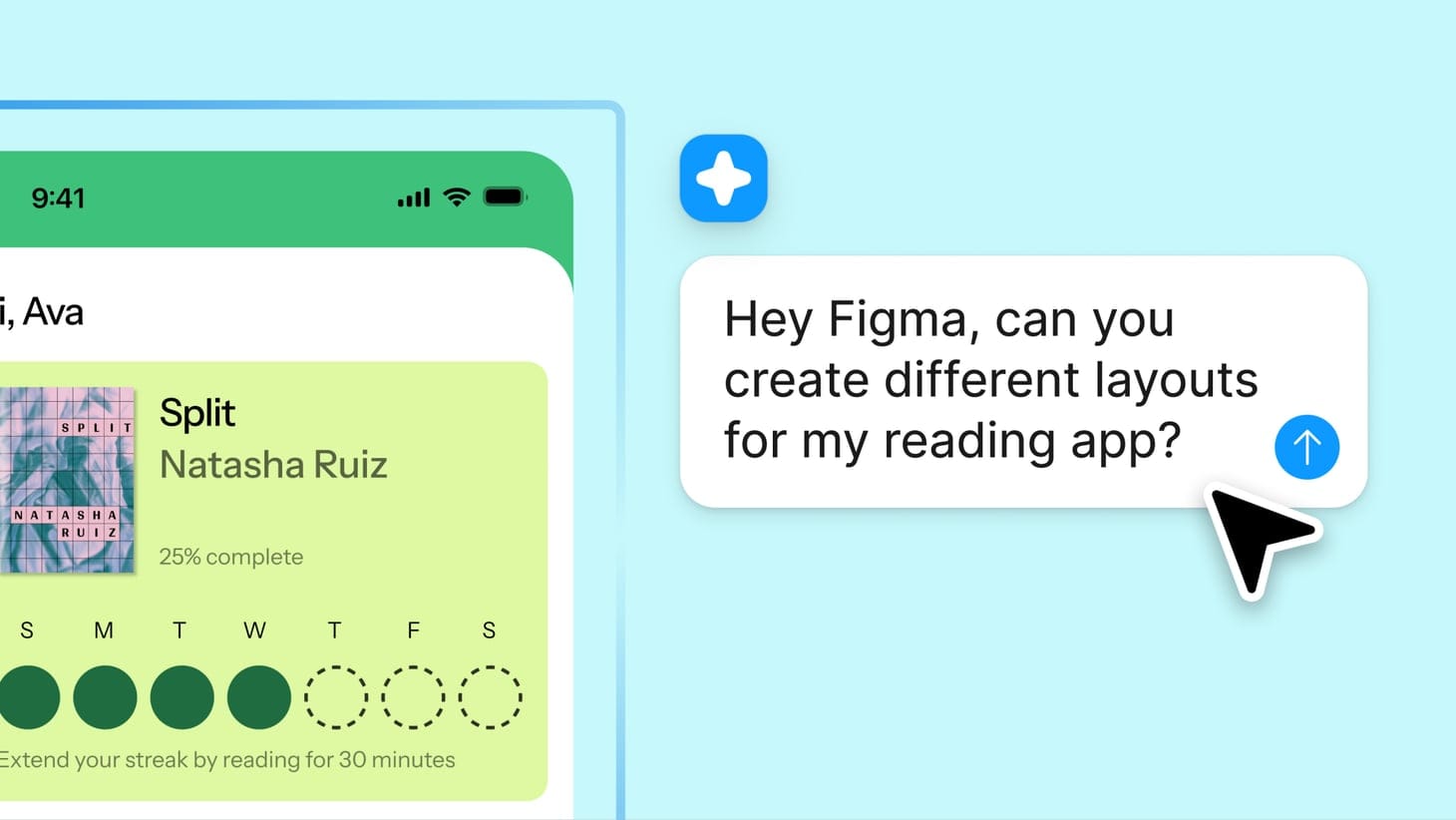
Think of this new agent as a highly skilled design assistant sitting next to you. Instead of manually clicking and dragging every frame, you can give it instructions like "generate three variations of this landing page" or "edit this header to look more modern." The agent interprets your text prompts to execute these tasks directly on the canvas.

The tool is designed to understand design context—the specific relationships between colors, spacing, and components—because it runs on models fine-tuned specifically for design workflows. This allows the agent to perform complex actions, such as iterating on existing designs or automating repetitive layout tasks, without losing the structural integrity of the file.

Users can also deploy multiple agents at once. This allows for simultaneous workflows, such as having one agent refine a color palette while another generates different versions of a mobile navigation menu. This "multiplayer" approach aims to shift the designer's role from manual execution to high-level direction.

"As building software gets easier, what matters most is setting direction: deciding what to work on, how it should function, what the experience should feel like. Teams can now collaborate with agents on the multiplayer canvas to test out ideas, visualize edge cases, and refine concepts together without over-indexing on the more tedious parts."

Loredana Crisan, Figma's chief design officer, said in a statement.

Contextualizing Figma's AI expansion

This launch marks a significant pivot in how Figma handles intelligence. While the company previously focused on integrations—partnering with OpenAI and Anthropic to support coding environments like Claude Code—it is now building its own proprietary intelligence directly into the core product.

The timing follows a period of aggressive expansion. Last year, Figma acquired Weavy, an AI-powered media generation platform, to bolster its creative capabilities. Weavy, which was rebranded as Figma Weave, provides a node-based canvas for professional image, video, and motion design. By combining Weave's generative power with the new design agent, Figma is attempting to bridge the gap between static layouts and dynamic, media-rich experiences.

This move also serves as a defensive play against a crowded market. Figma faces increasing pressure from design-adjacent tools like Canva and Adobe, as well as newer AI-native players like Krea and Dessn. By embedding agents into the workflow, Figma is betting that staying in the center of the design process is more important than being a standalone generation tool.

Financial momentum and the road ahead

Despite the intense competition, Figma's growth remains robust. In the first quarter of 2026, the company reported revenue of $333.4 million, representing a 46% increase compared to the same period last year. This surge suggests that the transition toward AI-integrated professional tools is currently meeting high market demand.

The rollout of the AI agent is beginning in Figma Design, but the company has indicated plans to expand these capabilities across its entire product suite. A long-term goal is to tighten the link between design and code, potentially allowing these agents to assist in the handoff process where design specifications are translated into functional software.

As these agents become more capable, the primary question for design teams will not be whether AI can do the work, but how much time they can reclaim for higher-order strategy and user experience research.


What is this about?

  • News
  • Evelyn Park
  • Tech
  • Software

Feed

    SpaceX IPO: A historic bet on the space economy

    SpaceX IPO: A historic bet on the space economy

    With 2025 revenue hitting $18.6 billion, the Nasdaq debut tests market appetite for Elon Musk

    Jasmine Wu18 minutes ago
    NanoClaw's sandbox stops AI agents from compromising your OS

    NanoClaw's sandbox stops AI agents from compromising your OS

    NanoCo secures $12 million to scale its isolated architecture for enterprise AI deployment

    Marcus Dillardabout 5 hours ago

    Microsoft's new Surface lineup is for businesses, not consumers

    Wait for Snapdragon X2 models this summer if you aren't buying for an enterprise fleet

    Carter Brooksabout 6 hours ago
    Google Android XR glasses bring Gemini AI to your field of view

    Google Android XR glasses bring Gemini AI to your field of view

    Two new hardware paths arriving in 2026 aim to replace your phone with hands-free AI overlays

    Logan Priceabout 7 hours ago

    Small space, smart laundry: Xiaomi's new dual-zone washer faces US hurdles

    The Mijia Mini Dual-Zone offers simultaneous wash and dry cycles in 0.2 m², but import risks remain high for American buyers

    Logan Priceabout 8 hours ago
    Beyond the 150-minute minimum: Why your movement volume matters

    Beyond the 150-minute minimum: Why your movement volume matters

    New data shows a 30% cardiovascular risk reduction at higher weekly activity volumes

    Sarah Lindgrenabout 10 hours ago
    The age 35 threshold: Why your physical capacity begins to drop early

    The age 35 threshold: Why your physical capacity begins to drop early

    New longitudinal data shows physiological decline starts decades sooner than expected, shifting the window for effective health intervention

    Sarah Lindgrenabout 11 hours ago
    Slow biological aging through creative arts: A new longevity protocol

    Slow biological aging through creative arts: A new longevity protocol

    New UCL data suggests monthly cultural engagement provides measurable epigenetic benefits comparable to physical activity

    Mei-Lin Chenabout 12 hours ago
    5 minutes to longevity: how micro-movements reduce mortality risk

    5 minutes to longevity: how micro-movements reduce mortality risk

    New Lancet data suggests small daily activity increments offer high-leverage healthspan returns without extreme training

    Sarah Lindgrenabout 20 hours ago
    Loading...
Tech/Software

Figma AI agents turn manual design into high-level direction

20 May 2026

—

News

Evelyn Park

Figma is moving from being a place where you draw interfaces to a place where you direct them. The company has launched a new AI agent that lives directly inside its collaborative canvas, allowing designers to use natural language to build and edit layouts.

The shift from manual drawing to intent-based design

Think of this new agent as a highly skilled design assistant sitting next to you. Instead of manually clicking and dragging every frame, you can give it instructions like "generate three variations of this landing page" or "edit this header to look more modern." The agent interprets your text prompts to execute these tasks directly on the canvas.

The tool is designed to understand design context—the specific relationships between colors, spacing, and components—because it runs on models fine-tuned specifically for design workflows. This allows the agent to perform complex actions, such as iterating on existing designs or automating repetitive layout tasks, without losing the structural integrity of the file.

Users can also deploy multiple agents at once. This allows for simultaneous workflows, such as having one agent refine a color palette while another generates different versions of a mobile navigation menu. This "multiplayer" approach aims to shift the designer's role from manual execution to high-level direction.

"As building software gets easier, what matters most is setting direction: deciding what to work on, how it should function, what the experience should feel like. Teams can now collaborate with agents on the multiplayer canvas to test out ideas, visualize edge cases, and refine concepts together without over-indexing on the more tedious parts."

Loredana Crisan, Figma's chief design officer, said in a statement.

Contextualizing Figma's AI expansion

This launch marks a significant pivot in how Figma handles intelligence. While the company previously focused on integrations—partnering with OpenAI and Anthropic to support coding environments like Claude Code—it is now building its own proprietary intelligence directly into the core product.

The timing follows a period of aggressive expansion. Last year, Figma acquired Weavy, an AI-powered media generation platform, to bolster its creative capabilities. Weavy, which was rebranded as Figma Weave, provides a node-based canvas for professional image, video, and motion design. By combining Weave's generative power with the new design agent, Figma is attempting to bridge the gap between static layouts and dynamic, media-rich experiences.

This move also serves as a defensive play against a crowded market. Figma faces increasing pressure from design-adjacent tools like Canva and Adobe, as well as newer AI-native players like Krea and Dessn. By embedding agents into the workflow, Figma is betting that staying in the center of the design process is more important than being a standalone generation tool.

Financial momentum and the road ahead

Despite the intense competition, Figma's growth remains robust. In the first quarter of 2026, the company reported revenue of $333.4 million, representing a 46% increase compared to the same period last year. This surge suggests that the transition toward AI-integrated professional tools is currently meeting high market demand.

The rollout of the AI agent is beginning in Figma Design, but the company has indicated plans to expand these capabilities across its entire product suite. A long-term goal is to tighten the link between design and code, potentially allowing these agents to assist in the handoff process where design specifications are translated into functional software.

As these agents become more capable, the primary question for design teams will not be whether AI can do the work, but how much time they can reclaim for higher-order strategy and user experience research.

What is this about?

  • News/
  • Evelyn Park/
  • Tech/
  • Software

Feed

    SpaceX IPO: A historic bet on the space economy

    SpaceX IPO: A historic bet on the space economy

    With 2025 revenue hitting $18.6 billion, the Nasdaq debut tests market appetite for Elon Musk

    Jasmine Wu18 minutes ago
    NanoClaw's sandbox stops AI agents from compromising your OS

    NanoClaw's sandbox stops AI agents from compromising your OS

    NanoCo secures $12 million to scale its isolated architecture for enterprise AI deployment

    Marcus Dillardabout 5 hours ago

    Microsoft's new Surface lineup is for businesses, not consumers

    Wait for Snapdragon X2 models this summer if you aren't buying for an enterprise fleet

    Carter Brooksabout 6 hours ago
    Google Android XR glasses bring Gemini AI to your field of view

    Google Android XR glasses bring Gemini AI to your field of view

    Two new hardware paths arriving in 2026 aim to replace your phone with hands-free AI overlays

    Logan Priceabout 7 hours ago

    Small space, smart laundry: Xiaomi's new dual-zone washer faces US hurdles

    The Mijia Mini Dual-Zone offers simultaneous wash and dry cycles in 0.2 m², but import risks remain high for American buyers

    Logan Priceabout 8 hours ago
    Beyond the 150-minute minimum: Why your movement volume matters

    Beyond the 150-minute minimum: Why your movement volume matters

    New data shows a 30% cardiovascular risk reduction at higher weekly activity volumes

    Sarah Lindgrenabout 10 hours ago
    The age 35 threshold: Why your physical capacity begins to drop early

    The age 35 threshold: Why your physical capacity begins to drop early

    New longitudinal data shows physiological decline starts decades sooner than expected, shifting the window for effective health intervention

    Sarah Lindgrenabout 11 hours ago
    Slow biological aging through creative arts: A new longevity protocol

    Slow biological aging through creative arts: A new longevity protocol

    New UCL data suggests monthly cultural engagement provides measurable epigenetic benefits comparable to physical activity

    Mei-Lin Chenabout 12 hours ago
    5 minutes to longevity: how micro-movements reduce mortality risk

    5 minutes to longevity: how micro-movements reduce mortality risk

    New Lancet data suggests small daily activity increments offer high-leverage healthspan returns without extreme training

    Sarah Lindgrenabout 20 hours ago
    Loading...
Home
Home
Search
Search