
Logo
Decide better.Live better.
My feedToday
Logo
Decide better.Live better.
My feedToday
Logo
My feedToday

Stay Curious. Stay Wanture.

© 2026 Wanture. All rights reserved.

  • Terms of Use
  • Privacy Policy
Logo
Decide better.Live better.
My feedTodayTechScienceHealthMobilityMindProductivityHomeExperiencesLongevity
Logo
Decide better.Live better.
My feedTodayTechScienceHealthMobilityMindProductivityHomeExperiencesLongevity
Logo
My feedTodayTechScienceHealthMobilityMindProductivityHomeExperiencesLongevity

Neuralink expands to UK as brain chip race heats up

28 October 2025

—

News

Emily Rivera

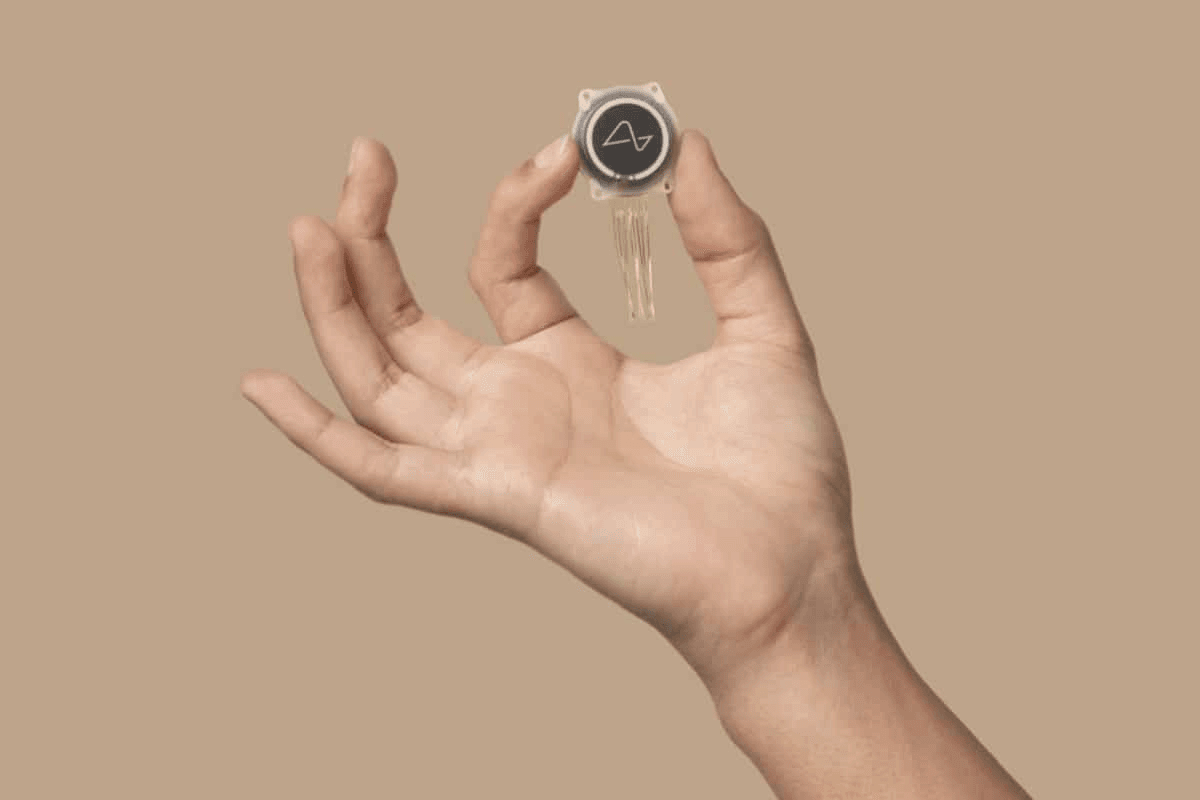
Elon Musk's Neuralink just performed its first brain chip implant in the United Kingdom—and for America, this means the race to lead the next frontier of human-computer connection just got a whole lot more competitive. The procedure marks Neuralink's expansion to a fourth country after the USA, Canada, and the UAE, building what's essentially a global testing ground while the world obsesses over AI chips.

Why it matters: Think of this like setting up baseball fields across continents to prove your technology works everywhere. For American patients with paralysis or neurological conditions, this multi-country approach means faster access to proven treatments. For U.S. researchers at institutions like Stanford and MIT, it's about establishing American leadership in safety standards before regulations lock in. And for Silicon Valley's growing cluster of brain-computer interface startups, it signals that the commercial race is heating up—fast.

The big picture: While NVIDIA dominates the AI chip headlines, a parallel race is unfolding—one that could fundamentally change how humans interact with technology. And it's taking three wildly different paths:

  • Deep brain threading: Neuralink and Paradromics insert hair-thin electrodes directly into brain tissue—high risk, high reward
  • Gentler surgical routes: Synchron and Precision Neuroscience use less invasive approaches, like threading through blood vessels
  • No surgery required: Companies like Nudge and Meta are betting on external sensors that skip the operating room entirely

Here's the kicker: no unified standard has emerged yet. That means American innovators still have a wide-open shot at defining how this technology evolves—and who benefits first.

The human element: Behind the technical specs are real people. Take the first U.S. Neuralink patient, who regained the ability to control a computer cursor with thought alone after years of paralysis. "It's like getting a piece of your independence back," he described it. That's what's driving researchers forward—not just technological bragging rights, but the chance to restore what disease or injury has taken away.

The intrigue: China isn't sitting idle. In August, Beijing published an "Implementation Plan" with 17 specific measures to accelerate brain-computer interface development by 2027 and build domestic champions by 2030. State-backed teams including NeuCyber and the Chinese Institute for Brain Research have already moved into early human trials with the Beinao device, with expanded patient testing planned through 2026.

Between the lines: American and European BCI companies are forming strategic alliances—partnering with tech giants like NVIDIA and Apple for platform development—but there's no coordinated government strategy beyond standard regulatory oversight. Meanwhile, U.S. export controls tightened in 2024–2025 have limited Chinese access to advanced neural-processing components, giving American firms a temporary technological edge.

Reality check: Some commercial brain-computer products already exist, but mass adoption faces serious hurdles. U.S. companies are laser-focused on protecting intellectual property, clinical data, and regulatory advantages—with minimal collaboration with China's state-backed programs. The path from lab breakthrough to your local hospital is long and expensive.

What's next: Neuralink's four-country footprint creates regulatory precedents that other agencies worldwide will watch closely. As clinical data accumulates across diverse populations—from American tech hubs to Middle Eastern medical centers—the race to define brain-computer interface standards is just beginning. For America, the question isn't just whether we can lead this revolution, but whether we can ensure it benefits patients first, not just shareholders.

Topic

Neuralink Expansión Global

Can We Upload Consciousness Into Machines?

12 November 2025

Neuralink's First Peer Review: Three Patients, Real Data

2 November 2025

What is this about?

  • News
  • Emily Rivera
  • Health
  • MedTech

Feed

    Apple Watch Ultra 4 could track blood pressure trends

    Apple Watch Ultra 4 could track blood pressure trends

    A potential hardware redesign with 8 sensors aims to move from simple alerts to direct cardiovascular measurement

    Ben Ramos1 day ago

    Your earbuds could become a secure digital key via your heartbeat

    AccLock uses standard accelerometers to verify identity without needing premium optical heart trackers

    Ben Ramos3 days ago
    Memory chip shortages could end by 2027

    Memory chip shortages could end by 2027

    Aggressive Chinese production expansions from YMTC and CXMT may lower hardware costs sooner than the 2030 consensus

    Ben Ramos3 days ago
    Hisense Explorer X1 Pro brings 120-inch cinema to your living room

    Hisense Explorer X1 Pro brings 120-inch cinema to your living room

    A new tri-color laser engine offers 110% BT.2020 color gamut, though US availability remains unannounced

    Logan Price3 days ago
    Onyx Boox Poke 7 series brings paper-like clarity to your library

    Onyx Boox Poke 7 series brings paper-like clarity to your library

    New 300 ppi displays and 2 TB expandable storage offer a sharper, larger reading experience

    Ben Ramos3 days ago
    SpaceX IPO: A historic bet on the space economy

    SpaceX IPO: A historic bet on the space economy

    With 2025 revenue hitting $18.6 billion, the Nasdaq debut tests market appetite for Elon Musk

    Jasmine Wu3 days ago
    Figma AI agents turn manual design into high-level direction

    Figma AI agents turn manual design into high-level direction

    New intent-based tools allow designers to build layouts using natural language instead of clicking and dragging

    Evelyn Park3 days ago
    NanoClaw's sandbox stops AI agents from compromising your OS

    NanoClaw's sandbox stops AI agents from compromising your OS

    NanoCo secures $12 million to scale its isolated architecture for enterprise AI deployment

    Marcus Dillard3 days ago

    Microsoft's new Surface lineup is for businesses, not consumers

    Wait for Snapdragon X2 models this summer if you aren't buying for an enterprise fleet

    Carter Brooks3 days ago
    Google Android XR glasses bring Gemini AI to your field of view

    Google Android XR glasses bring Gemini AI to your field of view

    Two new hardware paths arriving in 2026 aim to replace your phone with hands-free AI overlays

    Logan Price3 days ago
    Loading...

Neuralink expands to UK as brain chip race heats up

28 October 2025

—

News

Emily Rivera

Elon Musk's Neuralink just performed its first brain chip implant in the United Kingdom—and for America, this means the race to lead the next frontier of human-computer connection just got a whole lot more competitive. The procedure marks Neuralink's expansion to a fourth country after the USA, Canada, and the UAE, building what's essentially a global testing ground while the world obsesses over AI chips.

Why it matters: Think of this like setting up baseball fields across continents to prove your technology works everywhere. For American patients with paralysis or neurological conditions, this multi-country approach means faster access to proven treatments. For U.S. researchers at institutions like Stanford and MIT, it's about establishing American leadership in safety standards before regulations lock in. And for Silicon Valley's growing cluster of brain-computer interface startups, it signals that the commercial race is heating up—fast.

The big picture: While NVIDIA dominates the AI chip headlines, a parallel race is unfolding—one that could fundamentally change how humans interact with technology. And it's taking three wildly different paths:

  • Deep brain threading: Neuralink and Paradromics insert hair-thin electrodes directly into brain tissue—high risk, high reward
  • Gentler surgical routes: Synchron and Precision Neuroscience use less invasive approaches, like threading through blood vessels
  • No surgery required: Companies like Nudge and Meta are betting on external sensors that skip the operating room entirely

Here's the kicker: no unified standard has emerged yet. That means American innovators still have a wide-open shot at defining how this technology evolves—and who benefits first.

The human element: Behind the technical specs are real people. Take the first U.S. Neuralink patient, who regained the ability to control a computer cursor with thought alone after years of paralysis. "It's like getting a piece of your independence back," he described it. That's what's driving researchers forward—not just technological bragging rights, but the chance to restore what disease or injury has taken away.

The intrigue: China isn't sitting idle. In August, Beijing published an "Implementation Plan" with 17 specific measures to accelerate brain-computer interface development by 2027 and build domestic champions by 2030. State-backed teams including NeuCyber and the Chinese Institute for Brain Research have already moved into early human trials with the Beinao device, with expanded patient testing planned through 2026.

Between the lines: American and European BCI companies are forming strategic alliances—partnering with tech giants like NVIDIA and Apple for platform development—but there's no coordinated government strategy beyond standard regulatory oversight. Meanwhile, U.S. export controls tightened in 2024–2025 have limited Chinese access to advanced neural-processing components, giving American firms a temporary technological edge.

Reality check: Some commercial brain-computer products already exist, but mass adoption faces serious hurdles. U.S. companies are laser-focused on protecting intellectual property, clinical data, and regulatory advantages—with minimal collaboration with China's state-backed programs. The path from lab breakthrough to your local hospital is long and expensive.

What's next: Neuralink's four-country footprint creates regulatory precedents that other agencies worldwide will watch closely. As clinical data accumulates across diverse populations—from American tech hubs to Middle Eastern medical centers—the race to define brain-computer interface standards is just beginning. For America, the question isn't just whether we can lead this revolution, but whether we can ensure it benefits patients first, not just shareholders.

Topic

Neuralink Expansión Global

Can We Upload Consciousness Into Machines?

12 November 2025

Neuralink's First Peer Review: Three Patients, Real Data

2 November 2025

What is this about?

  • News/
  • Emily Rivera/
  • Health/
  • MedTech

Feed

    Apple Watch Ultra 4 could track blood pressure trends

    Apple Watch Ultra 4 could track blood pressure trends

    A potential hardware redesign with 8 sensors aims to move from simple alerts to direct cardiovascular measurement

    Ben Ramos1 day ago

    Your earbuds could become a secure digital key via your heartbeat

    AccLock uses standard accelerometers to verify identity without needing premium optical heart trackers

    Ben Ramos3 days ago
    Memory chip shortages could end by 2027

    Memory chip shortages could end by 2027

    Aggressive Chinese production expansions from YMTC and CXMT may lower hardware costs sooner than the 2030 consensus

    Ben Ramos3 days ago
    Hisense Explorer X1 Pro brings 120-inch cinema to your living room

    Hisense Explorer X1 Pro brings 120-inch cinema to your living room

    A new tri-color laser engine offers 110% BT.2020 color gamut, though US availability remains unannounced

    Logan Price3 days ago
    Onyx Boox Poke 7 series brings paper-like clarity to your library

    Onyx Boox Poke 7 series brings paper-like clarity to your library

    New 300 ppi displays and 2 TB expandable storage offer a sharper, larger reading experience

    Ben Ramos3 days ago
    SpaceX IPO: A historic bet on the space economy

    SpaceX IPO: A historic bet on the space economy

    With 2025 revenue hitting $18.6 billion, the Nasdaq debut tests market appetite for Elon Musk

    Jasmine Wu3 days ago
    Figma AI agents turn manual design into high-level direction

    Figma AI agents turn manual design into high-level direction

    New intent-based tools allow designers to build layouts using natural language instead of clicking and dragging

    Evelyn Park3 days ago
    NanoClaw's sandbox stops AI agents from compromising your OS

    NanoClaw's sandbox stops AI agents from compromising your OS

    NanoCo secures $12 million to scale its isolated architecture for enterprise AI deployment

    Marcus Dillard3 days ago

    Microsoft's new Surface lineup is for businesses, not consumers

    Wait for Snapdragon X2 models this summer if you aren't buying for an enterprise fleet

    Carter Brooks3 days ago
    Google Android XR glasses bring Gemini AI to your field of view

    Google Android XR glasses bring Gemini AI to your field of view

    Two new hardware paths arriving in 2026 aim to replace your phone with hands-free AI overlays

    Logan Price3 days ago
    Loading...
Home
Home
Search
Search