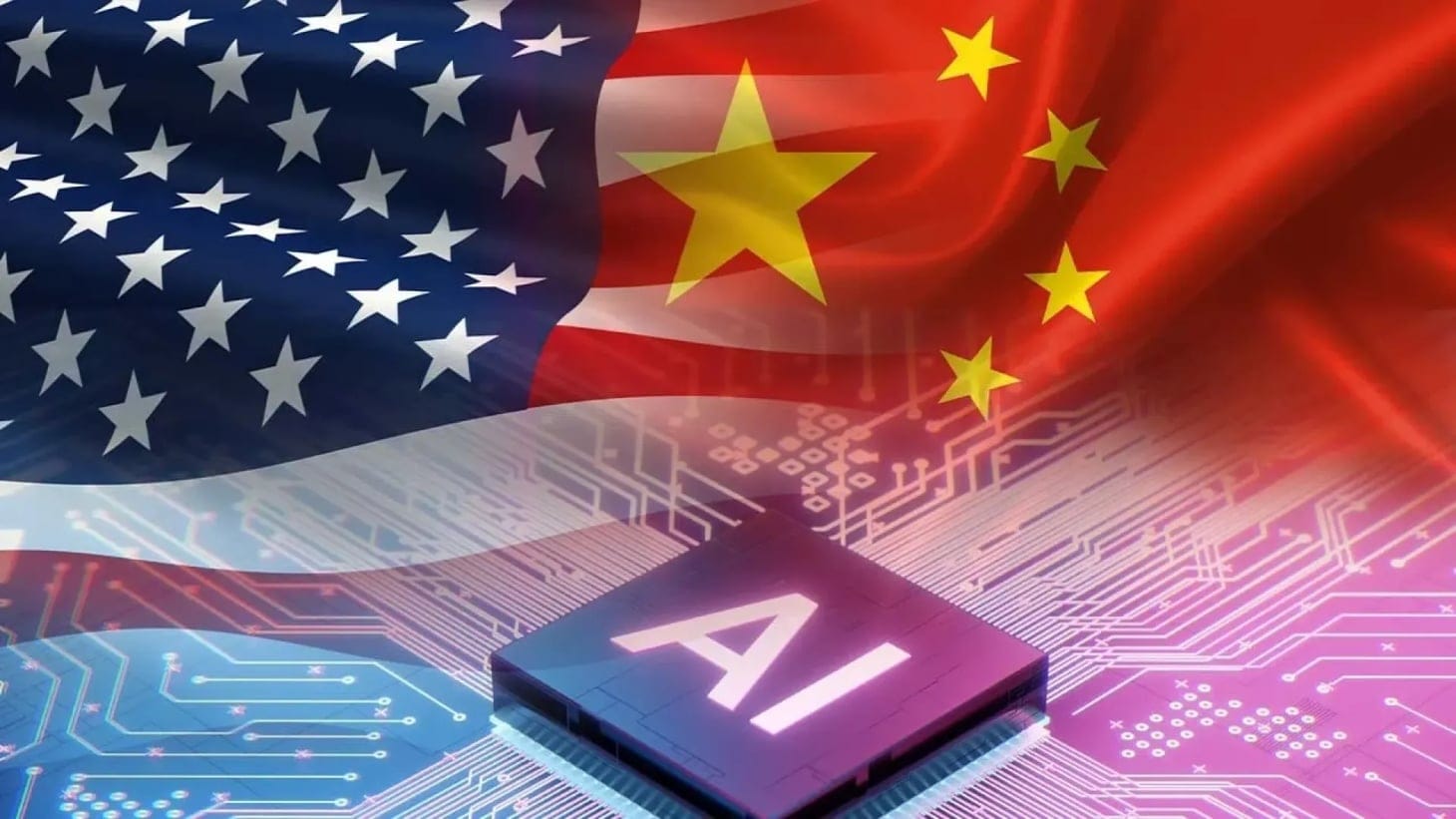

China's leading neural network now trails the United States by just 2.7% in benchmark performance, yet achieves this result while spending roughly 23 times less on AI development than American firms. The AI Index 2026, published last month by Stanford University, reveals a shift that raises a fundamental question: when efficiency beats massive spending, who really leads in AI?
The Performance Gap That Nearly Disappeared
In 2023, China's top AI models lagged behind American counterparts by more than 30%. By early 2026, that gap had narrowed to just 2.7%. The American model Claude Opus 4.6 holds the top benchmark position, with China's Dola‑Seed‑2.0 in second place: a margin so slim it challenges how we think about technological dominance.
The convergence isn't merely technical. It reveals a fundamental difference in strategy: the United States has bet on scale and capital intensity, while China has systematically optimized for getting more from every dollar spent. Both approaches work, but only one appears sustainable when resources become constrained.
The Numbers Behind the Shift
Investment Disparities
In 2025, private U.S. investment in artificial intelligence reached $285.9 billion. China's total AI expenditure for the same period was $12.4 billion. The 23-fold difference in spending would normally predict a huge gap in results. Yet the benchmark scores tell a very different story.
This gap suggests that money, while necessary, is no longer enough by itself. China's approach emphasizes coordinated industrial policy, tight integration between universities and industry, and efficiency mandates that extract maximum performance from each invested yuan. As we examined in our analysis of China's $100 billion tech strategy, this systematic resource allocation extends across semiconductors, quantum computing, and AI infrastructure.
The Patent Surge
Chinese entities filed nearly 70% of all global AI-related patents over the past twelve months. This volume reflects more than just government incentives; it signals a deliberate strategy to establish technical standards and intellectual property advantages before international frameworks are finalized.
Patents alone don't guarantee innovation quality, but they shape the playing field for future competition. When one nation controls the majority of filed claims in a foundational technology, it gains leverage in licensing negotiations, standard-setting bodies, and international collaborations.
Infrastructure: The Silent Advantage
China's electricity generation capacity exceeds that of the United States, enabling rapid expansion of data center infrastructure without the power shortage risks that constrain American facility construction. Aging U.S. power grids, designed for 20th-century industrial loads, struggle to handle the massive energy demands of large-scale AI training systems.
Chinese manufacturers also dominate the production of AI-optimized chips. While export restrictions limit access to cutting-edge manufacturing equipment, domestic production of mid-tier processors has accelerated, reducing dependence on imported hardware and shortening supply chains. This vertical integration creates resilience that purely market-driven ecosystems struggle to replicate.
Talent Migration Reversal
U.S. immigration data show an 89% decline in the influx of foreign AI specialists over the past two years. Visa processing delays, policy uncertainty, and competitive offers from institutions outside the U.S. have reversed decades of brain drain advantage. Meanwhile, China continues to attract domestic returnees and international researchers through targeted grants, laboratory access, and salaries that now rival Silicon Valley compensation when adjusted for purchasing power.
Talent is the irreplaceable ingredient in AI development. Algorithms can be copied; datasets can be synthesized; hardware can be purchased. But the human ability to identify novel approaches, debug complex failures, and sense which research directions are worth pursuing remains scarce. When talent flows reverse, capability gaps follow.
What the Data Tells Us
The narrowing performance gap is not a fluke; it's a signal. It shows us that the era of AI dominance through spending alone has ended. What comes next will be determined by how efficiently resources are deployed, how effectively institutions work together, and how intelligently nations develop the human expertise that no amount of money can instantly create.
For American innovators and policymakers, three responses emerge from the data:
First, expand funding for energy-efficient AI research. The current subsidy structure favors scale: larger models, bigger datasets, more computing power. But efficiency innovations (streamlined architectures, knowledge transfer techniques, and specialized hardware) receive comparatively little support. Redirecting even 10% of federal AI funding toward efficiency-first projects could yield outsized returns.
Second, streamline visa processes to reverse the specialist immigration decline. The 89% drop is not inevitable; it's a policy choice. Expedited processing for AI researchers, portable visa categories that survive job changes, and clear pathways to permanent residency would restore a structural advantage the United States once took for granted.
Third, foster public-private collaborations that learn from (without copying) China's coordinated approach to AI development. The United States won't adopt centralized planning, nor should it. But targeted partnerships linking national laboratories, universities, and industry could accelerate patent generation, share pre-competitive research, and establish technical standards before others do.
The Challenges Ahead
China's current efficiency advantage may not translate into long-term dominance. As we explored in our earlier examination of computing constraints, Chinese AI executives themselves acknowledge less than a 20% probability of overtaking U.S. frontier labs by 2031. Export restrictions on advanced semiconductors create substantial disadvantages (10× to 100× computing gaps in some domains) that no amount of efficiency can fully overcome.
Yet the 2026 data demonstrate that China can achieve near-equal outcomes with radically lower spending, at least within current testing frameworks. If those frameworks shift (toward applications deployed on devices, toward resource-constrained environments, toward use cases where efficiency matters more than raw capability) the competitive landscape may flip entirely.
The Question of Momentum
The AI Index 2026 forces us to confront an uncomfortable truth: the United States has optimized for capital deployment, China for efficiency, and the global balance of AI power will be determined by which approach proves more durable.
Future editions of the AI Index, along with related benchmarks and policy analyses, will clarify whether the 2.7% gap continues to shrink, stabilizes, or widens again. For now, the data suggest that American AI leadership (still real, still substantial) can no longer be assumed. It must be earned through smart choices about capital allocation, talent development, and the efficiency disciplines that China has already mastered.
The era of unchallenged advantage is over. What comes next depends on how quickly we recognize that spending more is not the same as spending wisely.