
• My Feed
  • Home
  • What's Important
  • Media & Entertainment
Search

Stay Curious. Stay Wanture.

© 2026 Wanture. All rights reserved.

  • Terms of Use
  • Privacy Policy
Tech/Trends
China's $100B Tech Bet: What It Means for Silicon Valley

Dual innovation ecosystems could fragment global tech—or accelerate breakthroughs for everyone

31 October 2025

—

Deep dive

Samuel Carver
banner

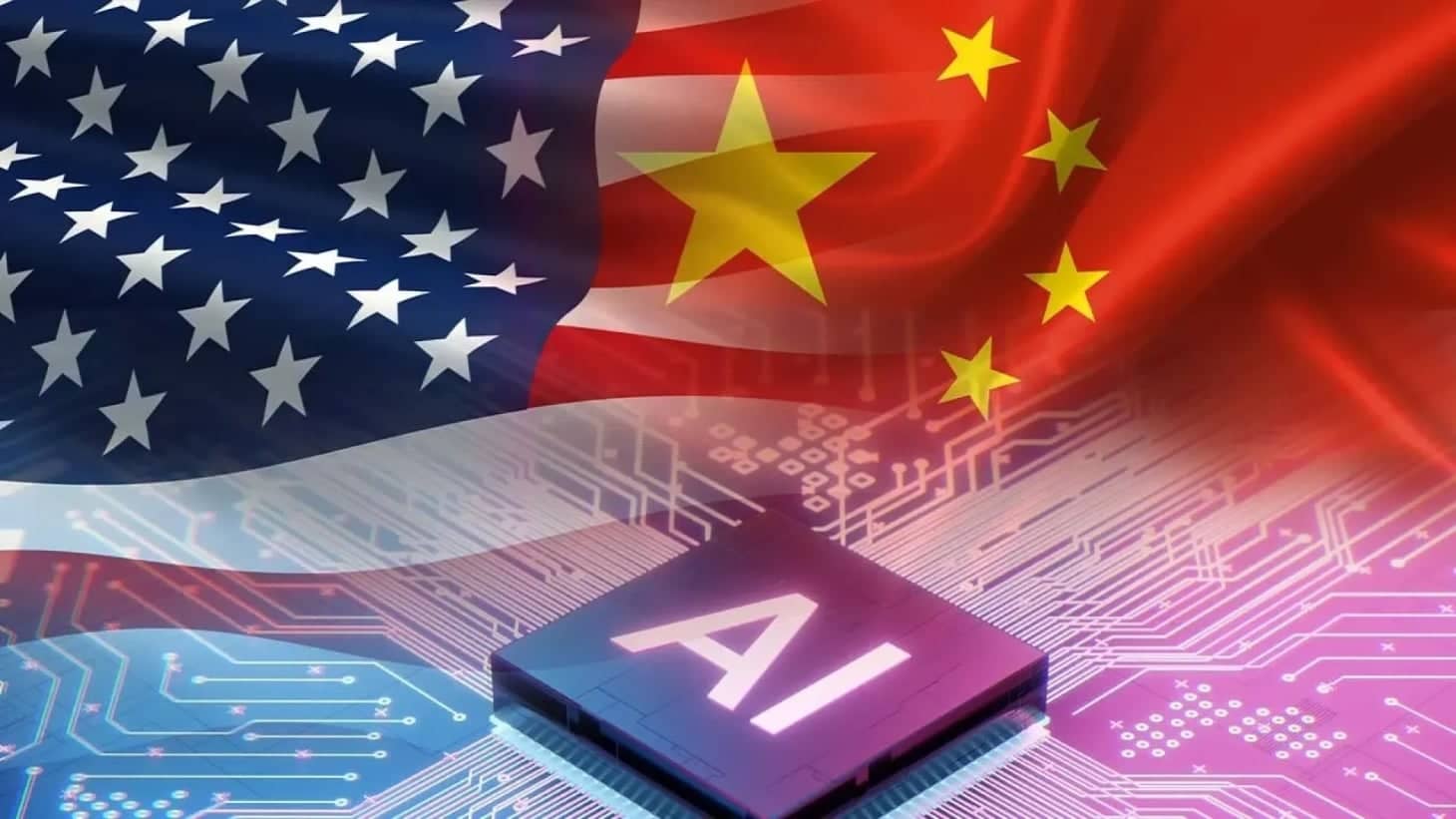
China's Five-Year Plan channels over $100 billion into semiconductors, quantum computing, and AI infrastructure, targeting 30% of the global AI market by 2030. This deep dive examines the three investment pillars, the Belt and Road 2.0 digital strategy, and what dual technological ecosystems mean for American entrepreneurs, investors, and tech leaders navigating the next decade of innovation.

Screenshot 2025-10-30 at 9

Summary:

  • China launches $100B tech investment strategy targeting 30% global AI market share by 2030
  • Massive funding targets semiconductors, quantum computing, and 'green AI' infrastructure
  • Dual technological ecosystem emerges, creating competitive pressure for US tech companies
banner

Picture this: China just laid down a blueprint that could reshape the global tech landscape—a Five-Year Plan channeling over $100 billion (≈710 billion CNY) into semiconductors, quantum computing, and AI infrastructure, with the audacious goal of capturing 30% of the worldwide AI market by 2030.

But for those of us who've watched tech booms and busts since the 1980s, this isn't just about one nation's ambitions. It's about creating what I call "dual innovation tracks"—two parallel ecosystems that could either fragment the tech world or, in the spirit of American ingenuity and healthy competition, accelerate breakthroughs for everyone.

For American entrepreneurs, investors, and tech leaders, understanding this shift isn't optional—it's essential for navigating the next decade of innovation.

The $100 Billion Question: What's Really on the Table?

China's government announced a multi-pronged investment strategy in 2024–2025, mobilizing massive capital across several specialized funds to achieve technological self-reliance. Now, before we get carried away with that headline-grabbing "$100B+" (≈710 billion CNY) figure, let's unpack what's actually happening here—because the devil, as always, is in the details.

The funding structure breaks down into several distinct vehicles, each targeting specific technological frontiers. In May 2024, China established the National Integrated Circuit Industry Investment Fund Phase III with registered capital of 344 billion yuan (≈$48 billion)—that's approximately $47–48 billion (≈330–340 billion CNY) dedicated specifically to semiconductors.

Then, in April 2025, the National Artificial Intelligence Industry Investment Fund launched with an initial scale of around 60.06 billion yuan (≈$8.4 billion). But the complexity deepens: China's state planner also announced a national venture-capital guidance fund designed to mobilize around 1 trillion yuan (≈$141 billion) from private and social capital for "hard technology" sectors, including semiconductors, renewables, and advanced manufacturing.

Think of it like this: the Chinese government isn't just writing one massive check—it's creating a cascading investment ecosystem where public funds leverage private capital, multiplying the impact far beyond the initial government outlay.

Multiple provincial governments in Shanghai, Beijing, and Hangzhou have announced their own 100-billion-yuan (≈$14 billion) scale funds for AI and semiconductors, creating a distributed funding model that spreads both risk and opportunity across regions. The funds operate over multiple years with staggered deployment schedules, meaning the money flows strategically rather than all at once.

For American tech watchers, this approach should feel familiar—it's reminiscent of how DARPA and the National Science Foundation have historically seeded transformative technologies, from the internet to GPS, through sustained, multi-year commitments.

Three Pillars: Semiconductors, Quantum Computing, and "Green AI"

China's technological self-reliance strategy concentrates investment on three critical domains where current dependencies on Western technology create vulnerabilities. Let's break down each pillar and what it means for the competitive landscape.

Semiconductors: The Foundation of Everything

The semiconductor push isn't just about making chips—it's about controlling the entire supply chain, from design tools to fabrication equipment to advanced packaging. The National Integrated Circuit Industry Investment Fund Phase III represents the third iteration of this strategy, building on lessons learned from previous phases.

For context, earlier phases helped companies like SMIC (Semiconductor Manufacturing International Corporation) expand capacity, though they still lag behind TSMC and Samsung in cutting-edge process nodes. The goal here is ambitious: achieve self-sufficiency in chips used for everything from smartphones to data centers to military applications.

For American semiconductor companies like Intel, AMD, and NVIDIA, this creates both challenges and opportunities. The challenge? A potentially formidable competitor emerging over the next decade. The opportunity? Continued demand for advanced chips that China can't yet produce domestically, plus potential partnerships in specific market segments.

Quantum Computing: The Next Frontier

Quantum computing represents the ultimate "leapfrog" technology—a field where being second doesn't cut it, and where breakthroughs could render current encryption obsolete overnight. China's investment here focuses on both hardware (building stable quantum processors) and algorithms (developing practical applications for quantum advantage).

In the spirit of the Cold War space race—which, let's remember, accelerated innovation on both sides—this quantum competition could drive faster progress than either nation would achieve alone. American companies like IBM, Google, and startups like Rigetti and IonQ are already making significant strides, but the injection of massive Chinese capital into quantum research creates a parallel innovation track that could yield unexpected breakthroughs.

"Green AI": Sustainable Computing at Scale

This is where China's strategy takes a pragmatic turn: "green AI" addresses both environmental concerns and practical infrastructure limitations. Training large language models and running massive data centers consume enormous amounts of energy—a problem that's particularly acute in developing nations with limited power infrastructure.

By focusing on energy-efficient AI architectures, optimized algorithms, and renewable-powered data centers, China aims to make AI deployment more accessible to countries that can't afford the energy costs of current Western approaches.

For American tech companies, this creates competitive pressure to improve efficiency—which, frankly, benefits everyone. Think of it as the tech equivalent of the fuel efficiency standards that pushed American automakers to innovate in the 1970s.

The 30% Target: Audacious Goal or Realistic Roadmap?

China's stated objective of capturing 30% of the global AI market by 2030 represents one of the most ambitious technological targets ever announced by any nation. But is it achievable? Let's look at the math and the market dynamics.

Currently, the global AI market is dominated by American companies—OpenAI, Google, Microsoft, Amazon, and Meta control the lion's share of both foundational models and commercial applications. China's domestic AI champions like Baidu, Alibaba, and Tencent have strong positions within China but limited international reach.

Reaching 30% global market share would require not just technological parity but actual advantages in specific domains. The strategy becomes more nuanced when you examine the focus: China isn't necessarily trying to beat GPT-4 or Claude at their own game.

Instead, the emphasis is on vertical AI applications—specialized models for manufacturing, logistics, agriculture, and infrastructure management—where China's massive domestic market provides unparalleled training data and deployment opportunities. Picture a factory floor in Shenzhen where AI systems optimize production in real time, or agricultural AI that helps farmers in rural provinces maximize yields with minimal resources.

The 30% target becomes more plausible when you consider that China is essentially creating a parallel market through Belt and Road partnerships. If dozens of developing nations adopt Chinese AI infrastructure and standards, that's a substantial chunk of the global market that might not even compete directly with Western offerings—it's a different ecosystem serving different needs at different price points.

For American tech leaders, the key question isn't whether China will hit exactly 30%—it's whether this competition will fragment the global AI market into incompatible ecosystems or drive innovation that benefits everyone. History suggests both outcomes are possible, depending on how companies and policymakers navigate the next few years.

Infrastructure Play: From 5G Affordability to 6G Standards

China's strategy extends beyond AI algorithms and chips to the fundamental infrastructure that makes advanced technology accessible—affordable 5G networks today and leadership in defining 6G standards tomorrow. This is where the rubber meets the road for developing nations and where American companies face their stiffest competition.

Here's the reality: deploying 5G infrastructure in the United States costs significantly more per capita than in China, partly due to geography, partly due to regulatory complexity, and partly due to equipment costs. Chinese companies like Huawei and ZTE offer 5G equipment at price points that make deployment feasible in countries where Western alternatives would be prohibitively expensive.

This isn't just about undercutting prices—it's about creating an integrated ecosystem where affordable infrastructure enables AI applications that wouldn't otherwise be economically viable.

The 6G standards battle is even more consequential. Whoever defines the technical standards for 6G—expected to roll out in the 2030s—will shape the global telecommunications landscape for decades. China is investing heavily in 6G research, filing patents, and working to ensure its technical approaches become international standards.

For American tech companies and policymakers, this means engaging actively in standards-setting bodies rather than ceding ground by default. Think of it like the battle over USB-C versus Lightning connectors, but with stakes a thousand times higher. The winning standard doesn't just determine which cables you buy—it shapes which companies dominate entire industries and which nations control critical infrastructure.

Belt and Road 2.0: Technology as Infrastructure

China's Belt and Road Initiative is evolving from physical infrastructure—ports, railways, power plants—to digital infrastructure, with AI, 5G networks, and data centers becoming the new roads and bridges connecting developing economies. This represents a fundamental shift in how technology diffuses globally, and it creates both opportunities and challenges for American businesses.

Consider a country like Kenya, which has embraced mobile money and digital services but lacks the infrastructure for advanced AI applications. Through Belt and Road technology partnerships, China offers a package deal: affordable 5G networks, subsidized data centers, AI platforms optimized for local languages and use cases, and financing terms that make adoption feasible.

For Kenya, this means leapfrogging directly to advanced digital services without building legacy infrastructure. For China, it means creating a network of countries using Chinese technology standards and platforms.

American companies aren't absent from these markets, but they often compete on different terms—higher-end solutions, premium pricing, emphasis on privacy and security. There's room for both approaches, but the Chinese model of integrated, affordable infrastructure creates dependencies that could shape technology choices for decades.

The constructive angle here? Competition drives innovation and keeps prices in check. When Huawei offers 5G equipment at a certain price point, it pressures Ericsson, Nokia, and American suppliers to improve efficiency and reduce costs. When Chinese AI platforms offer certain capabilities, it pushes OpenAI and Google to expand their offerings. This dynamic benefits end users—whether they're in Nairobi, New Delhi, or Nebraska.

Two Ecosystems: Fragmentation or Healthy Competition?

The emergence of parallel technological ecosystems—one centered on American platforms and standards, another on Chinese alternatives—raises a fundamental question: are we heading toward a fragmented tech world or a more competitive, innovative landscape? The answer, as with most complex questions, is "it depends."

Let's look at historical precedents. During the Cold War, the space race created parallel programs that ultimately accelerated innovation on both sides. The Soviet Union's early successes with Sputnik and Yuri Gagarin spurred American investment in NASA, leading to the moon landing and countless technological spinoffs. Competition drove progress faster than either nation would have achieved in isolation.

On the flip side, incompatible technical standards can create real costs. Remember the VHS versus Betamax battle? Or Blu-ray versus HD DVD? Fragmentation forces consumers and businesses to choose sides, limits interoperability, and can slow adoption of beneficial technologies.

The key difference with AI and telecommunications infrastructure is that the stakes are much higher—we're talking about foundational technologies that underpin entire economies, not just entertainment formats.

For American businesses, navigating two ecosystems requires strategic thinking. Companies operating globally may need to maintain compatibility with both Chinese and Western platforms, much like software developers today build for both iOS and Android. This creates additional costs but also opportunities—businesses that can bridge ecosystems become valuable intermediaries.

The constructive case for dual ecosystems rests on several factors. First, competition drives innovation—when Chinese companies push boundaries in affordable AI or energy-efficient computing, American companies must respond with their own innovations.

Second, diverse approaches increase the chances of breakthrough discoveries—different research priorities and methodologies mean more experiments running in parallel. Third, multiple options give businesses and nations more leverage—no single vendor can dictate terms when credible alternatives exist.

The risk, of course, is that geopolitical tensions turn technological competition into outright conflict, with nations forced to choose sides and interoperability deliberately sabotaged. Avoiding that outcome requires sustained diplomatic engagement, participation in international standards bodies, and recognition that technology serves humanity best when it connects rather than divides.

What This Means for American Tech Companies and Entrepreneurs

For U.S. businesses navigating this shifting landscape, China's massive investment in technological self-reliance creates both competitive pressures and strategic opportunities that demand careful analysis and proactive responses. Let's get practical about what this means for different players in the American tech ecosystem.

For Startups and Entrepreneurs

If you're building in AI, semiconductors, or related fields, the Chinese investment wave changes your competitive landscape. On one hand, you're competing with well-funded Chinese companies that have access to massive domestic markets for testing and scaling.

On the other hand, you have opportunities to differentiate through approaches that Chinese companies may not prioritize—privacy-preserving AI, transparent algorithms, solutions optimized for Western regulatory environments.

Consider focusing on vertical AI applications where domain expertise matters more than raw computing power. A startup building AI for American healthcare, for instance, benefits from deep understanding of HIPAA regulations, insurance systems, and clinical workflows—knowledge that doesn't transfer easily across borders. Similarly, AI tools for U.S. agriculture need to account for different crop varieties, soil conditions, and farming practices than Chinese equivalents.

For Established Tech Companies

Large American tech companies face more complex strategic choices. Do you compete head-to-head in markets where Chinese companies have government backing? Do you seek partnerships that allow you to operate in both ecosystems? Do you focus on markets where American technology maintains clear advantages?

The semiconductor industry offers instructive examples. Companies like Intel and AMD continue to lead in high-performance computing chips, even as Chinese manufacturers expand capacity in older process nodes. The strategy: maintain technological leadership in cutting-edge areas while accepting that commodity chip production may shift to lower-cost producers.

This mirrors how American manufacturing evolved in previous decades—moving up the value chain rather than competing on price in mature markets.

For Investors and Venture Capitalists

The dual ecosystem reality creates new investment considerations. Portfolio companies may need strategies for operating in both Chinese and Western markets, or clear reasons for focusing on one ecosystem over the other. Due diligence should include questions about supply chain dependencies, intellectual property protection across jurisdictions, and regulatory compliance in multiple markets.

There's also opportunity in companies that bridge ecosystems—businesses that facilitate interoperability, provide translation layers between incompatible standards, or help Western companies navigate Chinese markets and vice versa. Think of these as the "adapter plugs" of the tech world—not glamorous, but essential for making things work.

Concrete Next Steps: Navigating the Dual-Track Future

Understanding China's technological strategy is one thing; taking action to position your business, career, or organization for success in a dual-ecosystem world is another. Here are specific, actionable steps for different stakeholders in the American tech community.

For Individual Professionals and Technologists

  • Develop cross-ecosystem literacy: Invest time in understanding both Western and Chinese technology stacks. Learn about Chinese AI platforms like Baidu's ERNIE or Alibaba's Tongyi Qianwen alongside OpenAI and Anthropic. This knowledge makes you more valuable to employers navigating global markets. Timeline: Dedicate 2–3 hours weekly over the next six months to exploring alternative platforms.
  • Build expertise in interoperability: Focus on skills that translate across ecosystems—fundamental computer science, mathematics, system design principles. These core competencies remain valuable regardless of which platforms dominate specific markets. Timeline: Ongoing professional development, with quarterly assessments of skill relevance.
  • Engage with international standards bodies: If you work in areas like telecommunications, AI ethics, or cybersecurity, participate in organizations like IEEE, ITU, or ISO where technical standards are debated and set. American voices in these forums help ensure standards reflect diverse perspectives. Timeline: Identify relevant organizations within 30 days; attend first meeting or conference within six months.

For Startups and Small Businesses

  • Conduct a supply chain audit: Map your dependencies on Chinese components, manufacturing, or services. Identify critical single points of failure and develop contingency plans. This isn't about abandoning Chinese suppliers—it's about understanding your risk exposure and having alternatives. Timeline: Complete initial audit within 90 days; update quarterly.
  • Explore niche differentiation: Identify specific use cases, regulatory environments, or customer segments where your approach offers clear advantages over well-funded Chinese competitors. Double down on these differentiators rather than competing head-to-head in commodity markets. Timeline: Strategic planning session within 60 days; implementation of focused strategy within six months.
  • Build relationships with international partners: Develop partnerships with companies in Europe, Latin America, Africa, or Asia that can provide market intelligence and distribution channels in regions where both American and Chinese companies compete. Timeline: Identify three potential partners within 90 days; establish at least one formal partnership within one year.

For Established Companies and Enterprises

  • Develop a dual-ecosystem strategy: Create explicit plans for operating in both Western and Chinese technology environments. This might mean maintaining separate product lines, building interoperability layers, or making strategic choices about which markets to prioritize. Assign executive ownership of this strategy. Timeline: Initial strategy document within six months; full implementation roadmap within one year.
  • Invest in R&D that maintains technological leadership: Respond to Chinese investment by increasing your own R&D spending in areas where you have advantages. This might mean advanced chip design, novel AI architectures, or applications requiring deep domain expertise. Timeline: Budget allocation in next fiscal planning cycle; measurable R&D output increases within 18 months.
  • Engage proactively with policymakers: Provide input to government officials developing technology policy, trade regulations, and international standards. Your practical experience helps shape policies that balance competitiveness with openness. Timeline: Identify relevant policy forums within 90 days; establish regular engagement cadence within six months.

For Policymakers and Industry Organizations

  • Support open standards and interoperability: Advocate for technical standards that allow different ecosystems to communicate and exchange data. This reduces fragmentation costs while maintaining competitive dynamics. Timeline: Immediate advocacy; measurable progress in standards adoption within 2–3 years.
  • Invest in fundamental research and education: Respond to Chinese investment by strengthening American research institutions, STEM education, and talent pipelines. The long-term competitive advantage comes from sustained innovation capacity. Timeline: Budget proposals in next legislative cycle; program launches within 1–2 years; measurable outcomes within 5–10 years.

The emergence of dual technological ecosystems isn't a crisis—it's a challenge that, handled thoughtfully, could drive faster innovation and broader access to transformative technologies. In the spirit of American pragmatism and entrepreneurial resilience, the question isn't whether to engage with this new reality, but how to do so in ways that advance both competitive interests and broader human flourishing.

The companies, professionals, and nations that navigate this transition most successfully will be those that combine clear-eyed assessment of competitive dynamics with openness to collaboration where interests align.

Picture this as the tech equivalent of the transcontinental railroad era—a time of intense competition, massive investment, and transformative infrastructure that ultimately connected markets and accelerated progress. The rails being laid today are digital, the locomotives are AI models and 5G networks, but the fundamental dynamic remains: competition drives innovation, and the real winners are those who build systems that create value for the broadest possible range of users.

That's a race worth running, and one where American ingenuity, entrepreneurial spirit, and technological excellence still offer formidable advantages.

What is this about?

  • Deep dive/
  • Samuel Carver/
  • Tech/
  • Trends

Feed

    iPhone Express Transit Flaw Lets Thieves Steal $10,000

    iPhone Express Transit Flaw Lets Thieves Steal $10,000

    Locked iPhone Visa cards can be tapped for fraud; Apple and Visa have no fix

    Carter Brooksabout 6 hours ago
    China's Dola‑Seed‑2.0 Cuts Gap to 2.7% vs. Claude Opus 4.6

    China's Dola‑Seed‑2.0 Cuts Gap to 2.7% vs. Claude Opus 4.6

    Rachel Steinabout 7 hours ago
    Apple delays refreshed Mac Studio launch to October

    Apple delays refreshed Mac Studio launch to October

    Supply shortages push MacBook Pro to late‑2026/early‑2027, Q4 earnings at risk

    Carter Brooksabout 7 hours ago
    Apple delays M6‑Pro/M6‑Max OLED MacBook Pro to 2027

    Apple delays M6‑Pro/M6‑Max OLED MacBook Pro to 2027

    Shortages delay M6‑Pro and M6‑Max to early 2027, pushing back the new Mac

    Carter Brooksabout 7 hours ago
    Apple unveils glassy Siri on Dynamic Island with iOS 27

    Apple unveils glassy Siri on Dynamic Island with iOS 27

    WWDC 2026: Siri expands Island on iPhone 14 Pro and up, arriving with iOS 27

    Carter Brooksabout 7 hours ago
    Honor Robot Shatters Half‑Marathon Record in 50:26

    Honor Robot Shatters Half‑Marathon Record in 50:26

    Robot Beats Human Benchmark by 7 Minutes, With 40% Fully Autonomous

    Marcus Dillardabout 22 hours ago
    AI Demand Drives DRAM Shortage, 16 GB DDR4 Prices Triple

    AI Demand Drives DRAM Shortage, 16 GB DDR4 Prices Triple

    AI outpaces DRAM, 16 GB DDR4 kit costs rise to three‑times mid‑2025 levels

    Priya Desaiabout 24 hours ago
    Casely issues second E33A recall in April 2026

    Casely issues second E33A recall in April 2026

    Up to 429,000 units made between March 2022 and Sept 2024 may overheat, prompting an urgent CPSC warning

    Carter Brooks2 days ago
    Meta hikes Quest 3S 128 GB, 256 GB, and Quest 3 512 GB prices

    Meta hikes Quest 3S 128 GB, 256 GB, and Quest 3 512 GB prices

    Price rise effective April 19, 2026, cites memory‑chip cost pressures

    Carter Brooks2 days ago
    Surface Laptop 8 OLED to debut this summer

    Surface Laptop 8 OLED to debut this summer

    Top‑tier models will feature OLED; Intel units arrive in May, and Snapdragon later

    Carter Brooks2 days ago
    Pixel 11 Leaks Pixel Glow Notification LEDs

    Pixel 11 Leaks Pixel Glow Notification LEDs

    Android 17 beta code shows Pixel 11 will add back‑panel lighting for alerts

    Carter Brooks3 days ago
    Apple adds camera shortcuts to iOS 27

    Apple adds camera shortcuts to iOS 27

    iOS 27 shortcuts turn photos into nutrition logs, contacts, and ticket scans

    Carter Brooks3 days ago
    Intel AI Quiet Plus Debuts on April 15, 2026

    Intel AI Quiet Plus Debuts on April 15, 2026

    Core Ultra 200HX Plus NPU caps noise at 43 dBA, retains 92% performance

    Priya Desai3 days ago
    Redmi Buds 8 Launches with 50 dB ANC and 11 mm Driver

    Redmi Buds 8 Launches with 50 dB ANC and 11 mm Driver

    Xiaomi Rolls Out Budget Earbuds in China on April 22, with 4 kHz ANC

    Carter Brooks3 days ago
    AMD re‑releases Ryzen 7 5800X3D for Q2 2026

    AMD re‑releases Ryzen 7 5800X3D for Q2 2026

    AMD offers performance to AM4 builders, extending platform life

    Priya Desai3 days ago
    OpenAI’s Codex gets gpt‑image‑1.5 and 90+ plugins

    OpenAI’s Codex gets gpt‑image‑1.5 and 90+ plugins

    The April 15, 2026 update adds autonomous screen control and a built‑in browser

    Ben Ramos3 days ago
    Apple to debut OLED iPad Air in 2027

    Apple to debut OLED iPad Air in 2027

    Affordable OLED display aims to revamp mid-range tablets

    Carter Brooks4 days ago
    Capcom orders GrizzoUK to delete 1,004 videos

    Capcom orders GrizzoUK to delete 1,004 videos

    Cease‑and‑desist nukes his Resident Evil: Requiem and Street Fighter mods, warning creators

    Ben Ramos4 days ago
    Allbirds' Pivot Fuels 600% Stock Surge

    Allbirds' Pivot Fuels 600% Stock Surge

    Marcus Dillard4 days ago
    DaVinci Resolve Beta Adds Photo Editor

    DaVinci Resolve Beta Adds Photo Editor

    Photo Manager lets creators edit RAW images inside the video timeline

    Ben Ramos5 days ago
    Loading...
Tech/Trends

China's $100B Tech Bet: What It Means for Silicon Valley

Dual innovation ecosystems could fragment global tech—or accelerate breakthroughs for everyone

October 31, 2025, 1:21 am

China's Five-Year Plan channels over $100 billion into semiconductors, quantum computing, and AI infrastructure, targeting 30% of the global AI market by 2030. This deep dive examines the three investment pillars, the Belt and Road 2.0 digital strategy, and what dual technological ecosystems mean for American entrepreneurs, investors, and tech leaders navigating the next decade of innovation.

Screenshot 2025-10-30 at 9

Summary

  • China launches $100B tech investment strategy targeting 30% global AI market share by 2030
  • Massive funding targets semiconductors, quantum computing, and 'green AI' infrastructure
  • Dual technological ecosystem emerges, creating competitive pressure for US tech companies
banner

Picture this: China just laid down a blueprint that could reshape the global tech landscape—a Five-Year Plan channeling over $100 billion (≈710 billion CNY) into semiconductors, quantum computing, and AI infrastructure, with the audacious goal of capturing 30% of the worldwide AI market by 2030.

But for those of us who've watched tech booms and busts since the 1980s, this isn't just about one nation's ambitions. It's about creating what I call "dual innovation tracks"—two parallel ecosystems that could either fragment the tech world or, in the spirit of American ingenuity and healthy competition, accelerate breakthroughs for everyone.

For American entrepreneurs, investors, and tech leaders, understanding this shift isn't optional—it's essential for navigating the next decade of innovation.

The $100 Billion Question: What's Really on the Table?

China's government announced a multi-pronged investment strategy in 2024–2025, mobilizing massive capital across several specialized funds to achieve technological self-reliance. Now, before we get carried away with that headline-grabbing "$100B+" (≈710 billion CNY) figure, let's unpack what's actually happening here—because the devil, as always, is in the details.

The funding structure breaks down into several distinct vehicles, each targeting specific technological frontiers. In May 2024, China established the National Integrated Circuit Industry Investment Fund Phase III with registered capital of 344 billion yuan (≈$48 billion)—that's approximately $47–48 billion (≈330–340 billion CNY) dedicated specifically to semiconductors.

Then, in April 2025, the National Artificial Intelligence Industry Investment Fund launched with an initial scale of around 60.06 billion yuan (≈$8.4 billion). But the complexity deepens: China's state planner also announced a national venture-capital guidance fund designed to mobilize around 1 trillion yuan (≈$141 billion) from private and social capital for "hard technology" sectors, including semiconductors, renewables, and advanced manufacturing.

Think of it like this: the Chinese government isn't just writing one massive check—it's creating a cascading investment ecosystem where public funds leverage private capital, multiplying the impact far beyond the initial government outlay.

Multiple provincial governments in Shanghai, Beijing, and Hangzhou have announced their own 100-billion-yuan (≈$14 billion) scale funds for AI and semiconductors, creating a distributed funding model that spreads both risk and opportunity across regions. The funds operate over multiple years with staggered deployment schedules, meaning the money flows strategically rather than all at once.

For American tech watchers, this approach should feel familiar—it's reminiscent of how DARPA and the National Science Foundation have historically seeded transformative technologies, from the internet to GPS, through sustained, multi-year commitments.

Three Pillars: Semiconductors, Quantum Computing, and "Green AI"

China's technological self-reliance strategy concentrates investment on three critical domains where current dependencies on Western technology create vulnerabilities. Let's break down each pillar and what it means for the competitive landscape.

Semiconductors: The Foundation of Everything

The semiconductor push isn't just about making chips—it's about controlling the entire supply chain, from design tools to fabrication equipment to advanced packaging. The National Integrated Circuit Industry Investment Fund Phase III represents the third iteration of this strategy, building on lessons learned from previous phases.

For context, earlier phases helped companies like SMIC (Semiconductor Manufacturing International Corporation) expand capacity, though they still lag behind TSMC and Samsung in cutting-edge process nodes. The goal here is ambitious: achieve self-sufficiency in chips used for everything from smartphones to data centers to military applications.

For American semiconductor companies like Intel, AMD, and NVIDIA, this creates both challenges and opportunities. The challenge? A potentially formidable competitor emerging over the next decade. The opportunity? Continued demand for advanced chips that China can't yet produce domestically, plus potential partnerships in specific market segments.

Quantum Computing: The Next Frontier

Quantum computing represents the ultimate "leapfrog" technology—a field where being second doesn't cut it, and where breakthroughs could render current encryption obsolete overnight. China's investment here focuses on both hardware (building stable quantum processors) and algorithms (developing practical applications for quantum advantage).

In the spirit of the Cold War space race—which, let's remember, accelerated innovation on both sides—this quantum competition could drive faster progress than either nation would achieve alone. American companies like IBM, Google, and startups like Rigetti and IonQ are already making significant strides, but the injection of massive Chinese capital into quantum research creates a parallel innovation track that could yield unexpected breakthroughs.

"Green AI": Sustainable Computing at Scale

This is where China's strategy takes a pragmatic turn: "green AI" addresses both environmental concerns and practical infrastructure limitations. Training large language models and running massive data centers consume enormous amounts of energy—a problem that's particularly acute in developing nations with limited power infrastructure.

By focusing on energy-efficient AI architectures, optimized algorithms, and renewable-powered data centers, China aims to make AI deployment more accessible to countries that can't afford the energy costs of current Western approaches.

For American tech companies, this creates competitive pressure to improve efficiency—which, frankly, benefits everyone. Think of it as the tech equivalent of the fuel efficiency standards that pushed American automakers to innovate in the 1970s.

The 30% Target: Audacious Goal or Realistic Roadmap?

China's stated objective of capturing 30% of the global AI market by 2030 represents one of the most ambitious technological targets ever announced by any nation. But is it achievable? Let's look at the math and the market dynamics.

Currently, the global AI market is dominated by American companies—OpenAI, Google, Microsoft, Amazon, and Meta control the lion's share of both foundational models and commercial applications. China's domestic AI champions like Baidu, Alibaba, and Tencent have strong positions within China but limited international reach.

Reaching 30% global market share would require not just technological parity but actual advantages in specific domains. The strategy becomes more nuanced when you examine the focus: China isn't necessarily trying to beat GPT-4 or Claude at their own game.

Instead, the emphasis is on vertical AI applications—specialized models for manufacturing, logistics, agriculture, and infrastructure management—where China's massive domestic market provides unparalleled training data and deployment opportunities. Picture a factory floor in Shenzhen where AI systems optimize production in real time, or agricultural AI that helps farmers in rural provinces maximize yields with minimal resources.

The 30% target becomes more plausible when you consider that China is essentially creating a parallel market through Belt and Road partnerships. If dozens of developing nations adopt Chinese AI infrastructure and standards, that's a substantial chunk of the global market that might not even compete directly with Western offerings—it's a different ecosystem serving different needs at different price points.

For American tech leaders, the key question isn't whether China will hit exactly 30%—it's whether this competition will fragment the global AI market into incompatible ecosystems or drive innovation that benefits everyone. History suggests both outcomes are possible, depending on how companies and policymakers navigate the next few years.

Infrastructure Play: From 5G Affordability to 6G Standards

China's strategy extends beyond AI algorithms and chips to the fundamental infrastructure that makes advanced technology accessible—affordable 5G networks today and leadership in defining 6G standards tomorrow. This is where the rubber meets the road for developing nations and where American companies face their stiffest competition.

Here's the reality: deploying 5G infrastructure in the United States costs significantly more per capita than in China, partly due to geography, partly due to regulatory complexity, and partly due to equipment costs. Chinese companies like Huawei and ZTE offer 5G equipment at price points that make deployment feasible in countries where Western alternatives would be prohibitively expensive.

This isn't just about undercutting prices—it's about creating an integrated ecosystem where affordable infrastructure enables AI applications that wouldn't otherwise be economically viable.

The 6G standards battle is even more consequential. Whoever defines the technical standards for 6G—expected to roll out in the 2030s—will shape the global telecommunications landscape for decades. China is investing heavily in 6G research, filing patents, and working to ensure its technical approaches become international standards.

For American tech companies and policymakers, this means engaging actively in standards-setting bodies rather than ceding ground by default. Think of it like the battle over USB-C versus Lightning connectors, but with stakes a thousand times higher. The winning standard doesn't just determine which cables you buy—it shapes which companies dominate entire industries and which nations control critical infrastructure.

Belt and Road 2.0: Technology as Infrastructure

China's Belt and Road Initiative is evolving from physical infrastructure—ports, railways, power plants—to digital infrastructure, with AI, 5G networks, and data centers becoming the new roads and bridges connecting developing economies. This represents a fundamental shift in how technology diffuses globally, and it creates both opportunities and challenges for American businesses.

Consider a country like Kenya, which has embraced mobile money and digital services but lacks the infrastructure for advanced AI applications. Through Belt and Road technology partnerships, China offers a package deal: affordable 5G networks, subsidized data centers, AI platforms optimized for local languages and use cases, and financing terms that make adoption feasible.

For Kenya, this means leapfrogging directly to advanced digital services without building legacy infrastructure. For China, it means creating a network of countries using Chinese technology standards and platforms.

American companies aren't absent from these markets, but they often compete on different terms—higher-end solutions, premium pricing, emphasis on privacy and security. There's room for both approaches, but the Chinese model of integrated, affordable infrastructure creates dependencies that could shape technology choices for decades.

The constructive angle here? Competition drives innovation and keeps prices in check. When Huawei offers 5G equipment at a certain price point, it pressures Ericsson, Nokia, and American suppliers to improve efficiency and reduce costs. When Chinese AI platforms offer certain capabilities, it pushes OpenAI and Google to expand their offerings. This dynamic benefits end users—whether they're in Nairobi, New Delhi, or Nebraska.

Two Ecosystems: Fragmentation or Healthy Competition?

The emergence of parallel technological ecosystems—one centered on American platforms and standards, another on Chinese alternatives—raises a fundamental question: are we heading toward a fragmented tech world or a more competitive, innovative landscape? The answer, as with most complex questions, is "it depends."

Let's look at historical precedents. During the Cold War, the space race created parallel programs that ultimately accelerated innovation on both sides. The Soviet Union's early successes with Sputnik and Yuri Gagarin spurred American investment in NASA, leading to the moon landing and countless technological spinoffs. Competition drove progress faster than either nation would have achieved in isolation.

On the flip side, incompatible technical standards can create real costs. Remember the VHS versus Betamax battle? Or Blu-ray versus HD DVD? Fragmentation forces consumers and businesses to choose sides, limits interoperability, and can slow adoption of beneficial technologies.

The key difference with AI and telecommunications infrastructure is that the stakes are much higher—we're talking about foundational technologies that underpin entire economies, not just entertainment formats.

For American businesses, navigating two ecosystems requires strategic thinking. Companies operating globally may need to maintain compatibility with both Chinese and Western platforms, much like software developers today build for both iOS and Android. This creates additional costs but also opportunities—businesses that can bridge ecosystems become valuable intermediaries.

The constructive case for dual ecosystems rests on several factors. First, competition drives innovation—when Chinese companies push boundaries in affordable AI or energy-efficient computing, American companies must respond with their own innovations.

Second, diverse approaches increase the chances of breakthrough discoveries—different research priorities and methodologies mean more experiments running in parallel. Third, multiple options give businesses and nations more leverage—no single vendor can dictate terms when credible alternatives exist.

The risk, of course, is that geopolitical tensions turn technological competition into outright conflict, with nations forced to choose sides and interoperability deliberately sabotaged. Avoiding that outcome requires sustained diplomatic engagement, participation in international standards bodies, and recognition that technology serves humanity best when it connects rather than divides.

What This Means for American Tech Companies and Entrepreneurs

For U.S. businesses navigating this shifting landscape, China's massive investment in technological self-reliance creates both competitive pressures and strategic opportunities that demand careful analysis and proactive responses. Let's get practical about what this means for different players in the American tech ecosystem.

For Startups and Entrepreneurs

If you're building in AI, semiconductors, or related fields, the Chinese investment wave changes your competitive landscape. On one hand, you're competing with well-funded Chinese companies that have access to massive domestic markets for testing and scaling.

On the other hand, you have opportunities to differentiate through approaches that Chinese companies may not prioritize—privacy-preserving AI, transparent algorithms, solutions optimized for Western regulatory environments.

Consider focusing on vertical AI applications where domain expertise matters more than raw computing power. A startup building AI for American healthcare, for instance, benefits from deep understanding of HIPAA regulations, insurance systems, and clinical workflows—knowledge that doesn't transfer easily across borders. Similarly, AI tools for U.S. agriculture need to account for different crop varieties, soil conditions, and farming practices than Chinese equivalents.

For Established Tech Companies

Large American tech companies face more complex strategic choices. Do you compete head-to-head in markets where Chinese companies have government backing? Do you seek partnerships that allow you to operate in both ecosystems? Do you focus on markets where American technology maintains clear advantages?

The semiconductor industry offers instructive examples. Companies like Intel and AMD continue to lead in high-performance computing chips, even as Chinese manufacturers expand capacity in older process nodes. The strategy: maintain technological leadership in cutting-edge areas while accepting that commodity chip production may shift to lower-cost producers.

This mirrors how American manufacturing evolved in previous decades—moving up the value chain rather than competing on price in mature markets.

For Investors and Venture Capitalists

The dual ecosystem reality creates new investment considerations. Portfolio companies may need strategies for operating in both Chinese and Western markets, or clear reasons for focusing on one ecosystem over the other. Due diligence should include questions about supply chain dependencies, intellectual property protection across jurisdictions, and regulatory compliance in multiple markets.

There's also opportunity in companies that bridge ecosystems—businesses that facilitate interoperability, provide translation layers between incompatible standards, or help Western companies navigate Chinese markets and vice versa. Think of these as the "adapter plugs" of the tech world—not glamorous, but essential for making things work.

Concrete Next Steps: Navigating the Dual-Track Future

Understanding China's technological strategy is one thing; taking action to position your business, career, or organization for success in a dual-ecosystem world is another. Here are specific, actionable steps for different stakeholders in the American tech community.

For Individual Professionals and Technologists

  • Develop cross-ecosystem literacy: Invest time in understanding both Western and Chinese technology stacks. Learn about Chinese AI platforms like Baidu's ERNIE or Alibaba's Tongyi Qianwen alongside OpenAI and Anthropic. This knowledge makes you more valuable to employers navigating global markets. Timeline: Dedicate 2–3 hours weekly over the next six months to exploring alternative platforms.
  • Build expertise in interoperability: Focus on skills that translate across ecosystems—fundamental computer science, mathematics, system design principles. These core competencies remain valuable regardless of which platforms dominate specific markets. Timeline: Ongoing professional development, with quarterly assessments of skill relevance.
  • Engage with international standards bodies: If you work in areas like telecommunications, AI ethics, or cybersecurity, participate in organizations like IEEE, ITU, or ISO where technical standards are debated and set. American voices in these forums help ensure standards reflect diverse perspectives. Timeline: Identify relevant organizations within 30 days; attend first meeting or conference within six months.

For Startups and Small Businesses

  • Conduct a supply chain audit: Map your dependencies on Chinese components, manufacturing, or services. Identify critical single points of failure and develop contingency plans. This isn't about abandoning Chinese suppliers—it's about understanding your risk exposure and having alternatives. Timeline: Complete initial audit within 90 days; update quarterly.
  • Explore niche differentiation: Identify specific use cases, regulatory environments, or customer segments where your approach offers clear advantages over well-funded Chinese competitors. Double down on these differentiators rather than competing head-to-head in commodity markets. Timeline: Strategic planning session within 60 days; implementation of focused strategy within six months.
  • Build relationships with international partners: Develop partnerships with companies in Europe, Latin America, Africa, or Asia that can provide market intelligence and distribution channels in regions where both American and Chinese companies compete. Timeline: Identify three potential partners within 90 days; establish at least one formal partnership within one year.

For Established Companies and Enterprises

  • Develop a dual-ecosystem strategy: Create explicit plans for operating in both Western and Chinese technology environments. This might mean maintaining separate product lines, building interoperability layers, or making strategic choices about which markets to prioritize. Assign executive ownership of this strategy. Timeline: Initial strategy document within six months; full implementation roadmap within one year.
  • Invest in R&D that maintains technological leadership: Respond to Chinese investment by increasing your own R&D spending in areas where you have advantages. This might mean advanced chip design, novel AI architectures, or applications requiring deep domain expertise. Timeline: Budget allocation in next fiscal planning cycle; measurable R&D output increases within 18 months.
  • Engage proactively with policymakers: Provide input to government officials developing technology policy, trade regulations, and international standards. Your practical experience helps shape policies that balance competitiveness with openness. Timeline: Identify relevant policy forums within 90 days; establish regular engagement cadence within six months.

For Policymakers and Industry Organizations

  • Support open standards and interoperability: Advocate for technical standards that allow different ecosystems to communicate and exchange data. This reduces fragmentation costs while maintaining competitive dynamics. Timeline: Immediate advocacy; measurable progress in standards adoption within 2–3 years.
  • Invest in fundamental research and education: Respond to Chinese investment by strengthening American research institutions, STEM education, and talent pipelines. The long-term competitive advantage comes from sustained innovation capacity. Timeline: Budget proposals in next legislative cycle; program launches within 1–2 years; measurable outcomes within 5–10 years.

The emergence of dual technological ecosystems isn't a crisis—it's a challenge that, handled thoughtfully, could drive faster innovation and broader access to transformative technologies. In the spirit of American pragmatism and entrepreneurial resilience, the question isn't whether to engage with this new reality, but how to do so in ways that advance both competitive interests and broader human flourishing.

The companies, professionals, and nations that navigate this transition most successfully will be those that combine clear-eyed assessment of competitive dynamics with openness to collaboration where interests align.

Picture this as the tech equivalent of the transcontinental railroad era—a time of intense competition, massive investment, and transformative infrastructure that ultimately connected markets and accelerated progress. The rails being laid today are digital, the locomotives are AI models and 5G networks, but the fundamental dynamic remains: competition drives innovation, and the real winners are those who build systems that create value for the broadest possible range of users.

That's a race worth running, and one where American ingenuity, entrepreneurial spirit, and technological excellence still offer formidable advantages.
What is this about?

  • Deep dive/
  • Samuel Carver/
  • Tech/
  • Trends

Feed

    iPhone Express Transit Flaw Lets Thieves Steal $10,000

    iPhone Express Transit Flaw Lets Thieves Steal $10,000

    Locked iPhone Visa cards can be tapped for fraud; Apple and Visa have no fix

    Carter Brooksabout 6 hours ago
    China's Dola‑Seed‑2.0 Cuts Gap to 2.7% vs. Claude Opus 4.6

    China's Dola‑Seed‑2.0 Cuts Gap to 2.7% vs. Claude Opus 4.6

    Rachel Steinabout 7 hours ago
    Apple delays refreshed Mac Studio launch to October

    Apple delays refreshed Mac Studio launch to October

    Supply shortages push MacBook Pro to late‑2026/early‑2027, Q4 earnings at risk

    Carter Brooksabout 7 hours ago
    Apple delays M6‑Pro/M6‑Max OLED MacBook Pro to 2027

    Apple delays M6‑Pro/M6‑Max OLED MacBook Pro to 2027

    Shortages delay M6‑Pro and M6‑Max to early 2027, pushing back the new Mac

    Carter Brooksabout 7 hours ago
    Apple unveils glassy Siri on Dynamic Island with iOS 27

    Apple unveils glassy Siri on Dynamic Island with iOS 27

    WWDC 2026: Siri expands Island on iPhone 14 Pro and up, arriving with iOS 27

    Carter Brooksabout 7 hours ago
    Honor Robot Shatters Half‑Marathon Record in 50:26

    Honor Robot Shatters Half‑Marathon Record in 50:26

    Robot Beats Human Benchmark by 7 Minutes, With 40% Fully Autonomous

    Marcus Dillardabout 22 hours ago
    AI Demand Drives DRAM Shortage, 16 GB DDR4 Prices Triple

    AI Demand Drives DRAM Shortage, 16 GB DDR4 Prices Triple

    AI outpaces DRAM, 16 GB DDR4 kit costs rise to three‑times mid‑2025 levels

    Priya Desaiabout 24 hours ago
    Casely issues second E33A recall in April 2026

    Casely issues second E33A recall in April 2026

    Up to 429,000 units made between March 2022 and Sept 2024 may overheat, prompting an urgent CPSC warning

    Carter Brooks2 days ago
    Meta hikes Quest 3S 128 GB, 256 GB, and Quest 3 512 GB prices

    Meta hikes Quest 3S 128 GB, 256 GB, and Quest 3 512 GB prices

    Price rise effective April 19, 2026, cites memory‑chip cost pressures

    Carter Brooks2 days ago
    Surface Laptop 8 OLED to debut this summer

    Surface Laptop 8 OLED to debut this summer

    Top‑tier models will feature OLED; Intel units arrive in May, and Snapdragon later

    Carter Brooks2 days ago
    Pixel 11 Leaks Pixel Glow Notification LEDs

    Pixel 11 Leaks Pixel Glow Notification LEDs

    Android 17 beta code shows Pixel 11 will add back‑panel lighting for alerts

    Carter Brooks3 days ago
    Apple adds camera shortcuts to iOS 27

    Apple adds camera shortcuts to iOS 27

    iOS 27 shortcuts turn photos into nutrition logs, contacts, and ticket scans

    Carter Brooks3 days ago
    Intel AI Quiet Plus Debuts on April 15, 2026

    Intel AI Quiet Plus Debuts on April 15, 2026

    Core Ultra 200HX Plus NPU caps noise at 43 dBA, retains 92% performance

    Priya Desai3 days ago
    Redmi Buds 8 Launches with 50 dB ANC and 11 mm Driver

    Redmi Buds 8 Launches with 50 dB ANC and 11 mm Driver

    Xiaomi Rolls Out Budget Earbuds in China on April 22, with 4 kHz ANC

    Carter Brooks3 days ago
    AMD re‑releases Ryzen 7 5800X3D for Q2 2026

    AMD re‑releases Ryzen 7 5800X3D for Q2 2026

    AMD offers performance to AM4 builders, extending platform life

    Priya Desai3 days ago
    OpenAI’s Codex gets gpt‑image‑1.5 and 90+ plugins

    OpenAI’s Codex gets gpt‑image‑1.5 and 90+ plugins

    The April 15, 2026 update adds autonomous screen control and a built‑in browser

    Ben Ramos3 days ago
    Apple to debut OLED iPad Air in 2027

    Apple to debut OLED iPad Air in 2027

    Affordable OLED display aims to revamp mid-range tablets

    Carter Brooks4 days ago
    Capcom orders GrizzoUK to delete 1,004 videos

    Capcom orders GrizzoUK to delete 1,004 videos

    Cease‑and‑desist nukes his Resident Evil: Requiem and Street Fighter mods, warning creators

    Ben Ramos4 days ago
    Allbirds' Pivot Fuels 600% Stock Surge

    Allbirds' Pivot Fuels 600% Stock Surge

    Marcus Dillard4 days ago
    DaVinci Resolve Beta Adds Photo Editor

    DaVinci Resolve Beta Adds Photo Editor

    Photo Manager lets creators edit RAW images inside the video timeline

    Ben Ramos5 days ago
    Loading...
banner