
• My Feed
  • Home
  • What's Important
  • Media & Entertainment
Search

Stay Curious. Stay Wanture.

© 2026 Wanture. All rights reserved.

  • Terms of Use
  • Privacy Policy
Tech/Gadgets
MacBook Neo Base Review: Silent, Light, and Upgrade‑Limited

Campus test of the MacBook Neo shows all‑day battery life and silence, but limited RAM and a USB‑2 port

10 March 2026

—

Review

Omar Haddad
banner

Spending a week in lectures, research browsing, and video editing, the base‑model MacBook Neo reveals its strengths and exposes its limits.

sdXY0UOhquSD-2

Summary:

  • The Neo’s 36.5 Wh battery lasts ~12 h of web browsing, stays silent, and its modular design lets users replace it in 15 min for $60.
  • Weighing 2.7 lb, the fan‑less MacBook feels lighter than textbooks and offers quiet lap use, ideal for students who value portability.
  • Fixed 8 GB RAM, soldered 256 GB SSD and a USB‑2‑speed right port cause performance bottlenecks and require an extra hub.

Apple launched the base‑model MacBook Neo with an 8 GB RAM ceiling and a 36.5 Wh battery pack. During a week of library sessions, lecture halls, and dorm‑room deadlines, students discovered which trade‑offs benefit them and which push workflows into slowdowns. The $500 price point requires Apple's education discount; standard pricing starts higher.

Quick Take: The Neo delivers silent, lightweight performance and a replaceable battery for students who need up to a full day of web browsing and video. The non‑upgradable 8 GB RAM limits performance when multitasking with several apps. Best for budget‑focused learners who prioritize portability and battery life over heavy‑duty workloads. Available at $500 through Apple's education store.

iPhone‑Sized Logic Board Clears Space for All‑Day Battery

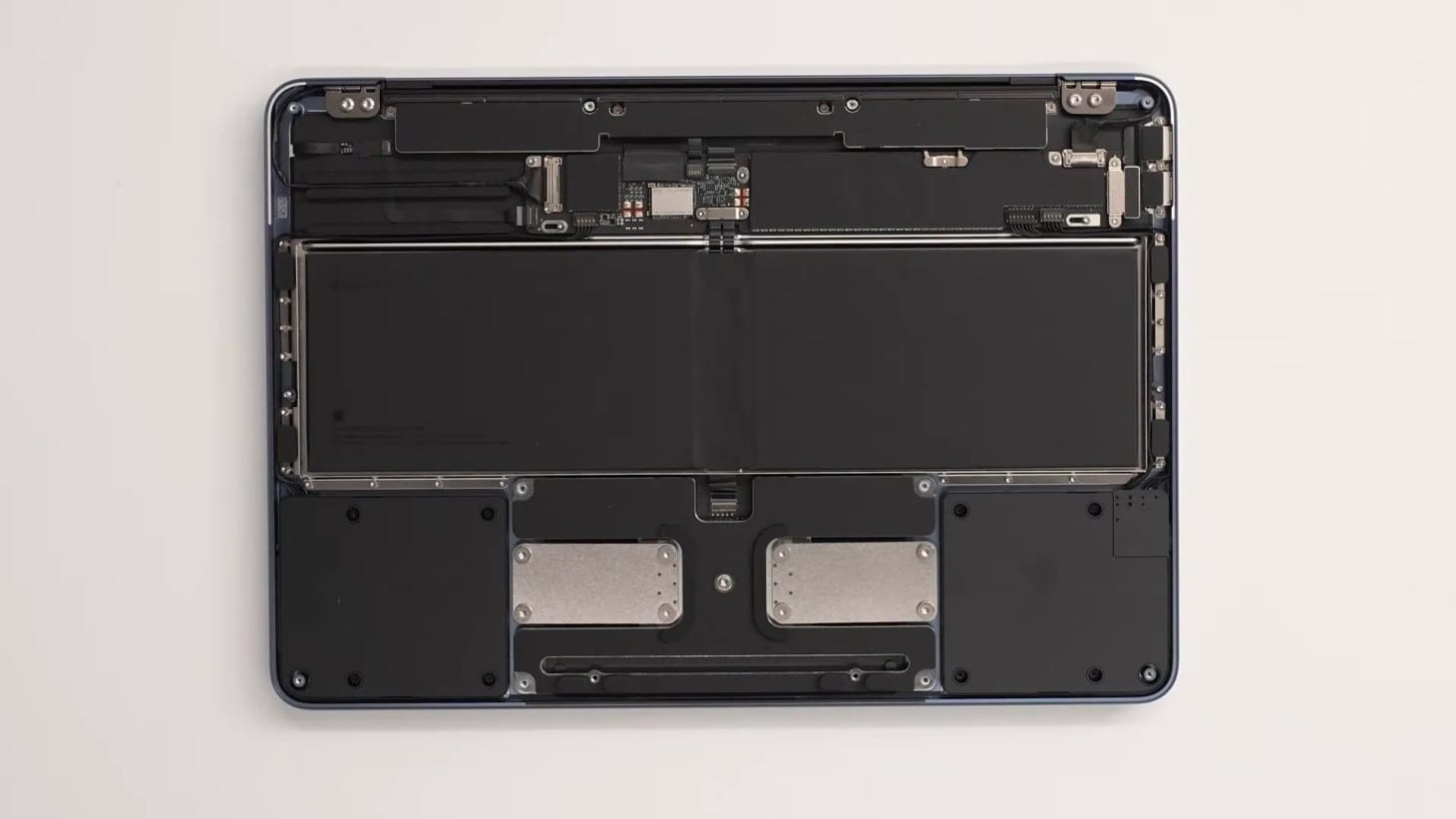
On the third morning of midterms, the Neo still showed 22 percent battery after six hours of Google Docs, Zoom office hours, and ten Safari tabs. Tech reviewer Dave2D's teardown revealed that Apple shrank the logic board to roughly the size of an iPhone 16 mainboard, freeing 70 percent of the chassis for a 36.5 Wh cell. Apple rates the pack for up to 15 hours of video playback. Independent testing recorded 12 hours 22 minutes of continuous web browsing on Wi‑Fi at 150 nits, enough for a full class day before a recharge.

Students carry the Neo across campus and notice it feels lighter than three hardcover textbooks. Weighing 2.7 pounds, the aluminum shell slides into a backpack side pocket and rests comfortably on a lap during a two‑hour seminar. The device produces no fan noise, so the professor's voice remains clear. Passive cooling eliminates the hum that disrupts quiet study rooms.

Fifteen Minutes to a Fresh Battery, No Glue Required

In the late afternoon at the repair table, four Phillips #00 screws release the battery without prying or heat guns. Large screws secure the battery, two USB‑C ports, and the floating trackpad. A simple Phillips #00 screwdriver removes them—no adhesive strips needed. iFixit sells a replacement battery for about $60, and users can install it in fifteen minutes.

The trackpad drops Force Touch haptics in favor of a spring‑loaded mechanical click. Users press anywhere on the surface and feel a uniform click as the metal plate depresses, eliminating pressure‑sensitive gestures used in Photoshop brush control. The tactile feedback stays consistent from edge to edge, making it reliable for highlighting text and dragging files.

When 8 GB Becomes a Ceiling You Can't Raise

Two hours into a group project, Slack, Spotify, and twelve Chrome tabs push memory pressure into the yellow zone, and Pages hesitates before saving. macOS Sequoia 15 consumes roughly 4.5 GB RAM at idle. Opening Slack, Spotify, and ten Chrome tabs pushes memory pressure into the yellow zone, causing the system to swap to the SSD. Running Figma or Premiere Pro triggers noticeable lag within minutes. Because the 8 GB LPDDR5 modules are soldered to the A18 Pro package, users cannot add more memory.

Apple also solders the 256 GB NVMe SSD, limiting storage expansion. Heavy photo or video libraries quickly fill the drive, pushing users toward iCloud+ subscriptions at $2.99 per month for 200 GB or $9.99 per month for 2 TB. As software demands grow over the next two years, the fixed RAM and storage become permanent bottlenecks.

Left Port Fast, Right Port Slow

When users plug an external SSD into the right port for a backup, the progress bar crawls. Switching to the left port makes the same file fly across in seconds. The left USB‑C port supports USB 3.2 Gen 2 with speeds up to 10 Gbps. The right port limits users to USB 2.0 at 480 Mbps. Transferring a 1 GB video file takes about 30 seconds on the left port but roughly three minutes on the right. Users who need simultaneous charging and high‑speed peripheral connections must carry a powered USB‑C hub.

Because the Neo lacks a dedicated MagSafe charger, the left USB‑C port stays occupied when charging, leaving only the slower right port for peripherals. This design pushes users toward $50‑plus power‑delivery hubs. Apple's entry into the budget segment prioritized battery size and silent operation, forcing compromises in port flexibility.

Three App Combinations That Hit the Memory Ceiling

Common workflows that exceed the 8 GB limit include:

  • Google Docs, Zoom, and Chrome with multiple tabs open.
  • Microsoft Word, Adobe Photoshop, and a cloud‑based backup client.
  • VS Code, Docker Desktop, and a local database server.

In each scenario, macOS begins swapping to the SSD, adding two to three seconds of delay when switching tasks and increasing SSD wear. Students who run these combinations feel the hesitation during presentations, code reviews, and design critiques.

Passive Cooling Caps Sustained Performance

During a continuous 4K video encode, the A18 Pro throttles to roughly 70 percent of its peak clock after three minutes to stay below 80 degrees Celsius. A fan‑cooled MacBook Air M4 completes the same task about 25 percent faster. For short bursts of rendering or compiling, the Neo keeps pace. For sustained heavy workloads, the passive cooling design becomes a ceiling.

What Works

Quiet, fan‑less operation. The silence feels as natural as a library reading room, with no fan noise in dorm rooms or lecture halls to interrupt focus.

Battery replaceability. The modular battery design lets users swap cells without voiding the warranty, extending the laptop's usable life beyond typical two‑year refresh cycles.

Lightweight portability. At 2.7 pounds, the Neo fits easily into a backpack and remains comfortable on laps for extended study sessions, lighter than carrying a single anatomy textbook.

What Doesn't

Soldered memory and storage. The fixed 8 GB RAM and 256 GB SSD prevent future upgrades, leading to performance bottlenecks as software demands grow over the next two academic years.

Asymmetric port speeds. The USB 2.0 right port creates a bottleneck for external SSD backups, forcing users to purchase an additional hub or remember which port delivers speed.

Limited storage capacity. The soldered SSD fills quickly for media‑heavy students, driving recurring cloud‑storage costs that add up over semesters.

The Competition at $500

Comparable options include:

  • Lenovo IdeaPad Flex 5i with 8 GB RAM, 256 GB SSD, 8 hours 15 minutes battery, user‑upgradable RAM and SSD.
  • HP Pavilion 14 with 8 GB RAM, 512 GB SSD, 7 hours 45 minutes battery, upgradable components.
  • Refurbished MacBook Air M4 from 2025 at $650, with 8 GB RAM, 256 GB SSD, 14 hours 10 minutes battery, no RAM upgrade but fan‑cooled performance.

The Neo outlasts the Windows peers by roughly four hours of battery life, but the Air M4 offers better sustained performance and a more flexible port layout for an additional $150.

Who Should Buy

Buy if: You write essays, browse research databases, and stream lectures. Your budget caps at $500 with education pricing. You value a silent, lightweight laptop and can manage with 8 GB RAM and 256 GB storage for the next two years.

Skip if: You edit high‑resolution photos, run virtual machines, or need multiple high‑speed peripherals while charging. You anticipate needing more RAM or storage within two years, or your workflow regularly involves sustained CPU‑intensive tasks.

What to Watch

Apple typically refreshes entry‑level MacBooks every 18 months. A successor with 12 GB RAM could resolve the primary bottleneck without raising the price dramatically, as LPDDR5 costs have fallen 15 percent year over year.

Refurbished M4 Air units are expected to drop below $600 by late 2026, narrowing the price gap. Wider adoption of USB‑C 3.0 on both ports would eliminate the current speed asymmetry. Apple introduced symmetrical USB‑C on the 2025 Air model, suggesting the technology is ready for the next Neo iteration.

Third‑party battery availability stabilizes by mid‑2026, reducing lead times from four weeks to one week, which will improve long‑term serviceability for students planning to keep the device through graduation.


Topic

Apple MacBook Neo Ports

Parallels Desktop 19.2 runs Windows 11 ARM on MacBook Neo

13 March 2026

MacBook Neo Disrupts Budget Laptop Market

10 March 2026

MacBook Neo’s Dual USB‑C Ports Split Speed

6 March 2026

What is this about?

  • Review/
  • Omar Haddad/
  • Tech/
  • Gadgets

Feed

    iPhone 18 Pro to Launch iOS 27 Camera with f/1.5‑f/2.8 Aperture

    iOS 27 adds a “Siri” visual‑AI mode as Apple readies iPhone 18 Pro for fall

    Carter Brooks3 days ago

    Therapist vs Counselor: Which Fits Your Needs?

    Licenses, Training Hours, and Treatment Options Compared (2024‑2025 Data)

    Caleb Brooks3 days ago

    Ask YouTube Launches March 15, 2026 for Premium Users

    On March 15, 2026, YouTube introduced Ask YouTube, an AI‑driven chat that lets U.S. Premium subscribers ask questions and receive synthesized video‑based answers. The tool promises a conversational search experience, yet early tests revealed factual slips, such as a wrong claim about the Steam controller’s joysticks, highlighting the need for users to verify information before acting.

    Ask YouTube Launches March 15, 2026 for Premium Users
    Carter Brooks5 days ago

    Samsung unveils Galaxy Z Fold 8 Wide with magnets

    Leaked images released by insider Sonny Dixon reveal Samsung’s upcoming Galaxy Z Fold 8 lineup, including a new Z Fold 8 Wide with integrated chassis magnets and a simplified two-camera rear array. The wide model aims to lower costs while keeping tablet-size screens, targeting buyers priced out of premium foldables ahead of an August 2026 launch.

    Samsung unveils Galaxy Z Fold 8 Wide with magnets
    Carter Brooks5 days ago

    Samsung launches Jinju smart glasses in 2026

    Samsung’s first smart glasses, code‑named Jinju, debut in 2026 as a voice‑assistant and photo‑capture device. They use a Qualcomm Snapdragon AR1 chip, Sony IMX681 12MP camera, 155 mAh battery, and bone‑conduction speakers, with no display. The battery lasts a few hours; sustained tasks may throttle. Samsung will unveil Jinju in 2026, targeting the Russian market where Meta glasses are unavailable.

    Samsung launches Jinju smart glasses in 2026
    Priya Desai5 days ago

    Sony Adds 30‑Day Online Checks for PlayStation 4 & PS5

    Starting April 2026, Sony’s PlayStation 4 and PS5 will require each digital title purchased after March 2026 to verify its license with Sony’s servers at least once every 30 days. Missing the online ping renders the game unplayable until the console reconnects, while disc copies and pre‑March downloads remain unaffected. Users should plan a monthly check to keep libraries active.

    Sony Adds 30‑Day Online Checks for PlayStation 4 & PS5
    Carter Brooks5 days ago

    Boost Your Healthspan: 1‑MET Gains Cut Mortality by 11–17%

    Why a 5–7 MET boost (16–25 ml·kg⁻¹·min⁻¹) narrows smoker‑level death risk

    Sarah Lindgren5 days ago

    Geely unveils 196‑billion‑parameter EVA Cab L4 robotaxi

    At Auto China 2026, Geely, AFARI and CaoCao introduced the EVA Cab, a purpose‑built L4 robotaxi with a 196‑billion‑parameter AI stack and a 1,400 TOPS compute platform. The 43‑sensor suite, featuring a 2,160‑line LiDAR with 600 m range, claims 99% scenario coverage and aims for series production in late 2027, while U.S. entry remains uncertain.

    Geely unveils 196‑billion‑parameter EVA Cab L4 robotaxi
    Ethan Whitaker6 days ago

    MediaTek launches Dimensity 7450X for mid‑range foldables

    MediaTek unveiled the Dimensity 7450 and 7450X on April 27, 2026, for mid‑range phones. They feature an octa‑core CPU (Cortex‑A78 up to 2.6 GHz + Cortex‑A55), Mali‑G615 MC2 GPU, sixth‑gen NPU with 7 % AI gain, and an Imagiq 950 ISP supporting up to 200 MP cameras. The 7450X adds dual‑display optimization and flagship‑class camera and AI capabilities, debuting in Motorola’s Razr 70 on April 29, 2026.

    MediaTek launches Dimensity 7450X for mid‑range foldables
    Priya Desai6 days ago

    Cat Gatekeeper Chrome Extension Launches on April 27, 2026

    Cat Gatekeeper, a free Chrome extension released on April 27, 2026, overlays a cartoon cat on selected sites—Facebook, X, Reddit, YouTube, Threads, and Bluesky—once a user‑set timer expires. The tab remains blocked until the user resets it. Developer @konekone2026 describes it as a light‑hearted productivity cue that avoids shame‑based blocking. A Firefox version is planned.

    Cat Gatekeeper Chrome Extension Launches on April 27, 2026
    Carter Brooks6 days ago
    Loading...
Tech/Gadgets

MacBook Neo Base Review: Silent, Light, and Upgrade‑Limited

Campus test of the MacBook Neo shows all‑day battery life and silence, but limited RAM and a USB‑2 port

March 10, 2026, 7:43 pm

Spending a week in lectures, research browsing, and video editing, the base‑model MacBook Neo reveals its strengths and exposes its limits.

sdXY0UOhquSD-2

Summary

  • The Neo’s 36.5 Wh battery lasts ~12 h of web browsing, stays silent, and its modular design lets users replace it in 15 min for $60.
  • Weighing 2.7 lb, the fan‑less MacBook feels lighter than textbooks and offers quiet lap use, ideal for students who value portability.
  • Fixed 8 GB RAM, soldered 256 GB SSD and a USB‑2‑speed right port cause performance bottlenecks and require an extra hub.

Apple launched the base‑model MacBook Neo with an 8 GB RAM ceiling and a 36.5 Wh battery pack. During a week of library sessions, lecture halls, and dorm‑room deadlines, students discovered which trade‑offs benefit them and which push workflows into slowdowns. The $500 price point requires Apple's education discount; standard pricing starts higher.

Quick Take: The Neo delivers silent, lightweight performance and a replaceable battery for students who need up to a full day of web browsing and video. The non‑upgradable 8 GB RAM limits performance when multitasking with several apps. Best for budget‑focused learners who prioritize portability and battery life over heavy‑duty workloads. Available at $500 through Apple's education store.

iPhone‑Sized Logic Board Clears Space for All‑Day Battery

On the third morning of midterms, the Neo still showed 22 percent battery after six hours of Google Docs, Zoom office hours, and ten Safari tabs. Tech reviewer Dave2D's teardown revealed that Apple shrank the logic board to roughly the size of an iPhone 16 mainboard, freeing 70 percent of the chassis for a 36.5 Wh cell. Apple rates the pack for up to 15 hours of video playback. Independent testing recorded 12 hours 22 minutes of continuous web browsing on Wi‑Fi at 150 nits, enough for a full class day before a recharge.

Students carry the Neo across campus and notice it feels lighter than three hardcover textbooks. Weighing 2.7 pounds, the aluminum shell slides into a backpack side pocket and rests comfortably on a lap during a two‑hour seminar. The device produces no fan noise, so the professor's voice remains clear. Passive cooling eliminates the hum that disrupts quiet study rooms.

Fifteen Minutes to a Fresh Battery, No Glue Required

In the late afternoon at the repair table, four Phillips #00 screws release the battery without prying or heat guns. Large screws secure the battery, two USB‑C ports, and the floating trackpad. A simple Phillips #00 screwdriver removes them—no adhesive strips needed. iFixit sells a replacement battery for about $60, and users can install it in fifteen minutes.

The trackpad drops Force Touch haptics in favor of a spring‑loaded mechanical click. Users press anywhere on the surface and feel a uniform click as the metal plate depresses, eliminating pressure‑sensitive gestures used in Photoshop brush control. The tactile feedback stays consistent from edge to edge, making it reliable for highlighting text and dragging files.

When 8 GB Becomes a Ceiling You Can't Raise

Two hours into a group project, Slack, Spotify, and twelve Chrome tabs push memory pressure into the yellow zone, and Pages hesitates before saving. macOS Sequoia 15 consumes roughly 4.5 GB RAM at idle. Opening Slack, Spotify, and ten Chrome tabs pushes memory pressure into the yellow zone, causing the system to swap to the SSD. Running Figma or Premiere Pro triggers noticeable lag within minutes. Because the 8 GB LPDDR5 modules are soldered to the A18 Pro package, users cannot add more memory.

Apple also solders the 256 GB NVMe SSD, limiting storage expansion. Heavy photo or video libraries quickly fill the drive, pushing users toward iCloud+ subscriptions at $2.99 per month for 200 GB or $9.99 per month for 2 TB. As software demands grow over the next two years, the fixed RAM and storage become permanent bottlenecks.

Left Port Fast, Right Port Slow

When users plug an external SSD into the right port for a backup, the progress bar crawls. Switching to the left port makes the same file fly across in seconds. The left USB‑C port supports USB 3.2 Gen 2 with speeds up to 10 Gbps. The right port limits users to USB 2.0 at 480 Mbps. Transferring a 1 GB video file takes about 30 seconds on the left port but roughly three minutes on the right. Users who need simultaneous charging and high‑speed peripheral connections must carry a powered USB‑C hub.

Because the Neo lacks a dedicated MagSafe charger, the left USB‑C port stays occupied when charging, leaving only the slower right port for peripherals. This design pushes users toward $50‑plus power‑delivery hubs. Apple's entry into the budget segment prioritized battery size and silent operation, forcing compromises in port flexibility.

Three App Combinations That Hit the Memory Ceiling

Common workflows that exceed the 8 GB limit include:

  • Google Docs, Zoom, and Chrome with multiple tabs open.
  • Microsoft Word, Adobe Photoshop, and a cloud‑based backup client.
  • VS Code, Docker Desktop, and a local database server.

In each scenario, macOS begins swapping to the SSD, adding two to three seconds of delay when switching tasks and increasing SSD wear. Students who run these combinations feel the hesitation during presentations, code reviews, and design critiques.

Passive Cooling Caps Sustained Performance

During a continuous 4K video encode, the A18 Pro throttles to roughly 70 percent of its peak clock after three minutes to stay below 80 degrees Celsius. A fan‑cooled MacBook Air M4 completes the same task about 25 percent faster. For short bursts of rendering or compiling, the Neo keeps pace. For sustained heavy workloads, the passive cooling design becomes a ceiling.

What Works

Quiet, fan‑less operation. The silence feels as natural as a library reading room, with no fan noise in dorm rooms or lecture halls to interrupt focus.

Battery replaceability. The modular battery design lets users swap cells without voiding the warranty, extending the laptop's usable life beyond typical two‑year refresh cycles.

Lightweight portability. At 2.7 pounds, the Neo fits easily into a backpack and remains comfortable on laps for extended study sessions, lighter than carrying a single anatomy textbook.

What Doesn't

Soldered memory and storage. The fixed 8 GB RAM and 256 GB SSD prevent future upgrades, leading to performance bottlenecks as software demands grow over the next two academic years.

Asymmetric port speeds. The USB 2.0 right port creates a bottleneck for external SSD backups, forcing users to purchase an additional hub or remember which port delivers speed.

Limited storage capacity. The soldered SSD fills quickly for media‑heavy students, driving recurring cloud‑storage costs that add up over semesters.

The Competition at $500

Comparable options include:

  • Lenovo IdeaPad Flex 5i with 8 GB RAM, 256 GB SSD, 8 hours 15 minutes battery, user‑upgradable RAM and SSD.
  • HP Pavilion 14 with 8 GB RAM, 512 GB SSD, 7 hours 45 minutes battery, upgradable components.
  • Refurbished MacBook Air M4 from 2025 at $650, with 8 GB RAM, 256 GB SSD, 14 hours 10 minutes battery, no RAM upgrade but fan‑cooled performance.

The Neo outlasts the Windows peers by roughly four hours of battery life, but the Air M4 offers better sustained performance and a more flexible port layout for an additional $150.

Who Should Buy

Buy if: You write essays, browse research databases, and stream lectures. Your budget caps at $500 with education pricing. You value a silent, lightweight laptop and can manage with 8 GB RAM and 256 GB storage for the next two years.

Skip if: You edit high‑resolution photos, run virtual machines, or need multiple high‑speed peripherals while charging. You anticipate needing more RAM or storage within two years, or your workflow regularly involves sustained CPU‑intensive tasks.

What to Watch

Apple typically refreshes entry‑level MacBooks every 18 months. A successor with 12 GB RAM could resolve the primary bottleneck without raising the price dramatically, as LPDDR5 costs have fallen 15 percent year over year.

Refurbished M4 Air units are expected to drop below $600 by late 2026, narrowing the price gap. Wider adoption of USB‑C 3.0 on both ports would eliminate the current speed asymmetry. Apple introduced symmetrical USB‑C on the 2025 Air model, suggesting the technology is ready for the next Neo iteration.

Third‑party battery availability stabilizes by mid‑2026, reducing lead times from four weeks to one week, which will improve long‑term serviceability for students planning to keep the device through graduation.

Topic

Apple MacBook Neo Ports

Parallels Desktop 19.2 runs Windows 11 ARM on MacBook Neo

13 March 2026

MacBook Neo Disrupts Budget Laptop Market

10 March 2026

MacBook Neo’s Dual USB‑C Ports Split Speed

6 March 2026

What is this about?

  • Review/
  • Omar Haddad/
  • Tech/
  • Gadgets

Feed

    iPhone 18 Pro to Launch iOS 27 Camera with f/1.5‑f/2.8 Aperture

    iOS 27 adds a “Siri” visual‑AI mode as Apple readies iPhone 18 Pro for fall

    Carter Brooks3 days ago

    Therapist vs Counselor: Which Fits Your Needs?

    Licenses, Training Hours, and Treatment Options Compared (2024‑2025 Data)

    Caleb Brooks3 days ago

    Ask YouTube Launches March 15, 2026 for Premium Users

    On March 15, 2026, YouTube introduced Ask YouTube, an AI‑driven chat that lets U.S. Premium subscribers ask questions and receive synthesized video‑based answers. The tool promises a conversational search experience, yet early tests revealed factual slips, such as a wrong claim about the Steam controller’s joysticks, highlighting the need for users to verify information before acting.

    Ask YouTube Launches March 15, 2026 for Premium Users
    Carter Brooks5 days ago

    Samsung unveils Galaxy Z Fold 8 Wide with magnets

    Leaked images released by insider Sonny Dixon reveal Samsung’s upcoming Galaxy Z Fold 8 lineup, including a new Z Fold 8 Wide with integrated chassis magnets and a simplified two-camera rear array. The wide model aims to lower costs while keeping tablet-size screens, targeting buyers priced out of premium foldables ahead of an August 2026 launch.

    Samsung unveils Galaxy Z Fold 8 Wide with magnets
    Carter Brooks5 days ago

    Samsung launches Jinju smart glasses in 2026

    Samsung’s first smart glasses, code‑named Jinju, debut in 2026 as a voice‑assistant and photo‑capture device. They use a Qualcomm Snapdragon AR1 chip, Sony IMX681 12MP camera, 155 mAh battery, and bone‑conduction speakers, with no display. The battery lasts a few hours; sustained tasks may throttle. Samsung will unveil Jinju in 2026, targeting the Russian market where Meta glasses are unavailable.

    Samsung launches Jinju smart glasses in 2026
    Priya Desai5 days ago

    Sony Adds 30‑Day Online Checks for PlayStation 4 & PS5

    Starting April 2026, Sony’s PlayStation 4 and PS5 will require each digital title purchased after March 2026 to verify its license with Sony’s servers at least once every 30 days. Missing the online ping renders the game unplayable until the console reconnects, while disc copies and pre‑March downloads remain unaffected. Users should plan a monthly check to keep libraries active.

    Sony Adds 30‑Day Online Checks for PlayStation 4 & PS5
    Carter Brooks5 days ago

    Boost Your Healthspan: 1‑MET Gains Cut Mortality by 11–17%

    Why a 5–7 MET boost (16–25 ml·kg⁻¹·min⁻¹) narrows smoker‑level death risk

    Sarah Lindgren5 days ago

    Geely unveils 196‑billion‑parameter EVA Cab L4 robotaxi

    At Auto China 2026, Geely, AFARI and CaoCao introduced the EVA Cab, a purpose‑built L4 robotaxi with a 196‑billion‑parameter AI stack and a 1,400 TOPS compute platform. The 43‑sensor suite, featuring a 2,160‑line LiDAR with 600 m range, claims 99% scenario coverage and aims for series production in late 2027, while U.S. entry remains uncertain.

    Geely unveils 196‑billion‑parameter EVA Cab L4 robotaxi
    Ethan Whitaker6 days ago

    MediaTek launches Dimensity 7450X for mid‑range foldables

    MediaTek unveiled the Dimensity 7450 and 7450X on April 27, 2026, for mid‑range phones. They feature an octa‑core CPU (Cortex‑A78 up to 2.6 GHz + Cortex‑A55), Mali‑G615 MC2 GPU, sixth‑gen NPU with 7 % AI gain, and an Imagiq 950 ISP supporting up to 200 MP cameras. The 7450X adds dual‑display optimization and flagship‑class camera and AI capabilities, debuting in Motorola’s Razr 70 on April 29, 2026.

    MediaTek launches Dimensity 7450X for mid‑range foldables
    Priya Desai6 days ago

    Cat Gatekeeper Chrome Extension Launches on April 27, 2026

    Cat Gatekeeper, a free Chrome extension released on April 27, 2026, overlays a cartoon cat on selected sites—Facebook, X, Reddit, YouTube, Threads, and Bluesky—once a user‑set timer expires. The tab remains blocked until the user resets it. Developer @konekone2026 describes it as a light‑hearted productivity cue that avoids shame‑based blocking. A Firefox version is planned.

    Cat Gatekeeper Chrome Extension Launches on April 27, 2026
    Carter Brooks6 days ago
    Loading...
banner