Sarah Chen had just pressed record when her daughter rolled onto her stomach for the first time. Six thousand miles away in Shanghai, her mother watched the video arrive in real time, tears streaming as she pinched the screen to zoom closer. The iPhone in Sarah's hand had collapsed an ocean into three taps: record, send, share.
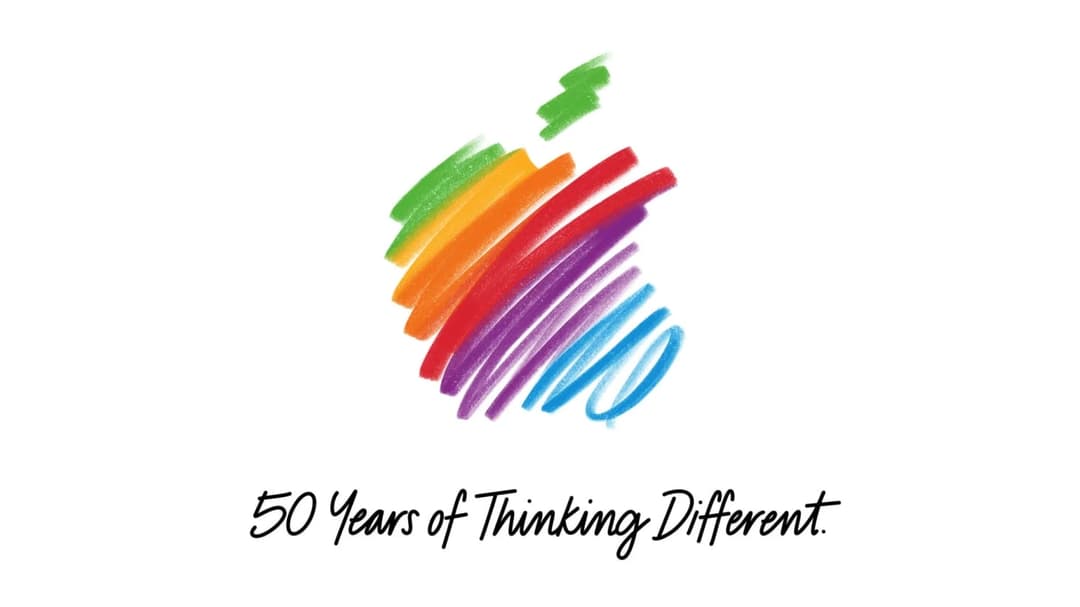
That moment, repeated across a billion devices, sits at the heart of a letter Tim Cook released today, March 13, 2026, as Apple approaches its 50th anniversary on April 1. The document arrives not as a product announcement but as a strategic reframing of the company's legacy. Instead of celebrating circuit boards and design awards, Cook spotlights the concrete actions users take every day: the videos they capture, the apps they build, the medical alerts that save lives. More than 1.5 billion iPhones have been activated worldwide since 2007, a figure that underscores how deeply Apple's tools have woven into daily routines. The letter poses a question that technology journalism too often ignores: what happens when hardware becomes invisible and only the human action remains?
From a Garage to a Global Stage
The story begins in a Los Altos garage in 1976, where two engineers bent over a plywood workbench, soldering circuits for the Apple I. Steve Wozniak priced the machine at $666.66, choosing the repeating digits because they rolled off his tongue. Early buyers received only a bare circuit board. They supplied their own cases, keyboards, and monitors, transforming a hobbyist kit into a working computer in their basements and spare bedrooms.
That first machine shipped to fewer than 200 customers, most of them electronics tinkerers who understood resistors and capacitors. Yet the act of assembling the Apple I planted a seed: computing could belong to individuals, not just corporations with climate‑controlled mainframe rooms. Wozniak and Steve Jobs understood that lowering the barrier to entry meant more people could write software, track expenses, and solve problems without waiting for IT departments to approve requests.
Eight years later, in 1984, the Macintosh arrived with a graphical user interface that let users point and click instead of memorizing command‑line syntax. A designer in Portland could drag a font icon into a document without reading a manual. A teacher in Atlanta could print worksheets by selecting a printer from a menu, not by typing cryptic strings. The Macintosh turned computing from a specialist skill into an everyday action, opening the door for millions who had no interest in learning BASIC or assembly language.
In 2001, the iPod compressed an entire music library into a device that fit in a jacket pocket. Users replaced shelves of jewel cases with digital playlists they could shuffle, repeat, or share. The act of listening to music shifted from a stationary ritual—sitting by a stereo—to a mobile one, soundtracking commutes, workouts, and study sessions.
The iPhone followed in 2007, eliminating the physical keyboard and replacing it with a multitouch screen that recognized taps, swipes, and pinches. Those gestures, already familiar from touching photographs and turning pages, required no instruction manual. Within weeks, users were checking email on subway platforms, looking up restaurant reviews while standing on sidewalks, and texting photographs to friends across continents.
Each milestone altered how people performed tasks. Navigation moved from folding paper maps to tapping a destination into a screen. Banking shifted from writing checks at desks to approving transfers with a fingerprint. Photography evolved from loading film into cameras to capturing spontaneous moments and editing them before breakfast.
Every Tap Tells a Story
Cook's letter highlighted concrete user behaviors rather than abstract achievements. In Austin, a developer named Miguel launched a meditation app on the App Store, a digital marketplace that distributes software to iPhone users worldwide. Within a week, he had customers in thirty countries. The barrier between idea and implementation collapsed to the time it took to write code and submit it for review.
Across the country in Boston, Maria recorded her newborn's first sounds on an iPhone, stored the videos in iCloud—a cloud‑based storage service—and shared them instantly with her sister in Madrid. The sister opened the notification during her lunch break, watching her niece yawn in a hospital room she would not visit for another six months. The act of sharing a milestone no longer required printing photographs, buying stamps, and waiting for mail delivery.
In Phoenix, James paired his AirPods with an Apple Watch while running through the desert at dawn. The watch monitored his pace and heart rate in real time, vibrating when his pulse climbed too high. One morning, the watch detected an irregular heartbeat and prompted him to schedule a cardiology appointment. Medical researchers have cited the Apple Watch's atrial fibrillation detection as a factor that prompts early clinical intervention for users unaware of their condition. James received a diagnosis, adjusted his medication, and returned to his morning runs within a month.
These examples illustrate how Apple's tools enable actions that were previously difficult, expensive, or impossible. The letter anchored the company's legacy not in engineering prowess but in the millions of tasks users complete without thinking about the technology itself.
What the Letter Did Not Say
The communication omitted any product roadmap, performance benchmarks, or financial data. Engineers and product managers who read the letter expressed a desire for specifics. A senior product manager at a Seattle startup requested details on upcoming APIs that could accelerate feature rollout. A UX lead in San Francisco sought measurable accessibility metrics that would help her team design for users with disabilities.
Apple's historical approach reserves technical disclosures for developer conferences and product launch events, keeping public letters focused on narrative and brand alignment. Cook's message arrived as a values statement, not a technical brief. For developers accustomed to parsing release notes and beta documentation, the absence of concrete specifications felt like a missed opportunity.
Yet the omission also reflected a deliberate strategy. By focusing on user actions rather than chip architectures or software frameworks, the letter positions Apple's devices as transparent enablers. The technology recedes; the human outcome advances.
The Garage as Origin Story
The letter opened with an image of a "big idea born in a small garage," a story about scrappy innovation that resonates across Silicon Valley. Garages occupy a special place in tech lore: Hewlett‑Packard, Google, and Amazon all trace their origins to residential spaces repurposed as laboratories. The symbolism suggests that breakthroughs require only vision and persistence, not capital or credentials.
While the garage symbolizes independence, Apple's growth required extensive supply‑chain partnerships, capital investment, and a global workforce of over 160,000 employees. Foxconn factories in China assemble iPhones around the clock. TSMC fabricates custom silicon in Taiwan. Corning produces Ceramic Shield glass in Kentucky. Thousands of app developers write software in languages Apple did not invent, on platforms Apple supports but does not control.
By acknowledging both the founders' vision and the contributions of engineers, manufacturers, and developers, the letter broadened its scope beyond the mythic duo.