Logo
Decide better.Live better.
My feedToday
Logo
Decide better.Live better.
My feedToday
Logo
My feedToday

Stay Curious. Stay Wanture.

© 2026 Wanture. All rights reserved.

  • Terms of Use
  • Privacy Policy
Logo
Decide better.Live better.
My feedTodayTechScienceHealthMobilityMindProductivityHomeExperiencesLongevity
Logo
Decide better.Live better.
My feedTodayTechScienceHealthMobilityMindProductivityHomeExperiencesLongevity
Logo
My feedTodayTechScienceHealthMobilityMindProductivityHomeExperiencesLongevity

SpaceX launches Twilight rideshare for dawn-dusk orbits

25 December 2025

—

News

Devon Clarke

SpaceX schedules its first Twilight rideshare mission for January 2026. The specialized service targets satellites needing continuous sunlight in dawn-dusk orbits. German integrator Exolaunch will deploy 22 spacecraft from seven countries into sun-synchronous terminator orbits where satellites remain perpetually on the boundary between day and night.

The mission launches no earlier than January 5, 2026, from Vandenberg Space Force Base in California. NASA's Pandora astrophysics satellite flies as primary payload. Commercial spacecraft from Bulgaria, Finland, Germany, Lithuania, Spain, Turkey, and the United States fill the manifest. Spire Global and Kepler Communications confirmed participation.

Dawn-dusk orbits provide near-continuous solar illumination—a critical advantage for power-hungry applications. Previously, customers waited years for suitable mission opportunities or paid premium rates for dedicated launches. SpaceX's standardized rideshare model democratizes access to this specialized orbital configuration.

This mission extends SpaceX's rideshare portfolio beyond standard sun-synchronous orbits to serve specific customer requirements. The move follows Exolaunch's May 2025 multi-year agreement with SpaceX, securing Falcon 9 rideshare access through 2028. Established applications include synthetic aperture radar systems requiring consistent lighting angles, communications networks, and IoT constellations—all operating with proven business models and current revenue streams.

Continuous power availability enables orbital configurations previously constrained by battery capacity limits. Solar panels never enter shadow, maintaining constant power generation without cycling through charge-discharge patterns that degrade batteries over time.

Exolaunch promotes dawn-dusk orbits as future hosting grounds for space-based data centers. Elon Musk has previously discussed the concept. The continuous power proposition addresses one fundamental constraint for orbital computing infrastructure.

Space data centers face unresolved engineering challenges beyond power generation. Radiative cooling in vacuum operates fundamentally differently than terrestrial systems. Data transmission bandwidth from orbit creates bottlenecks for compute-intensive workloads. Launch costs per kilogram of compute capacity remain prohibitive compared to ground-based facilities.

Twilight addresses immediate commercial demand from SAR, communications, and IoT sectors with working business models. Space data centers represent a long-term infrastructure possibility worth monitoring. Today's mission serves established markets, not speculative ones. For U.S. aerospace companies, standardized access to specialized orbits strengthens competitiveness in the growing small satellite sector.

Customer adoption rates for subsequent Twilight missions will indicate whether standardized access to dawn-dusk orbits unlocks latent demand. The alternative: the service simply consolidates existing customers who previously waited for dedicated launches.


What is this about?

  • News
  • Devon Clarke
  • Science
  • Cosmos
  • spacecraft technology
  • rocket technology
  • commercial space infrastructure
  • battery technology
  • satellite deployment

Feed

    ..

    ..

    ..

    Auden Wheelockabout 11 hours ago
    Apple Breaks Autumn Cadence: iPhone 18 Pro and iPhone Ultra

    Apple Breaks Autumn Cadence: iPhone 18 Pro and iPhone Ultra

    Plan purchases around September’s standard lineup or wait for Q4 hardware

    Ben Ramosabout 15 hours ago
    Apple Watch Ultra 4 could track blood pressure trends

    Apple Watch Ultra 4 could track blood pressure trends

    A potential hardware redesign with 8 sensors aims to move from simple alerts to direct cardiovascular measurement

    Ben Ramos4 days ago

    Your earbuds could become a secure digital key via your heartbeat

    AccLock uses standard accelerometers to verify identity without needing premium optical heart trackers

    Ben Ramos6 days ago
    Memory chip shortages could end by 2027

    Memory chip shortages could end by 2027

    Aggressive Chinese production expansions from YMTC and CXMT may lower hardware costs sooner than the 2030 consensus

    Ben Ramos6 days ago
    Hisense Explorer X1 Pro brings 120-inch cinema to your living room

    Hisense Explorer X1 Pro brings 120-inch cinema to your living room

    A new tri-color laser engine offers 110% BT.2020 color gamut, though US availability remains unannounced

    Logan Price6 days ago
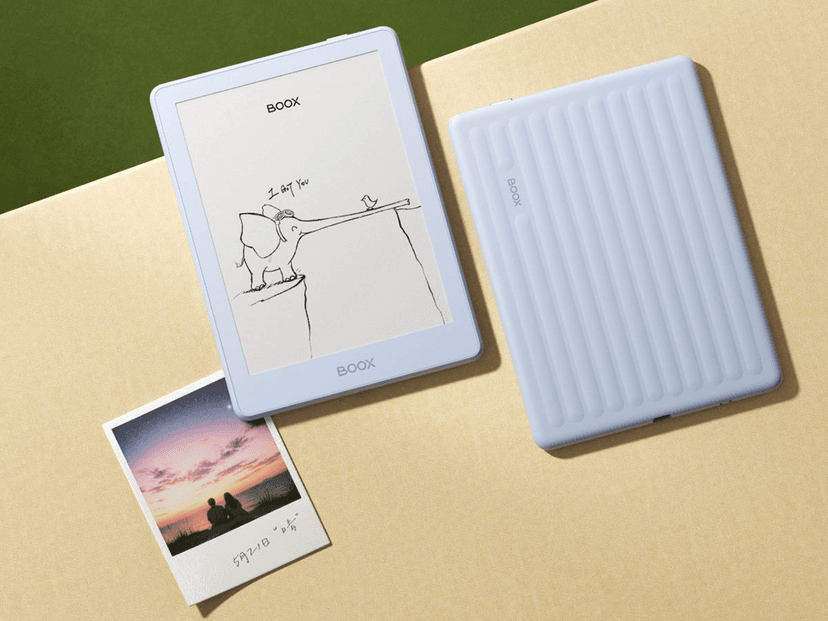
    Onyx Boox Poke 7 series brings paper-like clarity to your library

    Onyx Boox Poke 7 series brings paper-like clarity to your library

    New 300 ppi displays and 2 TB expandable storage offer a sharper, larger reading experience

    Ben Ramos6 days ago
    SpaceX IPO: A historic bet on the space economy

    SpaceX IPO: A historic bet on the space economy

    With 2025 revenue hitting $18.6 billion, the Nasdaq debut tests market appetite for Elon Musk

    Jasmine Wu6 days ago
    Figma AI agents turn manual design into high-level direction

    Figma AI agents turn manual design into high-level direction

    New intent-based tools allow designers to build layouts using natural language instead of clicking and dragging

    Evelyn Park6 days ago
    NanoClaw's sandbox stops AI agents from compromising your OS

    NanoClaw's sandbox stops AI agents from compromising your OS

    NanoCo secures $12 million to scale its isolated architecture for enterprise AI deployment

    Marcus Dillard6 days ago
    Loading...

SpaceX launches Twilight rideshare for dawn-dusk orbits

25 December 2025

—

News

Devon Clarke

SpaceX schedules its first Twilight rideshare mission for January 2026. The specialized service targets satellites needing continuous sunlight in dawn-dusk orbits. German integrator Exolaunch will deploy 22 spacecraft from seven countries into sun-synchronous terminator orbits where satellites remain perpetually on the boundary between day and night.

The mission launches no earlier than January 5, 2026, from Vandenberg Space Force Base in California. NASA's Pandora astrophysics satellite flies as primary payload. Commercial spacecraft from Bulgaria, Finland, Germany, Lithuania, Spain, Turkey, and the United States fill the manifest. Spire Global and Kepler Communications confirmed participation.

Dawn-dusk orbits provide near-continuous solar illumination—a critical advantage for power-hungry applications. Previously, customers waited years for suitable mission opportunities or paid premium rates for dedicated launches. SpaceX's standardized rideshare model democratizes access to this specialized orbital configuration.

This mission extends SpaceX's rideshare portfolio beyond standard sun-synchronous orbits to serve specific customer requirements. The move follows Exolaunch's May 2025 multi-year agreement with SpaceX, securing Falcon 9 rideshare access through 2028. Established applications include synthetic aperture radar systems requiring consistent lighting angles, communications networks, and IoT constellations—all operating with proven business models and current revenue streams.

Continuous power availability enables orbital configurations previously constrained by battery capacity limits. Solar panels never enter shadow, maintaining constant power generation without cycling through charge-discharge patterns that degrade batteries over time.

Exolaunch promotes dawn-dusk orbits as future hosting grounds for space-based data centers. Elon Musk has previously discussed the concept. The continuous power proposition addresses one fundamental constraint for orbital computing infrastructure.

Space data centers face unresolved engineering challenges beyond power generation. Radiative cooling in vacuum operates fundamentally differently than terrestrial systems. Data transmission bandwidth from orbit creates bottlenecks for compute-intensive workloads. Launch costs per kilogram of compute capacity remain prohibitive compared to ground-based facilities.

Twilight addresses immediate commercial demand from SAR, communications, and IoT sectors with working business models. Space data centers represent a long-term infrastructure possibility worth monitoring. Today's mission serves established markets, not speculative ones. For U.S. aerospace companies, standardized access to specialized orbits strengthens competitiveness in the growing small satellite sector.

Customer adoption rates for subsequent Twilight missions will indicate whether standardized access to dawn-dusk orbits unlocks latent demand. The alternative: the service simply consolidates existing customers who previously waited for dedicated launches.

What is this about?

  • News/
  • Devon Clarke/
  • Science/
  • Cosmos/
  • spacecraft technology/
  • rocket technology/
  • commercial space infrastructure/
  • battery technology/
  • satellite deployment

Feed

    ..

    ..

    ..

    Auden Wheelockabout 11 hours ago
    Apple Breaks Autumn Cadence: iPhone 18 Pro and iPhone Ultra

    Apple Breaks Autumn Cadence: iPhone 18 Pro and iPhone Ultra

    Plan purchases around September’s standard lineup or wait for Q4 hardware

    Ben Ramosabout 15 hours ago
    Apple Watch Ultra 4 could track blood pressure trends

    Apple Watch Ultra 4 could track blood pressure trends

    A potential hardware redesign with 8 sensors aims to move from simple alerts to direct cardiovascular measurement

    Ben Ramos4 days ago

    Your earbuds could become a secure digital key via your heartbeat

    AccLock uses standard accelerometers to verify identity without needing premium optical heart trackers

    Ben Ramos6 days ago
    Memory chip shortages could end by 2027

    Memory chip shortages could end by 2027

    Aggressive Chinese production expansions from YMTC and CXMT may lower hardware costs sooner than the 2030 consensus

    Ben Ramos6 days ago
    Hisense Explorer X1 Pro brings 120-inch cinema to your living room

    Hisense Explorer X1 Pro brings 120-inch cinema to your living room

    A new tri-color laser engine offers 110% BT.2020 color gamut, though US availability remains unannounced

    Logan Price6 days ago
    Onyx Boox Poke 7 series brings paper-like clarity to your library

    Onyx Boox Poke 7 series brings paper-like clarity to your library

    New 300 ppi displays and 2 TB expandable storage offer a sharper, larger reading experience

    Ben Ramos6 days ago
    SpaceX IPO: A historic bet on the space economy

    SpaceX IPO: A historic bet on the space economy

    With 2025 revenue hitting $18.6 billion, the Nasdaq debut tests market appetite for Elon Musk

    Jasmine Wu6 days ago
    Figma AI agents turn manual design into high-level direction

    Figma AI agents turn manual design into high-level direction

    New intent-based tools allow designers to build layouts using natural language instead of clicking and dragging

    Evelyn Park6 days ago
    NanoClaw's sandbox stops AI agents from compromising your OS

    NanoClaw's sandbox stops AI agents from compromising your OS

    NanoCo secures $12 million to scale its isolated architecture for enterprise AI deployment

    Marcus Dillard6 days ago
    Loading...
Home
Home
Search
Search