• My Feed
  • Home
  • What's Important
  • Media & Entertainment
Search

Stay Curious. Stay Wanture.

© 2026 Wanture. All rights reserved.

  • Terms of Use
  • Privacy Policy
Science/Tech
New air purifier catches your breath before it spreads

Canadian engineers cut infection risk to 9.5% with jet-suction tech that hunts aerosols at the source

14 November 2025

—

Explainer *

Serena Cho
banner

University of British Columbia researchers developed a jet-suction air purification system that captures exhaled aerosols before they spread—slashing infection risk from 91% to just 9.5%. Unlike traditional ventilation that dilutes contaminated air, this technology pulls pathogens away at the source, offering game-changing protection for hospitals, schools, and offices across the U.S.

Summary:

  • UBC engineers develop jet-suction air purification system that captures 94% of airborne aerosols, reducing infection risk to just 9.5%.
  • New technology targets exhaled aerosols at the source, creating localized air currents that pull contaminated particles into a purification zone.
  • Potential applications in hospitals, schools, and offices could revolutionize indoor air quality and pathogen transmission prevention.

Imagine every exhaled breath as a tiny cloud of invisible passengers—some harmless, some not. In crowded rooms, those clouds drift, mingle, and settle into lungs across the space. Traditional ventilation tries to dilute them, like opening a window in a smoky room. But what if you could catch those clouds right at the source, before they ever spread?

That's exactly what a team of mechanical engineers at the University of British Columbia in Okanagan, Canada, has designed: an air purification system that doesn't just clean the air—it hunts down exhaled aerosols like a targeted defense system. Published in Building and Environment, their jet-suction technology slashes infection risk to just 9.5%, compared to 91% with standard ventilation. It's not magic. It's physics meeting microbiology in a way that could reshape how Americans think about shared air.

What Aerosols Are—and Why They're So Hard to Stop

Aerosols are the microscopic droplets and particles exhaled with every breath, cough, or word. They behave like smoke: light enough to float, small enough to linger, and tricky enough to dodge most ventilation systems. Standard HVAC systems rely on dilution—mixing contaminated air with clean air and hoping the bad stuff gets filtered out eventually. But in a crowded office or clinic, that "eventually" can mean pathogens reach a dozen people before the system even notices.

Think of it like trying to catch dandelion seeds with a ceiling fan. Scattering them doesn't stop them from landing.

Dr. Sunny Lee, a professor in UBC Okanagan's School of Engineering and co-author of the study, explains the problem with current personalized ventilation systems—those airplane-style vents that blow clean air directly at passengers. "A person must remain in one position, and multiple people must use the same system simultaneously," he notes. Plus, constant exposure to that directed airflow can dry out skin and eyes, turning comfort into irritation.

How Jet-Suction Airflow Works

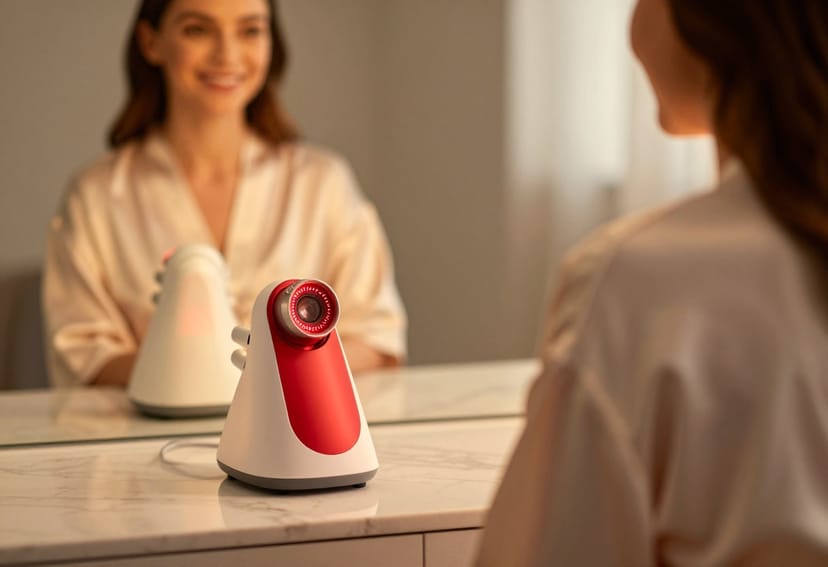
The new system doesn't push clean air at people—it pulls contaminated air away from them. The team calls it "jet-suction" or "induction-removal" airflow, and the concept is elegantly simple: create a localized air current that continuously draws exhaled aerosols into a nearby purification zone before they can disperse.

Picture an invisible shield that wraps around a person, gently but persistently sucking contaminated particles toward a cleaning station. It's like having a tiny, tireless vacuum hovering near every breath, redirecting pathogens before they become anyone else's problem.

Using computational fluid dynamics (CFD) simulations, the research team—led by first author Dr. Mojtaba Zabihi—modeled breathing patterns, body heat, and airflow over 30 minutes in a shared space. They compared their device against three other approaches: standard room ventilation, individual supply ventilation (the airplane model), and individual exhaust ventilation.

The Mechanism Behind Aerosol Capture

The system works by creating carefully engineered air currents that redirect exhaled aerosols into a purification zone. Unlike whole-room dilution, which treats all air equally, jet-suction targets the source. Dr. Zabihi emphasizes the challenge: "Room layouts and ventilation systems differ significantly. This makes it difficult to improve existing heating, ventilation, and air conditioning systems."

In the team's simulations, the jet-suction device captured aerosols so effectively that during the first 15 minutes, only 10 particles out of 540,000 reached another person. That's 0.0019%—a near-total interception. Over the full 30-minute period, the system removed up to 94% of airborne pathogens.

Why This Matters for Infection Prevention

Indoor air quality has become a priority concern in the U.S., especially in hospitals, schools, and offices where people gather for hours. Airborne transmission of pathogens isn't just a pandemic worry—it's a constant challenge in healthcare settings, where immunocompromised patients are vulnerable, and in classrooms, where close contact is unavoidable.

Current solutions have trade-offs. HEPA filters clean air but don't prevent initial exposure. UV light systems work but require careful installation and maintenance. Ionizers raise questions about byproducts. Standard ventilation systems, even upgraded ones, still allow significant pathogen spread because they rely on dilution rather than capture.

The jet-suction approach changes the equation: instead of cleaning the room's air after contamination, it intercepts contamination at the source.

Comparison with Traditional Ventilation Systems

The numbers tell the story. In the team's simulations, infection risk varied dramatically by system type. Standard room ventilation left infection risk at 91%—nearly everyone exposed. Individual supply ventilation (the airplane model) dropped it to 47.6%, better but still leaving nearly half the room at risk. Individual exhaust ventilation managed 38%.

But the jet-suction device? Just 9.5%. That's a tenfold improvement over standard systems and a fivefold improvement over personalized ventilation.

Real-World Applications and Implications

Imagine this technology in a hospital waiting room during flu season. Instead of patients sitting in a shared cloud of respiratory droplets, each seating area has a jet-suction unit quietly pulling exhaled air into a purification zone. Infection risk plummets, and vulnerable patients—those with weakened immune systems or chronic conditions—gain a layer of protection that current ventilation can't provide.

Or picture a conference room in an office building. Ten people meet for an hour. With standard ventilation, aerosols from one person's cough circulate freely. With jet-suction, those aerosols are captured within seconds, never reaching colleagues across the table.

In schools, where classrooms pack 25 students into tight quarters for six hours a day, the technology could reduce absenteeism and protect teachers who face repeated exposure. In airports, transit hubs, or senior care facilities—anywhere people share air for extended periods—jet-suction offers a targeted, efficient alternative to whole-room approaches.

The beauty of jet-suction is its adaptability—it works with existing infrastructure, targeting local zones rather than requiring full HVAC overhauls. The team indicates that prototype development and cost analysis are next steps before commercial deployment timelines can be established.

What This Means for Indoor Air Quality

This research is still simulation-based, which means the next step is prototype testing in real-world environments. The authors indicate that building and scaling up prototypes are the immediate priorities. Real-world variables—human movement, temperature fluctuations, varying room geometries—will test whether the simulated performance holds up.

But the principle is sound, and the potential is significant. If jet-suction systems prove effective in practice, they could become standard in high-risk environments: hospitals, clinics, nursing homes, schools, and public transit. The technology doesn't replace ventilation—it enhances it, adding a layer of targeted protection where it matters most.

For U.S. facility managers, healthcare administrators, and school districts, this represents a new tool in the indoor air quality toolkit. It's not about choosing between HEPA filters or UV light or better ventilation—it's about integrating capture-at-source technology into a comprehensive air safety strategy.

The research builds on principles showing that airflow patterns matter more than sheer air volume. It's a reminder that in microbiology, as in life, location is everything. Pathogens don't spread evenly—they follow air currents, body heat, and breathing patterns. Catch them early, and the game changes.

The invisible passengers in every breath might finally have a one-way ticket out.
What is this about?

  • Explainer */
  • Serena Cho/
  • Science/
  • Tech

Feed

    Xbox’s Next Console Chooses Off‑Shelf AMD RDNA 2 GPU

    Xbox’s Next Console Chooses Off‑Shelf AMD RDNA 2 GPU

    AMD GPU brings FidelityFX Super Resolution, echoing PlayStation 5’s RDNA 2

    Priya Desaiabout 9 hours ago
    Foldable iPhone Keeps 4.4 mm Body, Camera Control Button

    Foldable iPhone Keeps 4.4 mm Body, Camera Control Button

    Launching this year, the foldable iPhone is slimmer than the iPhone Air and is eSIM‑only.

    Carter Brooksabout 9 hours ago
    2024 C400 4Matic EV Packs 483 hp, 420‑mile Range

    2024 C400 4Matic EV Packs 483 hp, 420‑mile Range

    U.S. launch offers 3.9‑second 0‑62 mph sprint, $55,000 MSRP and $7,500 federal EV credit

    Ethan Whitakerabout 10 hours ago
    OnePlus drops Ace 6 Ultra gaming phone on April 28

    OnePlus drops Ace 6 Ultra gaming phone on April 28

    Clip‑on case adds buttons, fan, and pass‑through charging for console‑level play

    Carter Brooks1 day ago
    iPhone Express Transit Flaw Lets Thieves Steal $10,000

    iPhone Express Transit Flaw Lets Thieves Steal $10,000

    Locked iPhone Visa cards can be tapped for fraud; Apple and Visa have no fix

    Carter Brooks1 day ago
    China's Dola‑Seed‑2.0 Cuts Gap to 2.7% vs. Claude Opus 4.6

    China's Dola‑Seed‑2.0 Cuts Gap to 2.7% vs. Claude Opus 4.6

    Rachel Stein1 day ago
    Apple delays refreshed Mac Studio launch to October

    Apple delays refreshed Mac Studio launch to October

    Supply shortages push MacBook Pro to late‑2026/early‑2027, Q4 earnings at risk

    Carter Brooks1 day ago
    Apple delays M6‑Pro/M6‑Max OLED MacBook Pro to 2027

    Apple delays M6‑Pro/M6‑Max OLED MacBook Pro to 2027

    Shortages delay M6‑Pro and M6‑Max to early 2027, pushing back the new Mac

    Carter Brooks1 day ago
    Apple unveils glassy Siri on Dynamic Island with iOS 27

    Apple unveils glassy Siri on Dynamic Island with iOS 27

    WWDC 2026: Siri expands Island on iPhone 14 Pro and up, arriving with iOS 27

    Carter Brooks1 day ago
    Honor Robot Shatters Half‑Marathon Record in 50:26

    Honor Robot Shatters Half‑Marathon Record in 50:26

    Robot Beats Human Benchmark by 7 Minutes, With 40% Fully Autonomous

    Marcus Dillard2 days ago
    Loading...
Science/Tech

New air purifier catches your breath before it spreads

Canadian engineers cut infection risk to 9.5% with jet-suction tech that hunts aerosols at the source

November 14, 2025, 6:16 pm

University of British Columbia researchers developed a jet-suction air purification system that captures exhaled aerosols before they spread—slashing infection risk from 91% to just 9.5%. Unlike traditional ventilation that dilutes contaminated air, this technology pulls pathogens away at the source, offering game-changing protection for hospitals, schools, and offices across the U.S.

Summary

  • UBC engineers develop jet-suction air purification system that captures 94% of airborne aerosols, reducing infection risk to just 9.5%.
  • New technology targets exhaled aerosols at the source, creating localized air currents that pull contaminated particles into a purification zone.
  • Potential applications in hospitals, schools, and offices could revolutionize indoor air quality and pathogen transmission prevention.

Imagine every exhaled breath as a tiny cloud of invisible passengers—some harmless, some not. In crowded rooms, those clouds drift, mingle, and settle into lungs across the space. Traditional ventilation tries to dilute them, like opening a window in a smoky room. But what if you could catch those clouds right at the source, before they ever spread?

That's exactly what a team of mechanical engineers at the University of British Columbia in Okanagan, Canada, has designed: an air purification system that doesn't just clean the air—it hunts down exhaled aerosols like a targeted defense system. Published in Building and Environment, their jet-suction technology slashes infection risk to just 9.5%, compared to 91% with standard ventilation. It's not magic. It's physics meeting microbiology in a way that could reshape how Americans think about shared air.

What Aerosols Are—and Why They're So Hard to Stop

Aerosols are the microscopic droplets and particles exhaled with every breath, cough, or word. They behave like smoke: light enough to float, small enough to linger, and tricky enough to dodge most ventilation systems. Standard HVAC systems rely on dilution—mixing contaminated air with clean air and hoping the bad stuff gets filtered out eventually. But in a crowded office or clinic, that "eventually" can mean pathogens reach a dozen people before the system even notices.

Think of it like trying to catch dandelion seeds with a ceiling fan. Scattering them doesn't stop them from landing.

Dr. Sunny Lee, a professor in UBC Okanagan's School of Engineering and co-author of the study, explains the problem with current personalized ventilation systems—those airplane-style vents that blow clean air directly at passengers. "A person must remain in one position, and multiple people must use the same system simultaneously," he notes. Plus, constant exposure to that directed airflow can dry out skin and eyes, turning comfort into irritation.

How Jet-Suction Airflow Works

The new system doesn't push clean air at people—it pulls contaminated air away from them. The team calls it "jet-suction" or "induction-removal" airflow, and the concept is elegantly simple: create a localized air current that continuously draws exhaled aerosols into a nearby purification zone before they can disperse.

Picture an invisible shield that wraps around a person, gently but persistently sucking contaminated particles toward a cleaning station. It's like having a tiny, tireless vacuum hovering near every breath, redirecting pathogens before they become anyone else's problem.

Using computational fluid dynamics (CFD) simulations, the research team—led by first author Dr. Mojtaba Zabihi—modeled breathing patterns, body heat, and airflow over 30 minutes in a shared space. They compared their device against three other approaches: standard room ventilation, individual supply ventilation (the airplane model), and individual exhaust ventilation.

The Mechanism Behind Aerosol Capture

The system works by creating carefully engineered air currents that redirect exhaled aerosols into a purification zone. Unlike whole-room dilution, which treats all air equally, jet-suction targets the source. Dr. Zabihi emphasizes the challenge: "Room layouts and ventilation systems differ significantly. This makes it difficult to improve existing heating, ventilation, and air conditioning systems."

In the team's simulations, the jet-suction device captured aerosols so effectively that during the first 15 minutes, only 10 particles out of 540,000 reached another person. That's 0.0019%—a near-total interception. Over the full 30-minute period, the system removed up to 94% of airborne pathogens.

Why This Matters for Infection Prevention

Indoor air quality has become a priority concern in the U.S., especially in hospitals, schools, and offices where people gather for hours. Airborne transmission of pathogens isn't just a pandemic worry—it's a constant challenge in healthcare settings, where immunocompromised patients are vulnerable, and in classrooms, where close contact is unavoidable.

Current solutions have trade-offs. HEPA filters clean air but don't prevent initial exposure. UV light systems work but require careful installation and maintenance. Ionizers raise questions about byproducts. Standard ventilation systems, even upgraded ones, still allow significant pathogen spread because they rely on dilution rather than capture.

The jet-suction approach changes the equation: instead of cleaning the room's air after contamination, it intercepts contamination at the source.

Comparison with Traditional Ventilation Systems

The numbers tell the story. In the team's simulations, infection risk varied dramatically by system type. Standard room ventilation left infection risk at 91%—nearly everyone exposed. Individual supply ventilation (the airplane model) dropped it to 47.6%, better but still leaving nearly half the room at risk. Individual exhaust ventilation managed 38%.

But the jet-suction device? Just 9.5%. That's a tenfold improvement over standard systems and a fivefold improvement over personalized ventilation.

Real-World Applications and Implications

Imagine this technology in a hospital waiting room during flu season. Instead of patients sitting in a shared cloud of respiratory droplets, each seating area has a jet-suction unit quietly pulling exhaled air into a purification zone. Infection risk plummets, and vulnerable patients—those with weakened immune systems or chronic conditions—gain a layer of protection that current ventilation can't provide.

Or picture a conference room in an office building. Ten people meet for an hour. With standard ventilation, aerosols from one person's cough circulate freely. With jet-suction, those aerosols are captured within seconds, never reaching colleagues across the table.

In schools, where classrooms pack 25 students into tight quarters for six hours a day, the technology could reduce absenteeism and protect teachers who face repeated exposure. In airports, transit hubs, or senior care facilities—anywhere people share air for extended periods—jet-suction offers a targeted, efficient alternative to whole-room approaches.

The beauty of jet-suction is its adaptability—it works with existing infrastructure, targeting local zones rather than requiring full HVAC overhauls. The team indicates that prototype development and cost analysis are next steps before commercial deployment timelines can be established.

What This Means for Indoor Air Quality

This research is still simulation-based, which means the next step is prototype testing in real-world environments. The authors indicate that building and scaling up prototypes are the immediate priorities. Real-world variables—human movement, temperature fluctuations, varying room geometries—will test whether the simulated performance holds up.

But the principle is sound, and the potential is significant. If jet-suction systems prove effective in practice, they could become standard in high-risk environments: hospitals, clinics, nursing homes, schools, and public transit. The technology doesn't replace ventilation—it enhances it, adding a layer of targeted protection where it matters most.

For U.S. facility managers, healthcare administrators, and school districts, this represents a new tool in the indoor air quality toolkit. It's not about choosing between HEPA filters or UV light or better ventilation—it's about integrating capture-at-source technology into a comprehensive air safety strategy.

The research builds on principles showing that airflow patterns matter more than sheer air volume. It's a reminder that in microbiology, as in life, location is everything. Pathogens don't spread evenly—they follow air currents, body heat, and breathing patterns. Catch them early, and the game changes.

The invisible passengers in every breath might finally have a one-way ticket out.

What is this about?

  • Explainer */
  • Serena Cho/
  • Science/
  • Tech

Feed

    Xbox’s Next Console Chooses Off‑Shelf AMD RDNA 2 GPU

    Xbox’s Next Console Chooses Off‑Shelf AMD RDNA 2 GPU

    AMD GPU brings FidelityFX Super Resolution, echoing PlayStation 5’s RDNA 2

    Priya Desaiabout 9 hours ago
    Foldable iPhone Keeps 4.4 mm Body, Camera Control Button

    Foldable iPhone Keeps 4.4 mm Body, Camera Control Button

    Launching this year, the foldable iPhone is slimmer than the iPhone Air and is eSIM‑only.

    Carter Brooksabout 9 hours ago
    2024 C400 4Matic EV Packs 483 hp, 420‑mile Range

    2024 C400 4Matic EV Packs 483 hp, 420‑mile Range

    U.S. launch offers 3.9‑second 0‑62 mph sprint, $55,000 MSRP and $7,500 federal EV credit

    Ethan Whitakerabout 10 hours ago
    OnePlus drops Ace 6 Ultra gaming phone on April 28

    OnePlus drops Ace 6 Ultra gaming phone on April 28

    Clip‑on case adds buttons, fan, and pass‑through charging for console‑level play

    Carter Brooks1 day ago
    iPhone Express Transit Flaw Lets Thieves Steal $10,000

    iPhone Express Transit Flaw Lets Thieves Steal $10,000

    Locked iPhone Visa cards can be tapped for fraud; Apple and Visa have no fix

    Carter Brooks1 day ago
    China's Dola‑Seed‑2.0 Cuts Gap to 2.7% vs. Claude Opus 4.6

    China's Dola‑Seed‑2.0 Cuts Gap to 2.7% vs. Claude Opus 4.6

    Rachel Stein1 day ago
    Apple delays refreshed Mac Studio launch to October

    Apple delays refreshed Mac Studio launch to October

    Supply shortages push MacBook Pro to late‑2026/early‑2027, Q4 earnings at risk

    Carter Brooks1 day ago
    Apple delays M6‑Pro/M6‑Max OLED MacBook Pro to 2027

    Apple delays M6‑Pro/M6‑Max OLED MacBook Pro to 2027

    Shortages delay M6‑Pro and M6‑Max to early 2027, pushing back the new Mac

    Carter Brooks1 day ago
    Apple unveils glassy Siri on Dynamic Island with iOS 27

    Apple unveils glassy Siri on Dynamic Island with iOS 27

    WWDC 2026: Siri expands Island on iPhone 14 Pro and up, arriving with iOS 27

    Carter Brooks1 day ago
    Honor Robot Shatters Half‑Marathon Record in 50:26

    Honor Robot Shatters Half‑Marathon Record in 50:26

    Robot Beats Human Benchmark by 7 Minutes, With 40% Fully Autonomous

    Marcus Dillard2 days ago
    Loading...
banner