
Logo
Decide better.Live better.
My feedToday
Logo
Decide better.Live better.
My feedToday
Logo
My feedToday

Stay Curious. Stay Wanture.

© 2026 Wanture. All rights reserved.

  • Terms of Use
  • Privacy Policy
Logo
Decide better.Live better.
My feedTodayTechScienceHealthMobilityMindProductivityHomeExperiencesLongevity
Logo
Decide better.Live better.
My feedTodayTechScienceHealthMobilityMindProductivityHomeExperiencesLongevity
Logo
My feedTodayTechScienceHealthMobilityMindProductivityHomeExperiencesLongevity

XPeng X9 EREV: The $43,550 Minivan That Charges in 10 Minutes and Drives 995 Miles

First extended-range electric minivan pairs 155-mile battery with gas backup — no range anxiety, no compromises

XPeng X9 EREV: The $43,550 Minivan That Charges in 10 Minutes and Drives 995 Miles

XPeng launched the X9 EREV at $43,550 — a hybrid minivan that drives purely electric for 155 miles, charges 194 miles in 10 minutes at 350kW stations, then extends to 995 total miles with its gas generator. We break down the 800V architecture, real cold-weather performance, true 5-year ownership costs versus Pacifica Hybrid and Odyssey, and whether this Chinese EREV solves the family road-trip problem better than pure EVs or traditional hybrids.

26 November 2025

—

Review

Ethan Whitaker
banner

XPeng Launches X9 EREV: China's First Extended-Range Hybrid Minivan

XPeng has officially launched the X9 EREV, the company's first extended-range electric vehicle (EREV), expanding beyond its pure battery-electric lineup. Priced at 309,800 yuan (approximately $43,550 USD) in China, the hybrid minivan comes in 11.5% below its pre-sale price and undercuts the pure-electric X9 BEV variant.
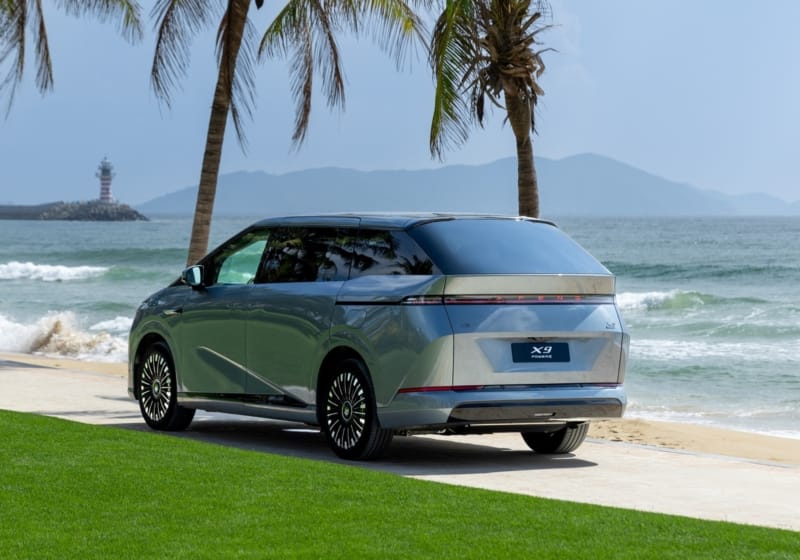
XPeng X9 EREV exterior

What Makes the X9 EREV Different

The X9 EREV represents XPeng's strategic pivot toward hybrid powertrains to address range anxiety—a persistent barrier to EV adoption in markets where charging infrastructure remains limited. Unlike the pure-electric X9 BEV, the EREV variant combines battery power with a gasoline range extender.

XPeng X9 EREV side profile

Extended-Range Electric Vehicle (EREV) architecture uses a series hybrid system where a gasoline engine generates electricity to charge the battery rather than directly powering the wheels. The vehicle operates as a pure EV under normal conditions, with the engine serving as an onboard generator when the battery depletes.

Technical Specifications
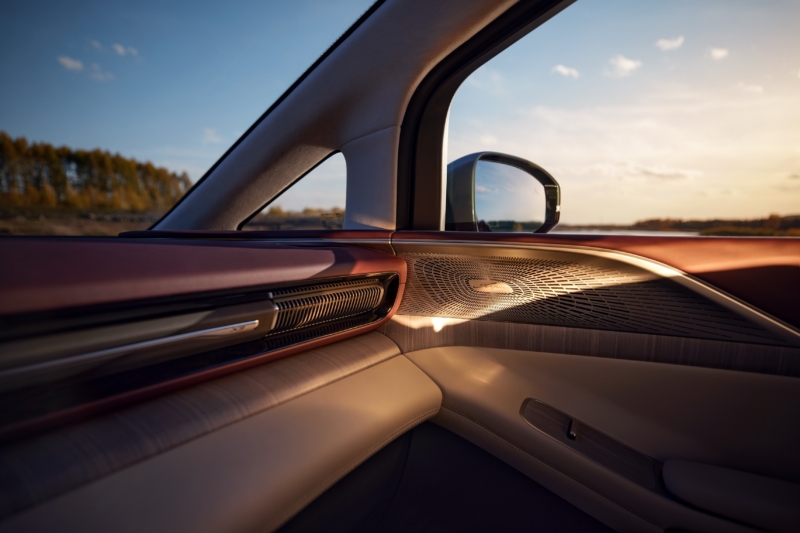
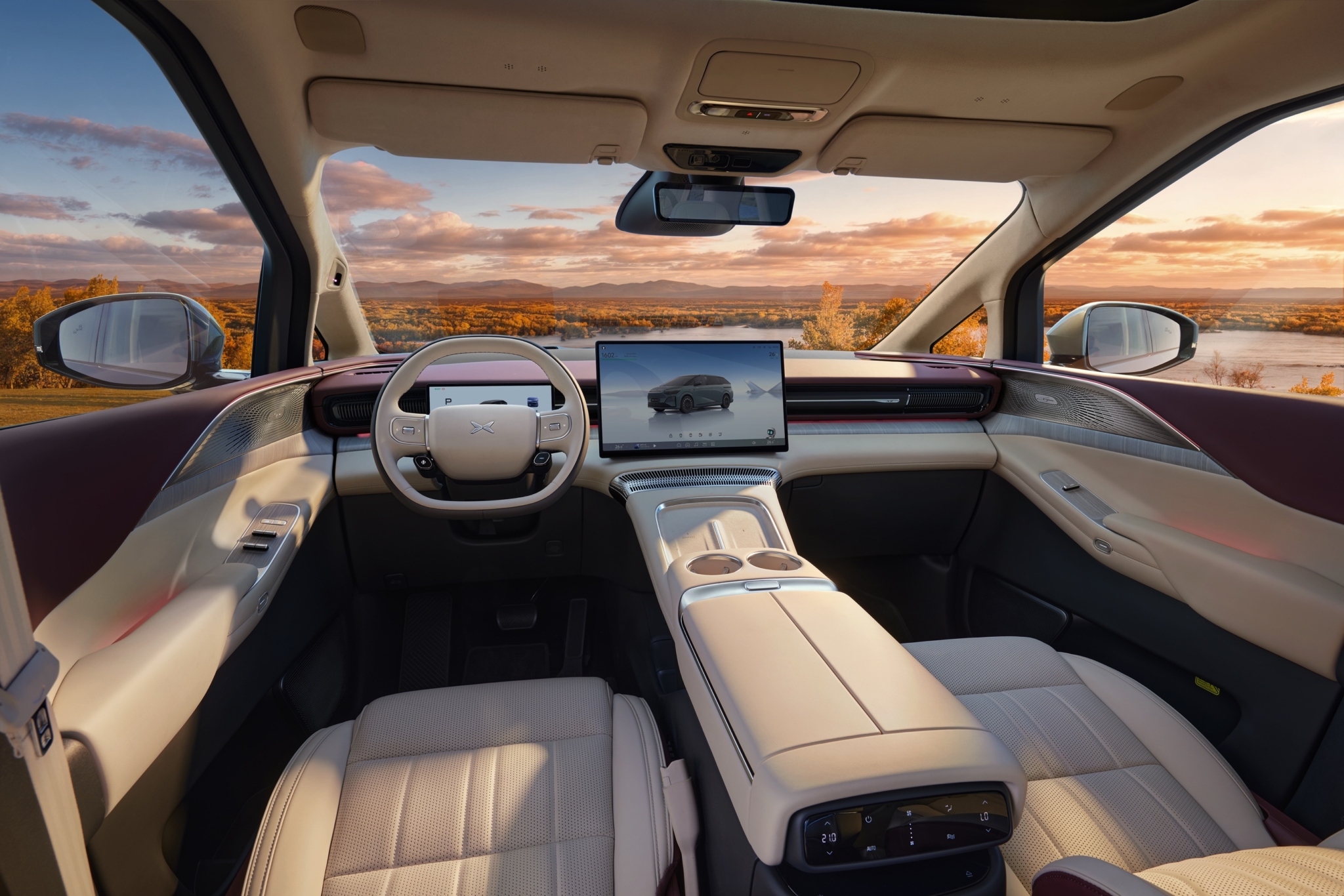
XPeng X9 EREV interior dashboard

The X9 EREV pairs a 63.3 kWh LFP (lithium iron phosphate) battery with a 60-liter (15.9-gallon) fuel tank. According to XPeng, this configuration delivers a combined range of 1,602 km (995 miles) under CLTC testing conditions—China's official fuel economy standard, which typically yields more optimistic figures than EPA testing.

The vehicle features XPeng's 800V electrical architecture with 5C charging capability. The company claims the battery can add 313 km (194 miles) of range in just 10 minutes at compatible ultra-fast charging stations—though this represents peak charging speed under optimal conditions.
XPeng X9 EREV charging port

Market Context and Strategy

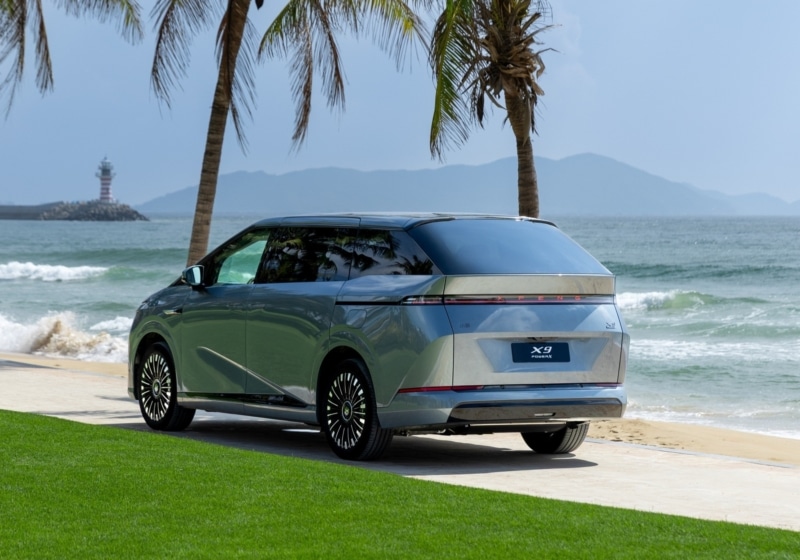
XPeng X9 EREV rear three-quarter view

The X9 EREV launch signals XPeng's broader strategic shift. The company announced plans to release seven models with dual powertrains—both BEV (battery electric vehicle) and EREV variants—in 2025. This dual-powertrain strategy mirrors approaches by Chinese competitors like Li Auto, which has found significant success with EREV technology in the domestic market.
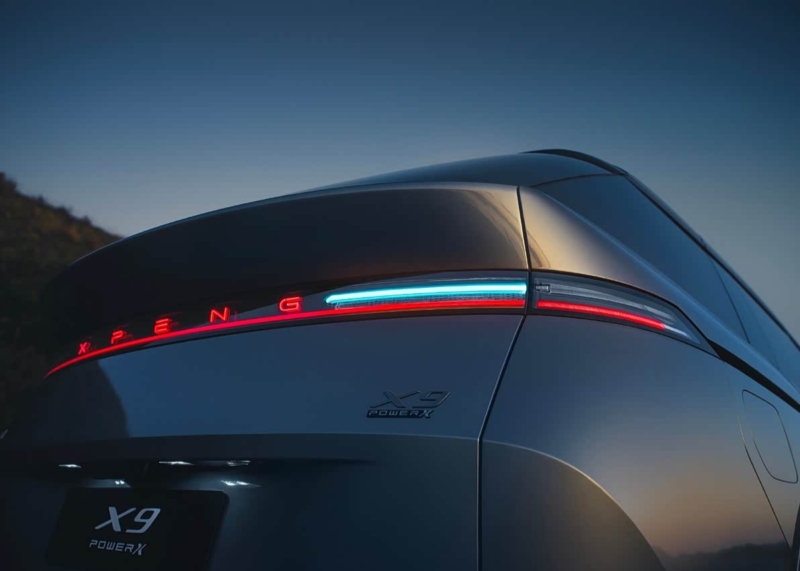
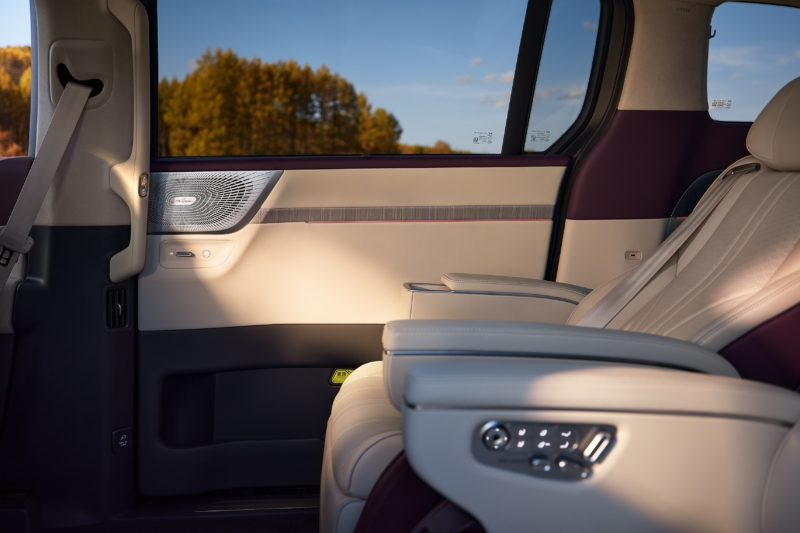
XPeng X9 EREV interior seating

The pricing strategy is notable: at 309,800 yuan, the X9 EREV comes in below the pure-electric version, potentially making hybrid technology more accessible to Chinese buyers who want EV benefits without range limitations. This inverts the typical pricing hierarchy where hybrids command premiums over conventional vehicles.

Availability and Market Focus
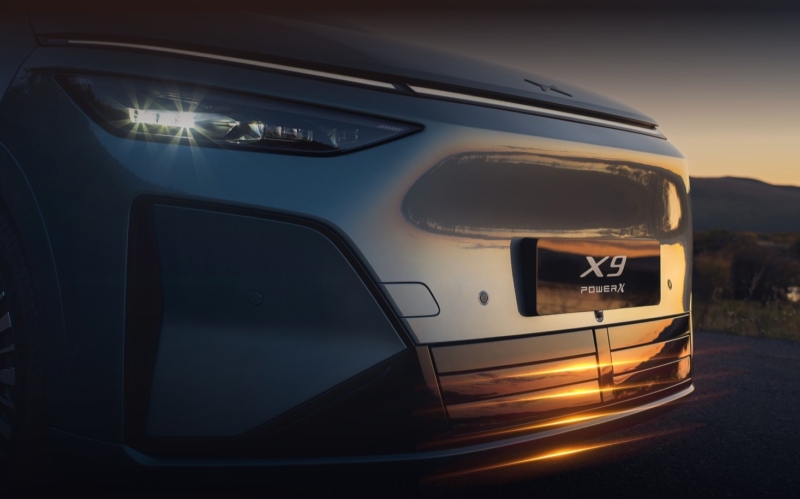
XPeng X9 EREV front grille detail

The X9 EREV is currently available only in the Chinese market. XPeng has not announced plans to bring the vehicle to the United States or other international markets. The company's U.S. presence remains limited, with no current retail operations or charging infrastructure partnerships in North America.

For American buyers interested in extended-range electric minivans, current options remain limited to vehicles like the Chrysler Pacifica Hybrid, which uses a different plug-in hybrid architecture where the gasoline engine can directly power the wheels.
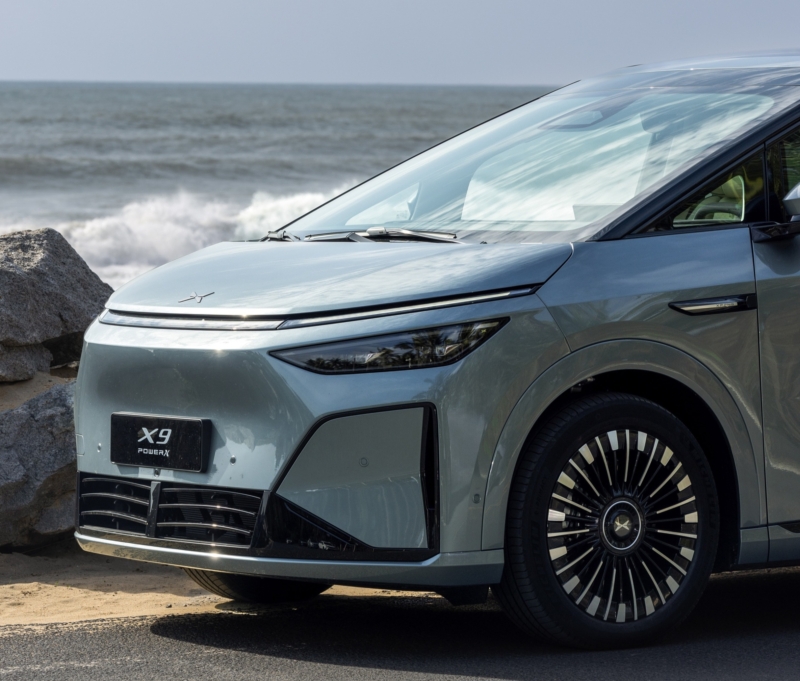
XPeng X9 EREV wheel and brake detail

The Bigger Picture

XPeng's move into EREV technology reflects broader trends in the Chinese automotive market, where range-extended EVs have gained significant traction as a bridge technology. While pure EVs dominate policy discussions and headlines, many Chinese consumers have gravitated toward EREVs as a practical compromise that delivers electric driving for daily commutes while eliminating range anxiety on longer trips.

Whether this technology strategy will extend to international markets—or whether XPeng will focus on pure EVs for exports—remains to be seen. For now, the X9 EREV represents XPeng's bet that Chinese buyers want the flexibility of dual powertrains, even as the country rapidly expands its charging infrastructure.


What is this about?

  • Review/
  • Ethan Whitaker/
  • Mobility/
  • Cars

Feed

    Apple Breaks Autumn Cadence: iPhone 18 Pro and iPhone Ultra

    Apple Breaks Autumn Cadence: iPhone 18 Pro and iPhone Ultra

    Plan purchases around September’s standard lineup or wait for Q4 hardware

    Ben Ramos42 minutes ago
    Apple Watch Ultra 4 could track blood pressure trends

    Apple Watch Ultra 4 could track blood pressure trends

    A potential hardware redesign with 8 sensors aims to move from simple alerts to direct cardiovascular measurement

    Ben Ramos4 days ago

    Your earbuds could become a secure digital key via your heartbeat

    AccLock uses standard accelerometers to verify identity without needing premium optical heart trackers

    Ben Ramos5 days ago
    Memory chip shortages could end by 2027

    Memory chip shortages could end by 2027

    Aggressive Chinese production expansions from YMTC and CXMT may lower hardware costs sooner than the 2030 consensus

    Ben Ramos5 days ago
    Hisense Explorer X1 Pro brings 120-inch cinema to your living room

    Hisense Explorer X1 Pro brings 120-inch cinema to your living room

    A new tri-color laser engine offers 110% BT.2020 color gamut, though US availability remains unannounced

    Logan Price5 days ago
    Onyx Boox Poke 7 series brings paper-like clarity to your library

    Onyx Boox Poke 7 series brings paper-like clarity to your library

    New 300 ppi displays and 2 TB expandable storage offer a sharper, larger reading experience

    Ben Ramos5 days ago
    SpaceX IPO: A historic bet on the space economy

    SpaceX IPO: A historic bet on the space economy

    With 2025 revenue hitting $18.6 billion, the Nasdaq debut tests market appetite for Elon Musk

    Jasmine Wu5 days ago
    Figma AI agents turn manual design into high-level direction

    Figma AI agents turn manual design into high-level direction

    New intent-based tools allow designers to build layouts using natural language instead of clicking and dragging

    Evelyn Park5 days ago
    NanoClaw's sandbox stops AI agents from compromising your OS

    NanoClaw's sandbox stops AI agents from compromising your OS

    NanoCo secures $12 million to scale its isolated architecture for enterprise AI deployment

    Marcus Dillard5 days ago

    Microsoft's new Surface lineup is for businesses, not consumers

    Wait for Snapdragon X2 models this summer if you aren't buying for an enterprise fleet

    Carter Brooks5 days ago
    Loading...

XPeng X9 EREV: The $43,550 Minivan That Charges in 10 Minutes and Drives 995 Miles

First extended-range electric minivan pairs 155-mile battery with gas backup — no range anxiety, no compromises

November 26, 2025, 12:07 am

XPeng launched the X9 EREV at $43,550 — a hybrid minivan that drives purely electric for 155 miles, charges 194 miles in 10 minutes at 350kW stations, then extends to 995 total miles with its gas generator. We break down the 800V architecture, real cold-weather performance, true 5-year ownership costs versus Pacifica Hybrid and Odyssey, and whether this Chinese EREV solves the family road-trip problem better than pure EVs or traditional hybrids.

XPeng X9 EREV: The $43,550 Minivan That Charges in 10 Minutes and Drives 995 Miles

XPeng Launches X9 EREV: China's First Extended-Range Hybrid Minivan

XPeng has officially launched the X9 EREV, the company's first extended-range electric vehicle (EREV), expanding beyond its pure battery-electric lineup. Priced at 309,800 yuan (approximately $43,550 USD) in China, the hybrid minivan comes in 11.5% below its pre-sale price and undercuts the pure-electric X9 BEV variant.

XPeng X9 EREV exterior

What Makes the X9 EREV Different

The X9 EREV represents XPeng's strategic pivot toward hybrid powertrains to address range anxiety—a persistent barrier to EV adoption in markets where charging infrastructure remains limited. Unlike the pure-electric X9 BEV, the EREV variant combines battery power with a gasoline range extender.

XPeng X9 EREV side profile

Extended-Range Electric Vehicle (EREV) architecture uses a series hybrid system where a gasoline engine generates electricity to charge the battery rather than directly powering the wheels. The vehicle operates as a pure EV under normal conditions, with the engine serving as an onboard generator when the battery depletes.

Technical Specifications

XPeng X9 EREV interior dashboard

The X9 EREV pairs a 63.3 kWh LFP (lithium iron phosphate) battery with a 60-liter (15.9-gallon) fuel tank. According to XPeng, this configuration delivers a combined range of 1,602 km (995 miles) under CLTC testing conditions—China's official fuel economy standard, which typically yields more optimistic figures than EPA testing.

The vehicle features XPeng's 800V electrical architecture with 5C charging capability. The company claims the battery can add 313 km (194 miles) of range in just 10 minutes at compatible ultra-fast charging stations—though this represents peak charging speed under optimal conditions.

XPeng X9 EREV charging port

Market Context and Strategy

XPeng X9 EREV rear three-quarter view

The X9 EREV launch signals XPeng's broader strategic shift. The company announced plans to release seven models with dual powertrains—both BEV (battery electric vehicle) and EREV variants—in 2025. This dual-powertrain strategy mirrors approaches by Chinese competitors like Li Auto, which has found significant success with EREV technology in the domestic market.

XPeng X9 EREV interior seating

The pricing strategy is notable: at 309,800 yuan, the X9 EREV comes in below the pure-electric version, potentially making hybrid technology more accessible to Chinese buyers who want EV benefits without range limitations. This inverts the typical pricing hierarchy where hybrids command premiums over conventional vehicles.

Availability and Market Focus

XPeng X9 EREV front grille detail

The X9 EREV is currently available only in the Chinese market. XPeng has not announced plans to bring the vehicle to the United States or other international markets. The company's U.S. presence remains limited, with no current retail operations or charging infrastructure partnerships in North America.

For American buyers interested in extended-range electric minivans, current options remain limited to vehicles like the Chrysler Pacifica Hybrid, which uses a different plug-in hybrid architecture where the gasoline engine can directly power the wheels.

XPeng X9 EREV wheel and brake detail

The Bigger Picture

XPeng's move into EREV technology reflects broader trends in the Chinese automotive market, where range-extended EVs have gained significant traction as a bridge technology. While pure EVs dominate policy discussions and headlines, many Chinese consumers have gravitated toward EREVs as a practical compromise that delivers electric driving for daily commutes while eliminating range anxiety on longer trips.

Whether this technology strategy will extend to international markets—or whether XPeng will focus on pure EVs for exports—remains to be seen. For now, the X9 EREV represents XPeng's bet that Chinese buyers want the flexibility of dual powertrains, even as the country rapidly expands its charging infrastructure.
What is this about?

  • Review/
  • Ethan Whitaker/
  • Mobility/
  • Cars

Feed

    Apple Breaks Autumn Cadence: iPhone 18 Pro and iPhone Ultra

    Apple Breaks Autumn Cadence: iPhone 18 Pro and iPhone Ultra

    Plan purchases around September’s standard lineup or wait for Q4 hardware

    Ben Ramos42 minutes ago
    Apple Watch Ultra 4 could track blood pressure trends

    Apple Watch Ultra 4 could track blood pressure trends

    A potential hardware redesign with 8 sensors aims to move from simple alerts to direct cardiovascular measurement

    Ben Ramos4 days ago

    Your earbuds could become a secure digital key via your heartbeat

    AccLock uses standard accelerometers to verify identity without needing premium optical heart trackers

    Ben Ramos5 days ago
    Memory chip shortages could end by 2027

    Memory chip shortages could end by 2027

    Aggressive Chinese production expansions from YMTC and CXMT may lower hardware costs sooner than the 2030 consensus

    Ben Ramos5 days ago
    Hisense Explorer X1 Pro brings 120-inch cinema to your living room

    Hisense Explorer X1 Pro brings 120-inch cinema to your living room

    A new tri-color laser engine offers 110% BT.2020 color gamut, though US availability remains unannounced

    Logan Price5 days ago
    Onyx Boox Poke 7 series brings paper-like clarity to your library

    Onyx Boox Poke 7 series brings paper-like clarity to your library

    New 300 ppi displays and 2 TB expandable storage offer a sharper, larger reading experience

    Ben Ramos5 days ago
    SpaceX IPO: A historic bet on the space economy

    SpaceX IPO: A historic bet on the space economy

    With 2025 revenue hitting $18.6 billion, the Nasdaq debut tests market appetite for Elon Musk

    Jasmine Wu5 days ago
    Figma AI agents turn manual design into high-level direction

    Figma AI agents turn manual design into high-level direction

    New intent-based tools allow designers to build layouts using natural language instead of clicking and dragging

    Evelyn Park5 days ago
    NanoClaw's sandbox stops AI agents from compromising your OS

    NanoClaw's sandbox stops AI agents from compromising your OS

    NanoCo secures $12 million to scale its isolated architecture for enterprise AI deployment

    Marcus Dillard5 days ago

    Microsoft's new Surface lineup is for businesses, not consumers

    Wait for Snapdragon X2 models this summer if you aren't buying for an enterprise fleet

    Carter Brooks5 days ago
    Loading...
Home
Home
Search
Search
banner