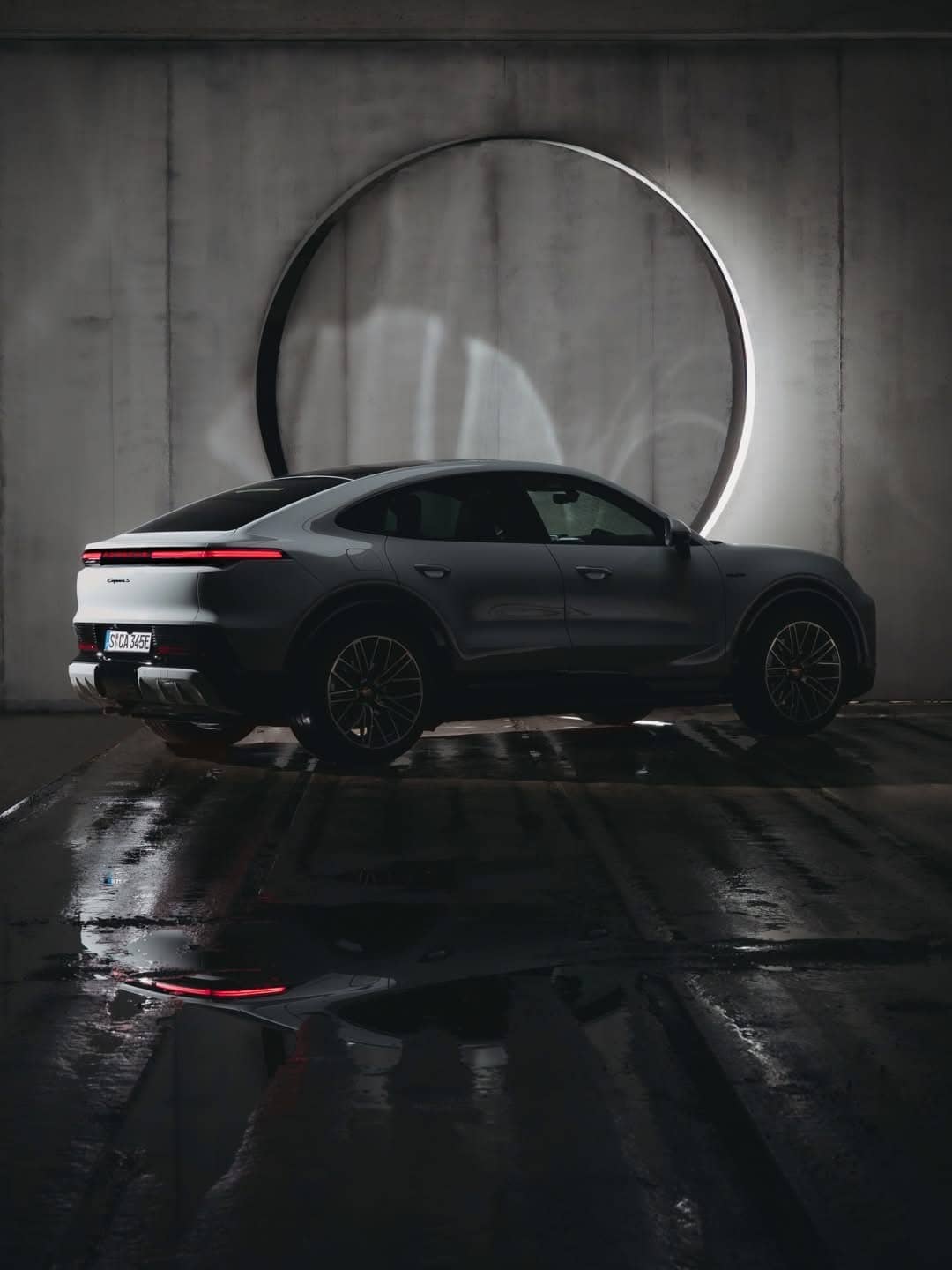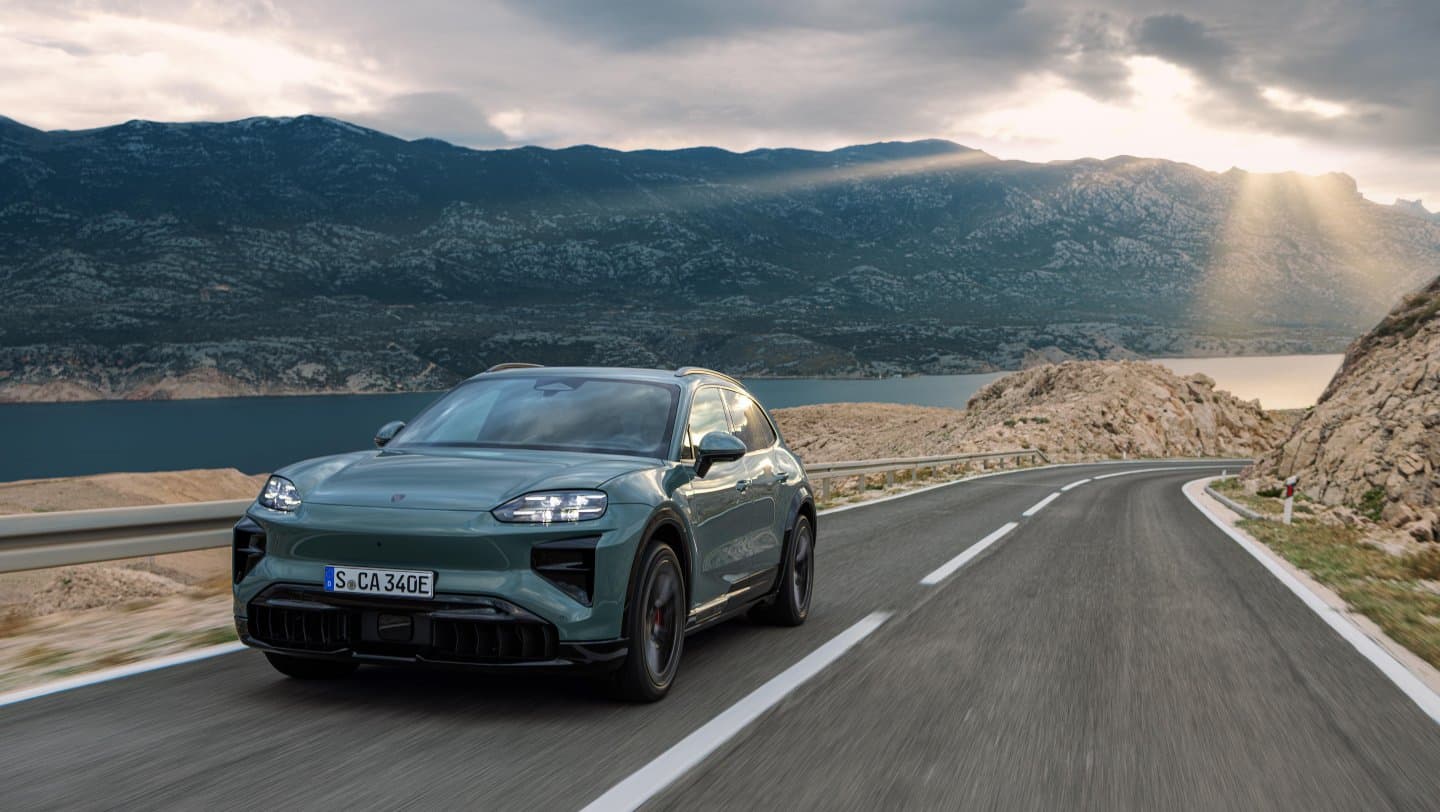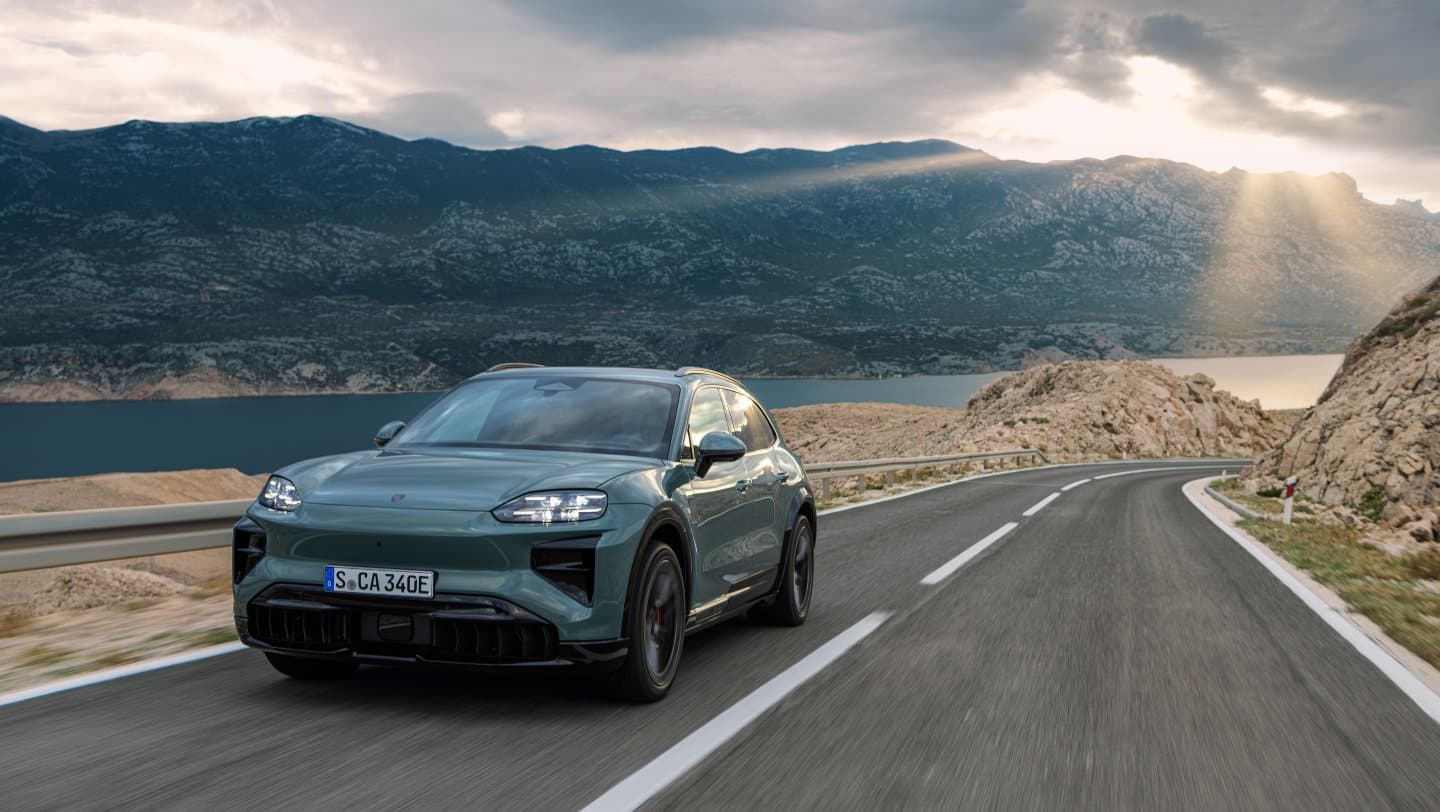
5:47 a.m. The garage door rolls up in suburban Denver. Outside, it's 14°F. Inside, the Cayenne Electric Turbo sits silent—no cold-start rattle, no exhaust plume, just 1,156 hp waiting under a layer of frost. Tap the throttle. The push comes instantly, pinning shoulders to leather that's already heated. 0–60 mph in 2.5 seconds. That's quicker than a 911 Turbo S, quicker than most things with a combustion engine, and it happens without a single decibel of drama.
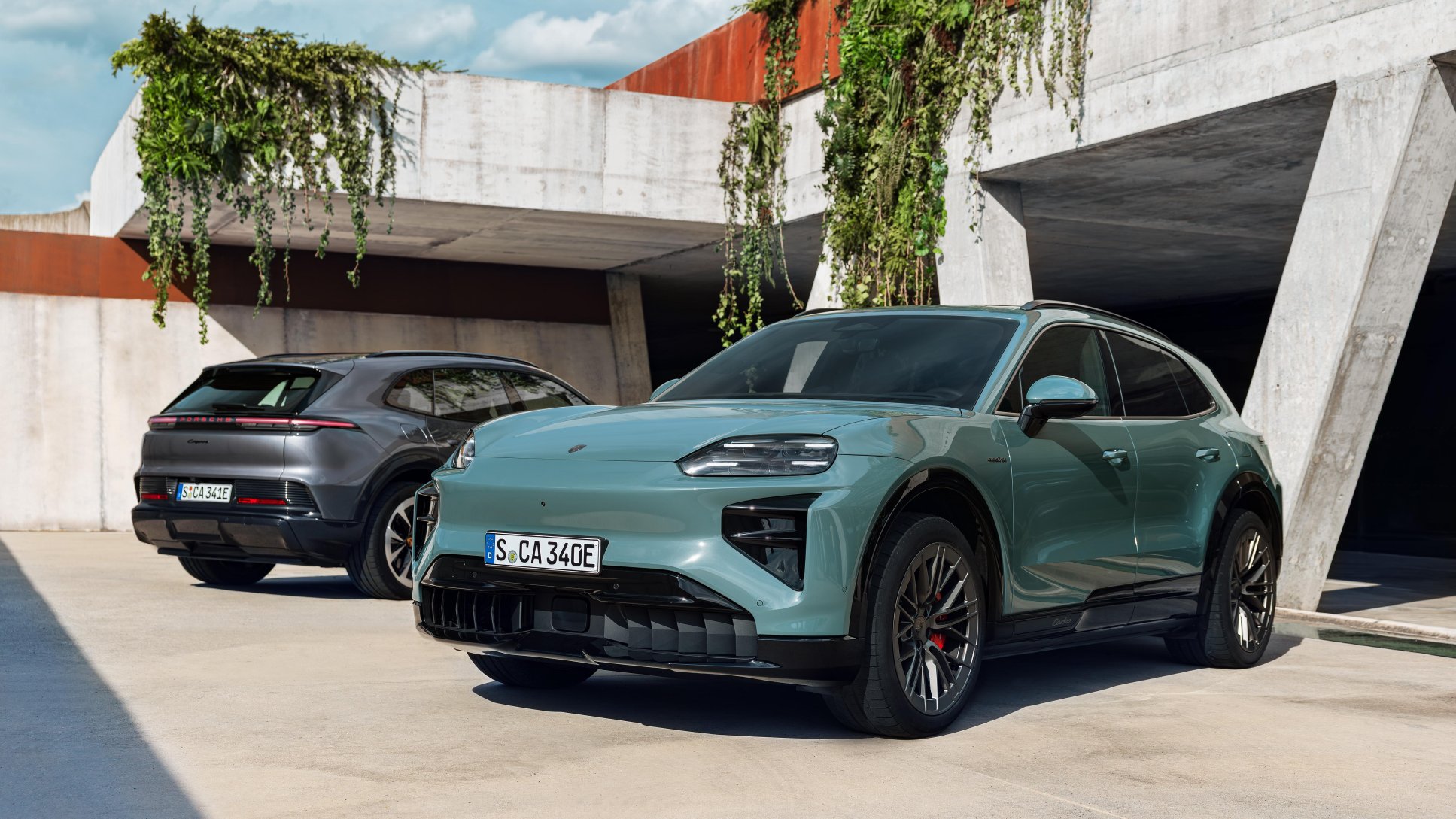
This is the Cayenne Electric Turbo—the most powerful production Porsche ever built, and the first time the brand's legendary SUV goes fully electric. It's also the most expensive way to move five people and a dog in near-silence. But the numbers tell only half the story.

What We're Testing—and What We're Not
This review covers the Cayenne Electric Turbo exclusively: 850 kW (1,156 hp), 400 kW peak charging, and a starting MSRP around $180,000 before destination and dealer fees. The base Cayenne Electric—roughly 100 hp less, slower charging, and an estimated $40,000 cheaper—will get its own story. Plug-in hybrid and combustion Cayenne models remain in the lineup, but they're not part of this conversation.
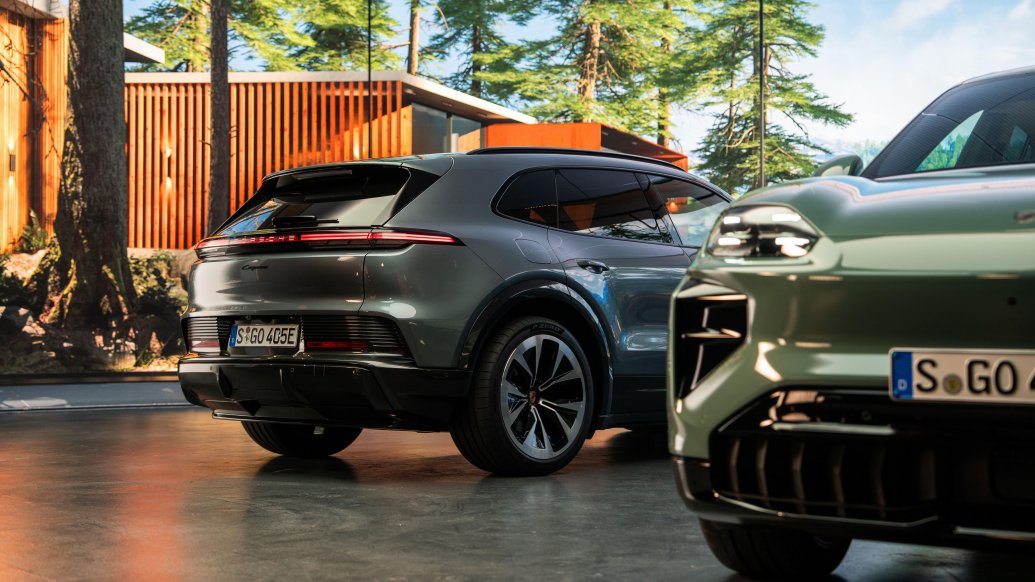
Every number, every sensation, every cost breakdown below applies to the Turbo variant only. If a figure doesn't say [Turbo], assume it's not here.
The Silence That Changes Morning Commutes
First week, first school run. Two kids in the back, backpacks wedged between car seats, the dog curled up in the cargo area. The Cayenne glides out of the subdivision at 7:12 a.m.—no engine warm-up, no idle vibration, no exhaust smell seeping through the vents. By the time the elementary school drop-off line starts moving, both kids are asleep again. The dog hasn't even lifted her head.
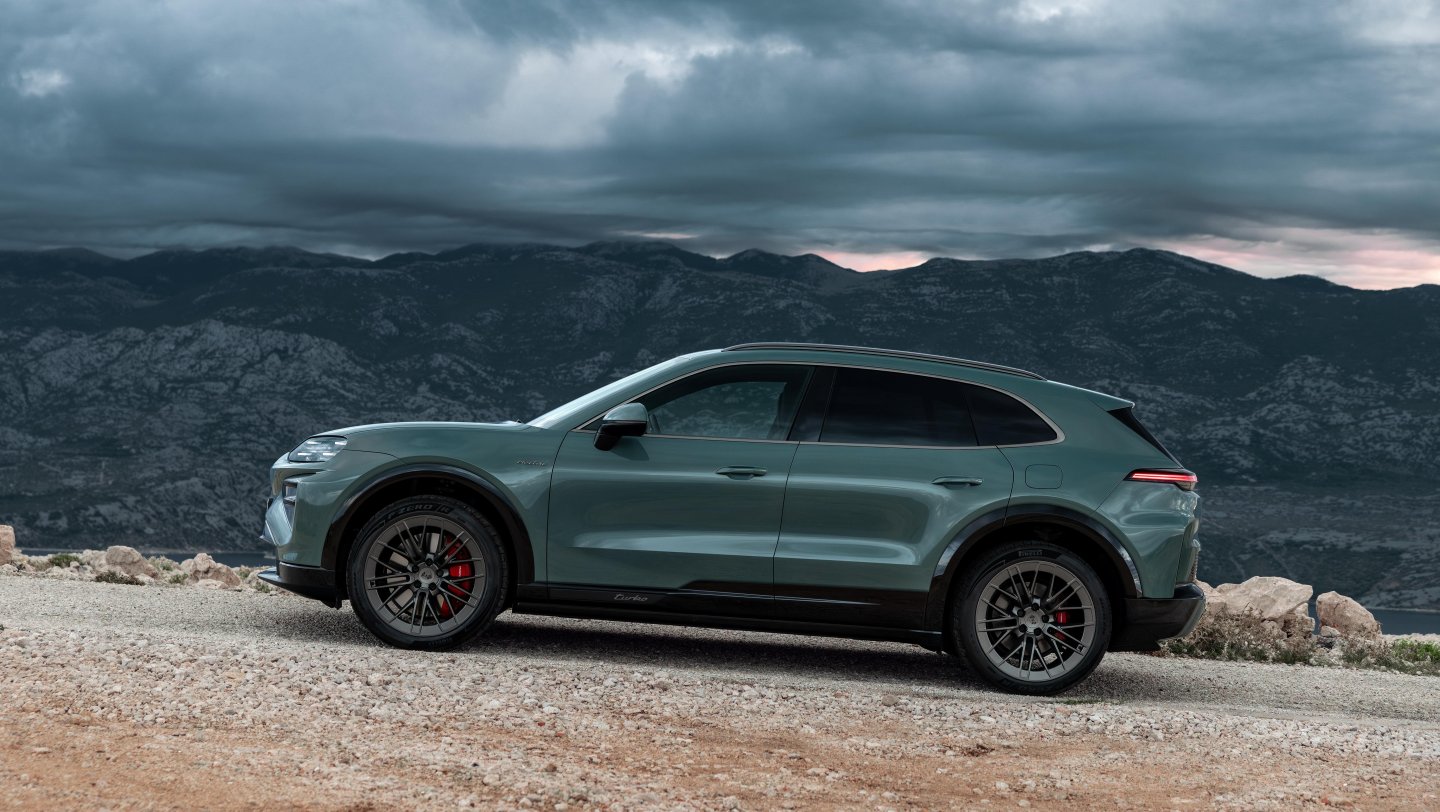
This is what 1,156 hp feels like at 15 mph: nothing. And that nothingness is the point.
What the Specs Don't Tell You
Porsche claims an EPA-estimated range around 380 miles Combined for the Turbo variant (official EPA certification pending as of November 2025). Real-world numbers from early owners on PorscheTalk forums suggest 320–340 miles at 70 mph in moderate weather, dropping to 260–280 miles when temperatures fall below 20°F. That's honest for a 6,000-lb SUV with this much power.
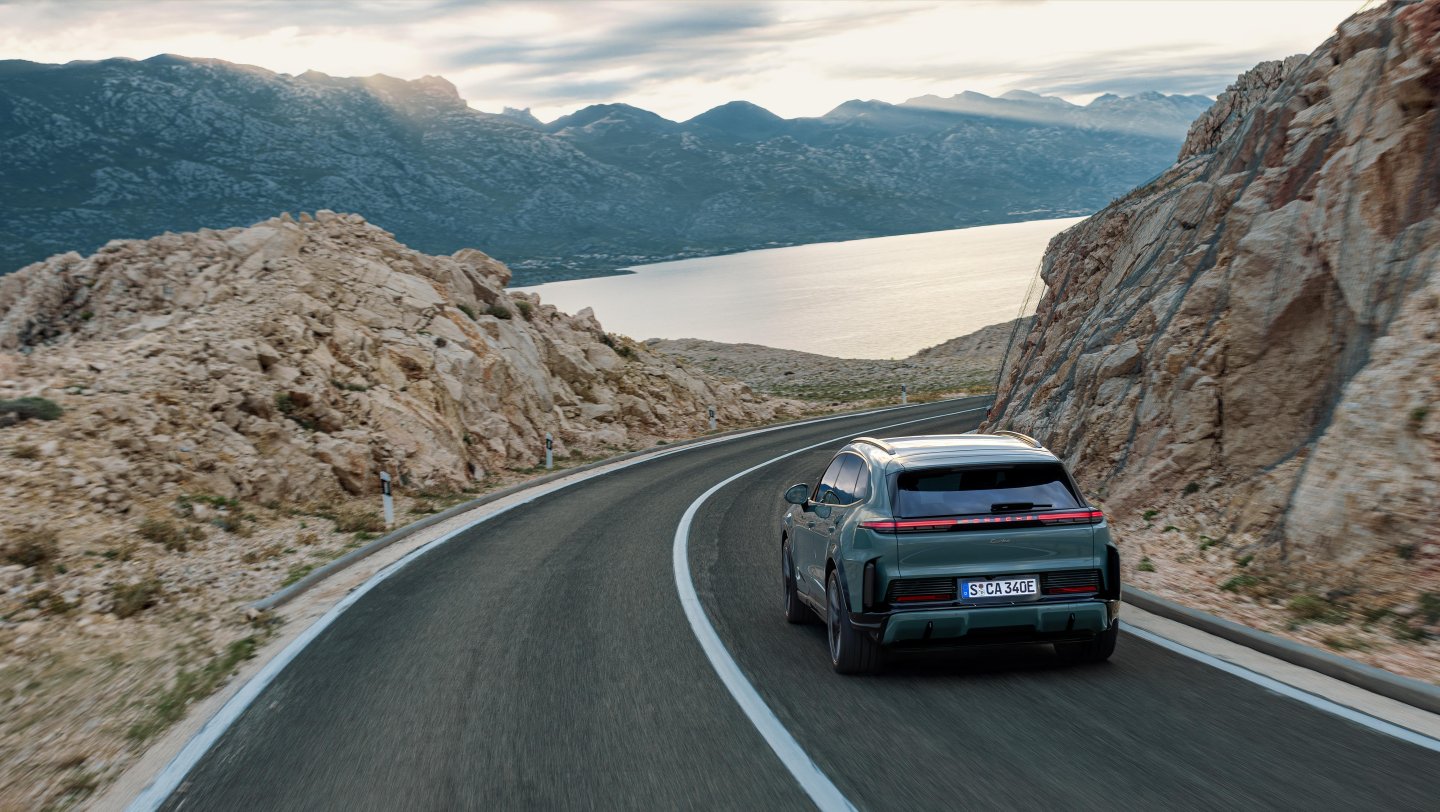
Charging tops out at 400 kW (kilowatts—a measure of charging speed) on Electrify America's newest 350 kW+ stalls—10% to 80% in roughly 18 minutes when the battery's preconditioned. At $0.56/kWh peak rates, a near-empty-to-80% session costs around $85. Compare that to $110 in premium fuel for the old Cayenne Turbo S E-Hybrid on the same 300-mile trip.
2.5 Seconds to 60 mph: The Push That Makes You Laugh
Empty two-lane highway outside Boulder. No traffic. No witnesses. Just 1,156 hp, all-wheel drive, and a right foot that's been too polite for too long. Full throttle from a roll. The Cayenne doesn't lunge—it detonates. The horizon compresses. The steering wheel tries to rip free. The speedometer climbs faster than the tachometer ever did in the old V8 models.
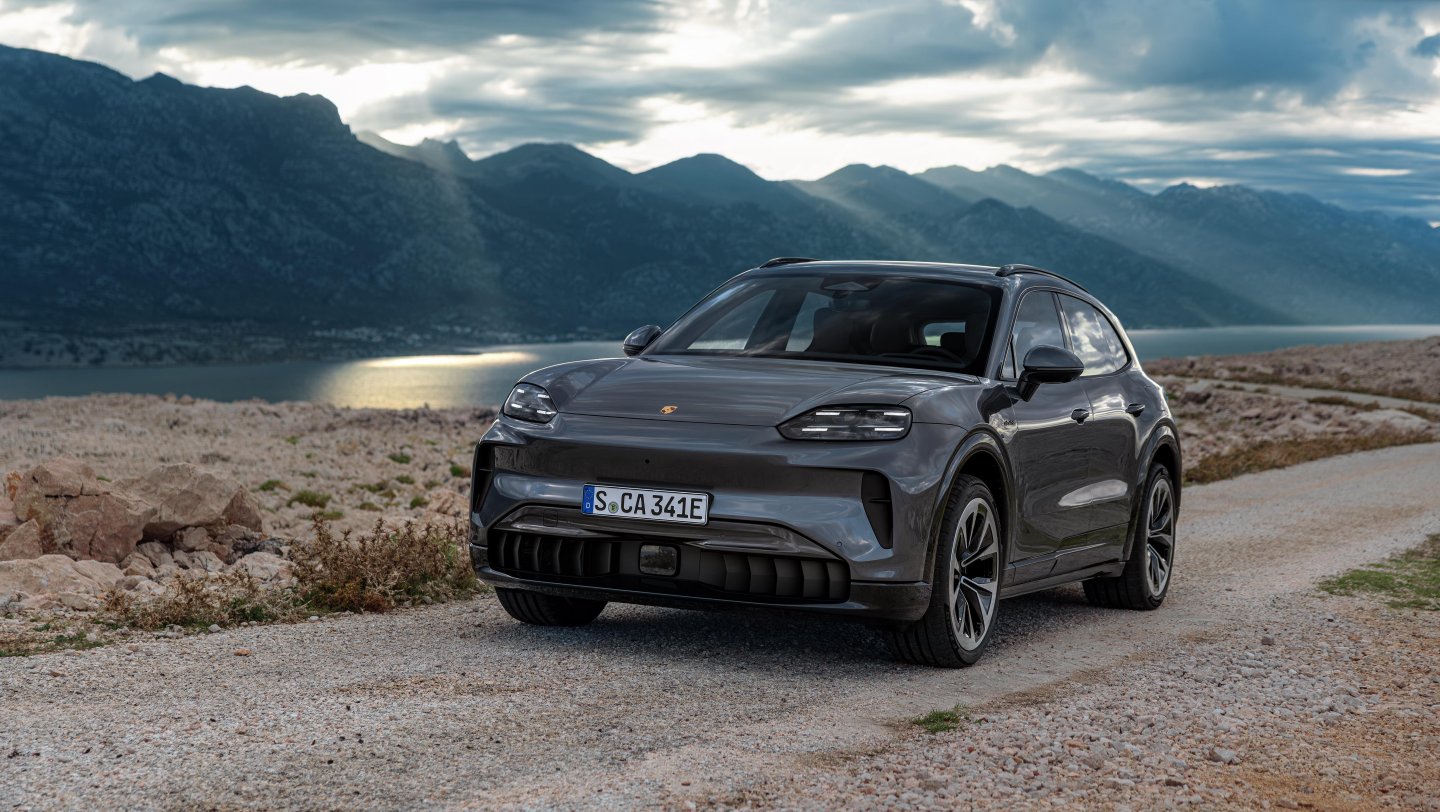
2.5 seconds to 60 mph. MotorTrend clocked 2.4 seconds with 1-foot rollout. That's supercar territory in a vehicle that seats five, tows 7,700 lbs, and has 27.2 cubic feet of cargo space behind the second row.
Real-World Range: The Cold Weather Reality
Week three, temperature drops to 8°F overnight. The Cayenne sits unplugged in the driveway. Morning comes. Range display shows 240 miles on a full charge—down from the usual 320. Battery conditioning to protect the cells in extreme cold, plus cabin heating that draws serious power, takes its toll.
Precondition while plugged in, though, and you preserve 30-40 miles of range. The Porsche app makes this simple: schedule departure time, and the car warms itself on grid power instead of battery power. It's a small habit that makes a significant difference in winter states.
The Interior: Where $180,000 Shows Up
Slide into the driver's seat. The leather is Porsche-grade—supple, perfectly stitched, broken in just enough to feel lived-in rather than showroom-stiff. The 12.6-inch curved display responds instantly, no lag, no stuttering through menus. Apple CarPlay is wireless and seamless. The Burmester sound system—optional but worth every penny of its $5,000 upcharge—delivers concert-hall clarity even at highway speeds.
Rear seats offer genuine adult space. Two six-footers fit comfortably with room to spare. The panoramic roof (standard on Turbo) floods the cabin with light without turning it into a greenhouse in summer. Cargo space is generous: 27.2 cubic feet behind the second row, 54.3 with seats folded. That's less than a Model X but more than a BMW iX.
Charging Infrastructure: The American Reality
Road trip from Denver to Vail, 100 miles each way. Electrify America station in Silverthorne has four 350 kW stalls. Three are working. One is occupied by a Rivian. Plug in at 22% charge. The Cayenne pulls 380 kW initially, tapering to 200 kW by 60%, then dropping to 100 kW after 80%. Total time from 22% to 85%: 21 minutes. Cost: $52.
This is the reality of electric road-tripping in 2025: infrastructure is improving but still inconsistent. The Cayenne's 400 kW capability is impressive, but you need the right charger, at the right time, with the battery at the right temperature. When it works, it's transformative. When it doesn't, you're waiting.
Off-Road Capability: More Than a Pavement Princess
Dirt road in Rocky Mountain National Park. The Cayenne Electric Turbo includes standard air suspension with adjustable ride height—up to 10 inches of ground clearance in Off-Road mode. Approach angle: 17.7 degrees. Departure angle: 22.1 degrees. Those aren't Wrangler numbers, but they're sufficient for fire roads, muddy trails, and snow-covered mountain passes.
Engage Gravel mode. The torque vectoring system shuffles power between wheels with millisecond precision. The weight—all 6,000 lbs of it—becomes an asset, pressing the tires into loose surfaces. The instant torque means no wheel spin, no drama, just steady forward progress. This isn't a rock crawler, but it's far more capable than most luxury SUV buyers will ever need.
The Competition: Where the Cayenne Stands
At $180,000, the Cayenne Electric Turbo competes with:
- BMW iX M60 ($110,000): Less power (619 hp), slower (3.6s 0-60), but $70,000 cheaper and nearly as luxurious
- Rivian R1S Quad Motor ($95,000): More off-road capability, more cargo space, less refined on pavement
- Tesla Model X Plaid ($90,000): Faster (2.5s 0-60), better charging network, less prestigious badge
- Mercedes EQS SUV ($125,000): More range (305 miles), quieter ride, less engaging to drive
The Cayenne wins on driving dynamics and badge prestige. It loses on value and practicality. If you want the best-driving electric SUV and can afford the premium, this is it. If you want the most sensible electric SUV, look elsewhere.
Who This Is For—and Who It's Not
Buy the Cayenne Electric Turbo if:
- You want supercar acceleration in a family-friendly package
- You value driving dynamics above all else
- The Porsche badge matters to you
- You have access to reliable 350 kW+ charging infrastructure
- $180,000 is within your budget without stretching
Skip it if:
- You prioritize value over performance
- You need maximum range or cargo space
- You do frequent long road trips through charging deserts
- You want the most practical electric SUV
- The base Cayenne Electric would meet your needs
The Verdict: Excellence at a Price
The Cayenne Electric Turbo is the most powerful production Porsche ever built. It's also one of the most expensive ways to go electric. At $180,000, it asks buyers to prioritize driving experience over practicality, badge prestige over value, and performance over efficiency.
For those who can afford it and value what it offers, the Cayenne Electric Turbo delivers. The acceleration is addictive. The handling is sublime. The interior is exquisite. The real-world usability—despite the price—is genuine. This isn't a garage queen; it's a daily driver that happens to be faster than most supercars.
But it's not for everyone. The base Cayenne Electric offers 90% of the experience at significantly lower cost. Competitors like the Rivian R1S and BMW iX M60 provide better value. The Tesla Model X Plaid is faster and cheaper.
The Cayenne Electric Turbo exists for buyers who want the best-driving electric SUV, period. If that's you, and you can afford the premium, this is the one. If you're looking for the most sensible choice, keep looking. Excellence, as always, comes at a price.