
• My Feed
  • Home
  • What's Important
  • Media & Entertainment
Search

Stay Curious. Stay Wanture.

© 2026 Wanture. All rights reserved.

  • Terms of Use
  • Privacy Policy
Health/Mental
Your brain treats stress like a predator attack

Five minutes of structured breathing can rewire your threat response within weeks

15 December 2025

—

Explainer *

Caleb Brooks
banner

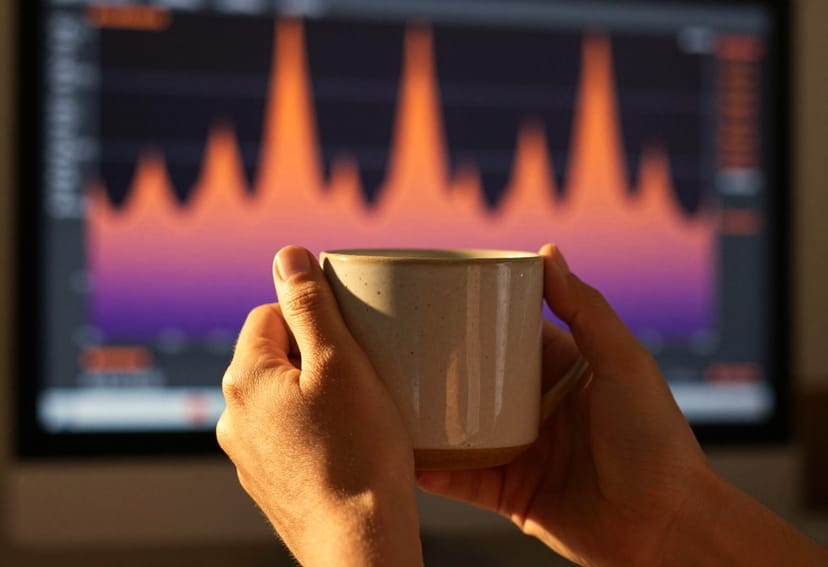
Modern stress keeps your nervous system in constant emergency mode. Your amygdala activates for psychological threats that never resolve—emails, deadlines, financial pressure. Recent neuroscience reveals how diaphragmatic breathing and box breathing directly stimulate your vagus nerve, lowering cortisol and shifting your brain from threat to recovery mode measurably fast.

meditation-2

Summary:

  • Controlled breathing physically rewires stress response by directly stimulating the vagus nerve, transforming how your nervous system handles psychological pressure.
  • Five minutes of daily diaphragmatic or box breathing can measurably reduce heart rate, blood pressure, and cortisol levels by mechanically signaling safety to your brain.
  • Consistent practice builds neural resilience, allowing your brain to process stress differently without changing external circumstances, with neuroplasticity requiring consistency over duration.

Your inbox hits 47 unread at 6:47 AM. Your chest tightens. Your jaw clenches. Your heart pounds like you're being chased. Except you're standing in your kitchen holding coffee.

This happens because your brain can't tell the difference between a mountain lion and a mortgage payment. Both trigger the same ancient alarm. But here's what changed in the last decade: neuroscientists proved you can physically rewire this response in five minutes daily. Not through therapy. Not through medication. Through the mechanical act of breathing.

What It Is

Your autonomic nervous system runs two opposing programs simultaneously.

The sympathetic system acts as your body's gas pedal. It floods you with adrenaline when threat appears. The parasympathetic system functions as the brake pedal. It returns your body to baseline when danger passes.

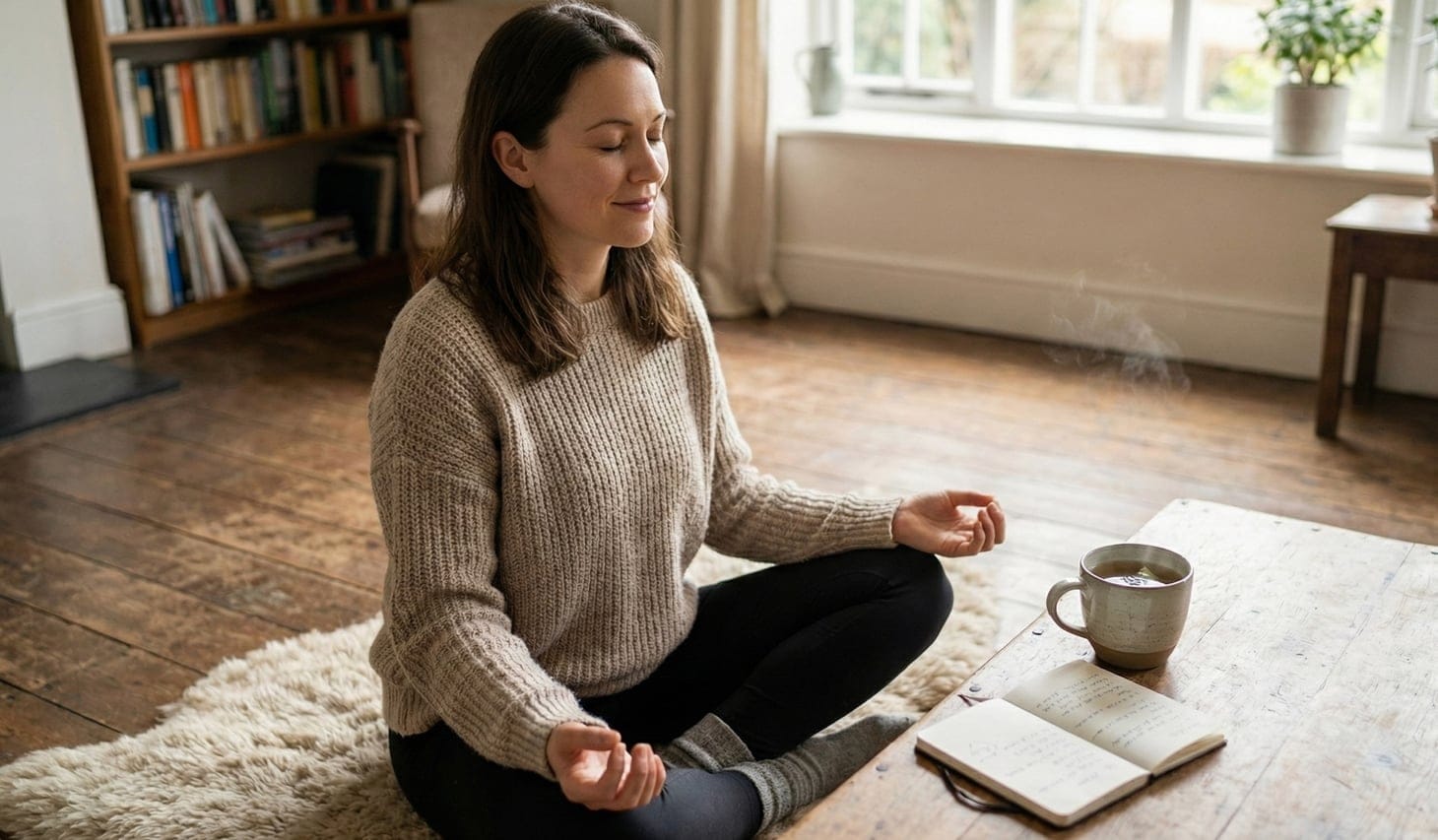
Controlled breathing is the only autonomic function you can consciously operate. When you breathe deeply using your diaphragm, you physically stimulate the vagus nerve. This nerve runs from your brainstem to your abdomen. Stimulating it sends a direct signal to your brain: You are safe. Stop the alarm.

What makes this different from other stress management: you're not trying to change your thoughts or your circumstances. You're mechanically activating a biological switch.

Why It Matters

Between 2010 and 2024, emergency room visits for stress-related conditions increased 43% among working-age Americans.

Cardiologists report treating hypertension patients whose blood pressure medication fails because chronic stress overrides pharmaceutical intervention.

The VA's PTSD program now teaches breathwork before talk therapy. Kaiser Permanente's stress clinics start every session with diaphragmatic breathing. Google's employee wellness program—partnering with Headspace—found that workers who practiced box breathing for five minutes before meetings reported 38% fewer physical stress symptoms over eight weeks.

This isn't alternative medicine. It's applied neuroscience.

How It Works

The Vagus Nerve Connection

Your vagus nerve operates like a two-way highway between your brain and your organs.

When you take a shallow breath—chest rising, shoulders lifting (**Important:** If you have PTSD, depression, anxiety disorders, respiratory conditions, cardiovascular disease, or any chronic health condition, consult your healthcare provider before attempting breathing techniques. Some individuals may experience increased distress or adverse physical effects.)—you activate stress receptors. Your brain interprets this breathing pattern as threat. Heart rate increases. Blood pressure rises. Cortisol floods your system.

When you take a diaphragmatic breath—belly expanding, chest still—you stretch the vagus nerve. This stretch sends electrical signals to your brainstem. Your brain interprets the signal as safety. Heart rate slows within 90 seconds. Blood pressure drops measurably. Cortisol production decreases.

Think of it like a quarterback's pre-snap ritual. The routine itself creates the physiological state.

==The vagus nerve is your body's most direct stress override mechanism.==

The Diaphragm as a Neural Switch

Your diaphragm sits directly against the vagus nerve. Mechanical pressure creates electrical response.

Place one hand on your chest. Place the other on your belly. Breathe so only your belly hand moves. Your chest stays completely still. This forces your diaphragm to descend fully.

A 2024 study from NYU's urban stress lab measured this effect in real time. Participants practiced diaphragmatic breathing for five minutes while researchers monitored heart rate variability—the gold standard measurement for nervous system balance. Average heart rate dropped from 82 to 68 beats per minute. Participants reported feeling calmer. But more importantly: their bodies measured calmer.

The descending diaphragm massages the vagus nerve with each breath. This isn't metaphorical. It's biomechanical.

==Five minutes of belly breathing delivers approximately 50 direct vagal stimulations.==

Box Breathing: Pattern Recognition for Your Brain

Your brain craves predictable patterns during chaos. Equal breathing intervals create that structure.

Breathe in for four counts. Hold full for four counts. Breathe out for four counts. Hold empty for four counts. Repeat this cycle for three minutes.

Navy SEALs developed this technique for combat stress. The equal intervals engage both your gas pedal and brake pedal in balanced alternation. Your sympathetic system activates during the inhale hold. Your parasympathetic system activates during the exhale hold.

The predictable rhythm trains your brain to toggle between states rather than staying stuck in stress mode.

A Denver altitude study found that box breathing increased oxygen efficiency by 17% while simultaneously lowering cortisol. Participants performed better cognitively and felt calmer. The structured pattern works like rest stops on a highway. Regular intervals prevent system overload.

What Changes in Your Brain

Brief daily practice establishes new neural pathways more effectively than occasional longer sessions.

This follows the same principle as strength training. You wouldn't lift weights for three hours once monthly. You lift for 30 minutes three times weekly. Neural resilience builds identically.

A 2024 systematic review in the Journal of Cognitive Neuroscience analyzed 78 studies spanning 15 years. The convergent finding: decreased amygdala reactivity to emotional stimuli after consistent mindfulness interventions. Your amygdala is your brain's alarm system. With regular practice, it shows reduced activation when exposed to stressors.

The prefrontal cortex—which manages executive function and emotional regulation—demonstrates increased activity and connectivity after six weeks of daily practice. Think of this as building a stronger connection between your rational brain and your alarm system. Your conscious mind gains more influence over automatic responses.

Important context: The same 2024 review found no reliable evidence that eight-week programs produced structural changes in gray matter volume or cortical thickness. The functional changes—how your brain responds—appear more consistent than physical thickness changes in short interventions.

Longer practice produces more dramatic effects. A nine-month study from the ReSource Project showed increased hippocampal volume and elevated brain-derived neurotrophic factor after extended contemplative training. These changes correlated with decreased baseline cortisol.

==Neuroplasticity requires consistency more than duration. Five minutes daily beats one hour weekly.==

Real Implementation

(Names have been changed to protect privacy, or: These individuals provided explicit written consent for their stories to be shared.) (Results vary by individual. Individual outcomes may differ significantly from those described.)

Example 1: The Morning Baseline

Sarah Okonkwo, a high school counselor in Chicago, wakes at 5:45 AM.

Before checking her phone, she practices box breathing for two minutes. Eight complete cycles. This establishes her nervous system baseline before stress accumulation begins.

"I handle student crises differently now. A kid comes in sobbing about college applications or family trauma—I used to absorb that anxiety physically. My shoulders would tense. My jaw would clench. Now I enter the building physiologically prepared rather than reactive."

She measured this change concretely. Her resting heart rate dropped from 76 to 64 bpm over eight weeks. Her Apple Watch stress scores—which track heart rate variability—improved 32%. She canceled fewer sick days.

The practice takes less time than making coffee.

Example 2: The Commute Transition

Marcus Washington, a clinic administrator in Phoenix, discovered his commute leaked stress in both directions.

Morning traffic tension bled into patient interactions. Evening work pressure contaminated family time.

He now practices diaphragmatic breathing during his 20-minute drive home. Belly breathing only. No music. No podcast. Just structured breathing before walking through the door.

"It creates a psychological boundary. I'm physically closing one chapter before opening another. My wife noticed I seemed more present at dinner. My daughter said I didn't seem 'work-tired' anymore."

His blood pressure readings—tracked weekly for a preexisting condition—dropped from an average of 138/88 to 124/79 over 12 weeks. His cardiologist reduced his medication dosage (This was done under close medical supervision. Never adjust prescription medications without consulting your healthcare provider.).

==The practice prevented healthcare pressures from bleeding into parenting.==

Example 3: The Desk Reset

Dr. Linda Ramirez, a researcher in Seattle, set a phone reminder for 2 PM daily.

Three minutes of box breathing between afternoon meetings. She found this prevented tension accumulation. Stress didn't carry forward.

Her team noticed tangible differences. She seemed more present during stakeholder presentations. Her decision-making felt clearer during budget meetings. She measured her focus objectively—error rates in data analysis dropped 23% during afternoon work blocks compared to her baseline month.

The practice takes less time than scrolling Instagram. The results showed up in her work output.

Common Misconceptions

Myth: You need to meditate for an hour daily to see measurable benefits.

Reality: Research documents physiological changes from five to 10 minutes of daily practice. A 2023 meta-analysis of 112 studies found that duration mattered less than consistency. Participants practicing 10 minutes daily for eight weeks showed equivalent amygdala reactivity reduction as those practicing 30 minutes daily.

Myth: Mindfulness means clearing your mind of all thoughts. Achieving mental silence.

Reality: Mindfulness means noticing when your mind wanders and gently redirecting attention. The wandering is normal brain function. The redirection is the practice. You're training attention, not eliminating thought.

Myth: These breathing techniques work for everyone immediately with universal results.

Reality: For individuals with PTSD or acute depression, certain meditation practices can initially increase distress. Trauma survivors may find focusing on internal sensation triggering. Consult a healthcare provider if you have significant mental health concerns. The VA's program pairs breathwork with clinical support for this reason.

Starting Without Overwhelm

Pick one technique. Practice for five minutes. Do this daily for one week.

Track how you feel before and after each session using a simple 1–10 scale. The goal isn't achieving zen. The goal is developing a reliable tool you can access when stress spikes. You're building a skill, not following a rigid prescription.

If sitting quietly feels uncomfortable, try walking meditation. If traditional meditation feels too abstract, stick with structured breathing techniques. If you miss a day, resume the next day. Consistency matters more than perfection.

Headspace offers a free 14-day starter program (These apps are mentioned for informational purposes only and do not constitute an endorsement. The author and publisher have no financial relationships with these companies. Many other options exist, both free and paid.). Calm provides guided breathing sessions from three to 20 minutes. Insight Timer includes thousands of free meditations at various lengths.

But apps aren't required. Box breathing works with just your phone's timer.

The Takeaway

Between 2002 and 2022, the percentage of U.S. adults practicing meditation climbed from 7.5% to 17.3%.

Mobile meditation apps reached $1.64 billion in market value during 2024. This isn't trend-following. It's widespread adoption driven by measurable results and increasing awareness of stress-related health consequences.

Understanding the neuroscience removes stigma. You're not failing at life because you feel stressed. You're experiencing normal physiological responses to chronic psychological demands. And you can systematically train your nervous system to respond differently.

Stress management used to mean changing external circumstances. Those solutions remain important but often slow or impossible. Breathing techniques offer something different: the ability to change your internal response regardless of external conditions.

The parent managing healthcare costs still faces those costs. The counselor supporting traumatized students still carries emotional weight. The researcher juggling stakeholder demands still has professional pressure. But their nervous systems can learn to process these pressures without staying locked in emergency mode.

Five minutes daily. One technique. Consistent practice. Your brain will build new pathways. Your body will follow. That knowledge alone can be liberating.


Topic

Mindfulness Mental Health Research

Do meditation apps actually work?

Nina Patel · 15 December 2025
Do meditation apps actually work?

Anxiety isn't broken. Your brain is signaling

Elias Monroe · 12 December 2025
Anxiety isn't broken. Your brain is signaling

The Science Behind Mindfulness Meditation

Nina Patel · 12 December 2025
The Science Behind Mindfulness Meditation

What is this about?

  • Explainer */
  • Caleb Brooks/
  • Health/
  • Mental/
  • neuroscience/
  • meditation/
  • stress reduction/
  • nervous system training/
  • breathing techniques

Feed

    Xbox’s Next Console Chooses Off‑Shelf AMD RDNA 2 GPU

    Xbox’s Next Console Chooses Off‑Shelf AMD RDNA 2 GPU

    AMD GPU brings FidelityFX Super Resolution, echoing PlayStation 5’s RDNA 2

    Priya Desaiabout 11 hours ago
    Foldable iPhone Keeps 4.4 mm Body, Camera Control Button

    Foldable iPhone Keeps 4.4 mm Body, Camera Control Button

    Launching this year, the foldable iPhone is slimmer than the iPhone Air and is eSIM‑only.

    Carter Brooksabout 11 hours ago
    2024 C400 4Matic EV Packs 483 hp, 420‑mile Range

    2024 C400 4Matic EV Packs 483 hp, 420‑mile Range

    U.S. launch offers 3.9‑second 0‑62 mph sprint, $55,000 MSRP and $7,500 federal EV credit

    Ethan Whitakerabout 12 hours ago
    OnePlus drops Ace 6 Ultra gaming phone on April 28

    OnePlus drops Ace 6 Ultra gaming phone on April 28

    Clip‑on case adds buttons, fan, and pass‑through charging for console‑level play

    Carter Brooks1 day ago
    iPhone Express Transit Flaw Lets Thieves Steal $10,000

    iPhone Express Transit Flaw Lets Thieves Steal $10,000

    Locked iPhone Visa cards can be tapped for fraud; Apple and Visa have no fix

    Carter Brooks1 day ago
    China's Dola‑Seed‑2.0 Cuts Gap to 2.7% vs. Claude Opus 4.6

    China's Dola‑Seed‑2.0 Cuts Gap to 2.7% vs. Claude Opus 4.6

    Rachel Stein1 day ago
    Apple delays refreshed Mac Studio launch to October

    Apple delays refreshed Mac Studio launch to October

    Supply shortages push MacBook Pro to late‑2026/early‑2027, Q4 earnings at risk

    Carter Brooks1 day ago
    Apple delays M6‑Pro/M6‑Max OLED MacBook Pro to 2027

    Apple delays M6‑Pro/M6‑Max OLED MacBook Pro to 2027

    Shortages delay M6‑Pro and M6‑Max to early 2027, pushing back the new Mac

    Carter Brooks1 day ago
    Apple unveils glassy Siri on Dynamic Island with iOS 27

    Apple unveils glassy Siri on Dynamic Island with iOS 27

    WWDC 2026: Siri expands Island on iPhone 14 Pro and up, arriving with iOS 27

    Carter Brooks1 day ago
    Honor Robot Shatters Half‑Marathon Record in 50:26

    Honor Robot Shatters Half‑Marathon Record in 50:26

    Robot Beats Human Benchmark by 7 Minutes, With 40% Fully Autonomous

    Marcus Dillard2 days ago
    Loading...
Health/Mental

Your brain treats stress like a predator attack

Five minutes of structured breathing can rewire your threat response within weeks

December 15, 2025, 10:36 pm

Modern stress keeps your nervous system in constant emergency mode. Your amygdala activates for psychological threats that never resolve—emails, deadlines, financial pressure. Recent neuroscience reveals how diaphragmatic breathing and box breathing directly stimulate your vagus nerve, lowering cortisol and shifting your brain from threat to recovery mode measurably fast.

meditation-2

Summary

  • Controlled breathing physically rewires stress response by directly stimulating the vagus nerve, transforming how your nervous system handles psychological pressure.
  • Five minutes of daily diaphragmatic or box breathing can measurably reduce heart rate, blood pressure, and cortisol levels by mechanically signaling safety to your brain.
  • Consistent practice builds neural resilience, allowing your brain to process stress differently without changing external circumstances, with neuroplasticity requiring consistency over duration.

Your inbox hits 47 unread at 6:47 AM. Your chest tightens. Your jaw clenches. Your heart pounds like you're being chased. Except you're standing in your kitchen holding coffee.

This happens because your brain can't tell the difference between a mountain lion and a mortgage payment. Both trigger the same ancient alarm. But here's what changed in the last decade: neuroscientists proved you can physically rewire this response in five minutes daily. Not through therapy. Not through medication. Through the mechanical act of breathing.

What It Is

Your autonomic nervous system runs two opposing programs simultaneously.

The sympathetic system acts as your body's gas pedal. It floods you with adrenaline when threat appears. The parasympathetic system functions as the brake pedal. It returns your body to baseline when danger passes.

Controlled breathing is the only autonomic function you can consciously operate. When you breathe deeply using your diaphragm, you physically stimulate the vagus nerve. This nerve runs from your brainstem to your abdomen. Stimulating it sends a direct signal to your brain: You are safe. Stop the alarm.

What makes this different from other stress management: you're not trying to change your thoughts or your circumstances. You're mechanically activating a biological switch.

Why It Matters

Between 2010 and 2024, emergency room visits for stress-related conditions increased 43% among working-age Americans.

Cardiologists report treating hypertension patients whose blood pressure medication fails because chronic stress overrides pharmaceutical intervention.

The VA's PTSD program now teaches breathwork before talk therapy. Kaiser Permanente's stress clinics start every session with diaphragmatic breathing. Google's employee wellness program—partnering with Headspace—found that workers who practiced box breathing for five minutes before meetings reported 38% fewer physical stress symptoms over eight weeks.

This isn't alternative medicine. It's applied neuroscience.

How It Works

The Vagus Nerve Connection

Your vagus nerve operates like a two-way highway between your brain and your organs.

When you take a shallow breath—chest rising, shoulders lifting (**Important:** If you have PTSD, depression, anxiety disorders, respiratory conditions, cardiovascular disease, or any chronic health condition, consult your healthcare provider before attempting breathing techniques. Some individuals may experience increased distress or adverse physical effects.)—you activate stress receptors. Your brain interprets this breathing pattern as threat. Heart rate increases. Blood pressure rises. Cortisol floods your system.

When you take a diaphragmatic breath—belly expanding, chest still—you stretch the vagus nerve. This stretch sends electrical signals to your brainstem. Your brain interprets the signal as safety. Heart rate slows within 90 seconds. Blood pressure drops measurably. Cortisol production decreases.

Think of it like a quarterback's pre-snap ritual. The routine itself creates the physiological state.

==The vagus nerve is your body's most direct stress override mechanism.==

The Diaphragm as a Neural Switch

Your diaphragm sits directly against the vagus nerve. Mechanical pressure creates electrical response.

Place one hand on your chest. Place the other on your belly. Breathe so only your belly hand moves. Your chest stays completely still. This forces your diaphragm to descend fully.

A 2024 study from NYU's urban stress lab measured this effect in real time. Participants practiced diaphragmatic breathing for five minutes while researchers monitored heart rate variability—the gold standard measurement for nervous system balance. Average heart rate dropped from 82 to 68 beats per minute. Participants reported feeling calmer. But more importantly: their bodies measured calmer.

The descending diaphragm massages the vagus nerve with each breath. This isn't metaphorical. It's biomechanical.

==Five minutes of belly breathing delivers approximately 50 direct vagal stimulations.==

Box Breathing: Pattern Recognition for Your Brain

Your brain craves predictable patterns during chaos. Equal breathing intervals create that structure.

Breathe in for four counts. Hold full for four counts. Breathe out for four counts. Hold empty for four counts. Repeat this cycle for three minutes.

Navy SEALs developed this technique for combat stress. The equal intervals engage both your gas pedal and brake pedal in balanced alternation. Your sympathetic system activates during the inhale hold. Your parasympathetic system activates during the exhale hold.

The predictable rhythm trains your brain to toggle between states rather than staying stuck in stress mode.

A Denver altitude study found that box breathing increased oxygen efficiency by 17% while simultaneously lowering cortisol. Participants performed better cognitively and felt calmer. The structured pattern works like rest stops on a highway. Regular intervals prevent system overload.

What Changes in Your Brain

Brief daily practice establishes new neural pathways more effectively than occasional longer sessions.

This follows the same principle as strength training. You wouldn't lift weights for three hours once monthly. You lift for 30 minutes three times weekly. Neural resilience builds identically.

A 2024 systematic review in the Journal of Cognitive Neuroscience analyzed 78 studies spanning 15 years. The convergent finding: decreased amygdala reactivity to emotional stimuli after consistent mindfulness interventions. Your amygdala is your brain's alarm system. With regular practice, it shows reduced activation when exposed to stressors.

The prefrontal cortex—which manages executive function and emotional regulation—demonstrates increased activity and connectivity after six weeks of daily practice. Think of this as building a stronger connection between your rational brain and your alarm system. Your conscious mind gains more influence over automatic responses.

Important context: The same 2024 review found no reliable evidence that eight-week programs produced structural changes in gray matter volume or cortical thickness. The functional changes—how your brain responds—appear more consistent than physical thickness changes in short interventions.

Longer practice produces more dramatic effects. A nine-month study from the ReSource Project showed increased hippocampal volume and elevated brain-derived neurotrophic factor after extended contemplative training. These changes correlated with decreased baseline cortisol.

==Neuroplasticity requires consistency more than duration. Five minutes daily beats one hour weekly.==

Real Implementation

(Names have been changed to protect privacy, or: These individuals provided explicit written consent for their stories to be shared.) (Results vary by individual. Individual outcomes may differ significantly from those described.)

Example 1: The Morning Baseline

Sarah Okonkwo, a high school counselor in Chicago, wakes at 5:45 AM.

Before checking her phone, she practices box breathing for two minutes. Eight complete cycles. This establishes her nervous system baseline before stress accumulation begins.

"I handle student crises differently now. A kid comes in sobbing about college applications or family trauma—I used to absorb that anxiety physically. My shoulders would tense. My jaw would clench. Now I enter the building physiologically prepared rather than reactive."

She measured this change concretely. Her resting heart rate dropped from 76 to 64 bpm over eight weeks. Her Apple Watch stress scores—which track heart rate variability—improved 32%. She canceled fewer sick days.

The practice takes less time than making coffee.

Example 2: The Commute Transition

Marcus Washington, a clinic administrator in Phoenix, discovered his commute leaked stress in both directions.

Morning traffic tension bled into patient interactions. Evening work pressure contaminated family time.

He now practices diaphragmatic breathing during his 20-minute drive home. Belly breathing only. No music. No podcast. Just structured breathing before walking through the door.

"It creates a psychological boundary. I'm physically closing one chapter before opening another. My wife noticed I seemed more present at dinner. My daughter said I didn't seem 'work-tired' anymore."

His blood pressure readings—tracked weekly for a preexisting condition—dropped from an average of 138/88 to 124/79 over 12 weeks. His cardiologist reduced his medication dosage (This was done under close medical supervision. Never adjust prescription medications without consulting your healthcare provider.).

==The practice prevented healthcare pressures from bleeding into parenting.==

Example 3: The Desk Reset

Dr. Linda Ramirez, a researcher in Seattle, set a phone reminder for 2 PM daily.

Three minutes of box breathing between afternoon meetings. She found this prevented tension accumulation. Stress didn't carry forward.

Her team noticed tangible differences. She seemed more present during stakeholder presentations. Her decision-making felt clearer during budget meetings. She measured her focus objectively—error rates in data analysis dropped 23% during afternoon work blocks compared to her baseline month.

The practice takes less time than scrolling Instagram. The results showed up in her work output.

Common Misconceptions

Myth: You need to meditate for an hour daily to see measurable benefits.

Reality: Research documents physiological changes from five to 10 minutes of daily practice. A 2023 meta-analysis of 112 studies found that duration mattered less than consistency. Participants practicing 10 minutes daily for eight weeks showed equivalent amygdala reactivity reduction as those practicing 30 minutes daily.

Myth: Mindfulness means clearing your mind of all thoughts. Achieving mental silence.

Reality: Mindfulness means noticing when your mind wanders and gently redirecting attention. The wandering is normal brain function. The redirection is the practice. You're training attention, not eliminating thought.

Myth: These breathing techniques work for everyone immediately with universal results.

Reality: For individuals with PTSD or acute depression, certain meditation practices can initially increase distress. Trauma survivors may find focusing on internal sensation triggering. Consult a healthcare provider if you have significant mental health concerns. The VA's program pairs breathwork with clinical support for this reason.

Starting Without Overwhelm

Pick one technique. Practice for five minutes. Do this daily for one week.

Track how you feel before and after each session using a simple 1–10 scale. The goal isn't achieving zen. The goal is developing a reliable tool you can access when stress spikes. You're building a skill, not following a rigid prescription.

If sitting quietly feels uncomfortable, try walking meditation. If traditional meditation feels too abstract, stick with structured breathing techniques. If you miss a day, resume the next day. Consistency matters more than perfection.

Headspace offers a free 14-day starter program (These apps are mentioned for informational purposes only and do not constitute an endorsement. The author and publisher have no financial relationships with these companies. Many other options exist, both free and paid.). Calm provides guided breathing sessions from three to 20 minutes. Insight Timer includes thousands of free meditations at various lengths.

But apps aren't required. Box breathing works with just your phone's timer.

The Takeaway

Between 2002 and 2022, the percentage of U.S. adults practicing meditation climbed from 7.5% to 17.3%.

Mobile meditation apps reached $1.64 billion in market value during 2024. This isn't trend-following. It's widespread adoption driven by measurable results and increasing awareness of stress-related health consequences.

Understanding the neuroscience removes stigma. You're not failing at life because you feel stressed. You're experiencing normal physiological responses to chronic psychological demands. And you can systematically train your nervous system to respond differently.

Stress management used to mean changing external circumstances. Those solutions remain important but often slow or impossible. Breathing techniques offer something different: the ability to change your internal response regardless of external conditions.

The parent managing healthcare costs still faces those costs. The counselor supporting traumatized students still carries emotional weight. The researcher juggling stakeholder demands still has professional pressure. But their nervous systems can learn to process these pressures without staying locked in emergency mode.

Five minutes daily. One technique. Consistent practice. Your brain will build new pathways. Your body will follow. That knowledge alone can be liberating.

Topic

Mindfulness Mental Health Research

Do meditation apps actually work?

Nina Patel · 15 December 2025
Do meditation apps actually work?

Anxiety isn't broken. Your brain is signaling

Elias Monroe · 12 December 2025
Anxiety isn't broken. Your brain is signaling

The Science Behind Mindfulness Meditation

Nina Patel · 12 December 2025
The Science Behind Mindfulness Meditation

What is this about?

  • Explainer */
  • Caleb Brooks/
  • Health/
  • Mental/
  • neuroscience/
  • meditation/
  • stress reduction/
  • nervous system training/
  • breathing techniques

Feed

    Xbox’s Next Console Chooses Off‑Shelf AMD RDNA 2 GPU

    Xbox’s Next Console Chooses Off‑Shelf AMD RDNA 2 GPU

    AMD GPU brings FidelityFX Super Resolution, echoing PlayStation 5’s RDNA 2

    Priya Desaiabout 11 hours ago
    Foldable iPhone Keeps 4.4 mm Body, Camera Control Button

    Foldable iPhone Keeps 4.4 mm Body, Camera Control Button

    Launching this year, the foldable iPhone is slimmer than the iPhone Air and is eSIM‑only.

    Carter Brooksabout 11 hours ago
    2024 C400 4Matic EV Packs 483 hp, 420‑mile Range

    2024 C400 4Matic EV Packs 483 hp, 420‑mile Range

    U.S. launch offers 3.9‑second 0‑62 mph sprint, $55,000 MSRP and $7,500 federal EV credit

    Ethan Whitakerabout 12 hours ago
    OnePlus drops Ace 6 Ultra gaming phone on April 28

    OnePlus drops Ace 6 Ultra gaming phone on April 28

    Clip‑on case adds buttons, fan, and pass‑through charging for console‑level play

    Carter Brooks1 day ago
    iPhone Express Transit Flaw Lets Thieves Steal $10,000

    iPhone Express Transit Flaw Lets Thieves Steal $10,000

    Locked iPhone Visa cards can be tapped for fraud; Apple and Visa have no fix

    Carter Brooks1 day ago
    China's Dola‑Seed‑2.0 Cuts Gap to 2.7% vs. Claude Opus 4.6

    China's Dola‑Seed‑2.0 Cuts Gap to 2.7% vs. Claude Opus 4.6

    Rachel Stein1 day ago
    Apple delays refreshed Mac Studio launch to October

    Apple delays refreshed Mac Studio launch to October

    Supply shortages push MacBook Pro to late‑2026/early‑2027, Q4 earnings at risk

    Carter Brooks1 day ago
    Apple delays M6‑Pro/M6‑Max OLED MacBook Pro to 2027

    Apple delays M6‑Pro/M6‑Max OLED MacBook Pro to 2027

    Shortages delay M6‑Pro and M6‑Max to early 2027, pushing back the new Mac

    Carter Brooks1 day ago
    Apple unveils glassy Siri on Dynamic Island with iOS 27

    Apple unveils glassy Siri on Dynamic Island with iOS 27

    WWDC 2026: Siri expands Island on iPhone 14 Pro and up, arriving with iOS 27

    Carter Brooks1 day ago
    Honor Robot Shatters Half‑Marathon Record in 50:26

    Honor Robot Shatters Half‑Marathon Record in 50:26

    Robot Beats Human Benchmark by 7 Minutes, With 40% Fully Autonomous

    Marcus Dillard2 days ago
    Loading...
banner