Xiaomi launched the Watch S5 today in China, priced at 1,199 yuan (approximately $165), challenging flagship smartwatches from Apple and Samsung with a feature set that typically commands twice the price. The release matters now because U.S. consumers face rising prices for premium wearables, and Xiaomi's pricing strategy signals a potential shift in how manufacturers balance cost and capability.
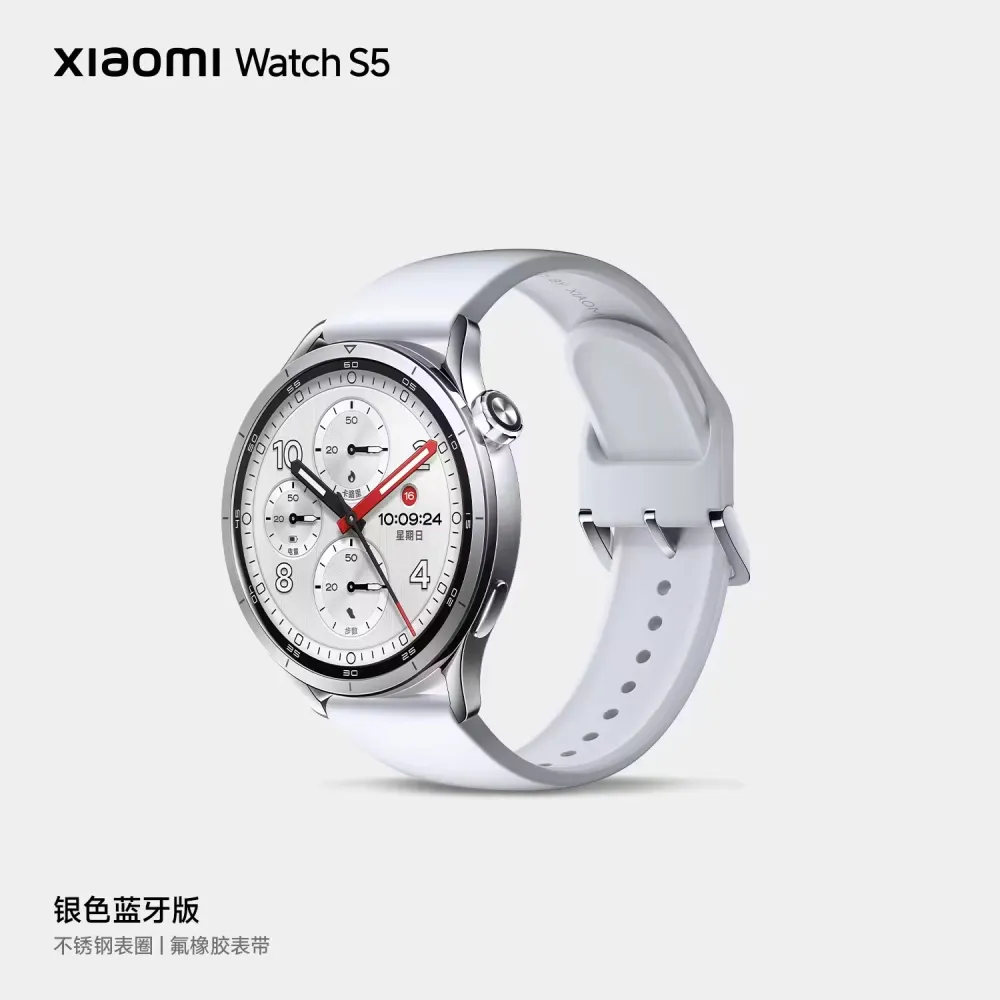
Driving the news. Xiaomi rolled out three variants: standard 316L stainless steel, ceramic bezel, and carbon bezel, plus an eSIM version. All models ship within two weeks and include dual-band positioning, oxygen monitoring, and stress tracking. The watches run on HyperOS 3.
Why it matters. The Watch S5 delivers 98.4% heart-rate accuracy and 2,500-nit brightness, specs that position it against Apple's and Samsung's flagship watches. Apple holds roughly 50% of the U.S. smartwatch market while Samsung accounts for about 22%, according to Counterpoint Research and Statista.
What they're saying. Industry analysts see the S5 as a serious challenger.
John Smith, a tech analyst at Gartner, noted that
"price-conscious U.S. consumers will watch closely if Xiaomi enters the American market with this hardware."
By the numbers. The OLED screen peaks at 2,500 nits, ensuring outdoor readability. Battery lasts up to 21 days with typical mixed use. The heart-rate sensor exceeds the typical 95% accuracy benchmark. The eSIM model costs 1,399 yuan (approximately $193). Car-control features unlock Xiaomi-brand vehicles remotely, currently limited to China.
The fine print. Pricing starts at 1,199 yuan (approximately $165) for 316L stainless steel and 1,399 yuan (approximately $193) for ceramic, carbon, and eSIM models. Apple Watch Series 10 starts at $399, Apple Watch Ultra 2 at $799, and Samsung's Galaxy Watch Ultra retails for $650.
What's next. Future software updates may broaden third-party app support and expand car-control compatibility. Observers will watch how the Watch S5's price-to-feature ratio influences U.S. consumer choices as Xiaomi eyes a broader market rollout.
This article was generated by AI.