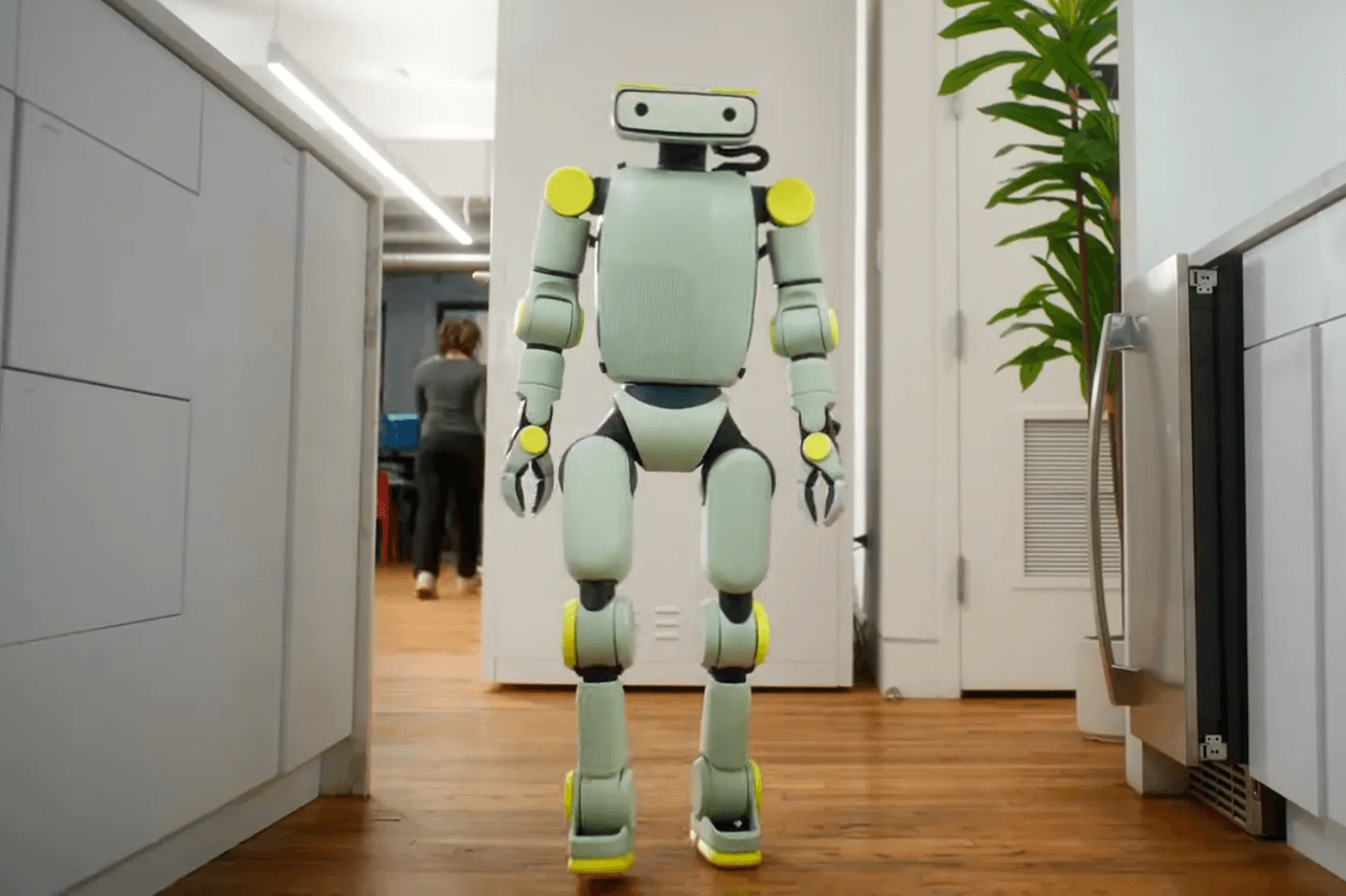

Fauna Robotics has unveiled Sprout, a 3.5-foot, foam-wrapped humanoid robot priced at $50,000 and designed for research labs, universities, and developers who need a ready-made walking platform.
Why it matters: Research teams can skip months of basic locomotion engineering and focus on building specialized applications. The relatively low price point makes humanoid robotics research accessible to midsize labs that lack resources to build custom platforms. Early customers include Disney and Boston Dynamics, both planning to explore new use cases.
Design priorities: Fauna wrapped Sprout in soft foam padding that eliminates pinch points and sharp edges, reducing injury risk during human-robot collaboration and lowering repair costs compared to heavy industrial robots. Co-founder and CEO Rob Cochran told the Associated Press that the design was inspired by friendly science fiction robots like Baymax and Rosie Jetson. The robot features articulated limbs, grippers for hands, expressive mechanical eyebrows, and a wide head that contributes to an approachable appearance.
What comes ready to use: Fauna Robotics says Sprout's "movement, perception, navigation, and expression all work out of the box," allowing developers to focus on unique applications rather than teaching basic functions like walking. The platform is lightweight and quiet, designed specifically for safe operation alongside humans even though it's initially destined for labs and research facilities rather than consumer spaces.
The cost trade-off: At $50,000, Sprout remains well out of reach for most consumers but offers a more affordable entry point than engineering a humanoid from scratch or purchasing high-end industrial robots. While the exact cost of robots like Boston Dynamics' Atlas isn't publicly known, Sprout will certainly be cheaper to repair if it takes damage from a bad fall, making it a lower-risk investment for experimental work.
What's next: Fauna Robotics is now selling Sprout to robot developers, researchers, universities, and tinkerers who want to experiment with humanoid platforms. The focus remains on enabling others to develop applications without needing to solve fundamental engineering challenges first. As humanoid robotics research accelerates, platforms like Sprout may determine which institutions can participate in shaping how these robots eventually interact with the public.