
Logo
Decide better.Live better.
My feedToday
Logo
Decide better.Live better.
My feedToday
Logo
My feedToday

Stay Curious. Stay Wanture.

© 2026 Wanture. All rights reserved.

  • Terms of Use
  • Privacy Policy
Logo
Decide better.Live better.
My feedTodayTechScienceHealthMobilityMindProductivityHomeExperiencesLongevity
Logo
Decide better.Live better.
My feedTodayTechScienceHealthMobilityMindProductivityHomeExperiencesLongevity
Logo
My feedTodayTechScienceHealthMobilityMindProductivityHomeExperiencesLongevity

Russia launches 16 Rassvet satellites for broadband service

24 March 2026

—

News

Priya Desai

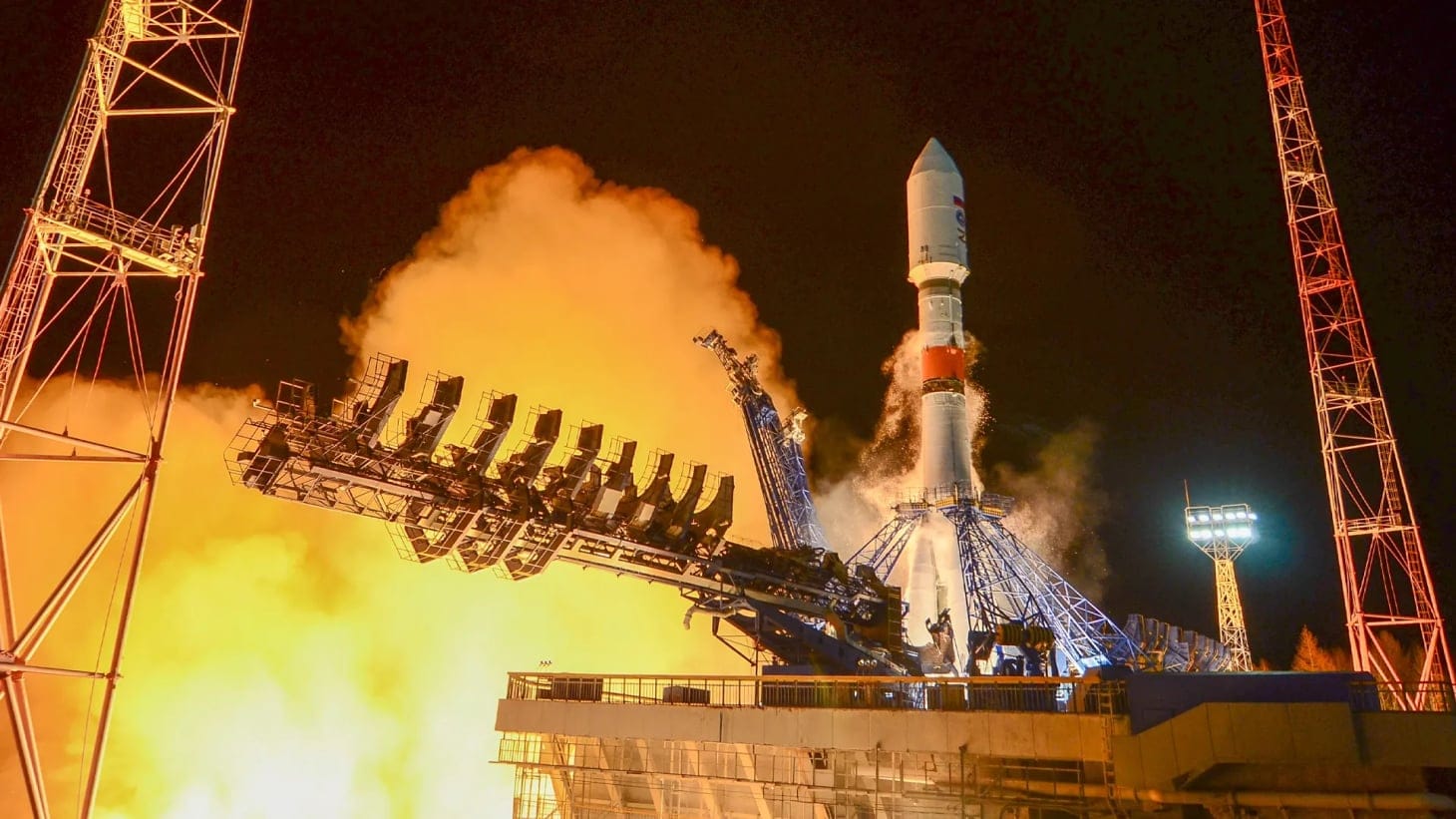
One thousand days after Russia tested its first experimental Rassvet satellite, a Soyuz rocket lifted 16 production spacecraft from Baikonur Cosmodrome in Kazakhstan on March 23, 2025. Bureau 1440 placed the batch into a parking orbit—a temporary holding orbit—then transferred control to its Mission Control Center for final maneuvering to target altitude. The launch transforms a laboratory project into an operational broadband network.

The shift matters because Russia is now building a domestic alternative to global satellite internet services. The Rassvet constellation will deliver 5G NTN (Non‑Terrestrial Network) communications directly to mobile devices across the nation, bypassing ground infrastructure and competing with established LEO providers such as Starlink, which serves millions of customers worldwide.

Each Rassvet satellite carries a 5G NTN payload, inter‑satellite laser links, upgraded solar arrays, and plasma thrusters (electric propulsion devices) that cut fuel mass by roughly 40 percent. The plasma propulsion units enable precise orbital adjustments without costly refueling. Laser links route data between satellites, reducing the need for ground stations and improving coverage over remote areas.

The project secured 102.8 billion rubles (approximately $1.1 billion USD) in federal funding and 329 billion rubles (approximately $3.6 billion USD) in corporate capital through 2030. Six experimental units already circle the planet. The new batch raises the total to 22 satellites, moving the constellation toward the minimum viable size needed for nationwide coverage.

According to company statements, dozens of additional launches will be required to reach the full constellation of several hundred satellites.

Bureau 1440 must execute dozens more missions to complete the network, secure spectrum allocations—the radio frequencies needed to transmit data—and demonstrate latency and throughput that can support cloud‑based AI and immersive media. If the rollout succeeds, Russia could offer a low-Earth orbit broadband alternative to services that currently dominate the market. The next milestone is the first user‑terminal activation, projected for late 2026.


What is this about?

  • News
  • Priya Desai
  • Science
  • Cosmos
  • Satellite broadband
  • 5G NTN
  • Electric propulsion
  • Laser inter‑satellite links

Feed

    Tesla gets European approval for semi-autonomous driving — here's what you need to pass before using it

    Tesla gets European approval for semi-autonomous driving — here's what you need to pass before using it

    You must pass a mandatory safety quiz and accept a "Max Speed" setting as regulators weigh U.S. crash data against autonomous claims

    Auden Wheelock3 days ago
    Apple Breaks Autumn Cadence: iPhone 18 Pro and iPhone Ultra

    Apple Breaks Autumn Cadence: iPhone 18 Pro and iPhone Ultra

    Plan purchases around September’s standard lineup or wait for Q4 hardware

    Ben Ramos5 days ago
    Apple Watch Ultra 4 could track blood pressure trends

    Apple Watch Ultra 4 could track blood pressure trends

    A potential hardware redesign with 8 sensors aims to move from simple alerts to direct cardiovascular measurement

    Ben Ramos22 May 2026

    Your earbuds could become a secure digital key via your heartbeat

    AccLock uses standard accelerometers to verify identity without needing premium optical heart trackers

    Ben Ramos21 May 2026
    Memory chip shortages could end by 2027

    Memory chip shortages could end by 2027

    Aggressive Chinese production expansions from YMTC and CXMT may lower hardware costs sooner than the 2030 consensus

    Ben Ramos21 May 2026
    Hisense Explorer X1 Pro brings 120-inch cinema to your living room

    Hisense Explorer X1 Pro brings 120-inch cinema to your living room

    A new tri-color laser engine offers 110% BT.2020 color gamut, though US availability remains unannounced

    Logan Price21 May 2026
    Onyx Boox Poke 7 series brings paper-like clarity to your library

    Onyx Boox Poke 7 series brings paper-like clarity to your library

    New 300 ppi displays and 2 TB expandable storage offer a sharper, larger reading experience

    Ben Ramos20 May 2026
    SpaceX IPO: A historic bet on the space economy

    SpaceX IPO: A historic bet on the space economy

    With 2025 revenue hitting $18.6 billion, the Nasdaq debut tests market appetite for Elon Musk

    Jasmine Wu20 May 2026
    Figma AI agents turn manual design into high-level direction

    Figma AI agents turn manual design into high-level direction

    New intent-based tools allow designers to build layouts using natural language instead of clicking and dragging

    Evelyn Park20 May 2026
    NanoClaw's sandbox stops AI agents from compromising your OS

    NanoClaw's sandbox stops AI agents from compromising your OS

    NanoCo secures $12 million to scale its isolated architecture for enterprise AI deployment

    Marcus Dillard20 May 2026
    Loading...

Russia launches 16 Rassvet satellites for broadband service

24 March 2026

—

News

Priya Desai

One thousand days after Russia tested its first experimental Rassvet satellite, a Soyuz rocket lifted 16 production spacecraft from Baikonur Cosmodrome in Kazakhstan on March 23, 2025. Bureau 1440 placed the batch into a parking orbit—a temporary holding orbit—then transferred control to its Mission Control Center for final maneuvering to target altitude. The launch transforms a laboratory project into an operational broadband network.

The shift matters because Russia is now building a domestic alternative to global satellite internet services. The Rassvet constellation will deliver 5G NTN (Non‑Terrestrial Network) communications directly to mobile devices across the nation, bypassing ground infrastructure and competing with established LEO providers such as Starlink, which serves millions of customers worldwide.

Each Rassvet satellite carries a 5G NTN payload, inter‑satellite laser links, upgraded solar arrays, and plasma thrusters (electric propulsion devices) that cut fuel mass by roughly 40 percent. The plasma propulsion units enable precise orbital adjustments without costly refueling. Laser links route data between satellites, reducing the need for ground stations and improving coverage over remote areas.

The project secured 102.8 billion rubles (approximately $1.1 billion USD) in federal funding and 329 billion rubles (approximately $3.6 billion USD) in corporate capital through 2030. Six experimental units already circle the planet. The new batch raises the total to 22 satellites, moving the constellation toward the minimum viable size needed for nationwide coverage.

According to company statements, dozens of additional launches will be required to reach the full constellation of several hundred satellites.

Bureau 1440 must execute dozens more missions to complete the network, secure spectrum allocations—the radio frequencies needed to transmit data—and demonstrate latency and throughput that can support cloud‑based AI and immersive media. If the rollout succeeds, Russia could offer a low-Earth orbit broadband alternative to services that currently dominate the market. The next milestone is the first user‑terminal activation, projected for late 2026.

What is this about?

  • News/
  • Priya Desai/
  • Science/
  • Cosmos/
  • Satellite broadband/
  • 5G NTN/
  • Electric propulsion/
  • Laser inter‑satellite links

Feed

    Tesla gets European approval for semi-autonomous driving — here's what you need to pass before using it

    Tesla gets European approval for semi-autonomous driving — here's what you need to pass before using it

    You must pass a mandatory safety quiz and accept a "Max Speed" setting as regulators weigh U.S. crash data against autonomous claims

    Auden Wheelock3 days ago
    Apple Breaks Autumn Cadence: iPhone 18 Pro and iPhone Ultra

    Apple Breaks Autumn Cadence: iPhone 18 Pro and iPhone Ultra

    Plan purchases around September’s standard lineup or wait for Q4 hardware

    Ben Ramos5 days ago
    Apple Watch Ultra 4 could track blood pressure trends

    Apple Watch Ultra 4 could track blood pressure trends

    A potential hardware redesign with 8 sensors aims to move from simple alerts to direct cardiovascular measurement

    Ben Ramos22 May 2026

    Your earbuds could become a secure digital key via your heartbeat

    AccLock uses standard accelerometers to verify identity without needing premium optical heart trackers

    Ben Ramos21 May 2026
    Memory chip shortages could end by 2027

    Memory chip shortages could end by 2027

    Aggressive Chinese production expansions from YMTC and CXMT may lower hardware costs sooner than the 2030 consensus

    Ben Ramos21 May 2026
    Hisense Explorer X1 Pro brings 120-inch cinema to your living room

    Hisense Explorer X1 Pro brings 120-inch cinema to your living room

    A new tri-color laser engine offers 110% BT.2020 color gamut, though US availability remains unannounced

    Logan Price21 May 2026
    Onyx Boox Poke 7 series brings paper-like clarity to your library

    Onyx Boox Poke 7 series brings paper-like clarity to your library

    New 300 ppi displays and 2 TB expandable storage offer a sharper, larger reading experience

    Ben Ramos20 May 2026
    SpaceX IPO: A historic bet on the space economy

    SpaceX IPO: A historic bet on the space economy

    With 2025 revenue hitting $18.6 billion, the Nasdaq debut tests market appetite for Elon Musk

    Jasmine Wu20 May 2026
    Figma AI agents turn manual design into high-level direction

    Figma AI agents turn manual design into high-level direction

    New intent-based tools allow designers to build layouts using natural language instead of clicking and dragging

    Evelyn Park20 May 2026
    NanoClaw's sandbox stops AI agents from compromising your OS

    NanoClaw's sandbox stops AI agents from compromising your OS

    NanoCo secures $12 million to scale its isolated architecture for enterprise AI deployment

    Marcus Dillard20 May 2026
    Loading...
Home
Home
Search
Search