
Logo
Decide better.Live better.
My feedToday
Logo
Decide better.Live better.
My feedToday
Logo
My feedToday

Stay Curious. Stay Wanture.

© 2026 Wanture. All rights reserved.

  • Terms of Use
  • Privacy Policy
Logo
Decide better.Live better.
My feedTodayTechScienceHealthMobilityMindProductivityHomeExperiencesLongevity
Logo
Decide better.Live better.
My feedTodayTechScienceHealthMobilityMindProductivityHomeExperiencesLongevity
Logo
My feedTodayTechScienceHealthMobilityMindProductivityHomeExperiencesLongevity

The football-field-sized plane built to move wind turbines

Radia's WindRunner could unlock massive onshore wind farms—if politics and fuel costs don't ground it first

The football-field-sized plane built to move wind turbines

A Colorado company is building the world's largest aircraft to transport 300-foot wind turbine blades to remote sites, bypassing impossible road logistics. The WindRunner promises to triple onshore wind capacity and cut energy costs by a third—but faces shifting political winds, tariff pressures, and the irony of burning jet fuel for clean energy. Now pivoting to defense contracts, the project reveals both the audacity and fragility of infrastructure-driven climate solutions.

2 November 2025

—

Explainer

Nadia Bennett
banner

Summary:

  • Radia's WindRunner aircraft aims to solve wind turbine transportation challenges by carrying 300-foot blades to remote onshore sites
  • The 108-meter aircraft can bypass road limitations, potentially tripling onshore wind energy capacity and reducing electron costs
  • WindRunner uses existing aviation technologies, designed to connect Midwest turbine manufacturers with wind farms across 1,200-mile ranges

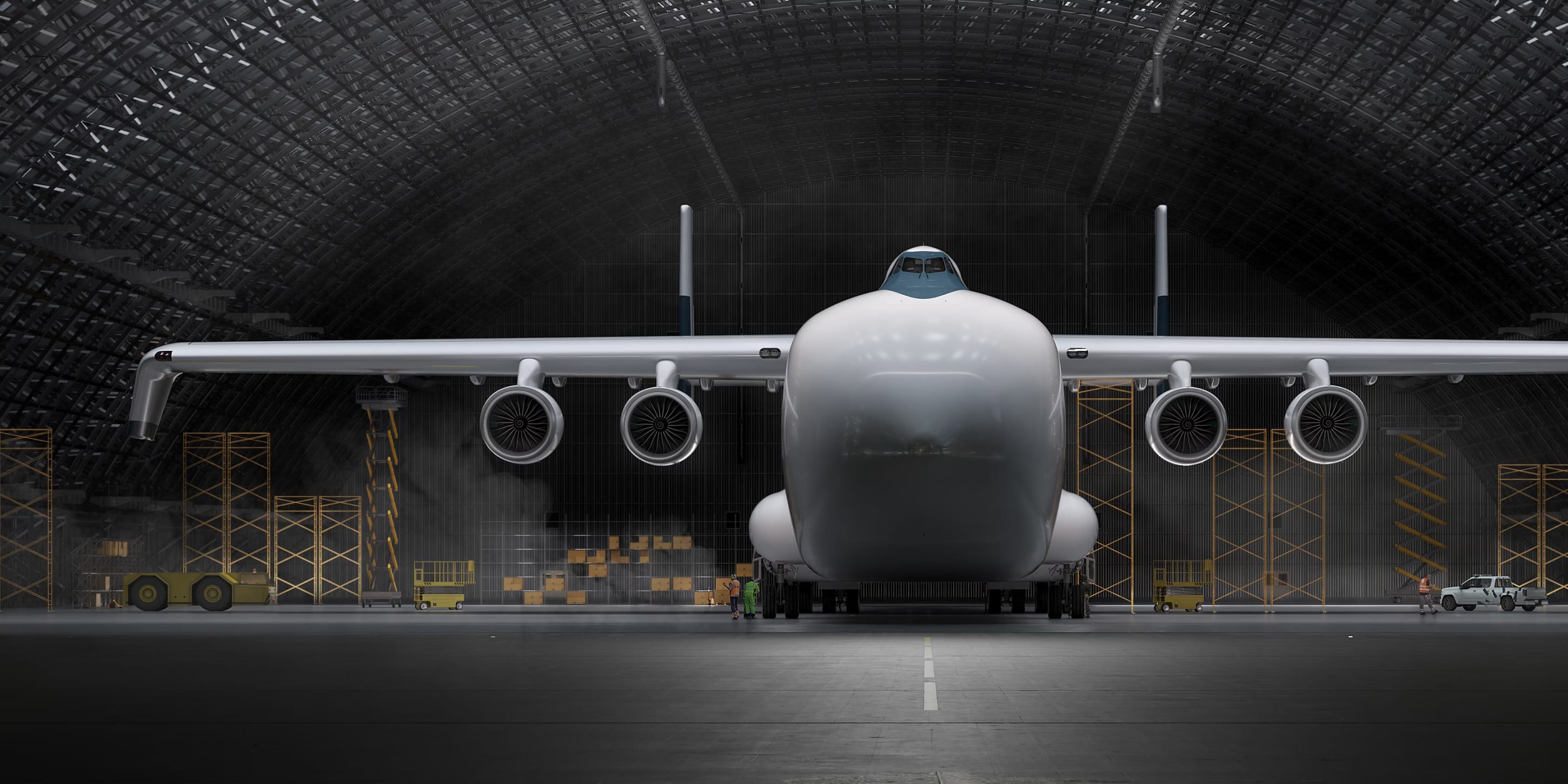
A Colorado-based company is building an aircraft the length of a football field—not to carry passengers, but to transport wind turbine blades longer than a city block. The WindRunner, designed by Radia, represents a bold engineering gamble: that the future of clean energy depends not just on better turbines, but on solving the stubborn logistics of getting them where they're needed most.
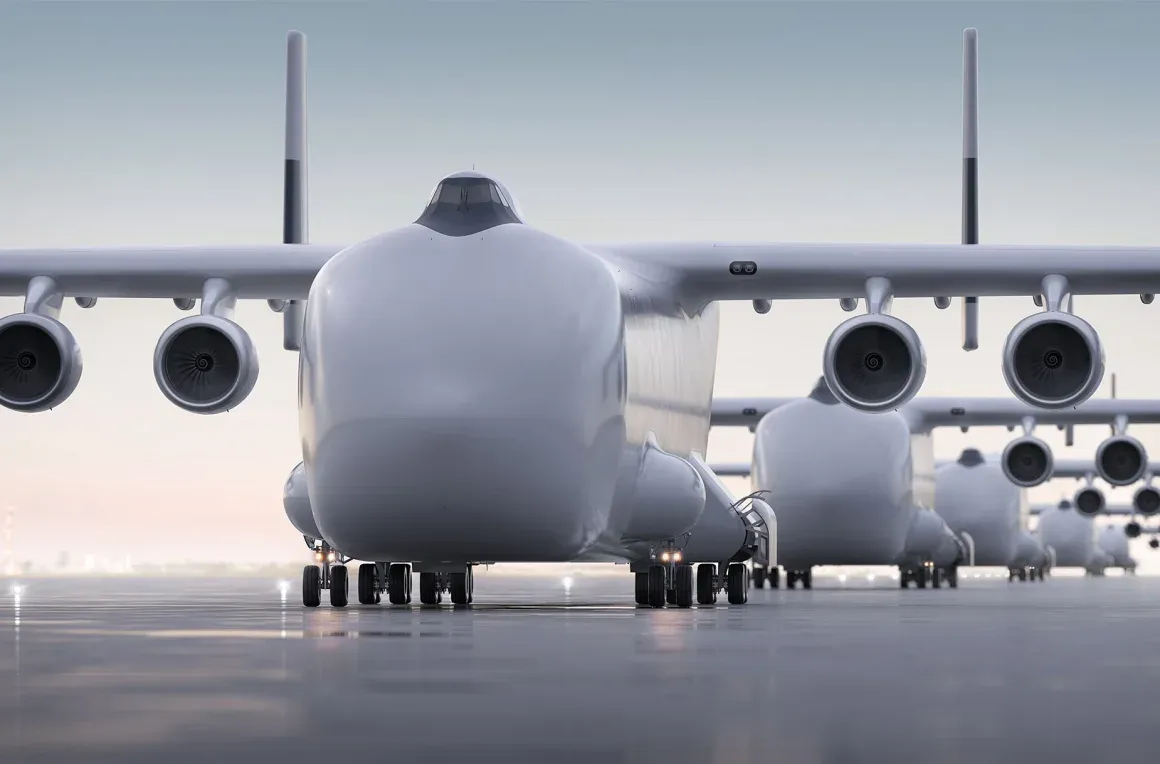
Wind energy has surged across the United States in recent years. By the end of 2023, wind accounted for approximately 10% of total U.S. electricity generation, with capacity continuing to grow into 2024 and 2025. Yet despite this growth, a fundamental constraint remains: the biggest, most efficient turbines—those with blades stretching beyond 300 feet—can't reach the remote onshore sites where they'd generate the most power.

Roads won't accommodate them. Bridges can't clear them. And the patchwork of highways, power lines, and overpasses that knit the country together becomes an impassable maze for components this large.
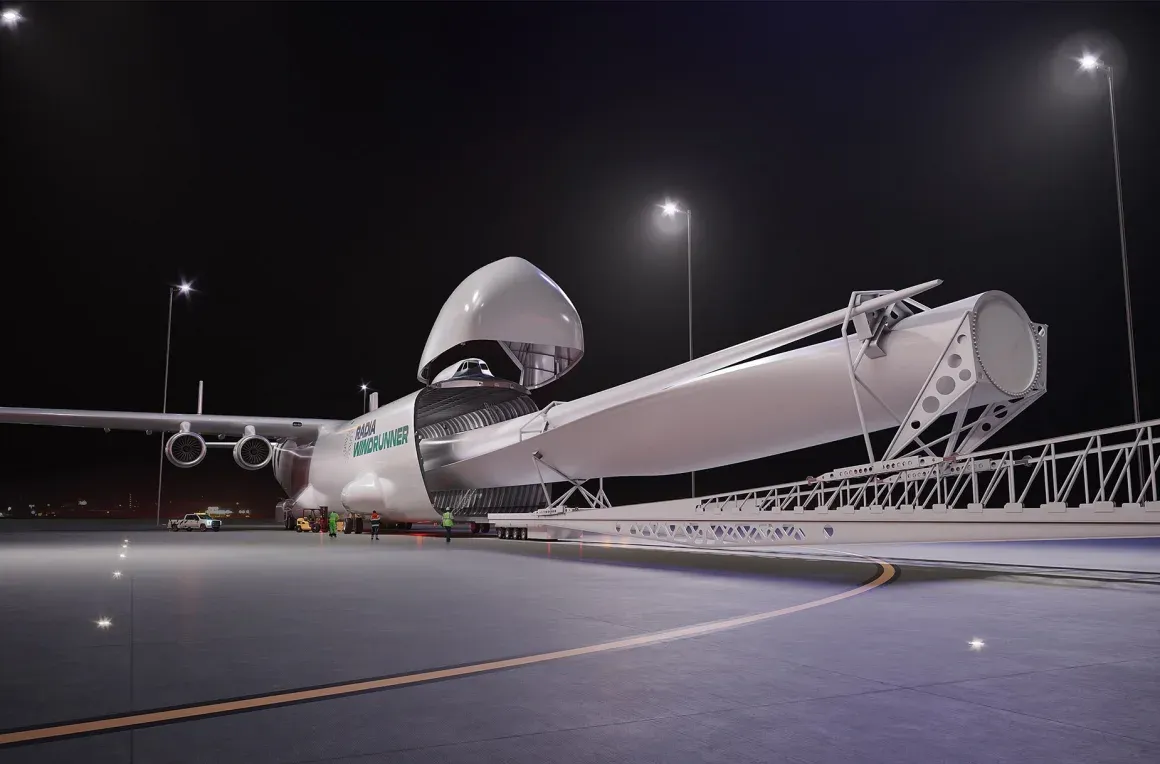
That's the problem Radia's WindRunner is designed to solve. But as the aircraft inches toward its projected 2029 first flight, it faces a new set of headwinds: shifting political priorities, volatile tariff policies, and the question of whether a jet-fuel-burning giant can credibly serve the cause of decarbonization—or whether its future lies elsewhere entirely.

Why Transporting Massive Onshore Wind Turbines Remains a Critical Bottleneck

Offshore wind farms have it easier. Out at sea, turbine blades can span upward of 230 feet, shipped by barge and assembled without worrying about highway clearances or street signs. Onshore projects, which generate about 93% of all wind energy, face a different reality.
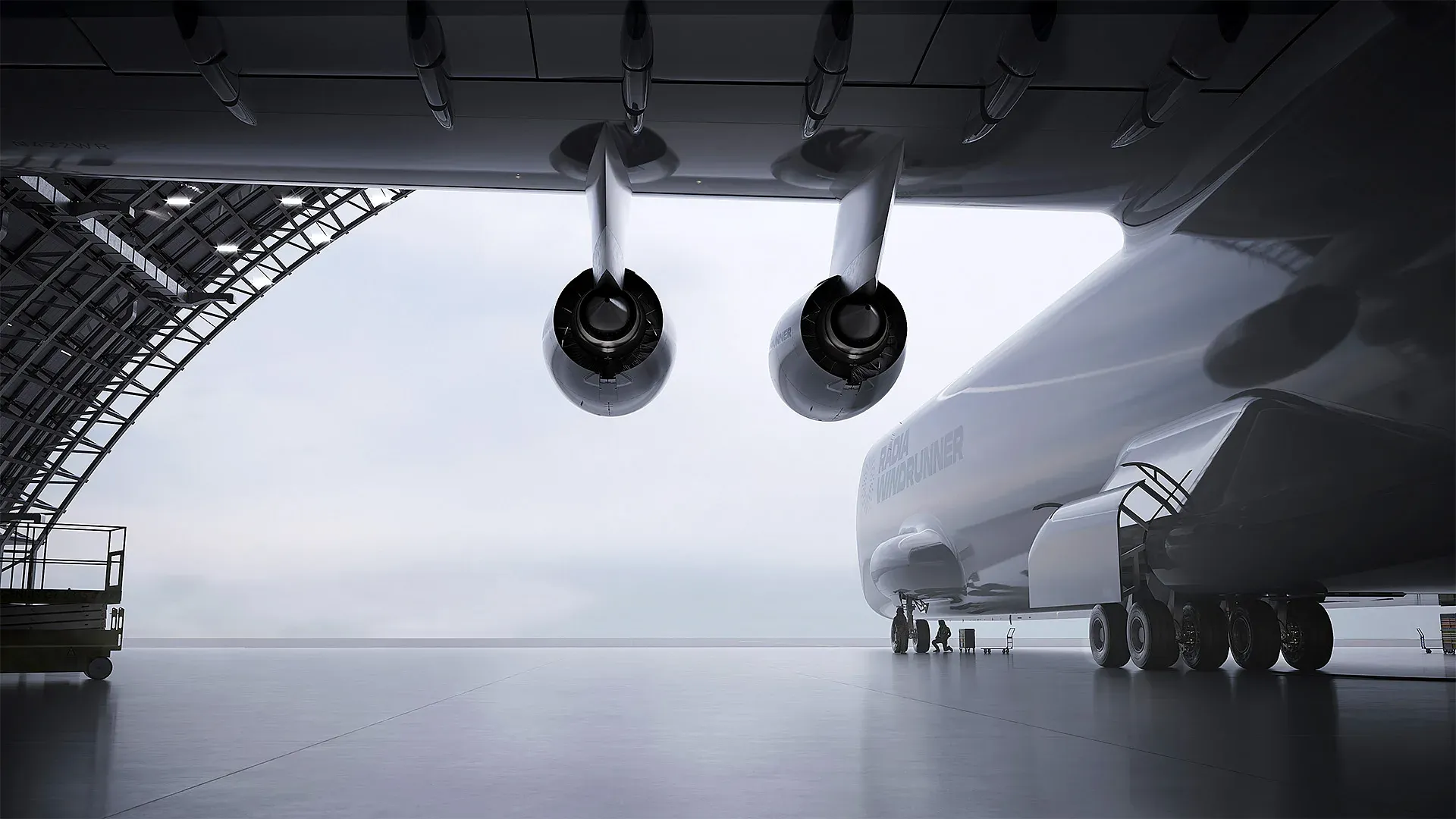
Interstate highway clearances hover around 16 feet—far too low for a blade that might stand three times that height when tilted for transport. Add in power lines, traffic signals, and the occasional underpass, and moving a single blade becomes a logistical puzzle that can cost millions and take weeks to solve.

The result is a compromise: onshore turbines use shorter blades, which means less energy captured per turbine, which means more turbines needed to generate the same power. It's inefficient, expensive, and—because transporting all those smaller components still requires fleets of diesel trucks—carbon-intensive in its own right.

Mark LundstromCEO, RadiaIf you could put an offshore-size turbine on shore, you can triple the capacity. You can reduce the cost of the electron by a third.

That's the promise of what Radia calls "GigaWind" projects: onshore installations using turbines as large as those offshore, made possible by an aircraft purpose-built to carry them. The WindRunner would bypass roads entirely, landing on semi-prepared fields near turbine factories or remote wind farm sites. It's a vision of infrastructure as workaround—building the plane because rebuilding the roads is impossible.

How the WindRunner Aircraft Solves Wind Energy Logistics

The WindRunner stretches 354 feet—about the length of an NFL football field—with a wingspan exceeding 260 feet. Its cargo bay offers approximately 270,000 cubic feet of volume, enough to hold three Olympic-sized swimming pools or a single wind turbine blade over 300 feet long. That's twelve times the cargo space of a Boeing C-17 Globemaster III, and around 1.5 times the size of the largest commercial aircraft currently flying.
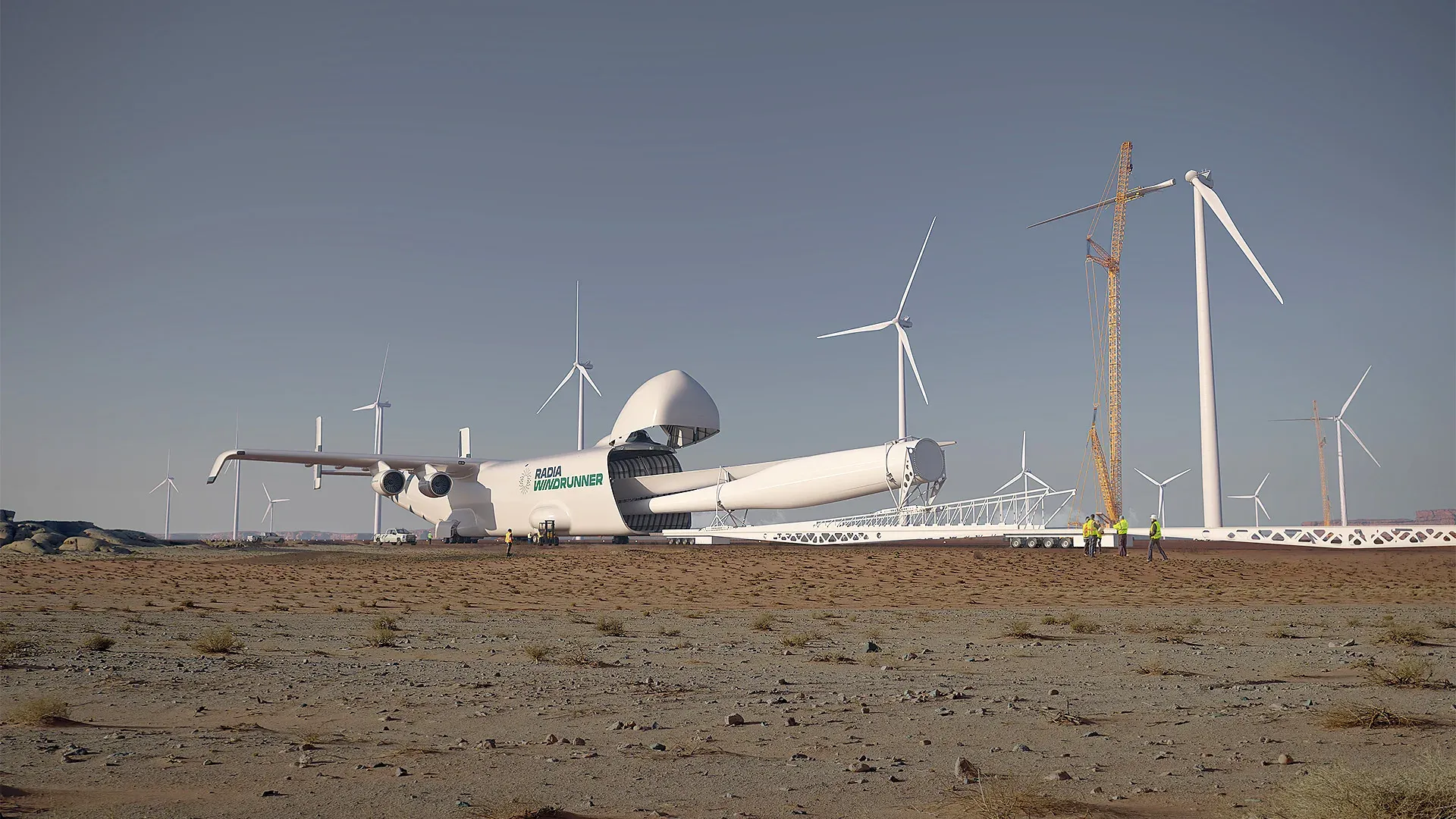
Yet despite its scale, the WindRunner is relatively light. Radia optimized for volume over weight, a design philosophy Lundstrom describes as unprecedented in aviation. Fully loaded, the aircraft would carry about 160,000 pounds—less than the much smaller C-17.

It's designed to cruise at Mach 0.6 (around 400 mph) with a range of approximately 1,200 miles, enough to connect turbine manufacturers in the Midwest to wind farms in Texas or the Great Plains.

Technical Specifications of the World's Largest Plane

Radia's approach to building the WindRunner is deliberately conservative. "Do nothing new," Lundstrom says. The aircraft uses existing engines, avionics, and flight control systems—components already proven in commercial and military aviation.

The novelty isn't in the technology itself, but in assembling it around a supply chain that already exists. That strategy cuts development costs and timelines, avoiding the years-long certification processes that come with inventing new propulsion or control systems.
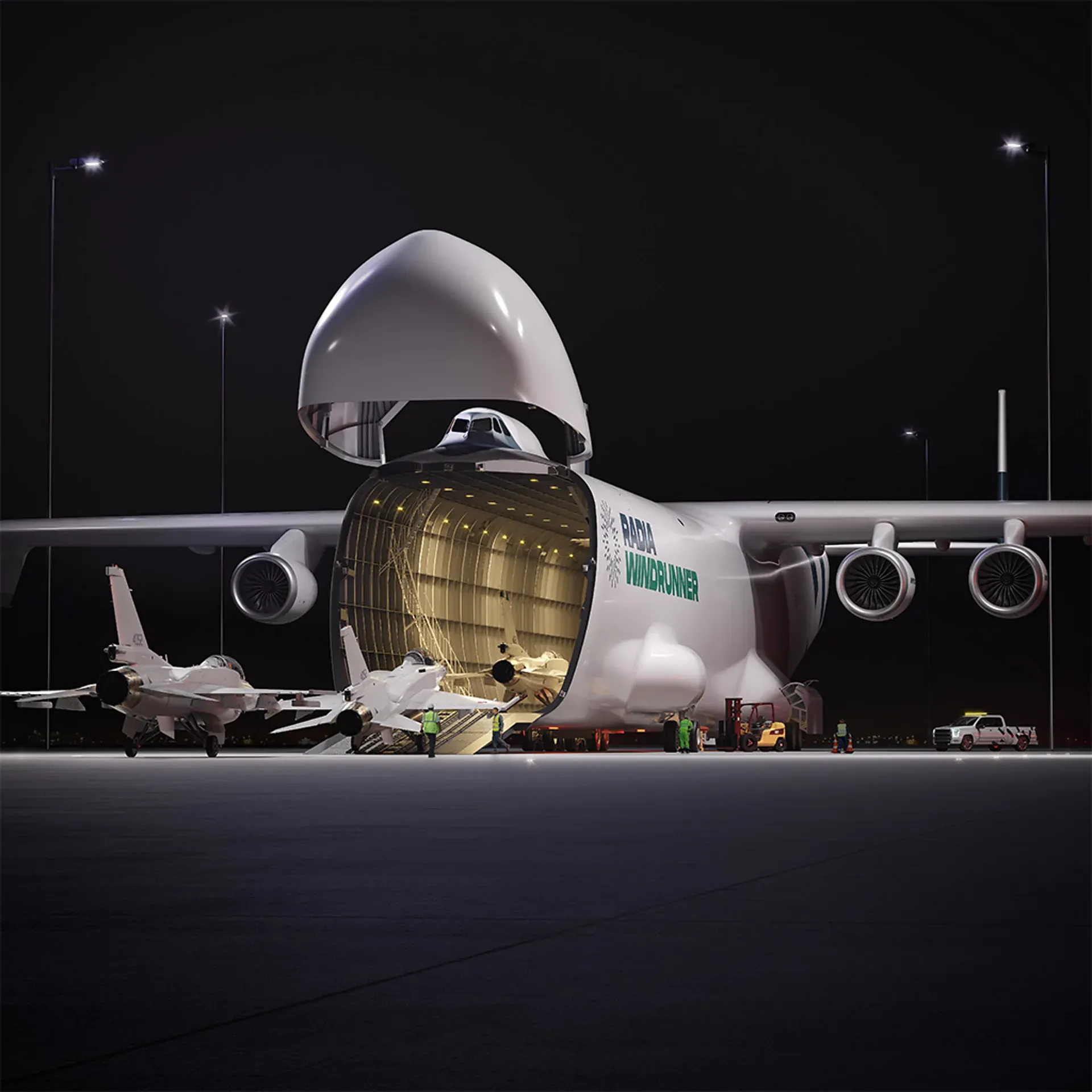
The cockpit alone is the size of a Gulfstream private jet. The fuselage is wide enough to accommodate blades that would otherwise require custom-built transport rigs and road closures spanning multiple states. And the entire aircraft is designed to operate with a crew trained on systems they already know.


What is this about?

  • Explainer/
  • Nadia Bennett/
  • Mobility/
  • Aviation

Feed

    Tesla gets European approval for semi-autonomous driving — here's what you need to pass before using it

    Tesla gets European approval for semi-autonomous driving — here's what you need to pass before using it

    You must pass a mandatory safety quiz and accept a "Max Speed" setting as regulators weigh U.S. crash data against autonomous claims

    Auden Wheelock2 days ago
    Apple Breaks Autumn Cadence: iPhone 18 Pro and iPhone Ultra

    Apple Breaks Autumn Cadence: iPhone 18 Pro and iPhone Ultra

    Plan purchases around September’s standard lineup or wait for Q4 hardware

    Ben Ramos4 days ago
    Apple Watch Ultra 4 could track blood pressure trends

    Apple Watch Ultra 4 could track blood pressure trends

    A potential hardware redesign with 8 sensors aims to move from simple alerts to direct cardiovascular measurement

    Ben Ramos22 May 2026

    Your earbuds could become a secure digital key via your heartbeat

    AccLock uses standard accelerometers to verify identity without needing premium optical heart trackers

    Ben Ramos21 May 2026
    Memory chip shortages could end by 2027

    Memory chip shortages could end by 2027

    Aggressive Chinese production expansions from YMTC and CXMT may lower hardware costs sooner than the 2030 consensus

    Ben Ramos21 May 2026
    Hisense Explorer X1 Pro brings 120-inch cinema to your living room

    Hisense Explorer X1 Pro brings 120-inch cinema to your living room

    A new tri-color laser engine offers 110% BT.2020 color gamut, though US availability remains unannounced

    Logan Price21 May 2026
    Onyx Boox Poke 7 series brings paper-like clarity to your library

    Onyx Boox Poke 7 series brings paper-like clarity to your library

    New 300 ppi displays and 2 TB expandable storage offer a sharper, larger reading experience

    Ben Ramos20 May 2026
    SpaceX IPO: A historic bet on the space economy

    SpaceX IPO: A historic bet on the space economy

    With 2025 revenue hitting $18.6 billion, the Nasdaq debut tests market appetite for Elon Musk

    Jasmine Wu20 May 2026
    Figma AI agents turn manual design into high-level direction

    Figma AI agents turn manual design into high-level direction

    New intent-based tools allow designers to build layouts using natural language instead of clicking and dragging

    Evelyn Park20 May 2026
    NanoClaw's sandbox stops AI agents from compromising your OS

    NanoClaw's sandbox stops AI agents from compromising your OS

    NanoCo secures $12 million to scale its isolated architecture for enterprise AI deployment

    Marcus Dillard20 May 2026
    Loading...

The football-field-sized plane built to move wind turbines

Radia's WindRunner could unlock massive onshore wind farms—if politics and fuel costs don't ground it first

November 2, 2025, 1:36 am

A Colorado company is building the world's largest aircraft to transport 300-foot wind turbine blades to remote sites, bypassing impossible road logistics. The WindRunner promises to triple onshore wind capacity and cut energy costs by a third—but faces shifting political winds, tariff pressures, and the irony of burning jet fuel for clean energy. Now pivoting to defense contracts, the project reveals both the audacity and fragility of infrastructure-driven climate solutions.

The football-field-sized plane built to move wind turbines

Summary

  • Radia's WindRunner aircraft aims to solve wind turbine transportation challenges by carrying 300-foot blades to remote onshore sites
  • The 108-meter aircraft can bypass road limitations, potentially tripling onshore wind energy capacity and reducing electron costs
  • WindRunner uses existing aviation technologies, designed to connect Midwest turbine manufacturers with wind farms across 1,200-mile ranges

A Colorado-based company is building an aircraft the length of a football field—not to carry passengers, but to transport wind turbine blades longer than a city block. The WindRunner, designed by Radia, represents a bold engineering gamble: that the future of clean energy depends not just on better turbines, but on solving the stubborn logistics of getting them where they're needed most.

Wind energy has surged across the United States in recent years. By the end of 2023, wind accounted for approximately 10% of total U.S. electricity generation, with capacity continuing to grow into 2024 and 2025. Yet despite this growth, a fundamental constraint remains: the biggest, most efficient turbines—those with blades stretching beyond 300 feet—can't reach the remote onshore sites where they'd generate the most power.

Roads won't accommodate them. Bridges can't clear them. And the patchwork of highways, power lines, and overpasses that knit the country together becomes an impassable maze for components this large.

That's the problem Radia's WindRunner is designed to solve. But as the aircraft inches toward its projected 2029 first flight, it faces a new set of headwinds: shifting political priorities, volatile tariff policies, and the question of whether a jet-fuel-burning giant can credibly serve the cause of decarbonization—or whether its future lies elsewhere entirely.

Why Transporting Massive Onshore Wind Turbines Remains a Critical Bottleneck

Offshore wind farms have it easier. Out at sea, turbine blades can span upward of 230 feet, shipped by barge and assembled without worrying about highway clearances or street signs. Onshore projects, which generate about 93% of all wind energy, face a different reality.

Interstate highway clearances hover around 16 feet—far too low for a blade that might stand three times that height when tilted for transport. Add in power lines, traffic signals, and the occasional underpass, and moving a single blade becomes a logistical puzzle that can cost millions and take weeks to solve.

The result is a compromise: onshore turbines use shorter blades, which means less energy captured per turbine, which means more turbines needed to generate the same power. It's inefficient, expensive, and—because transporting all those smaller components still requires fleets of diesel trucks—carbon-intensive in its own right.

Mark LundstromCEO, RadiaIf you could put an offshore-size turbine on shore, you can triple the capacity. You can reduce the cost of the electron by a third.

That's the promise of what Radia calls "GigaWind" projects: onshore installations using turbines as large as those offshore, made possible by an aircraft purpose-built to carry them. The WindRunner would bypass roads entirely, landing on semi-prepared fields near turbine factories or remote wind farm sites. It's a vision of infrastructure as workaround—building the plane because rebuilding the roads is impossible.

How the WindRunner Aircraft Solves Wind Energy Logistics

The WindRunner stretches 354 feet—about the length of an NFL football field—with a wingspan exceeding 260 feet. Its cargo bay offers approximately 270,000 cubic feet of volume, enough to hold three Olympic-sized swimming pools or a single wind turbine blade over 300 feet long. That's twelve times the cargo space of a Boeing C-17 Globemaster III, and around 1.5 times the size of the largest commercial aircraft currently flying.

Yet despite its scale, the WindRunner is relatively light. Radia optimized for volume over weight, a design philosophy Lundstrom describes as unprecedented in aviation. Fully loaded, the aircraft would carry about 160,000 pounds—less than the much smaller C-17.

It's designed to cruise at Mach 0.6 (around 400 mph) with a range of approximately 1,200 miles, enough to connect turbine manufacturers in the Midwest to wind farms in Texas or the Great Plains.

Technical Specifications of the World's Largest Plane

Radia's approach to building the WindRunner is deliberately conservative. "Do nothing new," Lundstrom says. The aircraft uses existing engines, avionics, and flight control systems—components already proven in commercial and military aviation.

The novelty isn't in the technology itself, but in assembling it around a supply chain that already exists. That strategy cuts development costs and timelines, avoiding the years-long certification processes that come with inventing new propulsion or control systems.

The cockpit alone is the size of a Gulfstream private jet. The fuselage is wide enough to accommodate blades that would otherwise require custom-built transport rigs and road closures spanning multiple states. And the entire aircraft is designed to operate with a crew trained on systems they already know.

What is this about?

  • Explainer/
  • Nadia Bennett/
  • Mobility/
  • Aviation

Feed

    Tesla gets European approval for semi-autonomous driving — here's what you need to pass before using it

    Tesla gets European approval for semi-autonomous driving — here's what you need to pass before using it

    You must pass a mandatory safety quiz and accept a "Max Speed" setting as regulators weigh U.S. crash data against autonomous claims

    Auden Wheelock2 days ago
    Apple Breaks Autumn Cadence: iPhone 18 Pro and iPhone Ultra

    Apple Breaks Autumn Cadence: iPhone 18 Pro and iPhone Ultra

    Plan purchases around September’s standard lineup or wait for Q4 hardware

    Ben Ramos4 days ago
    Apple Watch Ultra 4 could track blood pressure trends

    Apple Watch Ultra 4 could track blood pressure trends

    A potential hardware redesign with 8 sensors aims to move from simple alerts to direct cardiovascular measurement

    Ben Ramos22 May 2026

    Your earbuds could become a secure digital key via your heartbeat

    AccLock uses standard accelerometers to verify identity without needing premium optical heart trackers

    Ben Ramos21 May 2026
    Memory chip shortages could end by 2027

    Memory chip shortages could end by 2027

    Aggressive Chinese production expansions from YMTC and CXMT may lower hardware costs sooner than the 2030 consensus

    Ben Ramos21 May 2026
    Hisense Explorer X1 Pro brings 120-inch cinema to your living room

    Hisense Explorer X1 Pro brings 120-inch cinema to your living room

    A new tri-color laser engine offers 110% BT.2020 color gamut, though US availability remains unannounced

    Logan Price21 May 2026
    Onyx Boox Poke 7 series brings paper-like clarity to your library

    Onyx Boox Poke 7 series brings paper-like clarity to your library

    New 300 ppi displays and 2 TB expandable storage offer a sharper, larger reading experience

    Ben Ramos20 May 2026
    SpaceX IPO: A historic bet on the space economy

    SpaceX IPO: A historic bet on the space economy

    With 2025 revenue hitting $18.6 billion, the Nasdaq debut tests market appetite for Elon Musk

    Jasmine Wu20 May 2026
    Figma AI agents turn manual design into high-level direction

    Figma AI agents turn manual design into high-level direction

    New intent-based tools allow designers to build layouts using natural language instead of clicking and dragging

    Evelyn Park20 May 2026
    NanoClaw's sandbox stops AI agents from compromising your OS

    NanoClaw's sandbox stops AI agents from compromising your OS

    NanoCo secures $12 million to scale its isolated architecture for enterprise AI deployment

    Marcus Dillard20 May 2026
    Loading...
Home
Home
Search
Search
banner