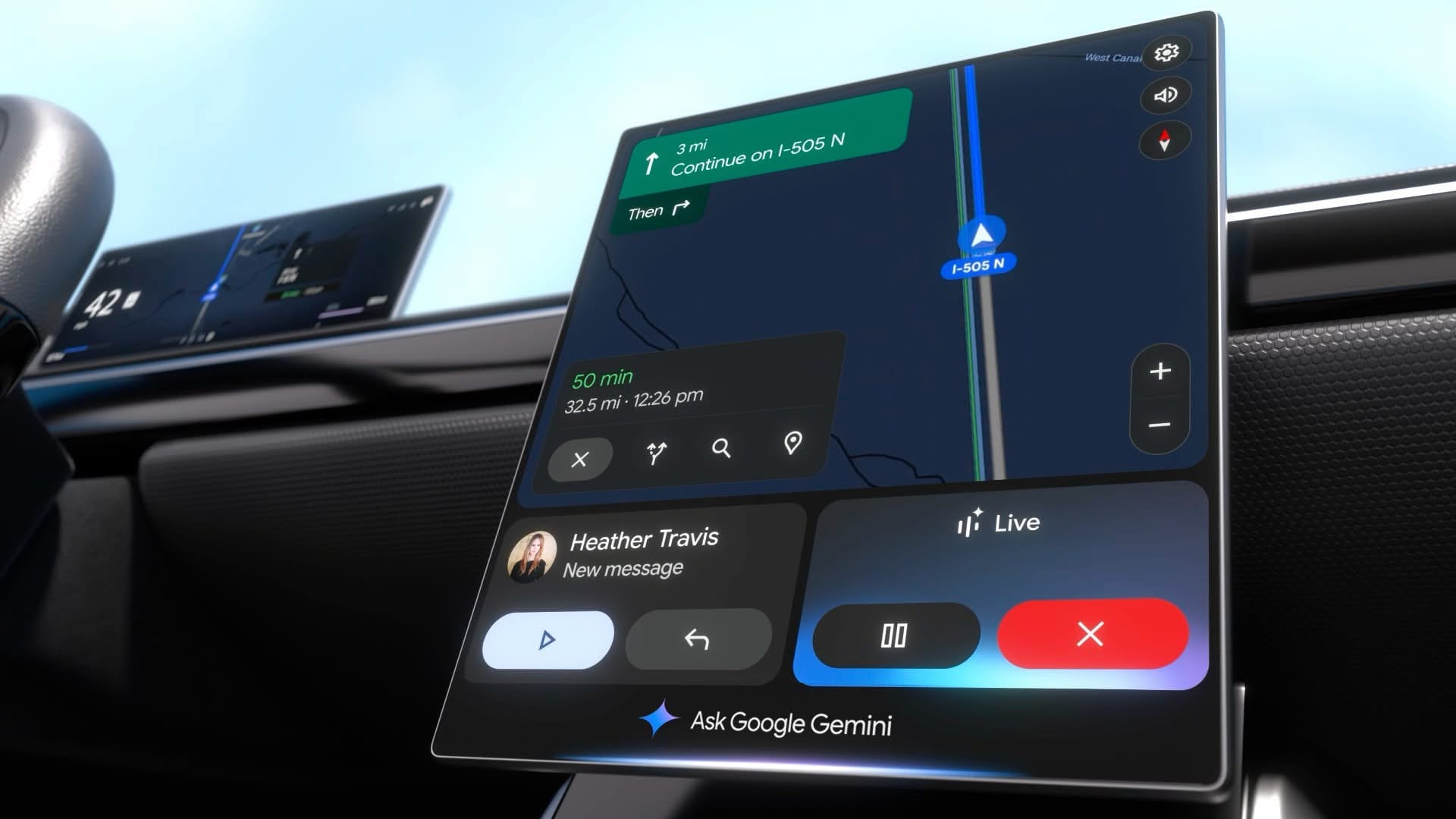

General Motors is putting Google's most advanced AI assistant—Gemini—into every vehicle starting in 2026, letting drivers talk to their cars like they would a helpful passenger.
Driving the news: GM will integrate Google Gemini into its existing Google built-in system across all vehicles by 2026, enabling natural conversation instead of rigid voice commands.
Why it matters: This fundamentally changes how drivers interact with vehicles. Instead of memorizing specific phrases, you can say "I need to fuel up and grab coffee" and the system understands context, accents, and conversational language—transforming your dashboard into a co-pilot that gets how humans actually talk.
By the numbers: GM delivered 2.2 million vehicles in the U.S. through September 2025, with Q3 sales up 8%. The automaker moved a record 66,501 EVs in Q3 alone. Millions of OnStar-equipped vehicles produced since 2015 will receive Gemini through over-the-air updates—no new purchase required.
The big picture: While Tesla has dominated in-car tech headlines, GM is leveraging Google's AI expertise to leapfrog competitors in voice assistance. The system will plan multi-stop routes, adjust climate controls through conversation, send messages hands-free, and share historical facts about passing landmarks. GM is also developing proprietary AI trained on transportation data to recommend maintenance and explain vehicle features.
Reality check: Privacy protections are built in. The system records voice commands and location data to improve responses, but only with owner consent. You control what the AI sees and learns—critical when vehicles function as rolling data centers. GM's approach aligns with U.S. data privacy standards, giving drivers transparency over their information.
The bottom line: GM is democratizing sophisticated AI technology, making conversational assistants accessible to millions of drivers without requiring tech expertise.