
Logo
Decide better.Live better.
My feedToday
Logo
Decide better.Live better.
My feedToday
Logo
My feedToday

Stay Curious. Stay Wanture.

© 2026 Wanture. All rights reserved.

  • Terms of Use
  • Privacy Policy
Logo
Decide better.Live better.
My feedTodayTechScienceHealthMobilityMindProductivityHomeExperiencesLongevity
Logo
Decide better.Live better.
My feedTodayTechScienceHealthMobilityMindProductivityHomeExperiencesLongevity
Logo
My feedTodayTechScienceHealthMobilityMindProductivityHomeExperiencesLongevity

Manure-Based SAF Slashes Fuel Costs 99% with Ouro Reactor

The platform turns dairy biogas into ASTM‑approved SAF, slashing expenses

Manure-Based SAF Slashes Fuel Costs 99% with Ouro Reactor

At a California dairy, Circularity Fuels’ Ouro reactor captured raw biogas and, without costly cleaning, produced synthesis gas that was turned into ASTM‑approved sustainable aviation fuel. The pilot showed a 99% cost cut versus conventional reforming, demonstrated revenue potential for farms, and proved manure‑derived SAF could supply up to 30% of U.S. jet‑fuel demand.

5 March 2026

—

Case

Tasha Greene
banner

Summary:

  • The Ouro reactor eliminates gas‑cleaning, converting raw manure biogas to synthesis gas and jet fuel, dropping reforming costs to ~1% of conventional systems.
  • US livestock creates 1.23 bn tons of manure; full capture could yield up to 9 bn gallons of SAF yearly—about 25% of U.S. jet fuel use.
  • A 1,000‑head dairy using Ouro can make ~200 gal SAF weekly, earning ~$70k per year; with $315k net cap after credits, payback arrives in 4–6 years.

A California dairy farm installed a compact reactor next to its manure lagoon, fed raw biogas into the chamber, and within several months produced jet fuel that met every ASTM specification for commercial flight.

The demonstration marks the first time a working livestock operation has converted unprocessed animal waste into sustainable aviation fuel without costly gas‑cleaning equipment. Circularity Fuels' Ouro reactor eliminates purification steps that have kept manure‑to‑fuel pathways uneconomic for decades, cutting synthesis gas production cost to roughly one percent of conventional reforming expenses. The breakthrough arrives as U.S. airlines face federal mandates to blend three billion gallons of SAF into their supply by 2030, a target that current corn‑ethanol and soy‑oil pathways cannot meet alone.

From Lagoon to Runway in Three Steps

Traditional biogas‑to‑fuel systems require multi‑stage scrubbing towers to remove hydrogen sulfide, siloxanes, and moisture before synthesis gas conversion can begin. Each purification stage adds capital cost and operating complexity, driving the breakeven price above what airlines will pay for drop‑in fuel.

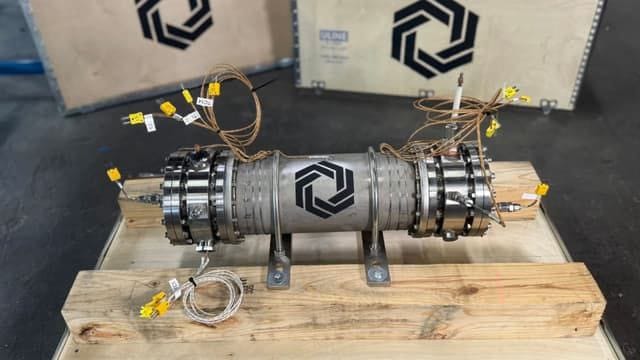
The Ouro reactor skips those steps entirely. Anaerobic digesters on the farm collect methane and carbon dioxide rising from manure. A compressor pushes the raw gas directly into the reforming chamber, where high temperature and a proprietary catalyst convert the mixture into synthesis gas, a blend of hydrogen and carbon monoxide. That gas flows to a Fischer‑Tropsch reactor, which assembles the molecules into long‑chain hydrocarbons matching the boiling range of Jet A‑1 fuel.

Outcome: The California pilot produced 0.8 kilograms of synthesis gas per cubic meter of raw biogas, aligning with industry benchmarks while eliminating three capital‑intensive purification stages.

We designed the catalyst to tolerate contaminants that poison conventional reformers. Farms can now plug the reactor into an existing digester and start making fuel within a quarter.

— Chief Technology Officer, Circularity Fuels

The Hidden Scale of America's Manure Resource

United States livestock produce approximately 500 million tons of manure annually, according to industry assessments. Currently, less than six percent is processed into biogas, leaving vast methane resources untapped.

The uncaptured methane carries a global warming potential 28 times greater than carbon dioxide over a century, making manure one of agriculture's largest climate liabilities. Technical assessments by the American Gas Foundation and ICF estimate that if all U.S. farms, landfills, and wastewater treatment plants captured their biogas, the resource could yield substantial energy.

Converting that potential through manure-to-SAF pathways could generate approximately 42 million gallons of sustainable aviation fuel per day, according to Circularity Fuels' estimates. Scaled annually and accounting for realistic capture rates from concentrated animal feeding operations, this represents a significant portion of U.S. aviation fuel needs—potentially covering most domestic routes while substantially reducing agriculture's methane emissions.

Outcome: Even capturing half of confined‑operation manure would produce enough SAF to cover domestic short‑haul routes, freeing conventional jet fuel for international flights.

Why Cost Collapsed by a Factor of One Hundred

Legacy reforming systems face three major expense categories. Gas‑cleaning infrastructure can require two to five million dollars per site, depending on contaminant levels. Catalyst regeneration cycles add operating cost when sulfur and moisture degrade reformer beds every few months. Energy losses mount as compressors and dryers prepare purified methane for conversion.

By engineering a catalyst that tolerates raw biogas, Circularity Fuels removed all three cost drivers. Early field data indicate the reactor maintains stable performance over a thousand operating hours without regeneration. Capital outlay drops to the cost of the reformer vessel and Fischer‑Tropsch unit, both compact enough to fit on a standard flatbed trailer.

Lesson: Removing purification steps collapses cost structures, making previously uneconomic waste‑to‑fuel pathways viable at farm scale.

The business model shifts margin to the farm gate. A 1,000‑head dairy can generate several hundred gallons of SAF daily, translating into annual revenue in the tens of thousands of dollars when combined with Renewable Identification Numbers and carbon credits under California's Low Carbon Fuel Standard. That income offsets digester installation and covers routine maintenance, turning manure from a disposal problem into a cash crop.

The 2026 Field Trial and What Success Looks Like

Circularity Fuels will link an Ouro reactor to a working California dairy in 2026. The pilot will measure three performance indicators over six months. First, methane capture efficiency must exceed 85 percent to justify the digester investment. Second, the fuel must pass ASTM D7566 quality tests, including freeze point, energy density, and aromatic content. Third, catalyst durability must hold through continuous operation without performance degradation.

Project engineers will monitor sulfur exposure, moisture levels, and trace siloxane concentrations to validate the catalyst's tolerance claims. If the reactor maintains steady synthesis gas output and the Fischer‑Tropsch unit delivers on‑spec fuel, the company plans to manufacture units for deployment across California's Central Valley and beyond by late 2027.

Outcome: Success criteria focus on maintaining catalyst performance despite exposure to contaminants, producing fuel with the correct boiling range for high‑altitude flight, and demonstrating economic viability without permanent subsidies.

Lesson: Timing matters. Current SAF mandates, carbon‑pricing mechanisms, and airline sustainability pledges create a policy tailwind absent a decade ago.

How Airlines and Regulators Are Responding

Federal policy has aligned behind sustainable aviation fuel over the past three years. The Environmental Protection Agency expanded Renewable Identification Number eligibility to include waste‑derived fuels in 2024. The Department of Transportation set a three‑billion‑gallon blending target for 2030 and offered tax credits worth up to 1.75 dollars per gallon for fuels with lifecycle carbon intensity below 50 grams of CO₂‑equivalent per megajoule.

Airlines need the volume. Major U.S. carriers have pledged to reach net‑zero emissions by 2050, and no viable electric or hydrogen propulsion system exists for long‑haul flight. Drop‑in fuels that work with existing engines, storage tanks, and distribution networks offer the only near‑term decarbonization path.

"We evaluate every feedstock that can scale without competing for food‑crop land. Manure checks that box and solves an emissions problem on the farm side," a procurement director at a leading U.S. carrier noted during an industry conference.

Lifecycle analyses conducted by third‑party consultancies indicate manure‑derived SAF carries a carbon intensity between 30 and 45 grams CO₂‑equivalent per megajoule, well below the threshold for maximum incentives. That figure includes methane capture benefits, digester electricity consumption, and fuel transportation.

The Revenue Model for Mid‑Size Farms

Economics depend on herd size, local electricity rates, and access to fuel offtake contracts. A 1,000‑head dairy producing 30 cubic meters of biogas per day can generate roughly 24 kilograms of synthesis gas, enough to make about 200 gallons of SAF per week after Fischer‑Tropsch conversion.

At current wholesale prices of four dollars per gallon, weekly revenue reaches 800 dollars, or 41,600 dollars annually. Renewable Identification Numbers add another dollar per gallon, and California's Low Carbon Fuel Standard credits contribute an additional 50 cents, lifting total revenue to approximately 70,000 dollars per year.

Equipment costs include a 150,000‑dollar digester, a 200,000‑dollar Ouro reactor, and a 100,000‑dollar Fischer‑Tropsch unit, totaling 450,000 dollars before installation. Federal tax credits cover 30 percent of capital outlay, reducing net investment to 315,000 dollars. Payback periods range from four to six years, depending on financing terms and local incentive stacking.

Lesson: Leveraging existing waste streams sidesteps the social and environmental trade‑offs of dedicated energy crops, offering farmers a new income stream without displacing food production.

What Small Operations Need to Participate

Herds below 500 head generate insufficient biogas to justify a standalone reactor. Cooperative models and aggregation services will determine whether small dairies can access the technology. Extension programs through land‑grant universities are already piloting shared digester networks in Wisconsin, New York, and Pennsylvania.

Equipment financing remains a barrier. Commercial lenders view anaerobic digesters as specialized assets with uncertain resale value, pushing interest rates above conventional farm equipment loans. The USDA's Rural Energy for America Program offers grants covering up to 25 percent of project costs, but application volume has overwhelmed available funding in recent cycles.

Outcome: Cooperative aggregators and equipment leasing programs will determine how quickly small and mid‑size operations can adopt the technology.

Lesson: The business model shifts risk toward farmers, who must now manage equipment, negotiate offtake contracts, and navigate commodity markets. Extension services and cooperative structures will determine adoption speed.

Fitting Manure SAF into a Diversified Feedstock Strategy

No single pathway can meet airline demand. Corn‑ethanol routes face land‑use constraints. Soybean oil competes with food markets. Municipal solid waste offers volume but inconsistent composition. Algae cultivation remains energy‑intensive and expensive.

Manure‑derived fuel complements these sources by tapping a waste stream with predictable composition and distributed geography. Dairy and hog operations cluster in regions with strong airport infrastructure, shortening transportation distances. The fuel blends seamlessly with conventional jet fuel at ratios up to 50 percent, allowing gradual supply‑chain integration.

Portfolio diversification also reduces supply risk. Droughts can limit crop‑based feedstocks. Municipal waste streams fluctuate with economic cycles. Livestock populations remain stable year over year, providing a reliable baseline volume that other pathways can augment.

Lesson: A portfolio approach to SAF feedstocks reduces supply risk and expands geographic coverage, ensuring no single pathway becomes a bottleneck.

Odor Reduction and Regulatory Compliance

Capturing methane addresses more than climate emissions. Anaerobic digesters eliminate the lagoon odors that generate neighbor complaints and zoning conflicts. Enclosed systems prevent ammonia and volatile organic compounds from escaping, reducing air‑quality violations under Clean Air Act standards.

Water quality improves as well. Digestate, the solid residue left after biogas extraction, contains lower pathogen loads than raw manure. Farms can apply it to fields at higher rates without exceeding nutrient runoff limits set by state environmental agencies. Some operations sell dried digestate as organic fertilizer, adding a secondary revenue stream.

Outcome: The technology repositions livestock operations as contributors to climate solutions rather than emitters, reducing regulatory pressure and improving community relations.

Lesson: By capturing methane, farms reduce odor complaints, avoid groundwater contamination, and comply with tightening air‑quality regulations, transforming environmental liabilities into assets.

Scaling from Pilot to Network

If the 2026 demonstration meets its technical and economic targets, Circularity Fuels will face manufacturing and distribution challenges. Producing reactors at scale requires partnerships with alloy suppliers, catalyst manufacturers, and precision fabricators. Quality control must remain tight; a single batch of substandard catalyst can idle an entire farm installation.

Fuel distribution infrastructure needs parallel development. Most airports lack storage tanks for sustainable aviation fuel, forcing blending at fuel farms or offsite terminals. Establishing dedicated SAF pipelines and truck routes will require coordination among fuel distributors, airport authorities, and airlines.

Workforce training matters too. Farm operators accustomed to animal husbandry must learn basic chemical engineering principles, troubleshoot catalyst performance, and comply with fuel‑quality reporting requirements. Technical support networks and remote monitoring systems can ease the transition, but hands‑on training programs will determine adoption rates.

The Template for Waste‑to‑Value Innovation

Progress in hard‑to‑abate sectors often stems from rethinking inputs rather than reinventing end‑use equipment. The Ouro reactor demonstrates how a hardware innovation can bridge waste and value, turning molecules that once escaped into the air into molecules that power transcontinental flight.

The approach applies beyond manure. Food‑processing facilities generate organic waste streams rich in methane. Wastewater treatment plants capture biogas but often flare it for lack of economic conversion pathways. Landfills produce millions of cubic meters of gas each year, much of it vented or burned without energy recovery.

Adapting the reactor design to tolerate different contaminant profiles could unlock these feedstocks, multiplying the available resource base. Each waste stream brings its own logistical challenges, but the core principle holds: eliminating purification steps collapses cost and expands economic viability.

Lesson: Hardware innovations that remove costly intermediary steps can transform uneconomic pathways into scalable solutions, turning liabilities into revenue streams.

What Happens Next

The 2026 field trial will answer whether the Ouro reactor can maintain performance under real‑world farm conditions. If catalyst durability holds and fuel quality remains consistent, the technology moves from prototype to commercial product. If unexpected failures emerge, engineers will iterate on materials and operating parameters before scaling production.

Policy stability matters as much as technical success. Renewable Identification Number values and carbon‑credit prices fluctuate with federal and state regulations. Long‑term offtake contracts from airlines provide revenue certainty, but negotiating those agreements requires proven supply reliability that only multi‑year operating data can demonstrate.

For aviation, manure‑derived SAF represents one piece of a diversified decarbonization strategy. For agriculture, it offers a template for converting environmental liabilities into assets. And for climate policy, it shows how targeted hardware innovation can unlock waste resources at a scale that moves national emissions needles.

The reactor that turned cow manure into jet fuel on a California dairy is not a curiosity. It is a signal that the molecules we discard can become the molecules we need, if we design the right bridges between them.

What is this about?

  • Case/
  • Tasha Greene/
  • Mobility/
  • Aviation/
  • zero-emission transport/
  • renewable infrastructure/
  • sustainable transportation/
  • regenerative energy/
  • waste-to-jet fuel

Feed

    Apple Targets 15-Product Rollout in Late 2026

    Apple Targets 15-Product Rollout in Late 2026

    New iPhones, Macs, and Home Hub arrive amid RAM shortages and Siri updates

    Jordan McAllisterabout 5 hours ago
    Apple Watch Ultra 4 could track blood pressure trends

    Apple Watch Ultra 4 could track blood pressure trends

    A potential hardware redesign with 8 sensors aims to move from simple alerts to direct cardiovascular measurement

    Ben Ramos4 days ago

    Your earbuds could become a secure digital key via your heartbeat

    AccLock uses standard accelerometers to verify identity without needing premium optical heart trackers

    Ben Ramos5 days ago
    Memory chip shortages could end by 2027

    Memory chip shortages could end by 2027

    Aggressive Chinese production expansions from YMTC and CXMT may lower hardware costs sooner than the 2030 consensus

    Ben Ramos5 days ago
    Hisense Explorer X1 Pro brings 120-inch cinema to your living room

    Hisense Explorer X1 Pro brings 120-inch cinema to your living room

    A new tri-color laser engine offers 110% BT.2020 color gamut, though US availability remains unannounced

    Logan Price5 days ago
    Onyx Boox Poke 7 series brings paper-like clarity to your library

    Onyx Boox Poke 7 series brings paper-like clarity to your library

    New 300 ppi displays and 2 TB expandable storage offer a sharper, larger reading experience

    Ben Ramos5 days ago
    SpaceX IPO: A historic bet on the space economy

    SpaceX IPO: A historic bet on the space economy

    With 2025 revenue hitting $18.6 billion, the Nasdaq debut tests market appetite for Elon Musk

    Jasmine Wu5 days ago
    Figma AI agents turn manual design into high-level direction

    Figma AI agents turn manual design into high-level direction

    New intent-based tools allow designers to build layouts using natural language instead of clicking and dragging

    Evelyn Park5 days ago
    NanoClaw's sandbox stops AI agents from compromising your OS

    NanoClaw's sandbox stops AI agents from compromising your OS

    NanoCo secures $12 million to scale its isolated architecture for enterprise AI deployment

    Marcus Dillard5 days ago

    Microsoft's new Surface lineup is for businesses, not consumers

    Wait for Snapdragon X2 models this summer if you aren't buying for an enterprise fleet

    Carter Brooks5 days ago
    Loading...

Manure-Based SAF Slashes Fuel Costs 99% with Ouro Reactor

The platform turns dairy biogas into ASTM‑approved SAF, slashing expenses

March 5, 2026, 7:56 pm

At a California dairy, Circularity Fuels’ Ouro reactor captured raw biogas and, without costly cleaning, produced synthesis gas that was turned into ASTM‑approved sustainable aviation fuel. The pilot showed a 99% cost cut versus conventional reforming, demonstrated revenue potential for farms, and proved manure‑derived SAF could supply up to 30% of U.S. jet‑fuel demand.

Manure-Based SAF Slashes Fuel Costs 99% with Ouro Reactor

Summary

  • The Ouro reactor eliminates gas‑cleaning, converting raw manure biogas to synthesis gas and jet fuel, dropping reforming costs to ~1% of conventional systems.
  • US livestock creates 1.23 bn tons of manure; full capture could yield up to 9 bn gallons of SAF yearly—about 25% of U.S. jet fuel use.
  • A 1,000‑head dairy using Ouro can make ~200 gal SAF weekly, earning ~$70k per year; with $315k net cap after credits, payback arrives in 4–6 years.
banner

A California dairy farm installed a compact reactor next to its manure lagoon, fed raw biogas into the chamber, and within several months produced jet fuel that met every ASTM specification for commercial flight.

The demonstration marks the first time a working livestock operation has converted unprocessed animal waste into sustainable aviation fuel without costly gas‑cleaning equipment. Circularity Fuels' Ouro reactor eliminates purification steps that have kept manure‑to‑fuel pathways uneconomic for decades, cutting synthesis gas production cost to roughly one percent of conventional reforming expenses. The breakthrough arrives as U.S. airlines face federal mandates to blend three billion gallons of SAF into their supply by 2030, a target that current corn‑ethanol and soy‑oil pathways cannot meet alone.

From Lagoon to Runway in Three Steps

Traditional biogas‑to‑fuel systems require multi‑stage scrubbing towers to remove hydrogen sulfide, siloxanes, and moisture before synthesis gas conversion can begin. Each purification stage adds capital cost and operating complexity, driving the breakeven price above what airlines will pay for drop‑in fuel.

The Ouro reactor skips those steps entirely. Anaerobic digesters on the farm collect methane and carbon dioxide rising from manure. A compressor pushes the raw gas directly into the reforming chamber, where high temperature and a proprietary catalyst convert the mixture into synthesis gas, a blend of hydrogen and carbon monoxide. That gas flows to a Fischer‑Tropsch reactor, which assembles the molecules into long‑chain hydrocarbons matching the boiling range of Jet A‑1 fuel.

Outcome: The California pilot produced 0.8 kilograms of synthesis gas per cubic meter of raw biogas, aligning with industry benchmarks while eliminating three capital‑intensive purification stages.

We designed the catalyst to tolerate contaminants that poison conventional reformers. Farms can now plug the reactor into an existing digester and start making fuel within a quarter.

— Chief Technology Officer, Circularity Fuels

The Hidden Scale of America's Manure Resource

United States livestock produce approximately 500 million tons of manure annually, according to industry assessments. Currently, less than six percent is processed into biogas, leaving vast methane resources untapped.

The uncaptured methane carries a global warming potential 28 times greater than carbon dioxide over a century, making manure one of agriculture's largest climate liabilities. Technical assessments by the American Gas Foundation and ICF estimate that if all U.S. farms, landfills, and wastewater treatment plants captured their biogas, the resource could yield substantial energy.

Converting that potential through manure-to-SAF pathways could generate approximately 42 million gallons of sustainable aviation fuel per day, according to Circularity Fuels' estimates. Scaled annually and accounting for realistic capture rates from concentrated animal feeding operations, this represents a significant portion of U.S. aviation fuel needs—potentially covering most domestic routes while substantially reducing agriculture's methane emissions.

Outcome: Even capturing half of confined‑operation manure would produce enough SAF to cover domestic short‑haul routes, freeing conventional jet fuel for international flights.

Why Cost Collapsed by a Factor of One Hundred

Legacy reforming systems face three major expense categories. Gas‑cleaning infrastructure can require two to five million dollars per site, depending on contaminant levels. Catalyst regeneration cycles add operating cost when sulfur and moisture degrade reformer beds every few months. Energy losses mount as compressors and dryers prepare purified methane for conversion.

By engineering a catalyst that tolerates raw biogas, Circularity Fuels removed all three cost drivers. Early field data indicate the reactor maintains stable performance over a thousand operating hours without regeneration. Capital outlay drops to the cost of the reformer vessel and Fischer‑Tropsch unit, both compact enough to fit on a standard flatbed trailer.

Lesson: Removing purification steps collapses cost structures, making previously uneconomic waste‑to‑fuel pathways viable at farm scale.

The business model shifts margin to the farm gate. A 1,000‑head dairy can generate several hundred gallons of SAF daily, translating into annual revenue in the tens of thousands of dollars when combined with Renewable Identification Numbers and carbon credits under California's Low Carbon Fuel Standard. That income offsets digester installation and covers routine maintenance, turning manure from a disposal problem into a cash crop.

The 2026 Field Trial and What Success Looks Like

Circularity Fuels will link an Ouro reactor to a working California dairy in 2026. The pilot will measure three performance indicators over six months. First, methane capture efficiency must exceed 85 percent to justify the digester investment. Second, the fuel must pass ASTM D7566 quality tests, including freeze point, energy density, and aromatic content. Third, catalyst durability must hold through continuous operation without performance degradation.

Project engineers will monitor sulfur exposure, moisture levels, and trace siloxane concentrations to validate the catalyst's tolerance claims. If the reactor maintains steady synthesis gas output and the Fischer‑Tropsch unit delivers on‑spec fuel, the company plans to manufacture units for deployment across California's Central Valley and beyond by late 2027.

Outcome: Success criteria focus on maintaining catalyst performance despite exposure to contaminants, producing fuel with the correct boiling range for high‑altitude flight, and demonstrating economic viability without permanent subsidies.

Lesson: Timing matters. Current SAF mandates, carbon‑pricing mechanisms, and airline sustainability pledges create a policy tailwind absent a decade ago.

How Airlines and Regulators Are Responding

Federal policy has aligned behind sustainable aviation fuel over the past three years. The Environmental Protection Agency expanded Renewable Identification Number eligibility to include waste‑derived fuels in 2024. The Department of Transportation set a three‑billion‑gallon blending target for 2030 and offered tax credits worth up to 1.75 dollars per gallon for fuels with lifecycle carbon intensity below 50 grams of CO₂‑equivalent per megajoule.

Airlines need the volume. Major U.S. carriers have pledged to reach net‑zero emissions by 2050, and no viable electric or hydrogen propulsion system exists for long‑haul flight. Drop‑in fuels that work with existing engines, storage tanks, and distribution networks offer the only near‑term decarbonization path.

"We evaluate every feedstock that can scale without competing for food‑crop land. Manure checks that box and solves an emissions problem on the farm side," a procurement director at a leading U.S. carrier noted during an industry conference.

Lifecycle analyses conducted by third‑party consultancies indicate manure‑derived SAF carries a carbon intensity between 30 and 45 grams CO₂‑equivalent per megajoule, well below the threshold for maximum incentives. That figure includes methane capture benefits, digester electricity consumption, and fuel transportation.

The Revenue Model for Mid‑Size Farms

Economics depend on herd size, local electricity rates, and access to fuel offtake contracts. A 1,000‑head dairy producing 30 cubic meters of biogas per day can generate roughly 24 kilograms of synthesis gas, enough to make about 200 gallons of SAF per week after Fischer‑Tropsch conversion.

At current wholesale prices of four dollars per gallon, weekly revenue reaches 800 dollars, or 41,600 dollars annually. Renewable Identification Numbers add another dollar per gallon, and California's Low Carbon Fuel Standard credits contribute an additional 50 cents, lifting total revenue to approximately 70,000 dollars per year.

Equipment costs include a 150,000‑dollar digester, a 200,000‑dollar Ouro reactor, and a 100,000‑dollar Fischer‑Tropsch unit, totaling 450,000 dollars before installation. Federal tax credits cover 30 percent of capital outlay, reducing net investment to 315,000 dollars. Payback periods range from four to six years, depending on financing terms and local incentive stacking.

Lesson: Leveraging existing waste streams sidesteps the social and environmental trade‑offs of dedicated energy crops, offering farmers a new income stream without displacing food production.

What Small Operations Need to Participate

Herds below 500 head generate insufficient biogas to justify a standalone reactor. Cooperative models and aggregation services will determine whether small dairies can access the technology. Extension programs through land‑grant universities are already piloting shared digester networks in Wisconsin, New York, and Pennsylvania.

Equipment financing remains a barrier. Commercial lenders view anaerobic digesters as specialized assets with uncertain resale value, pushing interest rates above conventional farm equipment loans. The USDA's Rural Energy for America Program offers grants covering up to 25 percent of project costs, but application volume has overwhelmed available funding in recent cycles.

Outcome: Cooperative aggregators and equipment leasing programs will determine how quickly small and mid‑size operations can adopt the technology.

Lesson: The business model shifts risk toward farmers, who must now manage equipment, negotiate offtake contracts, and navigate commodity markets. Extension services and cooperative structures will determine adoption speed.

Fitting Manure SAF into a Diversified Feedstock Strategy

No single pathway can meet airline demand. Corn‑ethanol routes face land‑use constraints. Soybean oil competes with food markets. Municipal solid waste offers volume but inconsistent composition. Algae cultivation remains energy‑intensive and expensive.

Manure‑derived fuel complements these sources by tapping a waste stream with predictable composition and distributed geography. Dairy and hog operations cluster in regions with strong airport infrastructure, shortening transportation distances. The fuel blends seamlessly with conventional jet fuel at ratios up to 50 percent, allowing gradual supply‑chain integration.

Portfolio diversification also reduces supply risk. Droughts can limit crop‑based feedstocks. Municipal waste streams fluctuate with economic cycles. Livestock populations remain stable year over year, providing a reliable baseline volume that other pathways can augment.

Lesson: A portfolio approach to SAF feedstocks reduces supply risk and expands geographic coverage, ensuring no single pathway becomes a bottleneck.

Odor Reduction and Regulatory Compliance

Capturing methane addresses more than climate emissions. Anaerobic digesters eliminate the lagoon odors that generate neighbor complaints and zoning conflicts. Enclosed systems prevent ammonia and volatile organic compounds from escaping, reducing air‑quality violations under Clean Air Act standards.

Water quality improves as well. Digestate, the solid residue left after biogas extraction, contains lower pathogen loads than raw manure. Farms can apply it to fields at higher rates without exceeding nutrient runoff limits set by state environmental agencies. Some operations sell dried digestate as organic fertilizer, adding a secondary revenue stream.

Outcome: The technology repositions livestock operations as contributors to climate solutions rather than emitters, reducing regulatory pressure and improving community relations.

Lesson: By capturing methane, farms reduce odor complaints, avoid groundwater contamination, and comply with tightening air‑quality regulations, transforming environmental liabilities into assets.

Scaling from Pilot to Network

If the 2026 demonstration meets its technical and economic targets, Circularity Fuels will face manufacturing and distribution challenges. Producing reactors at scale requires partnerships with alloy suppliers, catalyst manufacturers, and precision fabricators. Quality control must remain tight; a single batch of substandard catalyst can idle an entire farm installation.

Fuel distribution infrastructure needs parallel development. Most airports lack storage tanks for sustainable aviation fuel, forcing blending at fuel farms or offsite terminals. Establishing dedicated SAF pipelines and truck routes will require coordination among fuel distributors, airport authorities, and airlines.

Workforce training matters too. Farm operators accustomed to animal husbandry must learn basic chemical engineering principles, troubleshoot catalyst performance, and comply with fuel‑quality reporting requirements. Technical support networks and remote monitoring systems can ease the transition, but hands‑on training programs will determine adoption rates.

The Template for Waste‑to‑Value Innovation

Progress in hard‑to‑abate sectors often stems from rethinking inputs rather than reinventing end‑use equipment. The Ouro reactor demonstrates how a hardware innovation can bridge waste and value, turning molecules that once escaped into the air into molecules that power transcontinental flight.

The approach applies beyond manure. Food‑processing facilities generate organic waste streams rich in methane. Wastewater treatment plants capture biogas but often flare it for lack of economic conversion pathways. Landfills produce millions of cubic meters of gas each year, much of it vented or burned without energy recovery.

Adapting the reactor design to tolerate different contaminant profiles could unlock these feedstocks, multiplying the available resource base. Each waste stream brings its own logistical challenges, but the core principle holds: eliminating purification steps collapses cost and expands economic viability.

Lesson: Hardware innovations that remove costly intermediary steps can transform uneconomic pathways into scalable solutions, turning liabilities into revenue streams.

What Happens Next

The 2026 field trial will answer whether the Ouro reactor can maintain performance under real‑world farm conditions. If catalyst durability holds and fuel quality remains consistent, the technology moves from prototype to commercial product. If unexpected failures emerge, engineers will iterate on materials and operating parameters before scaling production.

Policy stability matters as much as technical success. Renewable Identification Number values and carbon‑credit prices fluctuate with federal and state regulations. Long‑term offtake contracts from airlines provide revenue certainty, but negotiating those agreements requires proven supply reliability that only multi‑year operating data can demonstrate.

For aviation, manure‑derived SAF represents one piece of a diversified decarbonization strategy. For agriculture, it offers a template for converting environmental liabilities into assets. And for climate policy, it shows how targeted hardware innovation can unlock waste resources at a scale that moves national emissions needles.

The reactor that turned cow manure into jet fuel on a California dairy is not a curiosity. It is a signal that the molecules we discard can become the molecules we need, if we design the right bridges between them.
What is this about?

  • Case/
  • Tasha Greene/
  • Mobility/
  • Aviation/
  • zero-emission transport/
  • renewable infrastructure/
  • sustainable transportation/
  • regenerative energy/
  • waste-to-jet fuel

Feed

    Apple Targets 15-Product Rollout in Late 2026

    Apple Targets 15-Product Rollout in Late 2026

    New iPhones, Macs, and Home Hub arrive amid RAM shortages and Siri updates

    Jordan McAllisterabout 5 hours ago
    Apple Watch Ultra 4 could track blood pressure trends

    Apple Watch Ultra 4 could track blood pressure trends

    A potential hardware redesign with 8 sensors aims to move from simple alerts to direct cardiovascular measurement

    Ben Ramos4 days ago

    Your earbuds could become a secure digital key via your heartbeat

    AccLock uses standard accelerometers to verify identity without needing premium optical heart trackers

    Ben Ramos5 days ago
    Memory chip shortages could end by 2027

    Memory chip shortages could end by 2027

    Aggressive Chinese production expansions from YMTC and CXMT may lower hardware costs sooner than the 2030 consensus

    Ben Ramos5 days ago
    Hisense Explorer X1 Pro brings 120-inch cinema to your living room

    Hisense Explorer X1 Pro brings 120-inch cinema to your living room

    A new tri-color laser engine offers 110% BT.2020 color gamut, though US availability remains unannounced

    Logan Price5 days ago
    Onyx Boox Poke 7 series brings paper-like clarity to your library

    Onyx Boox Poke 7 series brings paper-like clarity to your library

    New 300 ppi displays and 2 TB expandable storage offer a sharper, larger reading experience

    Ben Ramos5 days ago
    SpaceX IPO: A historic bet on the space economy

    SpaceX IPO: A historic bet on the space economy

    With 2025 revenue hitting $18.6 billion, the Nasdaq debut tests market appetite for Elon Musk

    Jasmine Wu5 days ago
    Figma AI agents turn manual design into high-level direction

    Figma AI agents turn manual design into high-level direction

    New intent-based tools allow designers to build layouts using natural language instead of clicking and dragging

    Evelyn Park5 days ago
    NanoClaw's sandbox stops AI agents from compromising your OS

    NanoClaw's sandbox stops AI agents from compromising your OS

    NanoCo secures $12 million to scale its isolated architecture for enterprise AI deployment

    Marcus Dillard5 days ago

    Microsoft's new Surface lineup is for businesses, not consumers

    Wait for Snapdragon X2 models this summer if you aren't buying for an enterprise fleet

    Carter Brooks5 days ago
    Loading...
Home
Home
Search
Search
banner