• My Feed
  • Home
  • What's Important
  • Media & Entertainment
Search

Stay Curious. Stay Wanture.

© 2026 Wanture. All rights reserved.

  • Terms of Use
  • Privacy Policy
Tech/Business

Escaping Pseudo‑Productivity: Reclaiming Deep Work

How nonstop tool switching taxes your brain; focus blocks boost real output

13 February 2026

—

Explainer *

Jordan McAllister
banner

Many workers confuse endless clicking and notification juggling with real productivity. This explainer shows how each tool‑driven interruption adds a hidden cognitive tax, erodes deep‑work capacity, and stalls progress. Learn the science of attention residue, the cost of task‑switching, and steps: audit tools, protect focus blocks, and set norms to regain bandwidth.

image (35)

Summary:

  • Constant notifications and tool switching trigger a dopamine loop that feels productive but blocks deep work, causing residue and 25‑minute resumption lag.
  • Studies find interruptions add ~25 minutes to refocus, boost errors and stress; workers face a disruption 3 minutes apart, and teams spend 35% day handling tools.
  • Adopt digital minimalism: audit apps, cut 40‑60%, protect morning deep‑work blocks, and use async communication so teams respect focus time.

A software engineer in Austin opens 12 browser tabs before her first coffee. By lunch, she has checked Slack 47 times, toggled between five applications, updated two project boards, and cleared 14 notification badges. She feels drained. The three priorities she wrote down at sunrise sit untouched. This is pseudo-productivity, and it consumes mental energy while producing almost nothing of value.

Pseudo-productivity: when busyness replaces progress

Pseudo-productivity is the performance of being busy without meaningful output. It operates through endless task lists, notification-driven sessions, and constant tool switching. Motion replaces progress.

The mechanism runs on a specific loop. Each notification triggers a small dopamine release. Your brain registers activity as accomplishment. The interface responds instantly. Checkboxes turn green. Badges vanish. You feel productive. But the deep thinking required to solve complex problems never happens. Instead, you manage the system designed to help you work.

Your brain pays a tax every time you switch

When you shift from writing code to checking Slack to updating Jira, your brain doesn't flip a switch. It carries residue from the previous task into the next. Researcher Sophie Leroy calls this attention residue. It compounds with every switch.

Gloria Mark's peer-reviewed field study at UC Irvine measured what happens after interruption. Workers took an average of 25 minutes and 26 seconds to return to their original task. Not 25 minutes to feel focused again. 25 minutes just to navigate back. During that span, most people never returned to the original work at all. They switched to something else entirely.

The cognitive cost appears in three forms. First, task resumption lag: the time required to rebuild your mental model. Second, error rate increase, because you work from incomplete context. Third, decision fatigue, because your brain treats every switch as a new choice about what deserves attention.

Mark's 2008 study found interrupted workers sometimes finished faster but reported higher stress, frustration, and effort. Interruptions changed performance quality and raised cognitive cost. Microsoft's 2025 Work Trend Index documented that U.S. employees face interruptions approximately every three minutes during active work periods. Each interruption carries a hidden tax your brain pays without your permission.

At Google's Mountain View campus, internal research found similar patterns. Engineers reported spending 35% of their workday managing communication tools rather than solving technical problems. Amazon's operations teams documented that warehouse planning software required workers to consult an average of seven different dashboards to complete a single inventory decision.

Tools create an illusion then demand attention

Digital tools create efficiency illusions through interface responsiveness. Click, and the system responds in milliseconds. Type, and auto-complete appears. Submit, and confirmation animations play. Your brain interprets this speed as productivity.

But interface speed has nothing to do with work completion. A project management tool that loads in 50 milliseconds doesn't make your project finish faster. A communication app with instant read receipts doesn't improve collaboration quality. The systems feel efficient while actual work slows down.

This illusion compounds when tools proliferate. Teams adopt Slack for communication, Jira for tasks, Notion for documentation, Figma for design, GitHub for code, Zoom for meetings. Each promises to streamline one aspect of work. Together, they create a coordination problem.

You spend mornings updating status in three different systems. You spend afternoons searching across platforms for information you know exists somewhere. You spend evenings processing notifications that accumulated while you tried to focus. The tools themselves become the work.

Meta's internal productivity audit in 2024 revealed that product managers spent 40% of their week synchronizing information across six separate platforms. The company later reduced its mandatory toolset from 23 applications to 11, increasing project completion rates by 28% without adding headcount.

Deep work shrinks the list to what matters

Neural imaging shows increased activity in brain regions tied to working memory and executive function. Productivity studies show three to five times higher output compared to fragmented sessions. Workers consistently describe a sense of flow: time perception shifts and effort becomes almost effortless.

But deep work cannot coexist with most modern American offices. Slack's default expectation is sub-five-minute response time. Standing meetings fragment the day into 30 to 90 minute chunks. Open offices create ambient interruption every 11 minutes on average. The environment actively prevents the cognitive state required for complex work.

This creates organizational dysfunction. Companies hire skilled developers and analysts, then structure the workday to make skilled work nearly impossible. Junior developers never build expertise because they never enter deep practice. Senior developers become managers simply to escape interruption culture. Entire teams stay trapped in what looks like productivity but delivers steadily declining output.

Three rules that reclaim cognitive capacity

Digital minimalism for work means reducing tools to the minimum necessary set and defending boundaries around deep work time. This operates at three levels: tool consolidation, schedule design, and team culture.

Tool consolidation starts with an audit

List every application you used in the past week. For each, ask whether it's essential or whether its function could be absorbed by something you already use. Most teams discover they can eliminate 40% to 60% of tools without losing capability. The coordination overhead saved exceeds the minor feature losses.

Schedule design protects focus blocks

Reserve mornings for deep work. Batch communication and coordination in early afternoon. Handle administrative tasks at end of day. This works because cognitive capacity declines through the day. Use peak hours for peak demands.

Researchers studying developer productivity found that protecting just one four-hour morning block per week increased complex problem solving output by 30%. A single protected block per week delivered measurable gains.

Team culture determines whether individual strategies survive

If your manager expects instant Slack responses, blocking notifications gets you penalized. If standups happen at 9:30 AM daily, morning deep work becomes impossible. Cultural change requires explicit agreements: asynchronous communication as default, defined response time expectations, and scheduled collaboration windows that respect focus time.

Priority limitation matters more than tool reduction. Warren Buffett's two list strategy applies here. Write down your top 25 goals, circle the top five, then treat the remaining 20 as your avoid at all costs list. Those 20 items feel important enough to deserve attention but not important enough to deserve completion. They generate pseudo-productivity without meaningful progress. Eliminate them entirely.

What happens when organizations recognize deep work as advantage

The productivity paradox isn't personal failure. It's a design outcome. Every interface pattern that increases engagement, every notification system that recaptures attention, every tool that promises seamless integration creates cognitive overhead that compounds across your entire work environment.

Solving this requires structural change, not individual optimization. Teams need explicit focus protection policies. Organizations need to measure deep work output, not activity metrics. Tool vendors need to design for consolidation and calm, not proliferation and engagement.

For now, the burden falls on individuals to create boundaries the environment won't provide. That means defending focus time, limiting tools aggressively, and accepting that looking less responsive often means being more productive. Start with one protected morning block this week. Audit your tools and eliminate three. The performance of busyness feels safer than the risk of deep work. But only one of them actually builds anything worth building.

What is this about?

  • productivity/
  • attention economy/
  • cognitive performance/
  • mindfulness/
  • burnout prevention/
  • distraction-free computing

Feed

    Cursor 3 Launches Unified AI Coding Workspace

    Cursor 3 Launches Unified AI Coding Workspace

    Side‑panel lets devs toggle local and cloud agents, building on Composer 2 and Kimi 2.5

    about 15 hours ago
    Orion’s Six‑Minute Burn Puts Artemis 2 on Free‑Return Path

    Orion’s Six‑Minute Burn Puts Artemis 2 on Free‑Return Path

    iPhone 17 Pro Max survives Orion’s deep‑space test as crew heads to lunar flyby

    about 17 hours ago
    Android 17 Introduces System‑Level Notification Rules

    Android 17 Introduces System‑Level Notification Rules

    Samsung’s One UI 9 will adopt Android 17’s rules, adding OS‑level alert control

    about 17 hours ago

    Nvidia rolls out DLSS 4.5, 6× boost on RTX 50-series

    Dynamic Multi‑Frame Generation smooths 120–240 Hz, delivered in the driver 595.97

    about 19 hours ago
    Apple rolls out iOS 18.7.7 to block DarkSword

    Apple rolls out iOS 18.7.7 to block DarkSword

    Patch fixes six Safari bugs, stopping DarkSword on iOS 18–18.7 devices

    1 day ago
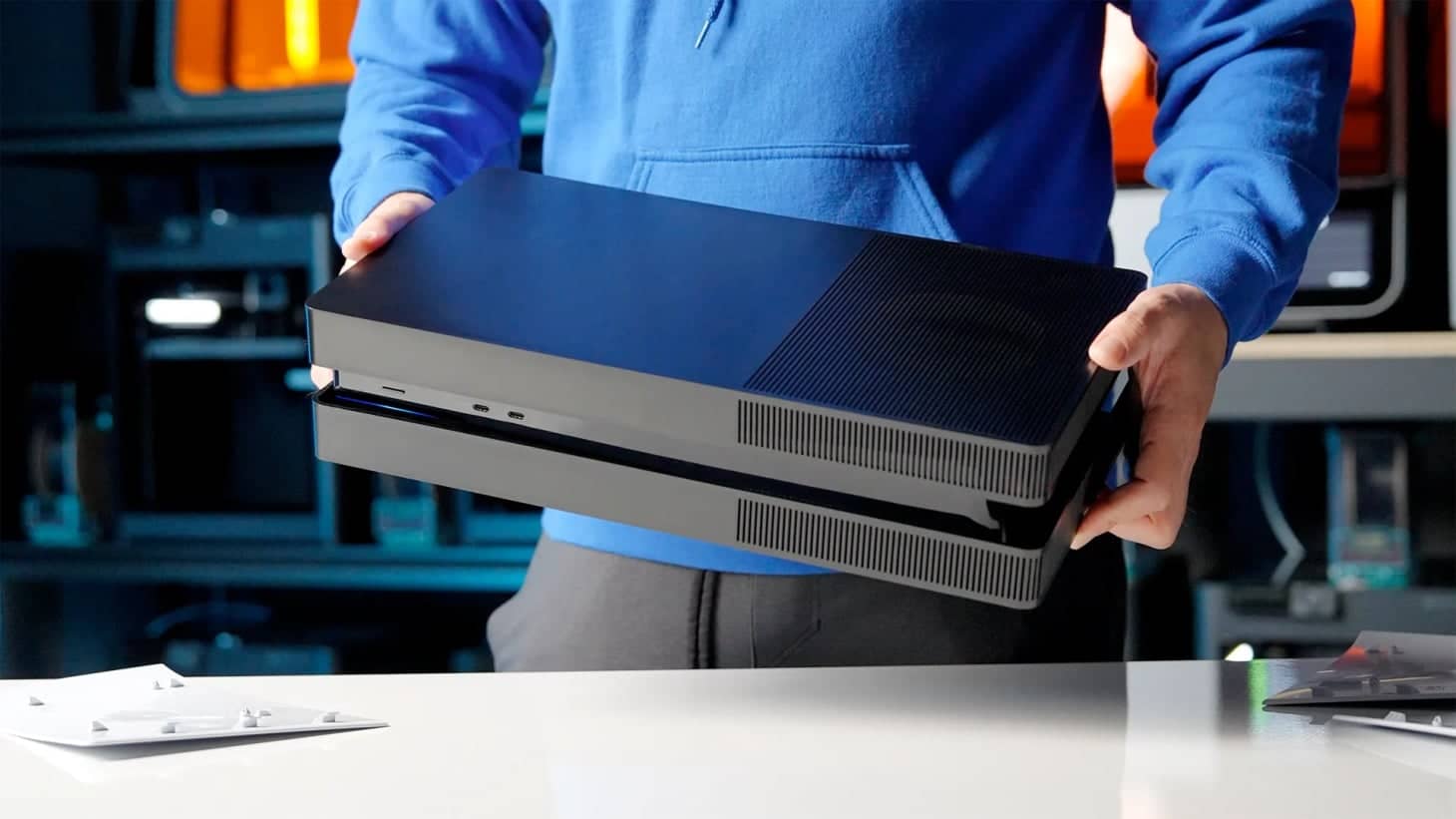
    BoxPlates Skins Revamp PS5 Slim & Pro in Two Weeks

    BoxPlates Skins Revamp PS5 Slim & Pro in Two Weeks

    1 day ago
    Artemis 2 Rockets Beyond Earth—402,000 km From Home

    Artemis 2 Rockets Beyond Earth—402,000 km From Home

    Lift‑off at 8:23 a.m. ET marks first crewed lunar flight since 1972, with a diverse four‑person crew

    1 day ago
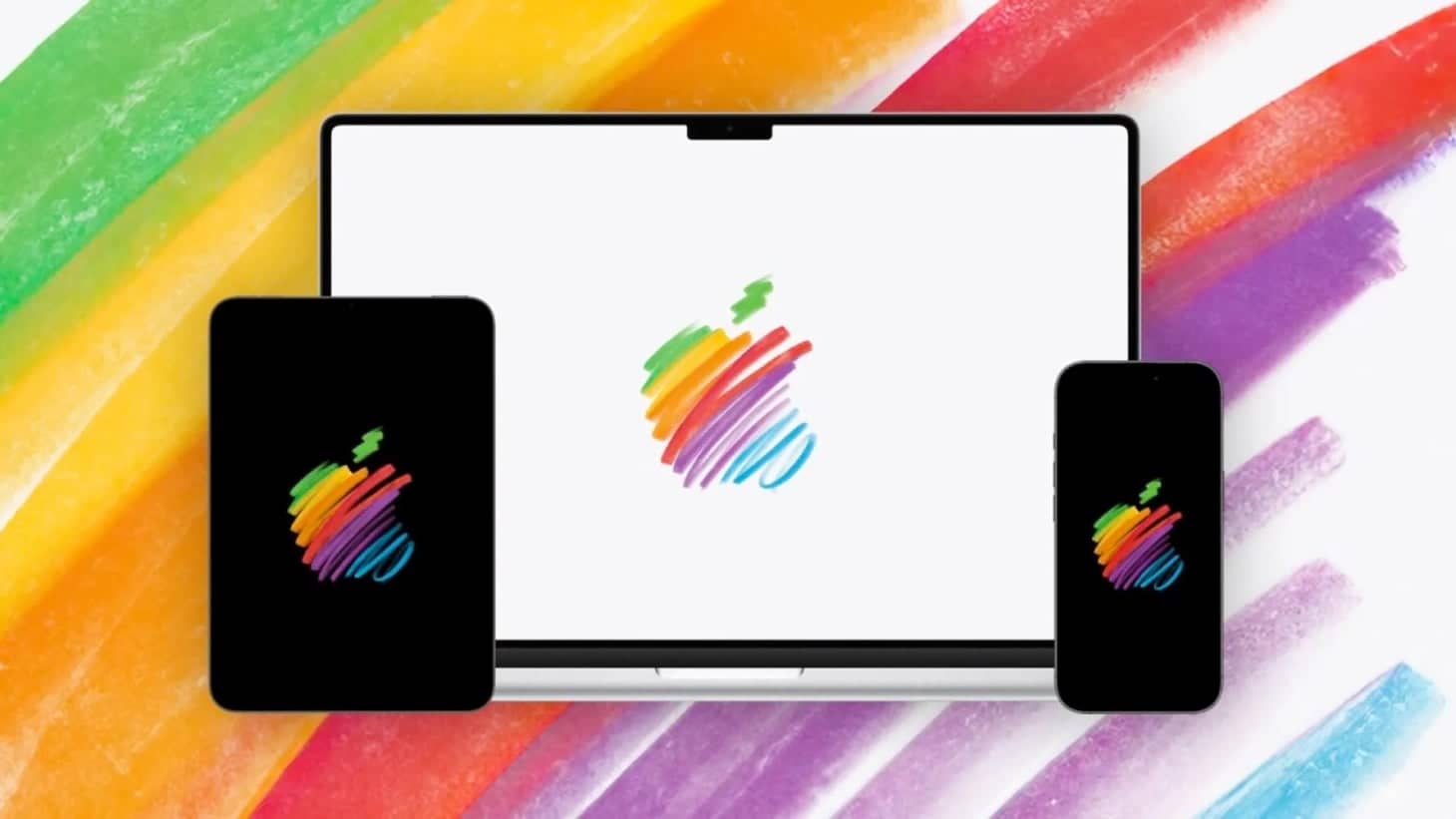
    Apple celebrates 50 years with new minimalist wallpapers

    Apple celebrates 50 years with new minimalist wallpapers

    Basic Apple Guy releases iPhone and Mac wallpapers for Apple’s 50th anniversary

    1 day ago
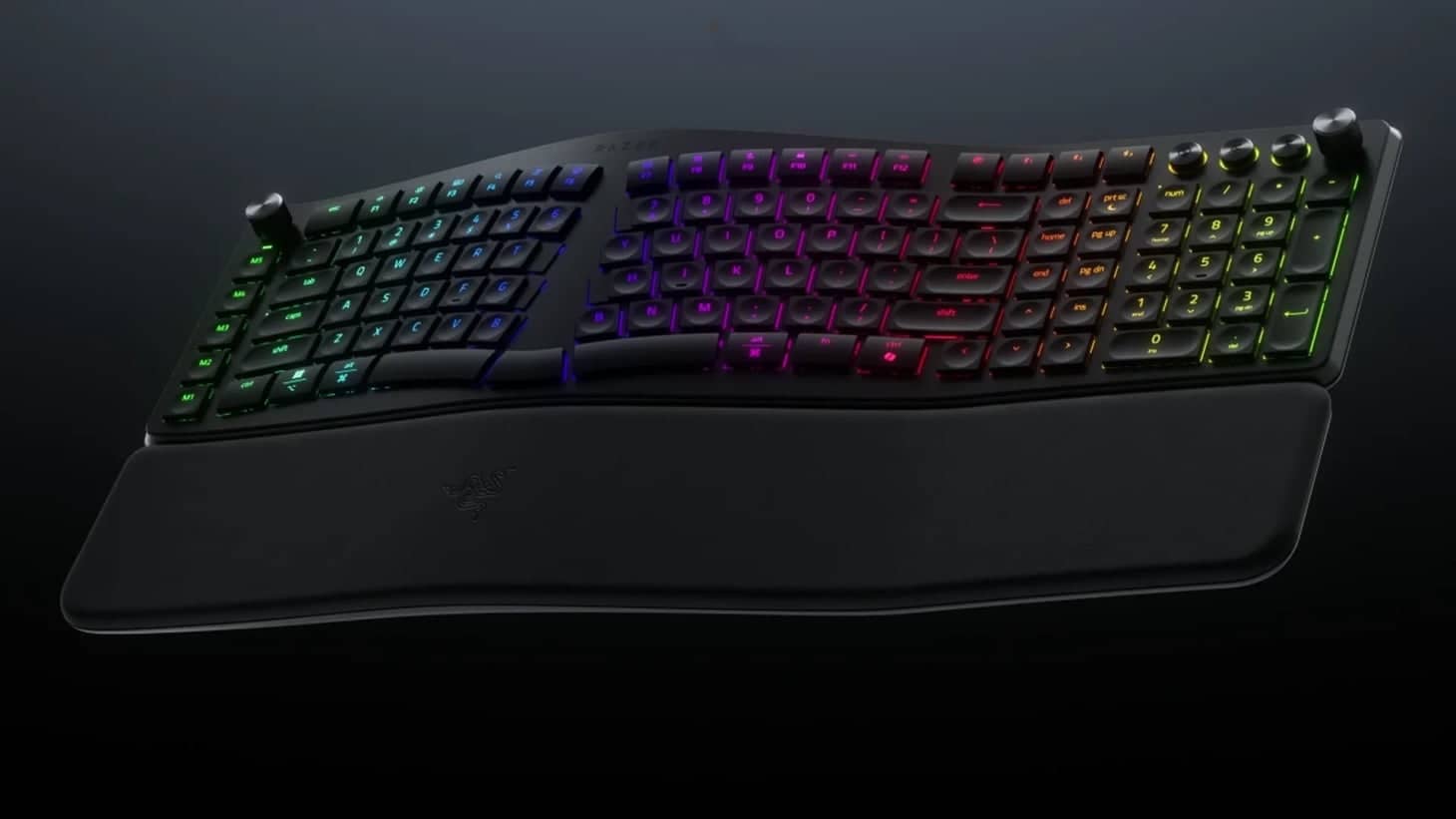
    Razer Unveils Pro Type Ergo Ergonomic Keyboard Today

    Razer Unveils Pro Type Ergo Ergonomic Keyboard Today

    Split design, AI button, and 19‑zone RGB aim at U.S. workers with a 9.7% RSI rate

    2 days ago
    Google to debut screen‑free Fitbit band in 2026

    Google to debut screen‑free Fitbit band in 2026

    AI‑driven training plan and upgraded platform aim at the health‑tracking market against Oura and Whoop

    3 days ago
    Nothing unveils AI‑powered smart glasses for a 2027 launch

    Nothing unveils AI‑powered smart glasses for a 2027 launch

    The glasses use a paired phone and cloud, with a clear frame and LED accents

    3 days ago
    Google rolls out Veo 3.1 Lite, halving AI video costs

    Google rolls out Veo 3.1 Lite, halving AI video costs

    Veo 3.1 Lite matches Veo 3.1 Fast speed but cuts price by over 50% for devs now

    3 days ago
    Freelander 97 Debuts 800‑V EV Crossover in Shanghai

    Freelander 97 Debuts 800‑V EV Crossover in Shanghai

    Chery‑JLR showcases ADS 4.1 autonomy on 800‑V platform, eyeing 2028 launch

    3 days ago
    Telegram Launches Version 12.6 With AI Editor, New Polls

    Telegram Launches Version 12.6 With AI Editor, New Polls

    It adds an AI tone editor, richer polls, Live/Motion Photos, and bot management

    3 days ago

    Pixel 11 Pro Renders Leak With Black Camera Bar and MediaTek Modem

    Google’s August 2026 flagship ditches Samsung radios for improved 5G and runs the Tensor G6

    3 days ago

    Anthropic leak reveals Opus 4.7, Sonnet 4.8 in npm 2.1.88

    Leak on March 30‑31 exposed TypeScript, revealing Opus 4.7, Sonnet 4.8, and internal features

    3 days ago
    iOS 26.5 beta lands on iPhone 17 Pro with an 8 GB download

    iOS 26.5 beta lands on iPhone 17 Pro with an 8 GB download

    Apple restores RCS encryption and adds a 12‑month subscription in the update

    3 days ago
    Windows 11 24H2 Brings Dark Mode to Core Utilities

    Windows 11 24H2 Brings Dark Mode to Core Utilities

    Tools like Registry Editor get dark mode in Windows 11 24H2, out in Sep 2026

    5 days ago

    John Noble's 1,024 Thread Implant Powers Warcraft Raids

    John Noble, a former British parachutist turned veteran gamer, received a neural implant with 1,024 threads after a 2024 trial in Seattle. The device lets him control a MacBook with thought alone, turning World of Warcraft raids into hands‑free battles. His story shows how brain‑computer interfaces can expand digital access for disabled veterans and reshape gaming.

    5 days ago
    Apple unveils Siri app for iOS 27, adds 50+ AI agents

    Apple unveils Siri app for iOS 27, adds 50+ AI agents

    iOS 27 Siri app adds Extensions marketplace, eyeing Alexa’s 100,000‑skill store

    5 days ago
    Loading...
Tech/Business

Escaping Pseudo‑Productivity: Reclaiming Deep Work

How nonstop tool switching taxes your brain; focus blocks boost real output

February 13, 2026, 12:40 pm

Many workers confuse endless clicking and notification juggling with real productivity. This explainer shows how each tool‑driven interruption adds a hidden cognitive tax, erodes deep‑work capacity, and stalls progress. Learn the science of attention residue, the cost of task‑switching, and steps: audit tools, protect focus blocks, and set norms to regain bandwidth.

image (35)

Summary

  • Constant notifications and tool switching trigger a dopamine loop that feels productive but blocks deep work, causing residue and 25‑minute resumption lag.
  • Studies find interruptions add ~25 minutes to refocus, boost errors and stress; workers face a disruption 3 minutes apart, and teams spend 35% day handling tools.
  • Adopt digital minimalism: audit apps, cut 40‑60%, protect morning deep‑work blocks, and use async communication so teams respect focus time.

A software engineer in Austin opens 12 browser tabs before her first coffee. By lunch, she has checked Slack 47 times, toggled between five applications, updated two project boards, and cleared 14 notification badges. She feels drained. The three priorities she wrote down at sunrise sit untouched. This is pseudo-productivity, and it consumes mental energy while producing almost nothing of value.

Pseudo-productivity: when busyness replaces progress

Pseudo-productivity is the performance of being busy without meaningful output. It operates through endless task lists, notification-driven sessions, and constant tool switching. Motion replaces progress.

The mechanism runs on a specific loop. Each notification triggers a small dopamine release. Your brain registers activity as accomplishment. The interface responds instantly. Checkboxes turn green. Badges vanish. You feel productive. But the deep thinking required to solve complex problems never happens. Instead, you manage the system designed to help you work.

Your brain pays a tax every time you switch

When you shift from writing code to checking Slack to updating Jira, your brain doesn't flip a switch. It carries residue from the previous task into the next. Researcher Sophie Leroy calls this attention residue. It compounds with every switch.

Gloria Mark's peer-reviewed field study at UC Irvine measured what happens after interruption. Workers took an average of 25 minutes and 26 seconds to return to their original task. Not 25 minutes to feel focused again. 25 minutes just to navigate back. During that span, most people never returned to the original work at all. They switched to something else entirely.

The cognitive cost appears in three forms. First, task resumption lag: the time required to rebuild your mental model. Second, error rate increase, because you work from incomplete context. Third, decision fatigue, because your brain treats every switch as a new choice about what deserves attention.

Mark's 2008 study found interrupted workers sometimes finished faster but reported higher stress, frustration, and effort. Interruptions changed performance quality and raised cognitive cost. Microsoft's 2025 Work Trend Index documented that U.S. employees face interruptions approximately every three minutes during active work periods. Each interruption carries a hidden tax your brain pays without your permission.

At Google's Mountain View campus, internal research found similar patterns. Engineers reported spending 35% of their workday managing communication tools rather than solving technical problems. Amazon's operations teams documented that warehouse planning software required workers to consult an average of seven different dashboards to complete a single inventory decision.

Tools create an illusion then demand attention

Digital tools create efficiency illusions through interface responsiveness. Click, and the system responds in milliseconds. Type, and auto-complete appears. Submit, and confirmation animations play. Your brain interprets this speed as productivity.

But interface speed has nothing to do with work completion. A project management tool that loads in 50 milliseconds doesn't make your project finish faster. A communication app with instant read receipts doesn't improve collaboration quality. The systems feel efficient while actual work slows down.

This illusion compounds when tools proliferate. Teams adopt Slack for communication, Jira for tasks, Notion for documentation, Figma for design, GitHub for code, Zoom for meetings. Each promises to streamline one aspect of work. Together, they create a coordination problem.

You spend mornings updating status in three different systems. You spend afternoons searching across platforms for information you know exists somewhere. You spend evenings processing notifications that accumulated while you tried to focus. The tools themselves become the work.

Meta's internal productivity audit in 2024 revealed that product managers spent 40% of their week synchronizing information across six separate platforms. The company later reduced its mandatory toolset from 23 applications to 11, increasing project completion rates by 28% without adding headcount.

Deep work shrinks the list to what matters

Neural imaging shows increased activity in brain regions tied to working memory and executive function. Productivity studies show three to five times higher output compared to fragmented sessions. Workers consistently describe a sense of flow: time perception shifts and effort becomes almost effortless.

But deep work cannot coexist with most modern American offices. Slack's default expectation is sub-five-minute response time. Standing meetings fragment the day into 30 to 90 minute chunks. Open offices create ambient interruption every 11 minutes on average. The environment actively prevents the cognitive state required for complex work.

This creates organizational dysfunction. Companies hire skilled developers and analysts, then structure the workday to make skilled work nearly impossible. Junior developers never build expertise because they never enter deep practice. Senior developers become managers simply to escape interruption culture. Entire teams stay trapped in what looks like productivity but delivers steadily declining output.

Three rules that reclaim cognitive capacity

Digital minimalism for work means reducing tools to the minimum necessary set and defending boundaries around deep work time. This operates at three levels: tool consolidation, schedule design, and team culture.

Tool consolidation starts with an audit

List every application you used in the past week. For each, ask whether it's essential or whether its function could be absorbed by something you already use. Most teams discover they can eliminate 40% to 60% of tools without losing capability. The coordination overhead saved exceeds the minor feature losses.

Schedule design protects focus blocks

Reserve mornings for deep work. Batch communication and coordination in early afternoon. Handle administrative tasks at end of day. This works because cognitive capacity declines through the day. Use peak hours for peak demands.

Researchers studying developer productivity found that protecting just one four-hour morning block per week increased complex problem solving output by 30%. A single protected block per week delivered measurable gains.

Team culture determines whether individual strategies survive

If your manager expects instant Slack responses, blocking notifications gets you penalized. If standups happen at 9:30 AM daily, morning deep work becomes impossible. Cultural change requires explicit agreements: asynchronous communication as default, defined response time expectations, and scheduled collaboration windows that respect focus time.

Priority limitation matters more than tool reduction. Warren Buffett's two list strategy applies here. Write down your top 25 goals, circle the top five, then treat the remaining 20 as your avoid at all costs list. Those 20 items feel important enough to deserve attention but not important enough to deserve completion. They generate pseudo-productivity without meaningful progress. Eliminate them entirely.

What happens when organizations recognize deep work as advantage

The productivity paradox isn't personal failure. It's a design outcome. Every interface pattern that increases engagement, every notification system that recaptures attention, every tool that promises seamless integration creates cognitive overhead that compounds across your entire work environment.

Solving this requires structural change, not individual optimization. Teams need explicit focus protection policies. Organizations need to measure deep work output, not activity metrics. Tool vendors need to design for consolidation and calm, not proliferation and engagement.

For now, the burden falls on individuals to create boundaries the environment won't provide. That means defending focus time, limiting tools aggressively, and accepting that looking less responsive often means being more productive. Start with one protected morning block this week. Audit your tools and eliminate three. The performance of busyness feels safer than the risk of deep work. But only one of them actually builds anything worth building.

What is this about?

  • productivity/
  • attention economy/
  • cognitive performance/
  • mindfulness/
  • burnout prevention/
  • distraction-free computing

Feed

    Cursor 3 Launches Unified AI Coding Workspace

    Cursor 3 Launches Unified AI Coding Workspace

    Side‑panel lets devs toggle local and cloud agents, building on Composer 2 and Kimi 2.5

    about 15 hours ago
    Orion’s Six‑Minute Burn Puts Artemis 2 on Free‑Return Path

    Orion’s Six‑Minute Burn Puts Artemis 2 on Free‑Return Path

    iPhone 17 Pro Max survives Orion’s deep‑space test as crew heads to lunar flyby

    about 17 hours ago
    Android 17 Introduces System‑Level Notification Rules

    Android 17 Introduces System‑Level Notification Rules

    Samsung’s One UI 9 will adopt Android 17’s rules, adding OS‑level alert control

    about 17 hours ago

    Nvidia rolls out DLSS 4.5, 6× boost on RTX 50-series

    Dynamic Multi‑Frame Generation smooths 120–240 Hz, delivered in the driver 595.97

    about 19 hours ago
    Apple rolls out iOS 18.7.7 to block DarkSword

    Apple rolls out iOS 18.7.7 to block DarkSword

    Patch fixes six Safari bugs, stopping DarkSword on iOS 18–18.7 devices

    1 day ago
    BoxPlates Skins Revamp PS5 Slim & Pro in Two Weeks

    BoxPlates Skins Revamp PS5 Slim & Pro in Two Weeks

    1 day ago
    Artemis 2 Rockets Beyond Earth—402,000 km From Home

    Artemis 2 Rockets Beyond Earth—402,000 km From Home

    Lift‑off at 8:23 a.m. ET marks first crewed lunar flight since 1972, with a diverse four‑person crew

    1 day ago
    Apple celebrates 50 years with new minimalist wallpapers

    Apple celebrates 50 years with new minimalist wallpapers

    Basic Apple Guy releases iPhone and Mac wallpapers for Apple’s 50th anniversary

    1 day ago
    Razer Unveils Pro Type Ergo Ergonomic Keyboard Today

    Razer Unveils Pro Type Ergo Ergonomic Keyboard Today

    Split design, AI button, and 19‑zone RGB aim at U.S. workers with a 9.7% RSI rate

    2 days ago
    Google to debut screen‑free Fitbit band in 2026

    Google to debut screen‑free Fitbit band in 2026

    AI‑driven training plan and upgraded platform aim at the health‑tracking market against Oura and Whoop

    3 days ago
    Nothing unveils AI‑powered smart glasses for a 2027 launch

    Nothing unveils AI‑powered smart glasses for a 2027 launch

    The glasses use a paired phone and cloud, with a clear frame and LED accents

    3 days ago
    Google rolls out Veo 3.1 Lite, halving AI video costs

    Google rolls out Veo 3.1 Lite, halving AI video costs

    Veo 3.1 Lite matches Veo 3.1 Fast speed but cuts price by over 50% for devs now

    3 days ago
    Freelander 97 Debuts 800‑V EV Crossover in Shanghai

    Freelander 97 Debuts 800‑V EV Crossover in Shanghai

    Chery‑JLR showcases ADS 4.1 autonomy on 800‑V platform, eyeing 2028 launch

    3 days ago
    Telegram Launches Version 12.6 With AI Editor, New Polls

    Telegram Launches Version 12.6 With AI Editor, New Polls

    It adds an AI tone editor, richer polls, Live/Motion Photos, and bot management

    3 days ago

    Pixel 11 Pro Renders Leak With Black Camera Bar and MediaTek Modem

    Google’s August 2026 flagship ditches Samsung radios for improved 5G and runs the Tensor G6

    3 days ago

    Anthropic leak reveals Opus 4.7, Sonnet 4.8 in npm 2.1.88

    Leak on March 30‑31 exposed TypeScript, revealing Opus 4.7, Sonnet 4.8, and internal features

    3 days ago
    iOS 26.5 beta lands on iPhone 17 Pro with an 8 GB download

    iOS 26.5 beta lands on iPhone 17 Pro with an 8 GB download

    Apple restores RCS encryption and adds a 12‑month subscription in the update

    3 days ago
    Windows 11 24H2 Brings Dark Mode to Core Utilities

    Windows 11 24H2 Brings Dark Mode to Core Utilities

    Tools like Registry Editor get dark mode in Windows 11 24H2, out in Sep 2026

    5 days ago

    John Noble's 1,024 Thread Implant Powers Warcraft Raids

    John Noble, a former British parachutist turned veteran gamer, received a neural implant with 1,024 threads after a 2024 trial in Seattle. The device lets him control a MacBook with thought alone, turning World of Warcraft raids into hands‑free battles. His story shows how brain‑computer interfaces can expand digital access for disabled veterans and reshape gaming.

    5 days ago
    Apple unveils Siri app for iOS 27, adds 50+ AI agents

    Apple unveils Siri app for iOS 27, adds 50+ AI agents

    iOS 27 Siri app adds Extensions marketplace, eyeing Alexa’s 100,000‑skill store

    5 days ago
    Loading...
banner