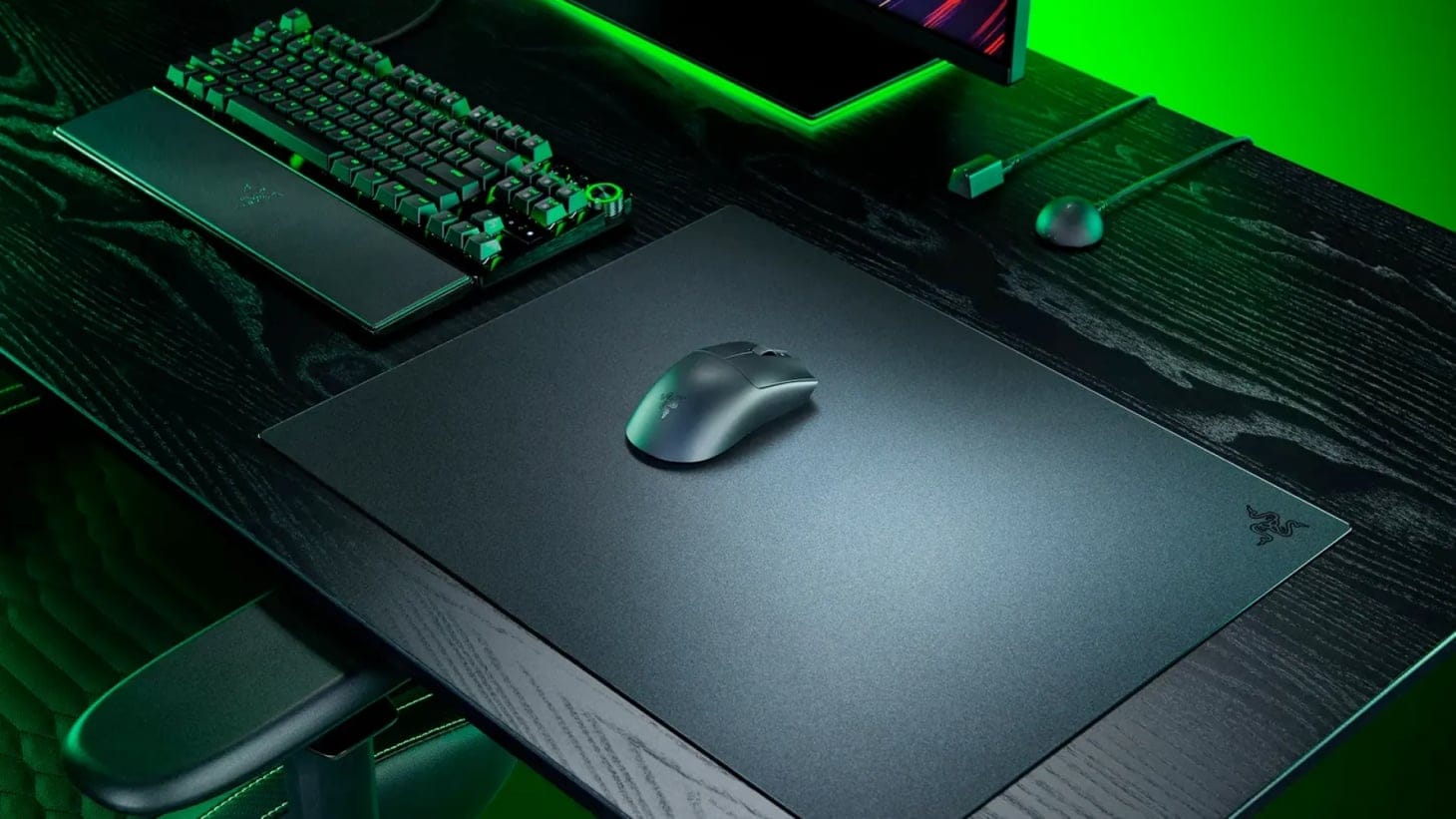

Razer launched the Atlas Pro, a 1.9 mm glass mouse pad priced at $130, positioning it as the world's thinnest gaming surface designed for minimalist desk setups.
What you're getting: The Atlas Pro combines a 1.1 mm glass surface with a 0.8 mm rubber base. Competing glass pads like the Wallhack SP-004 or QPAD Obsidian measure around 4 mm, making the Atlas Pro less than half their thickness. Razer compressed the design to roughly the width of two stacked credit cards.
Why thin matters (or doesn't): The ultra-low profile minimizes vertical desk space and integrates seamlessly into clean setups. If you color-coordinate cable sleeves, this pad will appeal to your aesthetic sensibilities.
Performance impact remains unclear. Thinness doesn't directly improve flick shots or cursor precision, but the design feels integrated rather than placed.
The real question: At $130, the Atlas Pro sits below boutique glass pads that exceed $200. For gamers and creators valuing low-profile surfaces and premium materials, it delivers. The ultra-thin design prioritizes aesthetics over measurable performance gains.
Glass pads provide smooth glide and warp resistance. If workspace elevation matters when you sit down, the Atlas Pro justifies its cost. If you chase frames and ignore what sits under your mouse, cheaper alternatives exist.
The bottom line: Sometimes the upgrade isn't about need. It's about want. Know which one you're paying for.