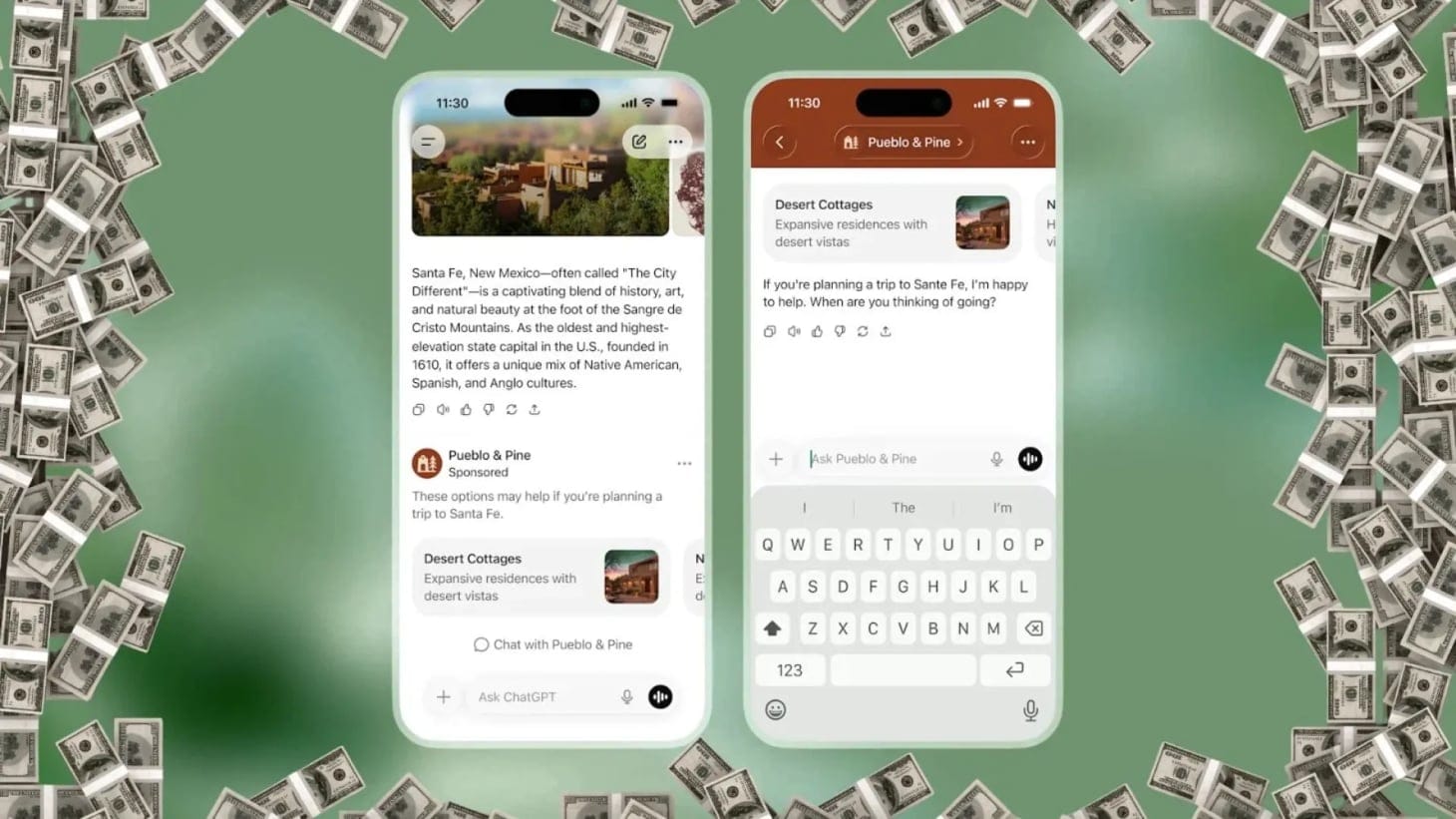

OpenAI collected $8.3 million from a six-week ad experiment that recently concluded in the United States, reaching just 20 percent of users with free accounts or basic ChatGPT Go subscriptions. The test generated $0.11 per user per year, a baseline the company will use to build a full self-service ad marketplace launching in April 2026.
The company wanted to confirm advertiser demand without disrupting the core experience. It limited banner placements to one in five U.S. users with free or ChatGPT Go accounts. That narrow slice still delivered $8.3 million over six weeks. OpenAI confirmed the figures, calling advertiser interest "strong" and user friction "modest." More than 600 brands are already working with the company.
At $0.11 per user annually, the model appears modest. Scale changes the equation. ChatGPT now serves 900 million weekly users, up from 200 million in August 2024. If OpenAI extends ads globally at current rates, annualized revenue could approach $3.5 billion.
That projection assumes uniform engagement across regions and user tiers. Real performance will vary by market, language, and willingness to accept interruptions. The test stayed in the U.S. to control variables.
OpenAI will open the marketplace to all businesses in April 2026. Companies will be able to create campaigns, set budgets, and upload creative assets through a self-service portal. Placement rules and frequency caps remain under review.
The company has not disclosed pricing tiers or whether premium users will remain ad-free. Current policy keeps paid subscribers insulated from banners.
Brands can reach audiences already using AI for research, drafting, and problem solving. That context makes ad placement more relevant than traditional display networks.
For users, the limited exposure means four out of five see no ads. The company will monitor feedback to decide whether to expand reach or hold the line. Too many banners risk driving users to competitors or prompting subscription upgrades solely to escape ads.
OpenAI will watch conversion data and engagement metrics through the April 2026 launch. If performance holds, the company will test international markets and additional formats. If users push back, frequency will stay capped or the experiment will shrink. The ad platform is being built now, but its future size depends on how much disruption users will tolerate for a service they currently receive free.