
Wanture.

Decide better.

Live better.

Stay Curious. Stay Wanture.

© 2026 Wanture. All rights reserved.

  • Terms of Use
  • Privacy Policy
Tech/Trends
Merriam-Webster names 'slop' 2025 Word of the Year

15 December 2025

—

News

Jordan McAllister

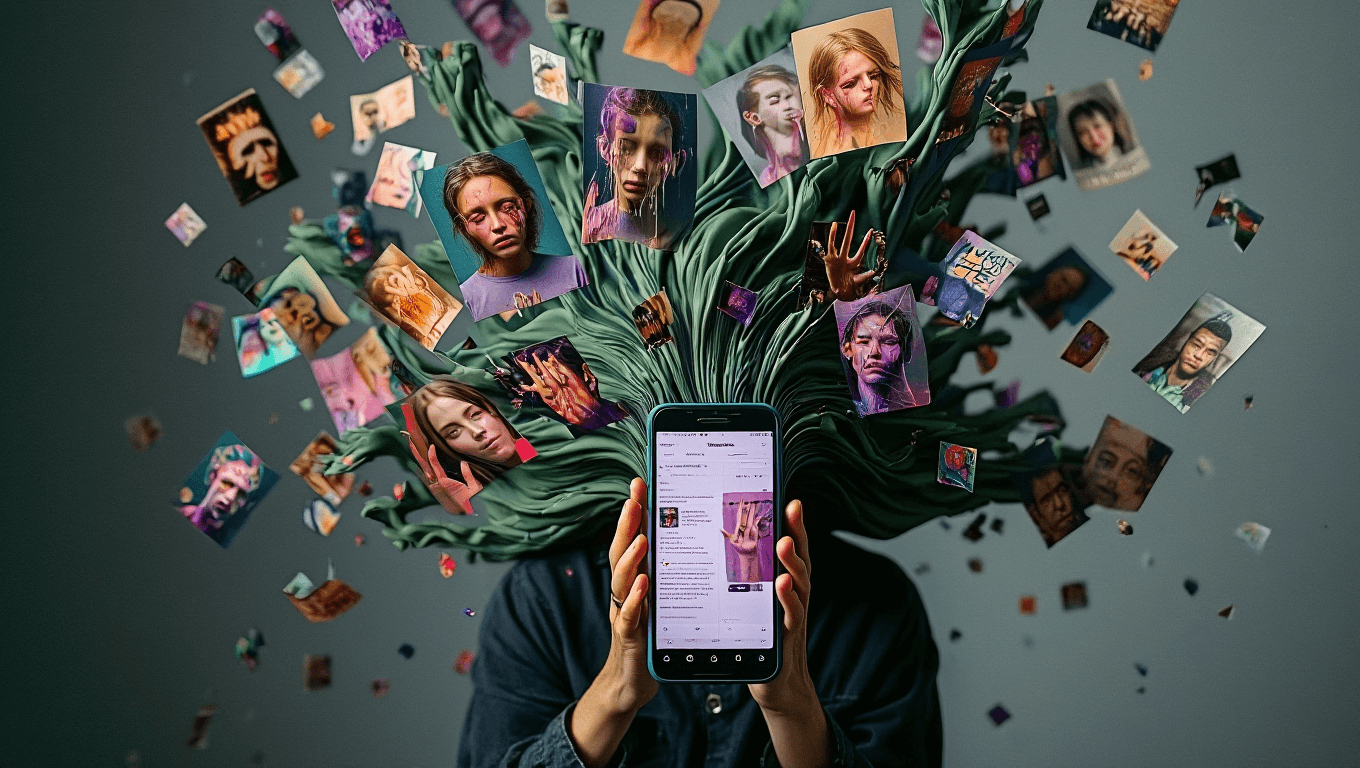
Merriam-Webster named "slop" its 2025 Word of the Year, defining it as low-quality AI-generated digital content produced at scale—formalizing what millions experience daily as feeds fill with content that looks real but feels hollow.

What's happening: The dictionary's choice captures widespread frustration with AI-generated content flooding major platforms. Users increasingly struggle to distinguish authentic content from synthetic material as they scroll through social feeds and search results.

Why it matters: The term "slop" gives users language to name what they're experiencing across their daily digital spaces. When a major dictionary formalizes this concern, it signals a cultural shift in how people view AI-generated content and its impact on the authenticity and trustworthiness of online platforms.

What platforms are doing: YouTube, Wikipedia, Spotify, and Pinterest have all taken action against what they view as an "infestation" of AI-generated content. These platforms are implementing new policies, adding transparency labels, and in some cases removing large volumes of synthetic content to address user concerns about feed quality and authenticity.

The tension: While some platforms work to remove low-quality AI content, others embrace it. Meta and OpenAI are actively developing apps featuring AI-generated video streams, betting that users will accept—or even prefer—synthetic content. One side removes slop; the other produces more. Both claim they serve user needs, revealing a complex and evolving digital landscape.

Reality check: Not all AI-generated content deserves the slop label. The distinction matters: tools that augment human creativity differ from systems that replace it entirely with mass-produced, generic material. Quality, transparency, and creative intent separate useful AI assistance from the flood of synthetic content eroding trust in digital platforms.

What to watch: Platform engagement metrics will determine the future. If users abandon platforms they perceive as overrun with synthetic content, business models will shift. Early signals suggest some users are already changing their behavior—skipping unfamiliar content and seeking out verified human creators.

What you can do: Learn to spot low-quality AI content by watching for repetitive phrasing, smooth but generic imagery, and accounts with high output but low engagement. Many platforms now offer AI content controls in settings that allow you to filter or label synthetic material, giving you more control over your feed experience.

The bottom line: The widespread recognition of "slop" as a cultural phenomenon reflects growing awareness that AI-generated content affects the authenticity of the digital spaces people navigate every day. The question now: whether platforms can maintain user trust while managing this transformation.


Topic

AI in Education Transformation

AI passes graduate linguistics exam

15 December 2025

Google's AI Education Vision: Promise and Peril

12 November 2025
Mobile Bottom Test Banner

What is this about?

  • News/
  • Jordan McAllister/
  • Tech/
  • Trends

Feed

    article

    James Whitmoreabout 12 hours ago

    Google Workspace Icon Redesign: From Flat Color Blocks to Gradient‑Rich, Rounded Designs

    Google replaced its 2020 four‑color Workspace icons with gradient‑rich, rounded versions. The redesign cut misclicks, eased app recognition, and underscored the importance of usability over strict brand uniformity.

    Renée Itoabout 13 hours ago

    Apple to unveil iOS 27 with standalone Siri app at WWDC on June 8

    Update brings satellite connectivity, ChatGPT-style interface, and developer extensions

    Carter Brooksabout 19 hours ago

    iPhone 18 Pro to Launch iOS 27 Camera with f/1.5‑f/2.8 Aperture

    iOS 27 adds a “Siri” visual‑AI mode as Apple readies iPhone 18 Pro for fall

    Carter Brooks4 days ago

    Therapist vs Counselor: Which Fits Your Needs?

    Licenses, Training Hours, and Treatment Options Compared (2024‑2025 Data)

    Caleb Brooks4 days ago

    Ask YouTube Launches March 15, 2026 for Premium Users

    On March 15, 2026, YouTube introduced Ask YouTube, an AI‑driven chat that lets U.S. Premium subscribers ask questions and receive synthesized video‑based answers. The tool promises a conversational search experience, yet early tests revealed factual slips, such as a wrong claim about the Steam controller’s joysticks, highlighting the need for users to verify information before acting.

    Ask YouTube Launches March 15, 2026 for Premium Users
    Carter Brooks6 days ago

    Samsung unveils Galaxy Z Fold 8 Wide with magnets

    Leaked images released by insider Sonny Dixon reveal Samsung’s upcoming Galaxy Z Fold 8 lineup, including a new Z Fold 8 Wide with integrated chassis magnets and a simplified two-camera rear array. The wide model aims to lower costs while keeping tablet-size screens, targeting buyers priced out of premium foldables ahead of an August 2026 launch.

    Samsung unveils Galaxy Z Fold 8 Wide with magnets
    Carter Brooks6 days ago

    Samsung launches Jinju smart glasses in 2026

    Samsung’s first smart glasses, code‑named Jinju, debut in 2026 as a voice‑assistant and photo‑capture device. They use a Qualcomm Snapdragon AR1 chip, Sony IMX681 12MP camera, 155 mAh battery, and bone‑conduction speakers, with no display. The battery lasts a few hours; sustained tasks may throttle. Samsung will unveil Jinju in 2026, targeting the Russian market where Meta glasses are unavailable.

    Samsung launches Jinju smart glasses in 2026
    Priya Desai6 days ago

    Sony Adds 30‑Day Online Checks for PlayStation 4 & PS5

    Starting April 2026, Sony’s PlayStation 4 and PS5 will require each digital title purchased after March 2026 to verify its license with Sony’s servers at least once every 30 days. Missing the online ping renders the game unplayable until the console reconnects, while disc copies and pre‑March downloads remain unaffected. Users should plan a monthly check to keep libraries active.

    Sony Adds 30‑Day Online Checks for PlayStation 4 & PS5
    Carter Brooks6 days ago

    Boost Your Healthspan: 1‑MET Gains Cut Mortality by 11–17%

    Why a 5–7 MET boost (16–25 ml·kg⁻¹·min⁻¹) narrows smoker‑level death risk

    Sarah Lindgren6 days ago
    Loading...
Tech/Trends

Merriam-Webster names 'slop' 2025 Word of the Year

15 December 2025

—

News

Jordan McAllister

Merriam-Webster named "slop" its 2025 Word of the Year, defining it as low-quality AI-generated digital content produced at scale—formalizing what millions experience daily as feeds fill with content that looks real but feels hollow.

What's happening: The dictionary's choice captures widespread frustration with AI-generated content flooding major platforms. Users increasingly struggle to distinguish authentic content from synthetic material as they scroll through social feeds and search results.

Why it matters: The term "slop" gives users language to name what they're experiencing across their daily digital spaces. When a major dictionary formalizes this concern, it signals a cultural shift in how people view AI-generated content and its impact on the authenticity and trustworthiness of online platforms.

What platforms are doing: YouTube, Wikipedia, Spotify, and Pinterest have all taken action against what they view as an "infestation" of AI-generated content. These platforms are implementing new policies, adding transparency labels, and in some cases removing large volumes of synthetic content to address user concerns about feed quality and authenticity.

The tension: While some platforms work to remove low-quality AI content, others embrace it. Meta and OpenAI are actively developing apps featuring AI-generated video streams, betting that users will accept—or even prefer—synthetic content. One side removes slop; the other produces more. Both claim they serve user needs, revealing a complex and evolving digital landscape.

Reality check: Not all AI-generated content deserves the slop label. The distinction matters: tools that augment human creativity differ from systems that replace it entirely with mass-produced, generic material. Quality, transparency, and creative intent separate useful AI assistance from the flood of synthetic content eroding trust in digital platforms.

What to watch: Platform engagement metrics will determine the future. If users abandon platforms they perceive as overrun with synthetic content, business models will shift. Early signals suggest some users are already changing their behavior—skipping unfamiliar content and seeking out verified human creators.

What you can do: Learn to spot low-quality AI content by watching for repetitive phrasing, smooth but generic imagery, and accounts with high output but low engagement. Many platforms now offer AI content controls in settings that allow you to filter or label synthetic material, giving you more control over your feed experience.

The bottom line: The widespread recognition of "slop" as a cultural phenomenon reflects growing awareness that AI-generated content affects the authenticity of the digital spaces people navigate every day. The question now: whether platforms can maintain user trust while managing this transformation.

Topic

AI in Education Transformation

AI passes graduate linguistics exam

15 December 2025

Google's AI Education Vision: Promise and Peril

12 November 2025

What is this about?

  • News/
  • Jordan McAllister/
  • Tech/
  • Trends

Feed

    article

    James Whitmoreabout 12 hours ago

    Google Workspace Icon Redesign: From Flat Color Blocks to Gradient‑Rich, Rounded Designs

    Google replaced its 2020 four‑color Workspace icons with gradient‑rich, rounded versions. The redesign cut misclicks, eased app recognition, and underscored the importance of usability over strict brand uniformity.

    Renée Itoabout 13 hours ago

    Apple to unveil iOS 27 with standalone Siri app at WWDC on June 8

    Update brings satellite connectivity, ChatGPT-style interface, and developer extensions

    Carter Brooksabout 19 hours ago

    iPhone 18 Pro to Launch iOS 27 Camera with f/1.5‑f/2.8 Aperture

    iOS 27 adds a “Siri” visual‑AI mode as Apple readies iPhone 18 Pro for fall

    Carter Brooks4 days ago

    Therapist vs Counselor: Which Fits Your Needs?

    Licenses, Training Hours, and Treatment Options Compared (2024‑2025 Data)

    Caleb Brooks4 days ago

    Ask YouTube Launches March 15, 2026 for Premium Users

    On March 15, 2026, YouTube introduced Ask YouTube, an AI‑driven chat that lets U.S. Premium subscribers ask questions and receive synthesized video‑based answers. The tool promises a conversational search experience, yet early tests revealed factual slips, such as a wrong claim about the Steam controller’s joysticks, highlighting the need for users to verify information before acting.

    Ask YouTube Launches March 15, 2026 for Premium Users
    Carter Brooks6 days ago

    Samsung unveils Galaxy Z Fold 8 Wide with magnets

    Leaked images released by insider Sonny Dixon reveal Samsung’s upcoming Galaxy Z Fold 8 lineup, including a new Z Fold 8 Wide with integrated chassis magnets and a simplified two-camera rear array. The wide model aims to lower costs while keeping tablet-size screens, targeting buyers priced out of premium foldables ahead of an August 2026 launch.

    Samsung unveils Galaxy Z Fold 8 Wide with magnets
    Carter Brooks6 days ago

    Samsung launches Jinju smart glasses in 2026

    Samsung’s first smart glasses, code‑named Jinju, debut in 2026 as a voice‑assistant and photo‑capture device. They use a Qualcomm Snapdragon AR1 chip, Sony IMX681 12MP camera, 155 mAh battery, and bone‑conduction speakers, with no display. The battery lasts a few hours; sustained tasks may throttle. Samsung will unveil Jinju in 2026, targeting the Russian market where Meta glasses are unavailable.

    Samsung launches Jinju smart glasses in 2026
    Priya Desai6 days ago

    Sony Adds 30‑Day Online Checks for PlayStation 4 & PS5

    Starting April 2026, Sony’s PlayStation 4 and PS5 will require each digital title purchased after March 2026 to verify its license with Sony’s servers at least once every 30 days. Missing the online ping renders the game unplayable until the console reconnects, while disc copies and pre‑March downloads remain unaffected. Users should plan a monthly check to keep libraries active.

    Sony Adds 30‑Day Online Checks for PlayStation 4 & PS5
    Carter Brooks6 days ago

    Boost Your Healthspan: 1‑MET Gains Cut Mortality by 11–17%

    Why a 5–7 MET boost (16–25 ml·kg⁻¹·min⁻¹) narrows smoker‑level death risk

    Sarah Lindgren6 days ago
    Loading...