Wanture.

Decide better.

Live better.

Stay Curious. Stay Wanture.

© 2026 Wanture. All rights reserved.

  • Terms of Use
  • Privacy Policy
Tech/Business
Steve Jobs' inverted leadership model

Why the best CEOs work for their teams, not the other way around

19 November 2025

—

Opinion

Marcus Dillard
banner

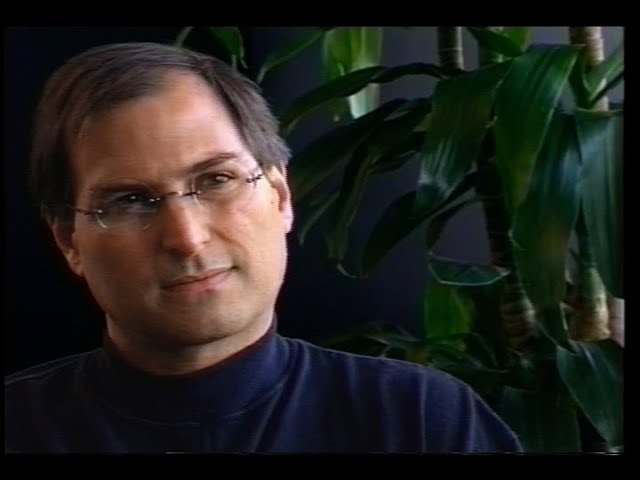
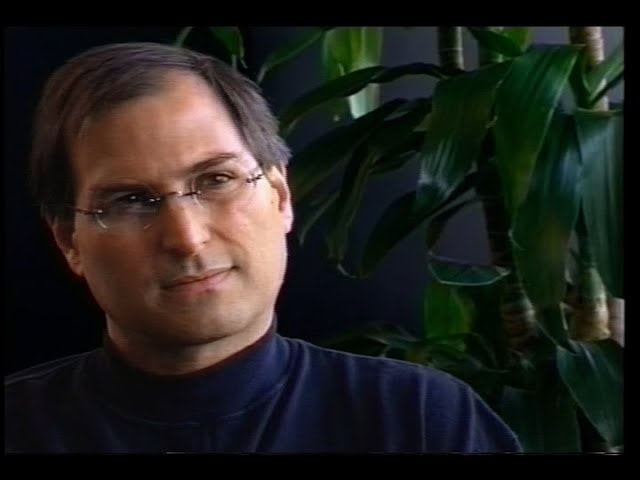
A 1996 recording captures Steve Jobs between Pixar and Apple, describing a radical management philosophy: talented employees sit at the top of the pyramid, and the CEO's job is to support them. This approach shaped Pixar's creative success and Apple's comeback, but it only works under specific conditions. Here's what modern leaders can learn from Jobs' counterintuitive hierarchy.

IMG_0486

Summary:

  • CEOs should work for employees, not vice versa. Talented people at the top solve problems while leaders provide support and remove obstacles.
  • Companies like Apple, Pixar, Zappos, and Whole Foods prove that inverting traditional hierarchies leads to faster innovation and better performance.
  • Successful inverted hierarchies require high talent density, absolute mission clarity, and leaders willing to kill their egos and empower talented teams.

The CEO should work for the employees. Not the other way around.

Steve Jobs said it plainly in multiple interviews throughout his career. The best companies flip the hierarchy. Talented people sit at the top. They see problems first. They build solutions. The CEO sits at the bottom, clearing obstacles and securing resources.

Most organizations ignore this. Executives set strategy. Middle managers translate. Individual contributors execute. Authority flows downward. Innovation gets stuck in approval chains.

Jobs proved the opposite works better. At Pixar and Apple, small teams owned entire products. Directors led films without executive interference. Engineers designed the iPod and iPhone with Jobs setting vision, not writing code. His job was support. Their job was creation.

This is not theory. It is a tested model. And American companies are proving it works at scale.

The Traditional Pyramid Fails Talent

Conventional org charts put decision-making far from expertise.

A software engineer spots a security flaw. She writes a report. It goes to her manager. Then to a director. Then to a VP. By the time it reaches someone with budget authority, two weeks have passed. The flaw gets exploited. Customers lose data.

This happens because hierarchies optimize for control, not speed. Information travels upward. Decisions travel downward. The people closest to problems have the least power to solve them.

Jobs saw this at Apple in 1985. Committees reviewed products. Executives overruled designers. The company shipped mediocre computers. The board fired him.

He spent the next decade learning a different approach. At Pixar, directors controlled films. In 1996, shortly after the release of Toy Story, Jobs reflected on this philosophy in an interview that recently surfaced online. John Lasseter had led the film with full creative authority. Jobs provided funding and removed studio interference. When Disney executives demanded changes, Jobs blocked them.

The film became the highest-grossing movie of 1995. Pixar went public with a $1.5 billion valuation. The lesson stuck.

When Jobs returned to Apple in 1997, he rebuilt around small, empowered teams. The iPod team had fewer than 50 people. They reported to Jobs, but he did not design the click wheel. Engineer Tony Fadell did. Jobs approved it in one meeting. The product shipped in nine months.

What Inverted Hierarchy Looks Like in Practice

Give talented people authority. Remove everything blocking them.

Zappos tested this in 2013. The Las Vegas-based retailer eliminated traditional managers. Employees organized into self-governing circles. Each circle owned specific functions like customer service or warehouse operations. They hired teammates. They set schedules. They solved problems without waiting for approval.

CEO Tony Hsieh described his role as "creating the conditions for magic." He secured funding. He set company values. He hired for culture fit. Then he stepped back. Customer satisfaction scores rose. Employee retention improved. The company grew to $2 billion in annual revenue before Amazon acquired it.

Whole Foods pioneered a similar model in the 1980s. Store teams vote on new hires. They control inventory and pricing within guidelines. Regional presidents support stores rather than command them. The structure scales. Whole Foods operates over 500 locations across the United States.

Valve, the Seattle-based game studio, takes it further. The company has no managers at all. Employees choose projects. Teams form around ideas. Desks have wheels so people can physically move to join new groups. Valve ships hit games like Half-Life and Portal while maintaining one of the highest per-employee revenues in the industry.

Stanford organizational behavior professor Robert Sutton studied these models for his book Good Boss, Bad Boss. He found a consistent pattern: high-performing organizations give authority to people with expertise while leaders focus on removing obstacles. Sutton calls it "servant leadership," but the term undersells the strategy. This is not about being nice. It is about putting decision-making where knowledge lives.

The Three Conditions That Make It Work

Not every team can handle autonomy. These factors determine success.

High Talent Density

Mediocre teams need direction. Exceptional teams need freedom. Jobs was ruthless about hiring. He called it "A players hire A players, B players hire C players." At Apple, he personally interviewed candidates for senior roles. He rejected hundreds. The bar stayed high.

Netflix CEO Reed Hastings describes this as "talent density." In his book No Rules Rules, he explains Netflix's approach: pay top of market, fire adequate performers, and keep only exceptional people. Then remove controls. No vacation policy. No expense approvals. No decision sign-offs. Trust replaces process.

Absolute Mission Clarity

Autonomy without alignment creates chaos. Jobs set clear product visions. The iPod would hold 1,000 songs and fit in a pocket. The iPhone would combine a phone, an iPod, and an internet device. Teams had freedom in execution, not direction.

Leaders Must Kill Their Egos

This is the hardest part. Most executives believe their judgment makes them valuable. Jobs believed his judgment was only as good as his team's input. He was famously demanding in meetings. He pushed back hard. But he changed his mind when engineers showed better solutions.

Apple Design Chief Jony Ive noted that Jobs "was secure enough to let the best idea win, regardless of where it came from." Jobs would reject a design. The team would refine it. Jobs would see the improvement and champion it as if it were his idea.

Why Most Companies Cannot Do This

The model threatens traditional power structures.

Middle managers lose authority. Executives lose control. HR departments lose standardized processes. The entire system resists change because change eliminates jobs and status.

Harvard Business School professor Clayton Christensen studied this in The Innovator's Dilemma. Established companies struggle to innovate because their structures optimize for efficiency, not experimentation. Hierarchies work well for repeating known processes. They fail at discovering new ones.

Jobs understood this. When he returned to Apple, he fired most senior executives. He cut the product line from 350 items to 10. He eliminated committees. Small teams reported directly to him. The structure was not scalable by traditional metrics. But it shipped the iMac, iPod, iPhone, and iPad in 13 years.

Critics argue this only works for elite talent at wealthy companies. They are wrong. Whole Foods proves it scales to retail workers. Zappos proves it works in customer service. Morning Star, a California tomato processing company, operates with no managers and 400 employees. Workers negotiate responsibilities with colleagues. The company processes 40 percent of California's tomato crop.

The real barrier is not talent or industry. It is leadership ego. Most CEOs cannot accept that their job is support, not command.

The Counterpoint: When Top-Down Works Better

Some situations require traditional hierarchy.

Crisis management needs clear authority. When Apple faced the iPhone 4 antenna crisis in 2010, Jobs made unilateral decisions. He called a press conference. He offered free cases. He controlled messaging. The team executed his plan.

Highly regulated industries need documented approval chains. Medical device companies cannot let engineers ship products without oversight. Financial institutions need compliance checks. Safety-critical systems require multiple reviews.

Early-stage startups often need directive leadership. When the mission is unclear and the team is learning, a strong founder provides necessary guidance. Jobs was directive at NeXT in the 1980s because the team was building something entirely new.

But these are exceptions. Most companies are not in crisis. Most industries are not life-or-death regulated. Most teams are not brand new. The default should be empowered teams with servant leadership. Traditional top-down should be the exception, not the rule.

What This Means for Leaders Today

Your job is not to have all the answers. It is to build a system where answers emerge.

Ask yourself three questions: Do your best people feel supported or managed? Are you clearing obstacles or creating them? Are you protecting their focus or fragmenting it with meetings and approvals?

If you manage engineers, count how many decisions require your approval. Then ask which ones actually need your input. Cut the rest. Give authority to the people doing the work.

If you run a company, look at your org chart. Find the most talented person in each function. Ask them what blocks their progress. Then remove those blocks. If the answer is "too many approvals," eliminate approval layers. If the answer is "unclear priorities," clarify strategy. If the answer is "weak teammates," raise the hiring bar.

Jobs put it simply: "It does not make sense to hire smart people and tell them what to do. We hire smart people so they can tell us what to do."

That idea still sounds radical. It should not. The evidence is clear. Companies that flip the hierarchy outperform companies that do not. Pixar dominated animation. Apple became the most valuable company in the world. Zappos and Whole Foods redefined retail. Valve ships hit games with no managers.

The model works. The question is whether leaders can handle it.

Take Action This Week

Open your org chart today. Find one obstacle your best people face. Remove it by Friday.

If you are a CEO, identify three decisions you made last month that someone closer to the work could have made better. Delegate those decisions permanently.

If you are a manager, ask your team what slows them down. Then fix one thing immediately. Do not wait for approval. Use your authority to clear the path.

The inverted hierarchy is not a management fad. It is a recognition of where expertise lives. Talented people are on the front lines. They see problems first. They invent solutions. Your job is to support them.

Steve Jobs proved it at Pixar and Apple. Zappos, Whole Foods, and Valve prove it scales. The research backs it. The results speak.

Your org chart is upside down. Flip it.
What is this about?

  • Opinion/
  • Marcus Dillard/
  • Tech/
  • Business

Feed

    article

    James Whitmoreabout 11 hours ago

    Google Workspace Icon Redesign: From Flat Color Blocks to Gradient‑Rich, Rounded Designs

    Google replaced its 2020 four‑color Workspace icons with gradient‑rich, rounded versions. The redesign cut misclicks, eased app recognition, and underscored the importance of usability over strict brand uniformity.

    Renée Itoabout 12 hours ago

    Apple to unveil iOS 27 with standalone Siri app at WWDC on June 8

    Update brings satellite connectivity, ChatGPT-style interface, and developer extensions

    Carter Brooksabout 18 hours ago

    iPhone 18 Pro to Launch iOS 27 Camera with f/1.5‑f/2.8 Aperture

    iOS 27 adds a “Siri” visual‑AI mode as Apple readies iPhone 18 Pro for fall

    Carter Brooks4 days ago

    Therapist vs Counselor: Which Fits Your Needs?

    Licenses, Training Hours, and Treatment Options Compared (2024‑2025 Data)

    Caleb Brooks4 days ago

    Ask YouTube Launches March 15, 2026 for Premium Users

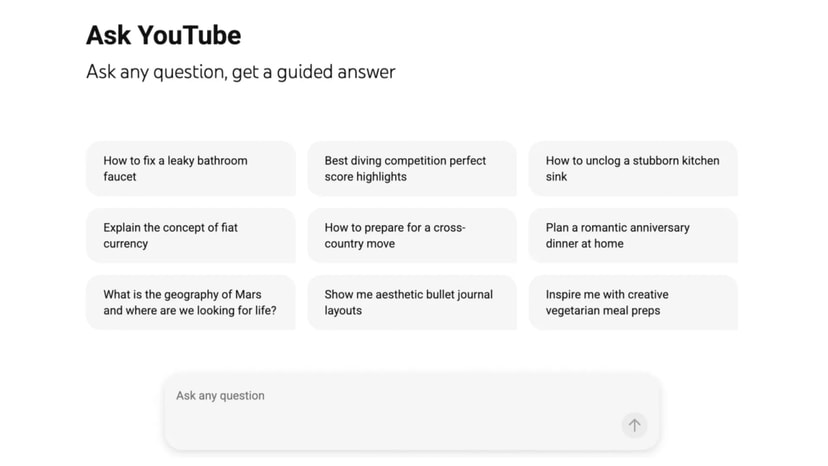
    On March 15, 2026, YouTube introduced Ask YouTube, an AI‑driven chat that lets U.S. Premium subscribers ask questions and receive synthesized video‑based answers. The tool promises a conversational search experience, yet early tests revealed factual slips, such as a wrong claim about the Steam controller’s joysticks, highlighting the need for users to verify information before acting.

    Ask YouTube Launches March 15, 2026 for Premium Users
    Carter Brooks6 days ago

    Samsung unveils Galaxy Z Fold 8 Wide with magnets

    Leaked images released by insider Sonny Dixon reveal Samsung’s upcoming Galaxy Z Fold 8 lineup, including a new Z Fold 8 Wide with integrated chassis magnets and a simplified two-camera rear array. The wide model aims to lower costs while keeping tablet-size screens, targeting buyers priced out of premium foldables ahead of an August 2026 launch.

    Samsung unveils Galaxy Z Fold 8 Wide with magnets
    Carter Brooks6 days ago

    Samsung launches Jinju smart glasses in 2026

    Samsung’s first smart glasses, code‑named Jinju, debut in 2026 as a voice‑assistant and photo‑capture device. They use a Qualcomm Snapdragon AR1 chip, Sony IMX681 12MP camera, 155 mAh battery, and bone‑conduction speakers, with no display. The battery lasts a few hours; sustained tasks may throttle. Samsung will unveil Jinju in 2026, targeting the Russian market where Meta glasses are unavailable.

    Samsung launches Jinju smart glasses in 2026
    Priya Desai6 days ago

    Sony Adds 30‑Day Online Checks for PlayStation 4 & PS5

    Starting April 2026, Sony’s PlayStation 4 and PS5 will require each digital title purchased after March 2026 to verify its license with Sony’s servers at least once every 30 days. Missing the online ping renders the game unplayable until the console reconnects, while disc copies and pre‑March downloads remain unaffected. Users should plan a monthly check to keep libraries active.

    Sony Adds 30‑Day Online Checks for PlayStation 4 & PS5
    Carter Brooks6 days ago

    Boost Your Healthspan: 1‑MET Gains Cut Mortality by 11–17%

    Why a 5–7 MET boost (16–25 ml·kg⁻¹·min⁻¹) narrows smoker‑level death risk

    Sarah Lindgren6 days ago
    Loading...
Tech/Business

Steve Jobs' inverted leadership model

Why the best CEOs work for their teams, not the other way around

November 19, 2025, 9:22 pm

A 1996 recording captures Steve Jobs between Pixar and Apple, describing a radical management philosophy: talented employees sit at the top of the pyramid, and the CEO's job is to support them. This approach shaped Pixar's creative success and Apple's comeback, but it only works under specific conditions. Here's what modern leaders can learn from Jobs' counterintuitive hierarchy.

IMG_0486

Summary

  • CEOs should work for employees, not vice versa. Talented people at the top solve problems while leaders provide support and remove obstacles.
  • Companies like Apple, Pixar, Zappos, and Whole Foods prove that inverting traditional hierarchies leads to faster innovation and better performance.
  • Successful inverted hierarchies require high talent density, absolute mission clarity, and leaders willing to kill their egos and empower talented teams.

The CEO should work for the employees. Not the other way around.

Steve Jobs said it plainly in multiple interviews throughout his career. The best companies flip the hierarchy. Talented people sit at the top. They see problems first. They build solutions. The CEO sits at the bottom, clearing obstacles and securing resources.

Most organizations ignore this. Executives set strategy. Middle managers translate. Individual contributors execute. Authority flows downward. Innovation gets stuck in approval chains.

Jobs proved the opposite works better. At Pixar and Apple, small teams owned entire products. Directors led films without executive interference. Engineers designed the iPod and iPhone with Jobs setting vision, not writing code. His job was support. Their job was creation.

This is not theory. It is a tested model. And American companies are proving it works at scale.

The Traditional Pyramid Fails Talent

Conventional org charts put decision-making far from expertise.

A software engineer spots a security flaw. She writes a report. It goes to her manager. Then to a director. Then to a VP. By the time it reaches someone with budget authority, two weeks have passed. The flaw gets exploited. Customers lose data.

This happens because hierarchies optimize for control, not speed. Information travels upward. Decisions travel downward. The people closest to problems have the least power to solve them.

Jobs saw this at Apple in 1985. Committees reviewed products. Executives overruled designers. The company shipped mediocre computers. The board fired him.

He spent the next decade learning a different approach. At Pixar, directors controlled films. In 1996, shortly after the release of Toy Story, Jobs reflected on this philosophy in an interview that recently surfaced online. John Lasseter had led the film with full creative authority. Jobs provided funding and removed studio interference. When Disney executives demanded changes, Jobs blocked them.

The film became the highest-grossing movie of 1995. Pixar went public with a $1.5 billion valuation. The lesson stuck.

When Jobs returned to Apple in 1997, he rebuilt around small, empowered teams. The iPod team had fewer than 50 people. They reported to Jobs, but he did not design the click wheel. Engineer Tony Fadell did. Jobs approved it in one meeting. The product shipped in nine months.

What Inverted Hierarchy Looks Like in Practice

Give talented people authority. Remove everything blocking them.

Zappos tested this in 2013. The Las Vegas-based retailer eliminated traditional managers. Employees organized into self-governing circles. Each circle owned specific functions like customer service or warehouse operations. They hired teammates. They set schedules. They solved problems without waiting for approval.

CEO Tony Hsieh described his role as "creating the conditions for magic." He secured funding. He set company values. He hired for culture fit. Then he stepped back. Customer satisfaction scores rose. Employee retention improved. The company grew to $2 billion in annual revenue before Amazon acquired it.

Whole Foods pioneered a similar model in the 1980s. Store teams vote on new hires. They control inventory and pricing within guidelines. Regional presidents support stores rather than command them. The structure scales. Whole Foods operates over 500 locations across the United States.

Valve, the Seattle-based game studio, takes it further. The company has no managers at all. Employees choose projects. Teams form around ideas. Desks have wheels so people can physically move to join new groups. Valve ships hit games like Half-Life and Portal while maintaining one of the highest per-employee revenues in the industry.

Stanford organizational behavior professor Robert Sutton studied these models for his book Good Boss, Bad Boss. He found a consistent pattern: high-performing organizations give authority to people with expertise while leaders focus on removing obstacles. Sutton calls it "servant leadership," but the term undersells the strategy. This is not about being nice. It is about putting decision-making where knowledge lives.

The Three Conditions That Make It Work

Not every team can handle autonomy. These factors determine success.

High Talent Density

Mediocre teams need direction. Exceptional teams need freedom. Jobs was ruthless about hiring. He called it "A players hire A players, B players hire C players." At Apple, he personally interviewed candidates for senior roles. He rejected hundreds. The bar stayed high.

Netflix CEO Reed Hastings describes this as "talent density." In his book No Rules Rules, he explains Netflix's approach: pay top of market, fire adequate performers, and keep only exceptional people. Then remove controls. No vacation policy. No expense approvals. No decision sign-offs. Trust replaces process.

Absolute Mission Clarity

Autonomy without alignment creates chaos. Jobs set clear product visions. The iPod would hold 1,000 songs and fit in a pocket. The iPhone would combine a phone, an iPod, and an internet device. Teams had freedom in execution, not direction.

Leaders Must Kill Their Egos

This is the hardest part. Most executives believe their judgment makes them valuable. Jobs believed his judgment was only as good as his team's input. He was famously demanding in meetings. He pushed back hard. But he changed his mind when engineers showed better solutions.

Apple Design Chief Jony Ive noted that Jobs "was secure enough to let the best idea win, regardless of where it came from." Jobs would reject a design. The team would refine it. Jobs would see the improvement and champion it as if it were his idea.

Why Most Companies Cannot Do This

The model threatens traditional power structures.

Middle managers lose authority. Executives lose control. HR departments lose standardized processes. The entire system resists change because change eliminates jobs and status.

Harvard Business School professor Clayton Christensen studied this in The Innovator's Dilemma. Established companies struggle to innovate because their structures optimize for efficiency, not experimentation. Hierarchies work well for repeating known processes. They fail at discovering new ones.

Jobs understood this. When he returned to Apple, he fired most senior executives. He cut the product line from 350 items to 10. He eliminated committees. Small teams reported directly to him. The structure was not scalable by traditional metrics. But it shipped the iMac, iPod, iPhone, and iPad in 13 years.

Critics argue this only works for elite talent at wealthy companies. They are wrong. Whole Foods proves it scales to retail workers. Zappos proves it works in customer service. Morning Star, a California tomato processing company, operates with no managers and 400 employees. Workers negotiate responsibilities with colleagues. The company processes 40 percent of California's tomato crop.

The real barrier is not talent or industry. It is leadership ego. Most CEOs cannot accept that their job is support, not command.

The Counterpoint: When Top-Down Works Better

Some situations require traditional hierarchy.

Crisis management needs clear authority. When Apple faced the iPhone 4 antenna crisis in 2010, Jobs made unilateral decisions. He called a press conference. He offered free cases. He controlled messaging. The team executed his plan.

Highly regulated industries need documented approval chains. Medical device companies cannot let engineers ship products without oversight. Financial institutions need compliance checks. Safety-critical systems require multiple reviews.

Early-stage startups often need directive leadership. When the mission is unclear and the team is learning, a strong founder provides necessary guidance. Jobs was directive at NeXT in the 1980s because the team was building something entirely new.

But these are exceptions. Most companies are not in crisis. Most industries are not life-or-death regulated. Most teams are not brand new. The default should be empowered teams with servant leadership. Traditional top-down should be the exception, not the rule.

What This Means for Leaders Today

Your job is not to have all the answers. It is to build a system where answers emerge.

Ask yourself three questions: Do your best people feel supported or managed? Are you clearing obstacles or creating them? Are you protecting their focus or fragmenting it with meetings and approvals?

If you manage engineers, count how many decisions require your approval. Then ask which ones actually need your input. Cut the rest. Give authority to the people doing the work.

If you run a company, look at your org chart. Find the most talented person in each function. Ask them what blocks their progress. Then remove those blocks. If the answer is "too many approvals," eliminate approval layers. If the answer is "unclear priorities," clarify strategy. If the answer is "weak teammates," raise the hiring bar.

Jobs put it simply: "It does not make sense to hire smart people and tell them what to do. We hire smart people so they can tell us what to do."

That idea still sounds radical. It should not. The evidence is clear. Companies that flip the hierarchy outperform companies that do not. Pixar dominated animation. Apple became the most valuable company in the world. Zappos and Whole Foods redefined retail. Valve ships hit games with no managers.

The model works. The question is whether leaders can handle it.

Take Action This Week

Open your org chart today. Find one obstacle your best people face. Remove it by Friday.

If you are a CEO, identify three decisions you made last month that someone closer to the work could have made better. Delegate those decisions permanently.

If you are a manager, ask your team what slows them down. Then fix one thing immediately. Do not wait for approval. Use your authority to clear the path.

The inverted hierarchy is not a management fad. It is a recognition of where expertise lives. Talented people are on the front lines. They see problems first. They invent solutions. Your job is to support them.

Steve Jobs proved it at Pixar and Apple. Zappos, Whole Foods, and Valve prove it scales. The research backs it. The results speak.

Your org chart is upside down. Flip it.

What is this about?

  • Opinion/
  • Marcus Dillard/
  • Tech/
  • Business

Feed

    article

    James Whitmoreabout 11 hours ago

    Google Workspace Icon Redesign: From Flat Color Blocks to Gradient‑Rich, Rounded Designs

    Google replaced its 2020 four‑color Workspace icons with gradient‑rich, rounded versions. The redesign cut misclicks, eased app recognition, and underscored the importance of usability over strict brand uniformity.

    Renée Itoabout 12 hours ago

    Apple to unveil iOS 27 with standalone Siri app at WWDC on June 8

    Update brings satellite connectivity, ChatGPT-style interface, and developer extensions

    Carter Brooksabout 18 hours ago

    iPhone 18 Pro to Launch iOS 27 Camera with f/1.5‑f/2.8 Aperture

    iOS 27 adds a “Siri” visual‑AI mode as Apple readies iPhone 18 Pro for fall

    Carter Brooks4 days ago

    Therapist vs Counselor: Which Fits Your Needs?

    Licenses, Training Hours, and Treatment Options Compared (2024‑2025 Data)

    Caleb Brooks4 days ago

    Ask YouTube Launches March 15, 2026 for Premium Users

    On March 15, 2026, YouTube introduced Ask YouTube, an AI‑driven chat that lets U.S. Premium subscribers ask questions and receive synthesized video‑based answers. The tool promises a conversational search experience, yet early tests revealed factual slips, such as a wrong claim about the Steam controller’s joysticks, highlighting the need for users to verify information before acting.

    Ask YouTube Launches March 15, 2026 for Premium Users
    Carter Brooks6 days ago

    Samsung unveils Galaxy Z Fold 8 Wide with magnets

    Leaked images released by insider Sonny Dixon reveal Samsung’s upcoming Galaxy Z Fold 8 lineup, including a new Z Fold 8 Wide with integrated chassis magnets and a simplified two-camera rear array. The wide model aims to lower costs while keeping tablet-size screens, targeting buyers priced out of premium foldables ahead of an August 2026 launch.

    Samsung unveils Galaxy Z Fold 8 Wide with magnets
    Carter Brooks6 days ago

    Samsung launches Jinju smart glasses in 2026

    Samsung’s first smart glasses, code‑named Jinju, debut in 2026 as a voice‑assistant and photo‑capture device. They use a Qualcomm Snapdragon AR1 chip, Sony IMX681 12MP camera, 155 mAh battery, and bone‑conduction speakers, with no display. The battery lasts a few hours; sustained tasks may throttle. Samsung will unveil Jinju in 2026, targeting the Russian market where Meta glasses are unavailable.

    Samsung launches Jinju smart glasses in 2026
    Priya Desai6 days ago

    Sony Adds 30‑Day Online Checks for PlayStation 4 & PS5

    Starting April 2026, Sony’s PlayStation 4 and PS5 will require each digital title purchased after March 2026 to verify its license with Sony’s servers at least once every 30 days. Missing the online ping renders the game unplayable until the console reconnects, while disc copies and pre‑March downloads remain unaffected. Users should plan a monthly check to keep libraries active.

    Sony Adds 30‑Day Online Checks for PlayStation 4 & PS5
    Carter Brooks6 days ago

    Boost Your Healthspan: 1‑MET Gains Cut Mortality by 11–17%

    Why a 5–7 MET boost (16–25 ml·kg⁻¹·min⁻¹) narrows smoker‑level death risk

    Sarah Lindgren6 days ago
    Loading...
banner