• My Feed
  • Home
  • What's Important
  • Media & Entertainment
Search

Stay Curious. Stay Wanture.

© 2026 Wanture. All rights reserved.

  • Terms of Use
  • Privacy Policy
Tech/Business
When Your Gut Beats the Algorithm

Why human bias outperforms AI in unprecedented situations and regulatory shifts

12 January 2026

—

Take *

Jasmine Wu
banner

Meta-analysis of 106 experiments shows human-AI teams underperform at Hedges' g = −0.23 in decision tasks. Productive bias detects regulatory shifts before data confirms them, while algorithms optimize only for historical patterns. Learn when experience-based judgment should override computational precision in hiring, forecasting, and innovation.

Summary:

  • Human pattern recognition outperforms algorithms in crises because it detects unprecedented events and contextual signals that data cannot capture — as seen when traders and logistics managers acted before models confirmed shifts during the pandemic.
  • Companies like JPMorgan Chase and John Deere combine AI with human oversight, allowing experienced professionals to override algorithmic recommendations based on local knowledge, proving that human judgment adds critical value in edge cases.
  • Over-reliance on algorithms risks dangerous efficiency — such as Amazon’s warehouse systems pushing unsafe productivity targets — while AI-human teams often perform worse than AI alone; the solution is structured frameworks for when to trust or override algorithms.

We treat algorithmic recommendations as superior to human judgment when the opposite is often true. Experienced professionals carry pattern recognition that protects against the blindness built into every AI system. The ability to sense what data cannot yet measure, to recognize the shape of unprecedented situations, to detect signals that fall outside historical datasets: these capacities matter more now than computational precision. Organizations that eliminate human override in favor of algorithmic efficiency are dismantling their best defense against catastrophic errors.

Why Human Pattern Recognition Outperforms Algorithms in Crisis

Algorithms optimize for what has already happened. They cannot detect the moment before public sentiment shifts, the tension in a negotiation room, or the early indicators that precede formal policy changes. During the COVID-19 pandemic, predictive models across American industries failed because they had no historical analogue for a global shutdown. Supply chain algorithms at major U.S. retailers continued recommending inventory levels suited to normal demand even as warehouses emptied. Financial models at investment firms missed the magnitude of market disruption for weeks.

Humans adapted faster. A trader at a Chicago commodities firm reduced exposure before the metrics confirmed the shift. A logistics manager at a Texas distribution center overrode the system and stockpiled critical supplies based on instinct about coming scarcity. Not because they had better data, but because they recognized the shape of an unprecedented event and adjusted their mental models accordingly. This is bias functioning as protective intelligence.

JPMorgan Chase demonstrates this principle in fraud detection. The bank combines algorithmic analysis with human investigator oversight specifically because experienced fraud specialists spot patterns the models miss. According to a 2024 presentation by JPMorgan's Chief Data and Analytics Officer, human investigators flag edge cases that fall outside the model's training parameters, catching sophisticated schemes that exploit gaps in historical data. The system works because the bank built organizational space for productive disagreement between human and machine recommendations.

The Innovation Case: Bias Drives Breakthroughs

Sara Blakely developed Spanx despite market research showing minimal demand for the product category. She cut the feet off her pantyhose, recognized the application, and built a billion-dollar company around an insight that contradicted available evidence. Reed Hastings proposed Netflix's streaming pivot when entertainment industry metrics indicated the infrastructure and consumer behavior were not ready. Industry analysts at the time called it premature. Both founders proceeded based on conviction that data could not validate.

This represents bias in its most productive form. It allows an individual to weight their perception of an emerging pattern more heavily than historical data. Entrepreneurship requires seeing possibilities that algorithms cannot generate because they fall outside established patterns. AI cannot produce that vision. It lacks the ability to extrapolate beyond what has already occurred.

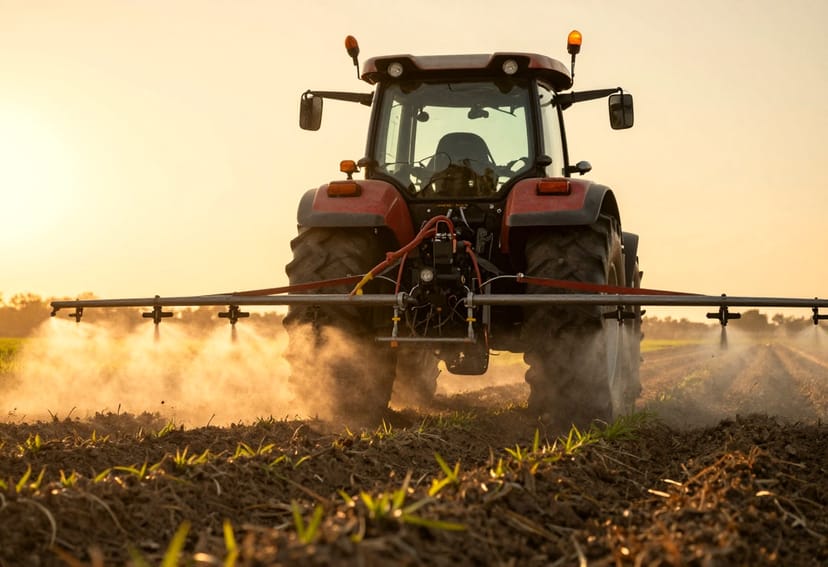
John Deere applies this principle to autonomous farming equipment. The company's precision agriculture systems combine machine learning with farmer override capabilities. According to John Deere's director of emerging technology, interviewed in December 2024, farmers routinely override algorithmic recommendations about planting depth, fertilizer application, and harvest timing based on localized knowledge about soil conditions, weather patterns, and crop behavior that sensors cannot fully capture. The farmers know their land in ways the data cannot represent.

When Algorithms Recommend Dangerous Efficiency

An algorithm might recommend workforce reductions based on efficiency metrics, unaware that the calculation ignores institutional knowledge, team morale, or long-term capability building. Amazon's warehouse management system famously recommended eliminating safety breaks to improve efficiency metrics. Human managers had to advocate for worker welfare considerations the algorithm could not factor. Labor reports from the National Employment Law Project in 2023 documented multiple instances where algorithmic warehouse management systems pushed productivity targets that increased injury rates until human supervisors intervened.

Medical diagnosis systems (This discussion of medical technology is for informational purposes only and does not constitute medical advice. Patients should consult licensed healthcare professionals for all medical decisions.) perform best when they surface patterns for physician review rather than making autonomous recommendations.

Physicians catch edge cases where patient history, medication interactions, or atypical presentations fall outside the model's training data.

Research examining human-AI collaboration found that combined teams don't always outperform the better performer alone. A meta-analysis of 74 papers examining 106 experiments, published by Vaccaro, Almaatouq, and Malone in Nature Human Behaviour in October 2024, found that human plus AI teams showed negative synergy on average in many contexts. Decision tasks such as fraud detection, forecasting, and diagnosis tended to show performance losses in human plus AI combinations versus AI alone. The coordination overhead can exceed the computational benefit when collaboration structures fail to protect space for productive disagreement.

Critics Say Human Bias Causes Harm

The strongest objection to this argument is legitimate. Human bias produces hiring discrimination, lending inequity, and flawed risk assessment. Pattern matching mistakes correlation for causation and perpetuates systemic inequities. Algorithmic decision making, properly designed, can reduce these harms by standardizing evaluation criteria and eliminating subjective prejudice.

This argument misses the critical distinction between unexamined bias and refined judgment. Productive bias comes from actively examining assumptions, seeking disconfirming evidence, and building decision frameworks that incorporate diverse perspectives. A venture capitalist who recognizes their bias toward founders who match their own background can compensate by deliberately seeking investments that challenge that pattern. The solution is not eliminating human judgment but sharpening it through reflection and structured disagreement.

Research from MIT's Center for Collective Intelligence by Spitzer and colleagues in 2024 demonstrated that providing contextual information about tasks and AI capabilities significantly improves human delegation decisions. When people understand what the AI can and cannot do, they make better choices about when to follow its recommendations. The problem is not human involvement but lack of frameworks for knowing when to trust algorithmic output and when to override it.

Algorithmic fairness addresses one category of bias while introducing another. AI systems optimize for historical patterns, which means they encode whatever inequities existed in training data. They also fail to account for contextual factors that require human interpretation. The answer is not choosing between human and algorithmic decision making but building systems that surface disagreements between the two.

What You Should Do Now

Develop explicit frameworks for recognizing when to override AI recommendations. Ask three questions before accepting algorithmic output. Does this situation match the conditions in the training data? What contextual factors might the model miss? What would I do if I trusted my experience over this recommendation?

Build organizational practices that protect space for productive disagreement. When data scientists and domain experts argue about whether to follow a model's recommendation, that tension surfaces the contextual factors the algorithm missed or the edge cases where human judgment should override optimization. Create formal protocols for human override and track when those overrides prove correct.

Treat AI as a tool rather than a replacement. Product managers need frameworks for weighing user research insights against A/B test results. Engineers need protocols for identifying when model outputs miss system constraints. Leaders need vocabulary for defending experience-based judgment without dismissing data. The organizations that will navigate most effectively are those who can hold both sources of insight in productive tension.

Bias is not the enemy of good judgment. Uncritical deference to either human instinct or algorithmic output is. The question is not whether to trust data or experience but how to build systems where the two challenge each other productively. Your refined instinct, shaped by accumulated exposure to contexts the algorithm has never seen, is not a flaw to eliminate. It is intelligence to sharpen and deploy exactly when computational precision fails.

What is this about?

  • Take */
  • Jasmine Wu/
  • Tech/
  • Business/
  • AI limitations/
  • decision-making wisdom/
  • human bias/
  • algorithmic thinking/
  • human-AI collaboration/
  • organizational intelligence

Feed

    Xbox’s Next Console Chooses Off‑Shelf AMD RDNA 2 GPU

    Xbox’s Next Console Chooses Off‑Shelf AMD RDNA 2 GPU

    AMD GPU brings FidelityFX Super Resolution, echoing PlayStation 5’s RDNA 2

    Priya Desaiabout 10 hours ago
    Foldable iPhone Keeps 4.4 mm Body, Camera Control Button

    Foldable iPhone Keeps 4.4 mm Body, Camera Control Button

    Launching this year, the foldable iPhone is slimmer than the iPhone Air and is eSIM‑only.

    Carter Brooksabout 10 hours ago
    2024 C400 4Matic EV Packs 483 hp, 420‑mile Range

    2024 C400 4Matic EV Packs 483 hp, 420‑mile Range

    U.S. launch offers 3.9‑second 0‑62 mph sprint, $55,000 MSRP and $7,500 federal EV credit

    Ethan Whitakerabout 11 hours ago
    OnePlus drops Ace 6 Ultra gaming phone on April 28

    OnePlus drops Ace 6 Ultra gaming phone on April 28

    Clip‑on case adds buttons, fan, and pass‑through charging for console‑level play

    Carter Brooks1 day ago
    iPhone Express Transit Flaw Lets Thieves Steal $10,000

    iPhone Express Transit Flaw Lets Thieves Steal $10,000

    Locked iPhone Visa cards can be tapped for fraud; Apple and Visa have no fix

    Carter Brooks1 day ago
    China's Dola‑Seed‑2.0 Cuts Gap to 2.7% vs. Claude Opus 4.6

    China's Dola‑Seed‑2.0 Cuts Gap to 2.7% vs. Claude Opus 4.6

    Rachel Stein1 day ago
    Apple delays refreshed Mac Studio launch to October

    Apple delays refreshed Mac Studio launch to October

    Supply shortages push MacBook Pro to late‑2026/early‑2027, Q4 earnings at risk

    Carter Brooks1 day ago
    Apple delays M6‑Pro/M6‑Max OLED MacBook Pro to 2027

    Apple delays M6‑Pro/M6‑Max OLED MacBook Pro to 2027

    Shortages delay M6‑Pro and M6‑Max to early 2027, pushing back the new Mac

    Carter Brooks1 day ago
    Apple unveils glassy Siri on Dynamic Island with iOS 27

    Apple unveils glassy Siri on Dynamic Island with iOS 27

    WWDC 2026: Siri expands Island on iPhone 14 Pro and up, arriving with iOS 27

    Carter Brooks1 day ago
    Honor Robot Shatters Half‑Marathon Record in 50:26

    Honor Robot Shatters Half‑Marathon Record in 50:26

    Robot Beats Human Benchmark by 7 Minutes, With 40% Fully Autonomous

    Marcus Dillard2 days ago
    Loading...
Tech/Business

When Your Gut Beats the Algorithm

Why human bias outperforms AI in unprecedented situations and regulatory shifts

January 12, 2026, 1:11 pm

Meta-analysis of 106 experiments shows human-AI teams underperform at Hedges' g = −0.23 in decision tasks. Productive bias detects regulatory shifts before data confirms them, while algorithms optimize only for historical patterns. Learn when experience-based judgment should override computational precision in hiring, forecasting, and innovation.

Summary

  • Human pattern recognition outperforms algorithms in crises because it detects unprecedented events and contextual signals that data cannot capture — as seen when traders and logistics managers acted before models confirmed shifts during the pandemic.
  • Companies like JPMorgan Chase and John Deere combine AI with human oversight, allowing experienced professionals to override algorithmic recommendations based on local knowledge, proving that human judgment adds critical value in edge cases.
  • Over-reliance on algorithms risks dangerous efficiency — such as Amazon’s warehouse systems pushing unsafe productivity targets — while AI-human teams often perform worse than AI alone; the solution is structured frameworks for when to trust or override algorithms.

We treat algorithmic recommendations as superior to human judgment when the opposite is often true. Experienced professionals carry pattern recognition that protects against the blindness built into every AI system. The ability to sense what data cannot yet measure, to recognize the shape of unprecedented situations, to detect signals that fall outside historical datasets: these capacities matter more now than computational precision. Organizations that eliminate human override in favor of algorithmic efficiency are dismantling their best defense against catastrophic errors.

Why Human Pattern Recognition Outperforms Algorithms in Crisis

Algorithms optimize for what has already happened. They cannot detect the moment before public sentiment shifts, the tension in a negotiation room, or the early indicators that precede formal policy changes. During the COVID-19 pandemic, predictive models across American industries failed because they had no historical analogue for a global shutdown. Supply chain algorithms at major U.S. retailers continued recommending inventory levels suited to normal demand even as warehouses emptied. Financial models at investment firms missed the magnitude of market disruption for weeks.

Humans adapted faster. A trader at a Chicago commodities firm reduced exposure before the metrics confirmed the shift. A logistics manager at a Texas distribution center overrode the system and stockpiled critical supplies based on instinct about coming scarcity. Not because they had better data, but because they recognized the shape of an unprecedented event and adjusted their mental models accordingly. This is bias functioning as protective intelligence.

JPMorgan Chase demonstrates this principle in fraud detection. The bank combines algorithmic analysis with human investigator oversight specifically because experienced fraud specialists spot patterns the models miss. According to a 2024 presentation by JPMorgan's Chief Data and Analytics Officer, human investigators flag edge cases that fall outside the model's training parameters, catching sophisticated schemes that exploit gaps in historical data. The system works because the bank built organizational space for productive disagreement between human and machine recommendations.

The Innovation Case: Bias Drives Breakthroughs

Sara Blakely developed Spanx despite market research showing minimal demand for the product category. She cut the feet off her pantyhose, recognized the application, and built a billion-dollar company around an insight that contradicted available evidence. Reed Hastings proposed Netflix's streaming pivot when entertainment industry metrics indicated the infrastructure and consumer behavior were not ready. Industry analysts at the time called it premature. Both founders proceeded based on conviction that data could not validate.

This represents bias in its most productive form. It allows an individual to weight their perception of an emerging pattern more heavily than historical data. Entrepreneurship requires seeing possibilities that algorithms cannot generate because they fall outside established patterns. AI cannot produce that vision. It lacks the ability to extrapolate beyond what has already occurred.

John Deere applies this principle to autonomous farming equipment. The company's precision agriculture systems combine machine learning with farmer override capabilities. According to John Deere's director of emerging technology, interviewed in December 2024, farmers routinely override algorithmic recommendations about planting depth, fertilizer application, and harvest timing based on localized knowledge about soil conditions, weather patterns, and crop behavior that sensors cannot fully capture. The farmers know their land in ways the data cannot represent.

When Algorithms Recommend Dangerous Efficiency

An algorithm might recommend workforce reductions based on efficiency metrics, unaware that the calculation ignores institutional knowledge, team morale, or long-term capability building. Amazon's warehouse management system famously recommended eliminating safety breaks to improve efficiency metrics. Human managers had to advocate for worker welfare considerations the algorithm could not factor. Labor reports from the National Employment Law Project in 2023 documented multiple instances where algorithmic warehouse management systems pushed productivity targets that increased injury rates until human supervisors intervened.

Medical diagnosis systems (This discussion of medical technology is for informational purposes only and does not constitute medical advice. Patients should consult licensed healthcare professionals for all medical decisions.) perform best when they surface patterns for physician review rather than making autonomous recommendations.

Physicians catch edge cases where patient history, medication interactions, or atypical presentations fall outside the model's training data.

Research examining human-AI collaboration found that combined teams don't always outperform the better performer alone. A meta-analysis of 74 papers examining 106 experiments, published by Vaccaro, Almaatouq, and Malone in Nature Human Behaviour in October 2024, found that human plus AI teams showed negative synergy on average in many contexts. Decision tasks such as fraud detection, forecasting, and diagnosis tended to show performance losses in human plus AI combinations versus AI alone. The coordination overhead can exceed the computational benefit when collaboration structures fail to protect space for productive disagreement.

Critics Say Human Bias Causes Harm

The strongest objection to this argument is legitimate. Human bias produces hiring discrimination, lending inequity, and flawed risk assessment. Pattern matching mistakes correlation for causation and perpetuates systemic inequities. Algorithmic decision making, properly designed, can reduce these harms by standardizing evaluation criteria and eliminating subjective prejudice.

This argument misses the critical distinction between unexamined bias and refined judgment. Productive bias comes from actively examining assumptions, seeking disconfirming evidence, and building decision frameworks that incorporate diverse perspectives. A venture capitalist who recognizes their bias toward founders who match their own background can compensate by deliberately seeking investments that challenge that pattern. The solution is not eliminating human judgment but sharpening it through reflection and structured disagreement.

Research from MIT's Center for Collective Intelligence by Spitzer and colleagues in 2024 demonstrated that providing contextual information about tasks and AI capabilities significantly improves human delegation decisions. When people understand what the AI can and cannot do, they make better choices about when to follow its recommendations. The problem is not human involvement but lack of frameworks for knowing when to trust algorithmic output and when to override it.

Algorithmic fairness addresses one category of bias while introducing another. AI systems optimize for historical patterns, which means they encode whatever inequities existed in training data. They also fail to account for contextual factors that require human interpretation. The answer is not choosing between human and algorithmic decision making but building systems that surface disagreements between the two.

What You Should Do Now

Develop explicit frameworks for recognizing when to override AI recommendations. Ask three questions before accepting algorithmic output. Does this situation match the conditions in the training data? What contextual factors might the model miss? What would I do if I trusted my experience over this recommendation?

Build organizational practices that protect space for productive disagreement. When data scientists and domain experts argue about whether to follow a model's recommendation, that tension surfaces the contextual factors the algorithm missed or the edge cases where human judgment should override optimization. Create formal protocols for human override and track when those overrides prove correct.

Treat AI as a tool rather than a replacement. Product managers need frameworks for weighing user research insights against A/B test results. Engineers need protocols for identifying when model outputs miss system constraints. Leaders need vocabulary for defending experience-based judgment without dismissing data. The organizations that will navigate most effectively are those who can hold both sources of insight in productive tension.

Bias is not the enemy of good judgment. Uncritical deference to either human instinct or algorithmic output is. The question is not whether to trust data or experience but how to build systems where the two challenge each other productively. Your refined instinct, shaped by accumulated exposure to contexts the algorithm has never seen, is not a flaw to eliminate. It is intelligence to sharpen and deploy exactly when computational precision fails.
What is this about?

  • Take */
  • Jasmine Wu/
  • Tech/
  • Business/
  • AI limitations/
  • decision-making wisdom/
  • human bias/
  • algorithmic thinking/
  • human-AI collaboration/
  • organizational intelligence

Feed

    Xbox’s Next Console Chooses Off‑Shelf AMD RDNA 2 GPU

    Xbox’s Next Console Chooses Off‑Shelf AMD RDNA 2 GPU

    AMD GPU brings FidelityFX Super Resolution, echoing PlayStation 5’s RDNA 2

    Priya Desaiabout 10 hours ago
    Foldable iPhone Keeps 4.4 mm Body, Camera Control Button

    Foldable iPhone Keeps 4.4 mm Body, Camera Control Button

    Launching this year, the foldable iPhone is slimmer than the iPhone Air and is eSIM‑only.

    Carter Brooksabout 10 hours ago
    2024 C400 4Matic EV Packs 483 hp, 420‑mile Range

    2024 C400 4Matic EV Packs 483 hp, 420‑mile Range

    U.S. launch offers 3.9‑second 0‑62 mph sprint, $55,000 MSRP and $7,500 federal EV credit

    Ethan Whitakerabout 11 hours ago
    OnePlus drops Ace 6 Ultra gaming phone on April 28

    OnePlus drops Ace 6 Ultra gaming phone on April 28

    Clip‑on case adds buttons, fan, and pass‑through charging for console‑level play

    Carter Brooks1 day ago
    iPhone Express Transit Flaw Lets Thieves Steal $10,000

    iPhone Express Transit Flaw Lets Thieves Steal $10,000

    Locked iPhone Visa cards can be tapped for fraud; Apple and Visa have no fix

    Carter Brooks1 day ago
    China's Dola‑Seed‑2.0 Cuts Gap to 2.7% vs. Claude Opus 4.6

    China's Dola‑Seed‑2.0 Cuts Gap to 2.7% vs. Claude Opus 4.6

    Rachel Stein1 day ago
    Apple delays refreshed Mac Studio launch to October

    Apple delays refreshed Mac Studio launch to October

    Supply shortages push MacBook Pro to late‑2026/early‑2027, Q4 earnings at risk

    Carter Brooks1 day ago
    Apple delays M6‑Pro/M6‑Max OLED MacBook Pro to 2027

    Apple delays M6‑Pro/M6‑Max OLED MacBook Pro to 2027

    Shortages delay M6‑Pro and M6‑Max to early 2027, pushing back the new Mac

    Carter Brooks1 day ago
    Apple unveils glassy Siri on Dynamic Island with iOS 27

    Apple unveils glassy Siri on Dynamic Island with iOS 27

    WWDC 2026: Siri expands Island on iPhone 14 Pro and up, arriving with iOS 27

    Carter Brooks1 day ago
    Honor Robot Shatters Half‑Marathon Record in 50:26

    Honor Robot Shatters Half‑Marathon Record in 50:26

    Robot Beats Human Benchmark by 7 Minutes, With 40% Fully Autonomous

    Marcus Dillard2 days ago
    Loading...
banner