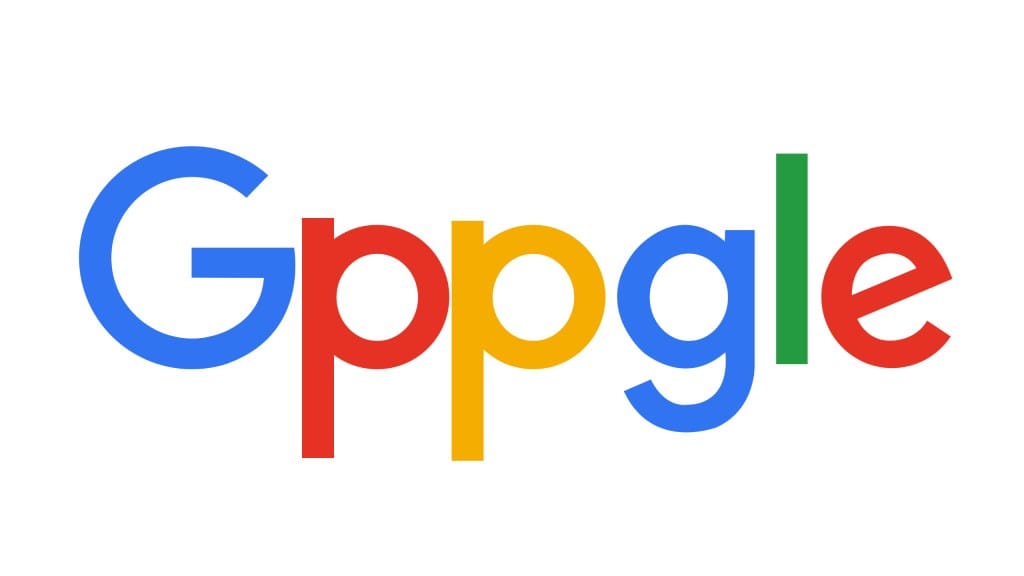

Google's AI Overview returns 2 Ps in "Google" and 1 r in "poop." You cannot trust the feature with spelling-critical work until the architecture changes. The errors stem from transformer models, so verify every search result before relying on it for important decisions.
Google is embedding generative AI deeper into its 29-year-old search engine. The rollout includes AI Overview, a feature that summarizes search results at the top of the page. The summaries consistently miss basic letter counts and drop letters from words.
When users search for "Google," the AI states there are 2 Ps. It identifies exactly 1 r in "poop." It assigns 2 d's to "journalism" while spelling it j-o-u-r-n-a-d-i-s-m. It even spells Donald Trump's last name t-r-p-u-m. These mistakes mirror previous failures. The AI previously cited The Onion, suggested eating rocks, and recommended glue on pizza. Google told TechCrunch in an emailed statement:
"Counting within words has been a known challenge for LLMs, and we're working to fix this particular issue."
The problems are not software bugs. They are permanent limits of how large language models process text. Google relies on transformer models to run these features. Transformers break text into tokens, which can represent full words, syllables, or individual letters. The AI does not read words. It converts text into numerical representations and builds context from those tokens. This tokenization splits words unpredictably, which breaks counting tasks entirely.
Matthew Guzdial, an AI researcher and assistant professor at the University of Alberta, explained the mechanics. He told TechCrunch that input prompts get translated into an encoding that the model uses. The model cannot count letters it never isolated.
Why this matters for your workflow
Researchers view token fuzziness as a hard constraint. Sheridan Feucht, a PhD student studying large language model interpretability at Northeastern University, told TechCrunch that human experts cannot agree on a perfect token vocabulary. She noted:
"It's kind of hard to get around the question of what exactly a 'word' should be for a language model, and even if we got human experts to agree on a perfect token vocabulary, models would probably still find it useful to 'chunk' things even further."
She added:
"My guess would be that there's no such thing as a perfect tokenizer due to this kind of fuzziness."
The utility of LLMs comes from pattern matching, not spelling precision.
Search errors will not vanish with a simple update. Google acknowledges the flaw. The fixes require architectural shifts, not quick patches. This structural limitation means you need a practical strategy for using AI Overview safely.
Use AI Overview for general summaries or creative brainstorming. Do not use it for spelling-critical work. Confirm every factual claim the summary generates before acting on it. If you draft an email based on an AI summary, validate the spelling and numbers manually before sending. If you research product specs, cross-reference the technical details on the manufacturer website. The AI saves time on high-level overviews. You protect your work by checking the details yourself.
Run a standard spell-check on any text the AI generates. Cross-reference the source links the summary provides to confirm the original data. Review official documentation for technical specifications before making purchasing decisions. These steps take minutes but prevent costly errors downstream.
Google is refining its search algorithms. The feature will improve slowly. You decide when the summaries are reliable enough to replace your manual verification.