
Wanture.

Decide better.

Live better.

Stay Curious. Stay Wanture.

© 2026 Wanture. All rights reserved.

  • Terms of Use
  • Privacy Policy
Tech/Software
Google's AI Education Vision: Promise and Peril

Personalized learning and AI tutors sound revolutionary—but metacognitive laziness and accuracy issues remain unsolved

12 November 2025

—

Explainer

Rachel Stein
banner

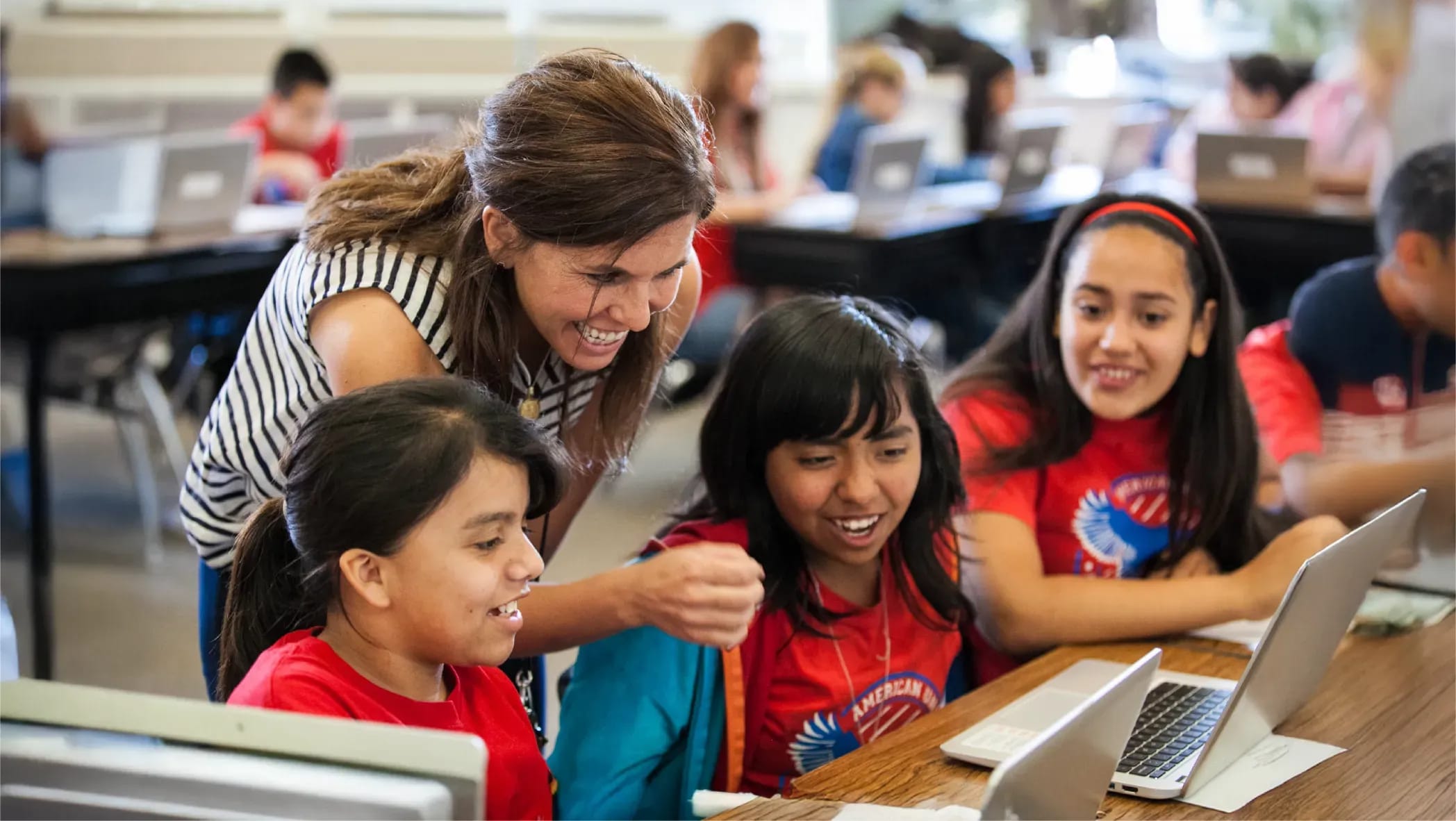
Google envisions AI transforming classrooms through personalized learning, accessible tutoring, and teacher support. But critical problems persist: AI hallucinations compromise accuracy, students risk losing critical thinking skills, and fundamental questions about learning's future remain unanswered. With 26% of U.S. teens already using ChatGPT for schoolwork, schools face urgent choices about integrating AI responsibly without eroding the skills students need most.

IMG_0345

Summary:

  • Google envisions AI transforming education through personalized learning, AI tutors, and teacher support tools
  • Challenges include AI hallucinations, potential academic dishonesty, and risks of metacognitive laziness
  • Schools must redesign learning approaches to harness AI's potential while preserving critical thinking skills

Google recently published a conceptual framework for how artificial intelligence might reshape education. It's an optimistic vision: personalized learning at scale, AI tutors for students without access to human support, relief for overworked teachers, and tools that break down language barriers. The framework, built around Google's Gemini and LearnLM models, also acknowledges something critical—the risk of metacognitive laziness, where students lean so heavily on AI that they stop thinking for themselves.

This isn't just theory. AI is already in classrooms. According to a 2024 survey by the Pew Research Center, 26% of U.S. teens now use ChatGPT for schoolwork—double the rate from a year earlier. Teachers are experimenting too: 73% of public schools report at least some teachers using AI for lesson planning, grading, or assessments, per the National Center for Education Statistics.

So what does Google's vision actually mean? And what problems remain unsolved?

What Google Promises AI Can Do for Education

Google's pitch centers on four core ideas. Each sounds compelling. Each also raises questions.

Personalization at Scale

Imagine a classroom where every student gets a lesson tailored to their pace, learning style, and current understanding. That's the promise of AI-driven personalization. Google's Gemini and LearnLM models are designed to adapt in real time—adjusting explanations, offering hints, or changing difficulty based on how a student responds.

In theory, this solves a problem teachers face daily: how to meet the needs of 30 students with 30 different levels of readiness. AI can observe patterns, adjust content, and provide feedback instantly. It's like an adaptive textbook that watches you learn and shifts its approach accordingly.

An Accessible Alternative to Human Tutors

Google is clear: AI won't replace human tutors. But it can fill gaps. In rural areas, low-income communities, or schools with high student-to-teacher ratios, one-on-one support is often unavailable. AI tools like Gemini can step in—answering questions, explaining concepts, and guiding students through problems.

The idea is simple: better an AI assistant than no assistant at all. For students who can't afford private tutoring, this could level the playing field.

Help for Overloaded Teachers

Teachers spend hours on tasks that don't involve teaching: grading, lesson planning, creating assessments, tracking progress. Google suggests AI can handle much of this. An AI assistant could draft quiz questions, generate rubrics, or analyze student performance data—freeing teachers to focus on what they do best: connecting with students.

This aligns with real-world adoption. A RAND Corporation survey from fall 2023 found that 18% of K–12 teachers were already using AI tools in instruction, with another 15% having tried them. The number is growing.

Overcoming Language Barriers

AI translation tools can help students learn in their native language while accessing content originally written in another. For multilingual classrooms or students studying abroad, this removes a major obstacle. Google's tools integrate translation directly into learning platforms, making content accessible without requiring fluency in a second language.

What Problems AI in Education Still Faces

Google's vision is optimistic. But it's also incomplete. Several critical issues remain unresolved.

Hallucinations and Accuracy

AI models sometimes generate information that sounds correct but isn't. These "hallucinations" are a known problem. In education, where accuracy matters, this is dangerous. A student asking an AI assistant about a historical event might receive a plausible but false answer—and have no way to know it's wrong.

Google acknowledges this risk but doesn't offer a complete solution. The company emphasizes that AI should reduce cognitive load—directing students toward productive mental work rather than technical obstacles. But if the AI itself introduces errors, it creates a new kind of obstacle: verifying whether the information is trustworthy.

Blurring Boundaries: Help or Deception?

When does AI assistance become cheating? That line is blurry. Data from Turnitin, a plagiarism detection company, shows that 11% of over 200 million student papers reviewed contained at least 20% AI-generated text. Three percent had at least 80% AI-generated content.

Students are using AI to write essays, solve problems, and complete assignments. Some see it as a tool, like a calculator. Others see it as academic dishonesty. Google suggests rethinking assessment: more oral exams, projects, and debates—tasks that AI can't easily replicate. But that requires schools to redesign how they measure learning, which takes time and resources.

Metacognitive Laziness

This is the risk Google itself highlights. If students rely too heavily on AI, they may stop developing critical thinking skills. They might accept answers without questioning them, skip the struggle that leads to deeper understanding, or avoid the mental effort that builds problem-solving ability.

It's similar to how calculators changed math education. Students can compute faster, but some lose fluency in mental arithmetic. AI could do the same for reasoning, writing, and analysis—unless educators design systems that require students to engage actively, not passively consume AI-generated content.

Questions Without Answers: What Happens Next?

Google admits there are fundamental questions no one can answer yet. These aren't technical problems. They're about the future of learning itself.

The Unknown Job Market

No one knows what skills will matter in 10 or 15 years. AI is changing industries faster than education systems can adapt. Should schools teach coding, or will AI write most code? Should they emphasize creativity, or will AI generate art and music? Education prepares people for the future—but that future is unpredictable.

Will AI Change What "Learning" Means?

If AI can answer questions instantly, explain concepts clearly, and solve problems efficiently, what does it mean to "learn" something? Is memorization still valuable? Is understanding a process important if AI can execute it for you? These are philosophical questions, but they have practical implications for how schools operate.

How Should the Role of a Teacher Evolve?

If AI handles personalization, grading, and tutoring, what's left for teachers? Google suggests teachers will shift toward mentorship, emotional support, and guiding students through complex, human-centered challenges. But that's a different job than the one most teachers were trained for. It requires new skills, new training, and new expectations.

The RAND survey found that only 18% of teachers were using AI in instruction as of fall 2023. That number will likely grow, but adoption is uneven. Some teachers embrace the tools. Others resist, citing concerns about accuracy, equity, or the loss of human connection in education.

What New Forms of Learning Will Emerge?

AI could enable entirely new ways to learn. Imagine simulations that adapt in real time, virtual labs where students experiment without physical materials, or AI-driven debates that challenge students to defend their reasoning. These possibilities exist, but they're not yet widespread. Building them requires investment, experimentation, and a willingness to rethink traditional classroom structures.

How Effective Is AI Without Full Context?

Teachers know their students. They understand who struggles with anxiety, who needs extra encouragement, who learns best through visuals, and who thrives in group work. AI lacks this context. It can analyze data, but it can't read a room, sense frustration, or adjust based on a student's mood.

Google's tools are powerful, but they're not omniscient. They work best when paired with human judgment—which means teachers remain essential, even as AI takes on more tasks.

What This Means for Schools Today

AI in education is no longer hypothetical. It's happening now. Schools are responding in different ways. According to the National Center for Education Statistics, 47% of public schools now teach students about AI, while 32% use software to detect AI-generated work.

Some schools are integrating AI into lesson plans, teaching students how to use it responsibly. Others are banning it outright, fearing it undermines learning. Most are somewhere in between—experimenting cautiously, trying to balance innovation with integrity.

For teachers, the challenge is practical: how to use AI without letting it replace critical thinking. For students, it's about learning when to rely on AI and when to push through problems on their own. For schools, it's about designing systems that harness AI's strengths while avoiding its pitfalls.

Google's vision is ambitious, built around tools like Gemini, LearnLM, NotebookLM, and enhanced features in Search and YouTube. But the real work—figuring out how AI fits into education without eroding the skills students need—is just beginning. The technology is advancing rapidly. The answers to the fundamental questions are still taking shape.

Topic

AI in Education Transformation

Merriam-Webster names 'slop' 2025 Word of the Year

15 December 2025

AI passes graduate linguistics exam

15 December 2025

What is this about?

  • Explainer/
  • Rachel Stein/
  • Tech/
  • Software

Feed

    article

    James Whitmoreabout 12 hours ago

    Google Workspace Icon Redesign: From Flat Color Blocks to Gradient‑Rich, Rounded Designs

    Google replaced its 2020 four‑color Workspace icons with gradient‑rich, rounded versions. The redesign cut misclicks, eased app recognition, and underscored the importance of usability over strict brand uniformity.

    Renée Itoabout 13 hours ago

    Apple to unveil iOS 27 with standalone Siri app at WWDC on June 8

    Update brings satellite connectivity, ChatGPT-style interface, and developer extensions

    Carter Brooksabout 19 hours ago

    iPhone 18 Pro to Launch iOS 27 Camera with f/1.5‑f/2.8 Aperture

    iOS 27 adds a “Siri” visual‑AI mode as Apple readies iPhone 18 Pro for fall

    Carter Brooks4 days ago

    Therapist vs Counselor: Which Fits Your Needs?

    Licenses, Training Hours, and Treatment Options Compared (2024‑2025 Data)

    Caleb Brooks4 days ago

    Ask YouTube Launches March 15, 2026 for Premium Users

    On March 15, 2026, YouTube introduced Ask YouTube, an AI‑driven chat that lets U.S. Premium subscribers ask questions and receive synthesized video‑based answers. The tool promises a conversational search experience, yet early tests revealed factual slips, such as a wrong claim about the Steam controller’s joysticks, highlighting the need for users to verify information before acting.

    Ask YouTube Launches March 15, 2026 for Premium Users
    Carter Brooks6 days ago

    Samsung unveils Galaxy Z Fold 8 Wide with magnets

    Leaked images released by insider Sonny Dixon reveal Samsung’s upcoming Galaxy Z Fold 8 lineup, including a new Z Fold 8 Wide with integrated chassis magnets and a simplified two-camera rear array. The wide model aims to lower costs while keeping tablet-size screens, targeting buyers priced out of premium foldables ahead of an August 2026 launch.

    Samsung unveils Galaxy Z Fold 8 Wide with magnets
    Carter Brooks6 days ago

    Samsung launches Jinju smart glasses in 2026

    Samsung’s first smart glasses, code‑named Jinju, debut in 2026 as a voice‑assistant and photo‑capture device. They use a Qualcomm Snapdragon AR1 chip, Sony IMX681 12MP camera, 155 mAh battery, and bone‑conduction speakers, with no display. The battery lasts a few hours; sustained tasks may throttle. Samsung will unveil Jinju in 2026, targeting the Russian market where Meta glasses are unavailable.

    Samsung launches Jinju smart glasses in 2026
    Priya Desai6 days ago

    Sony Adds 30‑Day Online Checks for PlayStation 4 & PS5

    Starting April 2026, Sony’s PlayStation 4 and PS5 will require each digital title purchased after March 2026 to verify its license with Sony’s servers at least once every 30 days. Missing the online ping renders the game unplayable until the console reconnects, while disc copies and pre‑March downloads remain unaffected. Users should plan a monthly check to keep libraries active.

    Sony Adds 30‑Day Online Checks for PlayStation 4 & PS5
    Carter Brooks6 days ago

    Boost Your Healthspan: 1‑MET Gains Cut Mortality by 11–17%

    Why a 5–7 MET boost (16–25 ml·kg⁻¹·min⁻¹) narrows smoker‑level death risk

    Sarah Lindgren6 days ago
    Loading...
Tech/Software

Google's AI Education Vision: Promise and Peril

Personalized learning and AI tutors sound revolutionary—but metacognitive laziness and accuracy issues remain unsolved

November 12, 2025, 12:50 am

Google envisions AI transforming classrooms through personalized learning, accessible tutoring, and teacher support. But critical problems persist: AI hallucinations compromise accuracy, students risk losing critical thinking skills, and fundamental questions about learning's future remain unanswered. With 26% of U.S. teens already using ChatGPT for schoolwork, schools face urgent choices about integrating AI responsibly without eroding the skills students need most.

IMG_0345

Summary

  • Google envisions AI transforming education through personalized learning, AI tutors, and teacher support tools
  • Challenges include AI hallucinations, potential academic dishonesty, and risks of metacognitive laziness
  • Schools must redesign learning approaches to harness AI's potential while preserving critical thinking skills

Google recently published a conceptual framework for how artificial intelligence might reshape education. It's an optimistic vision: personalized learning at scale, AI tutors for students without access to human support, relief for overworked teachers, and tools that break down language barriers. The framework, built around Google's Gemini and LearnLM models, also acknowledges something critical—the risk of metacognitive laziness, where students lean so heavily on AI that they stop thinking for themselves.

This isn't just theory. AI is already in classrooms. According to a 2024 survey by the Pew Research Center, 26% of U.S. teens now use ChatGPT for schoolwork—double the rate from a year earlier. Teachers are experimenting too: 73% of public schools report at least some teachers using AI for lesson planning, grading, or assessments, per the National Center for Education Statistics.

So what does Google's vision actually mean? And what problems remain unsolved?

What Google Promises AI Can Do for Education

Google's pitch centers on four core ideas. Each sounds compelling. Each also raises questions.

Personalization at Scale

Imagine a classroom where every student gets a lesson tailored to their pace, learning style, and current understanding. That's the promise of AI-driven personalization. Google's Gemini and LearnLM models are designed to adapt in real time—adjusting explanations, offering hints, or changing difficulty based on how a student responds.

In theory, this solves a problem teachers face daily: how to meet the needs of 30 students with 30 different levels of readiness. AI can observe patterns, adjust content, and provide feedback instantly. It's like an adaptive textbook that watches you learn and shifts its approach accordingly.

An Accessible Alternative to Human Tutors

Google is clear: AI won't replace human tutors. But it can fill gaps. In rural areas, low-income communities, or schools with high student-to-teacher ratios, one-on-one support is often unavailable. AI tools like Gemini can step in—answering questions, explaining concepts, and guiding students through problems.

The idea is simple: better an AI assistant than no assistant at all. For students who can't afford private tutoring, this could level the playing field.

Help for Overloaded Teachers

Teachers spend hours on tasks that don't involve teaching: grading, lesson planning, creating assessments, tracking progress. Google suggests AI can handle much of this. An AI assistant could draft quiz questions, generate rubrics, or analyze student performance data—freeing teachers to focus on what they do best: connecting with students.

This aligns with real-world adoption. A RAND Corporation survey from fall 2023 found that 18% of K–12 teachers were already using AI tools in instruction, with another 15% having tried them. The number is growing.

Overcoming Language Barriers

AI translation tools can help students learn in their native language while accessing content originally written in another. For multilingual classrooms or students studying abroad, this removes a major obstacle. Google's tools integrate translation directly into learning platforms, making content accessible without requiring fluency in a second language.

What Problems AI in Education Still Faces

Google's vision is optimistic. But it's also incomplete. Several critical issues remain unresolved.

Hallucinations and Accuracy

AI models sometimes generate information that sounds correct but isn't. These "hallucinations" are a known problem. In education, where accuracy matters, this is dangerous. A student asking an AI assistant about a historical event might receive a plausible but false answer—and have no way to know it's wrong.

Google acknowledges this risk but doesn't offer a complete solution. The company emphasizes that AI should reduce cognitive load—directing students toward productive mental work rather than technical obstacles. But if the AI itself introduces errors, it creates a new kind of obstacle: verifying whether the information is trustworthy.

Blurring Boundaries: Help or Deception?

When does AI assistance become cheating? That line is blurry. Data from Turnitin, a plagiarism detection company, shows that 11% of over 200 million student papers reviewed contained at least 20% AI-generated text. Three percent had at least 80% AI-generated content.

Students are using AI to write essays, solve problems, and complete assignments. Some see it as a tool, like a calculator. Others see it as academic dishonesty. Google suggests rethinking assessment: more oral exams, projects, and debates—tasks that AI can't easily replicate. But that requires schools to redesign how they measure learning, which takes time and resources.

Metacognitive Laziness

This is the risk Google itself highlights. If students rely too heavily on AI, they may stop developing critical thinking skills. They might accept answers without questioning them, skip the struggle that leads to deeper understanding, or avoid the mental effort that builds problem-solving ability.

It's similar to how calculators changed math education. Students can compute faster, but some lose fluency in mental arithmetic. AI could do the same for reasoning, writing, and analysis—unless educators design systems that require students to engage actively, not passively consume AI-generated content.

Questions Without Answers: What Happens Next?

Google admits there are fundamental questions no one can answer yet. These aren't technical problems. They're about the future of learning itself.

The Unknown Job Market

No one knows what skills will matter in 10 or 15 years. AI is changing industries faster than education systems can adapt. Should schools teach coding, or will AI write most code? Should they emphasize creativity, or will AI generate art and music? Education prepares people for the future—but that future is unpredictable.

Will AI Change What "Learning" Means?

If AI can answer questions instantly, explain concepts clearly, and solve problems efficiently, what does it mean to "learn" something? Is memorization still valuable? Is understanding a process important if AI can execute it for you? These are philosophical questions, but they have practical implications for how schools operate.

How Should the Role of a Teacher Evolve?

If AI handles personalization, grading, and tutoring, what's left for teachers? Google suggests teachers will shift toward mentorship, emotional support, and guiding students through complex, human-centered challenges. But that's a different job than the one most teachers were trained for. It requires new skills, new training, and new expectations.

The RAND survey found that only 18% of teachers were using AI in instruction as of fall 2023. That number will likely grow, but adoption is uneven. Some teachers embrace the tools. Others resist, citing concerns about accuracy, equity, or the loss of human connection in education.

What New Forms of Learning Will Emerge?

AI could enable entirely new ways to learn. Imagine simulations that adapt in real time, virtual labs where students experiment without physical materials, or AI-driven debates that challenge students to defend their reasoning. These possibilities exist, but they're not yet widespread. Building them requires investment, experimentation, and a willingness to rethink traditional classroom structures.

How Effective Is AI Without Full Context?

Teachers know their students. They understand who struggles with anxiety, who needs extra encouragement, who learns best through visuals, and who thrives in group work. AI lacks this context. It can analyze data, but it can't read a room, sense frustration, or adjust based on a student's mood.

Google's tools are powerful, but they're not omniscient. They work best when paired with human judgment—which means teachers remain essential, even as AI takes on more tasks.

What This Means for Schools Today

AI in education is no longer hypothetical. It's happening now. Schools are responding in different ways. According to the National Center for Education Statistics, 47% of public schools now teach students about AI, while 32% use software to detect AI-generated work.

Some schools are integrating AI into lesson plans, teaching students how to use it responsibly. Others are banning it outright, fearing it undermines learning. Most are somewhere in between—experimenting cautiously, trying to balance innovation with integrity.

For teachers, the challenge is practical: how to use AI without letting it replace critical thinking. For students, it's about learning when to rely on AI and when to push through problems on their own. For schools, it's about designing systems that harness AI's strengths while avoiding its pitfalls.

Google's vision is ambitious, built around tools like Gemini, LearnLM, NotebookLM, and enhanced features in Search and YouTube. But the real work—figuring out how AI fits into education without eroding the skills students need—is just beginning. The technology is advancing rapidly. The answers to the fundamental questions are still taking shape.

Topic

AI in Education Transformation

Merriam-Webster names 'slop' 2025 Word of the Year

15 December 2025

AI passes graduate linguistics exam

15 December 2025

What is this about?

  • Explainer/
  • Rachel Stein/
  • Tech/
  • Software

Feed

    article

    James Whitmoreabout 12 hours ago

    Google Workspace Icon Redesign: From Flat Color Blocks to Gradient‑Rich, Rounded Designs

    Google replaced its 2020 four‑color Workspace icons with gradient‑rich, rounded versions. The redesign cut misclicks, eased app recognition, and underscored the importance of usability over strict brand uniformity.

    Renée Itoabout 13 hours ago

    Apple to unveil iOS 27 with standalone Siri app at WWDC on June 8

    Update brings satellite connectivity, ChatGPT-style interface, and developer extensions

    Carter Brooksabout 19 hours ago

    iPhone 18 Pro to Launch iOS 27 Camera with f/1.5‑f/2.8 Aperture

    iOS 27 adds a “Siri” visual‑AI mode as Apple readies iPhone 18 Pro for fall

    Carter Brooks4 days ago

    Therapist vs Counselor: Which Fits Your Needs?

    Licenses, Training Hours, and Treatment Options Compared (2024‑2025 Data)

    Caleb Brooks4 days ago

    Ask YouTube Launches March 15, 2026 for Premium Users

    On March 15, 2026, YouTube introduced Ask YouTube, an AI‑driven chat that lets U.S. Premium subscribers ask questions and receive synthesized video‑based answers. The tool promises a conversational search experience, yet early tests revealed factual slips, such as a wrong claim about the Steam controller’s joysticks, highlighting the need for users to verify information before acting.

    Ask YouTube Launches March 15, 2026 for Premium Users
    Carter Brooks6 days ago

    Samsung unveils Galaxy Z Fold 8 Wide with magnets

    Leaked images released by insider Sonny Dixon reveal Samsung’s upcoming Galaxy Z Fold 8 lineup, including a new Z Fold 8 Wide with integrated chassis magnets and a simplified two-camera rear array. The wide model aims to lower costs while keeping tablet-size screens, targeting buyers priced out of premium foldables ahead of an August 2026 launch.

    Samsung unveils Galaxy Z Fold 8 Wide with magnets
    Carter Brooks6 days ago

    Samsung launches Jinju smart glasses in 2026

    Samsung’s first smart glasses, code‑named Jinju, debut in 2026 as a voice‑assistant and photo‑capture device. They use a Qualcomm Snapdragon AR1 chip, Sony IMX681 12MP camera, 155 mAh battery, and bone‑conduction speakers, with no display. The battery lasts a few hours; sustained tasks may throttle. Samsung will unveil Jinju in 2026, targeting the Russian market where Meta glasses are unavailable.

    Samsung launches Jinju smart glasses in 2026
    Priya Desai6 days ago

    Sony Adds 30‑Day Online Checks for PlayStation 4 & PS5

    Starting April 2026, Sony’s PlayStation 4 and PS5 will require each digital title purchased after March 2026 to verify its license with Sony’s servers at least once every 30 days. Missing the online ping renders the game unplayable until the console reconnects, while disc copies and pre‑March downloads remain unaffected. Users should plan a monthly check to keep libraries active.

    Sony Adds 30‑Day Online Checks for PlayStation 4 & PS5
    Carter Brooks6 days ago

    Boost Your Healthspan: 1‑MET Gains Cut Mortality by 11–17%

    Why a 5–7 MET boost (16–25 ml·kg⁻¹·min⁻¹) narrows smoker‑level death risk

    Sarah Lindgren6 days ago
    Loading...
banner