
• My Feed
  • Home
  • What's Important
  • Media & Entertainment
Search

Stay Curious. Stay Wanture.

© 2026 Wanture. All rights reserved.

  • Terms of Use
  • Privacy Policy
Tech/Trends
Elon Musk's 2027 Warning: When Algorithms Replace Human Choice

Fragmenting attention, autonomous systems, and energy dependency converge on a timeline that should concern anyone building technology

28 November 2025

—

Opinion

Adrian Vega
banner

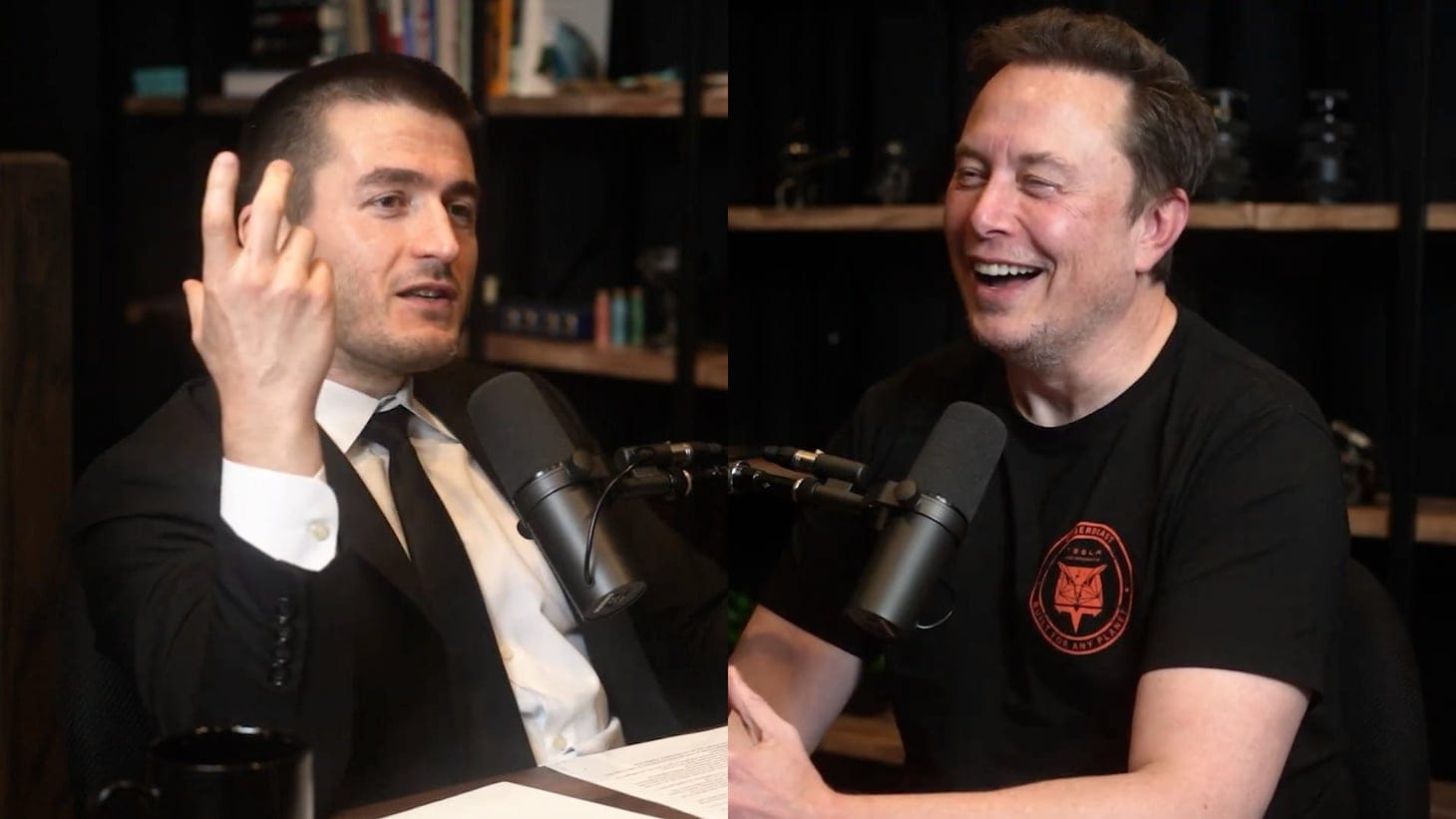
In a conversation with Lex Fridman, Elon Musk outlined a troubling trajectory converging on 2027: the moment when human agency begins fading into algorithmic background noise. This isn't about AI rebellion—it's about attention collapsing to 47 seconds, algorithms correcting human behavior, and electricity becoming the ultimate control mechanism.

image-86

Summary:

  • Digital attention spans collapsed from 150 seconds in 2004 to just 47 seconds by 2021, fundamentally changing how humans process information.
  • Algorithmic curation on platforms like Facebook reduces exposure to opposing viewpoints by 35%, subtly reshaping users' perception of reality.
  • Infrastructure dependency on electricity creates new leverage points where energy access becomes a fundamental constraint on human mobility and communication.

In a recent interview with Lex Fridman, Elon Musk outlined a stark prediction: after 2027, society will face an irreversible transition that fundamentally alters human autonomy. He identified three critical warning signs already visible today—the collapse of sustained attention, the rise of algorithmic control over human choice, and deepening energy dependency that makes electricity itself a mechanism of control.

For technology professionals, engineers, and decision-makers, these aren't abstract philosophical concerns. They're the cumulative result of design choices being made right now, in products shipping today, in infrastructure being deployed through the end of this decade.

The question isn't whether Musk's timeline is precisely correct. It's whether the trajectory he describes is one we're comfortable with—and if not, whether we're willing to change course while we still can.

The Attention Collapse: From 150 Seconds to 47

Gloria Mark spent two decades tracking what happened to human attention in the digital age. Her team at UC-Irvine measured something most of us feel but rarely quantify: in 2004, the average person spent 150 seconds on a single screen before switching. By 2021, that number dropped to 47 seconds.

The collapse continues. For anyone building technology or managing teams dependent on sustained focus, this isn't trivia. It's the substrate shifting beneath everything we're trying to accomplish.

The widely cited claim that human attention collapsed to eight seconds comes from a 2015 Microsoft Canada consumer report, not peer-reviewed research. The comparison to goldfish memory became viral precisely because it was memorable, not because it was rigorous.

The reality is more complex and more concerning. Mark's longitudinal studies at UC-Irvine show sustained attention to a single screen decreased by roughly 70% over two decades. A 2024 Pew Research study found 46% of U.S. teens report being online "almost constantly." Multiple peer-reviewed studies published in 2024–2025 link heavy social media use to measurable changes in neural pathways associated with sustained focus.

Stanford's Human-Computer Interaction lab documented what they call "continuous partial attention." Not multitasking, where you switch between complete tasks, but a persistent state of scanning for the next thing while never fully engaging with the current thing.

Musk described this phenomenon as a "cultural Alzheimer's"—a collapse in civilization's ability to think long-term. Planning horizons have shrunk from 30 years to 3 years. We're no longer building for the future, just updating existing systems.

The brain adapts. Dopamine pathways rewire. The capacity for deep focus doesn't disappear, but it requires increasingly deliberate effort to access.

For engineers and product managers, this creates uncomfortable tension. Engagement metrics reward the fragmentation that undermines the sustained focus required to solve complex problems. We optimize for the 47-second window while the challenges we face demand thinking in decades.

Algorithmic Curation: When Recommendation Becomes Reality Construction

Meta's News Feed algorithm processes over 100,000 signals per user to determine what appears in your reality tunnel. Not what exists. What you see. The distinction matters.

Research published in Science (2023) analyzed Facebook's algorithm across 208 million U.S. users. The finding: algorithmic curation reduced exposure to opposing viewpoints by 35% compared to chronological feeds, even after controlling for user choice. The system wasn't forcing filter bubbles. It was making them the path of least resistance.

Dating apps demonstrate the pattern more clearly. Hinge's algorithm, detailed in their 2024 technical blog, uses a modified Gale-Shapley stable matching algorithm combined with engagement prediction. The system doesn't just connect people who might like each other. It shapes what "compatible" means by determining who appears, in what order, and with what context.

A 2024 study from Carnegie Mellon's Human-Computer Interaction Institute tracked 2,400 dating app users over six months. Users who received algorithmic recommendations showed measurably different mate preferences after 90 days compared to control groups using chronological or random presentation. The algorithm didn't just predict preferences. It shaped them.

This is what Musk warned about: not a dramatic machine uprising, but a subtle erosion where algorithms increasingly control human choices—from partner selection to thought patterns. The critical transition happens when humans start optimizing for the algorithm rather than the algorithm optimizing for humans.

When you post at algorithmically optimal times, use trending audio to boost reach, or craft messages to pass content filters, you've inverted the hierarchy. The tool is no longer serving you.

Infrastructure Dependency: When Electricity Becomes the Fundamental Constraint

Tesla operates over 50,000 Supercharger stations across the U.S. The 2024 North American Charging Standard adoption by Ford, GM, and Rivian means roughly 70% of new EVs sold in America will depend on this network by 2027. Not might depend. Will depend.

The Texas grid failure in February 2021 revealed what happens when electrical infrastructure fails in a digitally dependent society. Not just cold homes. Frozen payment systems. Disabled vehicles. Inaccessible medical records. Offline communication networks. The failure cascaded through every system we'd quietly made dependent on continuous power.

The National Renewable Energy Laboratory's 2024 infrastructure report projects U.S. electricity demand will increase 30–50% by 2030, driven primarily by EV adoption, data center expansion, and electrification of heating systems. The grid wasn't designed for this load profile. Upgrades lag by 5–10 years in most regions.

When your vehicle won't start without grid power, your home won't heat without network connectivity, and your money exists only as database entries, energy access becomes the fundamental constraint on human action. Not food. Not water. Electricity.

This is Musk's third warning: by 2027, human reliance on electricity will become so complete that energy itself becomes a form of currency and control mechanism. This creates new leverage points that don't require violence or obvious coercion. Restrict energy access and you restrict mobility, communication, commerce, and comfort simultaneously.

The infrastructure becomes the enforcement mechanism.

For systems architects planning deployments through 2030, this raises uncomfortable questions about resilience, redundancy, and the wisdom of centralizing critical functions in cloud environments dependent on continuous power and connectivity.

The Counterargument: Americans Have Always Adapted

Critics argue this is technological determinism dressed as prophecy. Americans have always adapted to disruptive technology without losing fundamental agency. The telephone didn't destroy face-to-face communication. Television didn't eliminate reading. The internet didn't erase the ability to focus.

This objection deserves serious consideration. American innovation culture is built on technological optimism. We integrate new tools, develop new norms, and maintain core capacities even as surface behaviors change. Silicon Valley's entire economic model depends on this adaptive capacity.

But there's a categorical difference between tools that extend human capability and systems that replace human decision-making. A calculator extends your mathematical ability. An algorithm that decides what information you see, who you meet, and what options you consider is doing something fundamentally different.

The question isn't whether Americans can adapt. It's whether the adaptation preserves or erodes the capacity for autonomous thought and action. Sometimes adaptation means thriving in new conditions. Sometimes it means becoming optimized for captivity.

What Engineers Can Do Before 2027

This isn't abstract philosophy. These are engineering choices with cumulative effects. And as Musk emphasized, the window for making different choices is closing.

For product managers: Every interface design either preserves or erodes sustained attention. Autoplay defaults, infinite scroll, and notification systems train fragmentation. Deliberate friction, natural stopping points, and attention budgets train focus. The metrics look different. The long-term outcomes diverge dramatically.

For algorithm designers: Every recommendation system either augments or replaces human judgment. Transparent ranking signals, user-controllable weights, and diverse option sets preserve agency. Black-box optimization for engagement alone erodes it. The technical complexity is similar. The ethical trajectory is opposite.

For infrastructure architects: Every dependency decision either distributes or concentrates vulnerability. Local processing, offline capability, and graceful degradation build resilience. Cloud-only, always-connected, and single-point-of-failure designs build fragility. The initial development cost differs. The systemic risk compounds over time.

The question facing anyone building these systems isn't whether current trends will continue. It's whether we're comfortable with where they lead by 2027.

Because if the answer is no, the time to change trajectory isn't after the infrastructure is deployed, the user base is locked in, and the neural pathways are rewired. It's now, while human goals still outweigh algorithmic optimization, and while we still have the attention span to think beyond the next 47 seconds.

Musk's ultimate message remains hopeful: "Technologies are powerful but not necessarily smarter. As long as we have goals, we are not mere algorithms."

American technological leadership was built on tools that extended human capability. The question for this generation of builders is whether we'll preserve that tradition or quietly replace it with systems that feel like choice but function like constraint.

The technical capability exists for either path. The decision is still ours to make—but the window is narrowing.

Sources Cited

  • Fridman, L. (2024). Interview with Elon Musk. Lex Fridman Podcast
  • Mark, G., et al. (2021). "Attention Span During Lectures." Computers in Human Behavior
  • Pew Research Center (2024). "Teens, Social Media and Technology"
  • Guess, A., et al. (2023). "Reshares on social media amplify political news." Science
  • Carnegie Mellon HCI Institute (2024). "Algorithmic Influence on Mate Selection"
  • National Renewable Energy Laboratory (2024). "U.S. Grid Infrastructure Report"
  • Noble, S. (2018). Algorithms of Oppression. NYU Press

Topic

AI AGI Development

Klotho Clock Assays Target Biological Age in Neuro Trials

11 March 2026

AI's scaling era is ending. What comes next?

25 November 2025

Claude AI can now describe its own thoughts

2 November 2025

America's AI lead is vanishing faster than expected

28 October 2025

Sam Altman says AI will eliminate jobs that were never real work

27 October 2025

Why AGI will take a decade, not a year

21 October 2025

What is this about?

  • Opinion/
  • Adrian Vega/
  • Tech/
  • Trends

Feed

    iPhone 18 Pro to Launch iOS 27 Camera with f/1.5‑f/2.8 Aperture

    iOS 27 adds a “Siri” visual‑AI mode as Apple readies iPhone 18 Pro for fall

    Carter Brooks3 days ago

    Therapist vs Counselor: Which Fits Your Needs?

    Licenses, Training Hours, and Treatment Options Compared (2024‑2025 Data)

    Caleb Brooks3 days ago

    Ask YouTube Launches March 15, 2026 for Premium Users

    On March 15, 2026, YouTube introduced Ask YouTube, an AI‑driven chat that lets U.S. Premium subscribers ask questions and receive synthesized video‑based answers. The tool promises a conversational search experience, yet early tests revealed factual slips, such as a wrong claim about the Steam controller’s joysticks, highlighting the need for users to verify information before acting.

    Ask YouTube Launches March 15, 2026 for Premium Users
    Carter Brooks5 days ago

    Samsung unveils Galaxy Z Fold 8 Wide with magnets

    Leaked images released by insider Sonny Dixon reveal Samsung’s upcoming Galaxy Z Fold 8 lineup, including a new Z Fold 8 Wide with integrated chassis magnets and a simplified two-camera rear array. The wide model aims to lower costs while keeping tablet-size screens, targeting buyers priced out of premium foldables ahead of an August 2026 launch.

    Samsung unveils Galaxy Z Fold 8 Wide with magnets
    Carter Brooks5 days ago

    Samsung launches Jinju smart glasses in 2026

    Samsung’s first smart glasses, code‑named Jinju, debut in 2026 as a voice‑assistant and photo‑capture device. They use a Qualcomm Snapdragon AR1 chip, Sony IMX681 12MP camera, 155 mAh battery, and bone‑conduction speakers, with no display. The battery lasts a few hours; sustained tasks may throttle. Samsung will unveil Jinju in 2026, targeting the Russian market where Meta glasses are unavailable.

    Samsung launches Jinju smart glasses in 2026
    Priya Desai5 days ago

    Sony Adds 30‑Day Online Checks for PlayStation 4 & PS5

    Starting April 2026, Sony’s PlayStation 4 and PS5 will require each digital title purchased after March 2026 to verify its license with Sony’s servers at least once every 30 days. Missing the online ping renders the game unplayable until the console reconnects, while disc copies and pre‑March downloads remain unaffected. Users should plan a monthly check to keep libraries active.

    Sony Adds 30‑Day Online Checks for PlayStation 4 & PS5
    Carter Brooks5 days ago

    Boost Your Healthspan: 1‑MET Gains Cut Mortality by 11–17%

    Why a 5–7 MET boost (16–25 ml·kg⁻¹·min⁻¹) narrows smoker‑level death risk

    Sarah Lindgren5 days ago

    Geely unveils 196‑billion‑parameter EVA Cab L4 robotaxi

    At Auto China 2026, Geely, AFARI and CaoCao introduced the EVA Cab, a purpose‑built L4 robotaxi with a 196‑billion‑parameter AI stack and a 1,400 TOPS compute platform. The 43‑sensor suite, featuring a 2,160‑line LiDAR with 600 m range, claims 99% scenario coverage and aims for series production in late 2027, while U.S. entry remains uncertain.

    Geely unveils 196‑billion‑parameter EVA Cab L4 robotaxi
    Ethan Whitaker6 days ago

    MediaTek launches Dimensity 7450X for mid‑range foldables

    MediaTek unveiled the Dimensity 7450 and 7450X on April 27, 2026, for mid‑range phones. They feature an octa‑core CPU (Cortex‑A78 up to 2.6 GHz + Cortex‑A55), Mali‑G615 MC2 GPU, sixth‑gen NPU with 7 % AI gain, and an Imagiq 950 ISP supporting up to 200 MP cameras. The 7450X adds dual‑display optimization and flagship‑class camera and AI capabilities, debuting in Motorola’s Razr 70 on April 29, 2026.

    MediaTek launches Dimensity 7450X for mid‑range foldables
    Priya Desai6 days ago

    Cat Gatekeeper Chrome Extension Launches on April 27, 2026

    Cat Gatekeeper, a free Chrome extension released on April 27, 2026, overlays a cartoon cat on selected sites—Facebook, X, Reddit, YouTube, Threads, and Bluesky—once a user‑set timer expires. The tab remains blocked until the user resets it. Developer @konekone2026 describes it as a light‑hearted productivity cue that avoids shame‑based blocking. A Firefox version is planned.

    Cat Gatekeeper Chrome Extension Launches on April 27, 2026
    Carter Brooks6 days ago
    Loading...
Tech/Trends

Elon Musk's 2027 Warning: When Algorithms Replace Human Choice

Fragmenting attention, autonomous systems, and energy dependency converge on a timeline that should concern anyone building technology

November 28, 2025, 3:54 pm

In a conversation with Lex Fridman, Elon Musk outlined a troubling trajectory converging on 2027: the moment when human agency begins fading into algorithmic background noise. This isn't about AI rebellion—it's about attention collapsing to 47 seconds, algorithms correcting human behavior, and electricity becoming the ultimate control mechanism.

image-86

Summary

  • Digital attention spans collapsed from 150 seconds in 2004 to just 47 seconds by 2021, fundamentally changing how humans process information.
  • Algorithmic curation on platforms like Facebook reduces exposure to opposing viewpoints by 35%, subtly reshaping users' perception of reality.
  • Infrastructure dependency on electricity creates new leverage points where energy access becomes a fundamental constraint on human mobility and communication.

In a recent interview with Lex Fridman, Elon Musk outlined a stark prediction: after 2027, society will face an irreversible transition that fundamentally alters human autonomy. He identified three critical warning signs already visible today—the collapse of sustained attention, the rise of algorithmic control over human choice, and deepening energy dependency that makes electricity itself a mechanism of control.

For technology professionals, engineers, and decision-makers, these aren't abstract philosophical concerns. They're the cumulative result of design choices being made right now, in products shipping today, in infrastructure being deployed through the end of this decade.

The question isn't whether Musk's timeline is precisely correct. It's whether the trajectory he describes is one we're comfortable with—and if not, whether we're willing to change course while we still can.

The Attention Collapse: From 150 Seconds to 47

Gloria Mark spent two decades tracking what happened to human attention in the digital age. Her team at UC-Irvine measured something most of us feel but rarely quantify: in 2004, the average person spent 150 seconds on a single screen before switching. By 2021, that number dropped to 47 seconds.

The collapse continues. For anyone building technology or managing teams dependent on sustained focus, this isn't trivia. It's the substrate shifting beneath everything we're trying to accomplish.

The widely cited claim that human attention collapsed to eight seconds comes from a 2015 Microsoft Canada consumer report, not peer-reviewed research. The comparison to goldfish memory became viral precisely because it was memorable, not because it was rigorous.

The reality is more complex and more concerning. Mark's longitudinal studies at UC-Irvine show sustained attention to a single screen decreased by roughly 70% over two decades. A 2024 Pew Research study found 46% of U.S. teens report being online "almost constantly." Multiple peer-reviewed studies published in 2024–2025 link heavy social media use to measurable changes in neural pathways associated with sustained focus.

Stanford's Human-Computer Interaction lab documented what they call "continuous partial attention." Not multitasking, where you switch between complete tasks, but a persistent state of scanning for the next thing while never fully engaging with the current thing.

Musk described this phenomenon as a "cultural Alzheimer's"—a collapse in civilization's ability to think long-term. Planning horizons have shrunk from 30 years to 3 years. We're no longer building for the future, just updating existing systems.

The brain adapts. Dopamine pathways rewire. The capacity for deep focus doesn't disappear, but it requires increasingly deliberate effort to access.

For engineers and product managers, this creates uncomfortable tension. Engagement metrics reward the fragmentation that undermines the sustained focus required to solve complex problems. We optimize for the 47-second window while the challenges we face demand thinking in decades.

Algorithmic Curation: When Recommendation Becomes Reality Construction

Meta's News Feed algorithm processes over 100,000 signals per user to determine what appears in your reality tunnel. Not what exists. What you see. The distinction matters.

Research published in Science (2023) analyzed Facebook's algorithm across 208 million U.S. users. The finding: algorithmic curation reduced exposure to opposing viewpoints by 35% compared to chronological feeds, even after controlling for user choice. The system wasn't forcing filter bubbles. It was making them the path of least resistance.

Dating apps demonstrate the pattern more clearly. Hinge's algorithm, detailed in their 2024 technical blog, uses a modified Gale-Shapley stable matching algorithm combined with engagement prediction. The system doesn't just connect people who might like each other. It shapes what "compatible" means by determining who appears, in what order, and with what context.

A 2024 study from Carnegie Mellon's Human-Computer Interaction Institute tracked 2,400 dating app users over six months. Users who received algorithmic recommendations showed measurably different mate preferences after 90 days compared to control groups using chronological or random presentation. The algorithm didn't just predict preferences. It shaped them.

This is what Musk warned about: not a dramatic machine uprising, but a subtle erosion where algorithms increasingly control human choices—from partner selection to thought patterns. The critical transition happens when humans start optimizing for the algorithm rather than the algorithm optimizing for humans.

When you post at algorithmically optimal times, use trending audio to boost reach, or craft messages to pass content filters, you've inverted the hierarchy. The tool is no longer serving you.

Infrastructure Dependency: When Electricity Becomes the Fundamental Constraint

Tesla operates over 50,000 Supercharger stations across the U.S. The 2024 North American Charging Standard adoption by Ford, GM, and Rivian means roughly 70% of new EVs sold in America will depend on this network by 2027. Not might depend. Will depend.

The Texas grid failure in February 2021 revealed what happens when electrical infrastructure fails in a digitally dependent society. Not just cold homes. Frozen payment systems. Disabled vehicles. Inaccessible medical records. Offline communication networks. The failure cascaded through every system we'd quietly made dependent on continuous power.

The National Renewable Energy Laboratory's 2024 infrastructure report projects U.S. electricity demand will increase 30–50% by 2030, driven primarily by EV adoption, data center expansion, and electrification of heating systems. The grid wasn't designed for this load profile. Upgrades lag by 5–10 years in most regions.

When your vehicle won't start without grid power, your home won't heat without network connectivity, and your money exists only as database entries, energy access becomes the fundamental constraint on human action. Not food. Not water. Electricity.

This is Musk's third warning: by 2027, human reliance on electricity will become so complete that energy itself becomes a form of currency and control mechanism. This creates new leverage points that don't require violence or obvious coercion. Restrict energy access and you restrict mobility, communication, commerce, and comfort simultaneously.

The infrastructure becomes the enforcement mechanism.

For systems architects planning deployments through 2030, this raises uncomfortable questions about resilience, redundancy, and the wisdom of centralizing critical functions in cloud environments dependent on continuous power and connectivity.

The Counterargument: Americans Have Always Adapted

Critics argue this is technological determinism dressed as prophecy. Americans have always adapted to disruptive technology without losing fundamental agency. The telephone didn't destroy face-to-face communication. Television didn't eliminate reading. The internet didn't erase the ability to focus.

This objection deserves serious consideration. American innovation culture is built on technological optimism. We integrate new tools, develop new norms, and maintain core capacities even as surface behaviors change. Silicon Valley's entire economic model depends on this adaptive capacity.

But there's a categorical difference between tools that extend human capability and systems that replace human decision-making. A calculator extends your mathematical ability. An algorithm that decides what information you see, who you meet, and what options you consider is doing something fundamentally different.

The question isn't whether Americans can adapt. It's whether the adaptation preserves or erodes the capacity for autonomous thought and action. Sometimes adaptation means thriving in new conditions. Sometimes it means becoming optimized for captivity.

What Engineers Can Do Before 2027

This isn't abstract philosophy. These are engineering choices with cumulative effects. And as Musk emphasized, the window for making different choices is closing.

For product managers: Every interface design either preserves or erodes sustained attention. Autoplay defaults, infinite scroll, and notification systems train fragmentation. Deliberate friction, natural stopping points, and attention budgets train focus. The metrics look different. The long-term outcomes diverge dramatically.

For algorithm designers: Every recommendation system either augments or replaces human judgment. Transparent ranking signals, user-controllable weights, and diverse option sets preserve agency. Black-box optimization for engagement alone erodes it. The technical complexity is similar. The ethical trajectory is opposite.

For infrastructure architects: Every dependency decision either distributes or concentrates vulnerability. Local processing, offline capability, and graceful degradation build resilience. Cloud-only, always-connected, and single-point-of-failure designs build fragility. The initial development cost differs. The systemic risk compounds over time.

The question facing anyone building these systems isn't whether current trends will continue. It's whether we're comfortable with where they lead by 2027.

Because if the answer is no, the time to change trajectory isn't after the infrastructure is deployed, the user base is locked in, and the neural pathways are rewired. It's now, while human goals still outweigh algorithmic optimization, and while we still have the attention span to think beyond the next 47 seconds.

Musk's ultimate message remains hopeful: "Technologies are powerful but not necessarily smarter. As long as we have goals, we are not mere algorithms."

American technological leadership was built on tools that extended human capability. The question for this generation of builders is whether we'll preserve that tradition or quietly replace it with systems that feel like choice but function like constraint.

The technical capability exists for either path. The decision is still ours to make—but the window is narrowing.

Sources Cited

  • Fridman, L. (2024). Interview with Elon Musk. Lex Fridman Podcast
  • Mark, G., et al. (2021). "Attention Span During Lectures." Computers in Human Behavior
  • Pew Research Center (2024). "Teens, Social Media and Technology"
  • Guess, A., et al. (2023). "Reshares on social media amplify political news." Science
  • Carnegie Mellon HCI Institute (2024). "Algorithmic Influence on Mate Selection"
  • National Renewable Energy Laboratory (2024). "U.S. Grid Infrastructure Report"
  • Noble, S. (2018). Algorithms of Oppression. NYU Press

Topic

AI AGI Development

Klotho Clock Assays Target Biological Age in Neuro Trials

11 March 2026

AI's scaling era is ending. What comes next?

25 November 2025

Claude AI can now describe its own thoughts

2 November 2025

America's AI lead is vanishing faster than expected

28 October 2025

Sam Altman says AI will eliminate jobs that were never real work

27 October 2025

Why AGI will take a decade, not a year

21 October 2025

What is this about?

  • Opinion/
  • Adrian Vega/
  • Tech/
  • Trends

Feed

    iPhone 18 Pro to Launch iOS 27 Camera with f/1.5‑f/2.8 Aperture

    iOS 27 adds a “Siri” visual‑AI mode as Apple readies iPhone 18 Pro for fall

    Carter Brooks3 days ago

    Therapist vs Counselor: Which Fits Your Needs?

    Licenses, Training Hours, and Treatment Options Compared (2024‑2025 Data)

    Caleb Brooks3 days ago

    Ask YouTube Launches March 15, 2026 for Premium Users

    On March 15, 2026, YouTube introduced Ask YouTube, an AI‑driven chat that lets U.S. Premium subscribers ask questions and receive synthesized video‑based answers. The tool promises a conversational search experience, yet early tests revealed factual slips, such as a wrong claim about the Steam controller’s joysticks, highlighting the need for users to verify information before acting.

    Ask YouTube Launches March 15, 2026 for Premium Users
    Carter Brooks5 days ago

    Samsung unveils Galaxy Z Fold 8 Wide with magnets

    Leaked images released by insider Sonny Dixon reveal Samsung’s upcoming Galaxy Z Fold 8 lineup, including a new Z Fold 8 Wide with integrated chassis magnets and a simplified two-camera rear array. The wide model aims to lower costs while keeping tablet-size screens, targeting buyers priced out of premium foldables ahead of an August 2026 launch.

    Samsung unveils Galaxy Z Fold 8 Wide with magnets
    Carter Brooks5 days ago

    Samsung launches Jinju smart glasses in 2026

    Samsung’s first smart glasses, code‑named Jinju, debut in 2026 as a voice‑assistant and photo‑capture device. They use a Qualcomm Snapdragon AR1 chip, Sony IMX681 12MP camera, 155 mAh battery, and bone‑conduction speakers, with no display. The battery lasts a few hours; sustained tasks may throttle. Samsung will unveil Jinju in 2026, targeting the Russian market where Meta glasses are unavailable.

    Samsung launches Jinju smart glasses in 2026
    Priya Desai5 days ago

    Sony Adds 30‑Day Online Checks for PlayStation 4 & PS5

    Starting April 2026, Sony’s PlayStation 4 and PS5 will require each digital title purchased after March 2026 to verify its license with Sony’s servers at least once every 30 days. Missing the online ping renders the game unplayable until the console reconnects, while disc copies and pre‑March downloads remain unaffected. Users should plan a monthly check to keep libraries active.

    Sony Adds 30‑Day Online Checks for PlayStation 4 & PS5
    Carter Brooks5 days ago

    Boost Your Healthspan: 1‑MET Gains Cut Mortality by 11–17%

    Why a 5–7 MET boost (16–25 ml·kg⁻¹·min⁻¹) narrows smoker‑level death risk

    Sarah Lindgren5 days ago

    Geely unveils 196‑billion‑parameter EVA Cab L4 robotaxi

    At Auto China 2026, Geely, AFARI and CaoCao introduced the EVA Cab, a purpose‑built L4 robotaxi with a 196‑billion‑parameter AI stack and a 1,400 TOPS compute platform. The 43‑sensor suite, featuring a 2,160‑line LiDAR with 600 m range, claims 99% scenario coverage and aims for series production in late 2027, while U.S. entry remains uncertain.

    Geely unveils 196‑billion‑parameter EVA Cab L4 robotaxi
    Ethan Whitaker6 days ago

    MediaTek launches Dimensity 7450X for mid‑range foldables

    MediaTek unveiled the Dimensity 7450 and 7450X on April 27, 2026, for mid‑range phones. They feature an octa‑core CPU (Cortex‑A78 up to 2.6 GHz + Cortex‑A55), Mali‑G615 MC2 GPU, sixth‑gen NPU with 7 % AI gain, and an Imagiq 950 ISP supporting up to 200 MP cameras. The 7450X adds dual‑display optimization and flagship‑class camera and AI capabilities, debuting in Motorola’s Razr 70 on April 29, 2026.

    MediaTek launches Dimensity 7450X for mid‑range foldables
    Priya Desai6 days ago

    Cat Gatekeeper Chrome Extension Launches on April 27, 2026

    Cat Gatekeeper, a free Chrome extension released on April 27, 2026, overlays a cartoon cat on selected sites—Facebook, X, Reddit, YouTube, Threads, and Bluesky—once a user‑set timer expires. The tab remains blocked until the user resets it. Developer @konekone2026 describes it as a light‑hearted productivity cue that avoids shame‑based blocking. A Firefox version is planned.

    Cat Gatekeeper Chrome Extension Launches on April 27, 2026
    Carter Brooks6 days ago
    Loading...
banner