
Claude Design now connects brand rules to production code
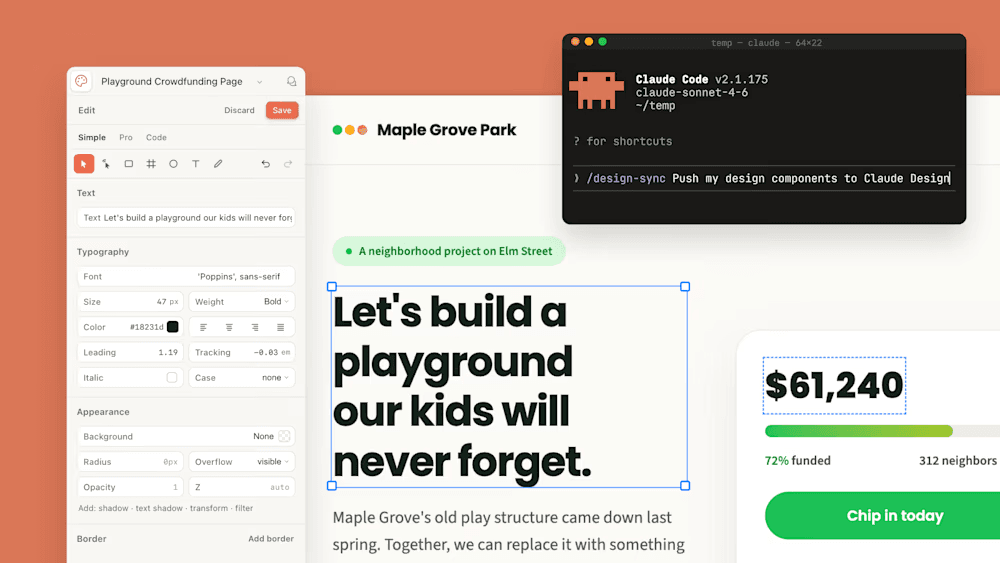
Anthropic overhauled Claude Design on June 17, 2026, adding design-system imports, an on-canvas editor, two-way syncing with Claude Code, and more export options. The update moves the product beyond quick visual experiments and toward a shared workflow for design, engineering, and brand teams.
The timing matters because Claude Design started as a research preview. Anthropic says the first release drew more than one million users in its first week. That figure should be read as a company-reported measure, rather than a description of verified active users or enterprise accounts. A PCWorld reviewer also reported using 80 percent of a weekly Claude Pro allowance in about 25 minutes. That was an individual test, not a promise that every user will see the same result.
Here is what changed, what it means for your team, and what to check before moving sensitive work into the tool.
1. Your brand system can become the starting point
Claude Design can import a design system from design files, raw uploads, or a GitHub repository. In plain terms, a design system is the shared kit of interface parts and rules that keeps a company’s products looking consistent. It can include buttons, typography, colors, spacing, and other reusable components.
Once the system is available, Claude Design can use those components while creating a prototype. Anthropic also says the product checks generated work against the imported system and can correct some mismatches before showing the result. That is useful, but it is not the same as guaranteed compliance. Teams should review the output and confirm what changed before approving an asset.
New enterprise controls let an organization import and lock a canonical design system across projects. Enterprise plans also include features such as single sign-on, role-based permissions, audit logs, customer-managed keys, and administrative APIs for user and role management. These controls give governance teams a clearer way to manage a shared visual standard.
The practical benefit is straightforward. Designers can spend less time rebuilding approved components, while brand teams have a stronger starting point for reviewing work. Before adoption, administrators should confirm repository permissions, supported file types, update behavior, retention terms, and how exceptions are handled.
2. Claude Code can carry a design into implementation
The update connects Claude Design with Claude Code, Anthropic’s coding tool. The /design-sync endpoint can bring a local codebase’s design system into Claude Design. A completed design can then move back to Claude Code for implementation. Developers can also use the /design command from a Claude Code terminal to create, edit, and sync design projects.
Think of this as keeping the recipe and the finished dish connected. A screenshot shows what a page should look like, but it does not preserve the real components behind it. A shared design system gives both tools access to the same building blocks, which can reduce the amount of manual interpretation between a mockup and working software.
This does not remove the need for review. Code can still require accessibility checks, responsive testing, security review, and product decisions that a visual prototype cannot settle. The value is that designers and engineers can start from a more consistent source instead of rebuilding the same intent twice.
For a large organization, that can mean fewer correction cycles and less visual quality assurance after a feature reaches staging. It also lets people with strong product or design knowledge work more directly with implementation without first becoming professional programmers.
3. Token limits are less disruptive, but the cost question remains
Claude Design now shares usage limits with chat, Claude Cowork, and Claude Code instead of drawing from a separate smaller pool. Anthropic also says it has reduced average token use per turn and lowered error rates. Tokens are the pieces of text and code an AI model processes, so fewer tokens generally means more work can fit within a usage allowance.
The new on-canvas editor helps in another way. You can drag, resize, and align individual elements without asking the model to regenerate the entire design for every small adjustment. That can reduce wasted turns caused by minor layout changes or failed generations.
Still, generative design asks the system to reason about layout, typography, color, spacing, responsiveness, and content at the same time. It is a heavier task than answering a short question. The update may give users more room, but it does not prove that design work will fit comfortably within every plan.
Claude Design is available to Pro, Max, Team, and Enterprise subscribers as a research preview or beta feature. If you are considering a rollout, measure usage with a small project first. Compare the number of revisions, the time saved on manual cleanup, and the effect on your team’s shared allowance.
4. Exports make Claude Design a starting point, not the finish line
Claude Design can export to PDF and PowerPoint, including PPTX, and connect with Adobe, Base44, Canva, Gamma, Lovable, Miro, Replit, Vercel, and Wix. The pattern is clear: Claude Design is intended to start an idea, while another tool handles presentation, collaboration, or deployment.
That approach can fit the way teams already work. A designer might use Claude Design to explore a branded concept, send it to Canva for collaboration, or pass a web concept to Vercel or Replit for development. The export list gives teams more ways to continue work without rebuilding the first draft from scratch.
There is a tradeoff. Each handoff creates another place where formatting, components, permissions, or brand rules can diverge. Test the exact path your team needs. Confirm which elements remain editable, whether the receiving tool preserves the imported system, and who owns approval at each stage.
5. Treat the beta as a controlled pilot, especially for sensitive work
Claude Design is still a research preview or beta, even as its controls become more enterprise-focused. Anthropic’s Business Associate Agreement documentation says Claude Design beta is not covered by the company’s BAA. US organizations subject to HIPAA should therefore not use it for protected health information while that status remains in place.
For other enterprise teams, a sensible pilot can stay useful and manageable. Start with a non-sensitive project. Import an approved design system. Test a few common components, sync one small code path, and review the exported files in the tools your team already uses.
Ask four questions before expanding access:
- Does the imported system produce components that your designers and developers recognize?
- Can administrators control access, review changes, and handle exceptions?
- Does the design-to-code round trip reduce rework in your actual codebase?
- Do usage limits remain practical after several rounds of iteration?
If the answers are positive, Claude Design could remove a frustrating part of the creative process: translating a visual idea into approved, working software. The best result is not simply faster generation. It is fewer manual corrections, fewer visual QA loops, and more time for your team to solve the product problem itself.