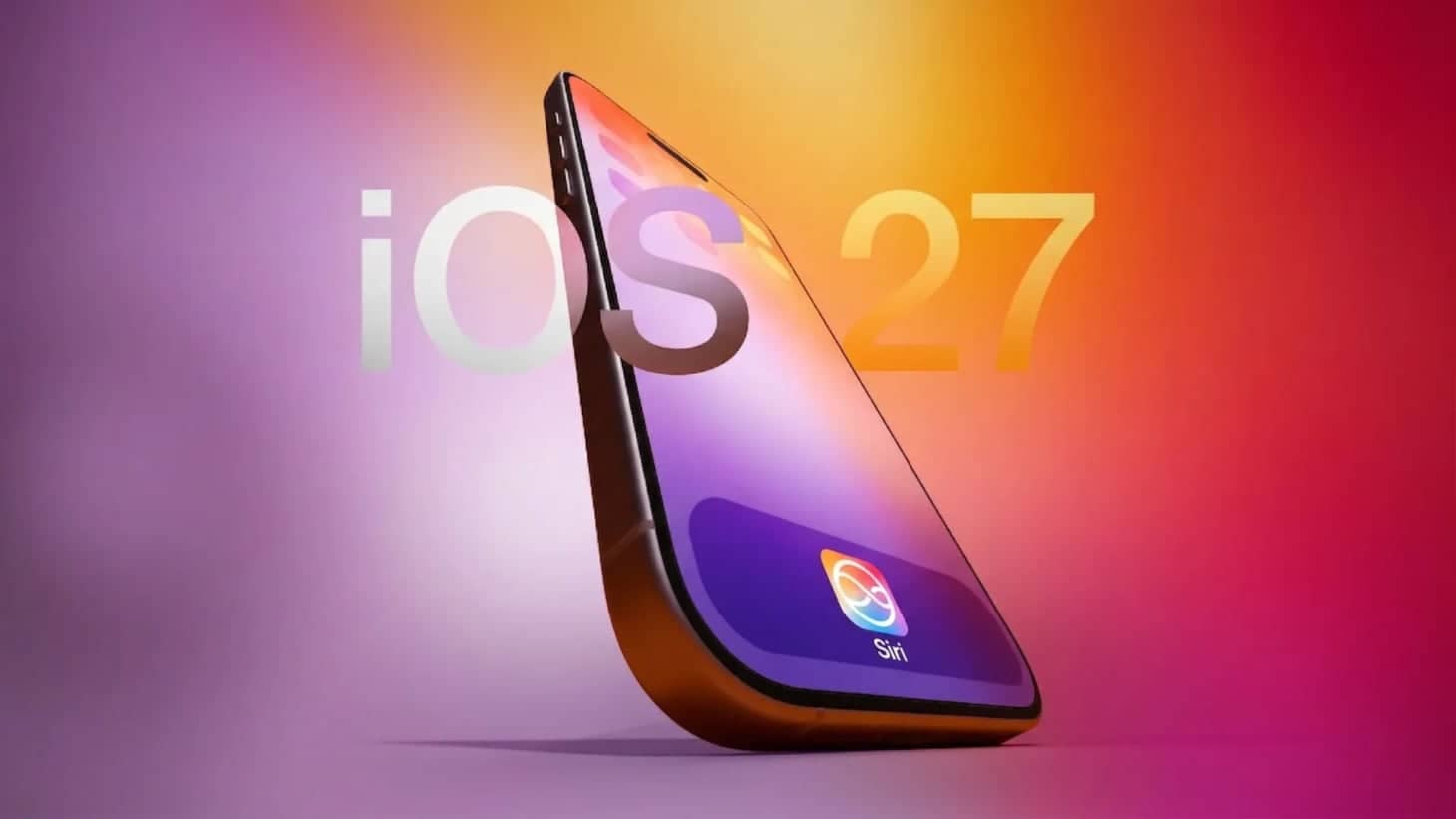
Apple plans to open Siri to third party AI assistants starting with iOS 27, allowing users to connect services like Gemini and Claude through an extensions menu, according to Bloomberg.
The move represents a significant shift for Apple, which has traditionally kept Siri tightly integrated within its own ecosystem. The new approach will give users direct control over which AI services power their voice assistant.
iOS 27 will introduce an AI extensions menu that lets apps downloaded from the App Store integrate directly with Siri. Users will be able to select and disable individual AI services as needed. This means Siri can route requests to various platforms, including Google's Gemini, Anthropic's Claude, and potentially other AI assistants, rather than relying solely on Apple's own models.
The extensions will work with both the Siri app and other Apple Intelligence features, creating a modular system where users control which AI services handle their requests.
Instead of being locked into a single AI assistant, iPhone users will have the flexibility to choose which service best fits their needs. Want one AI for creative tasks and another for research? The extensions menu makes that possible.
This approach marks a departure from Apple's traditional "walled garden" philosophy, where Apple tightly controls which services can integrate with its devices, opening Siri to the broader AI ecosystem while maintaining user control over data sharing and service selection.
According to Bloomberg's earlier reporting, Apple is also developing a standalone chat app for its AI assistant. Additionally, the company plans to merge Siri with Spotlight search, potentially making the assistant more deeply integrated throughout iOS rather than existing as a separate feature.
These changes suggest Apple is rethinking how users interact with AI across their devices, moving from a voice only assistant to a more comprehensive AI interface woven into multiple system functions.
The third party AI extensions are expected to roll out with iOS 27. Apple has indicated that users will maintain control over data sharing permissions for each service, allowing them to balance functionality with privacy preferences.
As the AI landscape continues to evolve rapidly, Apple's decision to open Siri to external services positions the company to leverage innovations across the industry while giving users more choice in how they interact with artificial intelligence on their devices.