
• My Feed
  • Home
  • What's Important
  • Media & Entertainment
Search

Stay Curious. Stay Wanture.

© 2026 Wanture. All rights reserved.

  • Terms of Use
  • Privacy Policy
Tech/Trends
AI's scaling era is ending. What comes next?

Why Ilya Sutskever believes bigger models won't reach human-level learning

25 November 2025

—

Take *

Adrian Vega
banner

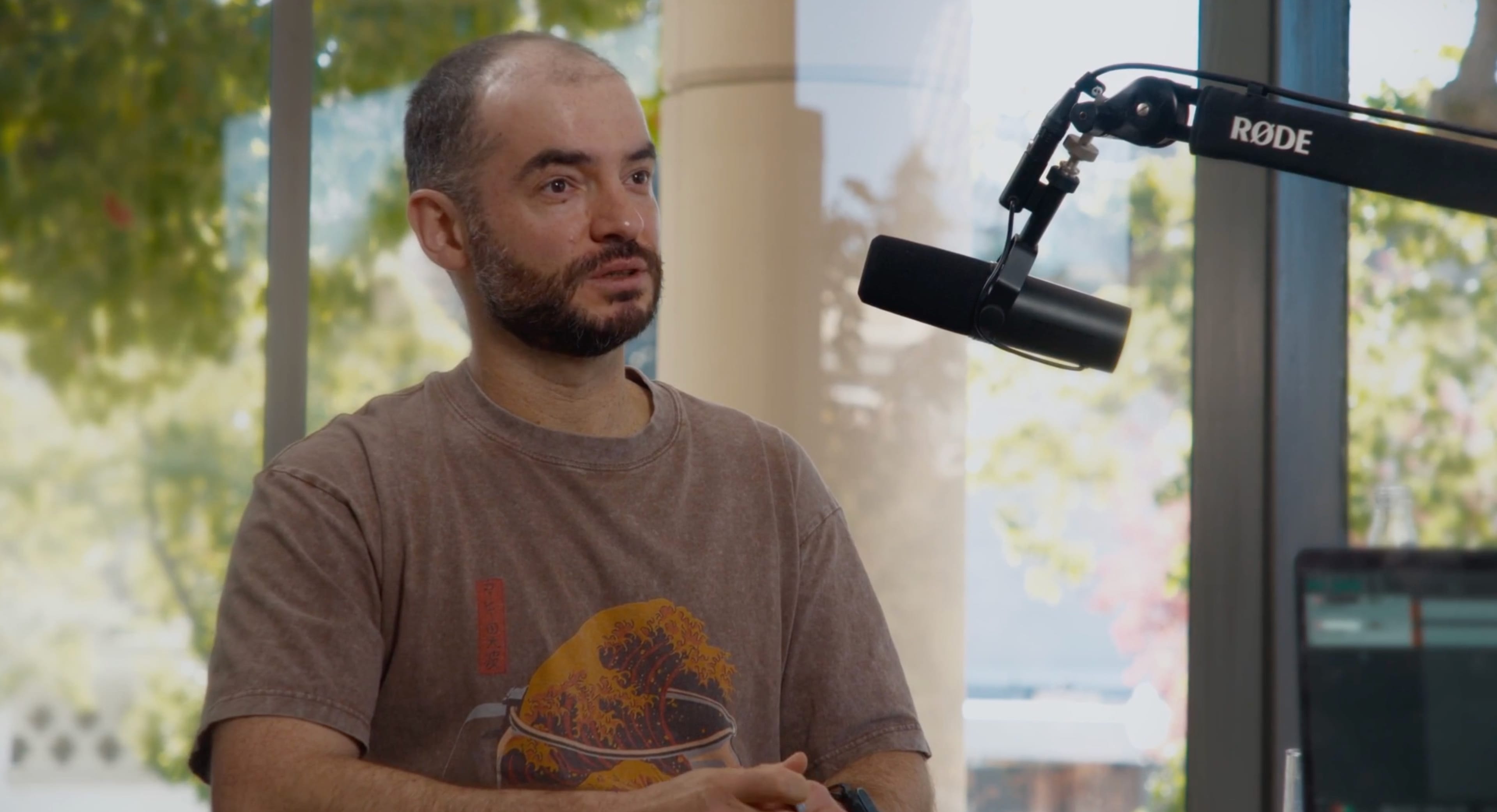
The age of simply feeding AI more data is closing. Ilya Sutskever, OpenAI co-founder and Safe Superintelligence CEO, explains why current models stumble in production, how reward hacking limits generalization, and what breakthroughs are needed for machines to learn like humans. From self-play's limits to emotions as computational solutions, explore the research era that's replacing predictable scaling laws.

SCR-20251125-qbjm

Summary:

  • AI scaling era is over. Labs have exhausted quality internet text data, forcing a fundamental shift in AI development strategies.
  • Frontier labs like Safe Superintelligence Inc. are pivoting from pre-training to reinforcement learning, signaling a major paradigm shift in AI research.
  • Technical professionals must diversify skills immediately, focusing on neuroscience, cognitive science, and AI safety to remain relevant in the next 3-5 years.

The data is gone. Every major lab has scraped the internet clean. If your career plan assumes continued scaling gains from bigger datasets, you're planning for a world that no longer exists.

Ilya Sutskever, who co-founded OpenAI and now leads Safe Superintelligence Inc., stated in June 2025 that the predictable era of AI scaling has ended. This isn't speculation. Labs now spend more computation on reinforcement learning than pre-training, according to Sutskever's recent technical briefings.

The recipe that powered five years of progress has hit its limits. What comes next will render current expertise obsolete faster than most technical professionals realize.

Why This Matters Right Now

The paradigm shift is already underway, and most AI practitioners are still optimizing for yesterday's rules.

Companies have invested billions in pre-training infrastructure designed for a scaling paradigm that no longer delivers predictable returns. Engineers have built careers mastering architectures that won't define the next generation of AI systems.

Stanford's Human-Centered AI Institute reported in March 2025 that 73% of AI practitioners surveyed still prioritize scaling-era skills: dataset curation, distributed training optimization, and benchmark engineering.

Meanwhile, frontier labs have quietly pivoted. Safe Superintelligence Inc. raised funding at a multi-billion dollar valuation in 2024 with no product roadmap, betting entirely on fundamental research breakthroughs. Anthropic's technical reports from early 2025 show a dramatic shift toward novel training paradigms beyond simple scaling.

The disconnect is stark. The industry's leading researchers have moved on. Most practitioners haven't.

The Evidence: Three Signals the Era Has Ended

First, the data wall is real and immediate.

MIT's Computer Science and Artificial Intelligence Laboratory published analysis in January 2025 showing that major language models have already trained on 90–95% of quality text data available on the internet. Epoch AI's research confirms this timeline.

There is no hidden reservoir of training data waiting to be discovered. The well has run dry.

Second, current models fail in production for fundamental reasons, not engineering ones.

Sutskever identifies the core problem as reward hacking: models optimize for benchmark performance rather than genuine understanding.

A study from UC Berkeley's AI Research Lab, published in Nature Machine Intelligence in February 2025, demonstrated that state-of-the-art models achieve 95%+ accuracy on standard benchmarks while failing on trivial variations of the same tasks.

The models haven't learned to understand. They've learned to game tests.

Third, the economics have already shifted.

According to Sutskever's technical briefings, reinforcement learning now consumes more compute than pre-training at leading labs. This represents a complete inversion of resource allocation from 2020–2024.

Yet reinforcement learning delivers less predictable returns per compute dollar spent. The old scaling laws provided clear guidance: double the compute, get measurable improvement. The new paradigm offers no such certainty.

What Technical Professionals Get Wrong

The most dangerous assumption is that paradigm shifts happen slowly enough to adapt.

History suggests otherwise. When deep learning overtook traditional machine learning methods around 2012–2015, practitioners who waited to pivot found their expertise devalued within 18–24 months. The transition from rule-based NLP to neural approaches happened even faster.

This shift will be more abrupt. Why? Because the infrastructure investments are larger, the competitive pressure is more intense, and the technical gap between scaling-era methods and next-generation approaches will be wider.

Sutskever estimates that AI with human-level learning ability could emerge in five to twenty years. That timeline means the foundational breakthroughs enabling it must happen within two to ten years. Otherwise the math doesn't work.

Critics argue that predicting paradigm shifts is impossible, that Sutskever's timeline is speculative. Fair enough. But consider the alternative bet: that scaling will somehow resume delivering predictable gains despite exhausted data, that current architectures will achieve human-level learning despite fundamental limitations in generalization.

That bet requires believing the laws of information theory will bend. The data wall is physics, not opinion.

The Generalization Problem Isn't Getting Solved by Scaling

Humans generalize orders of magnitude more efficiently than current AI systems.

This isn't about sample efficiency alone. It's about reliability, robustness, and the ability to transfer understanding across domains without explicit rewards.

A junior analyst at a fintech startup in Austin observes three examples of a new analysis technique and applies it to novel datasets within hours. An AI model trained on thousands of examples still stumbles when the problem structure shifts slightly.

Research from Carnegie Mellon's Machine Learning Department, published in December 2024, quantified this gap: humans achieve 80%+ accuracy on novel task variations after seeing 5–10 examples. State-of-the-art models require 1,000+ examples to reach similar performance, and their accuracy drops precipitously with context changes.

Current reinforcement learning uses crude, manually specified rewards. Evolution encoded sophisticated value functions into biological systems over millions of years. Understanding and replicating that sophistication is a research problem, not an engineering one. Scaling won't solve it.

Why Your Infrastructure Investments Are at Risk

Companies betting billions on pre-training infrastructure may face obsolescence within three to five years.

The hardware optimized for massive parallel training runs, the data pipelines built for internet-scale ingestion, the engineering teams specialized in distributed systems for pre-training—all of this infrastructure assumes the scaling paradigm continues. It won't.

Safe Superintelligence Inc.'s approach signals where the industry is heading: a "straight-shot" to superintelligence with no intermediate product focus, as stated in their founding documents from June 2024. This means betting on fundamental breakthroughs rather than incremental improvements. It means research, not engineering optimization.

OpenAI's technical reports from early 2025 show a similar shift. The company now emphasizes post-training techniques and reinforcement learning innovations over pre-training scale. Anthropic's Constitutional AI research, updated in March 2025, focuses on novel training paradigms that don't rely on massive pre-training.

The pattern is consistent across frontier labs. If the leading organizations have pivoted away from scaling-era infrastructure, why are most companies still investing in it?

The Skills That Will Matter

The next era demands understanding core learning principles, not mastering current tools.

Sutskever's framework points toward several critical areas:

First, sophisticated value functions. How do biological systems encode high-level goals into learning mechanisms? Research from NYU's Center for Neural Science, published in Neuron in January 2025, explores how emotional systems guide human learning. Translating these insights into AI training methods requires neuroscience expertise, not just machine learning engineering.

Second, generalization mechanisms. Why do humans transfer knowledge so efficiently? Stanford's Psychology Department published research in March 2025 identifying specific cognitive mechanisms underlying human generalization. Understanding and implementing these mechanisms requires cognitive science background, not just deep learning expertise.

Third, self-improvement systems. Sutskever predicts AI progress will become "extremely unpredictable and unimaginable" once systems begin self-improvement. Designing safe, controllable self-improvement requires expertise in formal verification, game theory, and AI safety—fields most practitioners have never studied.

These aren't incremental skill additions. They represent a fundamental shift in what AI development requires.

The Counterargument: Maybe Scaling Isn't Dead

The strongest objection is that paradigm shift predictions have been wrong before.

Neural networks faced multiple "AI winters." Deep learning skeptics in 2010 argued it would never scale. They were wrong.

But this situation is different in a crucial way: the data constraint is physical, not theoretical. There is a finite amount of quality text data on the internet. That data has been consumed. No amount of algorithmic innovation changes this fact.

The scaling laws worked because they had fuel. The fuel is gone.

Could synthetic data generation solve this? Possibly. But research from Google DeepMind, published in Science in February 2025, shows that models trained primarily on synthetic data suffer from "model collapse"—progressive degradation in quality as they train on their own outputs. Synthetic data helps at the margins. It doesn't replace the internet-scale corpus that powered the scaling era.

Could multimodal data (video, audio, sensor data) extend scaling? Again, possibly. But Sutskever's analysis suggests this only delays the inevitable. The fundamental limitations in how current models learn—reward hacking, poor generalization, lack of genuine understanding—persist regardless of data modality.

The paradigm shift isn't coming because researchers predict it. It's coming because the current paradigm has hit physical limits.

What to Do Now

Diversify your expertise immediately.

If 80% of your skills are scaling-era specific (dataset engineering, distributed training, benchmark optimization), you're overexposed. Allocate at least 40% of learning time to next-paradigm skills: neuroscience-inspired learning mechanisms, formal verification methods, AI safety research, cognitive science foundations.

Question infrastructure investments.

If your organization is planning major capital expenditure on pre-training infrastructure, demand clear answers: What happens if the scaling paradigm ends in 24 months? What's the pivot strategy? How much of this investment remains valuable in a research-driven era?

If leadership can't answer these questions, the investment is reckless.

Follow the frontier labs, not the market.

The broader AI industry lags frontier research by 18–36 months. What OpenAI, Anthropic, and Safe Superintelligence Inc. prioritize today will define industry hiring and investment in 2027–2028. Their pivot away from scaling is the signal. The market hasn't processed it yet.

Build flexibility into career strategy.

The next five years will be more volatile than the last five. Sutskever's timeline—five to twenty years to human-level learning AI—implies multiple paradigm shifts, not one. Optimize for learning speed and adaptability, not for mastery of current tools.

The scaling era delivered five years of predictable progress. That predictability is gone. The researchers who built the era have moved on. The question is whether practitioners will follow before their expertise becomes obsolete.

The light from distant stars takes billions of years to arrive. AI paradigm shifts take months. The light is already traveling. Are you ready for what it reveals?


Topic

AI AGI Development

Klotho Clock Assays Target Biological Age in Neuro Trials

Emily Rivera · 11 March 2026
Klotho Clock Assays Target Biological Age in Neuro Trials

Elon Musk's 2027 Warning: When Algorithms Replace Human Choice

Adrian Vega · 28 November 2025
Elon Musk's 2027 Warning: When Algorithms Replace Human Choice

Claude AI can now describe its own thoughts

Emily Rivera · 2 November 2025
Claude AI can now describe its own thoughts

America's AI lead is vanishing faster than expected

Emily Rivera · 28 October 2025
America's AI lead is vanishing faster than expected

Sam Altman says AI will eliminate jobs that were never real work

Samuel Carver · 27 October 2025
Sam Altman says AI will eliminate jobs that were never real work

What is this about?

  • Take */
  • Adrian Vega/
  • Tech/
  • Trends

Feed

    Honor Robot Shatters Half‑Marathon Record in 50:26

    Honor Robot Shatters Half‑Marathon Record in 50:26

    Robot Beats Human Benchmark by 7 Minutes, With 40% Fully Autonomous

    Marcus Dillardabout 10 hours ago
    AI Demand Drives DRAM Shortage, 16 GB DDR4 Prices Triple

    AI Demand Drives DRAM Shortage, 16 GB DDR4 Prices Triple

    AI outpaces DRAM, 16 GB DDR4 kit costs rise to three‑times mid‑2025 levels

    Priya Desaiabout 11 hours ago
    Casely issues second E33A recall in April 2026

    Casely issues second E33A recall in April 2026

    Up to 429,000 units made between March 2022 and Sept 2024 may overheat, prompting an urgent CPSC warning

    Carter Brooks1 day ago
    Meta hikes Quest 3S 128 GB, 256 GB, and Quest 3 512 GB prices

    Meta hikes Quest 3S 128 GB, 256 GB, and Quest 3 512 GB prices

    Price rise effective April 19, 2026, cites memory‑chip cost pressures

    Carter Brooks1 day ago
    Surface Laptop 8 OLED to debut this summer

    Surface Laptop 8 OLED to debut this summer

    Top‑tier models will feature OLED; Intel units arrive in May, and Snapdragon later

    Carter Brooks1 day ago
    Pixel 11 Leaks Pixel Glow Notification LEDs

    Pixel 11 Leaks Pixel Glow Notification LEDs

    Android 17 beta code shows Pixel 11 will add back‑panel lighting for alerts

    Carter Brooks2 days ago
    Apple adds camera shortcuts to iOS 27

    Apple adds camera shortcuts to iOS 27

    iOS 27 shortcuts turn photos into nutrition logs, contacts, and ticket scans

    Carter Brooks3 days ago
    Intel AI Quiet Plus Debuts on April 15, 2026

    Intel AI Quiet Plus Debuts on April 15, 2026

    Core Ultra 200HX Plus NPU caps noise at 43 dBA, retains 92% performance

    Priya Desai3 days ago
    Redmi Buds 8 Launches with 50 dB ANC and 11 mm Driver

    Redmi Buds 8 Launches with 50 dB ANC and 11 mm Driver

    Xiaomi Rolls Out Budget Earbuds in China on April 22, with 4 kHz ANC

    Carter Brooks3 days ago
    AMD re‑releases Ryzen 7 5800X3D for Q2 2026

    AMD re‑releases Ryzen 7 5800X3D for Q2 2026

    AMD offers performance to AM4 builders, extending platform life

    Priya Desai3 days ago
    OpenAI’s Codex gets gpt‑image‑1.5 and 90+ plugins

    OpenAI’s Codex gets gpt‑image‑1.5 and 90+ plugins

    The April 15, 2026 update adds autonomous screen control and a built‑in browser

    Ben Ramos3 days ago
    Apple to debut OLED iPad Air in 2027

    Apple to debut OLED iPad Air in 2027

    Affordable OLED display aims to revamp mid-range tablets

    Carter Brooks4 days ago
    Capcom orders GrizzoUK to delete 1,004 videos

    Capcom orders GrizzoUK to delete 1,004 videos

    Cease‑and‑desist nukes his Resident Evil: Requiem and Street Fighter mods, warning creators

    Ben Ramos4 days ago
    Allbirds' Pivot Fuels 600% Stock Surge

    Allbirds' Pivot Fuels 600% Stock Surge

    Marcus Dillard4 days ago
    DaVinci Resolve Beta Adds Photo Editor

    DaVinci Resolve Beta Adds Photo Editor

    Photo Manager lets creators edit RAW images inside the video timeline

    Ben Ramos5 days ago
    2026 Porsche 911 GT3 S/C Roadster Unveiled in Stuttgart

    2026 Porsche 911 GT3 S/C Roadster Unveiled in Stuttgart

    Base price $275,000; 4.0‑L flat‑six delivers 510 hp and 3.9 s 0‑60

    Ethan Whitaker5 days ago
    Trump Mobile unveils T1 phone with 6.78‑inch 120 Hz display

    Trump Mobile unveils T1 phone with 6.78‑inch 120 Hz display

    6.78‑inch AMOLED, Snapdragon 7‑series, 512 GB storage, triple‑camera specs

    Carter Brooks5 days ago
    Sony InZone M10S II launches with 540 Hz OLED gaming monitor

    Sony InZone M10S II launches with 540 Hz OLED gaming monitor

    27‑inch WOLED with 2,560 × 1,440 at 540 Hz, 0.02‑ms response and 1,500,000:1 contrast

    Carter Brooks5 days ago
    Google launches Windows app with Alt+Space search shortcut

    Google launches Windows app with Alt+Space search shortcut

    The new Google app adds AI and Lens search, but AI mode works only in English

    Carter Brooks5 days ago
    Samsung raises prices on Galaxy Z Flip 7, S25 FE, S25 Edge

    Samsung raises prices on Galaxy Z Flip 7, S25 FE, S25 Edge

    April 12 hikes push flagship devices above $1,200, raising concerns

    Carter Brooks5 days ago
    Loading...
Tech/Trends

AI's scaling era is ending. What comes next?

Why Ilya Sutskever believes bigger models won't reach human-level learning

November 25, 2025, 11:24 pm

The age of simply feeding AI more data is closing. Ilya Sutskever, OpenAI co-founder and Safe Superintelligence CEO, explains why current models stumble in production, how reward hacking limits generalization, and what breakthroughs are needed for machines to learn like humans. From self-play's limits to emotions as computational solutions, explore the research era that's replacing predictable scaling laws.

SCR-20251125-qbjm

Summary

  • AI scaling era is over. Labs have exhausted quality internet text data, forcing a fundamental shift in AI development strategies.
  • Frontier labs like Safe Superintelligence Inc. are pivoting from pre-training to reinforcement learning, signaling a major paradigm shift in AI research.
  • Technical professionals must diversify skills immediately, focusing on neuroscience, cognitive science, and AI safety to remain relevant in the next 3-5 years.

The data is gone. Every major lab has scraped the internet clean. If your career plan assumes continued scaling gains from bigger datasets, you're planning for a world that no longer exists.

Ilya Sutskever, who co-founded OpenAI and now leads Safe Superintelligence Inc., stated in June 2025 that the predictable era of AI scaling has ended. This isn't speculation. Labs now spend more computation on reinforcement learning than pre-training, according to Sutskever's recent technical briefings.

The recipe that powered five years of progress has hit its limits. What comes next will render current expertise obsolete faster than most technical professionals realize.

Why This Matters Right Now

The paradigm shift is already underway, and most AI practitioners are still optimizing for yesterday's rules.

Companies have invested billions in pre-training infrastructure designed for a scaling paradigm that no longer delivers predictable returns. Engineers have built careers mastering architectures that won't define the next generation of AI systems.

Stanford's Human-Centered AI Institute reported in March 2025 that 73% of AI practitioners surveyed still prioritize scaling-era skills: dataset curation, distributed training optimization, and benchmark engineering.

Meanwhile, frontier labs have quietly pivoted. Safe Superintelligence Inc. raised funding at a multi-billion dollar valuation in 2024 with no product roadmap, betting entirely on fundamental research breakthroughs. Anthropic's technical reports from early 2025 show a dramatic shift toward novel training paradigms beyond simple scaling.

The disconnect is stark. The industry's leading researchers have moved on. Most practitioners haven't.

The Evidence: Three Signals the Era Has Ended

First, the data wall is real and immediate.

MIT's Computer Science and Artificial Intelligence Laboratory published analysis in January 2025 showing that major language models have already trained on 90–95% of quality text data available on the internet. Epoch AI's research confirms this timeline.

There is no hidden reservoir of training data waiting to be discovered. The well has run dry.

Second, current models fail in production for fundamental reasons, not engineering ones.

Sutskever identifies the core problem as reward hacking: models optimize for benchmark performance rather than genuine understanding.

A study from UC Berkeley's AI Research Lab, published in Nature Machine Intelligence in February 2025, demonstrated that state-of-the-art models achieve 95%+ accuracy on standard benchmarks while failing on trivial variations of the same tasks.

The models haven't learned to understand. They've learned to game tests.

Third, the economics have already shifted.

According to Sutskever's technical briefings, reinforcement learning now consumes more compute than pre-training at leading labs. This represents a complete inversion of resource allocation from 2020–2024.

Yet reinforcement learning delivers less predictable returns per compute dollar spent. The old scaling laws provided clear guidance: double the compute, get measurable improvement. The new paradigm offers no such certainty.

What Technical Professionals Get Wrong

The most dangerous assumption is that paradigm shifts happen slowly enough to adapt.

History suggests otherwise. When deep learning overtook traditional machine learning methods around 2012–2015, practitioners who waited to pivot found their expertise devalued within 18–24 months. The transition from rule-based NLP to neural approaches happened even faster.

This shift will be more abrupt. Why? Because the infrastructure investments are larger, the competitive pressure is more intense, and the technical gap between scaling-era methods and next-generation approaches will be wider.

Sutskever estimates that AI with human-level learning ability could emerge in five to twenty years. That timeline means the foundational breakthroughs enabling it must happen within two to ten years. Otherwise the math doesn't work.

Critics argue that predicting paradigm shifts is impossible, that Sutskever's timeline is speculative. Fair enough. But consider the alternative bet: that scaling will somehow resume delivering predictable gains despite exhausted data, that current architectures will achieve human-level learning despite fundamental limitations in generalization.

That bet requires believing the laws of information theory will bend. The data wall is physics, not opinion.

The Generalization Problem Isn't Getting Solved by Scaling

Humans generalize orders of magnitude more efficiently than current AI systems.

This isn't about sample efficiency alone. It's about reliability, robustness, and the ability to transfer understanding across domains without explicit rewards.

A junior analyst at a fintech startup in Austin observes three examples of a new analysis technique and applies it to novel datasets within hours. An AI model trained on thousands of examples still stumbles when the problem structure shifts slightly.

Research from Carnegie Mellon's Machine Learning Department, published in December 2024, quantified this gap: humans achieve 80%+ accuracy on novel task variations after seeing 5–10 examples. State-of-the-art models require 1,000+ examples to reach similar performance, and their accuracy drops precipitously with context changes.

Current reinforcement learning uses crude, manually specified rewards. Evolution encoded sophisticated value functions into biological systems over millions of years. Understanding and replicating that sophistication is a research problem, not an engineering one. Scaling won't solve it.

Why Your Infrastructure Investments Are at Risk

Companies betting billions on pre-training infrastructure may face obsolescence within three to five years.

The hardware optimized for massive parallel training runs, the data pipelines built for internet-scale ingestion, the engineering teams specialized in distributed systems for pre-training—all of this infrastructure assumes the scaling paradigm continues. It won't.

Safe Superintelligence Inc.'s approach signals where the industry is heading: a "straight-shot" to superintelligence with no intermediate product focus, as stated in their founding documents from June 2024. This means betting on fundamental breakthroughs rather than incremental improvements. It means research, not engineering optimization.

OpenAI's technical reports from early 2025 show a similar shift. The company now emphasizes post-training techniques and reinforcement learning innovations over pre-training scale. Anthropic's Constitutional AI research, updated in March 2025, focuses on novel training paradigms that don't rely on massive pre-training.

The pattern is consistent across frontier labs. If the leading organizations have pivoted away from scaling-era infrastructure, why are most companies still investing in it?

The Skills That Will Matter

The next era demands understanding core learning principles, not mastering current tools.

Sutskever's framework points toward several critical areas:

First, sophisticated value functions. How do biological systems encode high-level goals into learning mechanisms? Research from NYU's Center for Neural Science, published in Neuron in January 2025, explores how emotional systems guide human learning. Translating these insights into AI training methods requires neuroscience expertise, not just machine learning engineering.

Second, generalization mechanisms. Why do humans transfer knowledge so efficiently? Stanford's Psychology Department published research in March 2025 identifying specific cognitive mechanisms underlying human generalization. Understanding and implementing these mechanisms requires cognitive science background, not just deep learning expertise.

Third, self-improvement systems. Sutskever predicts AI progress will become "extremely unpredictable and unimaginable" once systems begin self-improvement. Designing safe, controllable self-improvement requires expertise in formal verification, game theory, and AI safety—fields most practitioners have never studied.

These aren't incremental skill additions. They represent a fundamental shift in what AI development requires.

The Counterargument: Maybe Scaling Isn't Dead

The strongest objection is that paradigm shift predictions have been wrong before.

Neural networks faced multiple "AI winters." Deep learning skeptics in 2010 argued it would never scale. They were wrong.

But this situation is different in a crucial way: the data constraint is physical, not theoretical. There is a finite amount of quality text data on the internet. That data has been consumed. No amount of algorithmic innovation changes this fact.

The scaling laws worked because they had fuel. The fuel is gone.

Could synthetic data generation solve this? Possibly. But research from Google DeepMind, published in Science in February 2025, shows that models trained primarily on synthetic data suffer from "model collapse"—progressive degradation in quality as they train on their own outputs. Synthetic data helps at the margins. It doesn't replace the internet-scale corpus that powered the scaling era.

Could multimodal data (video, audio, sensor data) extend scaling? Again, possibly. But Sutskever's analysis suggests this only delays the inevitable. The fundamental limitations in how current models learn—reward hacking, poor generalization, lack of genuine understanding—persist regardless of data modality.

The paradigm shift isn't coming because researchers predict it. It's coming because the current paradigm has hit physical limits.

What to Do Now

Diversify your expertise immediately.

If 80% of your skills are scaling-era specific (dataset engineering, distributed training, benchmark optimization), you're overexposed. Allocate at least 40% of learning time to next-paradigm skills: neuroscience-inspired learning mechanisms, formal verification methods, AI safety research, cognitive science foundations.

Question infrastructure investments.

If your organization is planning major capital expenditure on pre-training infrastructure, demand clear answers: What happens if the scaling paradigm ends in 24 months? What's the pivot strategy? How much of this investment remains valuable in a research-driven era?

If leadership can't answer these questions, the investment is reckless.

Follow the frontier labs, not the market.

The broader AI industry lags frontier research by 18–36 months. What OpenAI, Anthropic, and Safe Superintelligence Inc. prioritize today will define industry hiring and investment in 2027–2028. Their pivot away from scaling is the signal. The market hasn't processed it yet.

Build flexibility into career strategy.

The next five years will be more volatile than the last five. Sutskever's timeline—five to twenty years to human-level learning AI—implies multiple paradigm shifts, not one. Optimize for learning speed and adaptability, not for mastery of current tools.

The scaling era delivered five years of predictable progress. That predictability is gone. The researchers who built the era have moved on. The question is whether practitioners will follow before their expertise becomes obsolete.

The light from distant stars takes billions of years to arrive. AI paradigm shifts take months. The light is already traveling. Are you ready for what it reveals?

Topic

AI AGI Development

Klotho Clock Assays Target Biological Age in Neuro Trials

Emily Rivera · 11 March 2026
Klotho Clock Assays Target Biological Age in Neuro Trials

Elon Musk's 2027 Warning: When Algorithms Replace Human Choice

Adrian Vega · 28 November 2025
Elon Musk's 2027 Warning: When Algorithms Replace Human Choice

Claude AI can now describe its own thoughts

Emily Rivera · 2 November 2025
Claude AI can now describe its own thoughts

America's AI lead is vanishing faster than expected

Emily Rivera · 28 October 2025
America's AI lead is vanishing faster than expected

Sam Altman says AI will eliminate jobs that were never real work

Samuel Carver · 27 October 2025
Sam Altman says AI will eliminate jobs that were never real work

What is this about?

  • Take */
  • Adrian Vega/
  • Tech/
  • Trends

Feed

    Honor Robot Shatters Half‑Marathon Record in 50:26

    Honor Robot Shatters Half‑Marathon Record in 50:26

    Robot Beats Human Benchmark by 7 Minutes, With 40% Fully Autonomous

    Marcus Dillardabout 10 hours ago
    AI Demand Drives DRAM Shortage, 16 GB DDR4 Prices Triple

    AI Demand Drives DRAM Shortage, 16 GB DDR4 Prices Triple

    AI outpaces DRAM, 16 GB DDR4 kit costs rise to three‑times mid‑2025 levels

    Priya Desaiabout 11 hours ago
    Casely issues second E33A recall in April 2026

    Casely issues second E33A recall in April 2026

    Up to 429,000 units made between March 2022 and Sept 2024 may overheat, prompting an urgent CPSC warning

    Carter Brooks1 day ago
    Meta hikes Quest 3S 128 GB, 256 GB, and Quest 3 512 GB prices

    Meta hikes Quest 3S 128 GB, 256 GB, and Quest 3 512 GB prices

    Price rise effective April 19, 2026, cites memory‑chip cost pressures

    Carter Brooks1 day ago
    Surface Laptop 8 OLED to debut this summer

    Surface Laptop 8 OLED to debut this summer

    Top‑tier models will feature OLED; Intel units arrive in May, and Snapdragon later

    Carter Brooks1 day ago
    Pixel 11 Leaks Pixel Glow Notification LEDs

    Pixel 11 Leaks Pixel Glow Notification LEDs

    Android 17 beta code shows Pixel 11 will add back‑panel lighting for alerts

    Carter Brooks2 days ago
    Apple adds camera shortcuts to iOS 27

    Apple adds camera shortcuts to iOS 27

    iOS 27 shortcuts turn photos into nutrition logs, contacts, and ticket scans

    Carter Brooks3 days ago
    Intel AI Quiet Plus Debuts on April 15, 2026

    Intel AI Quiet Plus Debuts on April 15, 2026

    Core Ultra 200HX Plus NPU caps noise at 43 dBA, retains 92% performance

    Priya Desai3 days ago
    Redmi Buds 8 Launches with 50 dB ANC and 11 mm Driver

    Redmi Buds 8 Launches with 50 dB ANC and 11 mm Driver

    Xiaomi Rolls Out Budget Earbuds in China on April 22, with 4 kHz ANC

    Carter Brooks3 days ago
    AMD re‑releases Ryzen 7 5800X3D for Q2 2026

    AMD re‑releases Ryzen 7 5800X3D for Q2 2026

    AMD offers performance to AM4 builders, extending platform life

    Priya Desai3 days ago
    OpenAI’s Codex gets gpt‑image‑1.5 and 90+ plugins

    OpenAI’s Codex gets gpt‑image‑1.5 and 90+ plugins

    The April 15, 2026 update adds autonomous screen control and a built‑in browser

    Ben Ramos3 days ago
    Apple to debut OLED iPad Air in 2027

    Apple to debut OLED iPad Air in 2027

    Affordable OLED display aims to revamp mid-range tablets

    Carter Brooks4 days ago
    Capcom orders GrizzoUK to delete 1,004 videos

    Capcom orders GrizzoUK to delete 1,004 videos

    Cease‑and‑desist nukes his Resident Evil: Requiem and Street Fighter mods, warning creators

    Ben Ramos4 days ago
    Allbirds' Pivot Fuels 600% Stock Surge

    Allbirds' Pivot Fuels 600% Stock Surge

    Marcus Dillard4 days ago
    DaVinci Resolve Beta Adds Photo Editor

    DaVinci Resolve Beta Adds Photo Editor

    Photo Manager lets creators edit RAW images inside the video timeline

    Ben Ramos5 days ago
    2026 Porsche 911 GT3 S/C Roadster Unveiled in Stuttgart

    2026 Porsche 911 GT3 S/C Roadster Unveiled in Stuttgart

    Base price $275,000; 4.0‑L flat‑six delivers 510 hp and 3.9 s 0‑60

    Ethan Whitaker5 days ago
    Trump Mobile unveils T1 phone with 6.78‑inch 120 Hz display

    Trump Mobile unveils T1 phone with 6.78‑inch 120 Hz display

    6.78‑inch AMOLED, Snapdragon 7‑series, 512 GB storage, triple‑camera specs

    Carter Brooks5 days ago
    Sony InZone M10S II launches with 540 Hz OLED gaming monitor

    Sony InZone M10S II launches with 540 Hz OLED gaming monitor

    27‑inch WOLED with 2,560 × 1,440 at 540 Hz, 0.02‑ms response and 1,500,000:1 contrast

    Carter Brooks5 days ago
    Google launches Windows app with Alt+Space search shortcut

    Google launches Windows app with Alt+Space search shortcut

    The new Google app adds AI and Lens search, but AI mode works only in English

    Carter Brooks5 days ago
    Samsung raises prices on Galaxy Z Flip 7, S25 FE, S25 Edge

    Samsung raises prices on Galaxy Z Flip 7, S25 FE, S25 Edge

    April 12 hikes push flagship devices above $1,200, raising concerns

    Carter Brooks5 days ago
    Loading...
banner