Wanture.

Decide better.

Live better.

Stay Curious. Stay Wanture.

© 2026 Wanture. All rights reserved.

  • Terms of Use
  • Privacy Policy
Tech/Software
Why AI Invents Facts That Sound True But Aren't

How language models generate confident answers with no basis in reality—and what that means for anyone using them

11 February 2026

—

Explainer

Jasmine Wu
banner

AI hallucination isn't a glitch. It's how these systems work. Language models predict probable text, not verified truth. They invent court cases, fabricate research, and generate medical advice that sounds authoritative but can be dangerously wrong. Understanding why helps you use AI effectively without overtrusting it.

image (4)

Summary:

  • AI hallucination occurs when language models generate authoritative-sounding text with no factual basis—not a malfunction, but how they work: predicting probable words, not verifying truth.
  • Legal cases show real consequences: lawyers sanctioned $5,000–$31,100 for filing briefs with ChatGPT-fabricated citations in cases like Mata v. Avianca and Johnson v. Dunn, spanning 2023–2026.
  • Verification is non-negotiable—AI excels at explanatory scaffolding and drafting, but fails on precision tasks like medical advice, legal research, and recent events where data is sparse or stakes are high.

A doctor asks an AI chatbot about treatment options for a patient with a rare autoimmune disorder. The system responds within seconds. The protocol looks detailed. The drug names sound familiar. The dosages appear precise. Then a medical database search reveals the problem. Two of the three medications don't exist. The third treats a different condition entirely.

This is AI hallucination. It is not a malfunction. It is how the system works.

AI hallucination occurs when a language model generates text that sounds authoritative but has no basis in reality. The model doesn't retrieve facts from a database. It predicts the next word based on patterns in its training data. When it lacks information, encounters ambiguity, or faces a question outside its learned scope, it fills the gap with the most plausible response. Not the true one. The probable one.

A chatbot can invent court cases that never existed, cite research papers no one published, or generate biographical details about people it never encountered. The output fits the expected pattern. It just doesn't fit the facts.

Why Language Models Generate False Information

Hallucinations emerge from the fundamental architecture of large language models. These systems learn by analyzing billions of text examples, identifying statistical patterns in how words and phrases appear together. They don't understand meaning. They calculate probability.

Four structural factors drive hallucination:

Insufficient training data creates gaps. When the model hasn't seen enough examples of a specific topic, it extrapolates from related patterns. A question about an obscure 18th-century philosopher might trigger a response blending fragments from better-known figures, producing a confident but fictional biography.

Overgeneralization from sparse signals distorts connections. Models detect correlations across massive datasets. Sometimes they identify patterns where none exist. Two unrelated medical symptoms that appeared together a few times in training documents might lead the system to conclude they always co-occur.

Complex or hyper-specific queries expose limitations. The narrower the question, the thinner the data. Ask about a niche subfield of quantum chemistry or a legal precedent from a small jurisdiction, and the model may construct an answer from loosely related material, blending real concepts with fabricated details.

Optimization for coherence over accuracy rewards confidence. These systems are trained to generate fluent, contextually appropriate text. They are not trained to say "I don't know." The architecture rewards completeness, which means the model will produce an answer even when uncertainty would be more honest.

The Architecture Behind AI Errors

Probabilistic prediction is not a bug you can patch. It is the operating principle. Large language models work like advanced autocomplete systems. They don't verify facts. They don't cross-reference a knowledge base. They don't have an internal mechanism that flags fabricated content.

Think of it this way: if you asked someone to write an essay on a topic they'd never studied, but they'd read thousands of essays on adjacent subjects, they'd mimic structure, tone, and terminology convincingly. They might even sound authoritative. But accuracy? That's not part of the task.

AI works the same way. It assembles text that fits the expected form. It doesn't audit truth. The system generates what comes next based on what usually comes next. When training data is strong and the query stays within well-documented territory, that process produces reliable results. When data is weak or the question ventures into unfamiliar ground, the same process produces hallucinations.

This is why improving AI accuracy is not a simple matter of better programming. The entire architecture depends on pattern recognition, not fact verification. You can reduce hallucination frequency through better training data, refined prompting techniques, and architectural modifications. You cannot eliminate it without fundamentally changing how these systems operate.

High-Risk Scenarios for AI Hallucination

Certain contexts concentrate hallucination risk because precision matters and consequences are real.

Medical and health information carries immediate danger. A hallucinated diagnosis or treatment recommendation can cause harm. Models trained on general medical literature may confidently generate advice about rare conditions they've barely encountered, blending symptoms from different diseases or inventing drug interactions. A patient who trusts that output without verification faces measurable risk.

Legal research has produced documented failures. In Mata v. Avianca, Inc., two New York lawyers were sanctioned $5,000 each on June 22, 2023, after filing a brief citing six judicial opinions invented by ChatGPT. The model knew what a legal reference should look like. It didn't know which ones were real. In Johnson v. Dunn, Butler Snow attorneys filed two motions in July 2025 with ChatGPT-fabricated citations, resulting in public reprimand, disqualification from the case, and referral to the Alabama State Bar. On May 28, 2025, attorney Rafael Ramirez was sanctioned $6,000 personally in Mid Central Operating Engineers Health Welfare Fund v. HoosierVac LLC after admitting to using generative AI to draft briefs containing fabricated citations. In Lacey v. State Farm General Ins. Co., a Special Master awarded approximately $31,100 in fees and costs to defendants on May 5, 2025, after plaintiff's submissions contained numerous AI-fabricated citations that persisted even after correction attempts.

Multiple tracking systems now document dozens to hundreds of cases involving AI hallucination incidents in legal filings across federal districts from 2023 through 2026. Courts are imposing remedies ranging from warnings and continuing legal education requirements to monetary sanctions in the $2,000 to $15,000 range, disqualification from cases, and state bar referrals.

Breaking news and recent events expose knowledge cutoff limitations. Most models have training cutoff dates. Ask about something that happened last month, and the system may generate plausible-sounding updates based on older patterns, creating a fictional narrative that matches the tone of real news but reports events that never occurred.

Specific numbers, dates, and technical specifications reveal precision failures. A model might correctly explain a concept but invent the year a study was published, fabricate the percentage cited in a report, or generate a product model number that sounds right but doesn't exist.

When AI Delivers Reliable Results

Understanding where AI excels helps you use it effectively without overextending trust.

Explanatory scaffolding works well. AI excels at breaking down complex concepts into accessible language. It can reframe technical jargon, generate analogies, and structure explanations in ways that clarify without requiring factual precision at every step. The value is in the framework, not the details.

Drafting and iteration accelerate creative work. Using AI to generate first drafts, outline ideas, or explore phrasing options works because you treat the output as raw material, not final copy. The value is in speed and variety, not verification.

Pattern recognition in familiar domains improves accuracy. When the model has deep training data and the query stays within well-documented territory, hallucination risk drops. Asking for a summary of established historical events or widely known scientific principles carries lower risk than niche or emerging topics. The difference is data density. More examples in training mean more accurate predictions.

How to Verify AI Responses and Reduce Errors

Verification is not optional when accuracy matters. Several practical strategies reduce hallucination risk without eliminating AI's utility.

Request source citations and verify them independently. Asking the model to cite references doesn't guarantee accuracy, but it gives you a trail to check. Cross-reference every claim that matters. If a citation doesn't lead to a real document, the content is suspect.

Formulate queries with precision. Vague or broad questions invite extrapolation. Narrow prompts with clear parameters reduce the space for fabrication. Instead of "tell me about recent AI research," try "summarize findings from the 2025 NeurIPS conference on transformer efficiency." Specificity constrains the model's range of plausible responses.

Compare outputs across multiple sources. Run the same query through different models or cross-check AI-generated content with authoritative databases, expert sources, or peer-reviewed publications. Consistency across independent sources increases confidence. Divergence signals potential hallucination.

Use AI as a research assistant, not a final authority. Treat generated content as a starting point. The model can surface concepts, suggest directions, and accelerate exploration. It cannot replace verification. In high-stakes contexts like medicine, law, or finance, human review is non-negotiable.

What's Being Built to Address This

Developers are working on several approaches to reduce hallucination frequency, though none eliminate the fundamental issue.

Retrieval-augmented generation connects models to external knowledge bases. Instead of relying solely on training data, the system retrieves relevant documents in real time and grounds its responses in verified sources. This doesn't eliminate hallucinations, but it reduces them by anchoring generation to factual material.

Confidence scoring and uncertainty quantification expose internal doubt. Some newer architectures flag when the model is extrapolating versus drawing on strong data. This lets users see where the system is guessing, though deployment remains limited.

Chain-of-thought prompting and constitutional AI introduce verification layers. Techniques that force the model to reason step-by-step or follow explicit ethical guidelines can improve output quality by slowing down generation. These methods are evolving but show promise in reducing fabrication rates.

The Fundamental Limitation

AI generates probable text, not verified truth. That distinction shapes every responsible use case.

You can trust these systems when you understand what they optimize for: fluency, coherence, and pattern completion. You cannot trust them to fact-check themselves, recognize the boundaries of their knowledge, or prioritize accuracy over plausibility.

The hallucination problem isn't going away because it's not a problem to fix. It's the cost of how these models work. What changes is how we design around it. Building verification systems. Setting user expectations. Deploying AI where its strengths matter and its weaknesses can be managed.

Use it as a tool. Verify what it produces. And never mistake confidence for correctness.
What is this about?

  • Explainer/
  • Jasmine Wu/
  • Tech/
  • Software

Feed

    article

    James Whitmoreabout 10 hours ago

    Google Workspace Icon Redesign: From Flat Color Blocks to Gradient‑Rich, Rounded Designs

    Google replaced its 2020 four‑color Workspace icons with gradient‑rich, rounded versions. The redesign cut misclicks, eased app recognition, and underscored the importance of usability over strict brand uniformity.

    Renée Itoabout 11 hours ago

    Apple to unveil iOS 27 with standalone Siri app at WWDC on June 8

    Update brings satellite connectivity, ChatGPT-style interface, and developer extensions

    Carter Brooksabout 17 hours ago

    iPhone 18 Pro to Launch iOS 27 Camera with f/1.5‑f/2.8 Aperture

    iOS 27 adds a “Siri” visual‑AI mode as Apple readies iPhone 18 Pro for fall

    Carter Brooks4 days ago

    Therapist vs Counselor: Which Fits Your Needs?

    Licenses, Training Hours, and Treatment Options Compared (2024‑2025 Data)

    Caleb Brooks4 days ago

    Ask YouTube Launches March 15, 2026 for Premium Users

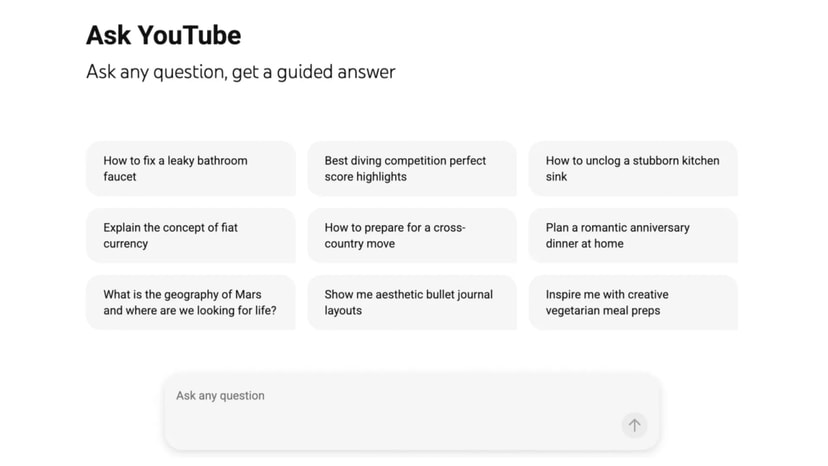
    On March 15, 2026, YouTube introduced Ask YouTube, an AI‑driven chat that lets U.S. Premium subscribers ask questions and receive synthesized video‑based answers. The tool promises a conversational search experience, yet early tests revealed factual slips, such as a wrong claim about the Steam controller’s joysticks, highlighting the need for users to verify information before acting.

    Ask YouTube Launches March 15, 2026 for Premium Users
    Carter Brooks6 days ago

    Samsung unveils Galaxy Z Fold 8 Wide with magnets

    Leaked images released by insider Sonny Dixon reveal Samsung’s upcoming Galaxy Z Fold 8 lineup, including a new Z Fold 8 Wide with integrated chassis magnets and a simplified two-camera rear array. The wide model aims to lower costs while keeping tablet-size screens, targeting buyers priced out of premium foldables ahead of an August 2026 launch.

    Samsung unveils Galaxy Z Fold 8 Wide with magnets
    Carter Brooks6 days ago

    Samsung launches Jinju smart glasses in 2026

    Samsung’s first smart glasses, code‑named Jinju, debut in 2026 as a voice‑assistant and photo‑capture device. They use a Qualcomm Snapdragon AR1 chip, Sony IMX681 12MP camera, 155 mAh battery, and bone‑conduction speakers, with no display. The battery lasts a few hours; sustained tasks may throttle. Samsung will unveil Jinju in 2026, targeting the Russian market where Meta glasses are unavailable.

    Samsung launches Jinju smart glasses in 2026
    Priya Desai6 days ago

    Sony Adds 30‑Day Online Checks for PlayStation 4 & PS5

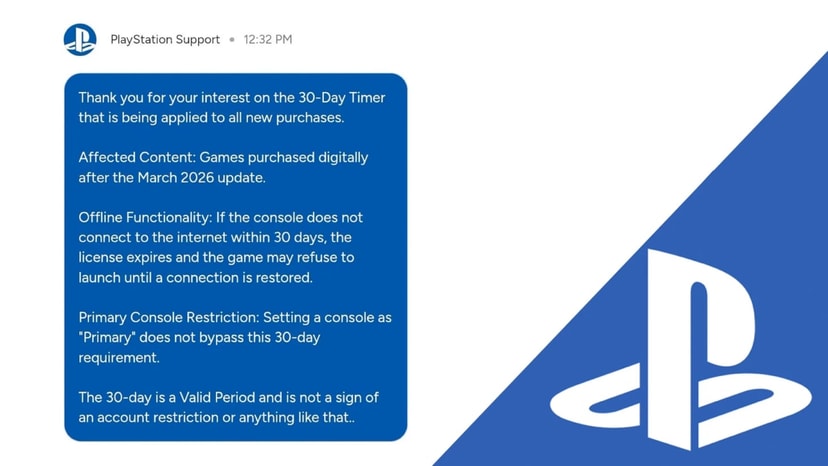
    Starting April 2026, Sony’s PlayStation 4 and PS5 will require each digital title purchased after March 2026 to verify its license with Sony’s servers at least once every 30 days. Missing the online ping renders the game unplayable until the console reconnects, while disc copies and pre‑March downloads remain unaffected. Users should plan a monthly check to keep libraries active.

    Sony Adds 30‑Day Online Checks for PlayStation 4 & PS5
    Carter Brooks6 days ago

    Boost Your Healthspan: 1‑MET Gains Cut Mortality by 11–17%

    Why a 5–7 MET boost (16–25 ml·kg⁻¹·min⁻¹) narrows smoker‑level death risk

    Sarah Lindgren6 days ago
    Loading...
Tech/Software

Why AI Invents Facts That Sound True But Aren't

How language models generate confident answers with no basis in reality—and what that means for anyone using them

February 11, 2026, 1:30 pm

AI hallucination isn't a glitch. It's how these systems work. Language models predict probable text, not verified truth. They invent court cases, fabricate research, and generate medical advice that sounds authoritative but can be dangerously wrong. Understanding why helps you use AI effectively without overtrusting it.

image (4)

Summary

  • AI hallucination occurs when language models generate authoritative-sounding text with no factual basis—not a malfunction, but how they work: predicting probable words, not verifying truth.
  • Legal cases show real consequences: lawyers sanctioned $5,000–$31,100 for filing briefs with ChatGPT-fabricated citations in cases like Mata v. Avianca and Johnson v. Dunn, spanning 2023–2026.
  • Verification is non-negotiable—AI excels at explanatory scaffolding and drafting, but fails on precision tasks like medical advice, legal research, and recent events where data is sparse or stakes are high.

A doctor asks an AI chatbot about treatment options for a patient with a rare autoimmune disorder. The system responds within seconds. The protocol looks detailed. The drug names sound familiar. The dosages appear precise. Then a medical database search reveals the problem. Two of the three medications don't exist. The third treats a different condition entirely.

This is AI hallucination. It is not a malfunction. It is how the system works.

AI hallucination occurs when a language model generates text that sounds authoritative but has no basis in reality. The model doesn't retrieve facts from a database. It predicts the next word based on patterns in its training data. When it lacks information, encounters ambiguity, or faces a question outside its learned scope, it fills the gap with the most plausible response. Not the true one. The probable one.

A chatbot can invent court cases that never existed, cite research papers no one published, or generate biographical details about people it never encountered. The output fits the expected pattern. It just doesn't fit the facts.

Why Language Models Generate False Information

Hallucinations emerge from the fundamental architecture of large language models. These systems learn by analyzing billions of text examples, identifying statistical patterns in how words and phrases appear together. They don't understand meaning. They calculate probability.

Four structural factors drive hallucination:

Insufficient training data creates gaps. When the model hasn't seen enough examples of a specific topic, it extrapolates from related patterns. A question about an obscure 18th-century philosopher might trigger a response blending fragments from better-known figures, producing a confident but fictional biography.

Overgeneralization from sparse signals distorts connections. Models detect correlations across massive datasets. Sometimes they identify patterns where none exist. Two unrelated medical symptoms that appeared together a few times in training documents might lead the system to conclude they always co-occur.

Complex or hyper-specific queries expose limitations. The narrower the question, the thinner the data. Ask about a niche subfield of quantum chemistry or a legal precedent from a small jurisdiction, and the model may construct an answer from loosely related material, blending real concepts with fabricated details.

Optimization for coherence over accuracy rewards confidence. These systems are trained to generate fluent, contextually appropriate text. They are not trained to say "I don't know." The architecture rewards completeness, which means the model will produce an answer even when uncertainty would be more honest.

The Architecture Behind AI Errors

Probabilistic prediction is not a bug you can patch. It is the operating principle. Large language models work like advanced autocomplete systems. They don't verify facts. They don't cross-reference a knowledge base. They don't have an internal mechanism that flags fabricated content.

Think of it this way: if you asked someone to write an essay on a topic they'd never studied, but they'd read thousands of essays on adjacent subjects, they'd mimic structure, tone, and terminology convincingly. They might even sound authoritative. But accuracy? That's not part of the task.

AI works the same way. It assembles text that fits the expected form. It doesn't audit truth. The system generates what comes next based on what usually comes next. When training data is strong and the query stays within well-documented territory, that process produces reliable results. When data is weak or the question ventures into unfamiliar ground, the same process produces hallucinations.

This is why improving AI accuracy is not a simple matter of better programming. The entire architecture depends on pattern recognition, not fact verification. You can reduce hallucination frequency through better training data, refined prompting techniques, and architectural modifications. You cannot eliminate it without fundamentally changing how these systems operate.

High-Risk Scenarios for AI Hallucination

Certain contexts concentrate hallucination risk because precision matters and consequences are real.

Medical and health information carries immediate danger. A hallucinated diagnosis or treatment recommendation can cause harm. Models trained on general medical literature may confidently generate advice about rare conditions they've barely encountered, blending symptoms from different diseases or inventing drug interactions. A patient who trusts that output without verification faces measurable risk.

Legal research has produced documented failures. In Mata v. Avianca, Inc., two New York lawyers were sanctioned $5,000 each on June 22, 2023, after filing a brief citing six judicial opinions invented by ChatGPT. The model knew what a legal reference should look like. It didn't know which ones were real. In Johnson v. Dunn, Butler Snow attorneys filed two motions in July 2025 with ChatGPT-fabricated citations, resulting in public reprimand, disqualification from the case, and referral to the Alabama State Bar. On May 28, 2025, attorney Rafael Ramirez was sanctioned $6,000 personally in Mid Central Operating Engineers Health Welfare Fund v. HoosierVac LLC after admitting to using generative AI to draft briefs containing fabricated citations. In Lacey v. State Farm General Ins. Co., a Special Master awarded approximately $31,100 in fees and costs to defendants on May 5, 2025, after plaintiff's submissions contained numerous AI-fabricated citations that persisted even after correction attempts.

Multiple tracking systems now document dozens to hundreds of cases involving AI hallucination incidents in legal filings across federal districts from 2023 through 2026. Courts are imposing remedies ranging from warnings and continuing legal education requirements to monetary sanctions in the $2,000 to $15,000 range, disqualification from cases, and state bar referrals.

Breaking news and recent events expose knowledge cutoff limitations. Most models have training cutoff dates. Ask about something that happened last month, and the system may generate plausible-sounding updates based on older patterns, creating a fictional narrative that matches the tone of real news but reports events that never occurred.

Specific numbers, dates, and technical specifications reveal precision failures. A model might correctly explain a concept but invent the year a study was published, fabricate the percentage cited in a report, or generate a product model number that sounds right but doesn't exist.

When AI Delivers Reliable Results

Understanding where AI excels helps you use it effectively without overextending trust.

Explanatory scaffolding works well. AI excels at breaking down complex concepts into accessible language. It can reframe technical jargon, generate analogies, and structure explanations in ways that clarify without requiring factual precision at every step. The value is in the framework, not the details.

Drafting and iteration accelerate creative work. Using AI to generate first drafts, outline ideas, or explore phrasing options works because you treat the output as raw material, not final copy. The value is in speed and variety, not verification.

Pattern recognition in familiar domains improves accuracy. When the model has deep training data and the query stays within well-documented territory, hallucination risk drops. Asking for a summary of established historical events or widely known scientific principles carries lower risk than niche or emerging topics. The difference is data density. More examples in training mean more accurate predictions.

How to Verify AI Responses and Reduce Errors

Verification is not optional when accuracy matters. Several practical strategies reduce hallucination risk without eliminating AI's utility.

Request source citations and verify them independently. Asking the model to cite references doesn't guarantee accuracy, but it gives you a trail to check. Cross-reference every claim that matters. If a citation doesn't lead to a real document, the content is suspect.

Formulate queries with precision. Vague or broad questions invite extrapolation. Narrow prompts with clear parameters reduce the space for fabrication. Instead of "tell me about recent AI research," try "summarize findings from the 2025 NeurIPS conference on transformer efficiency." Specificity constrains the model's range of plausible responses.

Compare outputs across multiple sources. Run the same query through different models or cross-check AI-generated content with authoritative databases, expert sources, or peer-reviewed publications. Consistency across independent sources increases confidence. Divergence signals potential hallucination.

Use AI as a research assistant, not a final authority. Treat generated content as a starting point. The model can surface concepts, suggest directions, and accelerate exploration. It cannot replace verification. In high-stakes contexts like medicine, law, or finance, human review is non-negotiable.

What's Being Built to Address This

Developers are working on several approaches to reduce hallucination frequency, though none eliminate the fundamental issue.

Retrieval-augmented generation connects models to external knowledge bases. Instead of relying solely on training data, the system retrieves relevant documents in real time and grounds its responses in verified sources. This doesn't eliminate hallucinations, but it reduces them by anchoring generation to factual material.

Confidence scoring and uncertainty quantification expose internal doubt. Some newer architectures flag when the model is extrapolating versus drawing on strong data. This lets users see where the system is guessing, though deployment remains limited.

Chain-of-thought prompting and constitutional AI introduce verification layers. Techniques that force the model to reason step-by-step or follow explicit ethical guidelines can improve output quality by slowing down generation. These methods are evolving but show promise in reducing fabrication rates.

The Fundamental Limitation

AI generates probable text, not verified truth. That distinction shapes every responsible use case.

You can trust these systems when you understand what they optimize for: fluency, coherence, and pattern completion. You cannot trust them to fact-check themselves, recognize the boundaries of their knowledge, or prioritize accuracy over plausibility.

The hallucination problem isn't going away because it's not a problem to fix. It's the cost of how these models work. What changes is how we design around it. Building verification systems. Setting user expectations. Deploying AI where its strengths matter and its weaknesses can be managed.

Use it as a tool. Verify what it produces. And never mistake confidence for correctness.

What is this about?

  • Explainer/
  • Jasmine Wu/
  • Tech/
  • Software

Feed

    article

    James Whitmoreabout 10 hours ago

    Google Workspace Icon Redesign: From Flat Color Blocks to Gradient‑Rich, Rounded Designs

    Google replaced its 2020 four‑color Workspace icons with gradient‑rich, rounded versions. The redesign cut misclicks, eased app recognition, and underscored the importance of usability over strict brand uniformity.

    Renée Itoabout 11 hours ago

    Apple to unveil iOS 27 with standalone Siri app at WWDC on June 8

    Update brings satellite connectivity, ChatGPT-style interface, and developer extensions

    Carter Brooksabout 17 hours ago

    iPhone 18 Pro to Launch iOS 27 Camera with f/1.5‑f/2.8 Aperture

    iOS 27 adds a “Siri” visual‑AI mode as Apple readies iPhone 18 Pro for fall

    Carter Brooks4 days ago

    Therapist vs Counselor: Which Fits Your Needs?

    Licenses, Training Hours, and Treatment Options Compared (2024‑2025 Data)

    Caleb Brooks4 days ago

    Ask YouTube Launches March 15, 2026 for Premium Users

    On March 15, 2026, YouTube introduced Ask YouTube, an AI‑driven chat that lets U.S. Premium subscribers ask questions and receive synthesized video‑based answers. The tool promises a conversational search experience, yet early tests revealed factual slips, such as a wrong claim about the Steam controller’s joysticks, highlighting the need for users to verify information before acting.

    Ask YouTube Launches March 15, 2026 for Premium Users
    Carter Brooks6 days ago

    Samsung unveils Galaxy Z Fold 8 Wide with magnets

    Leaked images released by insider Sonny Dixon reveal Samsung’s upcoming Galaxy Z Fold 8 lineup, including a new Z Fold 8 Wide with integrated chassis magnets and a simplified two-camera rear array. The wide model aims to lower costs while keeping tablet-size screens, targeting buyers priced out of premium foldables ahead of an August 2026 launch.

    Samsung unveils Galaxy Z Fold 8 Wide with magnets
    Carter Brooks6 days ago

    Samsung launches Jinju smart glasses in 2026

    Samsung’s first smart glasses, code‑named Jinju, debut in 2026 as a voice‑assistant and photo‑capture device. They use a Qualcomm Snapdragon AR1 chip, Sony IMX681 12MP camera, 155 mAh battery, and bone‑conduction speakers, with no display. The battery lasts a few hours; sustained tasks may throttle. Samsung will unveil Jinju in 2026, targeting the Russian market where Meta glasses are unavailable.

    Samsung launches Jinju smart glasses in 2026
    Priya Desai6 days ago

    Sony Adds 30‑Day Online Checks for PlayStation 4 & PS5

    Starting April 2026, Sony’s PlayStation 4 and PS5 will require each digital title purchased after March 2026 to verify its license with Sony’s servers at least once every 30 days. Missing the online ping renders the game unplayable until the console reconnects, while disc copies and pre‑March downloads remain unaffected. Users should plan a monthly check to keep libraries active.

    Sony Adds 30‑Day Online Checks for PlayStation 4 & PS5
    Carter Brooks6 days ago

    Boost Your Healthspan: 1‑MET Gains Cut Mortality by 11–17%

    Why a 5–7 MET boost (16–25 ml·kg⁻¹·min⁻¹) narrows smoker‑level death risk

    Sarah Lindgren6 days ago
    Loading...
banner