• My Feed
  • Home
  • What's Important
  • Media & Entertainment
Search

Stay Curious. Stay Wanture.

© 2026 Wanture. All rights reserved.

  • Terms of Use
  • Privacy Policy
Tech/Software

AI Assistants Are Redefining U.S. Offices: Act Now

AI assistants boost productivity, expose privacy gaps, and guide U.S. firms

26 February 2026

—

Take *

Rachel Stein
banner

Enterprise AI assistants are moving from pilots to core office tools, automating scheduling, finance, and communication for U.S. knowledge workers. They promise faster workflows but also raise privacy exposure and skill erosion. The article cites deployments in Seattle and Boston, outlines regulatory worries, and provides a checklist for firms to adopt these agents responsibly.

image (48)

Are AI Assistants Stealing Your Skills—Right Under Your Nose?

AI personal assistants promise productivity but deliver dependency. They automate thinking, not just tasks. By the end of this year, millions of American workers will lose core competencies to algorithms they never questioned. The convenience is real. The time savings are measurable. The cost is your professional capability.

By December 2026, 40 percent of enterprise applications will embed task-specific AI agents, up from less than 5 percent in 2025, according to Gartner's January enterprise software forecast and corroborated by IDC's workplace automation report. The surge turns personal AI assistants from experimental tools into core office infrastructure. These assistants act as digital chiefs of staff, handling scheduling, finance, and communication tasks for knowledge workers. Their rapid adoption reshapes productivity, privacy, and skill development across U.S. businesses right now.

The Productivity Trap Is Already Set

AI assistants parse meeting transcripts, flag budget anomalies, and draft routine emails. They pull data from Slack, Gmail, Salesforce, and QuickBooks without manual configuration. The technology combines large language models with workflow automation to predict next steps based on user patterns.

Workers issue a command. The assistant extracts relevant calendar entries, proposes three reschedule options, and confirms the chosen slot in seconds. The result is an immediate reduction in manual coordination time.

In a 2025 Gartner survey, 38 percent of U.S. firms with more than 500 employees piloted AI assistant platforms. Adoption will reach 60 percent by year-end 2026, according to both Forrester Research and McKinsey's Future of Work Institute.

Convoy in Seattle uses AI assistants to triage support tickets and generate status reports, as detailed in a TechCrunch profile last October. Product managers report a six-hour weekly time gain per employee. HubSpot in Boston integrated similar tools into its customer success team, allowing reps to focus on strategy while the assistant handles invoice follow-ups and renewal reminders, according to the company's February engineering blog. Salesforce piloted comparable systems across its sales development teams in San Francisco, cutting email response time by 40 percent, reported in The Information.

All three deployments required only days of configuration, replacing months of custom integration and lowering entry barriers for mid-size firms. But the speed of adoption masks a deeper transformation. Workers stop practicing the skills the AI now performs.

Your Data Belongs to Everyone But You

Every delegated task uploads calendar entries, email drafts, and expense data to cloud services. Vendors often process that information through third-party models hosted by OpenAI, Anthropic, or Google. In early 2025, a misconfigured cloud bucket exposed anonymized metadata from 12,000 corporate users at a mid-sized SaaS provider, revealing meeting attendees and email subjects, according to a Wired investigation published in March 2025 and confirmed by the Electronic Frontier Foundation.

The Federal Trade Commission opened three investigations into AI assistant data practices in 2025, according to agency filings reviewed by ProPublica. None resulted in public enforcement action. Privacy policies remain opaque. Users grant blanket permissions during signup, rarely revisiting terms as vendors update data-handling practices.

Stanford's Center for Internet and Society found that 68 percent of surveyed AI assistant users could not accurately describe where their data was stored or who could access it, according to research published in December 2025. The gap between convenience and comprehension widens every quarter.

The Skills You're Losing Right Now

Convenience breeds dependency, and dependency erodes skill. When an assistant auto-schedules every meeting, users stop negotiating time tradeoffs. They lose the ability to prioritize competing demands in real time.

A Stanford Human-Centered AI study (The research cited represents limited studies and findings may not generalize to all contexts or populations. Skill development outcomes vary by individual, implementation, and organizational factors.) published in November 2025 found a 19 percent decline in manual calendar optimization speed after six months of AI scheduling use, especially among workers under 35. Researchers measured task completion time for manual rescheduling scenarios before and after adoption. Participants who relied on AI assistants took significantly longer and made more scheduling conflicts when the tool was unavailable.

The pattern mirrors GPS navigation. Drivers reach destinations faster but lose map-reading ability. Cognitive psychologist Gary Klein, author of Sources of Power, told MIT Technology Review in January 2026:

"Skills atrophy when we delegate judgment to algorithms. You don't just lose speed. You lose the mental models that let you improvise when systems fail."

Email composition offers another warning. Workers who use AI drafting tools for six months show measurably weaker writing clarity when composing without assistance, according to a University of Pennsylvania study tracking 240 professionals over 18 months, published in the Journal of Applied Psychology in December 2025. The decline appears most pronounced in persuasive and emotionally nuanced communication.

Jobs Are Disappearing While We Schedule Meetings

Administrative support occupations will contract by 7 percent between 2024 and 2034. The Bureau of Labor Statistics cites AI-driven automation as a primary driver in its September 2025 employment projections. That translates to roughly 280,000 fewer jobs over a decade.

Conversely, LinkedIn reports a 240 percent rise in "AI operations specialist" job postings over the past 18 months, reflecting demand for professionals who configure and audit assistants. The new roles pay well but require technical fluency that displaced administrative workers often lack.

Human assistants now focus on high-touch relationship management, crisis response, and culturally nuanced tasks, while AI handles routine processing. The division is efficient but unequal. Workers who built careers on organizational skill find their expertise suddenly obsolete.

Sarah Kessler, labor reporter for The New York Times, documented this shift in a January 2026 feature on executive assistants in New York and Chicago. One assistant with 15 years of experience told Kessler:

"I used to be the person who knew everything. Now I'm the person who knows what the AI doesn't understand."

The role became smaller, less autonomous, and harder to justify at budget reviews.

Why Critics Say I'm Wrong

Proponents argue that efficiency gains outweigh skill loss. They point to historical precedent. Spreadsheets eliminated manual bookkeeping but created finance analysts. Email replaced memos but expanded communication reach. Every automation wave destroys old jobs and creates new ones.

He cites productivity gains of 20 to 30 percent in early adopter firms and argues that retraining programs can bridge the skills gap.

The evidence is rational but incomplete. Retraining takes time, money, and institutional support that most displaced workers never receive. The Bureau of Labor Statistics found that only 22 percent of workers who lost jobs to automation between 2020 and 2024 completed formal retraining programs, according to its January 2026 worker displacement report. The rest moved to lower-paying roles or left the workforce entirely.

The evidence shows that efficiency gains concentrate at the top while risks distribute downward. Executives save hours. Assistants lose jobs. The tradeoff is predictable and unjust.

What You Must Do Right Now

Audit data storage policies before adopting any AI assistant. Verify encryption standards, third-party integrations, and where information resides. Demand vendor transparency. If a company cannot or will not answer those questions, walk away.

Enable off-hours modes to prevent work creep into personal time, especially for households with children. Set boundaries now, before algorithms set them for you.

Start pilots on low-stakes tasks. Measure time saved and track skill retention. Schedule periodic "manual weeks" where teams operate without AI assistance to maintain core competencies. Treat these exercises like fire drills. You hope you never need them, but you practice anyway.

For executives, establish internal ethics boards to review deployments. Support federal privacy legislation that gives individuals control over their data. The American Data Privacy and Protection Act stalled in Congress in 2025, but pressure from businesses can revive it.

AI assistants in 2026 are powerful productivity tools. They also create new privacy risks and skill atrophy challenges. The next step is to shape their use with intentional policies and continuous human oversight. Your professional capability depends on it.

What is this about?

  • enterprise AI automation/
  • AI labor replacement/
  • AI privacy/
  • automation complacency/
  • enterprise AI governance

Feed

    Cursor 3 Launches Unified AI Coding Workspace

    Cursor 3 Launches Unified AI Coding Workspace

    Side‑panel lets devs toggle local and cloud agents, building on Composer 2 and Kimi 2.5

    about 6 hours ago
    Orion’s Six‑Minute Burn Puts Artemis 2 on Free‑Return Path

    Orion’s Six‑Minute Burn Puts Artemis 2 on Free‑Return Path

    iPhone 17 Pro Max survives Orion’s deep‑space test as crew heads to lunar flyby

    about 7 hours ago
    Android 17 Introduces System‑Level Notification Rules

    Android 17 Introduces System‑Level Notification Rules

    Samsung’s One UI 9 will adopt Android 17’s rules, adding OS‑level alert control

    about 7 hours ago

    Nvidia rolls out DLSS 4.5, 6× boost on RTX 50-series

    Dynamic Multi‑Frame Generation smooths 120–240 Hz, delivered in the driver 595.97

    about 10 hours ago
    Apple rolls out iOS 18.7.7 to block DarkSword

    Apple rolls out iOS 18.7.7 to block DarkSword

    Patch fixes six Safari bugs, stopping DarkSword on iOS 18–18.7 devices

    1 day ago
    BoxPlates Skins Revamp PS5 Slim & Pro in Two Weeks

    BoxPlates Skins Revamp PS5 Slim & Pro in Two Weeks

    1 day ago
    Artemis 2 Rockets Beyond Earth—402,000 km From Home

    Artemis 2 Rockets Beyond Earth—402,000 km From Home

    Lift‑off at 8:23 a.m. ET marks first crewed lunar flight since 1972, with a diverse four‑person crew

    1 day ago
    Apple celebrates 50 years with new minimalist wallpapers

    Apple celebrates 50 years with new minimalist wallpapers

    Basic Apple Guy releases iPhone and Mac wallpapers for Apple’s 50th anniversary

    1 day ago
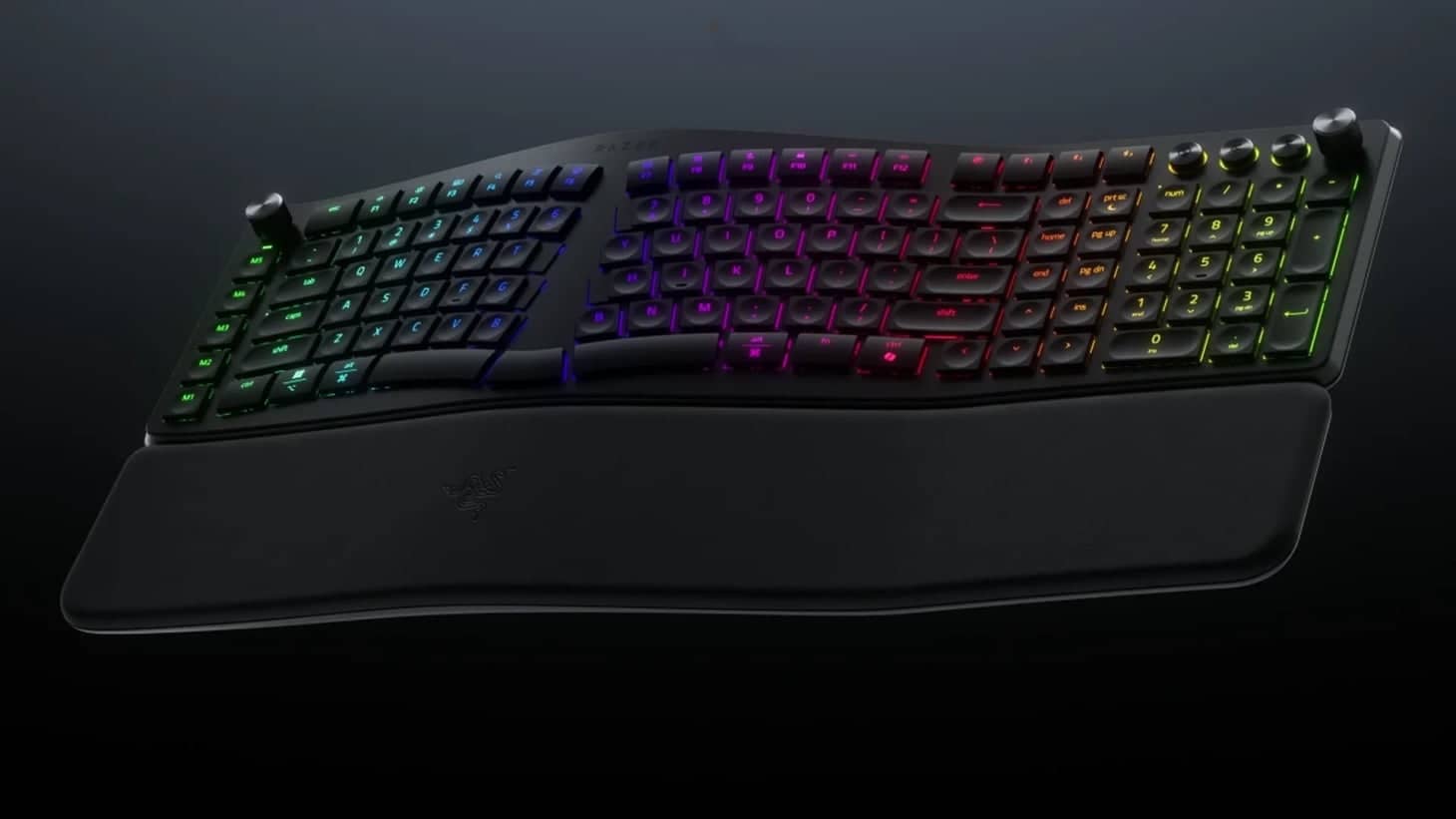
    Razer Unveils Pro Type Ergo Ergonomic Keyboard Today

    Razer Unveils Pro Type Ergo Ergonomic Keyboard Today

    Split design, AI button, and 19‑zone RGB aim at U.S. workers with a 9.7% RSI rate

    2 days ago
    Google to debut screen‑free Fitbit band in 2026

    Google to debut screen‑free Fitbit band in 2026

    AI‑driven training plan and upgraded platform aim at the health‑tracking market against Oura and Whoop

    2 days ago
    Nothing unveils AI‑powered smart glasses for a 2027 launch

    Nothing unveils AI‑powered smart glasses for a 2027 launch

    The glasses use a paired phone and cloud, with a clear frame and LED accents

    2 days ago
    Google rolls out Veo 3.1 Lite, halving AI video costs

    Google rolls out Veo 3.1 Lite, halving AI video costs

    Veo 3.1 Lite matches Veo 3.1 Fast speed but cuts price by over 50% for devs now

    2 days ago
    Freelander 97 Debuts 800‑V EV Crossover in Shanghai

    Freelander 97 Debuts 800‑V EV Crossover in Shanghai

    Chery‑JLR showcases ADS 4.1 autonomy on 800‑V platform, eyeing 2028 launch

    2 days ago
    Telegram Launches Version 12.6 With AI Editor, New Polls

    Telegram Launches Version 12.6 With AI Editor, New Polls

    It adds an AI tone editor, richer polls, Live/Motion Photos, and bot management

    2 days ago

    Pixel 11 Pro Renders Leak With Black Camera Bar and MediaTek Modem

    Google’s August 2026 flagship ditches Samsung radios for improved 5G and runs the Tensor G6

    3 days ago

    Anthropic leak reveals Opus 4.7, Sonnet 4.8 in npm 2.1.88

    Leak on March 30‑31 exposed TypeScript, revealing Opus 4.7, Sonnet 4.8, and internal features

    3 days ago
    iOS 26.5 beta lands on iPhone 17 Pro with an 8 GB download

    iOS 26.5 beta lands on iPhone 17 Pro with an 8 GB download

    Apple restores RCS encryption and adds a 12‑month subscription in the update

    3 days ago
    Windows 11 24H2 Brings Dark Mode to Core Utilities

    Windows 11 24H2 Brings Dark Mode to Core Utilities

    Tools like Registry Editor get dark mode in Windows 11 24H2, out in Sep 2026

    4 days ago

    John Noble's 1,024 Thread Implant Powers Warcraft Raids

    John Noble, a former British parachutist turned veteran gamer, received a neural implant with 1,024 threads after a 2024 trial in Seattle. The device lets him control a MacBook with thought alone, turning World of Warcraft raids into hands‑free battles. His story shows how brain‑computer interfaces can expand digital access for disabled veterans and reshape gaming.

    4 days ago
    Apple unveils Siri app for iOS 27, adds 50+ AI agents

    Apple unveils Siri app for iOS 27, adds 50+ AI agents

    iOS 27 Siri app adds Extensions marketplace, eyeing Alexa’s 100,000‑skill store

    4 days ago
    Loading...
Tech/Software

AI Assistants Are Redefining U.S. Offices: Act Now

AI assistants boost productivity, expose privacy gaps, and guide U.S. firms

February 26, 2026, 3:59 pm

Enterprise AI assistants are moving from pilots to core office tools, automating scheduling, finance, and communication for U.S. knowledge workers. They promise faster workflows but also raise privacy exposure and skill erosion. The article cites deployments in Seattle and Boston, outlines regulatory worries, and provides a checklist for firms to adopt these agents responsibly.

image (48)

Are AI Assistants Stealing Your Skills—Right Under Your Nose?

AI personal assistants promise productivity but deliver dependency. They automate thinking, not just tasks. By the end of this year, millions of American workers will lose core competencies to algorithms they never questioned. The convenience is real. The time savings are measurable. The cost is your professional capability.

By December 2026, 40 percent of enterprise applications will embed task-specific AI agents, up from less than 5 percent in 2025, according to Gartner's January enterprise software forecast and corroborated by IDC's workplace automation report. The surge turns personal AI assistants from experimental tools into core office infrastructure. These assistants act as digital chiefs of staff, handling scheduling, finance, and communication tasks for knowledge workers. Their rapid adoption reshapes productivity, privacy, and skill development across U.S. businesses right now.

The Productivity Trap Is Already Set

AI assistants parse meeting transcripts, flag budget anomalies, and draft routine emails. They pull data from Slack, Gmail, Salesforce, and QuickBooks without manual configuration. The technology combines large language models with workflow automation to predict next steps based on user patterns.

Workers issue a command. The assistant extracts relevant calendar entries, proposes three reschedule options, and confirms the chosen slot in seconds. The result is an immediate reduction in manual coordination time.

In a 2025 Gartner survey, 38 percent of U.S. firms with more than 500 employees piloted AI assistant platforms. Adoption will reach 60 percent by year-end 2026, according to both Forrester Research and McKinsey's Future of Work Institute.

Convoy in Seattle uses AI assistants to triage support tickets and generate status reports, as detailed in a TechCrunch profile last October. Product managers report a six-hour weekly time gain per employee. HubSpot in Boston integrated similar tools into its customer success team, allowing reps to focus on strategy while the assistant handles invoice follow-ups and renewal reminders, according to the company's February engineering blog. Salesforce piloted comparable systems across its sales development teams in San Francisco, cutting email response time by 40 percent, reported in The Information.

All three deployments required only days of configuration, replacing months of custom integration and lowering entry barriers for mid-size firms. But the speed of adoption masks a deeper transformation. Workers stop practicing the skills the AI now performs.

Your Data Belongs to Everyone But You

Every delegated task uploads calendar entries, email drafts, and expense data to cloud services. Vendors often process that information through third-party models hosted by OpenAI, Anthropic, or Google. In early 2025, a misconfigured cloud bucket exposed anonymized metadata from 12,000 corporate users at a mid-sized SaaS provider, revealing meeting attendees and email subjects, according to a Wired investigation published in March 2025 and confirmed by the Electronic Frontier Foundation.

The Federal Trade Commission opened three investigations into AI assistant data practices in 2025, according to agency filings reviewed by ProPublica. None resulted in public enforcement action. Privacy policies remain opaque. Users grant blanket permissions during signup, rarely revisiting terms as vendors update data-handling practices.

Stanford's Center for Internet and Society found that 68 percent of surveyed AI assistant users could not accurately describe where their data was stored or who could access it, according to research published in December 2025. The gap between convenience and comprehension widens every quarter.

The Skills You're Losing Right Now

Convenience breeds dependency, and dependency erodes skill. When an assistant auto-schedules every meeting, users stop negotiating time tradeoffs. They lose the ability to prioritize competing demands in real time.

A Stanford Human-Centered AI study (The research cited represents limited studies and findings may not generalize to all contexts or populations. Skill development outcomes vary by individual, implementation, and organizational factors.) published in November 2025 found a 19 percent decline in manual calendar optimization speed after six months of AI scheduling use, especially among workers under 35. Researchers measured task completion time for manual rescheduling scenarios before and after adoption. Participants who relied on AI assistants took significantly longer and made more scheduling conflicts when the tool was unavailable.

The pattern mirrors GPS navigation. Drivers reach destinations faster but lose map-reading ability. Cognitive psychologist Gary Klein, author of Sources of Power, told MIT Technology Review in January 2026:

"Skills atrophy when we delegate judgment to algorithms. You don't just lose speed. You lose the mental models that let you improvise when systems fail."

Email composition offers another warning. Workers who use AI drafting tools for six months show measurably weaker writing clarity when composing without assistance, according to a University of Pennsylvania study tracking 240 professionals over 18 months, published in the Journal of Applied Psychology in December 2025. The decline appears most pronounced in persuasive and emotionally nuanced communication.

Jobs Are Disappearing While We Schedule Meetings

Administrative support occupations will contract by 7 percent between 2024 and 2034. The Bureau of Labor Statistics cites AI-driven automation as a primary driver in its September 2025 employment projections. That translates to roughly 280,000 fewer jobs over a decade.

Conversely, LinkedIn reports a 240 percent rise in "AI operations specialist" job postings over the past 18 months, reflecting demand for professionals who configure and audit assistants. The new roles pay well but require technical fluency that displaced administrative workers often lack.

Human assistants now focus on high-touch relationship management, crisis response, and culturally nuanced tasks, while AI handles routine processing. The division is efficient but unequal. Workers who built careers on organizational skill find their expertise suddenly obsolete.

Sarah Kessler, labor reporter for The New York Times, documented this shift in a January 2026 feature on executive assistants in New York and Chicago. One assistant with 15 years of experience told Kessler:

"I used to be the person who knew everything. Now I'm the person who knows what the AI doesn't understand."

The role became smaller, less autonomous, and harder to justify at budget reviews.

Why Critics Say I'm Wrong

Proponents argue that efficiency gains outweigh skill loss. They point to historical precedent. Spreadsheets eliminated manual bookkeeping but created finance analysts. Email replaced memos but expanded communication reach. Every automation wave destroys old jobs and creates new ones.

He cites productivity gains of 20 to 30 percent in early adopter firms and argues that retraining programs can bridge the skills gap.

The evidence is rational but incomplete. Retraining takes time, money, and institutional support that most displaced workers never receive. The Bureau of Labor Statistics found that only 22 percent of workers who lost jobs to automation between 2020 and 2024 completed formal retraining programs, according to its January 2026 worker displacement report. The rest moved to lower-paying roles or left the workforce entirely.

The evidence shows that efficiency gains concentrate at the top while risks distribute downward. Executives save hours. Assistants lose jobs. The tradeoff is predictable and unjust.

What You Must Do Right Now

Audit data storage policies before adopting any AI assistant. Verify encryption standards, third-party integrations, and where information resides. Demand vendor transparency. If a company cannot or will not answer those questions, walk away.

Enable off-hours modes to prevent work creep into personal time, especially for households with children. Set boundaries now, before algorithms set them for you.

Start pilots on low-stakes tasks. Measure time saved and track skill retention. Schedule periodic "manual weeks" where teams operate without AI assistance to maintain core competencies. Treat these exercises like fire drills. You hope you never need them, but you practice anyway.

For executives, establish internal ethics boards to review deployments. Support federal privacy legislation that gives individuals control over their data. The American Data Privacy and Protection Act stalled in Congress in 2025, but pressure from businesses can revive it.

AI assistants in 2026 are powerful productivity tools. They also create new privacy risks and skill atrophy challenges. The next step is to shape their use with intentional policies and continuous human oversight. Your professional capability depends on it.

What is this about?

  • enterprise AI automation/
  • AI labor replacement/
  • AI privacy/
  • automation complacency/
  • enterprise AI governance

Feed

    Cursor 3 Launches Unified AI Coding Workspace

    Cursor 3 Launches Unified AI Coding Workspace

    Side‑panel lets devs toggle local and cloud agents, building on Composer 2 and Kimi 2.5

    about 6 hours ago
    Orion’s Six‑Minute Burn Puts Artemis 2 on Free‑Return Path

    Orion’s Six‑Minute Burn Puts Artemis 2 on Free‑Return Path

    iPhone 17 Pro Max survives Orion’s deep‑space test as crew heads to lunar flyby

    about 7 hours ago
    Android 17 Introduces System‑Level Notification Rules

    Android 17 Introduces System‑Level Notification Rules

    Samsung’s One UI 9 will adopt Android 17’s rules, adding OS‑level alert control

    about 7 hours ago

    Nvidia rolls out DLSS 4.5, 6× boost on RTX 50-series

    Dynamic Multi‑Frame Generation smooths 120–240 Hz, delivered in the driver 595.97

    about 10 hours ago
    Apple rolls out iOS 18.7.7 to block DarkSword

    Apple rolls out iOS 18.7.7 to block DarkSword

    Patch fixes six Safari bugs, stopping DarkSword on iOS 18–18.7 devices

    1 day ago
    BoxPlates Skins Revamp PS5 Slim & Pro in Two Weeks

    BoxPlates Skins Revamp PS5 Slim & Pro in Two Weeks

    1 day ago
    Artemis 2 Rockets Beyond Earth—402,000 km From Home

    Artemis 2 Rockets Beyond Earth—402,000 km From Home

    Lift‑off at 8:23 a.m. ET marks first crewed lunar flight since 1972, with a diverse four‑person crew

    1 day ago
    Apple celebrates 50 years with new minimalist wallpapers

    Apple celebrates 50 years with new minimalist wallpapers

    Basic Apple Guy releases iPhone and Mac wallpapers for Apple’s 50th anniversary

    1 day ago
    Razer Unveils Pro Type Ergo Ergonomic Keyboard Today

    Razer Unveils Pro Type Ergo Ergonomic Keyboard Today

    Split design, AI button, and 19‑zone RGB aim at U.S. workers with a 9.7% RSI rate

    2 days ago
    Google to debut screen‑free Fitbit band in 2026

    Google to debut screen‑free Fitbit band in 2026

    AI‑driven training plan and upgraded platform aim at the health‑tracking market against Oura and Whoop

    2 days ago
    Nothing unveils AI‑powered smart glasses for a 2027 launch

    Nothing unveils AI‑powered smart glasses for a 2027 launch

    The glasses use a paired phone and cloud, with a clear frame and LED accents

    2 days ago
    Google rolls out Veo 3.1 Lite, halving AI video costs

    Google rolls out Veo 3.1 Lite, halving AI video costs

    Veo 3.1 Lite matches Veo 3.1 Fast speed but cuts price by over 50% for devs now

    2 days ago
    Freelander 97 Debuts 800‑V EV Crossover in Shanghai

    Freelander 97 Debuts 800‑V EV Crossover in Shanghai

    Chery‑JLR showcases ADS 4.1 autonomy on 800‑V platform, eyeing 2028 launch

    2 days ago
    Telegram Launches Version 12.6 With AI Editor, New Polls

    Telegram Launches Version 12.6 With AI Editor, New Polls

    It adds an AI tone editor, richer polls, Live/Motion Photos, and bot management

    2 days ago

    Pixel 11 Pro Renders Leak With Black Camera Bar and MediaTek Modem

    Google’s August 2026 flagship ditches Samsung radios for improved 5G and runs the Tensor G6

    3 days ago

    Anthropic leak reveals Opus 4.7, Sonnet 4.8 in npm 2.1.88

    Leak on March 30‑31 exposed TypeScript, revealing Opus 4.7, Sonnet 4.8, and internal features

    3 days ago
    iOS 26.5 beta lands on iPhone 17 Pro with an 8 GB download

    iOS 26.5 beta lands on iPhone 17 Pro with an 8 GB download

    Apple restores RCS encryption and adds a 12‑month subscription in the update

    3 days ago
    Windows 11 24H2 Brings Dark Mode to Core Utilities

    Windows 11 24H2 Brings Dark Mode to Core Utilities

    Tools like Registry Editor get dark mode in Windows 11 24H2, out in Sep 2026

    4 days ago

    John Noble's 1,024 Thread Implant Powers Warcraft Raids

    John Noble, a former British parachutist turned veteran gamer, received a neural implant with 1,024 threads after a 2024 trial in Seattle. The device lets him control a MacBook with thought alone, turning World of Warcraft raids into hands‑free battles. His story shows how brain‑computer interfaces can expand digital access for disabled veterans and reshape gaming.

    4 days ago
    Apple unveils Siri app for iOS 27, adds 50+ AI agents

    Apple unveils Siri app for iOS 27, adds 50+ AI agents

    iOS 27 Siri app adds Extensions marketplace, eyeing Alexa’s 100,000‑skill store

    4 days ago
    Loading...
banner