
# Your Brain Sends an SOS Before You Feel the Crash — A Forehead Sensor Now Reads the Signal
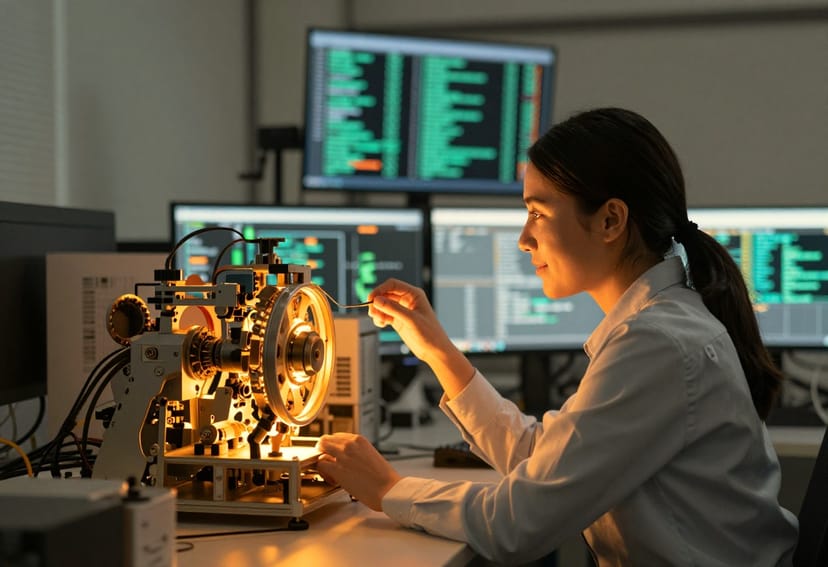
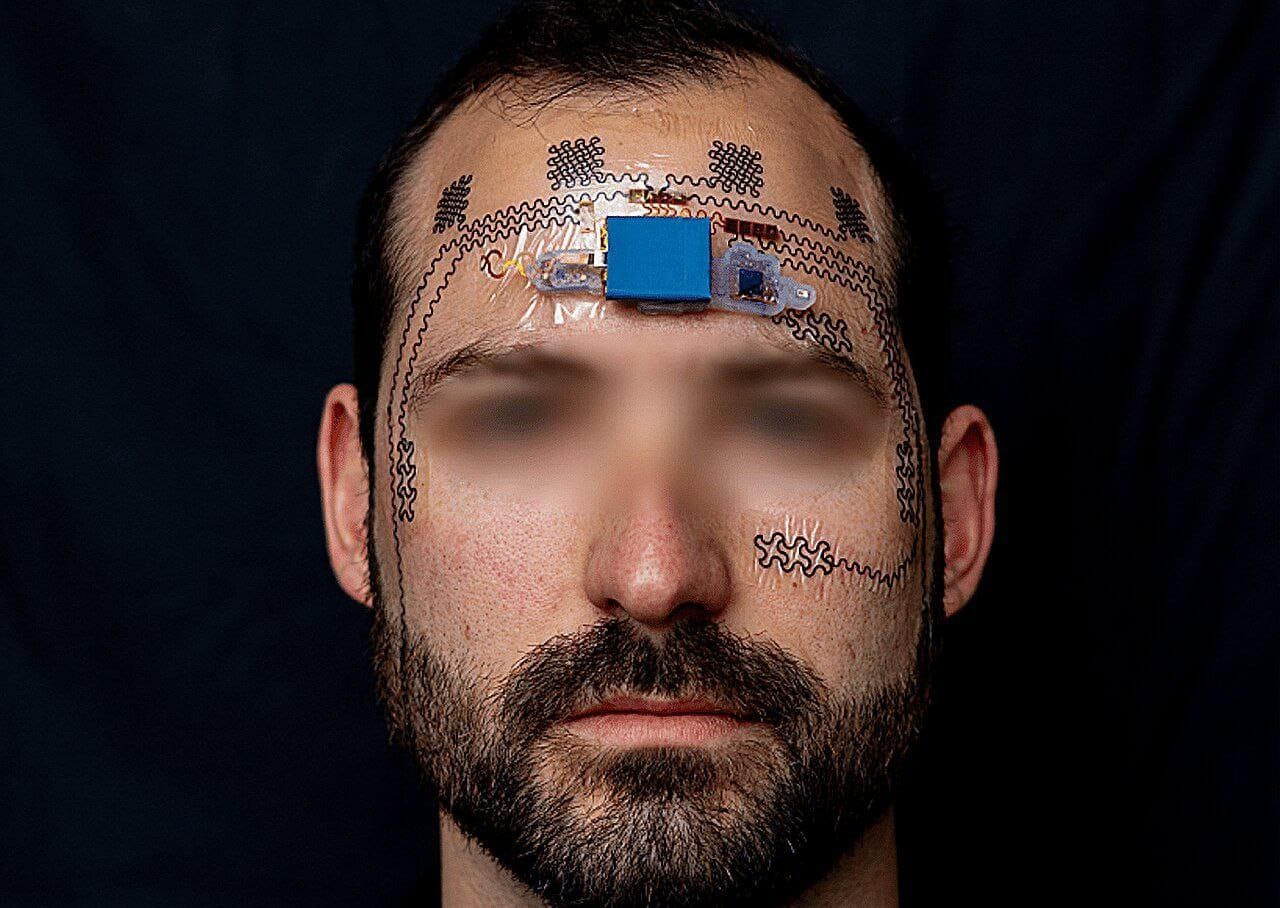
In a windowless lab on UT Austin's north campus, six volunteers stared at screens cycling through memory tests. Each wore a sensor on their forehead—thin as a Post-it note, wireless, reading brain waves in real time. For 47 minutes, they pushed through increasingly difficult recall tasks: matching number sequences, remembering word lists, identifying patterns in visual grids. The sensor tracked every shift in their neural activity. When theta and delta waves climbed while alpha and beta waves dropped, the device flagged it: cognitive overload approaching.
Your Brain's Electrical Patterns Shift Predictably Under Mental Strain—Before You Consciously Notice Exhaustion
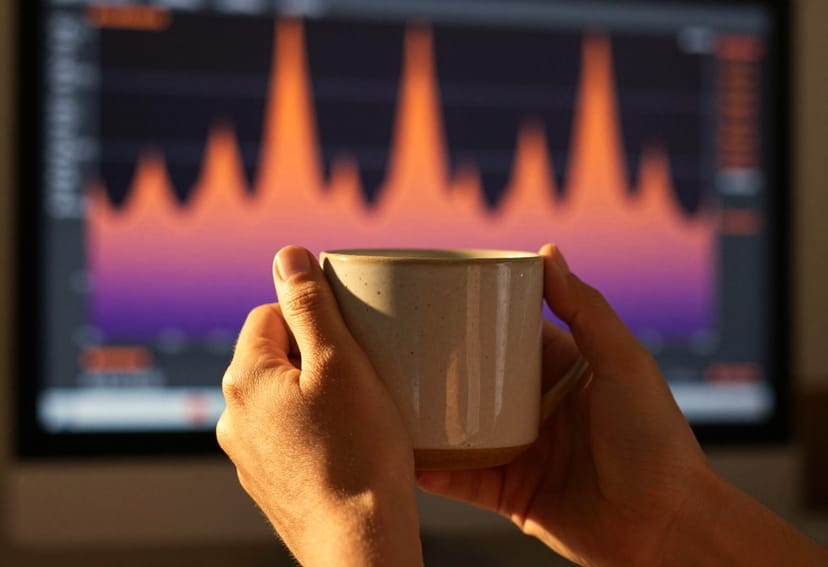
Your brain broadcasts distress before you feel it. Electrical patterns called brain waves shift as mental strain accumulates. The forehead sensor reads these signals continuously, watching for combinations that indicate mounting pressure.
When theta and delta waves increase while alpha and beta waves decline, the pattern signals emerging mental fatigue. It's the neurological equivalent of engine temperature rising before the dashboard light appears. The warning your conscious mind hasn't registered yet.
But what do these wave patterns actually represent? Theta waves (4–8 Hz) appear during drowsiness and light sleep. Delta waves (1–4 Hz) dominate deep sleep. Alpha waves (8–13 Hz) indicate relaxed alertness. Beta waves (13–30 Hz) accompany active concentration.
When your brain struggles with cognitive overload, it shifts toward the slower, fatigue-associated frequencies. It's your neural system sliding from high-performance mode into survival mode.
The device appeared in Device (Cell Press) on May 29, 2025. It records two signal types: electroencephalography (EEG) and electrooculography (EOG). The flexible design maintains skin contact even as you move, solving a decades-old problem with rigid EEG equipment. The sensor stretches with facial expressions, staying connected whether you're concentrating at a desk or navigating an airport terminal.
How a Prototype Shrinks a Medical Lab to Your Forehead
Traditional EEG systems require clinical settings, trained technicians, and $15,000 price tags. This prototype costs $200 in components.
That price difference transforms brain monitoring from a specialized medical procedure into potential daily health tracking. Consumer EEG devices already span from entry-level headsets at $80–$130 to research-grade systems at $2,299. The UT Austin prototype sits in the middle of that range. Each disposable sensor costs around $20.
These are researcher cost estimates, not retail prices. This isn't a commercial product yet.
Artificial intelligence powers the pattern recognition. The system doesn't just collect data—it interprets your brain's language. During the 47-minute protocol, participants progressed through three task difficulty levels. Early stages used simple four-digit sequences. Mid-level tasks required remembering six-word lists while identifying visual patterns. Final stages combined all elements with distraction stimuli.
As complexity increased, theta and delta activity rose while alpha and beta activity decreased. Researchers trained machine learning models on this data. The models learned to distinguish normal concentration fluctuations from dangerous cognitive overload. They could predict mental strain before participants reported feeling exhausted.
Like a car's cooling system that measures actual temperature rather than waiting for steam to pour from the hood, the sensor reads your brain's heat signature in real time. But unlike engine temperature, cognitive load doesn't follow a simple linear scale. Your brain shifts between wave frequencies in complex patterns, not steady climbs.
Where Mental Overload Carries Life-or-Death Stakes
Air traffic controllers manage dozens of aircraft simultaneously. Professional drivers navigate highways for hours fighting fatigue. Surgeons perform procedures requiring sustained precision.
These high-stakes professions represent the technology's most urgent applications—where cognitive failure carries life-or-death consequences.
But implications extend beyond emergency intervention. A software company in Austin could use the sensor data to discover developers hit cognitive limits by 2 PM, then restructure schedules to place demanding code reviews in morning hours. Remote workers could identify genuine productivity windows instead of forcing focus during low-cognitive periods.
This addresses a particularly American workplace dynamic. U.S. workers leave 768 million vacation days unused annually. The cultural norm of "powering through" exhaustion treats mental fatigue as weakness rather than biological reality. A sensor that makes cognitive strain objectively measurable could challenge that framework. You can't argue with brain wave data the way you can dismiss someone saying "I'm tired."
The research team is exploring conductive ink versions for hair-covered scalp areas. A related study published December 2, 2024, in Cell Biomaterials demonstrated on-scalp ink-printed EEG e-tattoos that work on short-haired scalps. That version, tested on five participants, showed stable connectivity for at least 24 hours. Some conventional electrodes degraded in the same timeframe.
A robot printer applies conductive ink based on personalized 3D head scans for optimized electrode placement. This addresses a practical limitation: comprehensive brain activity assessment requires sensors across multiple head regions, not just the exposed forehead strip.
Who Gets to See Your Brain's Electrical Signature?
Heart rate data reveals physical exertion. Brain wave data reveals mental state—a fundamentally different category of personal information.
Workplace adoption raises important questions. A tool designed to prevent employee burnout could theoretically become surveillance infrastructure monitoring cognitive engagement. The technology's value for individual wellness collides with concerns about employer access to neurological performance data.
Consider the scenarios: Does your manager receive alerts when your theta waves spike during afternoon meetings? Does your health insurance premium adjust based on cognitive stress patterns? Do job applicants undergo brain wave screening to assess "mental resilience"?
These aren't hypothetical concerns—they're implementation questions that will determine whether brain monitoring becomes empowering self-knowledge or invasive oversight.
The six-person pilot study proved technical feasibility. Broader adoption requires establishing data ownership frameworks, privacy protections, and clear boundaries around who sees your brain's electrical signatures.
Federal privacy laws don't yet specifically address neurological data. HIPAA covers medical records. The California Consumer Privacy Act addresses personal information collected by businesses. Brain waves exist in a regulatory gray zone between health data and personal metrics.
Making Invisible Strain Measurable
For decades, mental fatigue remained invisible until it became debilitating. You pushed through mounting exhaustion because there was no objective measure separating "tough day" from "cognitive crisis approaching."
This sensor makes the invisible measurable. It transforms burnout prevention from vague advice about self-care into data-driven decisions about when your brain needs rest.
The technology doesn't tell you to relax more. It shows you exactly when your neurological capacity hits critical thresholds.
We've measured heart rates during exercise for decades. Measuring mental load during knowledge work is the logical next frontier. The question isn't whether we'll monitor cognitive strain, but whether we'll do it ethically, accessibly, and in service of human wellbeing rather than extractive productivity.
The paper-thin sensor isn't just reading brain waves. It's making mental health visible in a culture that has historically treated cognitive strain as weakness rather than measurable biological reality. That shift from invisible suffering to quantified signal might be the technology's most profound contribution.
Like the engine temperature analogy that opens this understanding: you wouldn't ignore your car's overheating warning and expect the vehicle to keep running. Your brain deserves the same consideration. The sensor finally provides the dashboard your mind has always needed.