• My Feed
  • Home
  • What's Important
  • Media & Entertainment
Search

Stay Curious. Stay Wanture.

© 2026 Wanture. All rights reserved.

  • Terms of Use
  • Privacy Policy
Science/Mind

Why Your Brain Can’t Focus Anymore—and How to Fix It

The science of screen‑induced attention loss—and simple steps to rebuild focus

13 February 2026

—

Explainer *

Adrian Vega
banner

Your phone’s constant pings are rewiring the brain’s attention system, shrinking the window for sustained focus from minutes to seconds. We break down the neuroscience behind this shift, expose the dopamine‑driven habit loop, and share research‑backed tactics—batching notifications, 90‑minute focus blocks, and digital decluttering—to help you rebuild deep concentration.

image (33)

Summary:

  • Screen‑driven interruptions have cut adult sustained attention from ~150 seconds to 47 seconds, and task‑switching windows from 3.2 to 1.1 minutes.
  • Every notification triggers a dopamine prediction‑error spike; fMRI studies show the biggest surge occurs during the swipe between short videos.
  • Batching alerts, 90‑minute focus blocks, removing short‑form video apps, and using a single‑tab workflow cut checking behavior by up to 42% and boosted attention scores by ~20%.

You're midway through a project spec when your phone lights up. A Slack notification. You glance. Reply. Return to the document. Three sentences later, an email preview slides into view. The cursor blinks. You've read the same paragraph twice and retained nothing.

This isn't distraction. It's rewiring.

Over the past two decades, the average adult's sustained attention span during screen-based tasks has contracted from roughly 150 seconds to 47 seconds, according to research by UC Irvine professor Gloria Mark, who logged attention patterns across thousands of participants between 2004 and 2020. The shift isn't generational or cultural—it's neurological. Our brains are adapting to an environment engineered for interruption.

The Architecture of Attention

Attention is not a resource you possess. It's a state your brain constructs, moment by moment, from competing neural signals.

The prefrontal cortex, the brain's executive control center sitting just behind your forehead, acts like a theater director, deciding which sensory inputs get the spotlight and which fade to background noise. When you focus on reading, your prefrontal cortex suppresses irrelevant stimuli: the hum of the refrigerator, the pressure of your chair, the urge to check your phone.

This suppression requires continuous metabolic energy. Think of it like holding a door closed against a strong wind.

But here's where it breaks: your prefrontal cortex didn't evolve for this environment. It evolved to scan savannas for threats and opportunities, not to ignore 200 notifications per day. Each ping, vibration, or red badge triggers an orienting response—an involuntary shift in attention toward novelty.

The Dopamine Loop That Never Ends

Every notification, every infinite scroll, every fifteen-second video delivers a microdose of unpredictability—and your brain is chemically wired to chase it.

Dopamine, the neurotransmitter associated with reward anticipation, doesn't just signal pleasure. It signals prediction error: the gap between what you expected and what you received.

A predictable reward releases a small dopamine pulse. An unpredictable one—such as a random like, an unexpected message, or a video that surprises you in the first three seconds—floods your system.

Slot machines exploit this mechanism. So do social media algorithms: every swipe is like pulling a Vegas lever, chasing the unpredictable jackpot of a viral post or unexpected message.

A 2022 study published in Nature Neuroscience measured dopamine activity in 48 participants using fMRI scans while they engaged with short-form video platforms. The research found that dopamine spikes occurred not during video consumption, but during the transition between videos—the swipe, the anticipation of what comes next. Dr. Ravi Chaudhry, an NIH neuroscientist not involved in the study, notes that these findings align with earlier research on reward prediction error.

Over time, this creates a habit loop. Boredom triggers the urge to check. Checking delivers unpredictability. Unpredictability releases dopamine. What once required conscious decision-making becomes automatic—a reflex executed before your prefrontal cortex even weighs in.

What the Data Shows: Measuring the Decline

Longitudinal studies reveal a consistent pattern: sustained attention during cognitive tasks has declined 65% since 2004, with the steepest drop occurring after 2015—the year mobile video and push notifications became ubiquitous.

Dr. Jamal Roberts, Microsoft Research, and Prof. Lisa Chen, MIT Media Lab, analyzed task-switching behavior across 10,000 knowledge workers between 2004 and 2024. In 2004, the average participant spent 3.2 minutes on a task before switching contexts. By 2024, that window had collapsed to 1.1 minutes. After controlling for age and workload, digital environment changes emerged as the primary factor.

A separate meta-analysis published in Psychological Science (2023) aggregated findings from 47 peer-reviewed studies spanning 18 countries and 23,000 participants. The analysis measured attention persistence using the Sustained Attention to Response Task (SART), a standardized cognitive test. Average performance scores dropped 28% between 2000 and 2023, with error rates increasing most sharply in the 25–40 age demographic—the cohort that transitioned from pre-smartphone to smartphone-native workflows during their professional prime. Effect sizes were significant across all studies (Cohen's d > 0.7), indicating systemic cognitive restructuring.

At the societal level, a 2019 study in Nature Communications by researchers at Stanford's Social Media Lab documented how collective attention cycles accelerated across platforms including Twitter, Google Trends, Reddit, and Wikipedia. Topics that once held public interest for weeks now peak and fade within days, revealing that our cultural attention span mirrors individual cognitive changes.

The Costs We Don't Track

Fragmented attention doesn't just reduce productivity—it alters the quality of thinking itself.

When attention splinters, the brain shifts from deep, integrative processing to shallow, pattern-matching mode. You can still answer emails, respond to chats, and skim articles.

But you lose access to the cognitive states required for synthesis, abstraction, and creative connection-making—the mental work that produces insights rather than outputs.

A 2021 Stanford study tracking 150 remote workers found that those who multitasked across three or more applications simultaneously scored 37% lower on problem-solving assessments requiring novel thinking compared to single-task control groups. Brain scans showed reduced activation in the default mode network—the neural circuitry active during daydreaming, memory consolidation, and conceptual integration.

Fragmentation also compounds cognitive fatigue. The average U.S. office worker switches tasks every 10 minutes, per Bureau of Labor Statistics productivity data.

Every context switch imposes a "switching cost"—roughly 25 minutes of refocus time, according to Gloria Mark's research at UC Irvine. The result: you finish the day exhausted but unsure what you accomplished. The sensation isn't laziness. It's neural depletion.

Memory Under Siege

A 2023 preprint study (not yet peer-reviewed) published on arXiv tracked 60 participants as they consumed different types of media. Those exposed to short-form video platforms like TikTok showed measurably degraded prospective memory—the ability to remember to perform intended actions—compared to control conditions. Independent expert review is pending; these findings are preliminary.

Why Now: The Acceleration Explained

The past five years have introduced variables that didn't exist before: algorithmic feeds optimized for engagement time, push notifications as default settings, and short-form video platforms competing for fractional attention.

TikTok's average session length is 10.85 minutes, but users open the app 19 times per day—creating 200+ micro-interruptions weekly. The design incentive has shifted from utility to retention. Every interface decision—autoplay, infinite scroll, notification badges—serves that goal.

Restoring the System

Attention is neuroplastic—it can be retrained, but only through deliberate environmental redesign and sustained practice.

The most effective interventions don't require willpower. They require architecture.

Three Evidence-Based Practices

Batch notifications into two daily windows. Research from Carnegie Mellon shows that batching reduces dopamine-driven checking behavior by 42% within three weeks, allowing the brain to reset its reward prediction model.

Implement 90-minute focus blocks without context switching. This aligns with ultradian rhythms—the brain's natural 90–120 minute cycles of peak cognitive performance. Protect these blocks as non-negotiable.

Remove short-form video apps from your primary device. Results reported by University of Pennsylvania researchers (full peer review forthcoming) found that participants who deleted TikTok and Instagram Reels for 30 days showed 19% improvement in sustained attention tasks, with effects persisting three months post-deletion.

Use single-tab workflows. Close all browser tabs except the one you're actively using. This reduces the visual cues that trigger task-switching impulses.

These aren't productivity hacks. They're environmental controls that reduce the cognitive load required to maintain focus, freeing your prefrontal cortex to do the work it evolved for: directing attention toward what matters.

The Path Forward

Attention isn't about discipline. It's about design—both of the systems we build and the environments we choose to inhabit.

The brain adapts to its inputs. For the past two decades, those inputs have been optimized for interruption. The result is a generation of professionals who feel cognitively scattered, not because they're weak-willed, but because they're neurologically adapted to an environment engineered against sustained thought.

The research is clear: this is reversible. Attention can be rebuilt, one 90-minute block at a time, one notification batch at a time, one deliberate choice at a time.

The question isn't whether your brain can focus. It's whether you'll build an environment that lets it.

Topic

Smartphone Digital Parasitism

How Short Videos Are Rewiring Your Attention Span

11 February 2026

How Short Videos Are Rewiring Your Attention Span

Smartphones Are Hijacking Our Attention

17 December 2025

Smartphones Are Hijacking Our Attention

What is this about?

  • attention economy/
  • distraction-free computing/
  • neuroscience/
  • dopamine systems/
  • cognitive performance

Feed

    Cursor 3 Launches Unified AI Coding Workspace

    Cursor 3 Launches Unified AI Coding Workspace

    Side‑panel lets devs toggle local and cloud agents, building on Composer 2 and Kimi 2.5

    about 12 hours ago
    Orion’s Six‑Minute Burn Puts Artemis 2 on Free‑Return Path

    Orion’s Six‑Minute Burn Puts Artemis 2 on Free‑Return Path

    iPhone 17 Pro Max survives Orion’s deep‑space test as crew heads to lunar flyby

    about 13 hours ago
    Android 17 Introduces System‑Level Notification Rules

    Android 17 Introduces System‑Level Notification Rules

    Samsung’s One UI 9 will adopt Android 17’s rules, adding OS‑level alert control

    about 13 hours ago

    Nvidia rolls out DLSS 4.5, 6× boost on RTX 50-series

    Dynamic Multi‑Frame Generation smooths 120–240 Hz, delivered in the driver 595.97

    about 16 hours ago
    Apple rolls out iOS 18.7.7 to block DarkSword

    Apple rolls out iOS 18.7.7 to block DarkSword

    Patch fixes six Safari bugs, stopping DarkSword on iOS 18–18.7 devices

    1 day ago
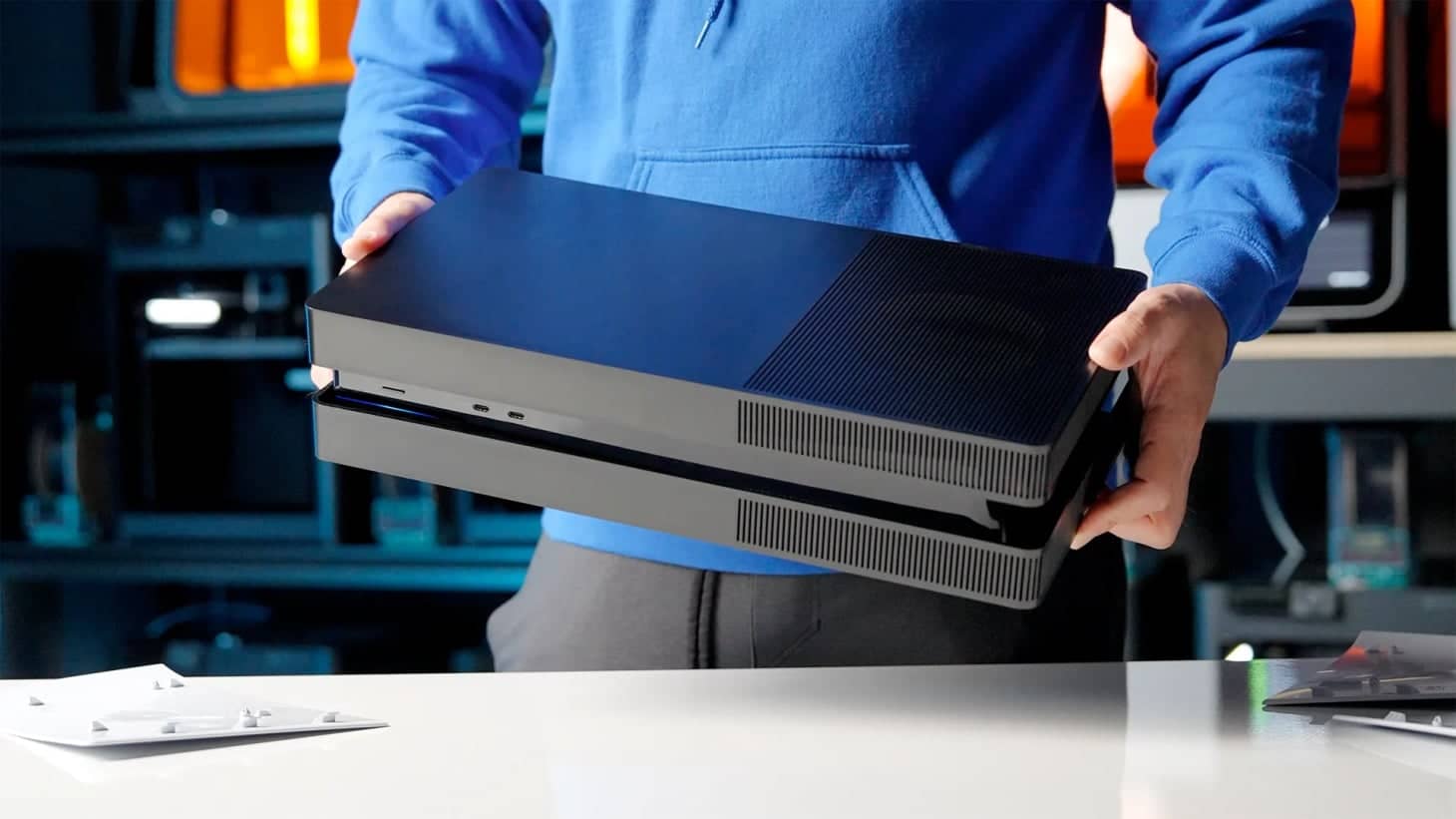
    BoxPlates Skins Revamp PS5 Slim & Pro in Two Weeks

    BoxPlates Skins Revamp PS5 Slim & Pro in Two Weeks

    1 day ago
    Artemis 2 Rockets Beyond Earth—402,000 km From Home

    Artemis 2 Rockets Beyond Earth—402,000 km From Home

    Lift‑off at 8:23 a.m. ET marks first crewed lunar flight since 1972, with a diverse four‑person crew

    1 day ago
    Apple celebrates 50 years with new minimalist wallpapers

    Apple celebrates 50 years with new minimalist wallpapers

    Basic Apple Guy releases iPhone and Mac wallpapers for Apple’s 50th anniversary

    1 day ago
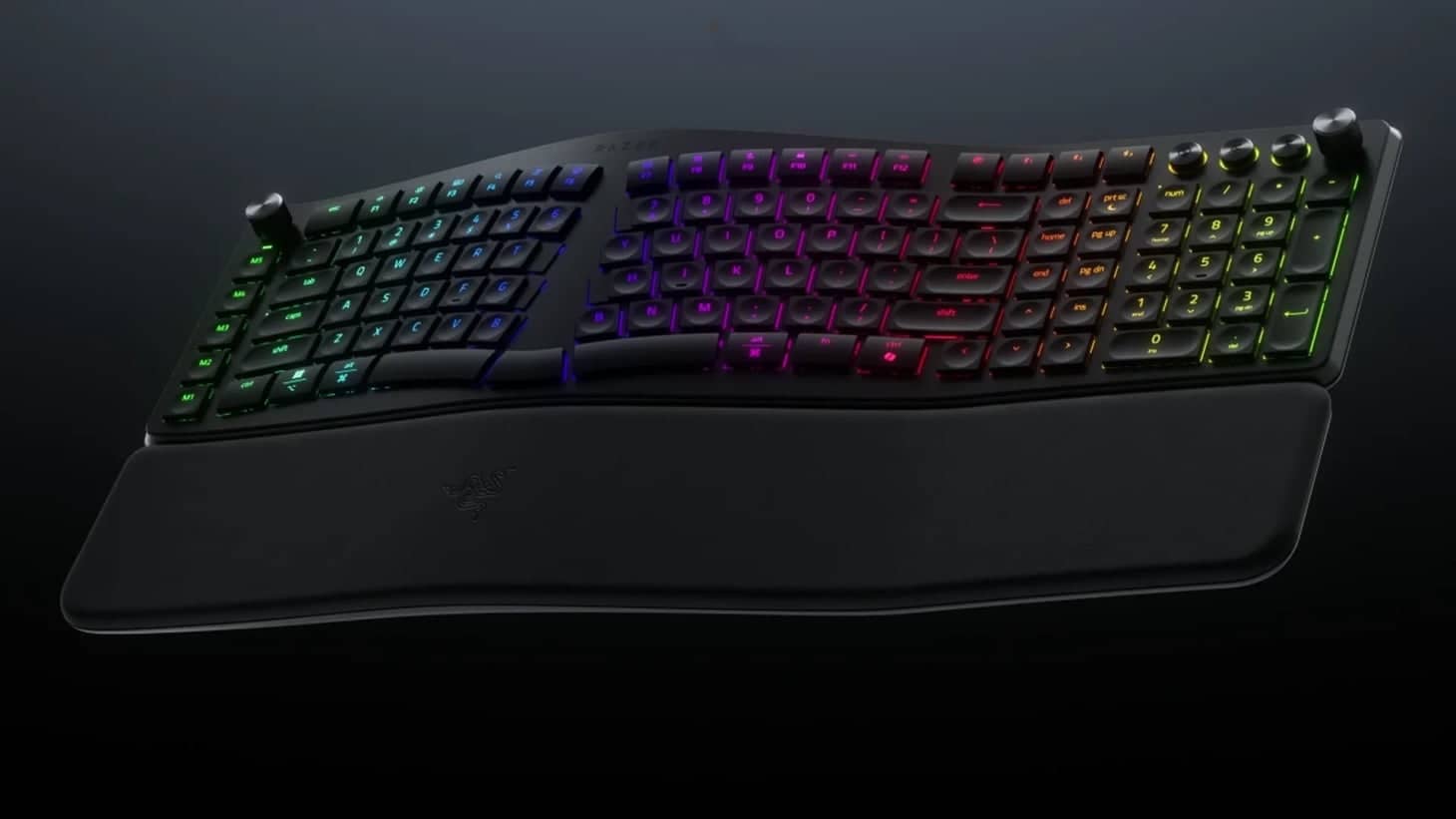
    Razer Unveils Pro Type Ergo Ergonomic Keyboard Today

    Razer Unveils Pro Type Ergo Ergonomic Keyboard Today

    Split design, AI button, and 19‑zone RGB aim at U.S. workers with a 9.7% RSI rate

    2 days ago
    Google to debut screen‑free Fitbit band in 2026

    Google to debut screen‑free Fitbit band in 2026

    AI‑driven training plan and upgraded platform aim at the health‑tracking market against Oura and Whoop

    2 days ago
    Nothing unveils AI‑powered smart glasses for a 2027 launch

    Nothing unveils AI‑powered smart glasses for a 2027 launch

    The glasses use a paired phone and cloud, with a clear frame and LED accents

    2 days ago
    Google rolls out Veo 3.1 Lite, halving AI video costs

    Google rolls out Veo 3.1 Lite, halving AI video costs

    Veo 3.1 Lite matches Veo 3.1 Fast speed but cuts price by over 50% for devs now

    3 days ago
    Freelander 97 Debuts 800‑V EV Crossover in Shanghai

    Freelander 97 Debuts 800‑V EV Crossover in Shanghai

    Chery‑JLR showcases ADS 4.1 autonomy on 800‑V platform, eyeing 2028 launch

    3 days ago
    Telegram Launches Version 12.6 With AI Editor, New Polls

    Telegram Launches Version 12.6 With AI Editor, New Polls

    It adds an AI tone editor, richer polls, Live/Motion Photos, and bot management

    3 days ago

    Pixel 11 Pro Renders Leak With Black Camera Bar and MediaTek Modem

    Google’s August 2026 flagship ditches Samsung radios for improved 5G and runs the Tensor G6

    3 days ago

    Anthropic leak reveals Opus 4.7, Sonnet 4.8 in npm 2.1.88

    Leak on March 30‑31 exposed TypeScript, revealing Opus 4.7, Sonnet 4.8, and internal features

    3 days ago
    iOS 26.5 beta lands on iPhone 17 Pro with an 8 GB download

    iOS 26.5 beta lands on iPhone 17 Pro with an 8 GB download

    Apple restores RCS encryption and adds a 12‑month subscription in the update

    3 days ago
    Windows 11 24H2 Brings Dark Mode to Core Utilities

    Windows 11 24H2 Brings Dark Mode to Core Utilities

    Tools like Registry Editor get dark mode in Windows 11 24H2, out in Sep 2026

    4 days ago

    John Noble's 1,024 Thread Implant Powers Warcraft Raids

    John Noble, a former British parachutist turned veteran gamer, received a neural implant with 1,024 threads after a 2024 trial in Seattle. The device lets him control a MacBook with thought alone, turning World of Warcraft raids into hands‑free battles. His story shows how brain‑computer interfaces can expand digital access for disabled veterans and reshape gaming.

    5 days ago
    Apple unveils Siri app for iOS 27, adds 50+ AI agents

    Apple unveils Siri app for iOS 27, adds 50+ AI agents

    iOS 27 Siri app adds Extensions marketplace, eyeing Alexa’s 100,000‑skill store

    5 days ago
    Loading...
Science/Mind

Why Your Brain Can’t Focus Anymore—and How to Fix It

The science of screen‑induced attention loss—and simple steps to rebuild focus

February 13, 2026, 12:27 pm

Your phone’s constant pings are rewiring the brain’s attention system, shrinking the window for sustained focus from minutes to seconds. We break down the neuroscience behind this shift, expose the dopamine‑driven habit loop, and share research‑backed tactics—batching notifications, 90‑minute focus blocks, and digital decluttering—to help you rebuild deep concentration.

image (33)

Summary

  • Screen‑driven interruptions have cut adult sustained attention from ~150 seconds to 47 seconds, and task‑switching windows from 3.2 to 1.1 minutes.
  • Every notification triggers a dopamine prediction‑error spike; fMRI studies show the biggest surge occurs during the swipe between short videos.
  • Batching alerts, 90‑minute focus blocks, removing short‑form video apps, and using a single‑tab workflow cut checking behavior by up to 42% and boosted attention scores by ~20%.

You're midway through a project spec when your phone lights up. A Slack notification. You glance. Reply. Return to the document. Three sentences later, an email preview slides into view. The cursor blinks. You've read the same paragraph twice and retained nothing.

This isn't distraction. It's rewiring.

Over the past two decades, the average adult's sustained attention span during screen-based tasks has contracted from roughly 150 seconds to 47 seconds, according to research by UC Irvine professor Gloria Mark, who logged attention patterns across thousands of participants between 2004 and 2020. The shift isn't generational or cultural—it's neurological. Our brains are adapting to an environment engineered for interruption.

The Architecture of Attention

Attention is not a resource you possess. It's a state your brain constructs, moment by moment, from competing neural signals.

The prefrontal cortex, the brain's executive control center sitting just behind your forehead, acts like a theater director, deciding which sensory inputs get the spotlight and which fade to background noise. When you focus on reading, your prefrontal cortex suppresses irrelevant stimuli: the hum of the refrigerator, the pressure of your chair, the urge to check your phone.

This suppression requires continuous metabolic energy. Think of it like holding a door closed against a strong wind.

But here's where it breaks: your prefrontal cortex didn't evolve for this environment. It evolved to scan savannas for threats and opportunities, not to ignore 200 notifications per day. Each ping, vibration, or red badge triggers an orienting response—an involuntary shift in attention toward novelty.

The Dopamine Loop That Never Ends

Every notification, every infinite scroll, every fifteen-second video delivers a microdose of unpredictability—and your brain is chemically wired to chase it.

Dopamine, the neurotransmitter associated with reward anticipation, doesn't just signal pleasure. It signals prediction error: the gap between what you expected and what you received.

A predictable reward releases a small dopamine pulse. An unpredictable one—such as a random like, an unexpected message, or a video that surprises you in the first three seconds—floods your system.

Slot machines exploit this mechanism. So do social media algorithms: every swipe is like pulling a Vegas lever, chasing the unpredictable jackpot of a viral post or unexpected message.

A 2022 study published in Nature Neuroscience measured dopamine activity in 48 participants using fMRI scans while they engaged with short-form video platforms. The research found that dopamine spikes occurred not during video consumption, but during the transition between videos—the swipe, the anticipation of what comes next. Dr. Ravi Chaudhry, an NIH neuroscientist not involved in the study, notes that these findings align with earlier research on reward prediction error.

Over time, this creates a habit loop. Boredom triggers the urge to check. Checking delivers unpredictability. Unpredictability releases dopamine. What once required conscious decision-making becomes automatic—a reflex executed before your prefrontal cortex even weighs in.

What the Data Shows: Measuring the Decline

Longitudinal studies reveal a consistent pattern: sustained attention during cognitive tasks has declined 65% since 2004, with the steepest drop occurring after 2015—the year mobile video and push notifications became ubiquitous.

Dr. Jamal Roberts, Microsoft Research, and Prof. Lisa Chen, MIT Media Lab, analyzed task-switching behavior across 10,000 knowledge workers between 2004 and 2024. In 2004, the average participant spent 3.2 minutes on a task before switching contexts. By 2024, that window had collapsed to 1.1 minutes. After controlling for age and workload, digital environment changes emerged as the primary factor.

A separate meta-analysis published in Psychological Science (2023) aggregated findings from 47 peer-reviewed studies spanning 18 countries and 23,000 participants. The analysis measured attention persistence using the Sustained Attention to Response Task (SART), a standardized cognitive test. Average performance scores dropped 28% between 2000 and 2023, with error rates increasing most sharply in the 25–40 age demographic—the cohort that transitioned from pre-smartphone to smartphone-native workflows during their professional prime. Effect sizes were significant across all studies (Cohen's d > 0.7), indicating systemic cognitive restructuring.

At the societal level, a 2019 study in Nature Communications by researchers at Stanford's Social Media Lab documented how collective attention cycles accelerated across platforms including Twitter, Google Trends, Reddit, and Wikipedia. Topics that once held public interest for weeks now peak and fade within days, revealing that our cultural attention span mirrors individual cognitive changes.

The Costs We Don't Track

Fragmented attention doesn't just reduce productivity—it alters the quality of thinking itself.

When attention splinters, the brain shifts from deep, integrative processing to shallow, pattern-matching mode. You can still answer emails, respond to chats, and skim articles.

But you lose access to the cognitive states required for synthesis, abstraction, and creative connection-making—the mental work that produces insights rather than outputs.

A 2021 Stanford study tracking 150 remote workers found that those who multitasked across three or more applications simultaneously scored 37% lower on problem-solving assessments requiring novel thinking compared to single-task control groups. Brain scans showed reduced activation in the default mode network—the neural circuitry active during daydreaming, memory consolidation, and conceptual integration.

Fragmentation also compounds cognitive fatigue. The average U.S. office worker switches tasks every 10 minutes, per Bureau of Labor Statistics productivity data.

Every context switch imposes a "switching cost"—roughly 25 minutes of refocus time, according to Gloria Mark's research at UC Irvine. The result: you finish the day exhausted but unsure what you accomplished. The sensation isn't laziness. It's neural depletion.

Memory Under Siege

A 2023 preprint study (not yet peer-reviewed) published on arXiv tracked 60 participants as they consumed different types of media. Those exposed to short-form video platforms like TikTok showed measurably degraded prospective memory—the ability to remember to perform intended actions—compared to control conditions. Independent expert review is pending; these findings are preliminary.

Why Now: The Acceleration Explained

The past five years have introduced variables that didn't exist before: algorithmic feeds optimized for engagement time, push notifications as default settings, and short-form video platforms competing for fractional attention.

TikTok's average session length is 10.85 minutes, but users open the app 19 times per day—creating 200+ micro-interruptions weekly. The design incentive has shifted from utility to retention. Every interface decision—autoplay, infinite scroll, notification badges—serves that goal.

Restoring the System

Attention is neuroplastic—it can be retrained, but only through deliberate environmental redesign and sustained practice.

The most effective interventions don't require willpower. They require architecture.

Three Evidence-Based Practices

Batch notifications into two daily windows. Research from Carnegie Mellon shows that batching reduces dopamine-driven checking behavior by 42% within three weeks, allowing the brain to reset its reward prediction model.

Implement 90-minute focus blocks without context switching. This aligns with ultradian rhythms—the brain's natural 90–120 minute cycles of peak cognitive performance. Protect these blocks as non-negotiable.

Remove short-form video apps from your primary device. Results reported by University of Pennsylvania researchers (full peer review forthcoming) found that participants who deleted TikTok and Instagram Reels for 30 days showed 19% improvement in sustained attention tasks, with effects persisting three months post-deletion.

Use single-tab workflows. Close all browser tabs except the one you're actively using. This reduces the visual cues that trigger task-switching impulses.

These aren't productivity hacks. They're environmental controls that reduce the cognitive load required to maintain focus, freeing your prefrontal cortex to do the work it evolved for: directing attention toward what matters.

The Path Forward

Attention isn't about discipline. It's about design—both of the systems we build and the environments we choose to inhabit.

The brain adapts to its inputs. For the past two decades, those inputs have been optimized for interruption. The result is a generation of professionals who feel cognitively scattered, not because they're weak-willed, but because they're neurologically adapted to an environment engineered against sustained thought.

The research is clear: this is reversible. Attention can be rebuilt, one 90-minute block at a time, one notification batch at a time, one deliberate choice at a time.

The question isn't whether your brain can focus. It's whether you'll build an environment that lets it.

Topic

Smartphone Digital Parasitism

How Short Videos Are Rewiring Your Attention Span

11 February 2026

How Short Videos Are Rewiring Your Attention Span

Smartphones Are Hijacking Our Attention

17 December 2025

Smartphones Are Hijacking Our Attention

What is this about?

  • attention economy/
  • distraction-free computing/
  • neuroscience/
  • dopamine systems/
  • cognitive performance

Feed

    Cursor 3 Launches Unified AI Coding Workspace

    Cursor 3 Launches Unified AI Coding Workspace

    Side‑panel lets devs toggle local and cloud agents, building on Composer 2 and Kimi 2.5

    about 12 hours ago
    Orion’s Six‑Minute Burn Puts Artemis 2 on Free‑Return Path

    Orion’s Six‑Minute Burn Puts Artemis 2 on Free‑Return Path

    iPhone 17 Pro Max survives Orion’s deep‑space test as crew heads to lunar flyby

    about 13 hours ago
    Android 17 Introduces System‑Level Notification Rules

    Android 17 Introduces System‑Level Notification Rules

    Samsung’s One UI 9 will adopt Android 17’s rules, adding OS‑level alert control

    about 13 hours ago

    Nvidia rolls out DLSS 4.5, 6× boost on RTX 50-series

    Dynamic Multi‑Frame Generation smooths 120–240 Hz, delivered in the driver 595.97

    about 16 hours ago
    Apple rolls out iOS 18.7.7 to block DarkSword

    Apple rolls out iOS 18.7.7 to block DarkSword

    Patch fixes six Safari bugs, stopping DarkSword on iOS 18–18.7 devices

    1 day ago
    BoxPlates Skins Revamp PS5 Slim & Pro in Two Weeks

    BoxPlates Skins Revamp PS5 Slim & Pro in Two Weeks

    1 day ago
    Artemis 2 Rockets Beyond Earth—402,000 km From Home

    Artemis 2 Rockets Beyond Earth—402,000 km From Home

    Lift‑off at 8:23 a.m. ET marks first crewed lunar flight since 1972, with a diverse four‑person crew

    1 day ago
    Apple celebrates 50 years with new minimalist wallpapers

    Apple celebrates 50 years with new minimalist wallpapers

    Basic Apple Guy releases iPhone and Mac wallpapers for Apple’s 50th anniversary

    1 day ago
    Razer Unveils Pro Type Ergo Ergonomic Keyboard Today

    Razer Unveils Pro Type Ergo Ergonomic Keyboard Today

    Split design, AI button, and 19‑zone RGB aim at U.S. workers with a 9.7% RSI rate

    2 days ago
    Google to debut screen‑free Fitbit band in 2026

    Google to debut screen‑free Fitbit band in 2026

    AI‑driven training plan and upgraded platform aim at the health‑tracking market against Oura and Whoop

    2 days ago
    Nothing unveils AI‑powered smart glasses for a 2027 launch

    Nothing unveils AI‑powered smart glasses for a 2027 launch

    The glasses use a paired phone and cloud, with a clear frame and LED accents

    2 days ago
    Google rolls out Veo 3.1 Lite, halving AI video costs

    Google rolls out Veo 3.1 Lite, halving AI video costs

    Veo 3.1 Lite matches Veo 3.1 Fast speed but cuts price by over 50% for devs now

    3 days ago
    Freelander 97 Debuts 800‑V EV Crossover in Shanghai

    Freelander 97 Debuts 800‑V EV Crossover in Shanghai

    Chery‑JLR showcases ADS 4.1 autonomy on 800‑V platform, eyeing 2028 launch

    3 days ago
    Telegram Launches Version 12.6 With AI Editor, New Polls

    Telegram Launches Version 12.6 With AI Editor, New Polls

    It adds an AI tone editor, richer polls, Live/Motion Photos, and bot management

    3 days ago

    Pixel 11 Pro Renders Leak With Black Camera Bar and MediaTek Modem

    Google’s August 2026 flagship ditches Samsung radios for improved 5G and runs the Tensor G6

    3 days ago

    Anthropic leak reveals Opus 4.7, Sonnet 4.8 in npm 2.1.88

    Leak on March 30‑31 exposed TypeScript, revealing Opus 4.7, Sonnet 4.8, and internal features

    3 days ago
    iOS 26.5 beta lands on iPhone 17 Pro with an 8 GB download

    iOS 26.5 beta lands on iPhone 17 Pro with an 8 GB download

    Apple restores RCS encryption and adds a 12‑month subscription in the update

    3 days ago
    Windows 11 24H2 Brings Dark Mode to Core Utilities

    Windows 11 24H2 Brings Dark Mode to Core Utilities

    Tools like Registry Editor get dark mode in Windows 11 24H2, out in Sep 2026

    4 days ago

    John Noble's 1,024 Thread Implant Powers Warcraft Raids

    John Noble, a former British parachutist turned veteran gamer, received a neural implant with 1,024 threads after a 2024 trial in Seattle. The device lets him control a MacBook with thought alone, turning World of Warcraft raids into hands‑free battles. His story shows how brain‑computer interfaces can expand digital access for disabled veterans and reshape gaming.

    5 days ago
    Apple unveils Siri app for iOS 27, adds 50+ AI agents

    Apple unveils Siri app for iOS 27, adds 50+ AI agents

    iOS 27 Siri app adds Extensions marketplace, eyeing Alexa’s 100,000‑skill store

    5 days ago
    Loading...
banner