
• My Feed
  • Home
  • What's Important
  • Media & Entertainment
Search

Stay Curious. Stay Wanture.

© 2026 Wanture. All rights reserved.

  • Terms of Use
  • Privacy Policy
Science/Life
Did life's building blocks arrive as cosmic dust?

New research suggests amino acids drifted to Earth on microscopic particles, not asteroids

3 November 2025

—

Explainer

Laila Grant
banner

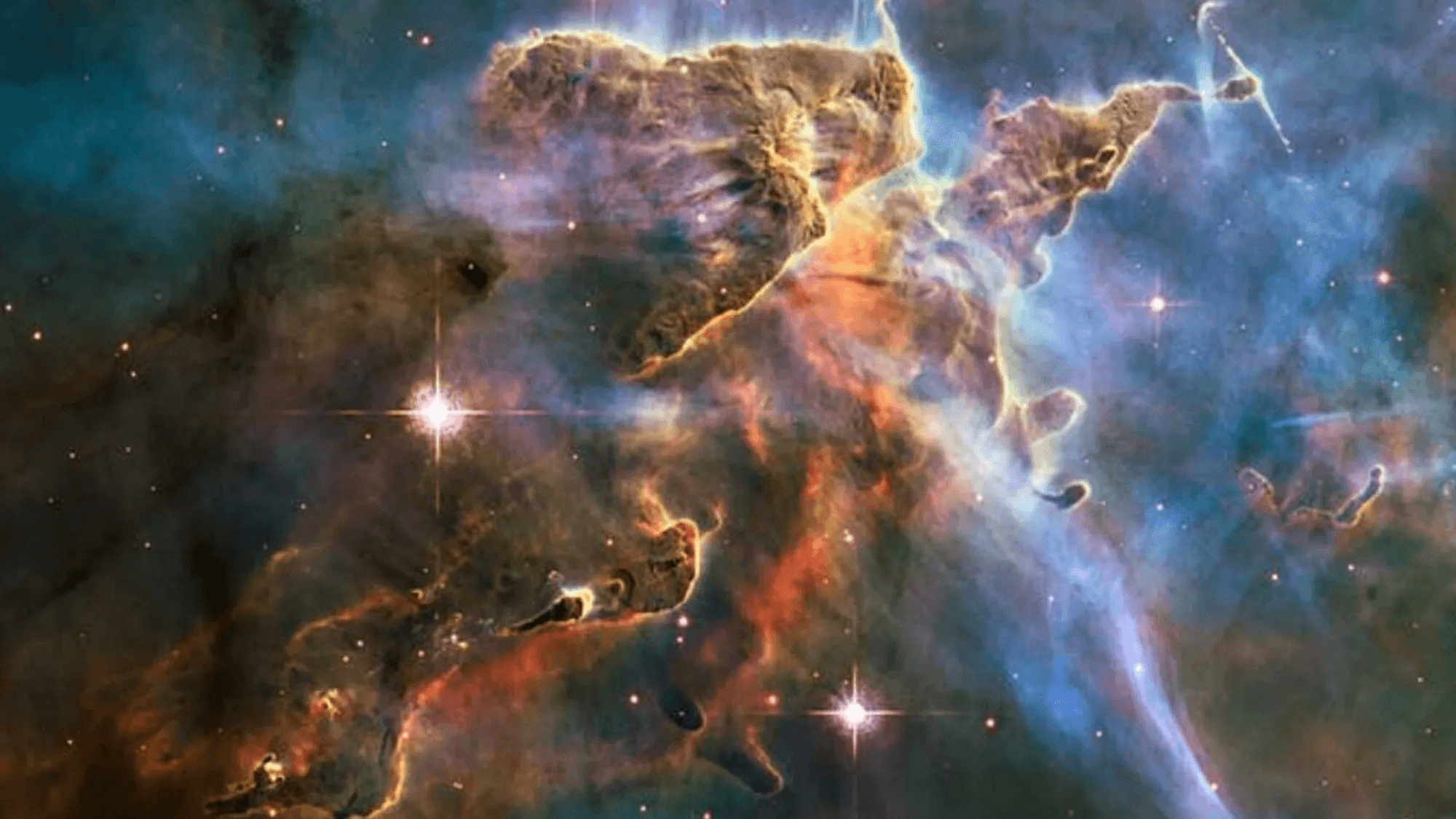
Scientists at Diamond Light Source discovered that glycine and alanine—essential amino acids—could survive space travel by clinging to cosmic dust particles. With 40,000 tons of this stardust settling on Earth annually, the constant microscopic delivery may have provided the concentrated building blocks needed to jumpstart life between 4.4 and 3.4 billion years ago.

image-24

Summary:

  • Cosmic dust delivers 40,000 tons of microscopic particles to Earth annually, potentially carrying life's molecular building blocks
  • Research reveals amino acids glycine and alanine can survive extreme space conditions by adhering to cosmic dust particles
  • Space-delivered molecules may have accelerated life's emergence on Earth between 3.4 and 4.4 billion years ago

Every day, Earth catches stardust. Not the occasional asteroid—those are rare visitors, cosmic freight trains barreling through the dark. This is different. Forty thousand tons of microscopic particles drift down annually, silent as snow. And new research suggests that these tiny grains may have carried the molecular alphabet of life itself.

For decades, scientists have asked: where did life's building blocks come from? Did Earth brew them in its own primordial chemistry set? Or did they arrive from elsewhere, hitchhiking on debris from deep space? Most theories about cosmic delivery have focused on meteorites—dramatic impacts that could seed a young planet with organic molecules. But a study in the Monthly Notices of the Royal Astronomical Society proposes we've been watching the wrong delivery system all along.

The Volume Problem

Consider the numbers. Roughly 10,000 meteorites strike Earth each year. That sounds substantial until you compare it to the alternative: 40,000 tons of cosmic dust settling onto our atmosphere annually. It's the difference between fruit falling from a tree and pollen carried on every breeze. One is occasional. The other is everywhere, constant, relentless.

If amino acids—the molecular building blocks of proteins—were going to arrive from space, sheer volume suggests they'd more likely stick to countless dust particles than to relatively rare meteorites. But could these fragile molecules actually survive the brutal conditions of interstellar space long enough to make the journey?

Testing Survival in a Cosmic Furnace

Amino acids are elegant molecules. Of more than 500 naturally occurring varieties, a special group of 22—called α-amino acids—form the proteins that constitute living organisms. Aside from water, proteins are the largest component in human muscle and tissue. Understanding where the first amino acids originated means understanding where we came from.

Researchers at Diamond Light Source, the UK's national synchrotron facility, decided to test whether dust could serve as a viable delivery system. They synthesized amorphous magnesium silicate—one of the most common types of cosmic dust drifting through space. Then they placed four different amino acids onto this inorganic substrate: alanine, glutamic acid, glycine, and aspartic acid.

The crucial test came next. Using synchrotron technology and infrared spectroscopy, they subjected these samples to superheated conditions—temperatures mimicking what cosmic dust would experience during the solar system's earliest, most violent phases. It was a molecular trial by fire.

A Cosmic Filter

The results revealed something remarkable. Of the four amino acids tested, only two—glycine and alanine—successfully adhered to the silicate particles and formed stable crystalline structures. The others couldn't maintain their grip under extreme heat.

This selectivity matters profoundly. The researchers propose what they call an "astromineralogical selection mechanism"—essentially, a cosmic filter determining which amino acids could survive the journey to Earth. Not every organic molecule got passage on the dust-delivery system. Only certain ones possessed the chemical properties to stick to particles and withstand the furnace of space travel.

If this mechanism existed, it would have fundamentally influenced which varieties of molecules ultimately reached our planet. Life didn't receive a random assortment of building blocks. It received a specific set, pre-selected by the physics and chemistry of interstellar transit itself.

When Life's Building Blocks Arrived

This research suggests that amino acids like glycine and alanine could have survived their cosmic journey and reached Earth between 3.4 and 4.4 billion years ago—a critical window in our planet's history. This era was bookended by the creation of Earth's crust and its oceans, and includes the very first geological records of microfossils.

What emerges clearly is that life appeared remarkably quickly once conditions allowed. The cosmic dust hypothesis offers an explanation: Earth didn't have to wait for its own chemistry to slowly accumulate sufficient amino acids. Instead, space provided a steady supply, accelerating the timeline from sterile planet to living world.

What This Means for Understanding Life's Beginning

The implications extend beyond solving a delivery problem. Earth's own chemistry could produce some amino acids naturally, but perhaps not enough to jumpstart life. The constant influx of space-delivered molecules may have tipped the balance, providing the concentrated building blocks necessary for the first proteins to form. It's a story of cosmic abundance compensating for terrestrial scarcity.

This research suggests that the universe itself played a role in setting up the conditions for life—not through dramatic collisions, but through patient, persistent delivery of stardust, grain by microscopic grain, until Earth had everything it needed to begin the story of life.

What is this about?

  • Explainer/
  • Laila Grant/
  • Science/
  • Life

Feed

    iPhone 18 Pro to Launch iOS 27 Camera with f/1.5‑f/2.8 Aperture

    iOS 27 adds a “Siri” visual‑AI mode as Apple readies iPhone 18 Pro for fall

    Carter Brooks3 days ago

    Therapist vs Counselor: Which Fits Your Needs?

    Licenses, Training Hours, and Treatment Options Compared (2024‑2025 Data)

    Caleb Brooks3 days ago

    Ask YouTube Launches March 15, 2026 for Premium Users

    On March 15, 2026, YouTube introduced Ask YouTube, an AI‑driven chat that lets U.S. Premium subscribers ask questions and receive synthesized video‑based answers. The tool promises a conversational search experience, yet early tests revealed factual slips, such as a wrong claim about the Steam controller’s joysticks, highlighting the need for users to verify information before acting.

    Ask YouTube Launches March 15, 2026 for Premium Users
    Carter Brooks5 days ago

    Samsung unveils Galaxy Z Fold 8 Wide with magnets

    Leaked images released by insider Sonny Dixon reveal Samsung’s upcoming Galaxy Z Fold 8 lineup, including a new Z Fold 8 Wide with integrated chassis magnets and a simplified two-camera rear array. The wide model aims to lower costs while keeping tablet-size screens, targeting buyers priced out of premium foldables ahead of an August 2026 launch.

    Samsung unveils Galaxy Z Fold 8 Wide with magnets
    Carter Brooks5 days ago

    Samsung launches Jinju smart glasses in 2026

    Samsung’s first smart glasses, code‑named Jinju, debut in 2026 as a voice‑assistant and photo‑capture device. They use a Qualcomm Snapdragon AR1 chip, Sony IMX681 12MP camera, 155 mAh battery, and bone‑conduction speakers, with no display. The battery lasts a few hours; sustained tasks may throttle. Samsung will unveil Jinju in 2026, targeting the Russian market where Meta glasses are unavailable.

    Samsung launches Jinju smart glasses in 2026
    Priya Desai5 days ago

    Sony Adds 30‑Day Online Checks for PlayStation 4 & PS5

    Starting April 2026, Sony’s PlayStation 4 and PS5 will require each digital title purchased after March 2026 to verify its license with Sony’s servers at least once every 30 days. Missing the online ping renders the game unplayable until the console reconnects, while disc copies and pre‑March downloads remain unaffected. Users should plan a monthly check to keep libraries active.

    Sony Adds 30‑Day Online Checks for PlayStation 4 & PS5
    Carter Brooks5 days ago

    Boost Your Healthspan: 1‑MET Gains Cut Mortality by 11–17%

    Why a 5–7 MET boost (16–25 ml·kg⁻¹·min⁻¹) narrows smoker‑level death risk

    Sarah Lindgren5 days ago

    Geely unveils 196‑billion‑parameter EVA Cab L4 robotaxi

    At Auto China 2026, Geely, AFARI and CaoCao introduced the EVA Cab, a purpose‑built L4 robotaxi with a 196‑billion‑parameter AI stack and a 1,400 TOPS compute platform. The 43‑sensor suite, featuring a 2,160‑line LiDAR with 600 m range, claims 99% scenario coverage and aims for series production in late 2027, while U.S. entry remains uncertain.

    Geely unveils 196‑billion‑parameter EVA Cab L4 robotaxi
    Ethan Whitaker6 days ago

    MediaTek launches Dimensity 7450X for mid‑range foldables

    MediaTek unveiled the Dimensity 7450 and 7450X on April 27, 2026, for mid‑range phones. They feature an octa‑core CPU (Cortex‑A78 up to 2.6 GHz + Cortex‑A55), Mali‑G615 MC2 GPU, sixth‑gen NPU with 7 % AI gain, and an Imagiq 950 ISP supporting up to 200 MP cameras. The 7450X adds dual‑display optimization and flagship‑class camera and AI capabilities, debuting in Motorola’s Razr 70 on April 29, 2026.

    MediaTek launches Dimensity 7450X for mid‑range foldables
    Priya Desai6 days ago

    Cat Gatekeeper Chrome Extension Launches on April 27, 2026

    Cat Gatekeeper, a free Chrome extension released on April 27, 2026, overlays a cartoon cat on selected sites—Facebook, X, Reddit, YouTube, Threads, and Bluesky—once a user‑set timer expires. The tab remains blocked until the user resets it. Developer @konekone2026 describes it as a light‑hearted productivity cue that avoids shame‑based blocking. A Firefox version is planned.

    Cat Gatekeeper Chrome Extension Launches on April 27, 2026
    Carter Brooks6 days ago
    Loading...
Science/Life

Did life's building blocks arrive as cosmic dust?

New research suggests amino acids drifted to Earth on microscopic particles, not asteroids

November 3, 2025, 12:48 am

Scientists at Diamond Light Source discovered that glycine and alanine—essential amino acids—could survive space travel by clinging to cosmic dust particles. With 40,000 tons of this stardust settling on Earth annually, the constant microscopic delivery may have provided the concentrated building blocks needed to jumpstart life between 4.4 and 3.4 billion years ago.

image-24

Summary

  • Cosmic dust delivers 40,000 tons of microscopic particles to Earth annually, potentially carrying life's molecular building blocks
  • Research reveals amino acids glycine and alanine can survive extreme space conditions by adhering to cosmic dust particles
  • Space-delivered molecules may have accelerated life's emergence on Earth between 3.4 and 4.4 billion years ago

Every day, Earth catches stardust. Not the occasional asteroid—those are rare visitors, cosmic freight trains barreling through the dark. This is different. Forty thousand tons of microscopic particles drift down annually, silent as snow. And new research suggests that these tiny grains may have carried the molecular alphabet of life itself.

For decades, scientists have asked: where did life's building blocks come from? Did Earth brew them in its own primordial chemistry set? Or did they arrive from elsewhere, hitchhiking on debris from deep space? Most theories about cosmic delivery have focused on meteorites—dramatic impacts that could seed a young planet with organic molecules. But a study in the Monthly Notices of the Royal Astronomical Society proposes we've been watching the wrong delivery system all along.

The Volume Problem

Consider the numbers. Roughly 10,000 meteorites strike Earth each year. That sounds substantial until you compare it to the alternative: 40,000 tons of cosmic dust settling onto our atmosphere annually. It's the difference between fruit falling from a tree and pollen carried on every breeze. One is occasional. The other is everywhere, constant, relentless.

If amino acids—the molecular building blocks of proteins—were going to arrive from space, sheer volume suggests they'd more likely stick to countless dust particles than to relatively rare meteorites. But could these fragile molecules actually survive the brutal conditions of interstellar space long enough to make the journey?

Testing Survival in a Cosmic Furnace

Amino acids are elegant molecules. Of more than 500 naturally occurring varieties, a special group of 22—called α-amino acids—form the proteins that constitute living organisms. Aside from water, proteins are the largest component in human muscle and tissue. Understanding where the first amino acids originated means understanding where we came from.

Researchers at Diamond Light Source, the UK's national synchrotron facility, decided to test whether dust could serve as a viable delivery system. They synthesized amorphous magnesium silicate—one of the most common types of cosmic dust drifting through space. Then they placed four different amino acids onto this inorganic substrate: alanine, glutamic acid, glycine, and aspartic acid.

The crucial test came next. Using synchrotron technology and infrared spectroscopy, they subjected these samples to superheated conditions—temperatures mimicking what cosmic dust would experience during the solar system's earliest, most violent phases. It was a molecular trial by fire.

A Cosmic Filter

The results revealed something remarkable. Of the four amino acids tested, only two—glycine and alanine—successfully adhered to the silicate particles and formed stable crystalline structures. The others couldn't maintain their grip under extreme heat.

This selectivity matters profoundly. The researchers propose what they call an "astromineralogical selection mechanism"—essentially, a cosmic filter determining which amino acids could survive the journey to Earth. Not every organic molecule got passage on the dust-delivery system. Only certain ones possessed the chemical properties to stick to particles and withstand the furnace of space travel.

If this mechanism existed, it would have fundamentally influenced which varieties of molecules ultimately reached our planet. Life didn't receive a random assortment of building blocks. It received a specific set, pre-selected by the physics and chemistry of interstellar transit itself.

When Life's Building Blocks Arrived

This research suggests that amino acids like glycine and alanine could have survived their cosmic journey and reached Earth between 3.4 and 4.4 billion years ago—a critical window in our planet's history. This era was bookended by the creation of Earth's crust and its oceans, and includes the very first geological records of microfossils.

What emerges clearly is that life appeared remarkably quickly once conditions allowed. The cosmic dust hypothesis offers an explanation: Earth didn't have to wait for its own chemistry to slowly accumulate sufficient amino acids. Instead, space provided a steady supply, accelerating the timeline from sterile planet to living world.

What This Means for Understanding Life's Beginning

The implications extend beyond solving a delivery problem. Earth's own chemistry could produce some amino acids naturally, but perhaps not enough to jumpstart life. The constant influx of space-delivered molecules may have tipped the balance, providing the concentrated building blocks necessary for the first proteins to form. It's a story of cosmic abundance compensating for terrestrial scarcity.

This research suggests that the universe itself played a role in setting up the conditions for life—not through dramatic collisions, but through patient, persistent delivery of stardust, grain by microscopic grain, until Earth had everything it needed to begin the story of life.
What is this about?

  • Explainer/
  • Laila Grant/
  • Science/
  • Life

Feed

    iPhone 18 Pro to Launch iOS 27 Camera with f/1.5‑f/2.8 Aperture

    iOS 27 adds a “Siri” visual‑AI mode as Apple readies iPhone 18 Pro for fall

    Carter Brooks3 days ago

    Therapist vs Counselor: Which Fits Your Needs?

    Licenses, Training Hours, and Treatment Options Compared (2024‑2025 Data)

    Caleb Brooks3 days ago

    Ask YouTube Launches March 15, 2026 for Premium Users

    On March 15, 2026, YouTube introduced Ask YouTube, an AI‑driven chat that lets U.S. Premium subscribers ask questions and receive synthesized video‑based answers. The tool promises a conversational search experience, yet early tests revealed factual slips, such as a wrong claim about the Steam controller’s joysticks, highlighting the need for users to verify information before acting.

    Ask YouTube Launches March 15, 2026 for Premium Users
    Carter Brooks5 days ago

    Samsung unveils Galaxy Z Fold 8 Wide with magnets

    Leaked images released by insider Sonny Dixon reveal Samsung’s upcoming Galaxy Z Fold 8 lineup, including a new Z Fold 8 Wide with integrated chassis magnets and a simplified two-camera rear array. The wide model aims to lower costs while keeping tablet-size screens, targeting buyers priced out of premium foldables ahead of an August 2026 launch.

    Samsung unveils Galaxy Z Fold 8 Wide with magnets
    Carter Brooks5 days ago

    Samsung launches Jinju smart glasses in 2026

    Samsung’s first smart glasses, code‑named Jinju, debut in 2026 as a voice‑assistant and photo‑capture device. They use a Qualcomm Snapdragon AR1 chip, Sony IMX681 12MP camera, 155 mAh battery, and bone‑conduction speakers, with no display. The battery lasts a few hours; sustained tasks may throttle. Samsung will unveil Jinju in 2026, targeting the Russian market where Meta glasses are unavailable.

    Samsung launches Jinju smart glasses in 2026
    Priya Desai5 days ago

    Sony Adds 30‑Day Online Checks for PlayStation 4 & PS5

    Starting April 2026, Sony’s PlayStation 4 and PS5 will require each digital title purchased after March 2026 to verify its license with Sony’s servers at least once every 30 days. Missing the online ping renders the game unplayable until the console reconnects, while disc copies and pre‑March downloads remain unaffected. Users should plan a monthly check to keep libraries active.

    Sony Adds 30‑Day Online Checks for PlayStation 4 & PS5
    Carter Brooks5 days ago

    Boost Your Healthspan: 1‑MET Gains Cut Mortality by 11–17%

    Why a 5–7 MET boost (16–25 ml·kg⁻¹·min⁻¹) narrows smoker‑level death risk

    Sarah Lindgren5 days ago

    Geely unveils 196‑billion‑parameter EVA Cab L4 robotaxi

    At Auto China 2026, Geely, AFARI and CaoCao introduced the EVA Cab, a purpose‑built L4 robotaxi with a 196‑billion‑parameter AI stack and a 1,400 TOPS compute platform. The 43‑sensor suite, featuring a 2,160‑line LiDAR with 600 m range, claims 99% scenario coverage and aims for series production in late 2027, while U.S. entry remains uncertain.

    Geely unveils 196‑billion‑parameter EVA Cab L4 robotaxi
    Ethan Whitaker6 days ago

    MediaTek launches Dimensity 7450X for mid‑range foldables

    MediaTek unveiled the Dimensity 7450 and 7450X on April 27, 2026, for mid‑range phones. They feature an octa‑core CPU (Cortex‑A78 up to 2.6 GHz + Cortex‑A55), Mali‑G615 MC2 GPU, sixth‑gen NPU with 7 % AI gain, and an Imagiq 950 ISP supporting up to 200 MP cameras. The 7450X adds dual‑display optimization and flagship‑class camera and AI capabilities, debuting in Motorola’s Razr 70 on April 29, 2026.

    MediaTek launches Dimensity 7450X for mid‑range foldables
    Priya Desai6 days ago

    Cat Gatekeeper Chrome Extension Launches on April 27, 2026

    Cat Gatekeeper, a free Chrome extension released on April 27, 2026, overlays a cartoon cat on selected sites—Facebook, X, Reddit, YouTube, Threads, and Bluesky—once a user‑set timer expires. The tab remains blocked until the user resets it. Developer @konekone2026 describes it as a light‑hearted productivity cue that avoids shame‑based blocking. A Firefox version is planned.

    Cat Gatekeeper Chrome Extension Launches on April 27, 2026
    Carter Brooks6 days ago
    Loading...
banner