
If you've ever watched a zebra's stripes ripple across its flank or traced the rosettes on a leopard's coat, you've witnessed one of nature's most elegant puzzles. These patterns aren't random accidents—they're mathematical signatures written in fur, scales, and skin. For over seventy years, scientists have chased the question of how these designs emerge from living tissue. The answer, it turns out, required looking beyond the equations and into the beautiful imperfections that make each animal unique.
The Mathematical Mystery Behind Animal Patterns
Nature is a pattern-maker. From the hexagons on a boxfish to the irregular spots scattered across a dalmatian's back, the animal kingdom displays an astonishing gallery of designs. These aren't decorative flourishes—they're the visible outcome of invisible processes happening beneath the surface as an embryo develops.
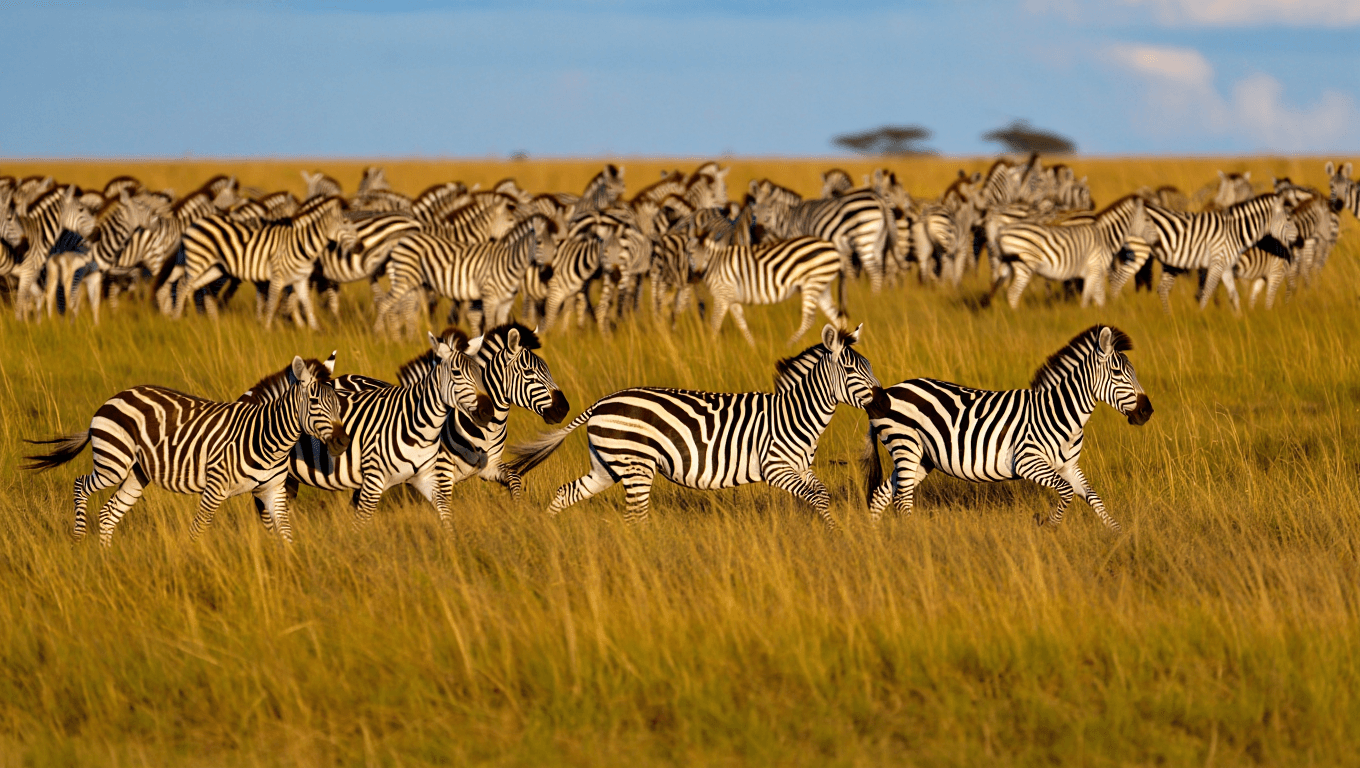
What makes these patterns so intriguing is their consistency within variation. Zebras always have stripes, but no two zebras wear them identically. Leopards always have spots, but the arrangement differs from one cat to the next. This combination of predictability and uniqueness has made animal patterns a scientific obsession—one that bridges biology, chemistry, and mathematics.
Alan Turing's Groundbreaking Theory
In 1952, British mathematician Alan Turing proposed a radical idea: patterns could emerge from chaos through simple chemical interactions. Best known for cracking Nazi codes during World War II, Turing turned his analytical mind toward biology and asked how a uniform cluster of cells could spontaneously organize into stripes or spots.
His hypothesis centered on two types of chemical agents—what we now call morphogens—that diffuse through developing tissue. Think of pouring cream into coffee: the white spreads through the black in swirling, temporary patterns. Turing imagined something similar happening in embryonic skin, but with a twist.
The Chemical Dance That Creates Spots
In Turing's model, one chemical activates pigment-producing cells, creating dark regions. A second chemical inhibits those same cells, preserving blank spaces. These two agents move at different speeds—the inhibitor spreads faster than the activator.
This difference in diffusion rates creates a push-and-pull dynamic that, under the right conditions, generates repeating patterns: spots, stripes, or labyrinth-like mazes. It was elegant. It was mathematically sound. And when scientists ran computer simulations based on Turing's equations, patterns did appear. But there was a problem.
The Problem with Perfect Patterns
The patterns generated by Turing's model were too blurry and too uniform. Real zebra stripes have crisp edges. Real leopard spots vary in size and spacing. Nature's patterns are sharp, irregular, and textured—qualities that Turing's original framework couldn't fully explain. For decades, the theory remained a beautiful approximation, but not a complete answer.
How Scientists Solved the Puzzle: Diffusiophoresis Explained
In 2023, chemical engineer Ankur Gupta at the University of Colorado Boulder and his team added a missing ingredient to Turing's recipe: a process called diffusiophoresis. This mechanism describes how diffusing particles can drag other particles along with them—like a molecular current pulling passengers downstream.
Gupta's insight was to recognize that cells don't just respond to chemical signals—they also move in response to gradients created by those signals. When morphogens diffuse outward, they create flows that pull pigment-producing cells into clusters. This added layer of movement sharpens the boundaries between patterned and unpatterned regions.
The Laundry Analogy: Understanding Diffusiophoresis
Imagine washing a stained shirt. As soap molecules dissolve into the water, they don't just break down the dirt—they physically carry it away from the fabric. The soap diffuses outward, and the grime follows.
Diffusiophoresis works the same way: as chemicals spread through tissue, they transport cells along invisible highways, organizing them into tighter, more defined patterns. When Gupta's team incorporated diffusiophoresis into their simulations, the results were striking. Patterns emerged with sharper edges and more realistic contrast. But they were still too perfect.
Testing the Theory on Ornate Boxfish
To test their refined model, the researchers turned to the ornate boxfish (Aracana ornata), a species endemic to temperate southern Australia. Found in sheltered coastal waters from southern New South Wales to southwest Western Australia—including Tasmania—this slow-moving fish displays a striking pattern of purple-and-black hexagons across its body.
The simulations successfully reproduced the hexagonal arrangement. But in nature, those hexagons aren't identical. Some are larger, some smaller. The spacing between them varies. The edges aren't perfectly straight. Real patterns are beautifully imperfect—and that imperfection was still missing from the model.
Why Nature's Patterns Are Never Perfect
The breakthrough came when Gupta's team stopped treating cells as identical units. In reality, cells vary in size, shape, and behavior. When the researchers gave each simulated cell its own dimensions and allowed those differences to influence movement, something remarkable happened: the patterns became irregular.
Larger cells clustered together to form thicker stripes. Smaller cells created finer details. When cells of different sizes collided, they created breaks and interruptions—the same kind of gaps you see in a zebra's stripes or the grainy texture in a cheetah's spots.
The Ball-in-a-Tube Model
Gupta offers a simple analogy: imagine pushing balls of different sizes through a tube. A basketball creates a wide path. A golf ball leaves a narrow trail. If the balls bump into each other and jam, the flow stops temporarily, creating gaps.
Cells behave similarly. When they move through developing tissue, their size determines the width of the pattern they create, and their interactions determine where the pattern breaks.
"Imperfections are everywhere in nature. We proposed a simple idea that can explain how cells assemble to create these variations."
The updated simulations, published in the journal Matter, now capture the grainy textures, irregular spacing, and broken lines that characterize real animal patterns. For the first time, a mathematical model could replicate not just the structure of nature's designs, but their character.
What This Discovery Means for Science and Technology
Understanding how pattern-making cells assemble has implications far beyond explaining why leopards have spots. The same principles that govern pigment distribution in skin could inform how we design materials that respond to their environment.
Consider chameleons, which change color by rearranging pigment-containing cells in their skin. If engineers could mimic that process, they might create fabrics or coatings that shift hue based on temperature, light, or chemical exposure—camouflage for soldiers, adaptive surfaces for buildings, or diagnostic patches that change color to signal infection.
From Chameleon Skin to Medicine Delivery
The research also holds promise for medicine. Delivering drugs to specific tissues requires precision—getting the right dose to the right place without affecting surrounding areas. By understanding how cells naturally organize into patterns, scientists could design drug delivery systems that mimic those processes, using chemical gradients to guide therapeutic molecules to tumors or damaged tissue.
American Research Leading the Way
This discovery represents a significant achievement for American scientific research in biomimetic materials and computational biology. Gupta's team at CU Boulder has cracked the pattern code, and researchers at institutions like MIT, Caltech, and Stanford are already exploring applications.
At MIT's Media Lab, scientists are developing color-changing textiles inspired by cephalopod skin. Stanford's bioengineering department is investigating pattern-formation principles for tissue engineering and regenerative medicine. Silicon Valley biotech startups are taking notice too, seeing pattern-formation research as the foundation for next-generation adaptive surfaces—everything from self-camouflaging military gear to building facades that adjust their thermal properties based on sunlight exposure.
The collaborative research environment across American universities and the entrepreneurial ecosystem are well-positioned to translate these biological insights into breakthrough technologies. Like the coordinated movement of cells creating patterns, successful innovation requires each component—research, development, and application—working together with precision.
Gupta and his team plan to refine their simulations further by incorporating more complex interactions among cells and background chemical agents. The goal is to capture even finer details of natural patterns and explore how those details emerge from the interplay of chemistry, physics, and biology.
"We are drawing inspiration from the imperfect beauty of natural systems and hope to harness these imperfections for new kinds of functionality in the future."
What This Means for You: Where to See This Next
So what can you watch for as this research moves from lab to life? Here are three concrete ways this discovery will show up in your world:
Military and outdoor gear: Keep an eye on defense technology announcements over the next 2–3 years. Pattern-based adaptive camouflage that responds to different environments—desert, forest, urban—could revolutionize tactical gear. Outdoor recreation companies are already exploring similar tech for hunting and wildlife photography apparel.
Medical diagnostics: Look for smart bandages and diagnostic patches at healthcare innovation showcases. These devices could change color to indicate infection, inflammation, or healing progress—giving patients and doctors real-time visual feedback without invasive testing.
Follow the research: Gupta's lab at CU Boulder regularly publishes simulation updates and collaborates with materials scientists nationwide. For the latest developments, check university press releases from MIT's biomimetic robotics group, Stanford's bioengineering department, and Caltech's applied physics labs. Major tech conferences like CES and SXSW increasingly feature biomimetic materials in their innovation showcases.
The next time you see a zebra at the zoo or a dalmatian on the street, take a moment to appreciate the mathematics written in their coats. Those stripes and spots are more than decoration—they're evidence of a hidden order, a dance of chemicals and cells that has been choreographing itself for millions of years. And now, after seventy years of inquiry, we're finally learning the steps—and teaching them to the technologies that will shape our future.