• My Feed
  • Home
  • What's Important
  • Media & Entertainment
Search

Stay Curious. Stay Wanture.

© 2026 Wanture. All rights reserved.

  • Terms of Use
  • Privacy Policy
Health/Biotech

Scientists are growing new teeth in adults

Japanese drug unlocks dormant tooth buds—human trials underway

13 November 2025

—

Explainer *

Marcus Lee
banner

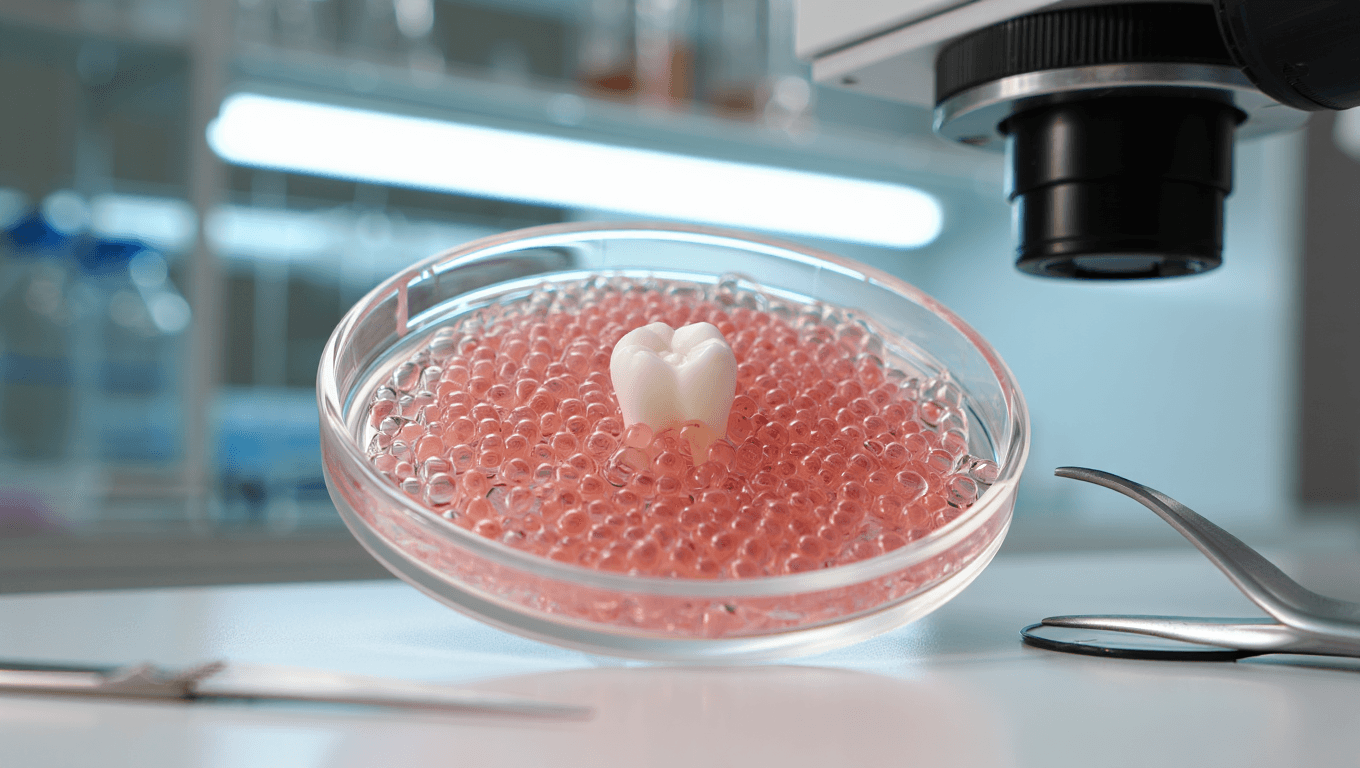
TRG-035 targets a single protein that blocks adult tooth growth, potentially allowing biological teeth to regenerate naturally. Early animal studies show promise, and the first human safety trial is now testing whether adults can grow replacement teeth without implants or dentures—a shift from artificial fixes to true regeneration.

560c6a4a-e565-4e56-a17f-3a17306be6c2

Summary:

  • Japanese researchers develop TRG-035, a drug that could enable adults to regenerate teeth by neutralizing a protein blocking tooth growth.
  • First human clinical trial launched in 2024, testing safety of drug that aims to stimulate natural tooth growth from dormant cell buds.
  • Potential breakthrough for people with congenital tooth agenesis, offering biological tooth regeneration as an alternative to implants and dentures.

Imagine losing a tooth and watching a new one grow back in its place — not in childhood, but as an adult. It sounds like science fiction, or perhaps something borrowed from the biology of sharks. But Japanese researchers are working to make this a reality for humans.

At the center of their effort is TRG-035, an experimental drug designed to regenerate teeth by targeting a single protein that nature uses to shut down tooth growth after our permanent set comes in. The question isn't whether the science is promising — early animal studies suggest it is. The question is how it works, what it means for people living without teeth, and whether this approach could one day replace the metal and porcelain we currently rely on to fill the gaps.

Why Adults Can't Grow New Teeth — and What Blocks the Process

Humans are born with the biological machinery to grow teeth twice: once as infants, and again as children when baby teeth fall out and permanent ones take their place. But after that second wave, the process stops. It's not that the body loses the ability entirely — it's that a biological switch gets flipped off.

The switch in question is a protein called USAG-1. Think of it as a gatekeeper that prevents dormant tooth buds — tiny clusters of cells left over from development — from activating in adulthood. These buds exist in the jaw, silent and unused, because USAG-1 blocks the signaling pathways that would otherwise tell them to grow.

Specifically, it interferes with a molecule called bone morphogenetic protein, or BMP, which plays a key role in tissue formation, including teeth. In children, this system is still flexible. But as we age, USAG-1 becomes a permanent barrier. The result: no third set of teeth, no matter how much we might need one.

How TRG-035 Unlocks Dormant Tooth Buds

TRG-035 is a monoclonal antibody — a lab-engineered protein designed to bind to a specific target in the body. In this case, the target is USAG-1. By attaching to this protein, the drug effectively neutralizes it, removing the block on BMP signaling. With the gatekeeper out of the way, the dormant tooth buds receive the molecular signals they need to begin developing into fully formed teeth.

The analogy here is simple: if USAG-1 is a lock, TRG-035 is the key that opens it. Once unlocked, the body's own developmental machinery takes over. The tooth bud begins to differentiate, forming enamel, dentin, and the root structures necessary for a functional tooth. The process mirrors what happens naturally in childhood, but it's triggered artificially in adulthood.

What Makes This Approach Different

Unlike dental implants, which involve surgically embedding a titanium post into the jawbone, or dentures, which sit on top of the gums, TRG-035 aims to stimulate the growth of a biological tooth. The tooth that emerges is made of the same materials as a natural tooth — enamel on the outside, dentin beneath, and a living pulp core with nerves and blood vessels.

If successful, it would integrate with the jaw just as a natural tooth does, without the need for foreign materials or ongoing adjustments.

What the Animal Studies Showed — and What They Didn't

Before TRG-035 could be tested in humans, researchers at Kyoto University conducted preclinical trials in mice and ferrets. The results, published in a peer-reviewed paper in March 2021, were encouraging. In both species, the drug successfully stimulated the growth of new teeth. The teeth appeared structurally normal, and no significant adverse effects were reported during the study period.

Ferrets were chosen specifically because their dental development is closer to that of humans than mice. They have a mix of tooth types — incisors, canines, and molars — and their jaw structure provides a better model for understanding how regenerated teeth might function in a human mouth. The fact that the drug worked in ferrets suggested it might translate to humans, though animal models are never perfect predictors.

What the studies didn't show, however, is long-term safety or efficacy. The trials were short, and the sample sizes were small. Questions remain about how long the regenerated teeth last, whether they're as strong as natural teeth, and whether the drug could have unintended effects on other tissues that rely on BMP signaling, such as bone or cartilage.

The First Human Trial: What's Being Tested and Why

In October 2024, researchers launched the first Phase 1 clinical trial of TRG-035 at Kyoto University Hospital and Kitano Hospital in Japan. The trial enrolled 30 healthy adult men between the ages of 30 and 64, all of whom are missing at least one tooth. The drug is administered as a single intravenous dose, and the trial follows a dose-escalation design, meaning participants receive increasing amounts of the drug to determine the highest safe dose.

Phase 1 trials are not designed to prove that a drug works — they're designed to prove that it's safe. Researchers are monitoring participants for adverse reactions, measuring how the drug is metabolized, and assessing whether it causes any unexpected side effects. The trial is scheduled to continue through August 2025, an 11-month study period. As of November 2024, no results, safety data, or adverse event reports have been publicly released.

Why Start with Healthy Adults?

It might seem counterintuitive to test a tooth regeneration drug on people who don't urgently need new teeth. But Phase 1 trials prioritize safety over efficacy. By starting with healthy adults, researchers can establish a baseline understanding of how the drug behaves in the human body without the added complexity of underlying health conditions.

If the drug proves safe in this group, future trials will expand to include people with congenital tooth agenesis — a condition in which some teeth never develop — and eventually, broader patient populations.

Who Would Benefit Most — and When

The most immediate beneficiaries of TRG-035, if it proves successful, would be children born with congenital tooth agenesis. This condition affects roughly 1 in 1,000 people and can range from a single missing tooth to the absence of most or all teeth. For these individuals, the lack of teeth isn't just cosmetic — it affects chewing, speech development, and social interaction.

Current treatments involve years of orthodontic work, implants, or dentures, all of which require ongoing maintenance and adjustment as the child grows. A drug that could stimulate natural tooth growth would eliminate the need for artificial replacements. The teeth would grow with the child, integrate with the jaw, and function like any other tooth. For families, this could mean fewer surgeries, lower costs, and a better quality of life.

Beyond congenital cases, the drug could eventually be used for adults who have lost teeth due to injury, decay, or periodontal disease. However, this application is further off. Researchers need to confirm that the drug works in people with healthy jaws before testing it in people with compromised bone structure or gum disease.

How This Compares to Implants and Dentures

Dental implants are currently the gold standard for replacing missing teeth. They're durable, functional, and can last decades with proper care. But they're also expensive — a single implant can cost several thousand dollars in the United States — and they require surgery. Dentures are less invasive but come with their own drawbacks: they can slip, require adhesives, and don't provide the same biting force as natural teeth.

TRG-035 offers a fundamentally different approach. Instead of replacing a tooth with an artificial structure, it aims to grow a biological one. The advantages are clear: no surgery, no foreign materials, and a tooth that integrates naturally with the body.

The trade-offs, at least for now, are uncertainty. We don't yet know how long regenerated teeth last, how strong they are, or whether the process works reliably across different patients.

What Comes Next — and What Remains Unknown

If the Phase 1 trial concludes successfully in August 2025, the next step will be Phase 2, which focuses on efficacy. Researchers will test whether the drug actually stimulates tooth growth in humans and, if so, how consistently. Phase 3 would follow, involving larger patient populations and longer observation periods. If all goes well, the drug could be approved for clinical use by the early 2030s, though this timeline is speculative.

Several questions remain unanswered. Will the regenerated teeth be as strong as natural ones? How long will they last? Can the drug be used in people with bone loss or gum disease? And perhaps most importantly, will the process be affordable and accessible, or will it remain a high-cost option available only to a few?

There's also the question of unintended effects. BMP signaling isn't unique to teeth — it's involved in bone formation, cartilage development, and other processes throughout the body. Blocking USAG-1 could theoretically affect these systems, though the animal studies didn't reveal any major issues. Human trials will provide more clarity, but the possibility of long-term side effects can't be ruled out yet.

What This Means for the Future of Dental Care

TRG-035 represents a shift in how we think about tooth loss. For most of human history, losing a tooth meant living without it or relying on crude replacements. Modern dentistry gave us implants and dentures, which work well but remain fundamentally artificial. Regenerative medicine offers the possibility of something closer to what nature intended: a biological solution to a biological problem.

If this approach succeeds, it won't just change dentistry — it will change expectations. People may come to view tooth loss not as permanent, but as reversible. The implications extend beyond individual patients. Health systems could see reduced demand for complex dental surgeries. Manufacturers of implants and dentures might need to adapt. And researchers working on other forms of tissue regeneration — bone, cartilage, even organs — will have a proof of concept to build on.

But all of that depends on what happens in the next few years. For now, TRG-035 is a promising experiment, not a proven treatment. The science is sound, the early results are encouraging, and the potential is significant. Whether it delivers on that potential will depend on the data that emerges from the ongoing trial — and the trials that follow.

Feed

    Cursor 3 Launches Unified AI Coding Workspace

    Cursor 3 Launches Unified AI Coding Workspace

    Side‑panel lets devs toggle local and cloud agents, building on Composer 2 and Kimi 2.5

    about 12 hours ago
    Orion’s Six‑Minute Burn Puts Artemis 2 on Free‑Return Path

    Orion’s Six‑Minute Burn Puts Artemis 2 on Free‑Return Path

    iPhone 17 Pro Max survives Orion’s deep‑space test as crew heads to lunar flyby

    about 13 hours ago
    Android 17 Introduces System‑Level Notification Rules

    Android 17 Introduces System‑Level Notification Rules

    Samsung’s One UI 9 will adopt Android 17’s rules, adding OS‑level alert control

    about 13 hours ago

    Nvidia rolls out DLSS 4.5, 6× boost on RTX 50-series

    Dynamic Multi‑Frame Generation smooths 120–240 Hz, delivered in the driver 595.97

    about 16 hours ago
    Apple rolls out iOS 18.7.7 to block DarkSword

    Apple rolls out iOS 18.7.7 to block DarkSword

    Patch fixes six Safari bugs, stopping DarkSword on iOS 18–18.7 devices

    1 day ago
    BoxPlates Skins Revamp PS5 Slim & Pro in Two Weeks

    BoxPlates Skins Revamp PS5 Slim & Pro in Two Weeks

    1 day ago
    Artemis 2 Rockets Beyond Earth—402,000 km From Home

    Artemis 2 Rockets Beyond Earth—402,000 km From Home

    Lift‑off at 8:23 a.m. ET marks first crewed lunar flight since 1972, with a diverse four‑person crew

    1 day ago
    Apple celebrates 50 years with new minimalist wallpapers

    Apple celebrates 50 years with new minimalist wallpapers

    Basic Apple Guy releases iPhone and Mac wallpapers for Apple’s 50th anniversary

    1 day ago
    Razer Unveils Pro Type Ergo Ergonomic Keyboard Today

    Razer Unveils Pro Type Ergo Ergonomic Keyboard Today

    Split design, AI button, and 19‑zone RGB aim at U.S. workers with a 9.7% RSI rate

    2 days ago
    Google to debut screen‑free Fitbit band in 2026

    Google to debut screen‑free Fitbit band in 2026

    AI‑driven training plan and upgraded platform aim at the health‑tracking market against Oura and Whoop

    2 days ago
    Nothing unveils AI‑powered smart glasses for a 2027 launch

    Nothing unveils AI‑powered smart glasses for a 2027 launch

    The glasses use a paired phone and cloud, with a clear frame and LED accents

    2 days ago
    Google rolls out Veo 3.1 Lite, halving AI video costs

    Google rolls out Veo 3.1 Lite, halving AI video costs

    Veo 3.1 Lite matches Veo 3.1 Fast speed but cuts price by over 50% for devs now

    3 days ago
    Freelander 97 Debuts 800‑V EV Crossover in Shanghai

    Freelander 97 Debuts 800‑V EV Crossover in Shanghai

    Chery‑JLR showcases ADS 4.1 autonomy on 800‑V platform, eyeing 2028 launch

    3 days ago
    Telegram Launches Version 12.6 With AI Editor, New Polls

    Telegram Launches Version 12.6 With AI Editor, New Polls

    It adds an AI tone editor, richer polls, Live/Motion Photos, and bot management

    3 days ago

    Pixel 11 Pro Renders Leak With Black Camera Bar and MediaTek Modem

    Google’s August 2026 flagship ditches Samsung radios for improved 5G and runs the Tensor G6

    3 days ago

    Anthropic leak reveals Opus 4.7, Sonnet 4.8 in npm 2.1.88

    Leak on March 30‑31 exposed TypeScript, revealing Opus 4.7, Sonnet 4.8, and internal features

    3 days ago
    iOS 26.5 beta lands on iPhone 17 Pro with an 8 GB download

    iOS 26.5 beta lands on iPhone 17 Pro with an 8 GB download

    Apple restores RCS encryption and adds a 12‑month subscription in the update

    3 days ago
    Windows 11 24H2 Brings Dark Mode to Core Utilities

    Windows 11 24H2 Brings Dark Mode to Core Utilities

    Tools like Registry Editor get dark mode in Windows 11 24H2, out in Sep 2026

    4 days ago

    John Noble's 1,024 Thread Implant Powers Warcraft Raids

    John Noble, a former British parachutist turned veteran gamer, received a neural implant with 1,024 threads after a 2024 trial in Seattle. The device lets him control a MacBook with thought alone, turning World of Warcraft raids into hands‑free battles. His story shows how brain‑computer interfaces can expand digital access for disabled veterans and reshape gaming.

    5 days ago
    Apple unveils Siri app for iOS 27, adds 50+ AI agents

    Apple unveils Siri app for iOS 27, adds 50+ AI agents

    iOS 27 Siri app adds Extensions marketplace, eyeing Alexa’s 100,000‑skill store

    5 days ago
    Loading...
Health/Biotech

Scientists are growing new teeth in adults

Japanese drug unlocks dormant tooth buds—human trials underway

November 13, 2025, 3:29 pm

TRG-035 targets a single protein that blocks adult tooth growth, potentially allowing biological teeth to regenerate naturally. Early animal studies show promise, and the first human safety trial is now testing whether adults can grow replacement teeth without implants or dentures—a shift from artificial fixes to true regeneration.

560c6a4a-e565-4e56-a17f-3a17306be6c2

Summary

  • Japanese researchers develop TRG-035, a drug that could enable adults to regenerate teeth by neutralizing a protein blocking tooth growth.
  • First human clinical trial launched in 2024, testing safety of drug that aims to stimulate natural tooth growth from dormant cell buds.
  • Potential breakthrough for people with congenital tooth agenesis, offering biological tooth regeneration as an alternative to implants and dentures.

Imagine losing a tooth and watching a new one grow back in its place — not in childhood, but as an adult. It sounds like science fiction, or perhaps something borrowed from the biology of sharks. But Japanese researchers are working to make this a reality for humans.

At the center of their effort is TRG-035, an experimental drug designed to regenerate teeth by targeting a single protein that nature uses to shut down tooth growth after our permanent set comes in. The question isn't whether the science is promising — early animal studies suggest it is. The question is how it works, what it means for people living without teeth, and whether this approach could one day replace the metal and porcelain we currently rely on to fill the gaps.

Why Adults Can't Grow New Teeth — and What Blocks the Process

Humans are born with the biological machinery to grow teeth twice: once as infants, and again as children when baby teeth fall out and permanent ones take their place. But after that second wave, the process stops. It's not that the body loses the ability entirely — it's that a biological switch gets flipped off.

The switch in question is a protein called USAG-1. Think of it as a gatekeeper that prevents dormant tooth buds — tiny clusters of cells left over from development — from activating in adulthood. These buds exist in the jaw, silent and unused, because USAG-1 blocks the signaling pathways that would otherwise tell them to grow.

Specifically, it interferes with a molecule called bone morphogenetic protein, or BMP, which plays a key role in tissue formation, including teeth. In children, this system is still flexible. But as we age, USAG-1 becomes a permanent barrier. The result: no third set of teeth, no matter how much we might need one.

How TRG-035 Unlocks Dormant Tooth Buds

TRG-035 is a monoclonal antibody — a lab-engineered protein designed to bind to a specific target in the body. In this case, the target is USAG-1. By attaching to this protein, the drug effectively neutralizes it, removing the block on BMP signaling. With the gatekeeper out of the way, the dormant tooth buds receive the molecular signals they need to begin developing into fully formed teeth.

The analogy here is simple: if USAG-1 is a lock, TRG-035 is the key that opens it. Once unlocked, the body's own developmental machinery takes over. The tooth bud begins to differentiate, forming enamel, dentin, and the root structures necessary for a functional tooth. The process mirrors what happens naturally in childhood, but it's triggered artificially in adulthood.

What Makes This Approach Different

Unlike dental implants, which involve surgically embedding a titanium post into the jawbone, or dentures, which sit on top of the gums, TRG-035 aims to stimulate the growth of a biological tooth. The tooth that emerges is made of the same materials as a natural tooth — enamel on the outside, dentin beneath, and a living pulp core with nerves and blood vessels.

If successful, it would integrate with the jaw just as a natural tooth does, without the need for foreign materials or ongoing adjustments.

What the Animal Studies Showed — and What They Didn't

Before TRG-035 could be tested in humans, researchers at Kyoto University conducted preclinical trials in mice and ferrets. The results, published in a peer-reviewed paper in March 2021, were encouraging. In both species, the drug successfully stimulated the growth of new teeth. The teeth appeared structurally normal, and no significant adverse effects were reported during the study period.

Ferrets were chosen specifically because their dental development is closer to that of humans than mice. They have a mix of tooth types — incisors, canines, and molars — and their jaw structure provides a better model for understanding how regenerated teeth might function in a human mouth. The fact that the drug worked in ferrets suggested it might translate to humans, though animal models are never perfect predictors.

What the studies didn't show, however, is long-term safety or efficacy. The trials were short, and the sample sizes were small. Questions remain about how long the regenerated teeth last, whether they're as strong as natural teeth, and whether the drug could have unintended effects on other tissues that rely on BMP signaling, such as bone or cartilage.

The First Human Trial: What's Being Tested and Why

In October 2024, researchers launched the first Phase 1 clinical trial of TRG-035 at Kyoto University Hospital and Kitano Hospital in Japan. The trial enrolled 30 healthy adult men between the ages of 30 and 64, all of whom are missing at least one tooth. The drug is administered as a single intravenous dose, and the trial follows a dose-escalation design, meaning participants receive increasing amounts of the drug to determine the highest safe dose.

Phase 1 trials are not designed to prove that a drug works — they're designed to prove that it's safe. Researchers are monitoring participants for adverse reactions, measuring how the drug is metabolized, and assessing whether it causes any unexpected side effects. The trial is scheduled to continue through August 2025, an 11-month study period. As of November 2024, no results, safety data, or adverse event reports have been publicly released.

Why Start with Healthy Adults?

It might seem counterintuitive to test a tooth regeneration drug on people who don't urgently need new teeth. But Phase 1 trials prioritize safety over efficacy. By starting with healthy adults, researchers can establish a baseline understanding of how the drug behaves in the human body without the added complexity of underlying health conditions.

If the drug proves safe in this group, future trials will expand to include people with congenital tooth agenesis — a condition in which some teeth never develop — and eventually, broader patient populations.

Who Would Benefit Most — and When

The most immediate beneficiaries of TRG-035, if it proves successful, would be children born with congenital tooth agenesis. This condition affects roughly 1 in 1,000 people and can range from a single missing tooth to the absence of most or all teeth. For these individuals, the lack of teeth isn't just cosmetic — it affects chewing, speech development, and social interaction.

Current treatments involve years of orthodontic work, implants, or dentures, all of which require ongoing maintenance and adjustment as the child grows. A drug that could stimulate natural tooth growth would eliminate the need for artificial replacements. The teeth would grow with the child, integrate with the jaw, and function like any other tooth. For families, this could mean fewer surgeries, lower costs, and a better quality of life.

Beyond congenital cases, the drug could eventually be used for adults who have lost teeth due to injury, decay, or periodontal disease. However, this application is further off. Researchers need to confirm that the drug works in people with healthy jaws before testing it in people with compromised bone structure or gum disease.

How This Compares to Implants and Dentures

Dental implants are currently the gold standard for replacing missing teeth. They're durable, functional, and can last decades with proper care. But they're also expensive — a single implant can cost several thousand dollars in the United States — and they require surgery. Dentures are less invasive but come with their own drawbacks: they can slip, require adhesives, and don't provide the same biting force as natural teeth.

TRG-035 offers a fundamentally different approach. Instead of replacing a tooth with an artificial structure, it aims to grow a biological one. The advantages are clear: no surgery, no foreign materials, and a tooth that integrates naturally with the body.

The trade-offs, at least for now, are uncertainty. We don't yet know how long regenerated teeth last, how strong they are, or whether the process works reliably across different patients.

What Comes Next — and What Remains Unknown

If the Phase 1 trial concludes successfully in August 2025, the next step will be Phase 2, which focuses on efficacy. Researchers will test whether the drug actually stimulates tooth growth in humans and, if so, how consistently. Phase 3 would follow, involving larger patient populations and longer observation periods. If all goes well, the drug could be approved for clinical use by the early 2030s, though this timeline is speculative.

Several questions remain unanswered. Will the regenerated teeth be as strong as natural ones? How long will they last? Can the drug be used in people with bone loss or gum disease? And perhaps most importantly, will the process be affordable and accessible, or will it remain a high-cost option available only to a few?

There's also the question of unintended effects. BMP signaling isn't unique to teeth — it's involved in bone formation, cartilage development, and other processes throughout the body. Blocking USAG-1 could theoretically affect these systems, though the animal studies didn't reveal any major issues. Human trials will provide more clarity, but the possibility of long-term side effects can't be ruled out yet.

What This Means for the Future of Dental Care

TRG-035 represents a shift in how we think about tooth loss. For most of human history, losing a tooth meant living without it or relying on crude replacements. Modern dentistry gave us implants and dentures, which work well but remain fundamentally artificial. Regenerative medicine offers the possibility of something closer to what nature intended: a biological solution to a biological problem.

If this approach succeeds, it won't just change dentistry — it will change expectations. People may come to view tooth loss not as permanent, but as reversible. The implications extend beyond individual patients. Health systems could see reduced demand for complex dental surgeries. Manufacturers of implants and dentures might need to adapt. And researchers working on other forms of tissue regeneration — bone, cartilage, even organs — will have a proof of concept to build on.

But all of that depends on what happens in the next few years. For now, TRG-035 is a promising experiment, not a proven treatment. The science is sound, the early results are encouraging, and the potential is significant. Whether it delivers on that potential will depend on the data that emerges from the ongoing trial — and the trials that follow.

Feed

    Cursor 3 Launches Unified AI Coding Workspace

    Cursor 3 Launches Unified AI Coding Workspace

    Side‑panel lets devs toggle local and cloud agents, building on Composer 2 and Kimi 2.5

    about 12 hours ago
    Orion’s Six‑Minute Burn Puts Artemis 2 on Free‑Return Path

    Orion’s Six‑Minute Burn Puts Artemis 2 on Free‑Return Path

    iPhone 17 Pro Max survives Orion’s deep‑space test as crew heads to lunar flyby

    about 13 hours ago
    Android 17 Introduces System‑Level Notification Rules

    Android 17 Introduces System‑Level Notification Rules

    Samsung’s One UI 9 will adopt Android 17’s rules, adding OS‑level alert control

    about 13 hours ago

    Nvidia rolls out DLSS 4.5, 6× boost on RTX 50-series

    Dynamic Multi‑Frame Generation smooths 120–240 Hz, delivered in the driver 595.97

    about 16 hours ago
    Apple rolls out iOS 18.7.7 to block DarkSword

    Apple rolls out iOS 18.7.7 to block DarkSword

    Patch fixes six Safari bugs, stopping DarkSword on iOS 18–18.7 devices

    1 day ago
    BoxPlates Skins Revamp PS5 Slim & Pro in Two Weeks

    BoxPlates Skins Revamp PS5 Slim & Pro in Two Weeks

    1 day ago
    Artemis 2 Rockets Beyond Earth—402,000 km From Home

    Artemis 2 Rockets Beyond Earth—402,000 km From Home

    Lift‑off at 8:23 a.m. ET marks first crewed lunar flight since 1972, with a diverse four‑person crew

    1 day ago
    Apple celebrates 50 years with new minimalist wallpapers

    Apple celebrates 50 years with new minimalist wallpapers

    Basic Apple Guy releases iPhone and Mac wallpapers for Apple’s 50th anniversary

    1 day ago
    Razer Unveils Pro Type Ergo Ergonomic Keyboard Today

    Razer Unveils Pro Type Ergo Ergonomic Keyboard Today

    Split design, AI button, and 19‑zone RGB aim at U.S. workers with a 9.7% RSI rate

    2 days ago
    Google to debut screen‑free Fitbit band in 2026

    Google to debut screen‑free Fitbit band in 2026

    AI‑driven training plan and upgraded platform aim at the health‑tracking market against Oura and Whoop

    2 days ago
    Nothing unveils AI‑powered smart glasses for a 2027 launch

    Nothing unveils AI‑powered smart glasses for a 2027 launch

    The glasses use a paired phone and cloud, with a clear frame and LED accents

    2 days ago
    Google rolls out Veo 3.1 Lite, halving AI video costs

    Google rolls out Veo 3.1 Lite, halving AI video costs

    Veo 3.1 Lite matches Veo 3.1 Fast speed but cuts price by over 50% for devs now

    3 days ago
    Freelander 97 Debuts 800‑V EV Crossover in Shanghai

    Freelander 97 Debuts 800‑V EV Crossover in Shanghai

    Chery‑JLR showcases ADS 4.1 autonomy on 800‑V platform, eyeing 2028 launch

    3 days ago
    Telegram Launches Version 12.6 With AI Editor, New Polls

    Telegram Launches Version 12.6 With AI Editor, New Polls

    It adds an AI tone editor, richer polls, Live/Motion Photos, and bot management

    3 days ago

    Pixel 11 Pro Renders Leak With Black Camera Bar and MediaTek Modem

    Google’s August 2026 flagship ditches Samsung radios for improved 5G and runs the Tensor G6

    3 days ago

    Anthropic leak reveals Opus 4.7, Sonnet 4.8 in npm 2.1.88

    Leak on March 30‑31 exposed TypeScript, revealing Opus 4.7, Sonnet 4.8, and internal features

    3 days ago
    iOS 26.5 beta lands on iPhone 17 Pro with an 8 GB download

    iOS 26.5 beta lands on iPhone 17 Pro with an 8 GB download

    Apple restores RCS encryption and adds a 12‑month subscription in the update

    3 days ago
    Windows 11 24H2 Brings Dark Mode to Core Utilities

    Windows 11 24H2 Brings Dark Mode to Core Utilities

    Tools like Registry Editor get dark mode in Windows 11 24H2, out in Sep 2026

    4 days ago

    John Noble's 1,024 Thread Implant Powers Warcraft Raids

    John Noble, a former British parachutist turned veteran gamer, received a neural implant with 1,024 threads after a 2024 trial in Seattle. The device lets him control a MacBook with thought alone, turning World of Warcraft raids into hands‑free battles. His story shows how brain‑computer interfaces can expand digital access for disabled veterans and reshape gaming.

    5 days ago
    Apple unveils Siri app for iOS 27, adds 50+ AI agents

    Apple unveils Siri app for iOS 27, adds 50+ AI agents

    iOS 27 Siri app adds Extensions marketplace, eyeing Alexa’s 100,000‑skill store

    5 days ago
    Loading...
banner