
Wanture.

Decide better.

Live better.

Stay Curious. Stay Wanture.

© 2026 Wanture. All rights reserved.

  • Terms of Use
  • Privacy Policy
Health/MedTech
Magnetic Nanobots: Could They Clear Arterial Plaque?

How steerable, enzyme‑loaded nanobots might transform heart‑disease therapy

30 November 2025

—

Explainer

Adrian Vega
banner

Magnetic nanobots are tiny, magnet‑steered capsules that carry enzymes or chemicals to dissolve arterial plaque from inside the bloodstream. Researchers are testing magnetic guidance, biocompatible coatings and targeted payloads in animal studies, but human trials remain years away. Knowing this approach shows how heart‑disease care could become less invasive and more precise.

567

Summary:

  • Nanobots are tiny biodegradable capsules loaded with enzymes or chemicals and embedded with iron‑oxide particles that let external magnets steer them in blood.
  • Magnetic steering creates a focused field that pulls the nanobot along blood flow, letting it target a plaque site even in fast‑moving arteries.
  • Research is still pre‑clinical; animal studies show targeted clot dissolution, but biocompatibility, precise navigation and FDA approval remain major hurdles.

# Formatted Article Output

Picture your arteries like city pipes that slowly fill with mineral deposits. Over decades, the buildup hardens. Blood flow narrows. Eventually, a surgeon has to go in with tools—stents, balloons, scalpels—to force the passage open again.

Now imagine something different. Imagine machines smaller than a grain of pollen, steered through your bloodstream by magnetic fields, dissolving blockages from the inside. Not with blades. With chemistry.

This is the vision driving some of the most ambitious research in cardiovascular medicine right now—including pioneering work by Swedish scientists and research teams worldwide. Scientists are exploring whether magnetic nanobots—microscopic robots guided by external magnets—could one day clear arterial plaque without surgery. The idea is still largely theoretical. No proven therapy exists yet. But the question itself rewires how we think about treating the leading cause of death worldwide.

What a Nanobot Actually Is

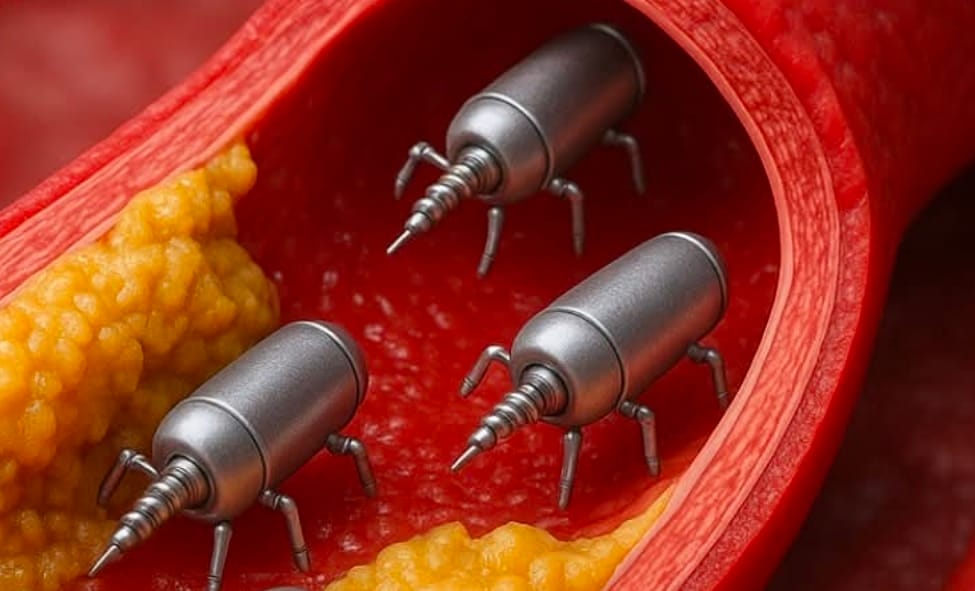
A nanobot isn't a tiny version of a factory robot—it's a molecular delivery system with a job. Think of it as a microscopic capsule, often made from biodegradable materials like lipids or polymers, loaded with enzymes or chemicals designed to break down specific substances.

The "bot" part comes from its ability to be directed. Researchers embed magnetic particles—often iron oxide—into the structure. When you apply an external magnetic field (similar to an MRI scanner but more focused), you can steer the particle through the bloodstream. It's like a quarterback threading a pass through defenders—precision at a scale where your finger is too big to point.

Iron oxide nanoparticles aren't entirely new to medicine. Ferumoxytol, a superparamagnetic iron oxide formulation, has FDA approval for treating iron deficiency and is used off-label as an MRI contrast agent in atherosclerosis imaging studies. What's different now is the attempt to add navigation and therapeutic payloads.

How Magnetic Steering Would Work Inside an Artery

Arteries are not empty highways—they're rivers of cells, proteins, and turbulence. A nanobot released into your bloodstream would tumble chaotically unless something guided it.

Magnetic navigation works because iron oxide responds predictably to magnetic gradients. Researchers position external magnets around the body—sometimes handheld, sometimes robotic arms—and create a controlled magnetic field that pulls the nanobot toward a target.

Here's where it gets complex. Blood flows at different speeds depending on where you are in the vascular system. Capillaries are slow and narrow. The aorta is fast and wide. A nanobot needs to navigate both without getting swept away or stuck in the wrong place.

Current research focuses on gradient-based steering—adjusting the magnetic field so the pull is strongest exactly where you want the particle to go. Recent engineering advances include tri-coil magnetic guidance systems for nanorobots in cerebral arteries and magnetically actuated devices optimized for high-flow endovascular navigation. These remain in early development stages.

What Happens When the Nanobot Reaches the Plaque

Arterial plaque is not uniform. Some of it is soft lipid deposits. Some is calcified and hard as bone. Some contains immune cells that have gotten stuck trying to clean up the mess.

Different research teams are testing different payloads. Some nanobots carry enzymes that digest lipids. Others release compounds that dissolve fibrin (the protein that stabilizes clots). A few experimental designs use localized heat—triggered by the magnetic field itself—to soften hardened plaque so the body's natural cleanup systems can remove it.

The goal is not to vaporize the blockage. It's to break it into small enough pieces that your liver and kidneys can filter it out like they do with other cellular debris.

One promising approach involves immunomodulatory lipid nanoparticles targeting specific immune cells that contribute to atherosclerosis. In mouse models, these particles slowed plaque progression by modulating the immune response rather than mechanically removing deposits.

Why This Is Harder Than It Sounds

Human bodies are exceptionally good at rejecting foreign objects—your immune system evolved to attack anything that doesn't belong. Nanobots, even biodegradable ones, look foreign.

Researchers coat nanoparticles with molecules that mimic the surface of red blood cells or wrap them in lipid layers the body recognizes as "self." This buys time. But not forever. Most experimental nanobots have a working window of minutes to hours before immune cells start tagging them for removal.

Then there's the targeting problem. Magnetic steering is precise, but not perfect. A nanobot released in your arm has to travel through your heart, navigate branching arteries, and stop at exactly the right spot in a coronary vessel that might be only two millimeters wide. Miss by a fraction, and the particle drifts past the blockage or lodges in healthy tissue.

And perhaps most challenging: how do you know when you're done? Surgeons can see plaque on imaging and confirm removal in real time. With nanobots, you're working blind unless you have continuous imaging—which means radiation exposure, cost, and time.

Systematic reviews of magnetic microrobot translation identify biocompatibility, retrieval and clearance pathways, real-time imaging guidance, and regulatory approval as the primary barriers to clinical use.

Where the Research Stands Now

Most of this work is happening in laboratory settings and animal models, not in human patients. A handful of research groups have demonstrated magnetic steering of nanoparticles through controlled vascular systems and in small animal studies.

The results are promising in controlled conditions. In 2024, researchers from the Chinese University of Hong Kong demonstrated tPA-anchored magnetic nanorobots that achieved targeted thrombolysis in submillimeter vessels in a rabbit carotid artery model. This represents progress in clot dissolution, though not plaque removal.

In the United States, major research institutions are pushing the field forward. At MIT, engineers are developing magnetic microrobots for targeted drug delivery. Carnegie Mellon's Metin Sitti lab focuses on bioinspired miniature robotics, including magnetically steered devices for medical applications. Stanford researchers are refining magnetic navigation systems for cardiovascular use, while Harvard's Wyss Institute explores soft microrobots that adapt to biological environments. Northeastern University, in collaboration with ARPA-H, is advancing microrobotics for precise vascular interventions. All of this work remains at preclinical and device development stages.

No major clinical trials are currently underway for plaque-clearing nanobots in humans. A comprehensive search of ClinicalTrials.gov through February 2026 found no FDA-regulated human interventional trials using magnetically actuated nanobots to mechanically remove or dissolve atherosclerotic plaque.

Some related technologies—like magnetically guided catheters or nanoparticle drug delivery for cancer—are in early human testing, and those results will inform cardiovascular applications. But we're talking about a timeline measured in years, possibly decades, not months.

What the Regulatory Path Looks Like

As of February 2026, no FDA-approved "magnetic nanobot" or autonomous nanorobot therapies exist to remove arterial atherosclerotic plaque in humans.

The FDA has published guidance on products involving nanotechnology and maintains standards (ISO/ASTM/ISO 10993) for nanomaterials in medical devices. Any therapeutic nanobot would need to clear multiple regulatory hurdles: materials biocompatibility, controlled navigation demonstration, efficacy in dissolving specific plaque types, long-term safety data, and manufacturing consistency.

These requirements exist for good reason. The cardiovascular system is unforgiving. A particle that breaks loose and causes a stroke or embolism turns a promising therapy into a catastrophic failure.

Why This Concept Matters, Even If It's Not Ready

Cardiovascular disease kills more people globally than anything else. In the United States alone, someone has a heart attack every 40 seconds. Current treatments—bypass surgery, stents, angioplasty—work, but they're invasive, expensive, and don't address the underlying biology that creates plaque in the first place.

The nanobot vision asks a different question: What if we could treat arterial disease the way we treat infections—with targeted agents that go where the problem is, do their job, and leave?

That question is driving innovation across multiple fields. Materials scientists are designing biocompatible particles. Engineers are refining magnetic steering systems. Biologists are identifying the enzymes that can safely break down plaque without triggering inflammation. Clinicians are mapping the vascular system at nanoscale resolution to understand where interventions are feasible.

None of these advances happen in isolation. Even if magnetic nanobots never become the primary treatment for arterial plaque, the research generates tools and knowledge that improve other therapies. Better imaging. Smarter drug delivery. Deeper understanding of how plaque forms and how the body responds to intervention.

What You Should Know Right Now

If you or someone you care about has cardiovascular disease, this article is not a reason to delay proven treatments. Statins, blood pressure management, lifestyle changes, and when necessary, surgical interventions remain the evidence-based standard of care.

What this research represents is the direction medicine is moving: toward precision, toward minimally invasive interventions, toward solutions that work with your biology instead of against it.

Keep an eye on clinical trial registries if you're interested in emerging therapies. Look for peer-reviewed publications in journals like Nature Biomedical Engineering or Science Translational Medicine. And talk to your cardiologist about what's coming—not because it's available now, but because understanding the trajectory of treatment helps you make informed decisions about your care as new options emerge.

The future of cardiovascular treatment is being written in research labs today. Magnetic nanobots are one sentence in that story. We don't yet know if it will be a footnote or a chapter heading.


What is this about?

  • Explainer/
  • Adrian Vega/
  • Health/
  • MedTech

Feed

    article

    James Whitmoreabout 11 hours ago

    Google Workspace Icon Redesign: From Flat Color Blocks to Gradient‑Rich, Rounded Designs

    Google replaced its 2020 four‑color Workspace icons with gradient‑rich, rounded versions. The redesign cut misclicks, eased app recognition, and underscored the importance of usability over strict brand uniformity.

    Renée Itoabout 12 hours ago

    Apple to unveil iOS 27 with standalone Siri app at WWDC on June 8

    Update brings satellite connectivity, ChatGPT-style interface, and developer extensions

    Carter Brooksabout 18 hours ago

    iPhone 18 Pro to Launch iOS 27 Camera with f/1.5‑f/2.8 Aperture

    iOS 27 adds a “Siri” visual‑AI mode as Apple readies iPhone 18 Pro for fall

    Carter Brooks4 days ago

    Therapist vs Counselor: Which Fits Your Needs?

    Licenses, Training Hours, and Treatment Options Compared (2024‑2025 Data)

    Caleb Brooks4 days ago

    Ask YouTube Launches March 15, 2026 for Premium Users

    On March 15, 2026, YouTube introduced Ask YouTube, an AI‑driven chat that lets U.S. Premium subscribers ask questions and receive synthesized video‑based answers. The tool promises a conversational search experience, yet early tests revealed factual slips, such as a wrong claim about the Steam controller’s joysticks, highlighting the need for users to verify information before acting.

    Ask YouTube Launches March 15, 2026 for Premium Users
    Carter Brooks6 days ago

    Samsung unveils Galaxy Z Fold 8 Wide with magnets

    Leaked images released by insider Sonny Dixon reveal Samsung’s upcoming Galaxy Z Fold 8 lineup, including a new Z Fold 8 Wide with integrated chassis magnets and a simplified two-camera rear array. The wide model aims to lower costs while keeping tablet-size screens, targeting buyers priced out of premium foldables ahead of an August 2026 launch.

    Samsung unveils Galaxy Z Fold 8 Wide with magnets
    Carter Brooks6 days ago

    Samsung launches Jinju smart glasses in 2026

    Samsung’s first smart glasses, code‑named Jinju, debut in 2026 as a voice‑assistant and photo‑capture device. They use a Qualcomm Snapdragon AR1 chip, Sony IMX681 12MP camera, 155 mAh battery, and bone‑conduction speakers, with no display. The battery lasts a few hours; sustained tasks may throttle. Samsung will unveil Jinju in 2026, targeting the Russian market where Meta glasses are unavailable.

    Samsung launches Jinju smart glasses in 2026
    Priya Desai6 days ago

    Sony Adds 30‑Day Online Checks for PlayStation 4 & PS5

    Starting April 2026, Sony’s PlayStation 4 and PS5 will require each digital title purchased after March 2026 to verify its license with Sony’s servers at least once every 30 days. Missing the online ping renders the game unplayable until the console reconnects, while disc copies and pre‑March downloads remain unaffected. Users should plan a monthly check to keep libraries active.

    Sony Adds 30‑Day Online Checks for PlayStation 4 & PS5
    Carter Brooks6 days ago

    Boost Your Healthspan: 1‑MET Gains Cut Mortality by 11–17%

    Why a 5–7 MET boost (16–25 ml·kg⁻¹·min⁻¹) narrows smoker‑level death risk

    Sarah Lindgren6 days ago
    Loading...
Health/MedTech

Magnetic Nanobots: Could They Clear Arterial Plaque?

How steerable, enzyme‑loaded nanobots might transform heart‑disease therapy

November 30, 2025, 9:12 pm

Magnetic nanobots are tiny, magnet‑steered capsules that carry enzymes or chemicals to dissolve arterial plaque from inside the bloodstream. Researchers are testing magnetic guidance, biocompatible coatings and targeted payloads in animal studies, but human trials remain years away. Knowing this approach shows how heart‑disease care could become less invasive and more precise.

567

Summary

  • Nanobots are tiny biodegradable capsules loaded with enzymes or chemicals and embedded with iron‑oxide particles that let external magnets steer them in blood.
  • Magnetic steering creates a focused field that pulls the nanobot along blood flow, letting it target a plaque site even in fast‑moving arteries.
  • Research is still pre‑clinical; animal studies show targeted clot dissolution, but biocompatibility, precise navigation and FDA approval remain major hurdles.

# Formatted Article Output

Picture your arteries like city pipes that slowly fill with mineral deposits. Over decades, the buildup hardens. Blood flow narrows. Eventually, a surgeon has to go in with tools—stents, balloons, scalpels—to force the passage open again.

Now imagine something different. Imagine machines smaller than a grain of pollen, steered through your bloodstream by magnetic fields, dissolving blockages from the inside. Not with blades. With chemistry.

This is the vision driving some of the most ambitious research in cardiovascular medicine right now—including pioneering work by Swedish scientists and research teams worldwide. Scientists are exploring whether magnetic nanobots—microscopic robots guided by external magnets—could one day clear arterial plaque without surgery. The idea is still largely theoretical. No proven therapy exists yet. But the question itself rewires how we think about treating the leading cause of death worldwide.

What a Nanobot Actually Is

A nanobot isn't a tiny version of a factory robot—it's a molecular delivery system with a job. Think of it as a microscopic capsule, often made from biodegradable materials like lipids or polymers, loaded with enzymes or chemicals designed to break down specific substances.

The "bot" part comes from its ability to be directed. Researchers embed magnetic particles—often iron oxide—into the structure. When you apply an external magnetic field (similar to an MRI scanner but more focused), you can steer the particle through the bloodstream. It's like a quarterback threading a pass through defenders—precision at a scale where your finger is too big to point.

Iron oxide nanoparticles aren't entirely new to medicine. Ferumoxytol, a superparamagnetic iron oxide formulation, has FDA approval for treating iron deficiency and is used off-label as an MRI contrast agent in atherosclerosis imaging studies. What's different now is the attempt to add navigation and therapeutic payloads.

How Magnetic Steering Would Work Inside an Artery

Arteries are not empty highways—they're rivers of cells, proteins, and turbulence. A nanobot released into your bloodstream would tumble chaotically unless something guided it.

Magnetic navigation works because iron oxide responds predictably to magnetic gradients. Researchers position external magnets around the body—sometimes handheld, sometimes robotic arms—and create a controlled magnetic field that pulls the nanobot toward a target.

Here's where it gets complex. Blood flows at different speeds depending on where you are in the vascular system. Capillaries are slow and narrow. The aorta is fast and wide. A nanobot needs to navigate both without getting swept away or stuck in the wrong place.

Current research focuses on gradient-based steering—adjusting the magnetic field so the pull is strongest exactly where you want the particle to go. Recent engineering advances include tri-coil magnetic guidance systems for nanorobots in cerebral arteries and magnetically actuated devices optimized for high-flow endovascular navigation. These remain in early development stages.

What Happens When the Nanobot Reaches the Plaque

Arterial plaque is not uniform. Some of it is soft lipid deposits. Some is calcified and hard as bone. Some contains immune cells that have gotten stuck trying to clean up the mess.

Different research teams are testing different payloads. Some nanobots carry enzymes that digest lipids. Others release compounds that dissolve fibrin (the protein that stabilizes clots). A few experimental designs use localized heat—triggered by the magnetic field itself—to soften hardened plaque so the body's natural cleanup systems can remove it.

The goal is not to vaporize the blockage. It's to break it into small enough pieces that your liver and kidneys can filter it out like they do with other cellular debris.

One promising approach involves immunomodulatory lipid nanoparticles targeting specific immune cells that contribute to atherosclerosis. In mouse models, these particles slowed plaque progression by modulating the immune response rather than mechanically removing deposits.

Why This Is Harder Than It Sounds

Human bodies are exceptionally good at rejecting foreign objects—your immune system evolved to attack anything that doesn't belong. Nanobots, even biodegradable ones, look foreign.

Researchers coat nanoparticles with molecules that mimic the surface of red blood cells or wrap them in lipid layers the body recognizes as "self." This buys time. But not forever. Most experimental nanobots have a working window of minutes to hours before immune cells start tagging them for removal.

Then there's the targeting problem. Magnetic steering is precise, but not perfect. A nanobot released in your arm has to travel through your heart, navigate branching arteries, and stop at exactly the right spot in a coronary vessel that might be only two millimeters wide. Miss by a fraction, and the particle drifts past the blockage or lodges in healthy tissue.

And perhaps most challenging: how do you know when you're done? Surgeons can see plaque on imaging and confirm removal in real time. With nanobots, you're working blind unless you have continuous imaging—which means radiation exposure, cost, and time.

Systematic reviews of magnetic microrobot translation identify biocompatibility, retrieval and clearance pathways, real-time imaging guidance, and regulatory approval as the primary barriers to clinical use.

Where the Research Stands Now

Most of this work is happening in laboratory settings and animal models, not in human patients. A handful of research groups have demonstrated magnetic steering of nanoparticles through controlled vascular systems and in small animal studies.

The results are promising in controlled conditions. In 2024, researchers from the Chinese University of Hong Kong demonstrated tPA-anchored magnetic nanorobots that achieved targeted thrombolysis in submillimeter vessels in a rabbit carotid artery model. This represents progress in clot dissolution, though not plaque removal.

In the United States, major research institutions are pushing the field forward. At MIT, engineers are developing magnetic microrobots for targeted drug delivery. Carnegie Mellon's Metin Sitti lab focuses on bioinspired miniature robotics, including magnetically steered devices for medical applications. Stanford researchers are refining magnetic navigation systems for cardiovascular use, while Harvard's Wyss Institute explores soft microrobots that adapt to biological environments. Northeastern University, in collaboration with ARPA-H, is advancing microrobotics for precise vascular interventions. All of this work remains at preclinical and device development stages.

No major clinical trials are currently underway for plaque-clearing nanobots in humans. A comprehensive search of ClinicalTrials.gov through February 2026 found no FDA-regulated human interventional trials using magnetically actuated nanobots to mechanically remove or dissolve atherosclerotic plaque.

Some related technologies—like magnetically guided catheters or nanoparticle drug delivery for cancer—are in early human testing, and those results will inform cardiovascular applications. But we're talking about a timeline measured in years, possibly decades, not months.

What the Regulatory Path Looks Like

As of February 2026, no FDA-approved "magnetic nanobot" or autonomous nanorobot therapies exist to remove arterial atherosclerotic plaque in humans.

The FDA has published guidance on products involving nanotechnology and maintains standards (ISO/ASTM/ISO 10993) for nanomaterials in medical devices. Any therapeutic nanobot would need to clear multiple regulatory hurdles: materials biocompatibility, controlled navigation demonstration, efficacy in dissolving specific plaque types, long-term safety data, and manufacturing consistency.

These requirements exist for good reason. The cardiovascular system is unforgiving. A particle that breaks loose and causes a stroke or embolism turns a promising therapy into a catastrophic failure.

Why This Concept Matters, Even If It's Not Ready

Cardiovascular disease kills more people globally than anything else. In the United States alone, someone has a heart attack every 40 seconds. Current treatments—bypass surgery, stents, angioplasty—work, but they're invasive, expensive, and don't address the underlying biology that creates plaque in the first place.

The nanobot vision asks a different question: What if we could treat arterial disease the way we treat infections—with targeted agents that go where the problem is, do their job, and leave?

That question is driving innovation across multiple fields. Materials scientists are designing biocompatible particles. Engineers are refining magnetic steering systems. Biologists are identifying the enzymes that can safely break down plaque without triggering inflammation. Clinicians are mapping the vascular system at nanoscale resolution to understand where interventions are feasible.

None of these advances happen in isolation. Even if magnetic nanobots never become the primary treatment for arterial plaque, the research generates tools and knowledge that improve other therapies. Better imaging. Smarter drug delivery. Deeper understanding of how plaque forms and how the body responds to intervention.

What You Should Know Right Now

If you or someone you care about has cardiovascular disease, this article is not a reason to delay proven treatments. Statins, blood pressure management, lifestyle changes, and when necessary, surgical interventions remain the evidence-based standard of care.

What this research represents is the direction medicine is moving: toward precision, toward minimally invasive interventions, toward solutions that work with your biology instead of against it.

Keep an eye on clinical trial registries if you're interested in emerging therapies. Look for peer-reviewed publications in journals like Nature Biomedical Engineering or Science Translational Medicine. And talk to your cardiologist about what's coming—not because it's available now, but because understanding the trajectory of treatment helps you make informed decisions about your care as new options emerge.

The future of cardiovascular treatment is being written in research labs today. Magnetic nanobots are one sentence in that story. We don't yet know if it will be a footnote or a chapter heading.

What is this about?

  • Explainer/
  • Adrian Vega/
  • Health/
  • MedTech

Feed

    article

    James Whitmoreabout 11 hours ago

    Google Workspace Icon Redesign: From Flat Color Blocks to Gradient‑Rich, Rounded Designs

    Google replaced its 2020 four‑color Workspace icons with gradient‑rich, rounded versions. The redesign cut misclicks, eased app recognition, and underscored the importance of usability over strict brand uniformity.

    Renée Itoabout 12 hours ago

    Apple to unveil iOS 27 with standalone Siri app at WWDC on June 8

    Update brings satellite connectivity, ChatGPT-style interface, and developer extensions

    Carter Brooksabout 18 hours ago

    iPhone 18 Pro to Launch iOS 27 Camera with f/1.5‑f/2.8 Aperture

    iOS 27 adds a “Siri” visual‑AI mode as Apple readies iPhone 18 Pro for fall

    Carter Brooks4 days ago

    Therapist vs Counselor: Which Fits Your Needs?

    Licenses, Training Hours, and Treatment Options Compared (2024‑2025 Data)

    Caleb Brooks4 days ago

    Ask YouTube Launches March 15, 2026 for Premium Users

    On March 15, 2026, YouTube introduced Ask YouTube, an AI‑driven chat that lets U.S. Premium subscribers ask questions and receive synthesized video‑based answers. The tool promises a conversational search experience, yet early tests revealed factual slips, such as a wrong claim about the Steam controller’s joysticks, highlighting the need for users to verify information before acting.

    Ask YouTube Launches March 15, 2026 for Premium Users
    Carter Brooks6 days ago

    Samsung unveils Galaxy Z Fold 8 Wide with magnets

    Leaked images released by insider Sonny Dixon reveal Samsung’s upcoming Galaxy Z Fold 8 lineup, including a new Z Fold 8 Wide with integrated chassis magnets and a simplified two-camera rear array. The wide model aims to lower costs while keeping tablet-size screens, targeting buyers priced out of premium foldables ahead of an August 2026 launch.

    Samsung unveils Galaxy Z Fold 8 Wide with magnets
    Carter Brooks6 days ago

    Samsung launches Jinju smart glasses in 2026

    Samsung’s first smart glasses, code‑named Jinju, debut in 2026 as a voice‑assistant and photo‑capture device. They use a Qualcomm Snapdragon AR1 chip, Sony IMX681 12MP camera, 155 mAh battery, and bone‑conduction speakers, with no display. The battery lasts a few hours; sustained tasks may throttle. Samsung will unveil Jinju in 2026, targeting the Russian market where Meta glasses are unavailable.

    Samsung launches Jinju smart glasses in 2026
    Priya Desai6 days ago

    Sony Adds 30‑Day Online Checks for PlayStation 4 & PS5

    Starting April 2026, Sony’s PlayStation 4 and PS5 will require each digital title purchased after March 2026 to verify its license with Sony’s servers at least once every 30 days. Missing the online ping renders the game unplayable until the console reconnects, while disc copies and pre‑March downloads remain unaffected. Users should plan a monthly check to keep libraries active.

    Sony Adds 30‑Day Online Checks for PlayStation 4 & PS5
    Carter Brooks6 days ago

    Boost Your Healthspan: 1‑MET Gains Cut Mortality by 11–17%

    Why a 5–7 MET boost (16–25 ml·kg⁻¹·min⁻¹) narrows smoker‑level death risk

    Sarah Lindgren6 days ago
    Loading...
banner