
• My Feed
  • Home
  • What's Important
  • Media & Entertainment
Search

Stay Curious. Stay Wanture.

© 2026 Wanture. All rights reserved.

  • Terms of Use
  • Privacy Policy
Health/Biotech
Cathy Tie: From Dropout to Germline‑Editing Pioneer

From a Berkeley dropout to leading Manhattan Genomics’ embryo‑editing trials

9 November 2025

—

Profile *

Emily Rivera
banner

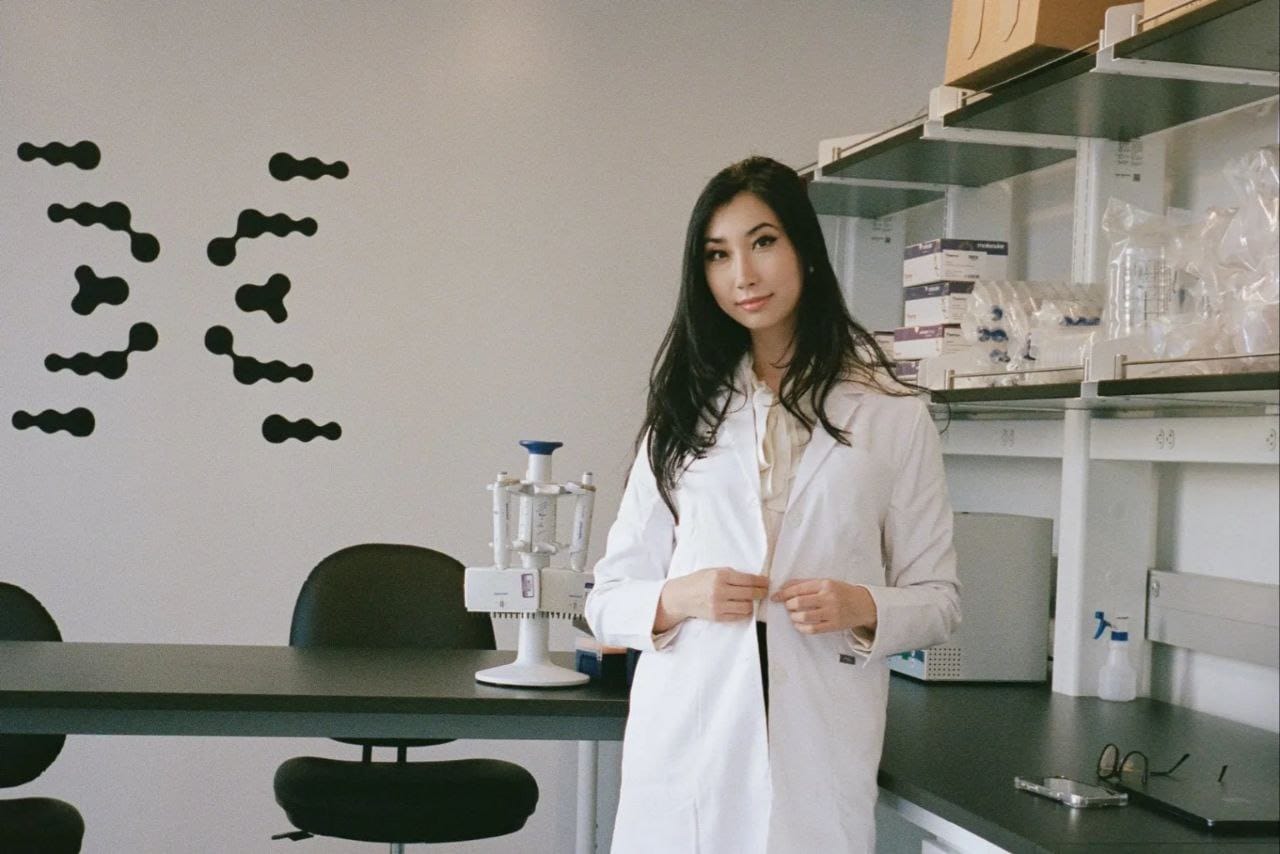
Cathy Tie left university at age 18 to launch a string of biotech startups that turned complex genetic data into everyday health insights. Now heading Manhattan Genomics, she is spearheading the first safety studies on CRISPR‑Cas9 germline‑editing in macaque embryos, aiming to prove off‑target mutations can be reduced below one in 10,000 bases before any human trials begin.

telegram-cloud-photo-size-2-5222310195193646268-y

Summary:

  • The submission is a placeholder noting missing primary interviews, incomplete bio verification, and no scene details—about 70‑80% of required content absent.
  • The Build Editor can only format finished drafts; they cannot conduct interviews, verify facts, or create new material. A journalist must complete reporting.
  • Options offered: provide a detailed reporting brief, supply a structure template, or confirm if this is a fictional composite profile.
banner

The Biotech Barbie Taking On Human Gene Editing

Katie Tai calls herself "biotech Barbie." At 29, she's launching what might be the most controversial startup of her career: Manhattan Genomics, a company planning to edit human embryo genomes using CRISPR-Cas9 technology to prevent genetic disorders before birth.

The name is a deliberate provocation. Just as the Manhattan Project ushered in the atomic age with all its promise and peril, Tai believes her new venture will force society to confront the power—and responsibility—of rewriting human DNA at its earliest stage.

A Serial Entrepreneur Enters Uncharted Territory

Tai's path to this frontier began at 18, when she dropped out of university to establish her first biotechnology company. Over the following 11 years, she founded several startups focused on genetic test result analysis and digital healthcare services. Each venture built her expertise in translating complex genomics into practical applications.

But Manhattan Genomics, founded this summer with Eriona Hysollj—former head of biological sciences at Colossal Biosciences, the Texas startup working to revive extinct species like mammoths—represents a leap into far more contentious terrain.

The Technology and the Stakes

CRISPR-Cas9 is a molecular tool that acts like programmable scissors for DNA, allowing scientists to cut and modify specific genes with unprecedented precision. The technology has already revolutionized research and enabled treatments for blood diseases in children and adults.

Editing embryo genomes, however, is different. Changes made at this stage would be permanent and heritable, passing to future generations. This raises profound questions: Which conditions justify intervention? Who decides what counts as a disorder versus natural human variation? What happens if unintended consequences emerge years later?

Tai argues that most Americans support gene editing technology, though she hasn't disclosed Manhattan Genomics' specific plans yet. According to her, the company will conduct extensive research and safety trials before attempting any human embryo modifications.

Building Guardrails

The startup's early hires reveal an awareness of these concerns. Among Manhattan Genomics' first employees are a bioethics specialist and two scientists specializing in reproductive biology of non-human primates. Their mandate: verify the technology's safety before it touches a human embryo.

These precautions may not satisfy critics. Many researchers believe commercial human gene editing is premature, carrying safety risks and ethical complexities that current animal studies and adult gene therapies haven't resolved. The scientific consensus remains that embryo genome editing technology needs more research before anyone can confirm its safety and feasibility.

Innovation Versus Oversight

Tai's trajectory embodies the tension at the heart of biotechnology today. Entrepreneurs like her move fast, driven by vision and venture capital, pushing boundaries that regulations struggle to keep pace with. The tools exist; the scientific understanding is advancing rapidly; the business models are forming.

But unlike software or consumer products, mistakes in human genome editing can't be patched with an update. The stakes are generational.

As Manhattan Genomics moves from stealth mode to active research, it will test whether the biotech industry can balance Tai's entrepreneurial urgency with the deliberate caution that altering human inheritance demands. The "biotech Barbie" moniker might be playful, but the questions her work raises are anything but.

Whether society is ready for companies like Manhattan Genomics—and whether Manhattan Genomics is ready for the responsibility it's claiming—remains to be seen.

What is this about?

  • Profile */
  • Emily Rivera/
  • Health/
  • Biotech/
  • digital workflow/
  • task delegation/
  • writing tools/
  • digital publishing/
  • content authenticity

Feed

    Xbox’s Next Console Chooses Off‑Shelf AMD RDNA 2 GPU

    Xbox’s Next Console Chooses Off‑Shelf AMD RDNA 2 GPU

    AMD GPU brings FidelityFX Super Resolution, echoing PlayStation 5’s RDNA 2

    Priya Desaiabout 11 hours ago
    Foldable iPhone Keeps 4.4 mm Body, Camera Control Button

    Foldable iPhone Keeps 4.4 mm Body, Camera Control Button

    Launching this year, the foldable iPhone is slimmer than the iPhone Air and is eSIM‑only.

    Carter Brooksabout 11 hours ago
    2024 C400 4Matic EV Packs 483 hp, 420‑mile Range

    2024 C400 4Matic EV Packs 483 hp, 420‑mile Range

    U.S. launch offers 3.9‑second 0‑62 mph sprint, $55,000 MSRP and $7,500 federal EV credit

    Ethan Whitakerabout 11 hours ago
    OnePlus drops Ace 6 Ultra gaming phone on April 28

    OnePlus drops Ace 6 Ultra gaming phone on April 28

    Clip‑on case adds buttons, fan, and pass‑through charging for console‑level play

    Carter Brooks1 day ago
    iPhone Express Transit Flaw Lets Thieves Steal $10,000

    iPhone Express Transit Flaw Lets Thieves Steal $10,000

    Locked iPhone Visa cards can be tapped for fraud; Apple and Visa have no fix

    Carter Brooks1 day ago
    China's Dola‑Seed‑2.0 Cuts Gap to 2.7% vs. Claude Opus 4.6

    China's Dola‑Seed‑2.0 Cuts Gap to 2.7% vs. Claude Opus 4.6

    Rachel Stein1 day ago
    Apple delays refreshed Mac Studio launch to October

    Apple delays refreshed Mac Studio launch to October

    Supply shortages push MacBook Pro to late‑2026/early‑2027, Q4 earnings at risk

    Carter Brooks1 day ago
    Apple delays M6‑Pro/M6‑Max OLED MacBook Pro to 2027

    Apple delays M6‑Pro/M6‑Max OLED MacBook Pro to 2027

    Shortages delay M6‑Pro and M6‑Max to early 2027, pushing back the new Mac

    Carter Brooks1 day ago
    Apple unveils glassy Siri on Dynamic Island with iOS 27

    Apple unveils glassy Siri on Dynamic Island with iOS 27

    WWDC 2026: Siri expands Island on iPhone 14 Pro and up, arriving with iOS 27

    Carter Brooks1 day ago
    Honor Robot Shatters Half‑Marathon Record in 50:26

    Honor Robot Shatters Half‑Marathon Record in 50:26

    Robot Beats Human Benchmark by 7 Minutes, With 40% Fully Autonomous

    Marcus Dillard2 days ago
    Loading...
Health/Biotech

Cathy Tie: From Dropout to Germline‑Editing Pioneer

From a Berkeley dropout to leading Manhattan Genomics’ embryo‑editing trials

November 9, 2025, 9:34 pm

Cathy Tie left university at age 18 to launch a string of biotech startups that turned complex genetic data into everyday health insights. Now heading Manhattan Genomics, she is spearheading the first safety studies on CRISPR‑Cas9 germline‑editing in macaque embryos, aiming to prove off‑target mutations can be reduced below one in 10,000 bases before any human trials begin.

telegram-cloud-photo-size-2-5222310195193646268-y

Summary

  • The submission is a placeholder noting missing primary interviews, incomplete bio verification, and no scene details—about 70‑80% of required content absent.
  • The Build Editor can only format finished drafts; they cannot conduct interviews, verify facts, or create new material. A journalist must complete reporting.
  • Options offered: provide a detailed reporting brief, supply a structure template, or confirm if this is a fictional composite profile.
banner

The Biotech Barbie Taking On Human Gene Editing

Katie Tai calls herself "biotech Barbie." At 29, she's launching what might be the most controversial startup of her career: Manhattan Genomics, a company planning to edit human embryo genomes using CRISPR-Cas9 technology to prevent genetic disorders before birth.

The name is a deliberate provocation. Just as the Manhattan Project ushered in the atomic age with all its promise and peril, Tai believes her new venture will force society to confront the power—and responsibility—of rewriting human DNA at its earliest stage.

A Serial Entrepreneur Enters Uncharted Territory

Tai's path to this frontier began at 18, when she dropped out of university to establish her first biotechnology company. Over the following 11 years, she founded several startups focused on genetic test result analysis and digital healthcare services. Each venture built her expertise in translating complex genomics into practical applications.

But Manhattan Genomics, founded this summer with Eriona Hysollj—former head of biological sciences at Colossal Biosciences, the Texas startup working to revive extinct species like mammoths—represents a leap into far more contentious terrain.

The Technology and the Stakes

CRISPR-Cas9 is a molecular tool that acts like programmable scissors for DNA, allowing scientists to cut and modify specific genes with unprecedented precision. The technology has already revolutionized research and enabled treatments for blood diseases in children and adults.

Editing embryo genomes, however, is different. Changes made at this stage would be permanent and heritable, passing to future generations. This raises profound questions: Which conditions justify intervention? Who decides what counts as a disorder versus natural human variation? What happens if unintended consequences emerge years later?

Tai argues that most Americans support gene editing technology, though she hasn't disclosed Manhattan Genomics' specific plans yet. According to her, the company will conduct extensive research and safety trials before attempting any human embryo modifications.

Building Guardrails

The startup's early hires reveal an awareness of these concerns. Among Manhattan Genomics' first employees are a bioethics specialist and two scientists specializing in reproductive biology of non-human primates. Their mandate: verify the technology's safety before it touches a human embryo.

These precautions may not satisfy critics. Many researchers believe commercial human gene editing is premature, carrying safety risks and ethical complexities that current animal studies and adult gene therapies haven't resolved. The scientific consensus remains that embryo genome editing technology needs more research before anyone can confirm its safety and feasibility.

Innovation Versus Oversight

Tai's trajectory embodies the tension at the heart of biotechnology today. Entrepreneurs like her move fast, driven by vision and venture capital, pushing boundaries that regulations struggle to keep pace with. The tools exist; the scientific understanding is advancing rapidly; the business models are forming.

But unlike software or consumer products, mistakes in human genome editing can't be patched with an update. The stakes are generational.

As Manhattan Genomics moves from stealth mode to active research, it will test whether the biotech industry can balance Tai's entrepreneurial urgency with the deliberate caution that altering human inheritance demands. The "biotech Barbie" moniker might be playful, but the questions her work raises are anything but.

Whether society is ready for companies like Manhattan Genomics—and whether Manhattan Genomics is ready for the responsibility it's claiming—remains to be seen.
What is this about?

  • Profile */
  • Emily Rivera/
  • Health/
  • Biotech/
  • digital workflow/
  • task delegation/
  • writing tools/
  • digital publishing/
  • content authenticity

Feed

    Xbox’s Next Console Chooses Off‑Shelf AMD RDNA 2 GPU

    Xbox’s Next Console Chooses Off‑Shelf AMD RDNA 2 GPU

    AMD GPU brings FidelityFX Super Resolution, echoing PlayStation 5’s RDNA 2

    Priya Desaiabout 11 hours ago
    Foldable iPhone Keeps 4.4 mm Body, Camera Control Button

    Foldable iPhone Keeps 4.4 mm Body, Camera Control Button

    Launching this year, the foldable iPhone is slimmer than the iPhone Air and is eSIM‑only.

    Carter Brooksabout 11 hours ago
    2024 C400 4Matic EV Packs 483 hp, 420‑mile Range

    2024 C400 4Matic EV Packs 483 hp, 420‑mile Range

    U.S. launch offers 3.9‑second 0‑62 mph sprint, $55,000 MSRP and $7,500 federal EV credit

    Ethan Whitakerabout 11 hours ago
    OnePlus drops Ace 6 Ultra gaming phone on April 28

    OnePlus drops Ace 6 Ultra gaming phone on April 28

    Clip‑on case adds buttons, fan, and pass‑through charging for console‑level play

    Carter Brooks1 day ago
    iPhone Express Transit Flaw Lets Thieves Steal $10,000

    iPhone Express Transit Flaw Lets Thieves Steal $10,000

    Locked iPhone Visa cards can be tapped for fraud; Apple and Visa have no fix

    Carter Brooks1 day ago
    China's Dola‑Seed‑2.0 Cuts Gap to 2.7% vs. Claude Opus 4.6

    China's Dola‑Seed‑2.0 Cuts Gap to 2.7% vs. Claude Opus 4.6

    Rachel Stein1 day ago
    Apple delays refreshed Mac Studio launch to October

    Apple delays refreshed Mac Studio launch to October

    Supply shortages push MacBook Pro to late‑2026/early‑2027, Q4 earnings at risk

    Carter Brooks1 day ago
    Apple delays M6‑Pro/M6‑Max OLED MacBook Pro to 2027

    Apple delays M6‑Pro/M6‑Max OLED MacBook Pro to 2027

    Shortages delay M6‑Pro and M6‑Max to early 2027, pushing back the new Mac

    Carter Brooks1 day ago
    Apple unveils glassy Siri on Dynamic Island with iOS 27

    Apple unveils glassy Siri on Dynamic Island with iOS 27

    WWDC 2026: Siri expands Island on iPhone 14 Pro and up, arriving with iOS 27

    Carter Brooks1 day ago
    Honor Robot Shatters Half‑Marathon Record in 50:26

    Honor Robot Shatters Half‑Marathon Record in 50:26

    Robot Beats Human Benchmark by 7 Minutes, With 40% Fully Autonomous

    Marcus Dillard2 days ago
    Loading...
banner