• My Feed
  • Home
  • What's Important
  • Media & Entertainment
Search

Stay Curious. Stay Wanture.

© 2026 Wanture. All rights reserved.

  • Terms of Use
  • Privacy Policy
Mobility/Aviation

MIT Built a Battery That Breathes Air

Sodium-air fuel cell hits 1,700 watt-hours per kilogram—enough to power electric planes

5 December 2025

—

Explainer *

Nadia Bennett
banner

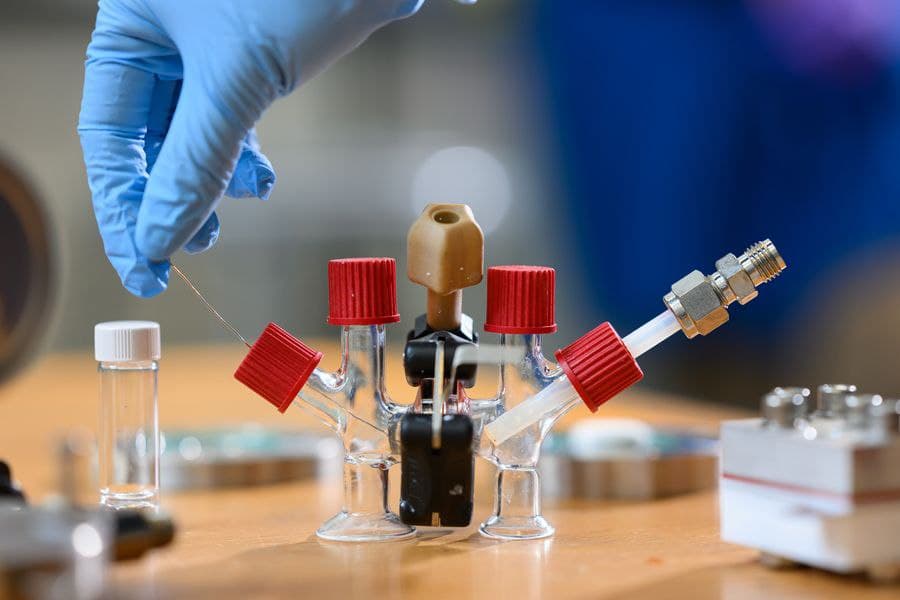
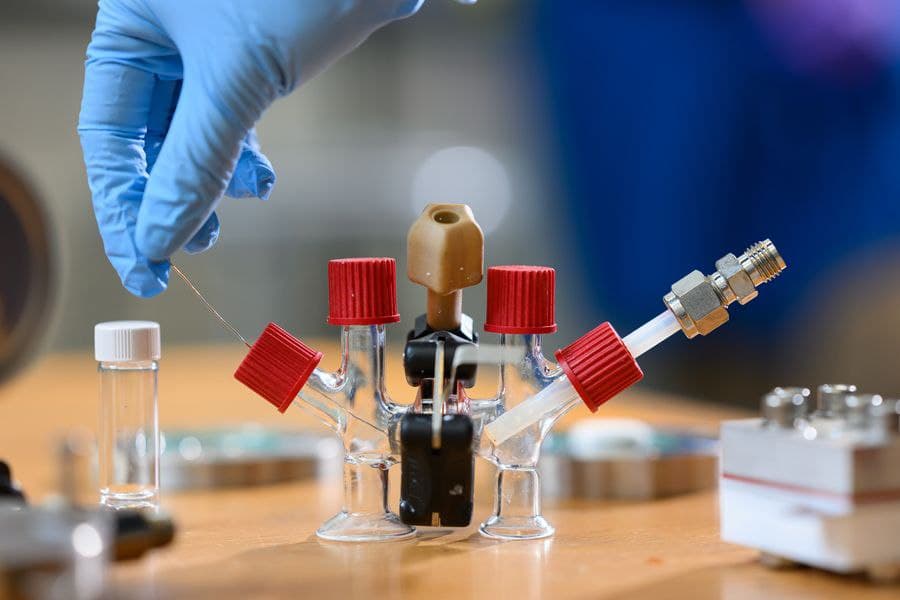
MIT engineers created a fuel cell that pulls oxygen from the atmosphere and runs on sodium from sea salt. It delivers 1,700 watt-hours per kilogram, seven times the energy density of lithium-ion batteries. This breakthrough makes electric aviation economically viable. The ceramic core operates safely at high temperatures without fire risk.

IMG_0716

Summary:

  • MIT engineers develop sodium-air fuel cell achieving 1,700 watt-hours/kg, enabling practical electric aviation with breakthrough energy density.
  • Fuel cell uses sodium metal and atmospheric oxygen, with a ceramic electrolyte creating a safe, refillable power system for aircraft.
  • Technology targets drone testing within a year, with potential for regional electric flights by 2040, transforming transportation infrastructure.

MIT engineers built a battery that breathes. It pulls oxygen from the air. It runs on sodium from sea salt. And it delivers 1,700 watt-hours per kilogram. That's enough energy density to lift electric aircraft off the ground and keep them flying.

What It Is

A sodium-air fuel cell generates electricity by reacting liquid sodium metal with oxygen drawn directly from the atmosphere. Unlike the rechargeable lithium-ion battery in your phone, this is a fuel cell. You fill it with sodium fuel, similar to filling a gas tank. The sodium reacts with ambient air to produce power. When the sodium runs out, you refill it rather than plugging it in to recharge.

Why It Matters

Commercial aviation remains trapped by a brutal constraint. Planes need enormous energy to lift cargo and passengers. Current lithium-ion batteries are too heavy. The MIT fuel cell achieves 1,700 watt-hours per kilogram at stack level. That's a 70% margin above the minimum threshold engineers say electric aviation requires. Airlines could operate regional electric routes profitably within the next two decades.

How Sodium-Air Fuel Cells Work

Sodium as the Active Fuel

Sodium metal is highly reactive. When it meets oxygen, it forms sodium peroxide. That reaction releases electrons. Those electrons become electric current.

The fuel cell stores pure sodium in a protected chamber. Oxygen comes from ambient air. The cell doesn't carry an oxidizer tank. It breathes like a jet engine. That saves weight. It saves space. And it enables the energy density numbers that make aviation viable.

Think of it like starting a car. You need fuel and oxygen. Mix them together, and you get energy. Here, sodium is the fuel. Air provides the oxygen. The result is electricity instead of combustion.

The Ceramic Electrolyte Barrier

The solid ceramic electrolyte is the safety layer. It works like a coffee filter. A filter lets coffee through but blocks the grounds. The ceramic lets sodium ions pass but blocks electrons. This separation creates voltage while keeping reactive sodium contained.

Ceramic electrolytes operate at 572 to 752 degrees Fahrenheit (300 to 400 degrees Celsius). That's hot, but manageable. Aircraft engines already generate significant heat. Thermal management systems are part of aviation design. The ceramic doesn't evaporate. It doesn't degrade. And it eliminates the fire risk that haunts lithium-ion systems.

Drawing Oxygen from the Atmosphere

The cell pulls oxygen directly from surrounding air. This is how jet engines work. They use ambient air rather than carrying oxidizer. The oxygen reacts with sodium ions at the cathode (the positive electrode where the chemical reaction occurs). This forms sodium peroxide and completes the electrical circuit.

In a traditional battery, both fuel and oxidizer are stored internally. Here, only sodium is stored. That's the breakthrough. The energy-to-weight ratio jumps because half the reaction mass comes from the environment. You're not lifting it off the ground. You're pulling it from the air around you.

Carbon Dioxide as a Byproduct

The reaction also captures carbon dioxide. Sodium peroxide binds with CO₂ from the air during operation. This isn't the primary function. It's an elegant side effect. The cell doesn't just avoid emissions. It removes a small amount of atmospheric carbon.

The scale per cell is modest. But deploy this across thousands of flights, and the cumulative effect becomes measurable. It's systems-level thinking where chemistry, physics, and infrastructure align.

Real-World Applications

Example 1: Large Drone Testing

The MIT team isn't starting with passenger jets. Their first target is large drones. These platforms are smaller and face less regulatory scrutiny. They allow rapid iteration on design.

The team plans to build a brick-sized prototype for initial testing. This form factor generates useful power while remaining testable on unmanned aerial vehicles. This approach demonstrates the concept under real flight conditions without the regulatory complexity of manned aircraft. Once the design proves stable, the technology scales to larger commercial platforms.

Example 2: Maritime Vessel Electrification

Ships face the same energy challenges as planes. They need high power output for long durations. They carry heavy cargo. And they're among the largest contributors to transportation emissions globally.

Maritime companies have expressed interest in electric propulsion systems for short-haul routes. Sodium-air fuel cells could address maritime electrification in parallel with aviation. The same energy density that lifts an aircraft can propel a cargo vessel. The ceramic electrolyte survives saltwater environments with proper housing.

Advantages Over Lithium-Ion Batteries

Lithium-ion batteries store energy in metal compounds. They're rechargeable. They're proven. But they hit a physics ceiling around 300 watt-hours per kilogram. Incremental improvements won't break that barrier.

The sodium-air fuel cell generates energy through reaction, not storage. It's refillable, not rechargeable. That distinction matters. Refilling is faster than recharging. Think gas station versus phone charging. Pull up, fill the tank, keep moving. And the energy density scales beyond what storage chemistry allows.

Sodium is abundant. Lithium is scarce. Sodium extraction is decentralized. Lithium mining is geopolitically concentrated. One system depends on resource access. The other depends on seawater. Coastal regions could extract sodium domestically, reducing supply chain vulnerabilities.

Ceramic electrolytes are stable. Liquid electrolytes in lithium-ion cells are flammable. One design eliminates fire risk. The other manages it through engineering controls.

Common Misconceptions

Myth: Sodium-air fuel cells are rechargeable like phone batteries.

Reality: These are fuel cells, not rechargeable batteries. You refill them with sodium fuel, similar to filling a gas tank. The spent sodium peroxide is replaced with fresh sodium. The process takes minutes, not hours.

Myth: Sodium is dangerous because it reacts violently with water.

Reality: The sodium is sealed inside a ceramic electrolyte that prevents contact with moisture. The ceramic operates at high temperature and blocks water vapor. The design isolates reactive sodium completely. This is safer than lithium-ion batteries, which contain flammable liquid electrolytes.

Myth: Electric planes using this technology will fly next year.

Reality: This is a fifteen-to-twenty-year infrastructure project. The physics work. The materials are available. But production scaling, certification, and supply chain development take time. Regional electric flights are likely in the coming decades, not immediate years.

What Comes Next

The prototype phase will test thermal management, power output stability, and durability. Sodium-air fuel cells need to handle rapid power draw changes during takeoff and landing. They need to operate reliably at altitude. And they need to demonstrate lifecycle performance that justifies manufacturing investment.

The MIT team has formed a startup to commercialize the technology, with support from government research programs focused on advancing high-energy-density technologies. These programs support innovations achieving energy densities above 1,000 watt-hours per kilogram.

Aviation certification requirements will be extensive. Regulatory agencies evaluate new propulsion systems for years before commercial approval. Government initiatives supporting clean aviation goals are providing funding through the 2030s. Airlines are monitoring electric propulsion developments closely.

If these milestones are met, production scaling becomes the next challenge. Ceramic electrolyte manufacturing is more complex than rolling out lithium-ion sheets. Specialized facilities will need to be built. Supply chains for high-purity sodium will need to scale.

This isn't a five-year timeline. It's a fifteen-to-twenty-year infrastructure project. But the physics work. The materials are available. And the energy density numbers are verified.

Energy density has always been the limiting factor in electric transportation. Batteries improved steadily over two decades, but the gains were incremental. This is different. This is a step-change improvement.

If this technology scales, it changes the economics of electric aviation. Airlines could operate regional electric routes profitably. Cargo companies could electrify short-haul flights. And manufacturers could design aircraft around electric propulsion rather than retrofitting jet designs.

This is what it looks like when engineering solves the problem rather than working around it. The Wright brothers didn't improve horse-drawn carriages. They built something entirely new. This fuel cell does the same for electric flight. It's not an upgrade. It's a different approach to the fundamental problem.

The Takeaway

Sodium-air fuel cells achieve 1,700 watt-hours per kilogram by reacting abundant sodium with atmospheric oxygen through a stable ceramic electrolyte. Understanding this breakthrough matters because it represents the first practical path to commercial electric aviation. The technology moves from MIT labs to prototype testing, with regional electric flights becoming feasible in the coming decades. For tech-savvy readers, this represents a fundamental shift in how we approach energy storage—not through incremental battery improvements, but through reimagining the chemistry itself. This is the kind of breakthrough that transforms industries and creates new possibilities for sustainable transportation within our lifetimes.

Sources:

  • MIT News Office press release on sodium-air fuel cell research
  • U.S. Advanced Research Projects Agency-Energy program documentation
  • Department of Mechanical Engineering, Massachusetts Institute of Technology
  • Federal Aviation Administration propulsion system requirements
  • Clean aviation technology research reports

Feed

    Cursor 3 Launches Unified AI Coding Workspace

    Cursor 3 Launches Unified AI Coding Workspace

    Side‑panel lets devs toggle local and cloud agents, building on Composer 2 and Kimi 2.5

    about 20 hours ago
    Orion’s Six‑Minute Burn Puts Artemis 2 on Free‑Return Path

    Orion’s Six‑Minute Burn Puts Artemis 2 on Free‑Return Path

    iPhone 17 Pro Max survives Orion’s deep‑space test as crew heads to lunar flyby

    about 22 hours ago
    Android 17 Introduces System‑Level Notification Rules

    Android 17 Introduces System‑Level Notification Rules

    Samsung’s One UI 9 will adopt Android 17’s rules, adding OS‑level alert control

    about 22 hours ago

    Nvidia rolls out DLSS 4.5, 6× boost on RTX 50-series

    Dynamic Multi‑Frame Generation smooths 120–240 Hz, delivered in the driver 595.97

    1 day ago
    Apple rolls out iOS 18.7.7 to block DarkSword

    Apple rolls out iOS 18.7.7 to block DarkSword

    Patch fixes six Safari bugs, stopping DarkSword on iOS 18–18.7 devices

    2 days ago
    BoxPlates Skins Revamp PS5 Slim & Pro in Two Weeks

    BoxPlates Skins Revamp PS5 Slim & Pro in Two Weeks

    2 days ago
    Artemis 2 Rockets Beyond Earth—402,000 km From Home

    Artemis 2 Rockets Beyond Earth—402,000 km From Home

    Lift‑off at 8:23 a.m. ET marks first crewed lunar flight since 1972, with a diverse four‑person crew

    2 days ago
    Apple celebrates 50 years with new minimalist wallpapers

    Apple celebrates 50 years with new minimalist wallpapers

    Basic Apple Guy releases iPhone and Mac wallpapers for Apple’s 50th anniversary

    2 days ago
    Razer Unveils Pro Type Ergo Ergonomic Keyboard Today

    Razer Unveils Pro Type Ergo Ergonomic Keyboard Today

    Split design, AI button, and 19‑zone RGB aim at U.S. workers with a 9.7% RSI rate

    3 days ago
    Google to debut screen‑free Fitbit band in 2026

    Google to debut screen‑free Fitbit band in 2026

    AI‑driven training plan and upgraded platform aim at the health‑tracking market against Oura and Whoop

    3 days ago
    Nothing unveils AI‑powered smart glasses for a 2027 launch

    Nothing unveils AI‑powered smart glasses for a 2027 launch

    The glasses use a paired phone and cloud, with a clear frame and LED accents

    3 days ago
    Google rolls out Veo 3.1 Lite, halving AI video costs

    Google rolls out Veo 3.1 Lite, halving AI video costs

    Veo 3.1 Lite matches Veo 3.1 Fast speed but cuts price by over 50% for devs now

    3 days ago
    Freelander 97 Debuts 800‑V EV Crossover in Shanghai

    Freelander 97 Debuts 800‑V EV Crossover in Shanghai

    Chery‑JLR showcases ADS 4.1 autonomy on 800‑V platform, eyeing 2028 launch

    3 days ago
    Telegram Launches Version 12.6 With AI Editor, New Polls

    Telegram Launches Version 12.6 With AI Editor, New Polls

    It adds an AI tone editor, richer polls, Live/Motion Photos, and bot management

    3 days ago

    Pixel 11 Pro Renders Leak With Black Camera Bar and MediaTek Modem

    Google’s August 2026 flagship ditches Samsung radios for improved 5G and runs the Tensor G6

    4 days ago

    Anthropic leak reveals Opus 4.7, Sonnet 4.8 in npm 2.1.88

    Leak on March 30‑31 exposed TypeScript, revealing Opus 4.7, Sonnet 4.8, and internal features

    4 days ago
    iOS 26.5 beta lands on iPhone 17 Pro with an 8 GB download

    iOS 26.5 beta lands on iPhone 17 Pro with an 8 GB download

    Apple restores RCS encryption and adds a 12‑month subscription in the update

    4 days ago
    Windows 11 24H2 Brings Dark Mode to Core Utilities

    Windows 11 24H2 Brings Dark Mode to Core Utilities

    Tools like Registry Editor get dark mode in Windows 11 24H2, out in Sep 2026

    5 days ago

    John Noble's 1,024 Thread Implant Powers Warcraft Raids

    John Noble, a former British parachutist turned veteran gamer, received a neural implant with 1,024 threads after a 2024 trial in Seattle. The device lets him control a MacBook with thought alone, turning World of Warcraft raids into hands‑free battles. His story shows how brain‑computer interfaces can expand digital access for disabled veterans and reshape gaming.

    5 days ago
    Apple unveils Siri app for iOS 27, adds 50+ AI agents

    Apple unveils Siri app for iOS 27, adds 50+ AI agents

    iOS 27 Siri app adds Extensions marketplace, eyeing Alexa’s 100,000‑skill store

    5 days ago
    Loading...
Mobility/Aviation

MIT Built a Battery That Breathes Air

Sodium-air fuel cell hits 1,700 watt-hours per kilogram—enough to power electric planes

December 5, 2025, 11:30 pm

MIT engineers created a fuel cell that pulls oxygen from the atmosphere and runs on sodium from sea salt. It delivers 1,700 watt-hours per kilogram, seven times the energy density of lithium-ion batteries. This breakthrough makes electric aviation economically viable. The ceramic core operates safely at high temperatures without fire risk.

IMG_0716

Summary

  • MIT engineers develop sodium-air fuel cell achieving 1,700 watt-hours/kg, enabling practical electric aviation with breakthrough energy density.
  • Fuel cell uses sodium metal and atmospheric oxygen, with a ceramic electrolyte creating a safe, refillable power system for aircraft.
  • Technology targets drone testing within a year, with potential for regional electric flights by 2040, transforming transportation infrastructure.

MIT engineers built a battery that breathes. It pulls oxygen from the air. It runs on sodium from sea salt. And it delivers 1,700 watt-hours per kilogram. That's enough energy density to lift electric aircraft off the ground and keep them flying.

What It Is

A sodium-air fuel cell generates electricity by reacting liquid sodium metal with oxygen drawn directly from the atmosphere. Unlike the rechargeable lithium-ion battery in your phone, this is a fuel cell. You fill it with sodium fuel, similar to filling a gas tank. The sodium reacts with ambient air to produce power. When the sodium runs out, you refill it rather than plugging it in to recharge.

Why It Matters

Commercial aviation remains trapped by a brutal constraint. Planes need enormous energy to lift cargo and passengers. Current lithium-ion batteries are too heavy. The MIT fuel cell achieves 1,700 watt-hours per kilogram at stack level. That's a 70% margin above the minimum threshold engineers say electric aviation requires. Airlines could operate regional electric routes profitably within the next two decades.

How Sodium-Air Fuel Cells Work

Sodium as the Active Fuel

Sodium metal is highly reactive. When it meets oxygen, it forms sodium peroxide. That reaction releases electrons. Those electrons become electric current.

The fuel cell stores pure sodium in a protected chamber. Oxygen comes from ambient air. The cell doesn't carry an oxidizer tank. It breathes like a jet engine. That saves weight. It saves space. And it enables the energy density numbers that make aviation viable.

Think of it like starting a car. You need fuel and oxygen. Mix them together, and you get energy. Here, sodium is the fuel. Air provides the oxygen. The result is electricity instead of combustion.

The Ceramic Electrolyte Barrier

The solid ceramic electrolyte is the safety layer. It works like a coffee filter. A filter lets coffee through but blocks the grounds. The ceramic lets sodium ions pass but blocks electrons. This separation creates voltage while keeping reactive sodium contained.

Ceramic electrolytes operate at 572 to 752 degrees Fahrenheit (300 to 400 degrees Celsius). That's hot, but manageable. Aircraft engines already generate significant heat. Thermal management systems are part of aviation design. The ceramic doesn't evaporate. It doesn't degrade. And it eliminates the fire risk that haunts lithium-ion systems.

Drawing Oxygen from the Atmosphere

The cell pulls oxygen directly from surrounding air. This is how jet engines work. They use ambient air rather than carrying oxidizer. The oxygen reacts with sodium ions at the cathode (the positive electrode where the chemical reaction occurs). This forms sodium peroxide and completes the electrical circuit.

In a traditional battery, both fuel and oxidizer are stored internally. Here, only sodium is stored. That's the breakthrough. The energy-to-weight ratio jumps because half the reaction mass comes from the environment. You're not lifting it off the ground. You're pulling it from the air around you.

Carbon Dioxide as a Byproduct

The reaction also captures carbon dioxide. Sodium peroxide binds with CO₂ from the air during operation. This isn't the primary function. It's an elegant side effect. The cell doesn't just avoid emissions. It removes a small amount of atmospheric carbon.

The scale per cell is modest. But deploy this across thousands of flights, and the cumulative effect becomes measurable. It's systems-level thinking where chemistry, physics, and infrastructure align.

Real-World Applications

Example 1: Large Drone Testing

The MIT team isn't starting with passenger jets. Their first target is large drones. These platforms are smaller and face less regulatory scrutiny. They allow rapid iteration on design.

The team plans to build a brick-sized prototype for initial testing. This form factor generates useful power while remaining testable on unmanned aerial vehicles. This approach demonstrates the concept under real flight conditions without the regulatory complexity of manned aircraft. Once the design proves stable, the technology scales to larger commercial platforms.

Example 2: Maritime Vessel Electrification

Ships face the same energy challenges as planes. They need high power output for long durations. They carry heavy cargo. And they're among the largest contributors to transportation emissions globally.

Maritime companies have expressed interest in electric propulsion systems for short-haul routes. Sodium-air fuel cells could address maritime electrification in parallel with aviation. The same energy density that lifts an aircraft can propel a cargo vessel. The ceramic electrolyte survives saltwater environments with proper housing.

Advantages Over Lithium-Ion Batteries

Lithium-ion batteries store energy in metal compounds. They're rechargeable. They're proven. But they hit a physics ceiling around 300 watt-hours per kilogram. Incremental improvements won't break that barrier.

The sodium-air fuel cell generates energy through reaction, not storage. It's refillable, not rechargeable. That distinction matters. Refilling is faster than recharging. Think gas station versus phone charging. Pull up, fill the tank, keep moving. And the energy density scales beyond what storage chemistry allows.

Sodium is abundant. Lithium is scarce. Sodium extraction is decentralized. Lithium mining is geopolitically concentrated. One system depends on resource access. The other depends on seawater. Coastal regions could extract sodium domestically, reducing supply chain vulnerabilities.

Ceramic electrolytes are stable. Liquid electrolytes in lithium-ion cells are flammable. One design eliminates fire risk. The other manages it through engineering controls.

Common Misconceptions

Myth: Sodium-air fuel cells are rechargeable like phone batteries.

Reality: These are fuel cells, not rechargeable batteries. You refill them with sodium fuel, similar to filling a gas tank. The spent sodium peroxide is replaced with fresh sodium. The process takes minutes, not hours.

Myth: Sodium is dangerous because it reacts violently with water.

Reality: The sodium is sealed inside a ceramic electrolyte that prevents contact with moisture. The ceramic operates at high temperature and blocks water vapor. The design isolates reactive sodium completely. This is safer than lithium-ion batteries, which contain flammable liquid electrolytes.

Myth: Electric planes using this technology will fly next year.

Reality: This is a fifteen-to-twenty-year infrastructure project. The physics work. The materials are available. But production scaling, certification, and supply chain development take time. Regional electric flights are likely in the coming decades, not immediate years.

What Comes Next

The prototype phase will test thermal management, power output stability, and durability. Sodium-air fuel cells need to handle rapid power draw changes during takeoff and landing. They need to operate reliably at altitude. And they need to demonstrate lifecycle performance that justifies manufacturing investment.

The MIT team has formed a startup to commercialize the technology, with support from government research programs focused on advancing high-energy-density technologies. These programs support innovations achieving energy densities above 1,000 watt-hours per kilogram.

Aviation certification requirements will be extensive. Regulatory agencies evaluate new propulsion systems for years before commercial approval. Government initiatives supporting clean aviation goals are providing funding through the 2030s. Airlines are monitoring electric propulsion developments closely.

If these milestones are met, production scaling becomes the next challenge. Ceramic electrolyte manufacturing is more complex than rolling out lithium-ion sheets. Specialized facilities will need to be built. Supply chains for high-purity sodium will need to scale.

This isn't a five-year timeline. It's a fifteen-to-twenty-year infrastructure project. But the physics work. The materials are available. And the energy density numbers are verified.

Energy density has always been the limiting factor in electric transportation. Batteries improved steadily over two decades, but the gains were incremental. This is different. This is a step-change improvement.

If this technology scales, it changes the economics of electric aviation. Airlines could operate regional electric routes profitably. Cargo companies could electrify short-haul flights. And manufacturers could design aircraft around electric propulsion rather than retrofitting jet designs.

This is what it looks like when engineering solves the problem rather than working around it. The Wright brothers didn't improve horse-drawn carriages. They built something entirely new. This fuel cell does the same for electric flight. It's not an upgrade. It's a different approach to the fundamental problem.

The Takeaway

Sodium-air fuel cells achieve 1,700 watt-hours per kilogram by reacting abundant sodium with atmospheric oxygen through a stable ceramic electrolyte. Understanding this breakthrough matters because it represents the first practical path to commercial electric aviation. The technology moves from MIT labs to prototype testing, with regional electric flights becoming feasible in the coming decades. For tech-savvy readers, this represents a fundamental shift in how we approach energy storage—not through incremental battery improvements, but through reimagining the chemistry itself. This is the kind of breakthrough that transforms industries and creates new possibilities for sustainable transportation within our lifetimes.

Sources:

  • MIT News Office press release on sodium-air fuel cell research
  • U.S. Advanced Research Projects Agency-Energy program documentation
  • Department of Mechanical Engineering, Massachusetts Institute of Technology
  • Federal Aviation Administration propulsion system requirements
  • Clean aviation technology research reports

Feed

    Cursor 3 Launches Unified AI Coding Workspace

    Cursor 3 Launches Unified AI Coding Workspace

    Side‑panel lets devs toggle local and cloud agents, building on Composer 2 and Kimi 2.5

    about 20 hours ago
    Orion’s Six‑Minute Burn Puts Artemis 2 on Free‑Return Path

    Orion’s Six‑Minute Burn Puts Artemis 2 on Free‑Return Path

    iPhone 17 Pro Max survives Orion’s deep‑space test as crew heads to lunar flyby

    about 22 hours ago
    Android 17 Introduces System‑Level Notification Rules

    Android 17 Introduces System‑Level Notification Rules

    Samsung’s One UI 9 will adopt Android 17’s rules, adding OS‑level alert control

    about 22 hours ago

    Nvidia rolls out DLSS 4.5, 6× boost on RTX 50-series

    Dynamic Multi‑Frame Generation smooths 120–240 Hz, delivered in the driver 595.97

    1 day ago
    Apple rolls out iOS 18.7.7 to block DarkSword

    Apple rolls out iOS 18.7.7 to block DarkSword

    Patch fixes six Safari bugs, stopping DarkSword on iOS 18–18.7 devices

    2 days ago
    BoxPlates Skins Revamp PS5 Slim & Pro in Two Weeks

    BoxPlates Skins Revamp PS5 Slim & Pro in Two Weeks

    2 days ago
    Artemis 2 Rockets Beyond Earth—402,000 km From Home

    Artemis 2 Rockets Beyond Earth—402,000 km From Home

    Lift‑off at 8:23 a.m. ET marks first crewed lunar flight since 1972, with a diverse four‑person crew

    2 days ago
    Apple celebrates 50 years with new minimalist wallpapers

    Apple celebrates 50 years with new minimalist wallpapers

    Basic Apple Guy releases iPhone and Mac wallpapers for Apple’s 50th anniversary

    2 days ago
    Razer Unveils Pro Type Ergo Ergonomic Keyboard Today

    Razer Unveils Pro Type Ergo Ergonomic Keyboard Today

    Split design, AI button, and 19‑zone RGB aim at U.S. workers with a 9.7% RSI rate

    3 days ago
    Google to debut screen‑free Fitbit band in 2026

    Google to debut screen‑free Fitbit band in 2026

    AI‑driven training plan and upgraded platform aim at the health‑tracking market against Oura and Whoop

    3 days ago
    Nothing unveils AI‑powered smart glasses for a 2027 launch

    Nothing unveils AI‑powered smart glasses for a 2027 launch

    The glasses use a paired phone and cloud, with a clear frame and LED accents

    3 days ago
    Google rolls out Veo 3.1 Lite, halving AI video costs

    Google rolls out Veo 3.1 Lite, halving AI video costs

    Veo 3.1 Lite matches Veo 3.1 Fast speed but cuts price by over 50% for devs now

    3 days ago
    Freelander 97 Debuts 800‑V EV Crossover in Shanghai

    Freelander 97 Debuts 800‑V EV Crossover in Shanghai

    Chery‑JLR showcases ADS 4.1 autonomy on 800‑V platform, eyeing 2028 launch

    3 days ago
    Telegram Launches Version 12.6 With AI Editor, New Polls

    Telegram Launches Version 12.6 With AI Editor, New Polls

    It adds an AI tone editor, richer polls, Live/Motion Photos, and bot management

    3 days ago

    Pixel 11 Pro Renders Leak With Black Camera Bar and MediaTek Modem

    Google’s August 2026 flagship ditches Samsung radios for improved 5G and runs the Tensor G6

    4 days ago

    Anthropic leak reveals Opus 4.7, Sonnet 4.8 in npm 2.1.88

    Leak on March 30‑31 exposed TypeScript, revealing Opus 4.7, Sonnet 4.8, and internal features

    4 days ago
    iOS 26.5 beta lands on iPhone 17 Pro with an 8 GB download

    iOS 26.5 beta lands on iPhone 17 Pro with an 8 GB download

    Apple restores RCS encryption and adds a 12‑month subscription in the update

    4 days ago
    Windows 11 24H2 Brings Dark Mode to Core Utilities

    Windows 11 24H2 Brings Dark Mode to Core Utilities

    Tools like Registry Editor get dark mode in Windows 11 24H2, out in Sep 2026

    5 days ago

    John Noble's 1,024 Thread Implant Powers Warcraft Raids

    John Noble, a former British parachutist turned veteran gamer, received a neural implant with 1,024 threads after a 2024 trial in Seattle. The device lets him control a MacBook with thought alone, turning World of Warcraft raids into hands‑free battles. His story shows how brain‑computer interfaces can expand digital access for disabled veterans and reshape gaming.

    5 days ago
    Apple unveils Siri app for iOS 27, adds 50+ AI agents

    Apple unveils Siri app for iOS 27, adds 50+ AI agents

    iOS 27 Siri app adds Extensions marketplace, eyeing Alexa’s 100,000‑skill store

    5 days ago
    Loading...
banner