
Logo
My feedToday
Logo
Decide better.Live better.
My feedToday
Logo
My feedToday

Stay Curious. Stay Wanture.

© 2026 Wanture. All rights reserved.

  • Terms of Use
  • Privacy Policy
Logo
My feedTodayTechScienceHealthMobilityMindProductivityHomeExperiencesLongevity
Logo
Decide better.Live better.
My feedTodayTechScienceHealthMobilityMindProductivityHomeExperiencesLongevity
Logo
My feedTodayTechScienceHealthMobilityMindProductivityHomeExperiencesLongevity
Tech/Gadgets

Samsung launches Jinju smart glasses in 2026

28 April 2026

—

News

Priya Desai

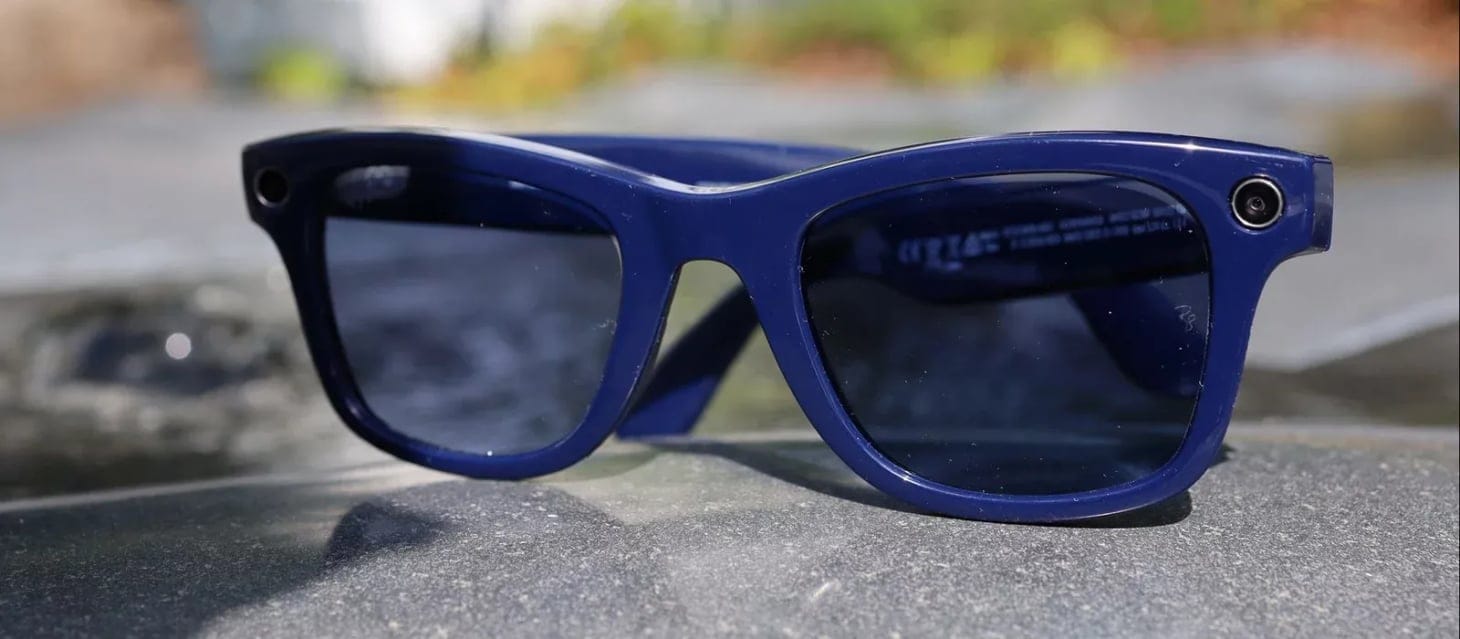
Samsung is preparing to release its first smart glasses, code‑named Jinju, by late 2026 at $379 to $499 (approximately ₽28,400 to ₽37,300), offering Russian consumers their first official smart glasses option since Meta's products were banned in the country.

Why this matters for Russia: With Meta Inc. declared an extremist organization and its products banned in Russia, Samsung's Galaxy Glasses represent the first legitimate smart glasses alternative available through official channels. No gray‑market imports, no service restrictions, and full warranty support: a significant development for Russian consumers who have been locked out of the smart glasses market.

What Samsung is shipping: Jinju pairs a Qualcomm Snapdragon AR1 chip with a Sony IMX681 12MP camera, 155 mAh battery, and bone‑conduction speakers. Notably, there's no display in this first version. This is a voice‑assistant and photo capture device designed for practical daily use, not an augmented reality headset.

Technical specifications and real‑world performance: The 155 mAh battery provides a few hours of mixed use: taking photos, voice queries, and audio playback. Continuous video recording or sustained AI processing drains it faster due to thermal constraints inherent in the glasses form factor. Battery capacity is limited by physics: more capacity means heavier frames and compromised wearability.

What the AR1 chip can do: Qualcomm's AR1 is optimized for low‑power audio workloads rather than compute‑heavy AR tasks. Expect solid performance for burst loads like snapping photos and quick voice commands, but thermal throttling during sustained tasks such as real‑time translation or extended video recording. Without active cooling, the chip operates in a tight thermal envelope to prevent uncomfortably hot frames.

Pricing and market positioning: At $379 to $499 (approximately ₽28,400 to ₽37,300), Jinju matches the pricing of Meta's second‑generation Ray‑Ban smart glasses: products that Russian consumers cannot legally purchase. Samsung isn't undercutting on price; they're betting on integration with the Galaxy ecosystem and official market availability to differentiate, particularly in markets like Russia where Meta hardware is unavailable.

The 2027 roadmap: Samsung plans a second model, code‑named Haean, for 2027 that will add microLED displays for true augmented reality functionality at $600 to $900 (approximately ₽44,900 to ₽67,400). MicroLED technology delivers high brightness and low power consumption but costs significantly more to manufacture at volume, justifying the premium. This model will compete directly with Meta's Ray‑Ban Display: another product unavailable in Russia due to the ban.

Russia‑specific advantages: For Russian consumers, Jinju offers critical benefits beyond hardware specs: official distribution channels, local warranty support, Russian‑language software localization, and access to Samsung's cloud services without geographic restrictions. These factors matter more than marginal technical differences when the alternative is no access at all or risky gray‑market purchases.

Launch timeline: Samsung is expected to unveil Jinju at Galaxy I/O in early May 2026 or at a Galaxy Unpacked event later this summer. Developer SDK details, AI capabilities, and regional availability, including potential Russia launch dates, will be revealed at the announcement.

What the market signal is: Samsung's entry validates Meta's bet that the first mainstream smart glasses should be camera glasses with AI assistance, not full AR glasses. Display‑equipped AR remains a generation away in both technical maturity and consumer readiness. The physics: battery life, thermal management, and weight haven't changed; what's changed is companies' willingness to ship within those constraints instead of waiting for technological breakthroughs.

The Russia context: Meta Inc.'s activities and its Instagram and Facebook products have been declared extremist and banned in Russia, creating a market gap that Samsung can fill. While this presents a business opportunity for Samsung, Russian consumers should note that full feature parity depends on Samsung's ability to provide cloud AI services and software updates in the region: details that will become clear only after the official announcement.

What is this about?

  • News
  • Priya Desai
  • Tech
  • Gadgets
  • Custom Silicon Strategy
  • AI visual intelligence
  • Smart Glasses Technology
  • Qualcomm AR Chips
  • Wearable Device Hardware
  • Samsung Galaxy Ecosystem

Feed

    Apple Secures Four ADC Annual Awards

    Apple Secures Four ADC Annual Awards

    Design excellence recognized at the 105th ADC Annual Awards

    Renée Itoabout 20 hours ago
    Do GLP-1 Drugs Cause Muscle Loss? The Science Behind Semaglutide and Tirzepatide

    Do GLP-1 Drugs Cause Muscle Loss? The Science Behind Semaglutide and Tirzepatide

    Marcus Leeabout 22 hours ago

    UCSD reverses aging in blood stem cells via lysosomal repair

    Breakthrough in gene modulation restores 78% differentiation efficiency in aged human cells

    James Whitmore3 days ago

    Scientists Reverse Blood Stem Cell Aging by Restoring Cellular Recycling

    James Whitmore3 days ago
    Amazon Acquires Globalstar for $11.57 Billion

    Amazon Acquires Globalstar for $11.57 Billion

    Deal gives Amazon control of Apple Watch Ultra 3 satellite network

    Carter Brooks3 days ago
    We Are as Gods: Peter Diamandis's Survival Guide for the Age of Abundance

    We Are as Gods: Peter Diamandis's Survival Guide for the Age of Abundance

    Marcus Dillard3 days ago
    Daemon Tools 12.5.0.2421‑2434 Compromised, 12.6.0.2445 Fixed

    Daemon Tools 12.5.0.2421‑2434 Compromised, 12.6.0.2445 Fixed

    Kaspersky flags 12.5.0.2421‑2434 installers compromised; upgrade to 12.6.0.2445

    Logan Price6 May 2026
    Xiaomi Mijia Robot Vacuum and Mop 6 Launches in China

    Xiaomi Mijia Robot Vacuum and Mop 6 Launches in China

    The 28 000 Pa suction robot adds roller‑wet cleaning, but U.S. must wait

    Logan Price6 May 2026
    Apple unveils iOS 27 AI overhaul at WWDC on June 8, 2026

    Apple unveils iOS 27 AI overhaul at WWDC on June 8, 2026

    Siri gets a standalone app, AI Photos tools, and health coaching in iOS 27

    Carter Brooks5 May 2026

    Google Workspace Icon Redesign: From Flat Color Blocks to Gradient‑Rich, Rounded Designs

    Google replaced its 2020 four‑color Workspace icons with gradient‑rich, rounded versions. The redesign cut misclicks, eased app recognition, and underscored the importance of usability over strict brand uniformity.

    Renée Ito3 May 2026
    Loading...
Tech/Gadgets

Samsung launches Jinju smart glasses in 2026

28 April 2026

—

News

Priya Desai

Samsung is preparing to release its first smart glasses, code‑named Jinju, by late 2026 at $379 to $499 (approximately ₽28,400 to ₽37,300), offering Russian consumers their first official smart glasses option since Meta's products were banned in the country.

Why this matters for Russia: With Meta Inc. declared an extremist organization and its products banned in Russia, Samsung's Galaxy Glasses represent the first legitimate smart glasses alternative available through official channels. No gray‑market imports, no service restrictions, and full warranty support: a significant development for Russian consumers who have been locked out of the smart glasses market.

What Samsung is shipping: Jinju pairs a Qualcomm Snapdragon AR1 chip with a Sony IMX681 12MP camera, 155 mAh battery, and bone‑conduction speakers. Notably, there's no display in this first version. This is a voice‑assistant and photo capture device designed for practical daily use, not an augmented reality headset.

Technical specifications and real‑world performance: The 155 mAh battery provides a few hours of mixed use: taking photos, voice queries, and audio playback. Continuous video recording or sustained AI processing drains it faster due to thermal constraints inherent in the glasses form factor. Battery capacity is limited by physics: more capacity means heavier frames and compromised wearability.

What the AR1 chip can do: Qualcomm's AR1 is optimized for low‑power audio workloads rather than compute‑heavy AR tasks. Expect solid performance for burst loads like snapping photos and quick voice commands, but thermal throttling during sustained tasks such as real‑time translation or extended video recording. Without active cooling, the chip operates in a tight thermal envelope to prevent uncomfortably hot frames.

Pricing and market positioning: At $379 to $499 (approximately ₽28,400 to ₽37,300), Jinju matches the pricing of Meta's second‑generation Ray‑Ban smart glasses: products that Russian consumers cannot legally purchase. Samsung isn't undercutting on price; they're betting on integration with the Galaxy ecosystem and official market availability to differentiate, particularly in markets like Russia where Meta hardware is unavailable.

The 2027 roadmap: Samsung plans a second model, code‑named Haean, for 2027 that will add microLED displays for true augmented reality functionality at $600 to $900 (approximately ₽44,900 to ₽67,400). MicroLED technology delivers high brightness and low power consumption but costs significantly more to manufacture at volume, justifying the premium. This model will compete directly with Meta's Ray‑Ban Display: another product unavailable in Russia due to the ban.

Russia‑specific advantages: For Russian consumers, Jinju offers critical benefits beyond hardware specs: official distribution channels, local warranty support, Russian‑language software localization, and access to Samsung's cloud services without geographic restrictions. These factors matter more than marginal technical differences when the alternative is no access at all or risky gray‑market purchases.

Launch timeline: Samsung is expected to unveil Jinju at Galaxy I/O in early May 2026 or at a Galaxy Unpacked event later this summer. Developer SDK details, AI capabilities, and regional availability, including potential Russia launch dates, will be revealed at the announcement.

What the market signal is: Samsung's entry validates Meta's bet that the first mainstream smart glasses should be camera glasses with AI assistance, not full AR glasses. Display‑equipped AR remains a generation away in both technical maturity and consumer readiness. The physics: battery life, thermal management, and weight haven't changed; what's changed is companies' willingness to ship within those constraints instead of waiting for technological breakthroughs.

The Russia context: Meta Inc.'s activities and its Instagram and Facebook products have been declared extremist and banned in Russia, creating a market gap that Samsung can fill. While this presents a business opportunity for Samsung, Russian consumers should note that full feature parity depends on Samsung's ability to provide cloud AI services and software updates in the region: details that will become clear only after the official announcement.

What is this about?

  • News/
  • Priya Desai/
  • Tech/
  • Gadgets/
  • Custom Silicon Strategy/
  • AI visual intelligence/
  • Smart Glasses Technology/
  • Qualcomm AR Chips/
  • Wearable Device Hardware/
  • Samsung Galaxy Ecosystem

Feed

    Apple Secures Four ADC Annual Awards

    Apple Secures Four ADC Annual Awards

    Design excellence recognized at the 105th ADC Annual Awards

    Renée Itoabout 20 hours ago
    Do GLP-1 Drugs Cause Muscle Loss? The Science Behind Semaglutide and Tirzepatide

    Do GLP-1 Drugs Cause Muscle Loss? The Science Behind Semaglutide and Tirzepatide

    Marcus Leeabout 22 hours ago

    UCSD reverses aging in blood stem cells via lysosomal repair

    Breakthrough in gene modulation restores 78% differentiation efficiency in aged human cells

    James Whitmore3 days ago

    Scientists Reverse Blood Stem Cell Aging by Restoring Cellular Recycling

    James Whitmore3 days ago
    Amazon Acquires Globalstar for $11.57 Billion

    Amazon Acquires Globalstar for $11.57 Billion

    Deal gives Amazon control of Apple Watch Ultra 3 satellite network

    Carter Brooks3 days ago
    We Are as Gods: Peter Diamandis's Survival Guide for the Age of Abundance

    We Are as Gods: Peter Diamandis's Survival Guide for the Age of Abundance

    Marcus Dillard3 days ago
    Daemon Tools 12.5.0.2421‑2434 Compromised, 12.6.0.2445 Fixed

    Daemon Tools 12.5.0.2421‑2434 Compromised, 12.6.0.2445 Fixed

    Kaspersky flags 12.5.0.2421‑2434 installers compromised; upgrade to 12.6.0.2445

    Logan Price6 May 2026
    Xiaomi Mijia Robot Vacuum and Mop 6 Launches in China

    Xiaomi Mijia Robot Vacuum and Mop 6 Launches in China

    The 28 000 Pa suction robot adds roller‑wet cleaning, but U.S. must wait

    Logan Price6 May 2026
    Apple unveils iOS 27 AI overhaul at WWDC on June 8, 2026

    Apple unveils iOS 27 AI overhaul at WWDC on June 8, 2026

    Siri gets a standalone app, AI Photos tools, and health coaching in iOS 27

    Carter Brooks5 May 2026

    Google Workspace Icon Redesign: From Flat Color Blocks to Gradient‑Rich, Rounded Designs

    Google replaced its 2020 four‑color Workspace icons with gradient‑rich, rounded versions. The redesign cut misclicks, eased app recognition, and underscored the importance of usability over strict brand uniformity.

    Renée Ito3 May 2026
    Loading...
Home
Home
Search
Search