
• My Feed
  • Home
  • What's Important
  • Media & Entertainment
Search

Stay Curious. Stay Wanture.

© 2026 Wanture. All rights reserved.

  • Terms of Use
  • Privacy Policy
Tech/Software
Microsoft writes 30% of its code with AI

Satya Nadella reveals how machine learning models now generate production code at scale

27 November 2025

—

Explainer

Aiden Roth
banner

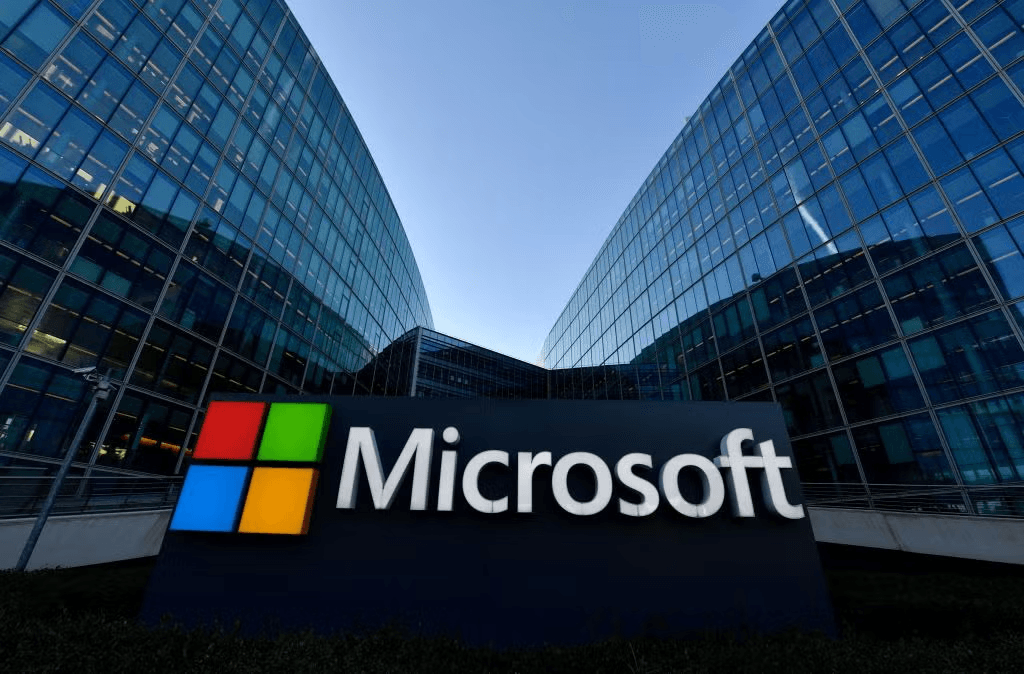
Microsoft CEO Satya Nadella disclosed that developers at the company write up to 30 percent of their code using artificial intelligence. This milestone marks AI's transition from experimental tool to production workhorse. The article explains how AI code generation works, what this percentage means for software development, and how Microsoft implements quality controls.

image-65

Summary:

  • Microsoft developers now write up to 30% of code with AI assistance, using tools like GitHub Copilot to generate code suggestions in real-time.
  • AI-generated code passes the same review and testing processes as human-written code, with Microsoft applying rigorous quality and security checks.
  • This collaboration model shifts programming work from writing boilerplate to focusing on system design, with AI expected to generate majority of new code within 5 years.

Microsoft's developers now write up to 30 percent of their code with artificial intelligence. CEO Satya Nadella shared this figure at a recent industry event.

Many assume AI writes entire programs autonomously. It doesn't. AI suggests code as developers type. Humans decide what to build and whether to accept those suggestions.

This explainer shows how that collaboration actually works.

What AI-Generated Code Actually Is

AI-generated code is source code written by machine learning models. These models learned patterns from millions of existing programs. They suggest code completions as developers type.

Think of it like autocomplete on your phone. You type a few letters. Your phone suggests the full word. AI does this for entire functions.

The technology doesn't copy code verbatim. It generates new code based on statistical patterns. When you write a function name like calculate_compound_interest, the model predicts the most likely implementation. It draws on thousands of similar functions it encountered during training.

Microsoft uses GitHub Copilot, built on OpenAI's Codex model. Codex trained on billions of lines of public code from GitHub. It learned patterns across Python, JavaScript, C++, and dozens of other languages.

Why This Matters Now

Microsoft ships this AI-written code in products millions use daily. Azure cloud services. Visual Studio development tools. Microsoft 365 applications. Windows operating system components.

This isn't experimental. It's production code that runs critical systems.

The 30 percent threshold changes how software teams work. Junior developers now prompt AI systems instead of writing every line manually. Senior architects structure projects to leverage AI generation while maintaining quality. Code reviewers evaluate AI suggestions alongside human-written implementations.

Microsoft employs tens of thousands of software engineers. A 30 percent AI contribution means tens of millions of lines of AI-generated code deployed annually. This volume creates new quality challenges. It also accelerates shipping features and iterating on feedback.

Nadella noted that acceptance rates vary by programming language. Python code suggestions see higher acceptance than C++ suggestions. Python dominates public repositories. The AI has more examples to learn from.

How It Works

The Model Layer

Large language models form the foundation. GitHub Copilot uses OpenAI's Codex. Codex trained on billions of lines of public code. It learned syntax, structure, and common solutions across programming languages.

The AI is like a sous chef who has memorized every recipe ever written. You tell it what dish you want. It suggests the ingredients and steps. You adjust the seasoning.

The model doesn't understand why code works. It recognizes patterns that usually produce working code. Training data quality determines output quality. Models trained on well-tested libraries generate more reliable code.

Microsoft's advantage lies in GitHub's corpus. It's the largest collection of version-controlled code in existence.

The Integration Layer

AI code generation integrates directly into development environments. It appears as inline suggestions in Visual Studio Code. Developers see suggestions in real time as they type. Ghost text appears that can be accepted with Tab or rejected with Escape.

This tight integration reduces friction. The AI becomes part of the development loop. No context switching required. The faster the feedback cycle, the more developers use it. The more they use it, the more code it generates.

Microsoft reports that developers accept AI suggestions 30 to 40 percent of the time. This acceptance rate, multiplied across thousands of developers and millions of keystrokes daily, produces the 30 percent figure. Some teams see higher percentages. Others see lower. It depends on the nature of their work.

The Quality Control Layer

AI-generated code passes through the same review and testing pipelines as human-written code. It must compile without errors. It must pass unit tests. It must survive code review by senior engineers. It must meet security scanning requirements.

Code review works like airport security. Every piece of code passes through scanners. AI-generated code gets extra screening. Only safe code reaches production.

The difference is volume. AI can generate code faster than humans can review it. Microsoft developed AI-assisted code review tools to address this bottleneck. These tools flag potential issues before human review. Unused variables. Deprecated API calls. Potential null pointer exceptions. Performance anti-patterns. Human reviewers then focus on logic and architecture.

Security represents a particular concern. AI models can reproduce vulnerabilities present in training data. If the model encountered SQL injection vulnerabilities in training examples, it might generate similar vulnerable code. Microsoft employs automated security scanning specifically tuned to catch common patterns in AI-generated code.

The Feedback Loop

Developer acceptance and rejection of AI suggestions trains the system. When developers consistently reject certain types of suggestions, the model learns. When they accept and modify suggestions in predictable ways, the model adapts.

This creates continuous improvement. The AI becomes more useful over time. It learns team-specific coding standards. It learns project-specific patterns. It learns individual developer preferences.

Microsoft's scale accelerates this learning. Thousands of developers provide millions of feedback signals daily. The model improves faster than it would with a smaller user base.

Real-World Examples

Example 1: Azure Infrastructure Code

Microsoft's Azure team uses AI generation extensively for infrastructure code. Terraform configurations and Kubernetes manifests follow predictable patterns. Developers describe desired infrastructure in comments. The AI generates the corresponding template. Complete with resource definitions, networking configuration, and security rules.

This reduced infrastructure provisioning time by approximately 40 percent for some Azure services. Developers spend less time looking up API documentation. More time on capacity planning and cost optimization.

Example 2: Visual Studio Code Extensions

VS Code's extension ecosystem includes thousands of plugins. Many follow similar architectural patterns. Microsoft's extension development team uses AI to generate boilerplate code for new extensions. Manifest files. Activation event handlers. Command registration code.

Developers focus on unique functionality. The actual logic that makes the extension useful. AI handles standard scaffolding. Extension development time decreased by approximately 25 percent. The cognitive load shifted. Developers describe what they want. Review the generated structure. Fill in business logic.

Common Misconceptions

Myth: AI writes complete applications autonomously.

Reality: AI generates code fragments, functions, and modules. It does not architect systems or make product decisions. Humans define requirements. Design system architecture. Choose technology stacks. Integrate AI-generated components into coherent applications. The 30 percent figure represents lines of code, not decision-making authority.

Myth: AI-generated code is lower quality than human-written code.

Reality: Quality depends on review and testing processes, not authorship. Well-reviewed AI code can exceed the quality of hastily written human code. Microsoft applies the same standards to AI-generated pull requests as human-generated ones. Rigorous testing maintains quality regardless of code origin.

Myth: AI code generation will eliminate programming jobs.

Reality: AI shifts the nature of programming work. Developers spend less time writing boilerplate. More time on system design, code review, and complex problem-solving. Microsoft continues hiring software engineers at scale. The company added thousands of engineering positions in 2024 and 2025. Skill requirements are evolving, not disappearing.

What This Means

AI code generation has become production-ready at Microsoft. It handles routine coding while humans focus on architecture and design. This collaboration model will expand as AI capabilities grow.

For business leaders, this shift represents both opportunity and challenge. Development velocity increases, but so does the need for robust quality assurance. Companies adopting similar tools can accelerate product development while maintaining security standards.

Startups in Austin and Seattle now use similar AI coding tools. In Silicon Valley, AI pair programming has become as common as standing desks. The technology will improve. The percentage will increase.

Within five years, AI-generated code may represent the majority of new code written at large technology companies. The most valuable developers will be those who can effectively direct AI systems while maintaining quality and security standards. Engineers who understand both the capabilities and limitations of AI code generation.

Having a programming buddy who has read every Stack Overflow answer changes what it means to write software.

Topic

OpenAI Market Competition

OpenAI Launches Superapp Combining ChatGPT, Atlas, Codex

20 March 2026
OpenAI Launches Superapp Combining ChatGPT, Atlas, Codex

Anthropic launches Claude Opus 4.5 for autonomous coding

25 November 2025
Anthropic launches Claude Opus 4.5 for autonomous coding

Google's infrastructure advantage just ended OpenAI's dominance

23 November 2025

OpenAI's Altman warns staff of financial risks after Gemini 3 launch

21 November 2025

ChatGPT Atlas macOS-Only Beta Review: AI-Centric Browser

27 October 2025
ChatGPT Atlas macOS-Only Beta Review: AI-Centric Browser

What is this about?

  • Explainer/
  • Aiden Roth/
  • Tech/
  • Software

Feed

    iPhone 18 Pro to Launch iOS 27 Camera with f/1.5‑f/2.8 Aperture

    iOS 27 adds a “Siri” visual‑AI mode as Apple readies iPhone 18 Pro for fall

    Carter Brooks2 days ago

    Therapist vs Counselor: Which Fits Your Needs?

    Licenses, Training Hours, and Treatment Options Compared (2024‑2025 Data)

    Caleb Brooks2 days ago

    Ask YouTube Launches March 15, 2026 for Premium Users

    On March 15, 2026, YouTube introduced Ask YouTube, an AI‑driven chat that lets U.S. Premium subscribers ask questions and receive synthesized video‑based answers. The tool promises a conversational search experience, yet early tests revealed factual slips, such as a wrong claim about the Steam controller’s joysticks, highlighting the need for users to verify information before acting.

    Ask YouTube Launches March 15, 2026 for Premium Users
    Carter Brooks4 days ago

    Samsung unveils Galaxy Z Fold 8 Wide with magnets

    Leaked images released by insider Sonny Dixon reveal Samsung’s upcoming Galaxy Z Fold 8 lineup, including a new Z Fold 8 Wide with integrated chassis magnets and a simplified two-camera rear array. The wide model aims to lower costs while keeping tablet-size screens, targeting buyers priced out of premium foldables ahead of an August 2026 launch.

    Samsung unveils Galaxy Z Fold 8 Wide with magnets
    Carter Brooks4 days ago

    Samsung launches Jinju smart glasses in 2026

    Samsung’s first smart glasses, code‑named Jinju, debut in 2026 as a voice‑assistant and photo‑capture device. They use a Qualcomm Snapdragon AR1 chip, Sony IMX681 12MP camera, 155 mAh battery, and bone‑conduction speakers, with no display. The battery lasts a few hours; sustained tasks may throttle. Samsung will unveil Jinju in 2026, targeting the Russian market where Meta glasses are unavailable.

    Samsung launches Jinju smart glasses in 2026
    Priya Desai4 days ago

    Sony Adds 30‑Day Online Checks for PlayStation 4 & PS5

    Starting April 2026, Sony’s PlayStation 4 and PS5 will require each digital title purchased after March 2026 to verify its license with Sony’s servers at least once every 30 days. Missing the online ping renders the game unplayable until the console reconnects, while disc copies and pre‑March downloads remain unaffected. Users should plan a monthly check to keep libraries active.

    Sony Adds 30‑Day Online Checks for PlayStation 4 & PS5
    Carter Brooks4 days ago

    Boost Your Healthspan: 1‑MET Gains Cut Mortality by 11–17%

    Why a 5–7 MET boost (16–25 ml·kg⁻¹·min⁻¹) narrows smoker‑level death risk

    Sarah Lindgren5 days ago

    Geely unveils 196‑billion‑parameter EVA Cab L4 robotaxi

    At Auto China 2026, Geely, AFARI and CaoCao introduced the EVA Cab, a purpose‑built L4 robotaxi with a 196‑billion‑parameter AI stack and a 1,400 TOPS compute platform. The 43‑sensor suite, featuring a 2,160‑line LiDAR with 600 m range, claims 99% scenario coverage and aims for series production in late 2027, while U.S. entry remains uncertain.

    Geely unveils 196‑billion‑parameter EVA Cab L4 robotaxi
    Ethan Whitaker5 days ago

    MediaTek launches Dimensity 7450X for mid‑range foldables

    MediaTek unveiled the Dimensity 7450 and 7450X on April 27, 2026, for mid‑range phones. They feature an octa‑core CPU (Cortex‑A78 up to 2.6 GHz + Cortex‑A55), Mali‑G615 MC2 GPU, sixth‑gen NPU with 7 % AI gain, and an Imagiq 950 ISP supporting up to 200 MP cameras. The 7450X adds dual‑display optimization and flagship‑class camera and AI capabilities, debuting in Motorola’s Razr 70 on April 29, 2026.

    MediaTek launches Dimensity 7450X for mid‑range foldables
    Priya Desai5 days ago

    Cat Gatekeeper Chrome Extension Launches on April 27, 2026

    Cat Gatekeeper, a free Chrome extension released on April 27, 2026, overlays a cartoon cat on selected sites—Facebook, X, Reddit, YouTube, Threads, and Bluesky—once a user‑set timer expires. The tab remains blocked until the user resets it. Developer @konekone2026 describes it as a light‑hearted productivity cue that avoids shame‑based blocking. A Firefox version is planned.

    Cat Gatekeeper Chrome Extension Launches on April 27, 2026
    Carter Brooks5 days ago
    Loading...
Tech/Software

Microsoft writes 30% of its code with AI

Satya Nadella reveals how machine learning models now generate production code at scale

November 27, 2025, 10:32 pm

Microsoft CEO Satya Nadella disclosed that developers at the company write up to 30 percent of their code using artificial intelligence. This milestone marks AI's transition from experimental tool to production workhorse. The article explains how AI code generation works, what this percentage means for software development, and how Microsoft implements quality controls.

image-65

Summary

  • Microsoft developers now write up to 30% of code with AI assistance, using tools like GitHub Copilot to generate code suggestions in real-time.
  • AI-generated code passes the same review and testing processes as human-written code, with Microsoft applying rigorous quality and security checks.
  • This collaboration model shifts programming work from writing boilerplate to focusing on system design, with AI expected to generate majority of new code within 5 years.

Microsoft's developers now write up to 30 percent of their code with artificial intelligence. CEO Satya Nadella shared this figure at a recent industry event.

Many assume AI writes entire programs autonomously. It doesn't. AI suggests code as developers type. Humans decide what to build and whether to accept those suggestions.

This explainer shows how that collaboration actually works.

What AI-Generated Code Actually Is

AI-generated code is source code written by machine learning models. These models learned patterns from millions of existing programs. They suggest code completions as developers type.

Think of it like autocomplete on your phone. You type a few letters. Your phone suggests the full word. AI does this for entire functions.

The technology doesn't copy code verbatim. It generates new code based on statistical patterns. When you write a function name like calculate_compound_interest, the model predicts the most likely implementation. It draws on thousands of similar functions it encountered during training.

Microsoft uses GitHub Copilot, built on OpenAI's Codex model. Codex trained on billions of lines of public code from GitHub. It learned patterns across Python, JavaScript, C++, and dozens of other languages.

Why This Matters Now

Microsoft ships this AI-written code in products millions use daily. Azure cloud services. Visual Studio development tools. Microsoft 365 applications. Windows operating system components.

This isn't experimental. It's production code that runs critical systems.

The 30 percent threshold changes how software teams work. Junior developers now prompt AI systems instead of writing every line manually. Senior architects structure projects to leverage AI generation while maintaining quality. Code reviewers evaluate AI suggestions alongside human-written implementations.

Microsoft employs tens of thousands of software engineers. A 30 percent AI contribution means tens of millions of lines of AI-generated code deployed annually. This volume creates new quality challenges. It also accelerates shipping features and iterating on feedback.

Nadella noted that acceptance rates vary by programming language. Python code suggestions see higher acceptance than C++ suggestions. Python dominates public repositories. The AI has more examples to learn from.

How It Works

The Model Layer

Large language models form the foundation. GitHub Copilot uses OpenAI's Codex. Codex trained on billions of lines of public code. It learned syntax, structure, and common solutions across programming languages.

The AI is like a sous chef who has memorized every recipe ever written. You tell it what dish you want. It suggests the ingredients and steps. You adjust the seasoning.

The model doesn't understand why code works. It recognizes patterns that usually produce working code. Training data quality determines output quality. Models trained on well-tested libraries generate more reliable code.

Microsoft's advantage lies in GitHub's corpus. It's the largest collection of version-controlled code in existence.

The Integration Layer

AI code generation integrates directly into development environments. It appears as inline suggestions in Visual Studio Code. Developers see suggestions in real time as they type. Ghost text appears that can be accepted with Tab or rejected with Escape.

This tight integration reduces friction. The AI becomes part of the development loop. No context switching required. The faster the feedback cycle, the more developers use it. The more they use it, the more code it generates.

Microsoft reports that developers accept AI suggestions 30 to 40 percent of the time. This acceptance rate, multiplied across thousands of developers and millions of keystrokes daily, produces the 30 percent figure. Some teams see higher percentages. Others see lower. It depends on the nature of their work.

The Quality Control Layer

AI-generated code passes through the same review and testing pipelines as human-written code. It must compile without errors. It must pass unit tests. It must survive code review by senior engineers. It must meet security scanning requirements.

Code review works like airport security. Every piece of code passes through scanners. AI-generated code gets extra screening. Only safe code reaches production.

The difference is volume. AI can generate code faster than humans can review it. Microsoft developed AI-assisted code review tools to address this bottleneck. These tools flag potential issues before human review. Unused variables. Deprecated API calls. Potential null pointer exceptions. Performance anti-patterns. Human reviewers then focus on logic and architecture.

Security represents a particular concern. AI models can reproduce vulnerabilities present in training data. If the model encountered SQL injection vulnerabilities in training examples, it might generate similar vulnerable code. Microsoft employs automated security scanning specifically tuned to catch common patterns in AI-generated code.

The Feedback Loop

Developer acceptance and rejection of AI suggestions trains the system. When developers consistently reject certain types of suggestions, the model learns. When they accept and modify suggestions in predictable ways, the model adapts.

This creates continuous improvement. The AI becomes more useful over time. It learns team-specific coding standards. It learns project-specific patterns. It learns individual developer preferences.

Microsoft's scale accelerates this learning. Thousands of developers provide millions of feedback signals daily. The model improves faster than it would with a smaller user base.

Real-World Examples

Example 1: Azure Infrastructure Code

Microsoft's Azure team uses AI generation extensively for infrastructure code. Terraform configurations and Kubernetes manifests follow predictable patterns. Developers describe desired infrastructure in comments. The AI generates the corresponding template. Complete with resource definitions, networking configuration, and security rules.

This reduced infrastructure provisioning time by approximately 40 percent for some Azure services. Developers spend less time looking up API documentation. More time on capacity planning and cost optimization.

Example 2: Visual Studio Code Extensions

VS Code's extension ecosystem includes thousands of plugins. Many follow similar architectural patterns. Microsoft's extension development team uses AI to generate boilerplate code for new extensions. Manifest files. Activation event handlers. Command registration code.

Developers focus on unique functionality. The actual logic that makes the extension useful. AI handles standard scaffolding. Extension development time decreased by approximately 25 percent. The cognitive load shifted. Developers describe what they want. Review the generated structure. Fill in business logic.

Common Misconceptions

Myth: AI writes complete applications autonomously.

Reality: AI generates code fragments, functions, and modules. It does not architect systems or make product decisions. Humans define requirements. Design system architecture. Choose technology stacks. Integrate AI-generated components into coherent applications. The 30 percent figure represents lines of code, not decision-making authority.

Myth: AI-generated code is lower quality than human-written code.

Reality: Quality depends on review and testing processes, not authorship. Well-reviewed AI code can exceed the quality of hastily written human code. Microsoft applies the same standards to AI-generated pull requests as human-generated ones. Rigorous testing maintains quality regardless of code origin.

Myth: AI code generation will eliminate programming jobs.

Reality: AI shifts the nature of programming work. Developers spend less time writing boilerplate. More time on system design, code review, and complex problem-solving. Microsoft continues hiring software engineers at scale. The company added thousands of engineering positions in 2024 and 2025. Skill requirements are evolving, not disappearing.

What This Means

AI code generation has become production-ready at Microsoft. It handles routine coding while humans focus on architecture and design. This collaboration model will expand as AI capabilities grow.

For business leaders, this shift represents both opportunity and challenge. Development velocity increases, but so does the need for robust quality assurance. Companies adopting similar tools can accelerate product development while maintaining security standards.

Startups in Austin and Seattle now use similar AI coding tools. In Silicon Valley, AI pair programming has become as common as standing desks. The technology will improve. The percentage will increase.

Within five years, AI-generated code may represent the majority of new code written at large technology companies. The most valuable developers will be those who can effectively direct AI systems while maintaining quality and security standards. Engineers who understand both the capabilities and limitations of AI code generation.

Having a programming buddy who has read every Stack Overflow answer changes what it means to write software.

Topic

OpenAI Market Competition

OpenAI Launches Superapp Combining ChatGPT, Atlas, Codex

20 March 2026
OpenAI Launches Superapp Combining ChatGPT, Atlas, Codex

Anthropic launches Claude Opus 4.5 for autonomous coding

25 November 2025
Anthropic launches Claude Opus 4.5 for autonomous coding

Google's infrastructure advantage just ended OpenAI's dominance

23 November 2025

OpenAI's Altman warns staff of financial risks after Gemini 3 launch

21 November 2025

ChatGPT Atlas macOS-Only Beta Review: AI-Centric Browser

27 October 2025
ChatGPT Atlas macOS-Only Beta Review: AI-Centric Browser

What is this about?

  • Explainer/
  • Aiden Roth/
  • Tech/
  • Software

Feed

    iPhone 18 Pro to Launch iOS 27 Camera with f/1.5‑f/2.8 Aperture

    iOS 27 adds a “Siri” visual‑AI mode as Apple readies iPhone 18 Pro for fall

    Carter Brooks2 days ago

    Therapist vs Counselor: Which Fits Your Needs?

    Licenses, Training Hours, and Treatment Options Compared (2024‑2025 Data)

    Caleb Brooks2 days ago

    Ask YouTube Launches March 15, 2026 for Premium Users

    On March 15, 2026, YouTube introduced Ask YouTube, an AI‑driven chat that lets U.S. Premium subscribers ask questions and receive synthesized video‑based answers. The tool promises a conversational search experience, yet early tests revealed factual slips, such as a wrong claim about the Steam controller’s joysticks, highlighting the need for users to verify information before acting.

    Ask YouTube Launches March 15, 2026 for Premium Users
    Carter Brooks4 days ago

    Samsung unveils Galaxy Z Fold 8 Wide with magnets

    Leaked images released by insider Sonny Dixon reveal Samsung’s upcoming Galaxy Z Fold 8 lineup, including a new Z Fold 8 Wide with integrated chassis magnets and a simplified two-camera rear array. The wide model aims to lower costs while keeping tablet-size screens, targeting buyers priced out of premium foldables ahead of an August 2026 launch.

    Samsung unveils Galaxy Z Fold 8 Wide with magnets
    Carter Brooks4 days ago

    Samsung launches Jinju smart glasses in 2026

    Samsung’s first smart glasses, code‑named Jinju, debut in 2026 as a voice‑assistant and photo‑capture device. They use a Qualcomm Snapdragon AR1 chip, Sony IMX681 12MP camera, 155 mAh battery, and bone‑conduction speakers, with no display. The battery lasts a few hours; sustained tasks may throttle. Samsung will unveil Jinju in 2026, targeting the Russian market where Meta glasses are unavailable.

    Samsung launches Jinju smart glasses in 2026
    Priya Desai4 days ago

    Sony Adds 30‑Day Online Checks for PlayStation 4 & PS5

    Starting April 2026, Sony’s PlayStation 4 and PS5 will require each digital title purchased after March 2026 to verify its license with Sony’s servers at least once every 30 days. Missing the online ping renders the game unplayable until the console reconnects, while disc copies and pre‑March downloads remain unaffected. Users should plan a monthly check to keep libraries active.

    Sony Adds 30‑Day Online Checks for PlayStation 4 & PS5
    Carter Brooks4 days ago

    Boost Your Healthspan: 1‑MET Gains Cut Mortality by 11–17%

    Why a 5–7 MET boost (16–25 ml·kg⁻¹·min⁻¹) narrows smoker‑level death risk

    Sarah Lindgren5 days ago

    Geely unveils 196‑billion‑parameter EVA Cab L4 robotaxi

    At Auto China 2026, Geely, AFARI and CaoCao introduced the EVA Cab, a purpose‑built L4 robotaxi with a 196‑billion‑parameter AI stack and a 1,400 TOPS compute platform. The 43‑sensor suite, featuring a 2,160‑line LiDAR with 600 m range, claims 99% scenario coverage and aims for series production in late 2027, while U.S. entry remains uncertain.

    Geely unveils 196‑billion‑parameter EVA Cab L4 robotaxi
    Ethan Whitaker5 days ago

    MediaTek launches Dimensity 7450X for mid‑range foldables

    MediaTek unveiled the Dimensity 7450 and 7450X on April 27, 2026, for mid‑range phones. They feature an octa‑core CPU (Cortex‑A78 up to 2.6 GHz + Cortex‑A55), Mali‑G615 MC2 GPU, sixth‑gen NPU with 7 % AI gain, and an Imagiq 950 ISP supporting up to 200 MP cameras. The 7450X adds dual‑display optimization and flagship‑class camera and AI capabilities, debuting in Motorola’s Razr 70 on April 29, 2026.

    MediaTek launches Dimensity 7450X for mid‑range foldables
    Priya Desai5 days ago

    Cat Gatekeeper Chrome Extension Launches on April 27, 2026

    Cat Gatekeeper, a free Chrome extension released on April 27, 2026, overlays a cartoon cat on selected sites—Facebook, X, Reddit, YouTube, Threads, and Bluesky—once a user‑set timer expires. The tab remains blocked until the user resets it. Developer @konekone2026 describes it as a light‑hearted productivity cue that avoids shame‑based blocking. A Firefox version is planned.

    Cat Gatekeeper Chrome Extension Launches on April 27, 2026
    Carter Brooks5 days ago
    Loading...
banner