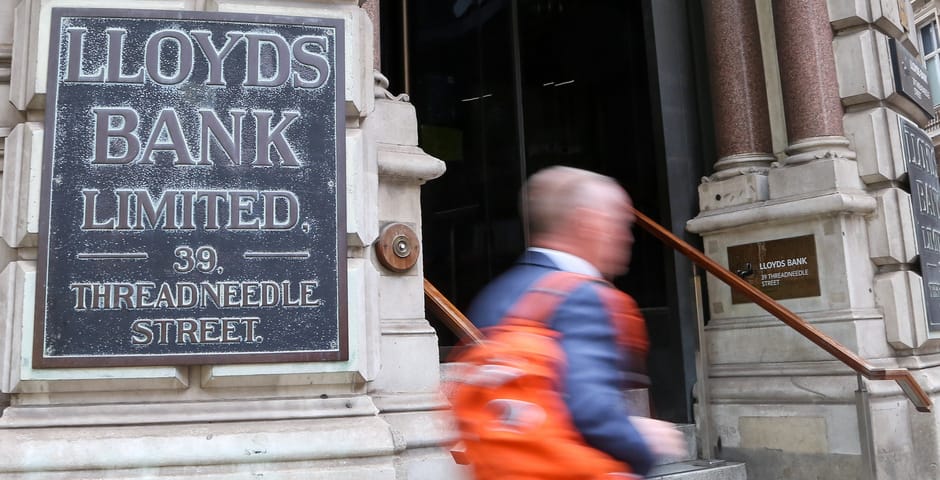

Lloyds Banking Group became the first UK blue-chip company, one of Britain's largest and most established firms, to seat an artificial intelligence agent on its board of directors. The bot doesn't cast votes, but it already shapes decisions by sifting through confidential data that would overwhelm human directors. This represents automation preparing the room where judgment happens, not replacing it.
Built by Board Intelligence, a corporate AI specialist, the system digests cyber-security alerts, acquisition prospects, merger scenarios, employee performance trends, and core financial metrics. It transforms sprawl into synthesis. Directors arrive briefed, not buried.
The bank credits the AI with generating £50 million (approximately $63 million) in profit last year and is targeting £100 million (roughly $126 million) for 2026. Lloyds frames the initiative as part of its ambition to become the United Kingdom's largest fintech operation, a vision that now includes redefining what a board member can be.
He framed the technology as a tool for responsible augmentation, not replacement.
£50 million ($63 million) in 2025. A £100 million ($126 million) goal for 2026. Zero votes. These figures outline both the financial incentive and the guardrails Lloyds has imposed, at least for now.
Introducing AI into boardrooms signals a structural shift toward data-driven oversight across the financial sector. If the experiment proves sound, competitors may follow. Strategic vetting could soon look fundamentally different.
Lloyds intends to expand the bot's role from preparation to active participation in future discussions. Performance will be monitored closely. Regulators will be consulted before any voting capability is explored. The question is no longer whether machines belong in governance; it's how much authority they should hold, and who decides when enough is enough.