
Logo
My feedToday
Logo
Decide better.Live better.
My feedToday
Logo
My feedToday

Stay Curious. Stay Wanture.

© 2026 Wanture. All rights reserved.

  • Terms of Use
  • Privacy Policy
Logo
My feedTodayTechScienceHealthMobilityMindProductivityHomeExperiencesLongevity
Logo
Decide better.Live better.
My feedTodayTechScienceHealthMobilityMindProductivityHomeExperiencesLongevity
Logo
My feedTodayTechScienceHealthMobilityMindProductivityHomeExperiencesLongevity
Tech/Gadgets

Apple’s 2027 iPhone to debut polarizer‑free display

25 April 2026

—

News

Carter Brooks

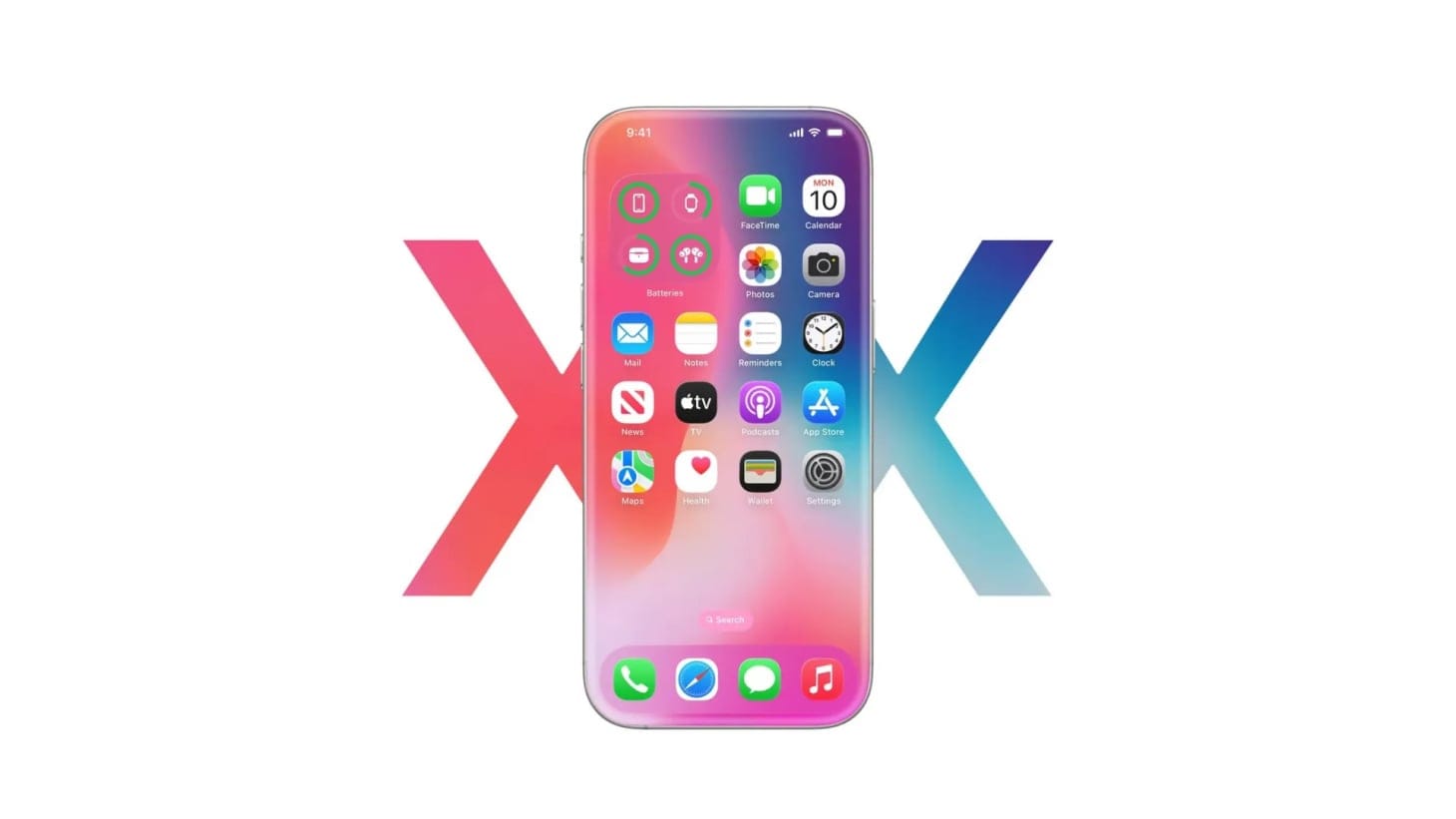
Apple has quietly laid the groundwork for its 2027 iPhone, tapping Samsung for a micro-curved polarizer-free display and testing under-display Face ID, according to supply-chain reports surfaced in late April. There's no official press release, none in Apple's U.S. Newsroom, but the supply-chain evidence is substantial enough to sort out what's real, what's technically doable, and what actually matters.

Driving the news: Industry sources say Apple is prototyping a "quad-curved" panel with Samsung's Pol-less (polarizer-free) OLED stack for the 20th-anniversary iPhone. Samsung publicly demonstrated this tech, branded Eco² OLED or OCF, at MWC25 in February 2025, claiming peak brightness of 5,000 nits under lab conditions and roughly 20 percent thinner panels. That's not marketing vapor; Samsung has the datasheets.
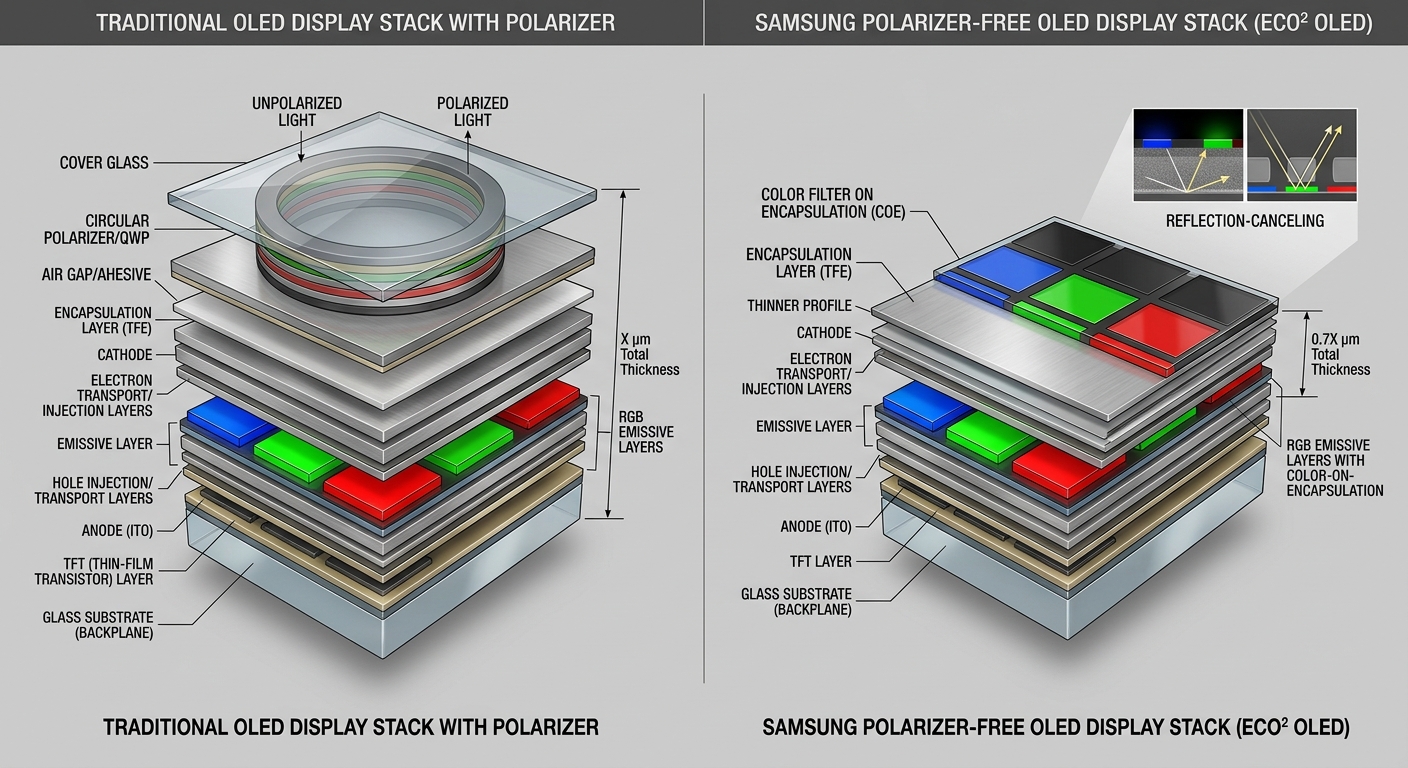
Why it matters: Dropping the polarizer lets more light through and cuts power draw. Samsung says the same brightness costs about 63 percent of the typical energy. In practice, your screen stays legible in direct sunlight without killing the battery by noon. The micro-curve adds a tactile payoff: instead of hitting a hard edge when you swipe from the side, your thumb glides over a smooth radius. Small ergonomic gain, but it adds up over hundreds of daily gestures.
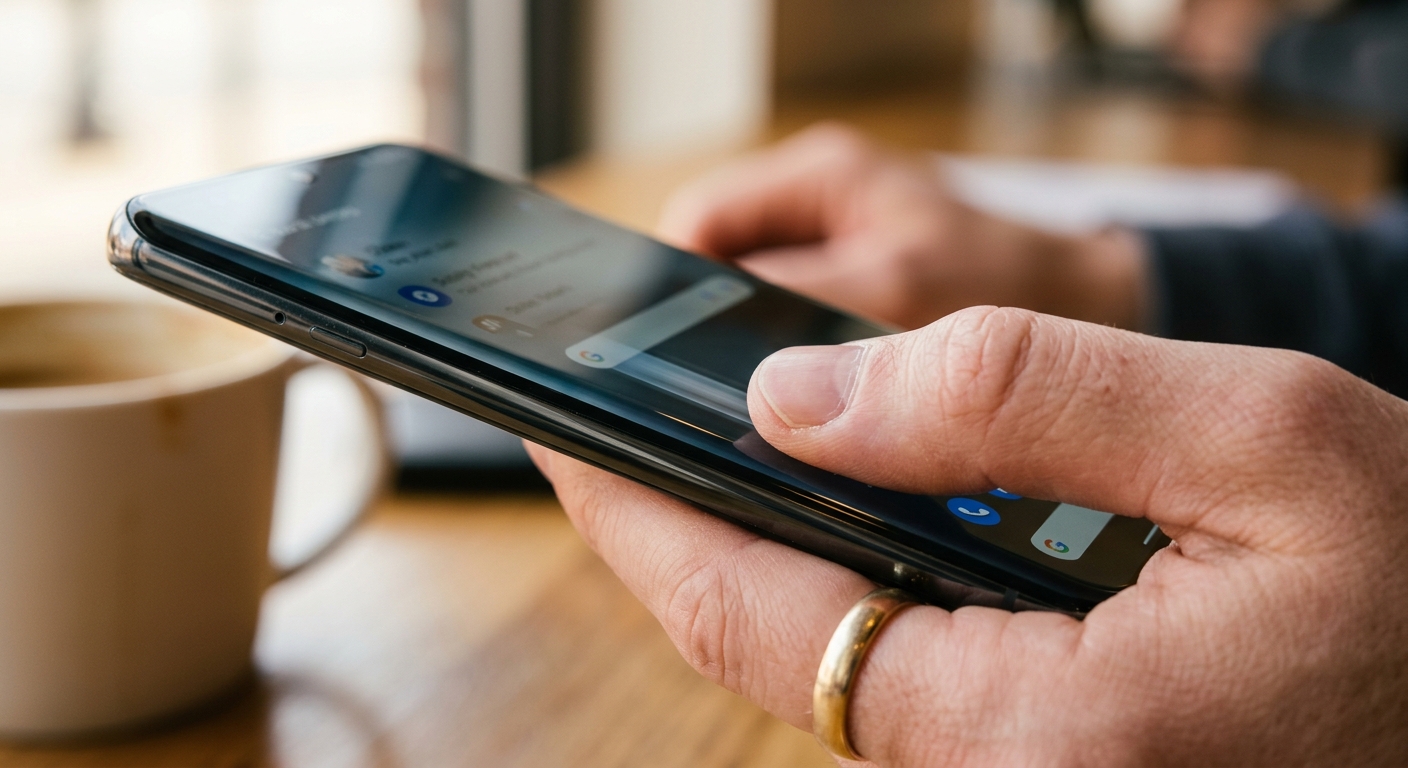
The catch: Under-display Face ID remains unconfirmed. Multiple credible sources, The Information, analyst Ross Young at DSCC, Bloomberg's Mark Gurman, reported Apple is working toward it for 2026–2027 Pro models, but March 2026 supply-chain updates flagged engineering snags. Apple may ship a smaller Dynamic Island cutout rather than a fully hidden sensor array. Treat "hidden Face ID" as aspirational until Apple or a teardown proves otherwise.

By the numbers: Samsung's OCF panels are up to 0.2 mm thinner than conventional stacks; peak brightness reaches 3,000+ nits in typical use and 5,000 nits in Samsung's 10-percent-pixel test rig. U.S. supply-chain players include Universal Display (phosphorescent OLED materials), Corning (raw glass for ultra-thin covers), Applied Materials and KLA (fab equipment). Panel production stays in Korea; final assembly will be in East Asia.

What we're watching: If Apple follows the rumored staged rollout, Pro models get the new display first (fall 2027), with mainstream models in 2028. Apple's recent iOS development work has shown the company is building software hooks for advanced OLED calibration and on-device sensor tuning, which aligns with the Pol-less and under-display roadmap.

Bottom line: The tech exists and Samsung is ramping production; whether Apple ships it next year or the year after depends on yield, cost, and whether the company solves the Face ID optical challenges. Watch for official word at WWDC or the fall iPhone event, and ignore any spec that isn't backed by a datasheet or a teardown.


What is this about?

  • News
  • Carter Brooks
  • Tech
  • Gadgets
  • Apple Anniversary
  • Apple Supply Chain
  • Polarizer-Free OLED
  • Under-Display Face ID

Feed

    Apple Develops Foldable iPad with 18-inch OLED

    Apple Develops Foldable iPad with 18-inch OLED

    Engineering hurdles and rising component costs delay potential 2029 release

    Aurora Fieldsabout 3 hours ago
    LG Announces UltraGear 25G590B with 1,000 Hz Refresh Rate

    LG Announces UltraGear 25G590B with 1,000 Hz Refresh Rate

    New 24.5-inch IPS gaming monitor targets esports elite with AI integration

    Carter Brooksabout 12 hours ago
    Apple iPhone Ultra Hinge Issues Reported

    Apple iPhone Ultra Hinge Issues Reported

    Internal testing reveals hardware hurdles for upcoming September foldable launch

    Lila Fontaineabout 12 hours ago
    Apple to Introduce Privacy-Centric Siri in iOS 27

    Apple to Introduce Privacy-Centric Siri in iOS 27

    New data retention controls and dual interface design expected via iOS 27

    Jasmine Wu1 day ago
    Google Sets 12GB RAM Limit for Gemini Intelligence

    Google Sets 12GB RAM Limit for Gemini Intelligence

    New hardware requirements restrict advanced AI to flagship smartphones

    Jasmine Wu1 day ago
    Honor Unveils ARRI-Powered Robot Phone

    Honor Unveils ARRI-Powered Robot Phone

    New concept smartphone brings professional 4DoF robotic stabilization to mobile

    Leo Navarro1 day ago
    Apple Secures Four ADC Annual Awards

    Apple Secures Four ADC Annual Awards

    Design excellence recognized at the 105th ADC Annual Awards

    Renée Ito3 days ago
    Do GLP-1 Drugs Cause Muscle Loss? The Science Behind Semaglutide and Tirzepatide

    Do GLP-1 Drugs Cause Muscle Loss? The Science Behind Semaglutide and Tirzepatide

    Marcus Lee3 days ago

    UCSD reverses aging in blood stem cells via lysosomal repair

    Breakthrough in gene modulation restores 78% differentiation efficiency in aged human cells

    James Whitmore5 days ago

    Scientists Reverse Blood Stem Cell Aging by Restoring Cellular Recycling

    James Whitmore5 days ago
    Loading...
Tech/Gadgets

Apple’s 2027 iPhone to debut polarizer‑free display

25 April 2026

—

News

Carter Brooks

Apple has quietly laid the groundwork for its 2027 iPhone, tapping Samsung for a micro-curved polarizer-free display and testing under-display Face ID, according to supply-chain reports surfaced in late April. There's no official press release, none in Apple's U.S. Newsroom, but the supply-chain evidence is substantial enough to sort out what's real, what's technically doable, and what actually matters.

Driving the news: Industry sources say Apple is prototyping a "quad-curved" panel with Samsung's Pol-less (polarizer-free) OLED stack for the 20th-anniversary iPhone. Samsung publicly demonstrated this tech, branded Eco² OLED or OCF, at MWC25 in February 2025, claiming peak brightness of 5,000 nits under lab conditions and roughly 20 percent thinner panels. That's not marketing vapor; Samsung has the datasheets.

Why it matters: Dropping the polarizer lets more light through and cuts power draw. Samsung says the same brightness costs about 63 percent of the typical energy. In practice, your screen stays legible in direct sunlight without killing the battery by noon. The micro-curve adds a tactile payoff: instead of hitting a hard edge when you swipe from the side, your thumb glides over a smooth radius. Small ergonomic gain, but it adds up over hundreds of daily gestures.

The catch: Under-display Face ID remains unconfirmed. Multiple credible sources, The Information, analyst Ross Young at DSCC, Bloomberg's Mark Gurman, reported Apple is working toward it for 2026–2027 Pro models, but March 2026 supply-chain updates flagged engineering snags. Apple may ship a smaller Dynamic Island cutout rather than a fully hidden sensor array. Treat "hidden Face ID" as aspirational until Apple or a teardown proves otherwise.

By the numbers: Samsung's OCF panels are up to 0.2 mm thinner than conventional stacks; peak brightness reaches 3,000+ nits in typical use and 5,000 nits in Samsung's 10-percent-pixel test rig. U.S. supply-chain players include Universal Display (phosphorescent OLED materials), Corning (raw glass for ultra-thin covers), Applied Materials and KLA (fab equipment). Panel production stays in Korea; final assembly will be in East Asia.

What we're watching: If Apple follows the rumored staged rollout, Pro models get the new display first (fall 2027), with mainstream models in 2028. Apple's recent iOS development work has shown the company is building software hooks for advanced OLED calibration and on-device sensor tuning, which aligns with the Pol-less and under-display roadmap.

Bottom line: The tech exists and Samsung is ramping production; whether Apple ships it next year or the year after depends on yield, cost, and whether the company solves the Face ID optical challenges. Watch for official word at WWDC or the fall iPhone event, and ignore any spec that isn't backed by a datasheet or a teardown.

What is this about?

  • News/
  • Carter Brooks/
  • Tech/
  • Gadgets/
  • Apple Anniversary/
  • Apple Supply Chain/
  • Polarizer-Free OLED/
  • Under-Display Face ID

Feed

    Apple Develops Foldable iPad with 18-inch OLED

    Apple Develops Foldable iPad with 18-inch OLED

    Engineering hurdles and rising component costs delay potential 2029 release

    Aurora Fieldsabout 3 hours ago
    LG Announces UltraGear 25G590B with 1,000 Hz Refresh Rate

    LG Announces UltraGear 25G590B with 1,000 Hz Refresh Rate

    New 24.5-inch IPS gaming monitor targets esports elite with AI integration

    Carter Brooksabout 12 hours ago
    Apple iPhone Ultra Hinge Issues Reported

    Apple iPhone Ultra Hinge Issues Reported

    Internal testing reveals hardware hurdles for upcoming September foldable launch

    Lila Fontaineabout 12 hours ago
    Apple to Introduce Privacy-Centric Siri in iOS 27

    Apple to Introduce Privacy-Centric Siri in iOS 27

    New data retention controls and dual interface design expected via iOS 27

    Jasmine Wu1 day ago
    Google Sets 12GB RAM Limit for Gemini Intelligence

    Google Sets 12GB RAM Limit for Gemini Intelligence

    New hardware requirements restrict advanced AI to flagship smartphones

    Jasmine Wu1 day ago
    Honor Unveils ARRI-Powered Robot Phone

    Honor Unveils ARRI-Powered Robot Phone

    New concept smartphone brings professional 4DoF robotic stabilization to mobile

    Leo Navarro1 day ago
    Apple Secures Four ADC Annual Awards

    Apple Secures Four ADC Annual Awards

    Design excellence recognized at the 105th ADC Annual Awards

    Renée Ito3 days ago
    Do GLP-1 Drugs Cause Muscle Loss? The Science Behind Semaglutide and Tirzepatide

    Do GLP-1 Drugs Cause Muscle Loss? The Science Behind Semaglutide and Tirzepatide

    Marcus Lee3 days ago

    UCSD reverses aging in blood stem cells via lysosomal repair

    Breakthrough in gene modulation restores 78% differentiation efficiency in aged human cells

    James Whitmore5 days ago

    Scientists Reverse Blood Stem Cell Aging by Restoring Cellular Recycling

    James Whitmore5 days ago
    Loading...
Home
Home
Search
Search