
Logo
Decide better.Live better.
My feedToday
Logo
Decide better.Live better.
My feedToday
Logo
My feedToday

Stay Curious. Stay Wanture.

© 2026 Wanture. All rights reserved.

  • Terms of Use
  • Privacy Policy
Logo
Decide better.Live better.
My feedTodayTechScienceHealthMobilityMindProductivityHomeExperiencesLongevity
Logo
Decide better.Live better.
My feedTodayTechScienceHealthMobilityMindProductivityHomeExperiencesLongevity
Logo
My feedTodayTechScienceHealthMobilityMindProductivityHomeExperiencesLongevity

Google launches Gemini 3 and the Antigravity AI platform

18 November 2025

—

News

Jasmine Wu

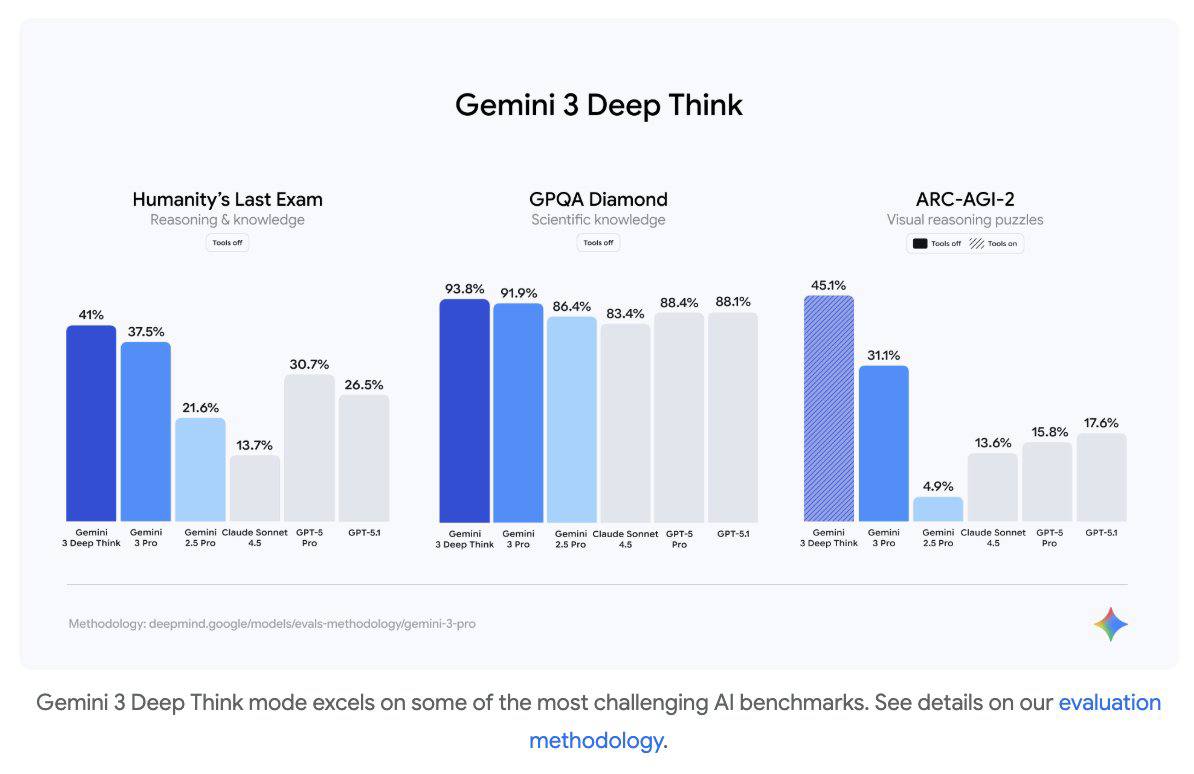
Google launched Gemini 3 and the Antigravity agent platform on February 16, 2026, introducing AI that plans, executes, and validates tasks across code editors, terminals, and browsers without human prompts. The release targets a U.S. autonomous-agents market projected to reach $5.8 billion in 2026, positioning Google to capture developers who need scalable AI partners capable of independent action.

Google trained Gemini 3 exclusively on Trillium TPUs, delivering a 2.3× improvement in task-completion speed over Gemini 2.5. The multimodal model processes text, image, and audio inputs simultaneously to coordinate outputs across environments.

Antigravity assigns each agent a persistent workspace containing a code editor, terminal, and browser, transforming AI from a reactive tool into an autonomous partner. A single agent can draft Python code, run unit tests in the terminal, submit a web form to provision cloud resources, then verify the deployment before reporting results. The platform eliminates the multi-step prompting workflows that previously required constant human oversight.
Developers can access Antigravity through the Google Cloud AI API starting today, with sandbox environments available for qualified projects and production quotas for paid accounts. Integration requires enabling the Gemini 3 model, authenticating via a service account, and invoking the "agent.run" endpoint with a natural-language task description. Anthropic's 2025 TPU expansion study confirms the infrastructure supports up to one million concurrent agents.

Enterprises can now automate end-to-end workflows without manual scripting, a shift Gartner predicts will embed task-specific AI agents in 40% of enterprise applications by year-end, up from under 5% in 2025. A finance team could configure an agent to reconcile statements, generate audit reports, and file documentation to a compliance portal, reducing manual effort and error rates. Security teams must review agent permissions carefully, as the platform grants terminal command execution and browser control.

The question shifts from whether AI can handle complex tasks to which processes organizations will trust autonomous systems to own completely.

Topic

Google Gemini 3 Launch

Google adds Gemini 3 Memory import for chat logs

27 March 2026

Google launches Gemini 3‑powered AI Overview on mobile

28 January 2026

Google's DiscoRL writes its own learning rules

15 December 2025

What is this about?

  • News
  • Jasmine Wu
  • Tech
  • Software
  • Gemini AI
  • autonomous AI agents
  • developer platforms
  • AI compute capacity
  • multimodal AI
  • enterprise AI automation

Feed

    Apple’s 2026 Product Pipeline Signals Fall Upgrades

    Apple’s 2026 Product Pipeline Signals Fall Upgrades

    iPhone Ultra, new Macs, and a smart hub arrive later this year

    Ben Ramosabout 1 hour ago
    Apple Watch Ultra 4 could track blood pressure trends

    Apple Watch Ultra 4 could track blood pressure trends

    A potential hardware redesign with 8 sensors aims to move from simple alerts to direct cardiovascular measurement

    Ben Ramos3 days ago

    Your earbuds could become a secure digital key via your heartbeat

    AccLock uses standard accelerometers to verify identity without needing premium optical heart trackers

    Ben Ramos4 days ago
    Memory chip shortages could end by 2027

    Memory chip shortages could end by 2027

    Aggressive Chinese production expansions from YMTC and CXMT may lower hardware costs sooner than the 2030 consensus

    Ben Ramos4 days ago
    Hisense Explorer X1 Pro brings 120-inch cinema to your living room

    Hisense Explorer X1 Pro brings 120-inch cinema to your living room

    A new tri-color laser engine offers 110% BT.2020 color gamut, though US availability remains unannounced

    Logan Price5 days ago
    Onyx Boox Poke 7 series brings paper-like clarity to your library

    Onyx Boox Poke 7 series brings paper-like clarity to your library

    New 300 ppi displays and 2 TB expandable storage offer a sharper, larger reading experience

    Ben Ramos5 days ago
    SpaceX IPO: A historic bet on the space economy

    SpaceX IPO: A historic bet on the space economy

    With 2025 revenue hitting $18.6 billion, the Nasdaq debut tests market appetite for Elon Musk

    Jasmine Wu5 days ago
    Figma AI agents turn manual design into high-level direction

    Figma AI agents turn manual design into high-level direction

    New intent-based tools allow designers to build layouts using natural language instead of clicking and dragging

    Evelyn Park5 days ago
    NanoClaw's sandbox stops AI agents from compromising your OS

    NanoClaw's sandbox stops AI agents from compromising your OS

    NanoCo secures $12 million to scale its isolated architecture for enterprise AI deployment

    Marcus Dillard5 days ago

    Microsoft's new Surface lineup is for businesses, not consumers

    Wait for Snapdragon X2 models this summer if you aren't buying for an enterprise fleet

    Carter Brooks5 days ago
    Loading...

Google launches Gemini 3 and the Antigravity AI platform

18 November 2025

—

News

Jasmine Wu

Google launched Gemini 3 and the Antigravity agent platform on February 16, 2026, introducing AI that plans, executes, and validates tasks across code editors, terminals, and browsers without human prompts. The release targets a U.S. autonomous-agents market projected to reach $5.8 billion in 2026, positioning Google to capture developers who need scalable AI partners capable of independent action.

Google trained Gemini 3 exclusively on Trillium TPUs, delivering a 2.3× improvement in task-completion speed over Gemini 2.5. The multimodal model processes text, image, and audio inputs simultaneously to coordinate outputs across environments.

Antigravity assigns each agent a persistent workspace containing a code editor, terminal, and browser, transforming AI from a reactive tool into an autonomous partner. A single agent can draft Python code, run unit tests in the terminal, submit a web form to provision cloud resources, then verify the deployment before reporting results. The platform eliminates the multi-step prompting workflows that previously required constant human oversight.

Developers can access Antigravity through the Google Cloud AI API starting today, with sandbox environments available for qualified projects and production quotas for paid accounts. Integration requires enabling the Gemini 3 model, authenticating via a service account, and invoking the "agent.run" endpoint with a natural-language task description. Anthropic's 2025 TPU expansion study confirms the infrastructure supports up to one million concurrent agents.

Enterprises can now automate end-to-end workflows without manual scripting, a shift Gartner predicts will embed task-specific AI agents in 40% of enterprise applications by year-end, up from under 5% in 2025. A finance team could configure an agent to reconcile statements, generate audit reports, and file documentation to a compliance portal, reducing manual effort and error rates. Security teams must review agent permissions carefully, as the platform grants terminal command execution and browser control.

The question shifts from whether AI can handle complex tasks to which processes organizations will trust autonomous systems to own completely.

Topic

Google Gemini 3 Launch

Google adds Gemini 3 Memory import for chat logs

27 March 2026

Google launches Gemini 3‑powered AI Overview on mobile

28 January 2026

Google's DiscoRL writes its own learning rules

15 December 2025

What is this about?

  • News/
  • Jasmine Wu/
  • Tech/
  • Software/
  • Gemini AI/
  • autonomous AI agents/
  • developer platforms/
  • AI compute capacity/
  • multimodal AI/
  • enterprise AI automation

Feed

    Apple’s 2026 Product Pipeline Signals Fall Upgrades

    Apple’s 2026 Product Pipeline Signals Fall Upgrades

    iPhone Ultra, new Macs, and a smart hub arrive later this year

    Ben Ramosabout 1 hour ago
    Apple Watch Ultra 4 could track blood pressure trends

    Apple Watch Ultra 4 could track blood pressure trends

    A potential hardware redesign with 8 sensors aims to move from simple alerts to direct cardiovascular measurement

    Ben Ramos3 days ago

    Your earbuds could become a secure digital key via your heartbeat

    AccLock uses standard accelerometers to verify identity without needing premium optical heart trackers

    Ben Ramos4 days ago
    Memory chip shortages could end by 2027

    Memory chip shortages could end by 2027

    Aggressive Chinese production expansions from YMTC and CXMT may lower hardware costs sooner than the 2030 consensus

    Ben Ramos4 days ago
    Hisense Explorer X1 Pro brings 120-inch cinema to your living room

    Hisense Explorer X1 Pro brings 120-inch cinema to your living room

    A new tri-color laser engine offers 110% BT.2020 color gamut, though US availability remains unannounced

    Logan Price5 days ago
    Onyx Boox Poke 7 series brings paper-like clarity to your library

    Onyx Boox Poke 7 series brings paper-like clarity to your library

    New 300 ppi displays and 2 TB expandable storage offer a sharper, larger reading experience

    Ben Ramos5 days ago
    SpaceX IPO: A historic bet on the space economy

    SpaceX IPO: A historic bet on the space economy

    With 2025 revenue hitting $18.6 billion, the Nasdaq debut tests market appetite for Elon Musk

    Jasmine Wu5 days ago
    Figma AI agents turn manual design into high-level direction

    Figma AI agents turn manual design into high-level direction

    New intent-based tools allow designers to build layouts using natural language instead of clicking and dragging

    Evelyn Park5 days ago
    NanoClaw's sandbox stops AI agents from compromising your OS

    NanoClaw's sandbox stops AI agents from compromising your OS

    NanoCo secures $12 million to scale its isolated architecture for enterprise AI deployment

    Marcus Dillard5 days ago

    Microsoft's new Surface lineup is for businesses, not consumers

    Wait for Snapdragon X2 models this summer if you aren't buying for an enterprise fleet

    Carter Brooks5 days ago
    Loading...
Home
Home
Search
Search