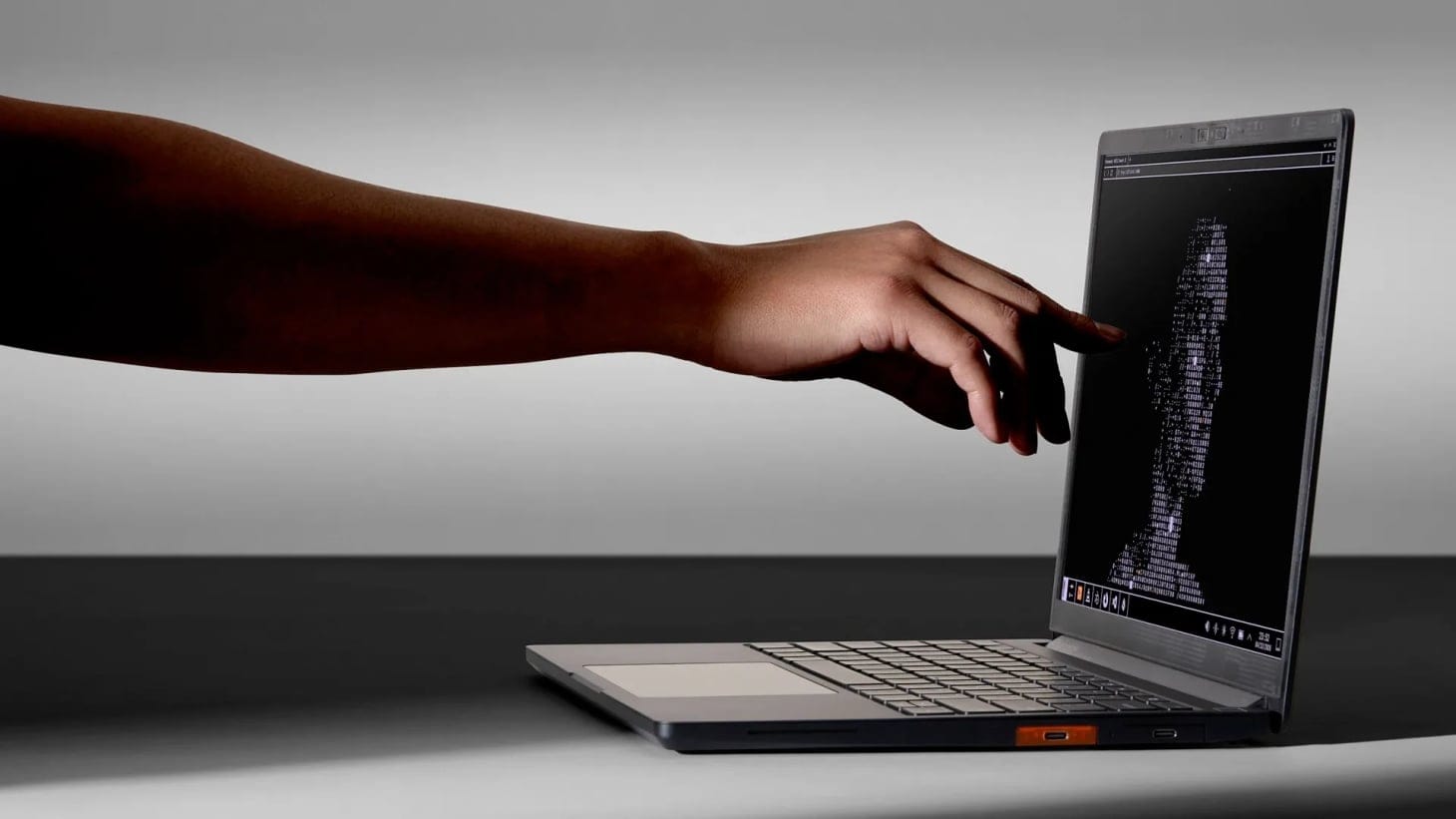

Framework has thrown down a gauntlet in San Francisco. Today, April 22, the company is unveiling the Laptop 13 Pro, a machine that feels like the MacBook Pro Linux users have been waiting for. It's aluminum, it's got a haptic trackpad that rivals Apple's, and you can still crack it open and swap parts like it's 2012. If you've ever felt stuck choosing between polished hardware and repairability, this one's for you.
Why it matters: For years, Linux devotees have had to settle for plasticky ThinkPads or Dells that felt like afterthoughts. The Laptop 13 Pro changes that calculus. You get a rigid aluminum chassis, a haptic‑feedback trackpad that feels responsive, and the freedom to replace your SSD or RAM without voiding a warranty. It's the rare notebook that doesn't make you pick a side.
What they're saying: The Verge praised the keyboard for its stiffness ("barely flexes") and noted the hinge holds enough tension to let you flip it open with one finger. The trackpad delivers smooth, tactile feedback that doesn't feel like a consolation prize for skipping macOS.
By the numbers: The 13.5‑inch display hits 2.5K resolution, 700 nits brightness, and 100% sRGB coverage. Inside, Intel Core Ultra Series 3 processors deliver horsepower across three configurations: the Core Ultra 5 325 (up to 4.5 GHz, 8 threads), Core Ultra X7 358H (up to 4.8 GHz, 16 threads), and Core Ultra X9 388H (up to 5.1 GHz, 16 threads). Battery capacity sits at 74 Wh, good for up to 20 hours of 4K Netflix streaming. The whole package weighs 1.4 kg (about 3.1 lb) and measures 15.85 mm thick. Pricing starts at $1,199 for the DIY version with the Core Ultra 5 325 model, or $1,499 for the pre-built configuration with 16 GB RAM and a 512 GB SSD.
The big picture: Framework's modular DNA remains intact. Owners can swap SSDs and memory, and the Laptop 13 Pro stays compatible with parts from the earlier Laptop 13, stretching the lifespan of components across generations. In a world of soldered‑everything, that's not just convenient. It's a statement.
What's next: Framework hinted at future updates that could bring higher‑refresh panels and more port options. For now, the Laptop 13 Pro stands alone in its category: well-built, Linux‑ready, and designed to last.