
Logo
Decide better.Live better.
My feedToday
Logo
Decide better.Live better.
My feedToday
Logo
My feedToday

Stay Curious. Stay Wanture.

© 2026 Wanture. All rights reserved.

  • Terms of Use
  • Privacy Policy
Logo
Decide better.Live better.
My feedTodayTechScienceHealthMobilityMindProductivityHomeExperiencesLongevity
Logo
Decide better.Live better.
My feedTodayTechScienceHealthMobilityMindProductivityHomeExperiencesLongevity
Logo
My feedTodayTechScienceHealthMobilityMindProductivityHomeExperiencesLongevity

Apple Orders Ultra‑Thin Face ID Modules for iPhone Air 2

27 January 2026

—

News

Priya Desai

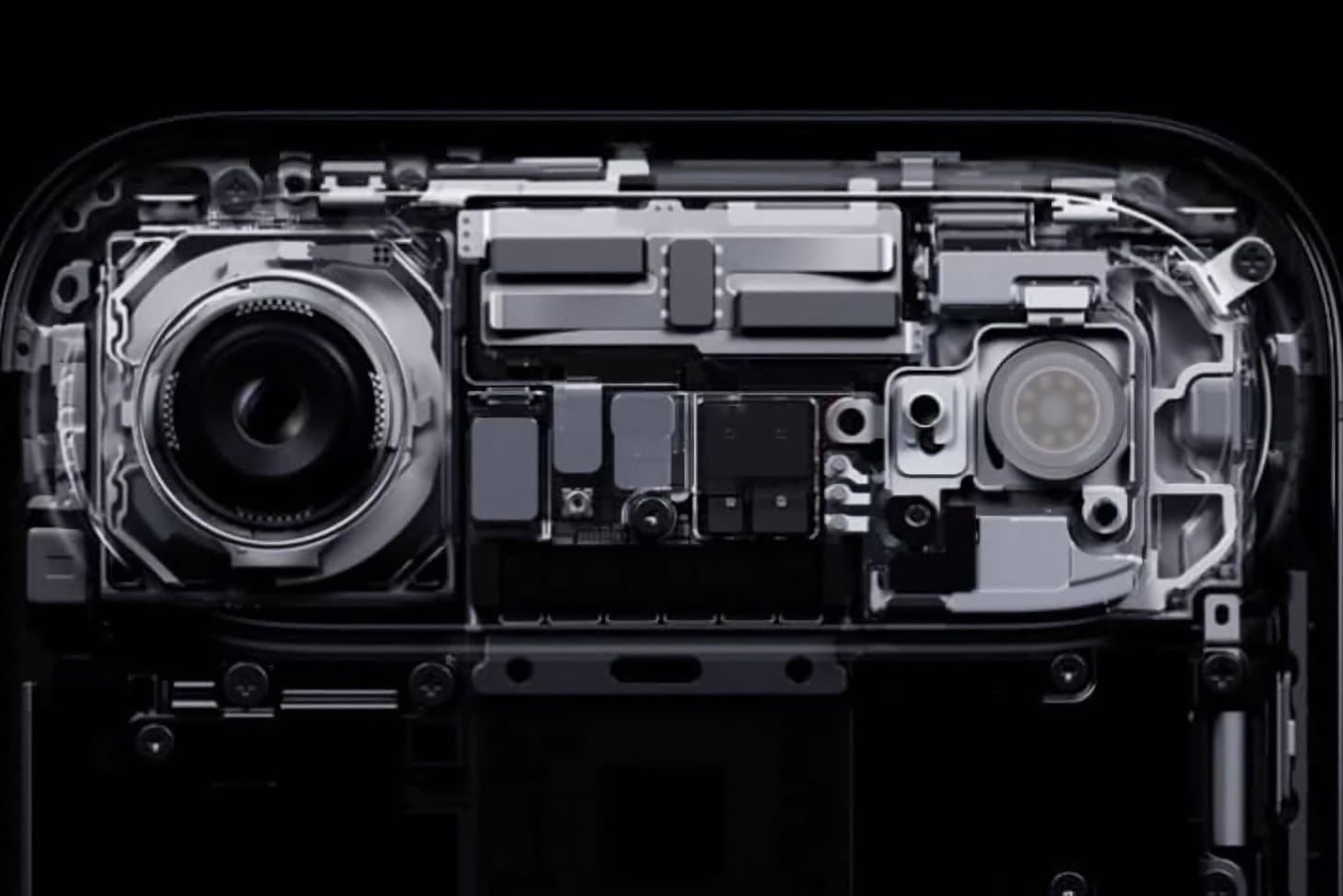
Apple is developing an ultra-thin Face ID module for the upcoming iPhone Air 2 to make room for a second ultra-wide camera without increasing chassis thickness. According to an insider at Instant Digital, the company has requested these slimmer components from its suppliers. Face ID works by projecting infrared dots onto a face and matching the pattern to stored data.

The depth reduction would create space for an ultra-wide lens, allowing users to capture broader scenes while keeping the phone slim. Shoppers continue to value thin phones, so expanding photographic capability without adding bulk addresses a real consumer preference.

The redesign requires more than just Face ID—engineers must reconfigure the entire component layout to accommodate the second camera. In the current iPhone Air, all technical hardware is housed within the protruding camera module, while the rest of the chassis is occupied by the battery. The slimmer Face ID unit would need to maintain infrared performance, thermal management, and signal integrity in a more constrained vertical space.

The change likely involves relocating components and optimizing the internal architecture to balance the new camera requirements with Face ID functionality.

If the ultra-thin design proves successful, Instant Digital suggests it could eventually appear in MacBook lids, enabling biometric unlocking without widening the display housing. However, there are currently no rumors indicating Apple is actually working on adding Face ID to MacBooks.

The development timeline remains unclear, though component orders typically occur several months before product launches. If development progresses as planned, the redesigned Face ID module could debut in a future iPhone Air iteration, potentially enabling the dual-camera system Apple appears to be pursuing.

Watch for further supply-chain reports and any performance data Apple releases about the new module. Key questions include whether the slimmer design maintains depth-sensing accuracy in various lighting conditions and whether it impacts battery placement or overall device thermals.


What is this about?

  • News
  • Priya Desai
  • Tech
  • Gadgets
  • smartphone design
  • hardware innovation
  • advanced camera system
  • digital identity

Feed

    Tesla gets European approval for semi-autonomous driving — here's what you need to pass before using it

    Tesla gets European approval for semi-autonomous driving — here's what you need to pass before using it

    You must pass a mandatory safety quiz and accept a "Max Speed" setting as regulators weigh U.S. crash data against autonomous claims

    Auden Wheelock4 days ago
    Apple Breaks Autumn Cadence: iPhone 18 Pro and iPhone Ultra

    Apple Breaks Autumn Cadence: iPhone 18 Pro and iPhone Ultra

    Plan purchases around September’s standard lineup or wait for Q4 hardware

    Ben Ramos6 days ago
    Apple Watch Ultra 4 could track blood pressure trends

    Apple Watch Ultra 4 could track blood pressure trends

    A potential hardware redesign with 8 sensors aims to move from simple alerts to direct cardiovascular measurement

    Ben Ramos22 May 2026

    Your earbuds could become a secure digital key via your heartbeat

    AccLock uses standard accelerometers to verify identity without needing premium optical heart trackers

    Ben Ramos21 May 2026
    Memory chip shortages could end by 2027

    Memory chip shortages could end by 2027

    Aggressive Chinese production expansions from YMTC and CXMT may lower hardware costs sooner than the 2030 consensus

    Ben Ramos21 May 2026
    Hisense Explorer X1 Pro brings 120-inch cinema to your living room

    Hisense Explorer X1 Pro brings 120-inch cinema to your living room

    A new tri-color laser engine offers 110% BT.2020 color gamut, though US availability remains unannounced

    Logan Price21 May 2026
    Onyx Boox Poke 7 series brings paper-like clarity to your library

    Onyx Boox Poke 7 series brings paper-like clarity to your library

    New 300 ppi displays and 2 TB expandable storage offer a sharper, larger reading experience

    Ben Ramos20 May 2026
    SpaceX IPO: A historic bet on the space economy

    SpaceX IPO: A historic bet on the space economy

    With 2025 revenue hitting $18.6 billion, the Nasdaq debut tests market appetite for Elon Musk

    Jasmine Wu20 May 2026
    Figma AI agents turn manual design into high-level direction

    Figma AI agents turn manual design into high-level direction

    New intent-based tools allow designers to build layouts using natural language instead of clicking and dragging

    Evelyn Park20 May 2026
    NanoClaw's sandbox stops AI agents from compromising your OS

    NanoClaw's sandbox stops AI agents from compromising your OS

    NanoCo secures $12 million to scale its isolated architecture for enterprise AI deployment

    Marcus Dillard20 May 2026
    Loading...

Apple Orders Ultra‑Thin Face ID Modules for iPhone Air 2

27 January 2026

—

News

Priya Desai

Apple is developing an ultra-thin Face ID module for the upcoming iPhone Air 2 to make room for a second ultra-wide camera without increasing chassis thickness. According to an insider at Instant Digital, the company has requested these slimmer components from its suppliers. Face ID works by projecting infrared dots onto a face and matching the pattern to stored data.

The depth reduction would create space for an ultra-wide lens, allowing users to capture broader scenes while keeping the phone slim. Shoppers continue to value thin phones, so expanding photographic capability without adding bulk addresses a real consumer preference.

The redesign requires more than just Face ID—engineers must reconfigure the entire component layout to accommodate the second camera. In the current iPhone Air, all technical hardware is housed within the protruding camera module, while the rest of the chassis is occupied by the battery. The slimmer Face ID unit would need to maintain infrared performance, thermal management, and signal integrity in a more constrained vertical space.

The change likely involves relocating components and optimizing the internal architecture to balance the new camera requirements with Face ID functionality.

If the ultra-thin design proves successful, Instant Digital suggests it could eventually appear in MacBook lids, enabling biometric unlocking without widening the display housing. However, there are currently no rumors indicating Apple is actually working on adding Face ID to MacBooks.

The development timeline remains unclear, though component orders typically occur several months before product launches. If development progresses as planned, the redesigned Face ID module could debut in a future iPhone Air iteration, potentially enabling the dual-camera system Apple appears to be pursuing.

Watch for further supply-chain reports and any performance data Apple releases about the new module. Key questions include whether the slimmer design maintains depth-sensing accuracy in various lighting conditions and whether it impacts battery placement or overall device thermals.

What is this about?

  • News/
  • Priya Desai/
  • Tech/
  • Gadgets/
  • smartphone design/
  • hardware innovation/
  • advanced camera system/
  • digital identity

Feed

    Tesla gets European approval for semi-autonomous driving — here's what you need to pass before using it

    Tesla gets European approval for semi-autonomous driving — here's what you need to pass before using it

    You must pass a mandatory safety quiz and accept a "Max Speed" setting as regulators weigh U.S. crash data against autonomous claims

    Auden Wheelock4 days ago
    Apple Breaks Autumn Cadence: iPhone 18 Pro and iPhone Ultra

    Apple Breaks Autumn Cadence: iPhone 18 Pro and iPhone Ultra

    Plan purchases around September’s standard lineup or wait for Q4 hardware

    Ben Ramos6 days ago
    Apple Watch Ultra 4 could track blood pressure trends

    Apple Watch Ultra 4 could track blood pressure trends

    A potential hardware redesign with 8 sensors aims to move from simple alerts to direct cardiovascular measurement

    Ben Ramos22 May 2026

    Your earbuds could become a secure digital key via your heartbeat

    AccLock uses standard accelerometers to verify identity without needing premium optical heart trackers

    Ben Ramos21 May 2026
    Memory chip shortages could end by 2027

    Memory chip shortages could end by 2027

    Aggressive Chinese production expansions from YMTC and CXMT may lower hardware costs sooner than the 2030 consensus

    Ben Ramos21 May 2026
    Hisense Explorer X1 Pro brings 120-inch cinema to your living room

    Hisense Explorer X1 Pro brings 120-inch cinema to your living room

    A new tri-color laser engine offers 110% BT.2020 color gamut, though US availability remains unannounced

    Logan Price21 May 2026
    Onyx Boox Poke 7 series brings paper-like clarity to your library

    Onyx Boox Poke 7 series brings paper-like clarity to your library

    New 300 ppi displays and 2 TB expandable storage offer a sharper, larger reading experience

    Ben Ramos20 May 2026
    SpaceX IPO: A historic bet on the space economy

    SpaceX IPO: A historic bet on the space economy

    With 2025 revenue hitting $18.6 billion, the Nasdaq debut tests market appetite for Elon Musk

    Jasmine Wu20 May 2026
    Figma AI agents turn manual design into high-level direction

    Figma AI agents turn manual design into high-level direction

    New intent-based tools allow designers to build layouts using natural language instead of clicking and dragging

    Evelyn Park20 May 2026
    NanoClaw's sandbox stops AI agents from compromising your OS

    NanoClaw's sandbox stops AI agents from compromising your OS

    NanoCo secures $12 million to scale its isolated architecture for enterprise AI deployment

    Marcus Dillard20 May 2026
    Loading...
Home
Home
Search
Search