
Engineer Paul Staall transformed a 1979 LEGO Galaxy Explorer computer block into a working Mac mini M4 case, scaling the iconic design tenfold and 3D-printing an enclosure that houses Apple's compact desktop. The M2x2 project demonstrates how open-source maker tools can turn nostalgia into functional hardware. Affordable 3D printers and free design files now let hobbyists dive into hands-on computing projects without buying proprietary accessories.
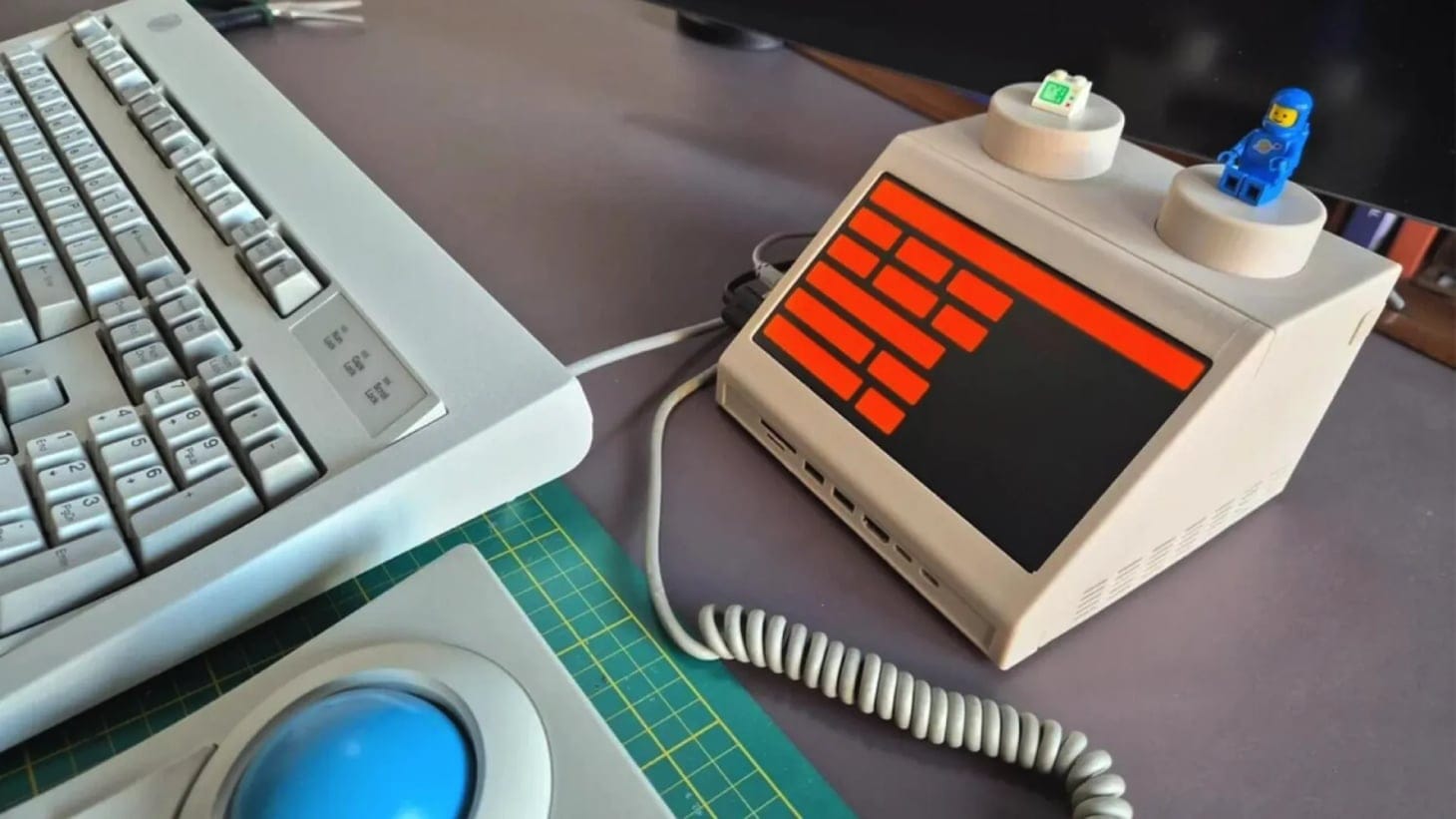
Staall 3D-printed an enlarged version of the classic LEGO computer piece, creating room inside for a Mac mini M4 and additional components. The original 2-inch LEGO brick was scaled up to approximately 20 inches, providing ample interior space for the build. The engineer equipped the enclosure with a 7-inch IPS touchscreen and added extra USB-C, HDMI, and SD card ports beyond the Mac mini's standard configuration.
The top LEGO studs serve a dual purpose, functioning as a platform for wireless charging and a volume regulator. Staall converted the traditional connection points into practical tools while maintaining the ability to attach standard LEGO pieces—including the original computer block—to the oversized brick. A rotary encoder connects to the Mac mini's volume control, turning the iconic studs into tactile dials.
Makers can download the STL files from MakerWorld and replicate the project at home using a 3D printer with adequate build volume. The design files are freely available, allowing anyone with basic maker skills to build their own M2x2. Builders will need PETG filament, standard tools, and basic electronics skills to assemble the case, mount the Mac mini, install the touchscreen, and wire the additional ports and charging module.
The modular design invites community extensions and customization. Makers can adapt the LEGO studs as magnetic tool holders, cable organizers, or mounting points for other accessories, turning the nostalgic brick into a versatile platform for small-form-factor PCs. What other childhood toys could house tomorrow's workstations?