
Why Your Warehouse Doesn't Need a Robot That Looks Human
A former Tesla robotics leader who built Optimus now says the industry is chasing the wrong dream. American companies betting billions on humanoid workers might regret waiting while competitors deploy simpler machines that already work.
The Man Who Built Tesla's Robot Changed His Mind
Chris Walti led the team that created TeslaBot, the program that became Optimus. He designed material flow systems for Tesla's Model 3 factory in Fremont, California. Then he walked away to build something that looks nothing like a person.
No legs. No arms. No human face. Just mobile platforms with modular systems engineered for one purpose: moving products reliably through warehouses.
Walti's argument challenges a $6 billion industry: humanoid robots are exponentially more complex than specialized machines, and they solve problems most American warehouses don't actually have. That assessment comes from someone who spent years trying to build them.
This matters because U.S. logistics companies are making automation decisions right now that will define competitiveness for the next decade. Amazon deploys 750,000 robots across its fulfillment network. Walmart operates massive automated distribution centers. Target races to modernize supply chains.
The question facing these operators isn't whether humanoid robots represent impressive engineering. The question is whether they're the right investment when specialized alternatives already deliver measurable returns.
Third Inning of a Nine-Inning Game
Walti describes humanoid robotics as being in the "third inning" of development—using baseball's nine-inning structure as a timeline metaphor. Not the second. Not the fourth. The third. Six innings remain.
That timeline assessment aligns with industry analysis. A 2024 McKinsey report on warehouse automation noted that while humanoid prototypes demonstrate potential, commercial viability remains years away due to control complexity and cost structure. Goldman Sachs research projects the humanoid robotics market won't reach significant scale until 2030–2035, with early adoption concentrated in niche applications rather than general warehouse deployment.
The technology exists in prototype form today. Limited autonomy. Heavy manual intervention. Performance that doesn't scale to commercial operations.
Many high-profile demonstrations rely on remote human control, not autonomous decision-making.
According to research from Carnegie Mellon University's Robotics Institute, teleoperation remains common in demonstrations that appear autonomous. Human operators manage object recognition, grasp planning, and balance control remotely. The robot appears to move independently. Somewhere offstage, an operator handles the hard decisions. What looks like intelligence is remote control with impressive mechanical execution.
Autonomous vehicles faced similar challenges. Companies demonstrated highway driving while engineers managed edge cases from control rooms. The difference: self-driving cars operate in two dimensions with four contact points and relatively predictable environments. Humanoid robots operate in three dimensions with two unstable contact points, dozens of actuated joints, and manipulation tasks requiring real-time force feedback.
The Complexity Compounds
Every additional degree of freedom multiplies the control problem. Every new sensor adds integration overhead. Every untested environment introduces failure modes that take years to map and mitigate.
A humanoid robot requires advanced actuators for every joint, sophisticated balance control, real-time sensory integration across vision and proprioception, plus software that generalizes across unpredictable environments. Each system represents an active research area. Integrating them into a single platform that operates safely around humans in industrial environments remains exponentially harder than demonstrations suggest.
Form Built for Survival, Not Efficiency
The human body evolved for general survival. Bipedal locomotion is metabolically expensive, mechanically unstable, and requires constant sensorimotor correction. Our hands are dexterous because primate evolution favored tool use, not because fingers are optimal for every manipulation task.
Designing a robot to mimic this form makes sense only if the task environment was built exclusively for human anatomy. Most American warehouses were not. Assembly lines were not. Even facilities initially designed around human workers undergo regular modification for efficiency gains.
Take the Amazon fulfillment center in Aurora, Colorado. The facility deployed specialized Kiva robots (now Amazon Robotics) that bring shelves to stationary pickers. The system required infrastructure modification but delivered 20% productivity gains and paid for itself within 18 months, according to company data.
A humanoid robot designed to walk warehouse aisles and pick items like a human would need to match that performance without the infrastructure investment. Current prototypes can't.
Mytra's platforms, now operating in Albertsons distribution centers, reflect different logic. Mobile bases with modular manipulation systems designed for logistics operations. Moving inventory. Organizing storage. Interfacing with conveyor systems. They don't walk. They don't grasp arbitrary objects with five-fingered hands. They perform a narrow set of tasks with reliability humanoid systems can't match because they were built for those tasks from the ground up.
Boston Dynamics' Stretch robot, designed specifically for warehouse box handling, represents the same philosophy: purpose-built over human-shaped. The company tested Stretch at DHL facilities in Tennessee and California, achieving predictable performance handling 800 boxes per hour—a metric that matters more than looking human.
The ROI Calculation American Companies Are Making
Humanoid robots cost more to develop, more to manufacture, and more to maintain than specialized alternatives. This isn't a temporary problem solved by scale. It's a structural consequence of design complexity.
A 2024 analysis by ABI Research compared total cost of ownership for warehouse automation systems. Specialized automated guided vehicles (AGVs) and automated storage and retrieval systems (AS/RS) show break-even points between 18–24 months. Autonomous mobile robots (AMRs) from companies like Locus Robotics, deployed in facilities from Ohio to Texas, typically break even within two years based on labor cost displacement and productivity gains.
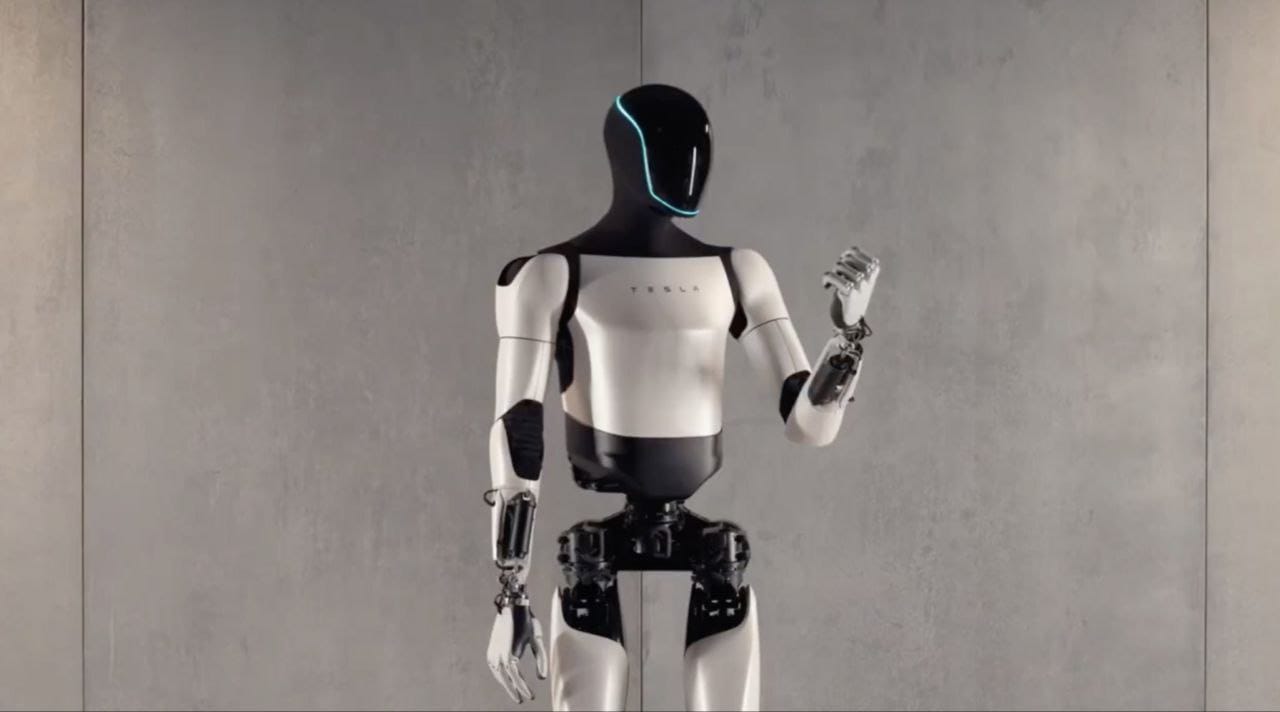
Humanoid robot economics remain unclear. Figure AI's demonstrations haven't disclosed unit costs or maintenance requirements. Agility Robotics' Digit handles testing at Amazon but hasn't announced commercial pricing or deployment timelines. Tesla's Optimus cost projections of "less than $20,000" at scale assume manufacturing volumes that don't yet exist.
Compare this uncertainty to known outcomes. Tom Galluzzo, head of automation at a mid-sized logistics company operating facilities in Pennsylvania and North Carolina, made his decision last year.
"We looked at humanoid options. Impressive tech. No clear timeline to production. No reliable cost data. We deployed specialized picking robots from 6 River Systems instead. System went live in four months. ROI projected within 20 months. I can't wait five years to find out if humanoids might work when I know automated mobile robots work today."
That calculation repeats across the industry. A Gartner survey of U.S. manufacturing and logistics executives found that 73% prioritize "proven ROI" over "future versatility" when making automation investments. The flexibility promise of humanoid robots loses appeal when specialized systems deliver measurable returns now.
Why This Matters for American Competitiveness
The United States faces pressure from multiple directions: post-pandemic supply chain disruptions exposed fragility, labor shortages persist in logistics and manufacturing, and international competitors accelerate automation.
China deployed 290,000 industrial robots in 2023, according to the International Federation of Robotics. Europe pushes aggressive Industry 4.0 initiatives. American companies waiting for humanoid robots to mature risk falling behind competitors deploying proven specialized systems.
The regional dynamics vary. Silicon Valley tech hubs invest in moonshot humanoid projects. Midwest manufacturing centers prioritize reliability and known costs. Southeastern automotive corridors need solutions that integrate with existing production lines. Southwestern warehouses serving e-commerce demand fast deployment timelines.
Specialized automation addresses these regional needs better than humanoid platforms still in development.
A food processing facility in Iowa needs reliable case picking. A pharmaceutical distribution center in New Jersey needs precise inventory tracking. An automotive parts supplier in Alabama needs integration with legacy systems. Humanoid robots promise eventual versatility. Specialized systems deliver specific solutions now.
The Counterargument: Flexibility Has Value
Defenders of humanoid robotics argue that human-shaped robots can operate in human-designed spaces without infrastructure modification. A humanoid can climb stairs, open doors, use tools designed for hands. No retrofitting factories. No redesigning warehouse layouts. Deployment becomes faster and cheaper.
This argument holds merit in specific scenarios. Military applications face unpredictable terrain where specialized robots can't operate. Disaster response requires adapting to damaged infrastructure designed for humans. Research facilities exploring general-purpose AI need platforms that can test diverse manipulation tasks. Legacy industrial sites protected by historical preservation or constrained by lease agreements can't easily modify infrastructure.
The counterargument: most American industrial settings aren't legacy buildings preserved for historical reasons. They're active workspaces that already undergo regular modification for efficiency gains. According to the Council of Supply Chain Management Professionals, U.S. warehouses average facility upgrades every 7–10 years.
Infrastructure modification costs, while real, are often justified by performance gains from purpose-built systems. ABI Research estimated infrastructure modification for specialized automation averages $200,000–$800,000 per facility depending on size and complexity. That investment delivers robots with known performance, established maintenance protocols, and proven ROI timelines.
Humanoid robots avoid that upfront infrastructure cost but introduce uncertainty in unit price, performance reliability, and maintenance requirements that may exceed the savings.
The flexibility argument weakens further when examining task requirements. A humanoid robot's ability to climb stairs matters little when most modern warehouses use single-story layouts or elevators. Five-fingered hands add complexity for tasks like palletizing that specialized grippers handle more reliably.
What American Warehouse Operators Should Do Now
The choice facing logistics companies is simple: deploy proven automation systems that deliver measurable returns within 18–24 months, or wait 5–10 years for humanoid robots to reach commercial maturity.
That's not a rhetorical question. It's a decision with direct consequences for competitiveness.
Warehouse operators should take three specific actions:
First, audit current automation gaps. Identify high-volume, repetitive tasks where specialized systems already deliver proven ROI. Amazon, Walmart, and Target didn't wait for perfect robots. They deployed incremental automation and improved iteratively. A 2024 analysis from Logistics Management magazine found that companies taking this approach gained 25–40% productivity improvements over three years while competitors waited for breakthrough technology.
Second, calculate ROI for specialized systems available now. Companies like Locus Robotics, 6 River Systems, IAM Robotics, and Mytra publish performance data, cost structures, and deployment timelines. These aren't projections. They're operational metrics from running systems. Compare those numbers to your labor costs, error rates, and throughput requirements. The math often justifies deployment within months, not years.
Third, set a decision timeline. If humanoid robots will revolutionize logistics, when? Figure AI, Agility Robotics, and Apptronik target commercial deployment by 2027–2028. Tesla's Optimus timeline remains unclear. Even optimistic projections put widespread adoption in the 2030s. Can your operation wait that long while competitors gain years of productivity improvements from specialized systems deployed today?
"We evaluated humanoid options. Beautiful engineering. No clear path to deployment at our scale. We installed Mytra's system in our Sacramento facility. Live in nine months. We're seeing 30% improvement in storage density and faster order fulfillment. That's real competitive advantage now, not five years from now when humanoids might be ready."
Maria Chen, vice president of operations for a regional grocery chain with distribution centers in California, Oregon, and Washington, made her choice last year.
The Investment Reality
Humanoid robotics will continue attracting funding, talent, and media attention. The vision is compelling. The engineering challenges are intellectually rich. Companies like Figure, Agility Robotics, and Tesla's Optimus program will push the technology forward. Some will achieve commercialization in niche applications where flexibility justifies complexity and cost.
But the broader industrial automation market is moving in a different direction. Specialized robotics companies are deploying systems today that solve real logistics problems with measurable ROI.
The data supports this: automated warehouse systems grew to $37 billion globally in 2024, according to Interact Analysis, with specialized AMRs and AS/RS driving the majority of deployments. Humanoid robot investments, while significant in venture funding, remain negligible in operational deployment.
Walti's critique, informed by years building Tesla's humanoid program, isn't that humanoid robots are impossible. In his assessment, they're impractical for most industrial applications in the foreseeable future. The third inning metaphor is deliberate. Six innings remain. That's years, possibly decades, based on the development timeline of comparably complex robotic systems.
Investors, engineers, and companies betting on humanoid robots need to ask whether they can afford to wait that long when specialized alternatives already exist and deliver returns.
The Choice American Companies Face
The robotics industry has always been driven by two competing philosophies: generalization versus specialization. Humanoid robots represent the former. Purpose-built platforms represent the latter. Both have merit. Only one is solving warehouse problems today.
This isn't about which vision is more inspiring. This is about which technology delivers competitive advantage now while your competitors deploy proven systems and gain years of operational improvements.
The American logistics industry faces labor shortages, supply chain pressure, and international competition. These challenges demand solutions today, not promises about what might work in 2030.
Warehouse operators who deploy specialized automation now will gain 5–7 years of productivity improvements, data, and iterative optimization before humanoid robots reach commercial viability. That head start compounds. Better fulfillment speeds. Lower error rates. Improved inventory management. Cost reductions that fund further automation.
Companies waiting for humanoids to mature will spend that same 5–7 years falling further behind competitors who chose proven technology over future promises.
The question isn't whether humanoid robots will eventually transform industrial automation. The question is whether you can afford to wait for the ninth inning while your competitors score runs with specialized systems available right now.
Choose accordingly.